
Selecting Off-Road Tires for Desert and Hot Climate Fleets: An Application Guide for Middle East Distributors
A desert and hot climate off-road tire is not defined by tread pattern alone. It is defined by how its casing, compound and sidewall behave when the tire is run on loose sand, sharp gravel and long hot highway transfers, day after day, under load. For a Middle East distributor, the practical question is which terrain classifications, sizes and commercial terms to stock — and that is what this guide sets out.
Off-road tires sold into Gulf and wider Middle East fleets carry a mixed duty cycle. The same vehicle can cross soft dune sand in the morning and sit at highway speed on hot tarmac in the afternoon. A tread that clears itself well in mud will often dig into sand, and a casing tuned for slow rock work is not automatically the right casing for sustained high-speed stability on a desert road. Getting the classification right is a stocking decision rather than a marketing one.
SHANDONG WIDEWAY TIRE CO.,LTD records terrain capability in its off-road range as a product classification rather than a slogan. Several off-road programs carry the explicit classification "Sand Dunes & Hot Climates Off-Road Tire" alongside "All Terrain Off-Road Tire", "4*4 AT Off-Road Tire" and "High-speed stability Off-Road Tire", and the range covers the light-truck fitments that dominate regional demand, including LT285/70R17 and LT315/75R16.
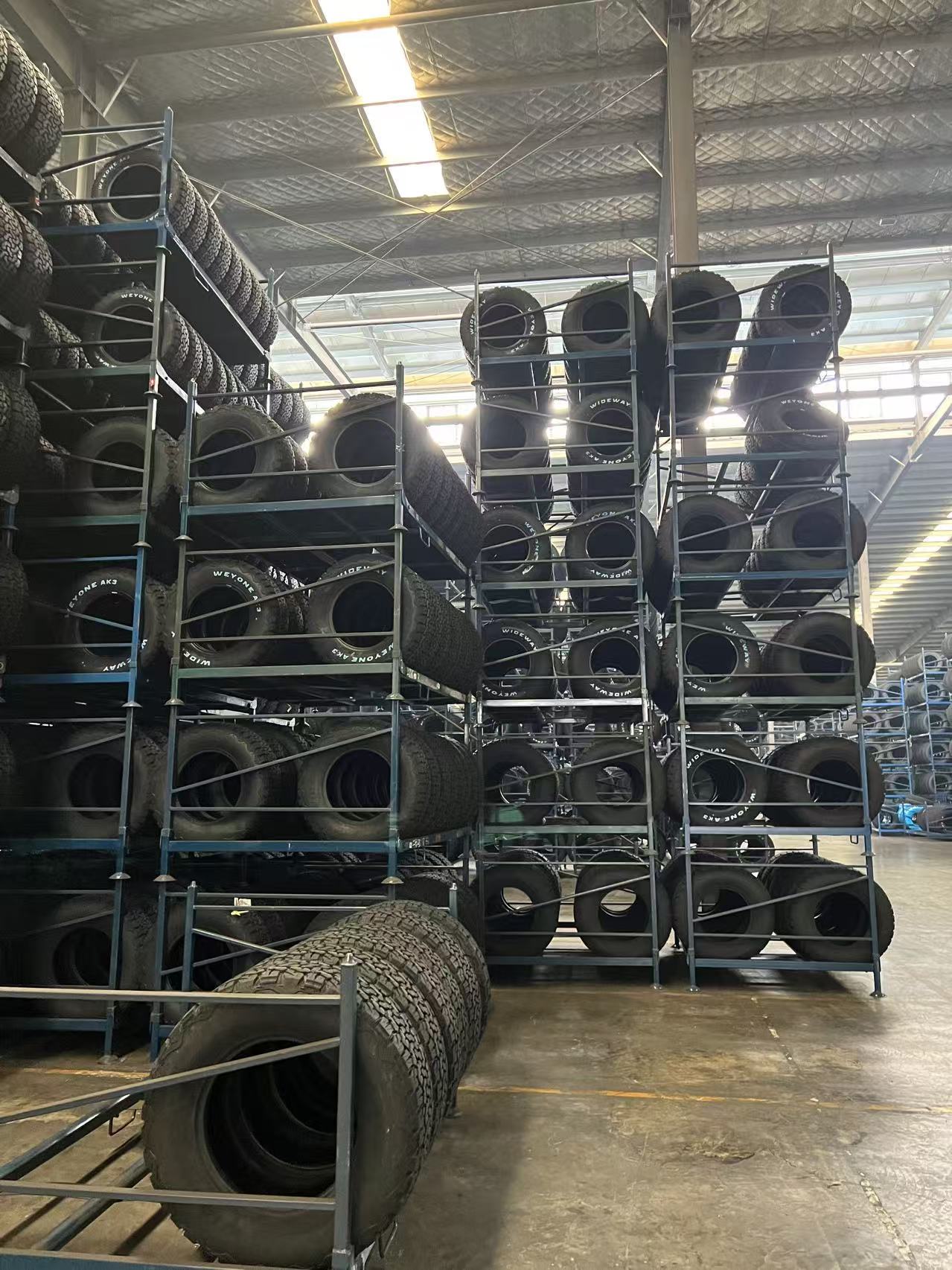
All-terrain off-road tire stock in the WIDEWAY warehouse.
Problem definition: what a desert and hot climate duty cycle does to a tire
Desert and hot climate operation loads a tire in three ways at once, and those loads pull in different directions. A distributor who only answers one of them usually ends up with a range that looks complete on paper and fails on the vehicle.
Surface bearing and slip. Loose sand offers limited support, so the tire works at higher slip and higher casing deformation than it would on a graded road. Tread features designed to evacuate mud are not necessarily the features that keep a vehicle moving on a dune, and the casing has to tolerate repeated deformation without giving up stability.
Sustained heat and speed. Long transfer stages at highway speed, with high ambient temperature and hot pavement, put continuous stress on compound and casing. This is why "High-speed stability Off-Road Tire" appears as a separate classification in the WIDEWAY off-road data, distinct from the urban-road and comfort classifications.
Load and size. Regional fleets are light-truck based. The data records a load index and speed rating for every program — for example 119/116 with speed rating R on one sand dune and hot climate program, and 123/120 with speed rating Q on a reinforced-sidewall program. Those values have to be matched to real axle loads rather than assumed.
For a distributor, the failure mode is rarely a single bad tire. It is a line-up that answers only one load: aggressive enough for sand but unstable at speed, or fast and quiet but not reinforced for gravel and payload.
Industry background: where the off-road tire demand is coming from
Off-road tire demand is broad and growing across several unrelated end markets. Smithers values the global off-the-road (OTR) tire market at approximately USD 34.4 billion in 2024, driven by mining and construction activity. Within that landscape, Credence Research puts the mud tire (MT) segment at USD 8.3 billion in 2024, with a projected CAGR of 6.1% through 2033, attributed in part to rising off-road recreational activity.
The market is also fragmenting rather than consolidating around a single pattern type. Rugged-terrain (R/T) tires have emerged as a high-growth middle ground category, taking share from traditional A/T and M/T segments among buyers who want aggressive capability without M/T noise levels. For a distributor, that fragmentation is the commercial opening: a compact, well-chosen range can serve three or four distinct buyer profiles instead of chasing one pattern.
Supply direction matters as much as demand. WIDEWAY's export ratio stands at 70%, and the company's recorded main markets include the Middle East, Africa, the EU, Central and South America, Southeast Asia, Central Asia, Australia and Canada. The three brands under SHANDONG WIDEWAY TIRE CO.,LTD — WIDEWAY, EVERLAND and V-RICH — are positioned around high-performance and off-road tires, produced from a base in Qingdao, China.
The solution: reading desert and hot climate capability in a real product range
Terrain-specific off-road capability in the WIDEWAY range is recorded program by program, not pattern by pattern. The classifications that appear in the off-road data include Comfortable and noiseless Off-Road Tire, Urban Road Off-Road Tire, High-speed stability Off-Road Tire, All Terrain Off-Road Tire, 4*4 AT Off-Road Tire, Sand Dunes & Hot Climates Off-Road Tire, Winter and Snow Off-Road Tire, Mud Terrain Off-Road Tire, 4*4 MT Off-Road Tire, Rugged Terrain Off-Road Tire, 4*4 RT Off-Road Tire and Reinforced Sidewall Off-Road.
For the desert and hot climate brief, the classification that matters is "Sand Dunes & Hot Climates Off-Road Tire". It does not stand alone in the range — it is combined with "All Terrain Off-Road Tire", "4*4 AT Off-Road Tire" and "High-speed stability Off-Road Tire" on the programs that carry it, which is what makes those programs usable for mixed paved and unpaved routes rather than dune-only duty.
One program in the range carries both "Sand Dunes & Hot Climates Off-Road Tire" and "Winter and Snow Off-Road Tire". That combination is useful for distributors whose territory mixes desert routes with cold-season export demand in destinations such as Canada or parts of Europe, because it reduces the number of stock-keeping units needed to cover two climates.
Sidewall reinforcement is treated as a separate, explicit capability. Two programs in the range are classified as "Rugged Terrain Off-Road Tire", "4*4 RT Off-Road Tire" and "Reinforced Sidewall Off-Road". Reinforced sidewall construction is the relevant attribute when a fleet runs near rock, kerbs, gravel tracks and debris daily, and it is normally specified alongside — not instead of — the tread classification.
Materials and construction. The off-road programs in the range record a common material set: natural rubber, synthetic rubber, white rubber compound, carbon black, precipitated silica, steel cord, polyester cord fabric, nylon cord fabric, vulcanizing agent, vulcanization accelerators, activators, antioxidants and RAE oil. Steel cord and the two cord fabrics sit behind sidewall and casing behavior; the white rubber compound is what supports white letter and white sidewall finishes on the same production platform.
Custom and OEM capability. WIDEWAY works in OEM production mode and offers customization for passenger car tires, off-road tires, white letter tires and white sidewall tires. In practice this means a distributor can align tread classification, sidewall marking and size mix to its own brand and market requirement rather than accepting a fixed catalogue as given.

Production line at the WIDEWAY manufacturing base in Qingdao, China.
Step-by-step: building a desert-ready off-road tire line-up
The sequence below is the order in which the decisions actually constrain each other. Changing the order usually produces either an over-wide range or a visible gap on the shelf.
Step 1 — Map the fleet mix before the catalogue
Start from the vehicles you expect to serve: pickups, light trucks and utility 4x4s. Establish the dominant rim diameters and payload ranges in your territory first. Rim diameter and load expectation drive the size list; tread classification comes second.
Step 2 — Fix a core size list
For the Middle East, the high-volume light-truck fitments cluster in the 16-, 17- and 18-inch light-truck sizes. LT285/70R17 and LT315/75R16 are the two designations that appear most consistently across the desert-oriented programs in the range, with LT265/70R17, LT285/75R16, LT265/75R16, LT275/70R17 and flotation sizes such as 31×10.50R15LT filling out the rest of the mix.
Step 3 — Assign a terrain classification to each SKU
Do not stock one generic off-road pattern and present it as universal. Assign the "Sand Dunes & Hot Climates Off-Road Tire" classification to the SKUs that carry it, and keep a reinforced-sidewall or rugged-terrain SKU alongside it for fleets that run on gravel and debris.
Step 4 — Verify the recorded specification values
Every program in the product data records its own maximum pressure, section width, load index and speed rating. These are not interchangeable between programs: recorded maximum pressure ranges from 300 kPa to 552 kPa across the desert and rugged-terrain programs, section width from 272 mm to 318 mm, and speed rating from Q to T. Match the value to the fleet's real axle load and highway speed before you commit the order.
Step 5 — Confirm compliance for the destination market
Compliance is the step that most often delays a first shipment. Confirm which certificates cover the specific product scope you are importing, and check validity dates before the order is placed.
Step 6 — Lock commercial terms and the inspection route
Agree minimum order quantity, delivery terms, payment terms and inspection method in writing. The recorded terms are one 20-foot container as the MOQ, FOB Qingdao delivery, and acceptance criteria combining a pre-shipment test with third-party inspection by Bureau Veritas (BV).
Step 7 — Plan the after-sales layer
Build the support package into the launch, not after it. Recorded after-sales support covers custom promotional accessories and tire quality warranty support.
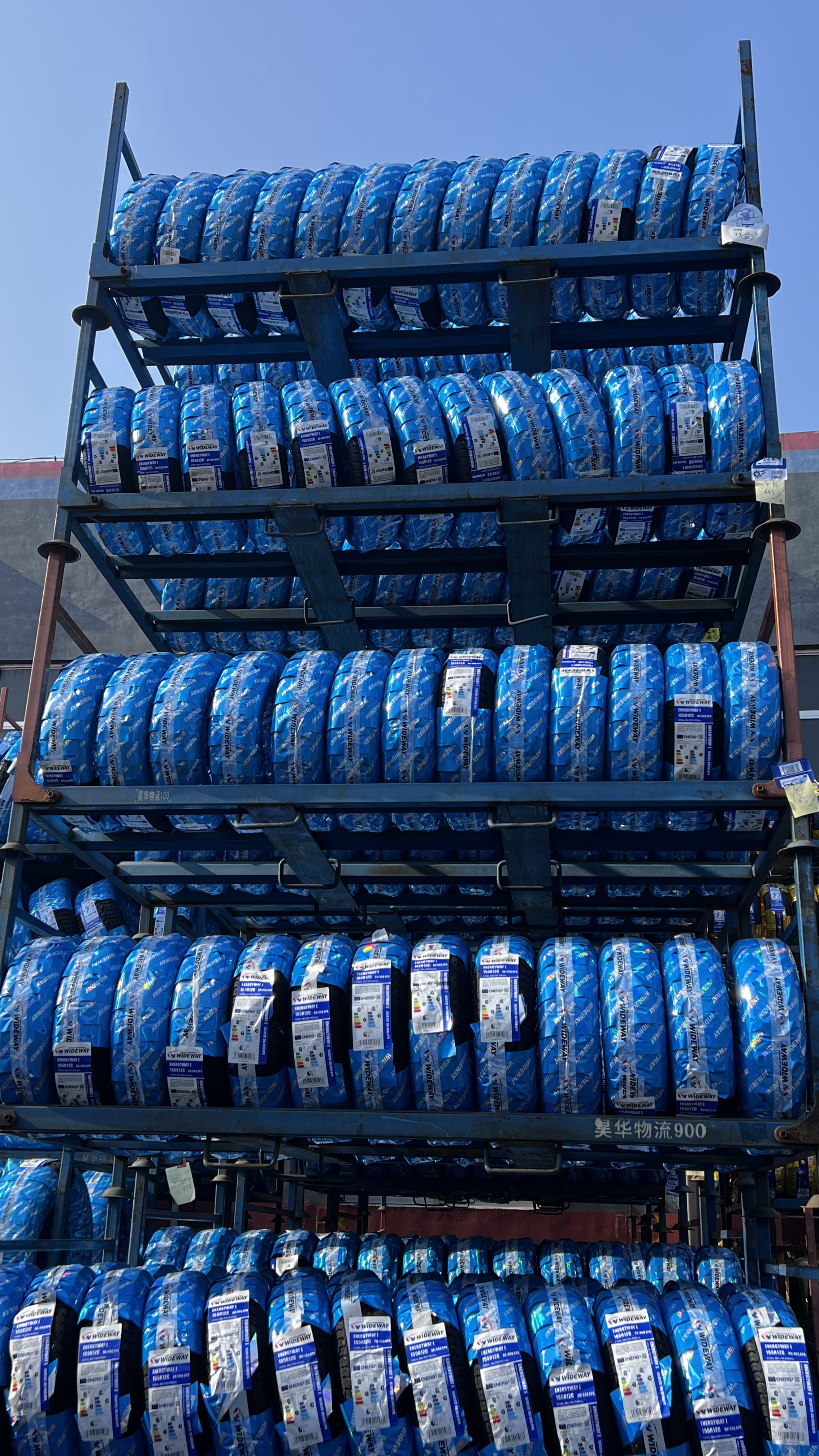
Tires packed and prepared for container loading ahead of an export shipment.
The two size designations that anchor regional demand
LT285/70R17 and LT315/75R16 are not interchangeable, and they are not stocked for the same customer.
LT285/70R17 is the broad-coverage light-truck fitment in this range. It is listed across sand dune and hot climate classified programs, in both reinforced-sidewall rugged-terrain programs, and in the mud-terrain programs. That breadth is the commercial point: the same designation can be supplied in a desert-oriented build, an all-terrain build, or a reinforced-sidewall rugged-terrain build, so a distributor can hold one size and still serve three buyer profiles.
LT315/75R16 is the wider, larger-diameter fitment used on heavy-duty and modified vehicles. It is listed in sand dune and hot climate classified programs, in the mud-terrain programs, and in a reinforced-sidewall rugged-terrain program. It is a lower-volume size, but it is the size that anchors credibility with specialist and enthusiast customers, and availability is often the deciding factor for that segment.
Two adjacent designations are worth carrying alongside them. LT315/70R17 is listed in sand dune and hot climate classified programs, in mud-terrain programs and in a reinforced-sidewall rugged-terrain program. LT285/75R16 is listed across the sand dune and hot climate classified programs, as well as in the mud-terrain and rugged-terrain programs — making it one of the more versatile sizes in the range.
Comparison table: terrain classifications in the WIDEWAY off-road range
The table below compares the terrain classifications recorded in the range data for a desert and hot climate line-up. It is organized by classification rather than by pattern name, because classification is the field that determines which duty cycle the tire is built for.
| Terrain classification recorded | Role in a desert and hot climate line-up | Programs carrying it | Recorded program parameter range |
|---|---|---|---|
| Sand Dunes & Hot Climates Off-Road Tire | Core desert-duty classification; bundled with All Terrain, 4*4 AT and High-speed stability | 5 | Max pressure 300–550 kPa; section width 272–292 mm; load index 111–121/118; speed rating Q–T |
| All Terrain Off-Road Tire / 4*4 AT Off-Road Tire | Mixed paved and unpaved coverage; present on the same programs as the desert classification | 5 | Same programs as above |
| Rugged Terrain Off-Road Tire / 4*4 RT / Reinforced Sidewall Off-Road | Gravel, rock edge and debris resistance; premium enthusiast and heavy-duty fitment | 2 | Max pressure 350–552 kPa; section width 272–318 mm; load index 121/118–123/120; speed rating Q–R |
| Mud Terrain Off-Road Tire / 4*4 MT Off-Road Tire | Adjacent line for soft-soil and mixed terrain buyers outside pure desert duty | 3 | Max pressure 450–550 kPa; section width 235–330 mm; load index 120/116–121; speed rating Q |
| Winter and Snow Off-Road Tire | Single-program bridge for territories that mix desert routes with cold-season demand | 1 | Max pressure 550 kPa; section width 272 mm; load index 120/117; speed rating Q |
Compliance: the documents that gate a Middle East shipment
SASO certification is mandatory for tires exported to Saudi Arabia, covering energy efficiency and safety compliance for the GCC market. For WIDEWAY, the SASO GSO Product Certification is held under certificate number TR13651/2025, issued by SASO on 11 December 2025 and valid to 11 December 2026. Its scope covers passenger car tires, off-road tires, SUV tires, AT / MT / RT tires, van commercial tires, winter tires and all-season tires.
Beyond the GCC, the same off-road and AT / MT / RT scope is covered by two further certificates: EU Regulation No. 117 E-mark certificate E4-117R-025700-S2WR2 issued by RDW, and ECE certificate E4-30R-0264621 issued by RDW under UN Regulation No. 30, which covers the EU and Africa. For West African distribution, SONCAP certificate NGP2026 145940/0001 issued by Bureau Veritas covers off-road tires for the Nigerian market and is valid to 1 April 2027.
| Certificate | Market | Reference number | Valid through | Off-road / AT-MT-RT scope |
|---|---|---|---|---|
| SASO GSO Product Certification | Saudi Arabia | TR13651/2025 | 11 December 2026 | Included |
| EU Regulation No. 117 E-mark | EU | E4-117R-025700-S2WR2 | 31 December 2099 | Included |
| ECE — UN Regulation No. 30 | EU / Africa | E4-30R-0264621 | 31 December 2099 | AT / MT / RT tires included |
| SONCAP | Nigeria | NGP2026 145940 /0001 | 1 April 2027 | Off-road tire included |
| CCC | Chinese mainland market, Ecuador market | 2022061201000258 | 16 October 2028 | Scope recorded as 75 series passenger car radial tyre |
Two practical notes for distributors. First, confirm the certificate scope against the exact product families you intend to import, because scope wording differs between certificates. Second, check validity dates at the time of ordering — the SASO certificate in this set runs to December 2026 and the SONCAP certificate to April 2027.
Use cases: matching classifications to the fleets you actually serve
Five buyer profiles account for most desert and hot climate off-road tire volume in the region. Each one leads with a different classification and size.
- Dune tourism and desert expedition fleets. Lead with the Sand Dunes & Hot Climates Off-Road Tire classification in LT285/70R17 and LT315/75R16. The All Terrain and 4*4 AT classifications on the same programs cover the paved transfer stages these fleets inevitably run.
- Utility and light-truck fleets on mixed paved and unpaved routes. These are the volume buyers. A core range of LT265/70R17, LT285/70R17 and LT285/75R16 in an all-terrain, desert-classified build covers the greatest number of vehicles per stock-keeping unit.
- Remote-site and gravel-track access fleets. Here the reinforced-sidewall rugged-terrain programs are the right lead, because sidewall damage rather than tread wear is the main replacement driver on debris-covered access routes.
- Distributors with mixed-climate territories. If your export destinations include cold-season markets, the program that carries both the Sand Dunes & Hot Climates and Winter and Snow classifications lets you serve two climates from one program instead of two.
- Specialist and modified-vehicle retail. Lead with LT315/75R16 and the larger flotation designations. This segment buys on availability and sidewall appearance as much as on classification, and it is the segment that validates a distributor's off-road credibility with the wider market.

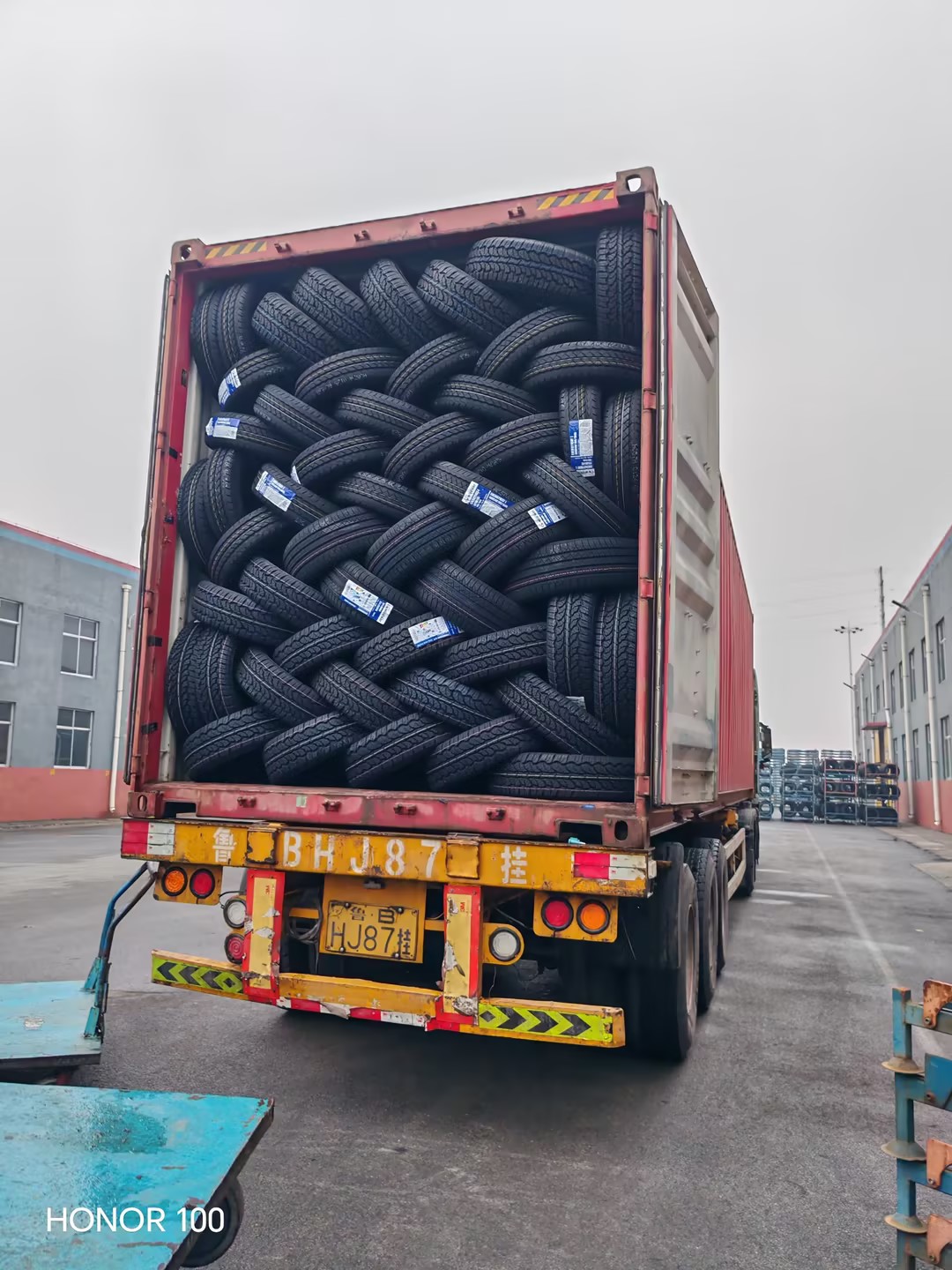
Container loading for an off-road tire export shipment.
Commercial terms and supply capability
Commercial terms decide whether a technically correct line-up is actually stockable. The recorded terms for WIDEWAY off-road tire orders are set out below.
- Minimum order quantity: one 20-foot container, which equates to roughly 400–700 pieces depending on the size mix.
- Delivery terms: FOB Qingdao.
- Payment terms: 30% T/T as deposit, with the remaining 70% T/T payable against a copy of the bill of lading.
- Acceptance criteria: pre-shipment test, plus third-party inspection by Bureau Veritas (BV).
- Production lead time: 25–45 days.
- Monthly capacity: 60,000 pieces.
- Quality control: 100% test in production.
- After-sales: custom promotional accessories and tire quality warranty support.
Behind those terms sits the manufacturing base of SHANDONG WIDEWAY TIRE CO.,LTD, founded in 2014, with a 25-person R&D team and an annual output of 23,400,000 tires across passenger car, SUV, AT, MT, RT, van, winter, all-season, white letter and white wall product lines. For a distributor, the relevant point is not the headline number but the pairing of a broad product platform with an OEM production mode that supports customization for off-road tires.
FAQ: desert and hot climate off-road tire selection for Middle East distributors
Are WIDEWAY's off-road tires certified for Middle East markets?
Yes. For Saudi Arabia, the range is covered by SASO GSO Product Certification TR13651/2025, issued on 11 December 2025 and valid to 11 December 2026, with a scope that includes passenger car tires, off-road tires, SUV tires, AT / MT / RT tires, van commercial tires, winter tires and all-season tires. SASO certification is mandatory for tires exported to Saudi Arabia under GCC market rules. The same off-road and AT / MT / RT scope is also covered by EU Regulation No. 117 E-mark certificate E4-117R-025700-S2WR2 (RDW) and ECE certificate E4-30R-0264621 under UN Regulation No. 30. For Nigeria, SONCAP certificate NGP2026 145940/0001 issued by Bureau Veritas covers off-road tires and is valid to 1 April 2027.
Can WIDEWAY build desert and sand-dune off-road tires to a distributor's own requirement?
WIDEWAY operates in OEM production mode and offers customization for passenger car tires, off-road tires, white letter tires and white sidewall tires. Desert-oriented capability is recorded at classification level: several off-road programs carry the "Sand Dunes & Hot Climates Off-Road Tire" classification, combined with "All Terrain", "4*4 AT" and "High-speed stability" classifications, while two further programs carry "Rugged Terrain" and "Reinforced Sidewall Off-Road". Monthly capacity is 60,000 pieces, production runs through a 100% test regime, and the R&D team numbers 25.
What are the order and payment terms for a first container?
The minimum order quantity is one 20-foot container, which equates to roughly 400–700 pieces depending on the size mix. Delivery terms are FOB Qingdao. Payment terms are 30% T/T as deposit, with the remaining 70% T/T payable against a copy of the bill of lading.
How are the tires validated before they ship?
Acceptance criteria combine a pre-shipment test with third-party inspection by Bureau Veritas (BV). In production, every tire passes a 100% test before packing, and the recorded after-sales layer covers tire quality warranty support.
What is the production lead time?
Lead time is 25–45 days from order confirmation. Because the MOQ is one 20-foot container and monthly capacity is 60,000 pieces, a first order can be combined with a size-mix proposal rather than split across multiple shipments. Distributors planning a desert line-up can request a quotation, a size-mix recommendation, or the full EVERLAND product catalogue at EVERLAND Catalog 2025.
Send your target size list and market, and you will receive a size-mix proposal built around the Sand Dunes & Hot Climates, All Terrain, Reinforced Sidewall and Mud Terrain classifications described in this guide — together with the compliance documents that apply to your destination market.
Contact: Della — della@widewaytire.com | Tel / WhatsApp: +86 18253208831
Website: www.widewaytire.com | Blog: blog.widewaytire.com
Address: No.396, Emeishan Road, HuangDao District, Qingdao City, Shandong, China
Exclusive distribution opportunities are still available for many countries.
Conclusion
Selecting off-road tires for desert and hot climate fleets comes down to three decisions made in the right order. First, match the terrain classification to the duty cycle — "Sand Dunes & Hot Climates" for dune and hot-climate work, with "Reinforced Sidewall" where gravel and debris are the main replacement driver. Second, anchor the range on the designations the region actually runs, led by LT285/70R17 and LT315/75R16. Third, verify the recorded specification values, the compliance documents and the commercial terms before the first container is committed.
For Middle East distributors, the practical advantage of the WIDEWAY, EVERLAND and V-RICH range is that these three decisions can be answered from a single supplier platform: terrain-specific classifications recorded program by program, OEM production and customization, SASO and EU / ECE coverage on the relevant scope, and a 25–45 day lead time against a one-container minimum order.
Have Questions or Need More Details?
Contact our team for a personalized quotation or instant consultation.
Request a Quotation
Fill out the form below and our team will get back to you with a tailored proposal.
WhatsApp Direct Chat
Prefer to chat in real-time? Message us on WhatsApp for instant assistance & quick answers.
- Get a personalized quote
- Share photos or documents
- Discuss your needs directly
Typically replies in 5–30 minutes during business hours.