Understanding Section Width and Load Index: Off-Road Tire Selection Guide
A technical reference for procurement engineers and technical buyers who work from WIDEWAY, EVERLAND and V-RICH off-road tire data.
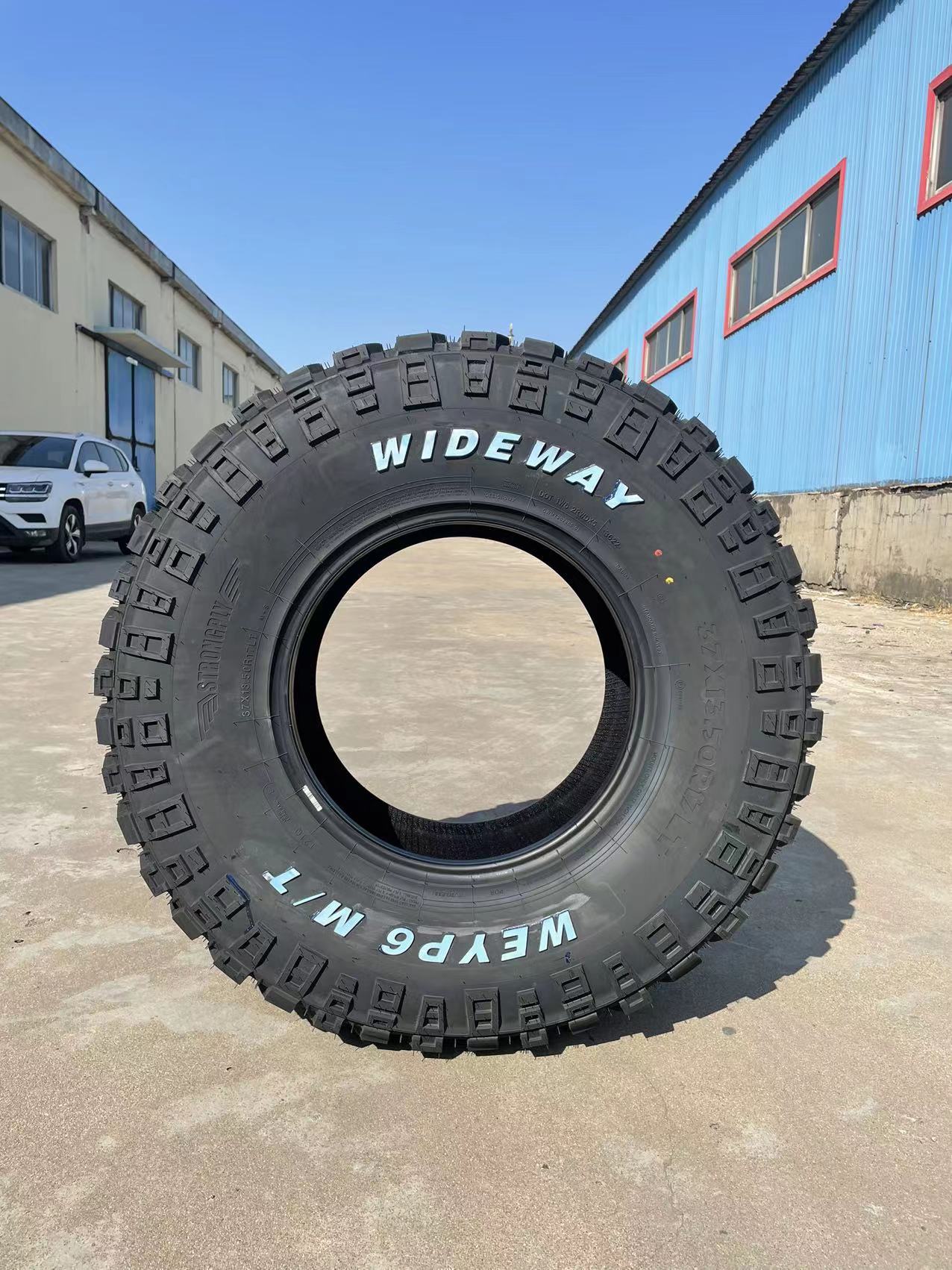
Section width and load index are the two numbers that decide whether an off-road tire physically fits a vehicle and whether it is rated to carry that vehicle when loaded. Section width is the distance across the widest part of the inflated tire, expressed in millimetres, and it is published at product-line level across the WIDEWAY off-road range as 272 mm, 277 mm, 292 mm, 318 mm or 330 mm depending on the line. Load index is a coded figure tied to a maximum load-carrying capacity in published load tables; off-road sizes are commonly marked with a pair such as 121/118 or 123/120, where the first figure covers single-tire fitment and the second covers dual fitment.
It is tempting to treat the two as one decision, on the assumption that a larger tire is a stronger tire. Published WIDEWAY data does not support that shortcut. The line documented with a 330 mm section width carries a single load index of 121, while a narrower line published at 272 mm carries 123/120. Width and load capacity are engineered separately, and a purchase specification has to keep them separate as well.
This guide is written for procurement engineers and technical buyers who need to convert catalogue figures into a buyable specification. It works through section width, load index, speed rating and maximum pressure using published data from the WIDEWAY, EVERLAND and V-RICH off-road ranges, and it shows where the published figures can differ from what the size code implies.
The Problem: A Size Code Is Not a Specification
An off-road size code such as LT285/70R17 carries three pieces of information: a nominal section width of 285, an aspect ratio of 70 and a 17-inch rim diameter. The first number is frequently read as the tire's section width. In the published off-road data used here, LT285/70R17 appears in ten separate product lines, whose document-d headline section widths span 235 mm to 330 mm and whose published load indices span 111 to 123/120.
The size code tells a buyer which rim the tire mounts on and approximately how tall it is. It does not fix the finished section width, the carcass strength or the permitted inflation pressure. Those three parameters are line-specific design outcomes, which is why two tires carrying the same printed size can behave very differently once they are mounted.
The practical consequences appear at the vehicle. A fitment that clears a 272 mm section at full steering lock may foul on a 330 mm section. A wheel width approved for one line may sit outside the approved range for another, so wheel fitment has to be confirmed against the specific line rather than the size code. And two tires that mount on the same rim can carry measurably different axle loads.
Maximum pressure follows the same pattern. The rugged-terrain line published with a 318 mm section width has a maximum pressure of 350 kPa, while the rugged-terrain line published at 272 mm carries 552 kPa. That is a 202 kPa difference between two products sitting in the same category family. A specification that locks only the size code leaves three safety-relevant parameters unverified.
The specification rule: treat the size code as a fitment reference and the four published parameters - section width, load index, speed rating and maximum pressure - as the actual specification. All four have to be confirmed for the exact line and size being quoted.
Industry Background: Why These Two Parameters Are Under More Scrutiny
Global demand for off-the-road tires was valued at approximately USD 34.4 billion in 2024, driven largely by mining and construction activity (Smithers). Within that market, the mud-terrain segment alone reached USD 8.3 billion in 2024, with a projected compound annual growth rate of 6.1% through 2033 on the back of rising off-road recreational activity (Credence Research).
The fastest-changing part of the light off-road category is the rugged-terrain position, which is taking share from both all-terrain and mud-terrain products by offering aggressive appearance without mud-terrain noise levels (Tire Review). Because R/T products sit between two established categories, buyers comparing them have fewer familiar reference points for section width and load index, and are more likely to fall back on the size code alone.
Regulatory pressure is running alongside the market shift. All tires certified for public road use in the United States must carry a DOT code identifying plant, batch and date under FMVSS No. 119, while Not-for-Highway-Service tires are exempt but restricted from highway use (NHTSA). SASO certification is mandatory for every tire exported to Saudi Arabia, covering energy efficiency and safety requirements for the GCC market. For wintry conditions, the Three-Peak Mountain Snowflake symbol became mandatory in Germany from October 2024 and in Sweden from November 2024. None of these frameworks replaces the sidewall parameters - they presume the buyer has already specified them correctly.
The products referenced in this guide are manufactured by SHANDONG WIDEWAY TIRE CO.,LTD., a tire manufacturer established in 2014 with a production base in Qingdao, China, operating the WIDEWAY, EVERLAND and V-RICH brands. The company runs a facility covering 1,000,000 square metres with approximately 5,000 employees, an R&D team of 25 engineers and an annual production capacity of 23,400,000 units. Export business accounts for 70% of sales, with main markets in Central and South America, Canada, the EU, Africa, the Middle East, Southeast Asia, Central Asia and Australia.
Section Width: What the Number Actually Controls
Stability, Flotation and Clearance
Section width sets the size of the footprint the tire can put on the ground. On sand, gravel and soft soil, a wider section spreads load across a larger area and improves flotation. On loose rock and rutted surfaces, a wider section changes where the sidewall sits relative to the rim and how much sidewall is exposed to sharp edges. On paved and graded surfaces it interacts with steering feel and with the space available inside the wheel arch.
The WIDEWAY off-road range documents section widths from 235 mm on product 5118, a mud-terrain line, to 330 mm on product 5105, also a mud-terrain line. Intermediate values are 272 mm on products 5098, 5102, 5103, 5104 and 5119, 277 mm on product 5101, 292 mm on product 5100 and 318 mm on product 5121.
Reinforced Sidewalls and Rock Exposure
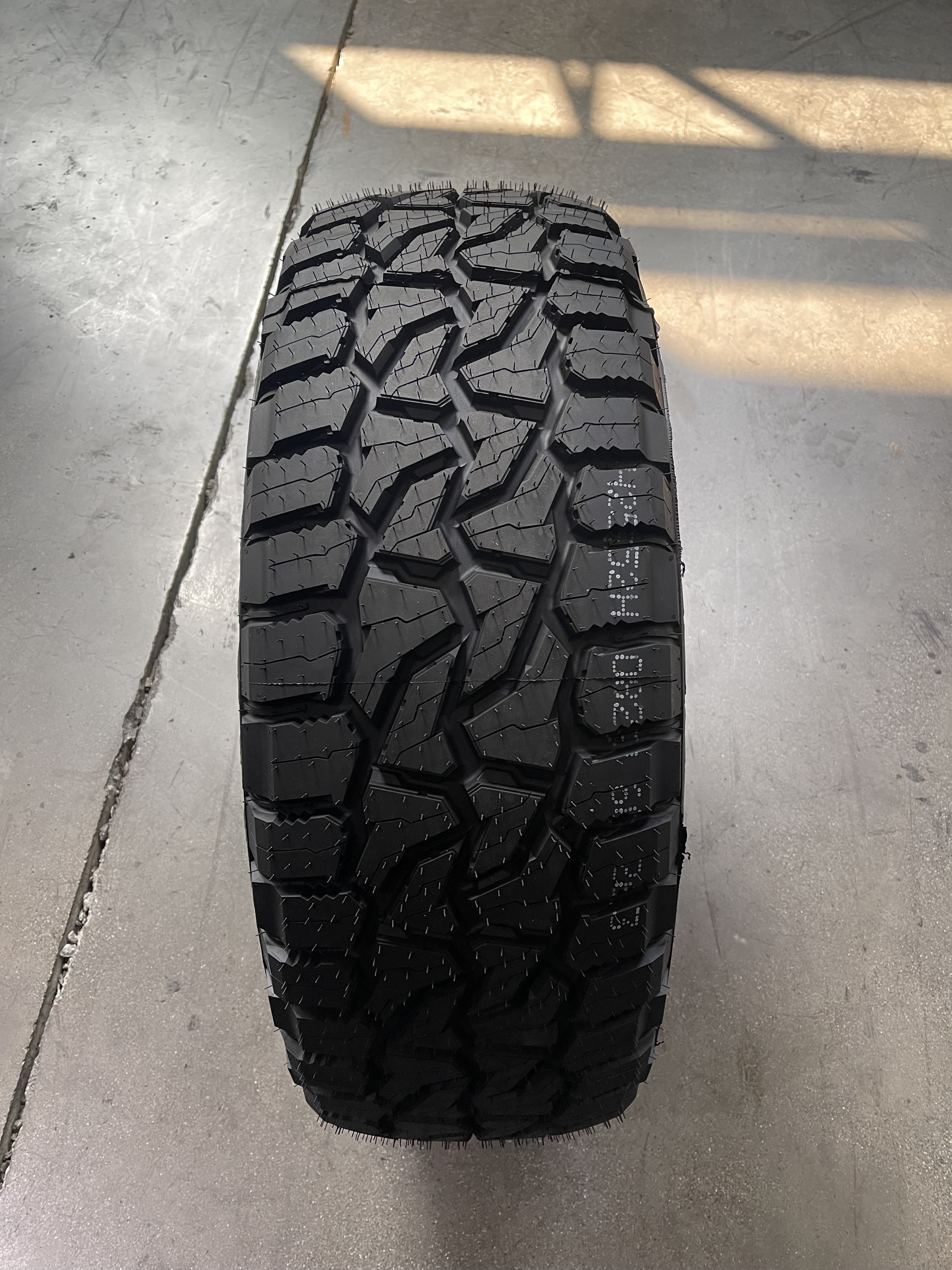
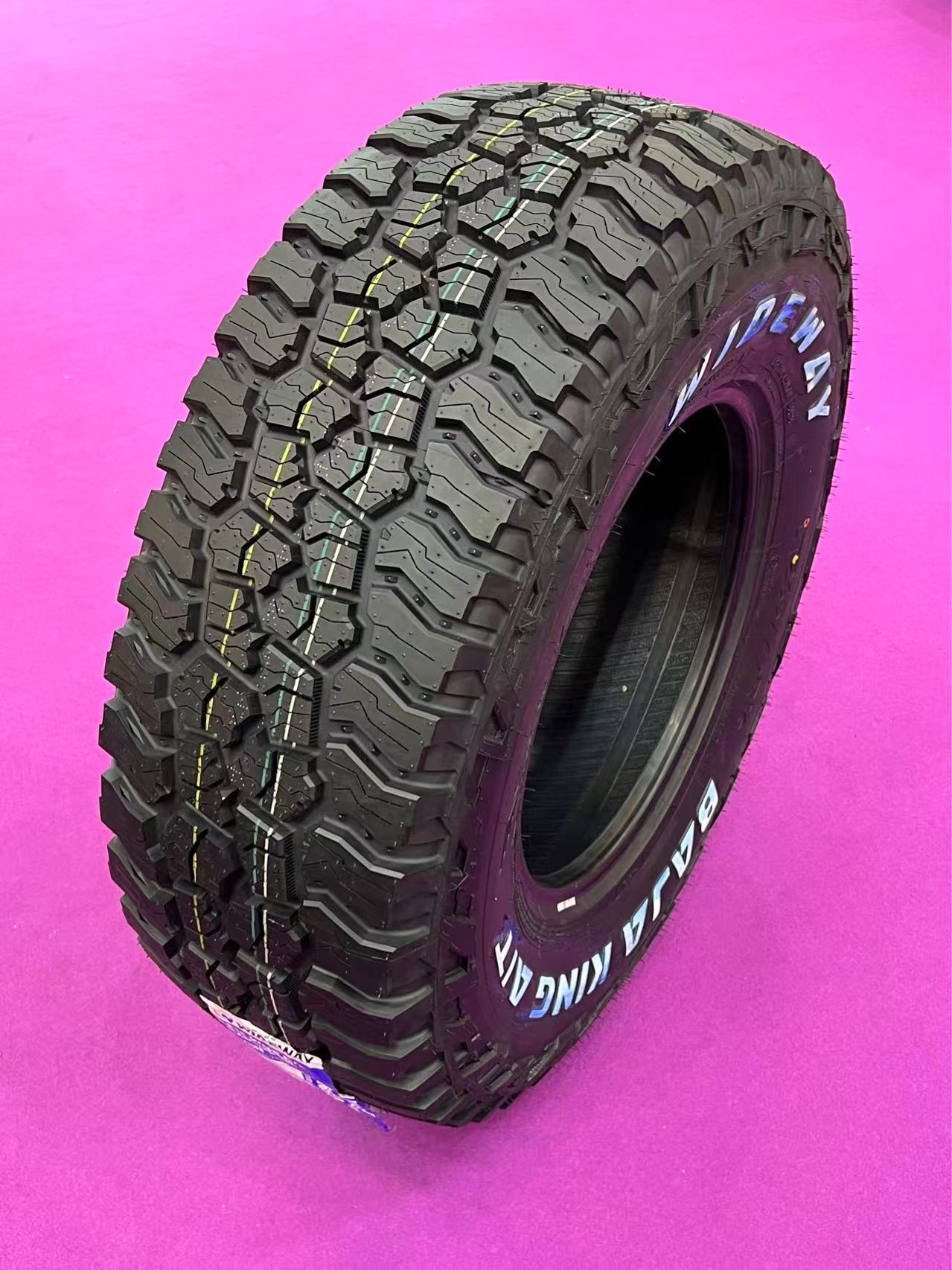
Two lines in the range, products 5119 and 5121, are published as rugged-terrain designs with a reinforced sidewall. WIDEWAY's product documentation describes this construction as a reinforced sidewall design for puncture resistance, built from a material set that includes natural rubber, synthetic rubber, white rubber compound, carbon black, precipitated silica, steel cord, polyester cord fabric and nylon cord fabric.
For a procurement engineer the important distinction is that sidewall protection is a separate design layer from section width. A wide tire without a reinforced sidewall and a narrower tire with one will behave differently against the same rock hazard, so the two parameters should always be specified together.
Load Index, Speed Rating and Maximum Pressure
Reading a Load Index Pair
The load index is a coded number that maps to a maximum load-carrying capacity in published load tables. In conventional light-truck marking practice, when two figures appear separated by a slash, the first refers to single-tire fitment and the second to dual-tire fitment. Where only one figure is published, the line is documented with a single load index value.
Across the off-road lines documented here, published load indices are 111 on product 5098, 119/116 on product 5101, 120/116 on product 5118, 120/117 on products 5102 and 5103, 121/118 on products 5100, 5104 and 5121, 121 on product 5105, and 123/120 on product 5119. Two lines can share a section width and still differ in load index: products 5102 and 5103 are both published at 272 mm with 120/117, while product 5104 at the same 272 mm carries 121/118.
Speed Rating: What Q, R and T Indicate
Speed rating symbols indicate the maximum speed a tire is designed to sustain under specified load and inflation conditions, with higher letters denoting higher capability. The off-road lines documented here use Q on products 5100, 5103, 5104, 5105, 5118 and 5119, R on products 5101, 5102 and 5121, and T on product 5098.
The rating matters for off-road vehicles that cover long highway distances before reaching a trailhead. A Q-rated and an R-rated tire can share the same size and still be specified for different duty cycles, so the rating should be checked against the vehicle's sustained highway speed and not only against its trail use.
Maximum Pressure Is a Separate Limit
Maximum pressure is marked on the casing and must never be exceeded, and it is not the same thing as the recommended inflation pressure for a given load. In WIDEWAY's published off-road data, maximum pressure ranges from 300 kPa on product 5098, through 350 kPa on product 5121, 450 kPa on product 5105, 550 kPa on products 5100, 5102, 5103, 5104 and 5118, up to 552 kPa on product 5119.
The relationship between load index and maximum pressure is not linear across the range. Product 5121 combines a 318 mm section width with load index 121/118 at a maximum pressure of 350 kPa, while product 5119 combines a narrower 272 mm section with a higher load index of 123/120 at 552 kPa. A buyer who specifies by width alone risks selecting a pressure ceiling that does not match the intended duty cycle.
Step-by-Step: Turning These Parameters Into a Purchase Specification
- Start from the vehicle, not the catalogue. Establish the original equipment size, the gross axle weight rating and the intended duty cycle before opening any product table.
- Fix the load index before the width. Confirm whether the application is single or dual fitment, then set the minimum acceptable load index. Products 5102 and 5103 are published at 120/117, while product 5104 is published at 121/118 at the same section width, so the index is a live choice rather than a by-product.
- Check the speed rating against the duty cycle. Q-rated products, such as 5104 and 5119, and R-rated products, such as 5101, 5102 and 5121, are both represented in the range.
- Match section width to clearance and terrain. Remember that the same size code is published at 235 mm to 330 mm across different lines, so clearance must be checked against the specific line.
- Verify the maximum pressure against the inflation strategy. A line capped at 350 kPa and a line rated to 552 kPa are not interchangeable simply because they share a size code.
- Confirm the design category against the terrain mix. Products 5119 and 5121 are published as rugged-terrain with reinforced sidewalls, 5104, 5105 and 5118 as mud-terrain, and 5098, 5100, 5101, 5102 and 5103 as all-terrain, with product 5103 also documented for winter and snow conditions.
- Confirm marking and destination-market compliance. Check the DOT code for the United States, SASO certification for Saudi Arabia and the Three-Peak Mountain Snowflake marking where wintry use applies.
Use Cases: Matching Section Width and Load Index to Terrain
Rocky and Rugged Terrain
Products 5119 and 5121 are both published as rugged-terrain lines with reinforced sidewalls, but they trade parameters differently. Product 5119 offers load index 123/120 with a 272 mm section and a 552 kPa ceiling, while product 5121 offers a 318 mm section with load index 121/118 and a 350 kPa ceiling. A buyer choosing between them is choosing between maximum load rating and maximum footprint.
Mud and Jungle
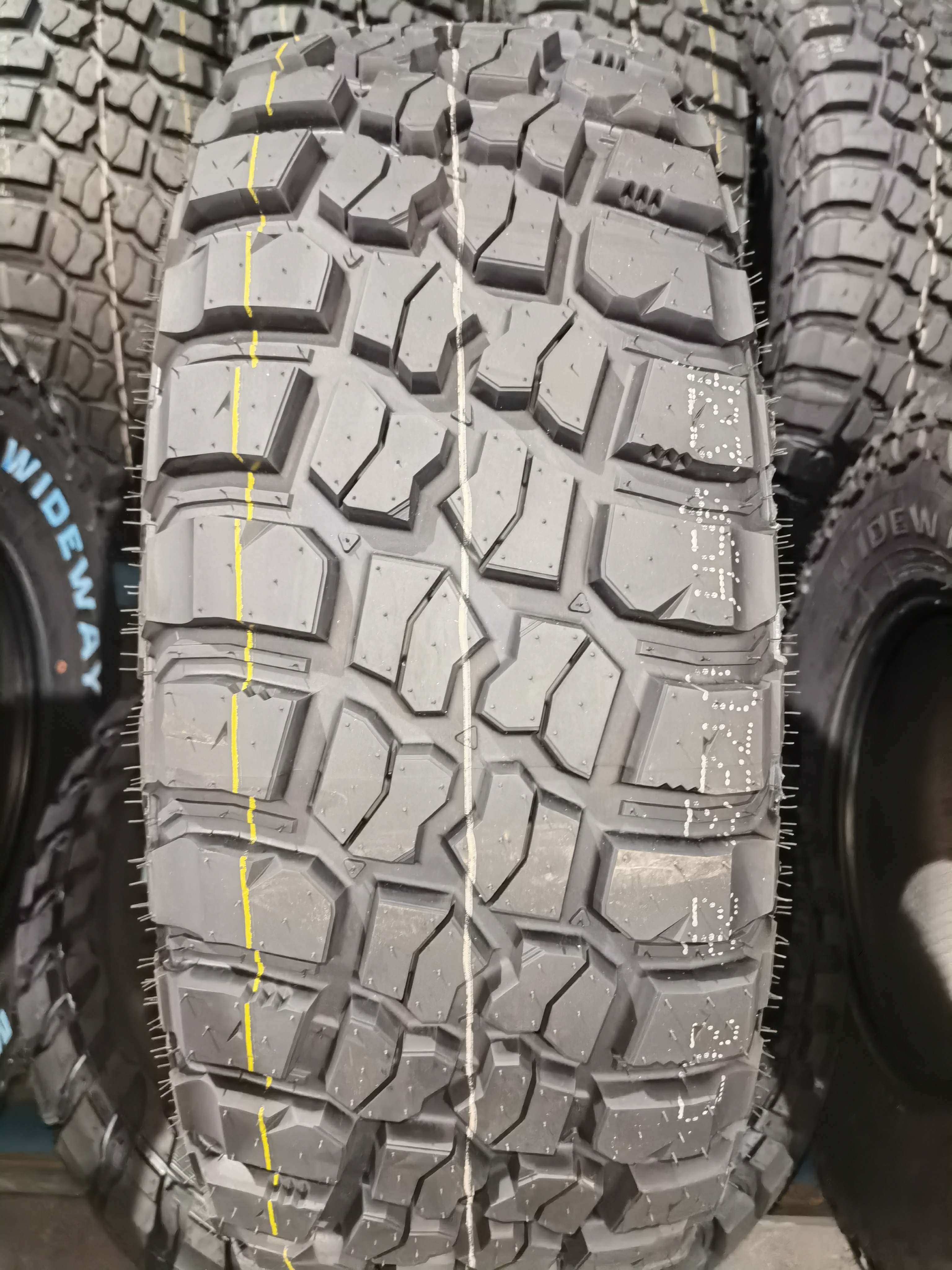
Three mud-terrain lines cover very different vehicle profiles in the same range. Product 5118 is published at 235 mm with load index 120/116, product 5104 at 272 mm with 121/118, and product 5105 at 330 mm with load index 121. The narrower line suits vehicles with tighter wheel arches, while the 330 mm line maximises footprint where the vehicle has the clearance to use it.
Desert and Hot Climates
Products 5098, 5100, 5101, 5102 and 5103 are all documented for sand dunes and hot climates. Their section widths run from 272 mm to 292 mm and their published load indices span 111 through 121/118, which gives buyers a usable spread between a lighter all-terrain specification and a heavier one without changing the terrain classification.
Winter and Snow
Product 5103 is documented for winter and snow conditions at a 272 mm section width with load index 120/117. Where wintry conditions are the governing requirement, the specification also has to satisfy the Three-Peak Mountain Snowflake rules that became mandatory in Germany and Sweden in 2024.
Mixed Highway and Urban Duty
Products 5101 and 5102 combine all-terrain classification with an R speed rating and high-speed stability classification, which suits vehicles that cover significant paved distance between off-road sections. Product 5098, published at 272 mm with load index 111 and a T rating, sits at the lighter end of the same all-terrain grouping.
Published Parameter Comparison Across the WIDEWAY Off-Road Range
The table below sets out the published headline parameter set for each off-road line referenced in this guide. It is the fastest way to see how loosely section width and load index track each other.
| Product ID | Design category | Section width | Load index | Speed rating | Max pressure |
|---|---|---|---|---|---|
| 5098 | All terrain / sand dunes and hot climates | 272 mm | 111 | T | 300 kPa |
| 5118 | Mud terrain / 4x4 MT | 235 mm | 120/116 | Q | 550 kPa |
| 5104 | Mud terrain / 4x4 MT | 272 mm | 121/118 | Q | 550 kPa |
| 5103 | All terrain / winter and snow | 272 mm | 120/117 | Q | 550 kPa |
| 5102 | All terrain / sand dunes and hot climates | 272 mm | 120/117 | R | 550 kPa |
| 5119 | Rugged terrain / RT, reinforced sidewall | 272 mm | 123/120 | Q | 552 kPa |
| 5101 | All terrain / 4x4 AT | 277 mm | 119/116 | R | 550 kPa |
| 5100 | All terrain / 4x4 AT | 292 mm | 121/118 | Q | 550 kPa |
| 5121 | Rugged terrain / RT, reinforced sidewall | 318 mm | 121/118 | R | 350 kPa |
| 5105 | Mud terrain / 4x4 MT | 330 mm | 121 | Q | 450 kPa |
Two readings matter for procurement. First, section width and load index do not move together: the widest line in the table, at 330 mm, carries load index 121, while a line 58 mm narrower carries 123/120. Second, the pressure ceiling is independent of both, ranging from 300 kPa to 552 kPa across lines that share popular size codes.
Figures shown are the published headline parameter set for each product line. Individual sizes within a line can carry different markings, so the specification for the exact size being ordered should always be confirmed before purchase.
Frequently Asked Questions
Are section width and load index part of regulatory compliance for off-road tires?
They are not compliance marks in themselves, but they sit inside the regulatory framework buyers have to satisfy. In the United States, tires certified for public road use under FMVSS No. 119 must carry a DOT code identifying plant, batch and date, while Not-for-Highway-Service tires are exempt but restricted from highway use (NHTSA). SASO certification is mandatory for all tires exported to Saudi Arabia. The Three-Peak Mountain Snowflake symbol became mandatory for winter use in Germany from October 2024 and in Sweden from November 2024. Buyers should verify the marking on the physical casing rather than infer compliance from a catalogue figure.
Does a wider off-road tire always carry a higher load index?
No. In WIDEWAY's published off-road data, the rugged-terrain line documented with a 318 mm section width carries load index 121/118, while the rugged-terrain line published at 272 mm carries 123/120. The two parameters follow from different design decisions, so load capacity has to be verified per product line and per size rather than inferred from width.
How do section width and load index affect sourcing cost?
No price figures are published in this data set, so cost has to be reasoned from structure rather than quoted as a number. Wider sections and higher load indices generally require more compound and stronger carcass reinforcement, and wider tires occupy more container volume per unit, which influences landed cost. The practical rule is to justify the specification from axle load and terrain rather than selecting the largest available size.
Can buyers validate section width and load index before ordering?
Yes, and validation is the standard way to close the gap between line-level catalogue figures and the physical product. Buyers should request the specification that applies to the exact size and line being quoted - section width, load index, speed rating and maximum pressure - and cross-check it against the marking on the casing. The EVERLAND CATALOG-2025 is available as a starting reference for the range.
How should lead time be planned when parameters vary across the range?
Lead time is not determined by section width or load index alone. Because the range is managed size by size - the rugged-terrain line documented as product 5121 alone lists 35 model designations - buyers planning a container programme should confirm which sizes are covered by the standard range and confirm the current schedule for the remainder. To confirm the applicable specification and availability for a specific size, contact WIDEWAY at della@widewaytire.com or download the EVERLAND CATALOG-2025 below.
Conclusion
Section width and load index are not two views of the same decision. In the WIDEWAY off-road range, a 330 mm mud-terrain line carries load index 121 while a 272 mm rugged-terrain line carries 123/120, and two lines published at the same 272 mm section width carry 120/117 and 121/118 respectively. The same popular size code, LT285/70R17, appears across ten lines whose section widths span 235 mm to 330 mm.
For procurement engineers the working method is consistent: fix the load index from the axle load, then the speed rating from the duty cycle, then the section width from clearance and terrain, then confirm the pressure ceiling and the destination-market marking. Treated in that order, the four published parameters replace guesswork with a specification that can be verified on the casing.
Next step: download the EVERLAND CATALOG-2025 for full off-road size coverage, or send your vehicle data and target market for a specification and quotation.
Brochure: EVERLAND CATALOG-2025 (PDF)
Contact: Della | Email: della@widewaytire.com | Tel / WhatsApp: +86 18253208831
Website: www.widewaytire.com | WhatsApp: Start a WhatsApp enquiry
SHANDONG WIDEWAY TIRE CO.,LTD. | No.396, Emeishan Road, HuangDao District, Qingdao City, Shandong, China
Have Questions or Need More Details?
Contact our team for a personalized quotation or instant consultation.
Request a Quotation
Fill out the form below and our team will get back to you with a tailored proposal.
WhatsApp Direct Chat
Prefer to chat in real-time? Message us on WhatsApp for instant assistance & quick answers.
- Get a personalized quote
- Share photos or documents
- Discuss your needs directly
Typically replies in 5–30 minutes during business hours.