
Verifying Off-Road Tire Supplier Capability and Delivery Assurance: A Distributor's Framework
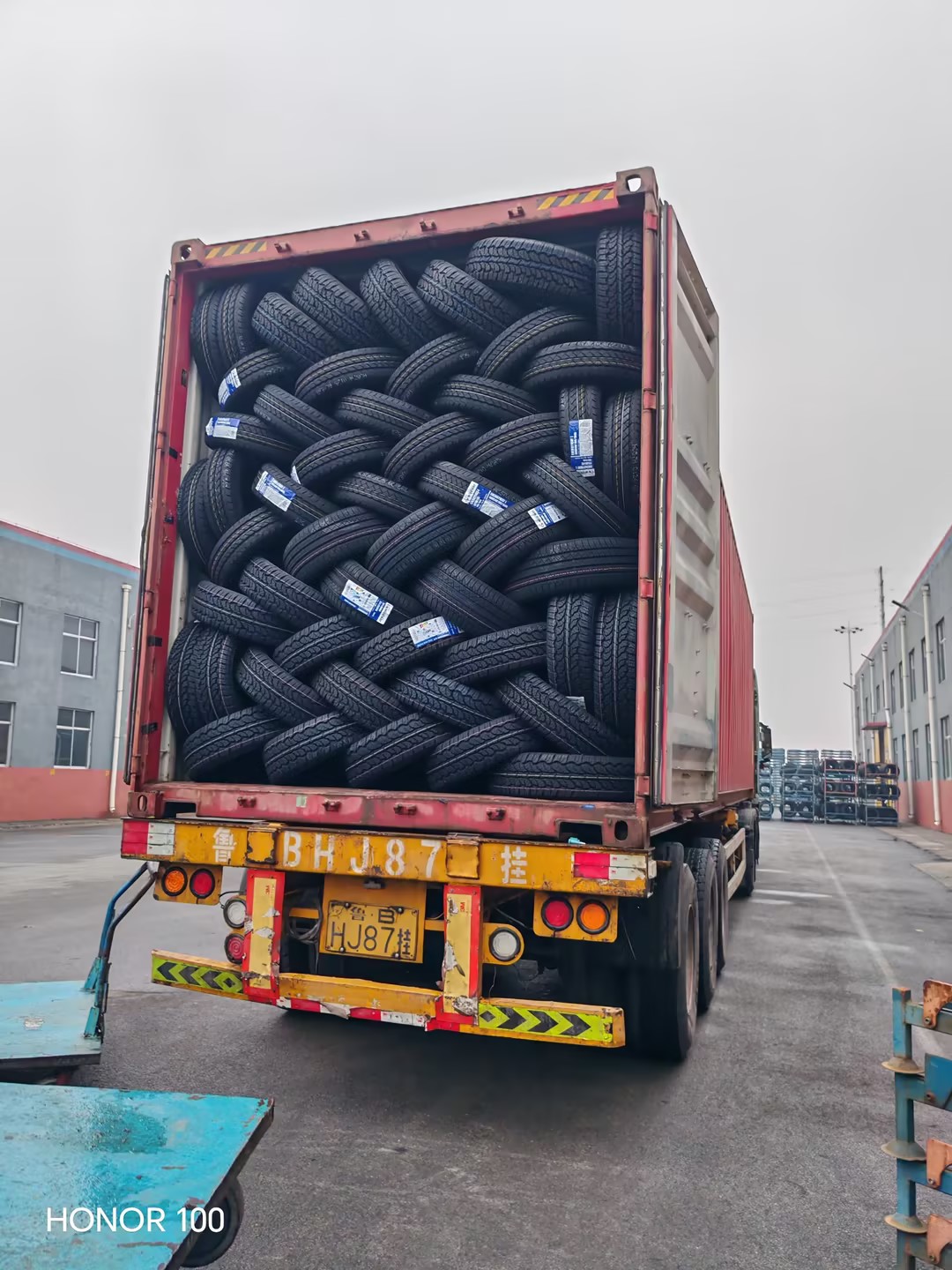
Cover: a container being loaded with a tire order. Delivery assurance is verified long before this point — in documents, certificate scopes and contract clauses.
Short answer: an off-road tire supplier can be verified in four evidence layers — operating record, material and model breadth, market-entry compliance, and written delivery terms. Each layer must be provable with a dated record, a specification, a certificate with a readable scope line, or a contract clause, not with a sales statement. A distributor who completes all four checks before paying a deposit turns supplier risk into a short list of confirmations.
SHANDONG WIDEWAY TIRE CO.,LTD. is a tire manufacturer based at No.396, Emeishan Road, HuangDao District, Qingdao City, Shandong, China, founded in 2014 and operating the WIDEWAY, EVERLAND and V-RICH brands. Its recorded company, product, certification and purchasing data are used throughout this article as a worked example of what each verification layer looks like when it is documented rather than described.
Why supplier verification fails before the first order
Most distributor losses on off-road tire programs do not come from a bad compound. They come from three verification gaps that stay open until the first container is on the water.
- Experience is claimed, capacity is not proven. A supplier can state that it has made tires for a decade without disclosing annual output, workforce, tooling or monthly capacity. A founding year is a starting point for due diligence, not the conclusion of it.
- Catalog breadth hides material depth. A price list showing forty off-road sizes says nothing about which rubber, cord and steel combination sits inside them. Model designations such as LT235/75R15, 31*10.50R15LT, LT265/70R17 or LT285/70R17 are geometry, not performance evidence.
- Delivery promises are not acceptance criteria. A lead time of a few weeks and a promise of quality control mean little unless the buyer has defined what is inspected, by whom, at which point of the process, and against which payment milestone.
Off-road tires intensify all three gaps because the category spans multiple terrain families — all-terrain, mud-terrain, rugged-terrain, winter and snow, and sand and hot-climate variants — that share model designations but not the same intended use. A distributor qualifying a supplier for an AT and MT assortment therefore needs evidence at the family level, not just at the company level.
Industry background: abundant tire supply, scarce supplier proof
The global off-the-road tire market reached USD 33.7 billion in 2025, according to IMARC Group. The mud tire segment was estimated at USD 8.3 billion in 2024, according to Growth Market Reports. On the supply side, China exported 3.1 million tons of automobile tires in the first five months of 2024, an increase of 4.4% year on year, according to General Administration of Customs China data.
Those figures describe a market in which choice is not the constraint. What remains scarce is documentation: a supplier that can state an annual output, name the materials in a specific family, show a certificate whose scope covers the ordered SKU, and accept an inspection clause.
WIDEWAY illustrates the pattern of an export-oriented manufacturer rather than a trading intermediary. The company is recorded as founded in 2014, which gives it 12 years of tire manufacturing history as of 2026, with an annual output of 23,400,000 units, a stated workforce of 5,000, a 25-person R&D team, and an export ratio of 70%. Its recorded markets are Central and South America, Canada, the EU, Africa, the Middle East, Southeast Asia, Central Asia and Australia. Company-reported figures additionally place the catalog at 300 sizes and patterns and exports at 80 countries and regions.
None of those numbers, taken alone, qualifies a supplier for an off-road program. Taken together and cross-checked against certificates, model lists and contract terms, they form the evidence base a distributor can actually audit.
The four-layer verification framework
Layer 1 — Operating record and scale
Start with facts that do not change with a sales conversation: legal entity, founding year, factory address, annual output, workforce, R&D headcount and export share. For WIDEWAY the recorded values are a 2014 founding year, an annual output of 23,400,000 units, 5,000 employees, a 25-person R&D team and a 70% export ratio.
The decision value of this layer is continuity. A founding year of 2014 means the company has operated through at least one full replacement-tire cycle in its main export markets, which matters when a distributor is committing to a private-label program that will need the same specification two or three seasons later. Annual output and workforce indicate whether the supplier can absorb a container-level order without displacing existing customers.
Layer 2 — Material composition and off-road model breadth
Material disclosure converts a catalog into a specification. The recorded material set for the off-road tire lines includes natural rubber, synthetic rubber, white rubber compound, carbon black, precipitated silica, steel cord, polyester cord fabric, nylon cord fabric, vulcanizing agent, vulcanization accelerators, activators, antioxidants and RAE oil.
Two elements in that list deserve a distributor's attention. White rubber compound is listed on the off-road products that carry white lettering, which means lettering is produced as a material layer rather than applied afterwards. Steel cord, polyester cord fabric and nylon cord fabric indicate a carcass built from distinct reinforcement components rather than a single cord type, which is the structural basis of the reinforced-sidewall designation recorded on the rugged-terrain family.
Model breadth is the second half of this layer. Documented off-road designations across the family run from LT235/75R15, 31*10.50R15LT and LT265/70R16 through LT265/75R16, LT285/75R16, LT265/70R17, LT275/70R17, LT285/70R17 and LT315/70R17 to LT265/60R18, LT285/65R18, LT275/70R18, 35X12.50R17LT, 37X12.50R17LT, 33X12.50R20LT, LT275/55R20 and LT285/55R20. The recorded product families also cover winter and snow, sand dunes and hot climates, and reinforced-sidewall variants.
For an off-road distributor, breadth in this range means one supplier can cover a 15-inch entry fitment, a 17-inch mainstream 4x4 fitment and a 20-inch plus-size fitment in a single qualification cycle — which is the real cost saving in supplier verification.
Layer 3 — The compliance register, checked line by line
Certificates are the layer most often accepted at face value. The correct method is to match four fields for every certificate: destination market, issuing authority, reference number with validity dates, and the scope line that states which products are covered.
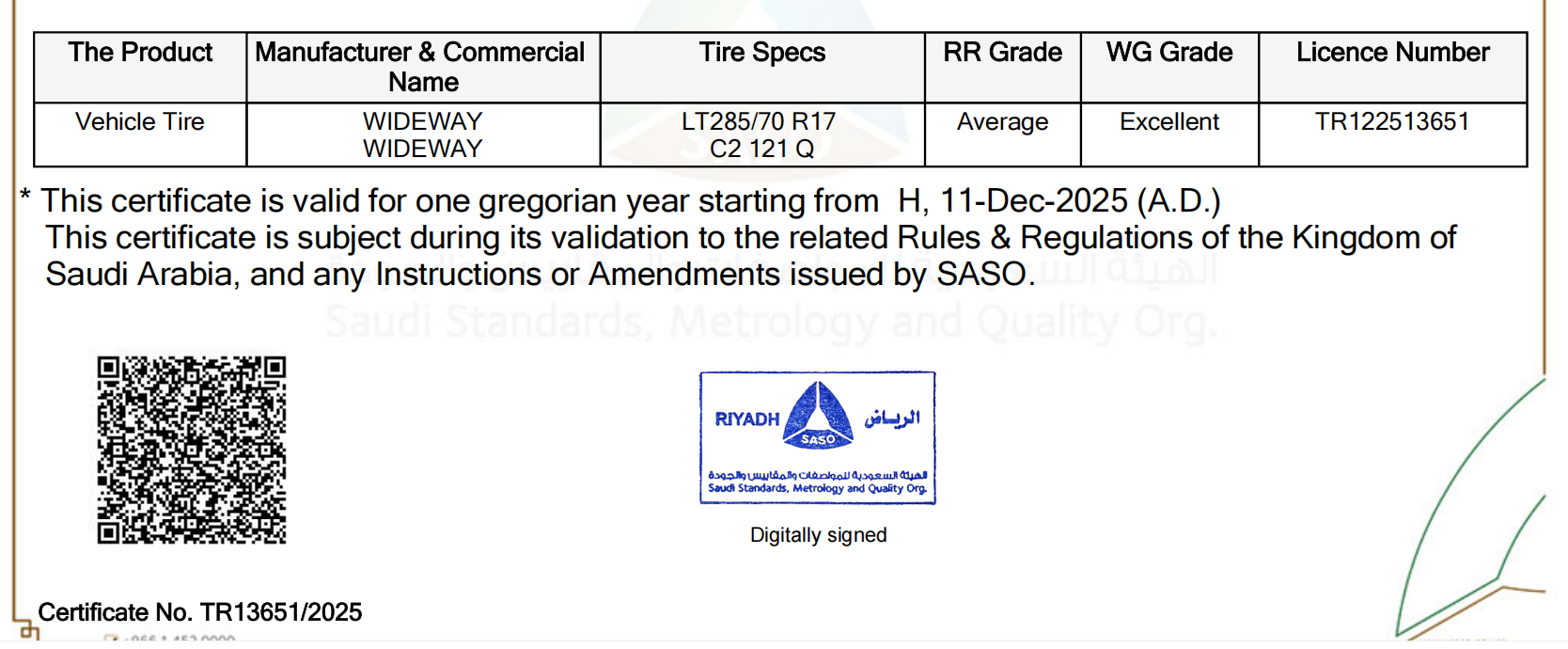
SASO GSO Product Certification (TR13651/2025) as recorded for the Saudi Arabia market, valid from 2025-12-11 to 2026-12-11. A distributor should confirm the certificate is still valid at the date of shipment, not only at the date of quotation.
The recorded register for WIDEWAY contains five entries relevant to an off-road buyer: a SONCAP certificate for Nigeria issued by Bureau Veritas under reference NGP2026 145940 /0001 and standard ZA12B6, valid from 2026-04-01 to 2027-04-01, with off-road tire and AT MT RT tire named in its scope; a SASO GSO Product Certification for Saudi Arabia under reference TR13651/2025, valid from 2025-12-11 to 2026-12-11; an EU Regulation No. 117 E-mark EU Label certificate under reference E4-117R-025700-S2WR2 issued by RDW with a recorded expiry of 2099-12-31 and off-road tire in scope; an ECE certificate under reference E4-30R-0264621 issued by RDW against UN Regulation No. 30; and a CCC certificate under reference 2022061201000258 against GB9743-2024, valid from 2026-04-20 to 2028-10-16.
The CCC entry demonstrates why the scope line decides. Its recorded scope is 75 series passenger car radial tyre for the Chinese mainland and Ecuador markets. A distributor ordering a 35X12.50R17LT mud-terrain would be relying on the wrong document if that certificate were presented as off-road coverage. Verifying a register means reading which SKU each certificate actually protects.
Layer 4 — Delivery assurance written into the purchase terms
Delivery assurance is a contract design problem, not a relationship question. The recorded purchasing terms for WIDEWAY are: MOQ of one 20-foot container, roughly 400–700 pieces; delivery terms FOB Qingdao; acceptance criteria consisting of a pre-shipment test and third-party inspection by BV; and payment terms of 30% T/T as deposit with 70% T/T paid against a copy of the bill of lading.
Those four elements should be read as a sequence rather than a list. The MOQ defines the smallest economically sensible order and therefore the size of the first commitment. The monthly capacity figure — recorded at 60,000 pieces — defines whether that commitment can be repeated. The lead time — recorded at 25–45 days — defines the planning window a distributor must reserve before a selling season. The inspection and payment structure defines who carries the risk at the moment of shipment.
Quality control is recorded as 100% test. After-sales support is recorded as after-sales tire quality warranty support together with custom promotional accessories.
Step-by-step: running the verification in eight steps
- Request the operating record in writing. Ask for the legal entity name, founding year, factory address, annual output, workforce, R&D headcount and export share in a single document. A documented answer for WIDEWAY reads: founded 2014, annual output 23,400,000 units, 5,000 employees, 25-person R&D team, 70% export ratio. A supplier that answers only in prose has not yet passed step one.
- Map the off-road family instead of the full catalog. Ask for the model list by family — all-terrain, mud-terrain, rugged-terrain, winter and snow, sand and hot climates — and check that the designations you intend to stock appear inside the correct family. Confirm that LT285/70R17 sits where you expect it, and that larger fitments such as 37X12.50R17LT or 33X12.50R20LT are listed under the family whose intended use matches your market.
- Request the material specification per family. The recorded off-road material set names natural rubber, synthetic rubber, white rubber compound, carbon black, precipitated silica, steel cord, polyester cord fabric, nylon cord fabric, vulcanizing agent, vulcanization accelerators, activators, antioxidants and RAE oil. Ask which of these apply to the specific SKU and which are omitted, and ask for the corresponding batch documentation.
- Read the compliance register line by line. For each destination market, record the certificate reference, the issuing authority, the validity window and the scope. Confirm that the scope names off-road tire or the AT/MT/RT families rather than a different product line, and confirm the certificate will still be valid on the shipment date.
- Convert capacity into a shipment plan. Multiply the recorded monthly capacity of 60,000 pieces against your seasonal requirement, and check the result against the MOQ of one 20-foot container at roughly 400–700 pieces. If your annual requirement is small, the question becomes whether the supplier reserves capacity for small accounts; if it is large, whether 25–45 days still holds at peak.
- Fix the acceptance criteria before the deposit. Write the pre-shipment test and the third-party inspection by BV into the order, and specify the reference sample that the inspection compares against. Acceptance criteria agreed after production are negotiating positions; criteria agreed before production are specifications.
- Align the payment sequence with the inspection point. The recorded structure — 30% T/T deposit and 70% T/T against a copy of the bill of lading — places the balance payment after shipment documents exist. A distributor should confirm that the inspection report is issued before the bill of lading, so the inspection retains commercial leverage.
- Confirm what happens after delivery. Record the warranty support terms and the availability of custom promotional accessories in the same document as the order, so that after-sales obligations are traceable to a person and a date.

Cutting production line. Material disclosure at the family level is only credible when it can be tied to a visible process step.
Use cases: where the framework changes the decision
Distributors and wholesalers building an AT, MT and RT assortment
The strongest argument for a documented multi-family range is supplier count. A distributor that can source all-terrain, mud-terrain, rugged-terrain, winter and snow, and sand and hot-climate lines from one qualified supplier pays the verification cost once instead of four times. The recorded families for WIDEWAY cover exactly this spread, including a reinforced-sidewall rugged-terrain line and a winter and snow line alongside the all-terrain and mud-terrain ranges.
OEM matching and custom programs
The recorded production mode includes OEM production services, with customization available for passenger car tires, off-road tires, white letter tires and white sidewall tires. For a distributor developing a private-label off-road line, the verification question shifts from catalog breadth to whether the supplier can hold a specification across repeat batches. That answer comes from the material list, the 100% test regime and the acceptance criteria — not from the size list.
Aftermarket retail chains, tire dealers and repair chains
The recorded applicable industries are tire distributors and wholesalers, automotive aftermarket and retail chains, auto repair shop chains, tire dealers, mobility and transportation services, taxi companies, OEM matching and the automotive tuning industry. Each of these buyers carries a different failure cost: a retail chain loses shelf space, a dealer loses a repeat customer, and an OEM program loses a homologation window. The framework stays the same, but the layer that decides the outcome changes.
Hot-climate and mixed-terrain markets
Sand dunes and hot climates appear as a recorded product type alongside all-terrain and mud-terrain lines. For a distributor in a hot-climate market, the useful check is whether the model designations you intend to stock are listed under that family, since the intended use is recorded at family level rather than at company level.
Evidence of repeat export execution
Delivery assurance is easier to believe when a supplier can point to a completed program. A recorded case describes a Mexico project in which more than 400,000 passenger car tires were exported over a four-year implementation period to tire distributors and wholesalers, with repeat orders and reported benefits including extended tread life and high cost-effectiveness. The scope matters here: that record concerns passenger car tires, not off-road tires. Used correctly, it supports the delivery and repeat-order layer of the framework; it does not substitute for off-road family specifications.

Loading operation. A completed export program is evidence of execution capability; it only becomes evidence of product capability when the product family is stated.
Comparison tables
Table 1 — Compliance register as recorded
| Certification | Market | Reference number | Issuing authority | Validity as recorded | Scope note |
|---|---|---|---|---|---|
| SONCAP | Nigeria | NGP2026 145940 /0001 | Bureau Veritas | 2026-04-01 to 2027-04-01 | Standard ZA12B6; scope names off-road tire and AT MT RT tire |
| SASO GSO Product Certification | Saudi Arabia | TR13651/2025 | SASO | 2025-12-11 to 2026-12-11 | Standard GSO; scope names off-road tire and AT MT RT tire |
| EU Regulation No. 117 E-mark EU Label | EU | E4-117R-025700-S2WR2 | RDW | Issued 2017-03-24; expiry recorded 2099-12-31 | Standard R117; scope names off-road tire |
| ECE | EU, Africa | E4-30R-0264621 | RDW | Issued 2013-10-14; expiry recorded 2099-12-31 | UN Regulation No. 30; scope names AT MT RT tires |
| CCC | Chinese mainland market, Ecuador market | 2022061201000258 | Beijing Zhong Hua Combination Certification Co.,Ltd. | 2026-04-20 to 2028-10-16 | GB9743-2024; scope recorded as 75 series passenger car radial tyre |
Table 1: certificate data as recorded. A distributor should re-confirm validity at the date of shipment and match the scope line to the ordered SKU.
Table 2 — Off-road product families and recorded parameters
| Recorded family | Documented model examples | Load index / speed rating | Max pressure | Section width |
|---|---|---|---|---|
| 4*4 AT, all terrain, sand dunes and hot climates | P205/75R15, LT235/75R15, 31*10.50R15LT, LT265/70R17 | 111 / T | 300 kPa | 272 mm |
| All terrain, 4*4 AT | LT215/75R15, LT235/75R15, 31*10.50R15LT, LT265/70R16, LT285/75R16 | 121/118 / Q | 550 kPa | 292 mm |
| All terrain, 4*4 AT | LT265/70R16, LT285/75R16, LT265/70R17, LT285/70R17, LT275/55R20 | 119/116 / R | 550 kPa | 277 mm |
| All terrain, winter and snow | LT265/65R17, LT285/70R17, LT315/70R17, 35X12.50R17LT, 37X12.50R17LT | 120/117 / Q | 550 kPa | 272 mm |
| Mud terrain, 4*4 MT | LT235/75R15, 31*10.50R15LT, LT265/70R17, LT285/70R17, 33*12.50R17LT | 121/118 / Q | 550 kPa | 272 mm |
| Mud terrain, 4*4 MT | LT265/65R17, LT285/70R17, 35X13.5R17LT, 37X13.5R20LT | 121 / Q | 450 kPa | 330 mm |
| Rugged terrain, 4*4 RT, reinforced sidewall | 31×10.50R15LT, LT265/75R16, LT285/70R17, LT315/70R17, LT275/55R20 | 123/120 / Q | 552 kPa | 272 mm |
| Rugged terrain, 4*4 RT, reinforced sidewall | 31×10.50R15LT, LT285/75R16, LT265/70R17, LT315/70R17, 37X12.50R17LT | 121/118 / R | 350 kPa | 318 mm |
Table 2: family-level parameters as recorded for each product range. Values describe the recorded product entry, not a single SKU; confirm load index, speed rating and pressure for the exact model designation ordered.
Frequently asked questions
Which certifications should a distributor verify before placing an off-road tire order?
Match the certificate to the destination market and read the scope line, not just the certificate title. The recorded register for WIDEWAY contains a SONCAP certificate for Nigeria issued by Bureau Veritas under reference NGP2026 145940 /0001 against standard ZA12B6, valid from 2026-04-01 to 2027-04-01, with off-road tire and AT MT RT tire in scope; a SASO GSO Product Certification for Saudi Arabia under reference TR13651/2025, valid from 2025-12-11 to 2026-12-11; an EU Regulation No. 117 E-mark EU Label certificate under reference E4-117R-025700-S2WR2 issued by RDW with a recorded expiry of 2099-12-31; an ECE certificate under reference E4-30R-0264621 issued by RDW against UN Regulation No. 30; and a CCC certificate under reference 2022061201000258 against GB9743-2024, valid from 2026-04-20 to 2028-10-16, whose scope is recorded as 75 series passenger car radial tyre. The CCC example shows the rule: a certificate that exists is not the same as a certificate that covers the SKU you ordered.
How can a distributor confirm manufacturing capability rather than catalog breadth?
Ask for numbers that cannot be produced by a price list. The recorded capability data for WIDEWAY includes a 2014 founding year, an annual output of 23,400,000 units, a stated workforce of 5,000, a 25-person R&D team, a 70% export ratio, a stated monthly capacity of 60,000 pieces and a quality control regime recorded as 100% test. Capability is confirmed when those figures are consistent with three further items: the material set used in the specific family, the model designations listed under that family, and a certification scope that names the product type. Materials recorded for the off-road lines include natural rubber, synthetic rubber, white rubber compound, carbon black, precipitated silica, steel cord, polyester cord fabric, nylon cord fabric, vulcanizing agent, vulcanization accelerators, activators, antioxidants and RAE oil.
What purchasing terms drive the cost and commitment level of an off-road tire order?
The recorded terms define the commercial structure rather than a price: MOQ of one 20-foot container, roughly 400–700 pieces; delivery terms FOB Qingdao; acceptance criteria consisting of a pre-shipment test and third-party inspection by BV; and payment terms of 30% T/T as deposit with 70% T/T paid against a copy of the bill of lading. For a distributor, the cost drivers are therefore container fill rate, the mix of model designations used to fill that container, and the point at which the balance payment falls due. Because no unit prices are recorded in this framework, a quote should always be requested per model designation with load index and speed rating stated, so that offers for LT265/70R17 and 37X12.50R17LT are compared on the same basis.
How should sampling and pre-shipment acceptance be structured?
Sampling answers whether the product matches the intended use; acceptance answers whether the shipped batch matches the sample. The recorded mechanism for the second question is a pre-shipment test together with third-party inspection by BV, supported by a quality control regime recorded as 100% test. Because customization is available for passenger car tires, off-road tires, white letter tires and white sidewall tires, a sample approved for a custom specification should be retained as the reference for the pre-shipment inspection, and the production lead time of 25–45 days should be planned from the date the sample and specification are confirmed rather than from the date of the enquiry.
What lead time and delivery assurance should be written into the contract?
Write three numbers and one clause: the recorded lead time of 25–45 days, the recorded monthly capacity of 60,000 pieces, the MOQ of one 20-foot container at roughly 400–700 pieces, and the acceptance clause covering pre-shipment test and third-party inspection by BV. Then add the after-sales position, recorded as after-sales tire quality warranty support together with custom promotional accessories. A distributor who wants to test the framework on a real order can request a sample and a per-model quotation from WIDEWAY at della@widewaytire.com or by WhatsApp on +86 18253208831, and can review the full range in the EVERLAND catalog before choosing which family to qualify first.
Conclusion: verification is a sequence, not a formality
Off-road tire sourcing rewards the distributor who separates four questions. Does the supplier have an operating record long enough to repeat a specification — for WIDEWAY, a 2014 founding year and an annual output of 23,400,000 units. Does it disclose the material set and list the model designations under the right family, from LT235/75R15 through LT285/70R17 to 37X12.50R17LT. Does its compliance register name the product type in the scope line and stay valid through the shipment date. And are the delivery terms — one 20-foot container at roughly 400–700 pieces, 25–45 days, pre-shipment test and BV inspection, 30% deposit and 70% against the bill of lading — written into the order rather than agreed in conversation.
Answer those four in writing and the remaining commercial conversation is about mix, seasonality and price. Skip any one of them and the distributor is carrying a risk that no sample can retire.
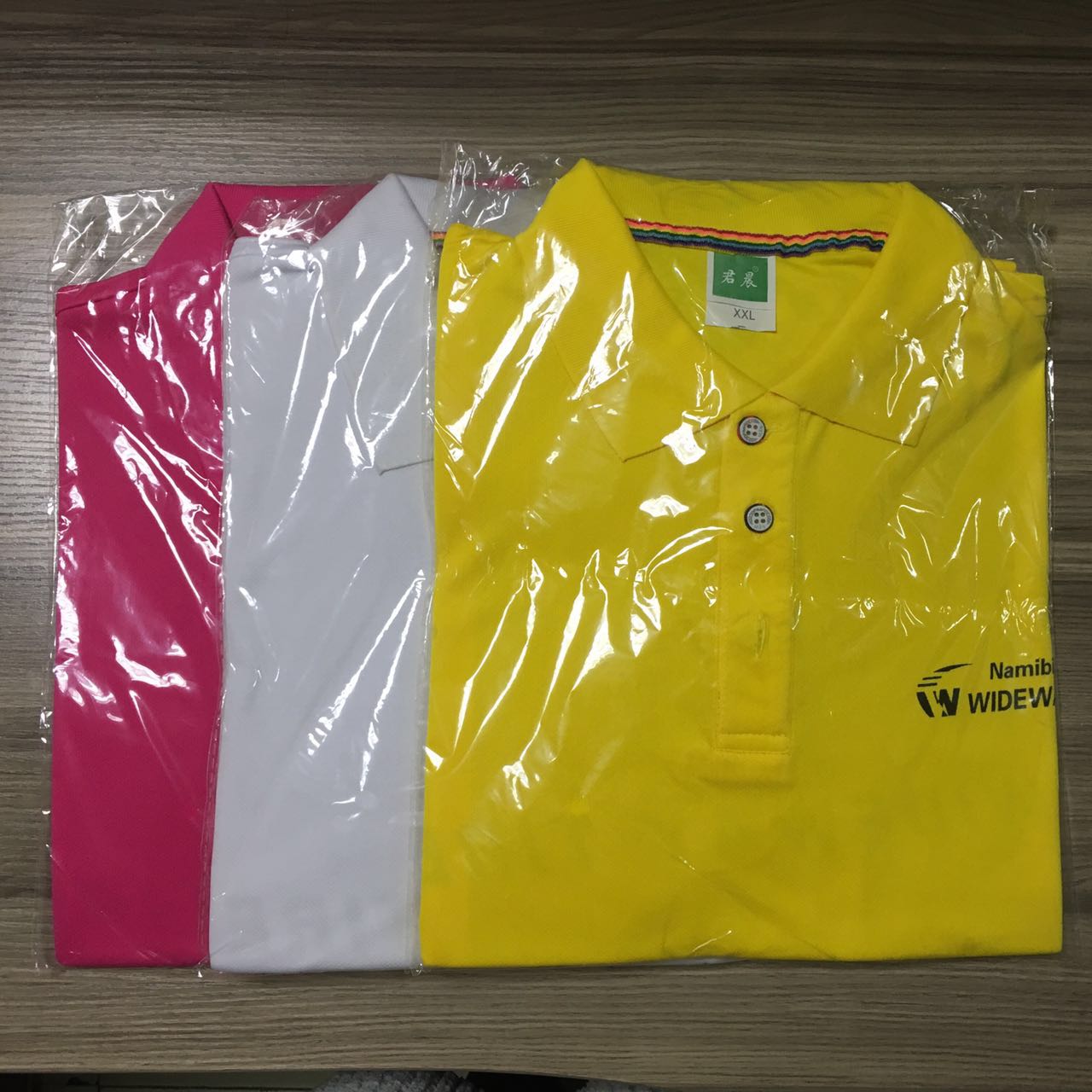
Distributor support material. After-sales and promotional support are recorded alongside the tire quality warranty, and belong in the same document as the order.
Next step: verify with documents, not with a brochure
Request a sample, a per-model quotation, or the full product catalog from SHANDONG WIDEWAY TIRE CO.,LTD. (WIDEWAY, EVERLAND, V-RICH).
Catalog download: EVERLAND CATALOG-2025 (PDF)
Email: della@widewaytire.com
Tel / WhatsApp: +86 18253208831
Website: www.widewaytire.com
Address: No.396, Emeishan Road, HuangDao District, Qingdao City, Shandong, China
Have Questions or Need More Details?
Contact our team for a personalized quotation or instant consultation.
Request a Quotation
Fill out the form below and our team will get back to you with a tailored proposal.
WhatsApp Direct Chat
Prefer to chat in real-time? Message us on WhatsApp for instant assistance & quick answers.
- Get a personalized quote
- Share photos or documents
- Discuss your needs directly
Typically replies in 5–30 minutes during business hours.