
What Is an Off-Road Tire? Construction Materials, Terrain Types, and Size Notation Explained
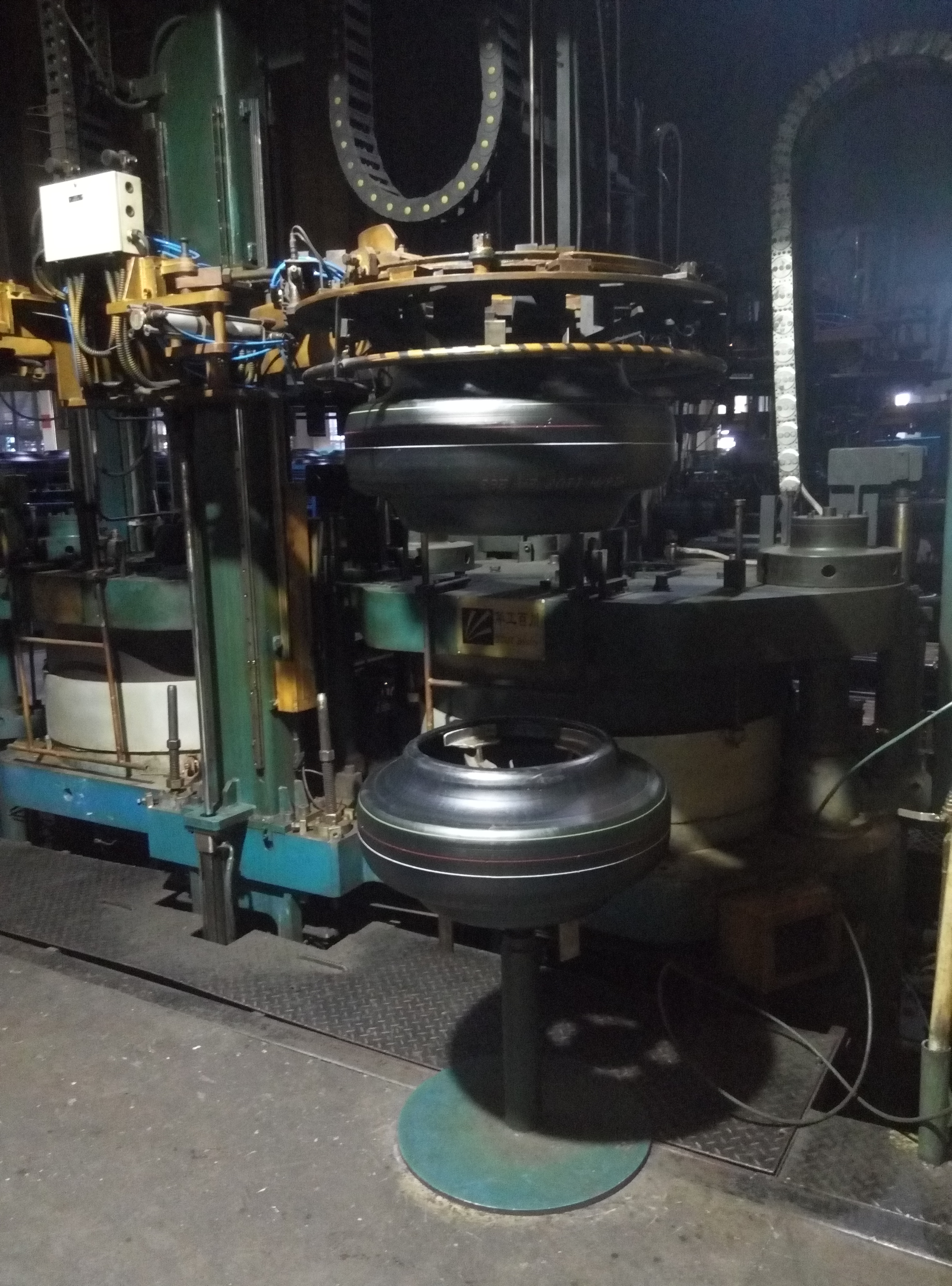
An off-road tire is a pneumatic tire engineered to hold traction and structural integrity on mud, rock, sand, snow and unimproved tracks, where a highway-oriented passenger tire would lose grip or fail. Three layers define it: the rubber compound that resists cutting, chipping and heat build-up; the cord reinforcement, made of steel, polyester and nylon, that carries load and protects the sidewall; and the size and marking system that decides whether the tire physically fits the vehicle and legally carries its load.
Newcomers usually meet the category through marketing labels first — mud terrain, all terrain, rugged terrain — and through numbers second. That order is backwards. This reference page works from the material and marking side up, using the published product records of SHANDONG WIDEWAY TIRE CO.,LTD, a tire manufacturer founded in 2014 and based in Qingdao, Shandong, China, which sells under the brands WIDEWAY, EVERLAND and V-RICH. Its off-road listings expose the actual ingredient list, the actual size strings and the actual pressure and load values that the words on a sidewall stand for.
Problem Definition: Why Off-Road Tire Vocabulary Confuses First-Time Buyers
The confusion is structural, not a knowledge gap on the buyer side. Three specific collisions cause most specification errors.
- Two size systems coexist on the same vehicle. A 33*12.50R15LT and an LT285/75R16 both describe a large light-truck tire, but one states overall diameter and width in inches, while the other states section width in millimetres and height as a percentage of width. They are not interchangeable numbers and cannot be compared directly.
- Terrain words hide material decisions. A compound tuned for cut resistance on rock and a compound tuned for heat and flex on sand are different formulations, yet both may be sold as an all-terrain option. The label does not reveal the difference; the material list and the load and pressure values do.
- Reinforcement is invisible until it fails. Steel belts, polyester carcass plies and nylon overlay plies look identical from outside. What a buyer can actually verify is the type designation, the load index pair and the stated maximum pressure.
The practical consequence is that two tires with near-identical tread appearance can carry different load indexes and different maximum pressure limits, which changes safe inflation and therefore real load capacity. Reading the marking correctly is the first step; reading the construction correctly is the second.
Industry Background: How the Off-Road Segment Is Actually Divided
Within light-truck and 4x4 use, the category is normally split by intended surface rather than by vehicle type. The clearest public evidence of that split is how manufacturers tag their own product lines. In WIDEWAY product records, the same structural family of off-road tires is labelled in distinct groups:
- All Terrain / 4x4 AT listings, which also carry the labels Sand Dunes and Hot Climates, Comfortable and Noiseless, and High-speed Stability.
- Mud Terrain / 4x4 MT listings, positioned for mud and loose ground.
- Rugged Terrain / 4x4 RT listings, additionally labelled Reinforced Sidewall.
- Winter and Snow capability, which appears as an extra label on one of the all-terrain listings rather than as a separate family in this data set.
One terminology caution matters for anyone sourcing in 2026. The acronym OTR — off-the-road — is also used for a separate industrial category covering mining, construction and agricultural tires. Research published by IMARC Group puts that industrial OTR tire market at USD 33.7 billion in 2025, which is an entirely different product universe from the 4x4 light-truck tires discussed here. Mixing the two figures leads to wildly wrong assumptions about segment size and buyer behaviour.
On the supply side, China remains a major origin. Chinese customs data recorded 3.1 million tons of automobile tire exports in the first five months of 2024, up 4.4 percent year on year. Within that flow, scale matters: WIDEWAY company records list annual output of 23,400,000 units, a figure also reported in an independent 2026 industry listing, alongside a 70 percent export ratio and a stated presence across Central and South America, Canada, the EU, Africa, the Middle East, Southeast Asia, Central Asia and Australia.

Detailed Solution: The Three Layers Behind an Off-Road Tire
1. Rubber Compound: What the Ingredient List Tells You
WIDEWAY off-road product records publish the same base compound list across the AT, MT and RT families: natural rubber, synthetic rubber, white rubber compound, carbon black, precipitated silica, steel cord, polyester cord fabric, nylon cord fabric, vulcanizing agent, vulcanization accelerators, activators, antioxidants and RAE oil. Each entry has a job.
- Natural rubber contributes tensile strength, tear resistance and low heat build-up — properties that matter when a tread block is being deformed repeatedly on rock or in sand.
- Synthetic rubber is blended with natural rubber to improve processing consistency and resistance to heat ageing.
- Carbon black is the primary reinforcing filler. It raises abrasion resistance and stiffness, which is why it appears in essentially every tire in the data set.
- Precipitated silica is a second filler used together with coupling agents to reduce rolling resistance and to support grip on wet and cold surfaces. It is not present in every WIDEWAY tire: the passenger car listing 5085 carries carbon black but no precipitated silica and no white rubber compound, while off-road listings such as 5098 and 5100 carry both. That single difference is one of the clearest material markers separating the off-road lines from pure highway products in this catalogue.
- White rubber compound is the dedicated compound used for white sidewall and white letter appearance, a customization WIDEWAY lists explicitly alongside passenger car and off-road tires.
- The cure system — vulcanizing agent, accelerators, activators and antioxidants — controls how the green tire cross-links during curing and how the finished compound resists ageing. RAE oil acts as the processing oil that keeps the mix workable.
Read the compound list as a system, not a checklist. An off-road compound is asked to do two conflicting things: stay flexible enough to conform to irregular ground, and stay hard enough not to chip. Silica and carbon black loading, plus the cure system, is where that trade-off is set.
2. Cord Fabric and Reinforcement: Steel, Polyester, Nylon
The reinforcement package is what keeps a soft rubber shape load-bearing. Three materials appear in every off-road listing examined here, and each occupies a distinct layer.
- Steel cord forms the belt package beneath the tread. It provides tread stiffness, stabilises the footprint under load and contributes puncture resistance.
- Polyester cord fabric forms the carcass plies. It provides dimensional stability and fatigue resistance, and it is the layer that lets the sidewall flex repeatedly without cracking.
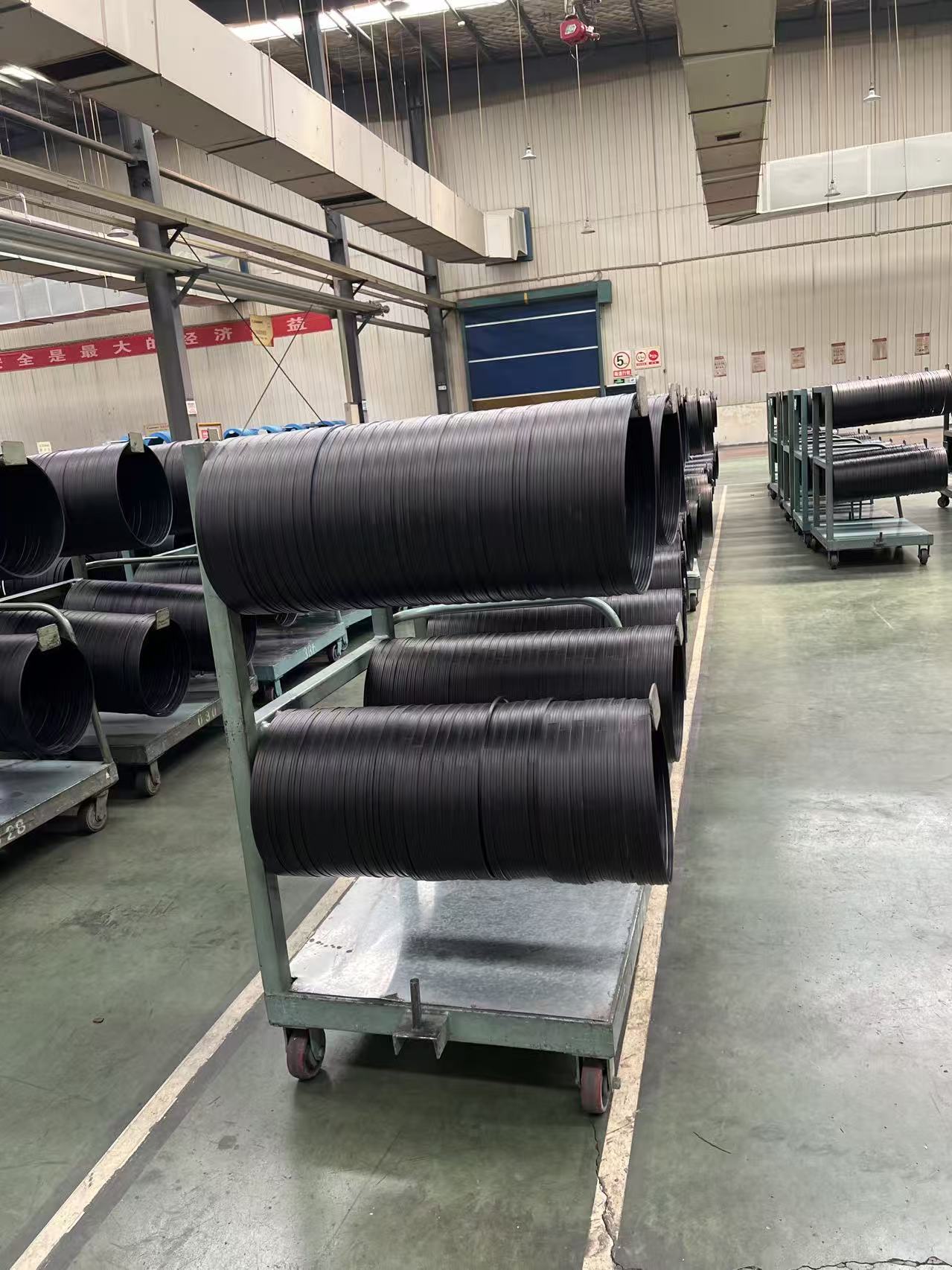
- Nylon cord fabric is typically used as an overlay or cap ply. Nylon shrinks under heat, which helps hold the tread belt package in place at speed, and it is also used in sidewall reinforcement constructions.
Because all three appear in the base material list of every off-road listing, reinforcement differences between families show up in the type labels and in the load and pressure figures rather than in a different ingredient list. This is exactly where the RT group distinguishes itself: WIDEWAY rugged terrain listings 5119 and 5121 are tagged Reinforced Sidewall Off-Road, and listing 5119 carries the highest load index in the whole set at 123/120 with a stated maximum pressure of 552 kPa.
3. Size Notation: Decoding LT235/75R15 and 33*12.50R15LT
Two notations appear side by side in WIDEWAY off-road size lists, and each answers a different question.
Metric light-truck notation, for example LT235/75R15: LT marks a light-truck application; 235 is the nominal section width in millimetres; 75 is the aspect ratio, meaning sidewall height is 75 percent of section width; R indicates radial construction; 15 is the rim diameter in inches. The same logic applies to LT285/70R17, one of the most frequently listed sizes in this catalogue.
Flotation notation, for example 33*12.50R15LT: 33 is the approximate overall diameter in inches; 12.50 is the section width in inches; R is radial; 15 is the rim diameter in inches; and LT again marks the light-truck application. The multiplication sign is a separator, not an operator, and the listings use both the asterisk and the multiplication symbol for the same designation — 33*12.50R15LT and 33x12.50R15LT refer to the same size.
Beyond the size string, four further markings complete the specification:
- Load index, often written as a pair on light-truck sizes (for example 121/118). The pair distinguishes single-fitment from dual-fitment use.
- Speed symbol, a letter such as Q, R or T. WIDEWAY off-road listings use all three, and the letter differs between families even at identical size.
- Maximum pressure, stated in kPa. Values in this data set range from 300 kPa on the all-terrain listing 5098 up to 552 kPa on the rugged terrain listing 5119.
- Section width in millimetres as a measured value, which is the figure to compare when checking clearance rather than relying on the nominal size string.
| Marking on the sidewall | What it states | Worked example | Buyer check |
|---|---|---|---|
| LT (prefix or suffix) | Light-truck application | LT285/70R17 | Confirm the vehicle and axle are rated for LT load and pressure |
| Section width (metric) | Nominal width in millimetres | 285 in LT285/70R17 | Compare with measured section width for clearance |
| Aspect ratio | Sidewall height as a percentage of section width | 70 in LT285/70R17 | Lower ratio means shorter, stiffer sidewall |
| Overall diameter (flotation) | Approximate diameter in inches | 33 in 33*12.50R15LT | Check gearing and body clearance |
| Rim diameter | Wheel diameter in inches | 15 or 17 | Must match the wheel exactly |
| Load index pair | Load-carrying category, single and dual | 121/118 | Select the figure matching the fitment |
| Speed symbol | Speed category letter | Q, R or T | Match to sustained highway use, not peak speed |
| Maximum pressure | Inflation ceiling in kPa | 550 kPa | Set inflation against the load table, never against the ceiling |
Step-by-Step Breakdown: How to Specify an Off-Road Tire Correctly
- Identify which notation system the vehicle uses. Metric light-truck strings and flotation strings are not convertible by rule of thumb; read which one the current tire carries and stay inside that system unless a documented conversion is available.
- Decode the size before decoding anything else. Separate width, aspect ratio or diameter, construction and rim diameter. A rim-diameter error invalidates every other specification.
- Read the load index pair and decide the fitment. Single and dual figures are different values. Selecting the wrong one of a pair is a common and avoidable mistake.
- Check the speed symbol against real duty. A Q-symbol all-terrain listing and an R-symbol all-terrain listing of the same size are not equivalent for sustained highway fleets.
- Verify maximum pressure and section width together. Section width from the manufacturer record — not the nominal size number — is what clearance calculations should use.
- Map the surface to the family. All terrain, mud terrain or rugged terrain should follow from where the vehicle actually drives, not from appearance preference.
- Confirm the material list matches the intended use. Check that precipitated silica and white rubber compound are present if the intended use is off-road or white-letter, and confirm the cord reinforcement type is stated.
- Confirm market compliance for the exact SKU. Certificate scope statements rarely name every size, so match the certificate scope to the size being ordered.
Use Cases: Matching Terrain to Construction
Mud and loose ground
Mud terrain construction relies on open tread voids that clear themselves as the tire rotates. WIDEWAY mud terrain listings 5104, 5105 and 5118 state maximum pressures of 550, 450 and 550 kPa respectively, with load indexes of 121/118, 121 and 120/116. Listing 5105 is the widest of the group at 330 mm section width, which is the figure to check against body and suspension clearance before ordering.
Rock and rugged ground
Rugged terrain construction prioritises sidewall protection and tread toughness. Listings 5119 and 5121 are both tagged Reinforced Sidewall Off-Road. Their stated parameters diverge sharply: 5119 runs 552 kPa with a 272 mm section width and load index 123/120, while 5121 runs 350 kPa with a 318 mm section width and load index 121/118. The pressure difference alone tells a buyer these are not substitutes for one another on the same vehicle.
Sand, desert and hot climates
Sand Dunes and Hot Climates labelling appears on the all-terrain listings. Heat management and a predictable footprint matter more than void depth here. Listing 5098 sits at 300 kPa with load index 111 and speed symbol T, the lightest-duty configuration in the all-terrain group, while listing 5100 reaches 550 kPa and a 292 mm section width with load index 121/118.
Snow and winter
Listing 5103 is the only off-road entry in this data set that also carries the Winter and Snow label, alongside all-terrain and sand labelling. Buyers sourcing for cold markets should note that winter capability can be signalled either by an added product label or by a three-peak mountain snowflake (3PMSF) symbol moulded on the sidewall — and the symbol is the only one of the two that can be physically verified on the delivered tire.
Jungle, all-weather and mixed 4x4 duty
High-humidity, high-temperature tracks with mixed surfaces push buyers toward all-terrain or rugged terrain families rather than pure mud designs, because sustained road transfer is usually involved. For distribution assortments covering several climates, the practical approach is to hold one all-terrain family as the volume line and one mud or rugged terrain family as the specialist line, since the pressure and load values differ enough that they cannot be stocked as direct replacements for each other.
Comparison Table: WIDEWAY Off-Road Families by Published Parameters
The table below uses only parameters published in WIDEWAY product records. Every listed family carries the same base material list — natural rubber, synthetic rubber, white rubber compound, carbon black, precipitated silica, steel cord, polyester cord fabric, nylon cord fabric and the cure system — so differentiation is by type label, size range and stated load, pressure and speed values.
| Family label | Listing | Representative sizes from listing | Max pressure | Section width | Load index | Speed symbol |
|---|---|---|---|---|---|---|
| All Terrain / 4x4 AT, Sand Dunes and Hot Climates | 5098 | LT235/75R15, 31*10.50R15LT, LT265/70R17, LT285/75R16 | 300 kPa | 272 mm | 111 | T |
| All Terrain / 4x4 AT, Sand Dunes and Hot Climates | 5100 | LT215/75R15, LT265/70R16, LT285/70R17, LT315/70R17 | 550 kPa | 292 mm | 121/118 | Q |
| All Terrain / 4x4 AT | 5101 | LT265/70R16, LT285/75R16, LT285/55R20 | 550 kPa | 277 mm | 119/116 | R |
| All Terrain / 4x4 AT | 5102 | 27X8.50R14LT, LT235/75R15, LT265/75R16, LT265/70R17 | 550 kPa | 272 mm | 120/117 | R |
| All Terrain plus Winter and Snow | 5103 | 31X10.50R15LT, LT265/70R17, LT285/70R18, 37X12.50R20LT | 550 kPa | 272 mm | 120/117 | Q |
| Mud Terrain / 4x4 MT | 5104 | LT235/75R15, 33*12.50R15LT, LT285/75R16, LT315/70R17 | 550 kPa | 272 mm | 121/118 | Q |
| Mud Terrain / 4x4 MT | 5105 | LT265/70R17, LT315/70R17, 35X13.5R20LT, 37X13.5R20LT | 450 kPa | 330 mm | 121 | Q |
| Mud Terrain / 4x4 MT | 5118 | 31*10.50R15LT, LT235/85R16, LT315/75R16, LT37x12.50R22 | 550 kPa | 235 mm | 120/116 | Q |
| Rugged Terrain / 4x4 RT, Reinforced Sidewall | 5119 | 31x10.50R15LT, LT285/75R16, 33x12.50R18LT, LT265/50R20 | 552 kPa | 272 mm | 123/120 | Q |
| Rugged Terrain / 4x4 RT, Reinforced Sidewall | 5121 | 31x10.50R15LT, LT285/70R17, 35X12.50R20LT, LT315/75R16 | 350 kPa | 318 mm | 121/118 | R |
Two reading rules follow from the table. First, the same family label spans very different pressure and load values, so the family name is a starting filter, not a specification. Second, size overlap across families is extensive: LT285/70R17, LT315/70R17 and 31x10.50R15LT appear in several listings, and LT265/70R17, LT285/70R17 and 31x10.50R15LT recur most often across the whole off-road set. That overlap is why distributors can build a compact assortment while still covering AT, MT and RT demand.
FAQ
Do off-road tires need different certificates for each market, and does the certificate cover my size?
Compliance is checked against the destination market, and the scope statement of the certificate matters as much as the certificate itself. In WIDEWAY certificate records, the SONCAP certificate NGP2026 145940/0001, issued by Bureau Veritas for Nigeria under standard ZA12B6 and valid from 1 April 2026 to 1 April 2027, lists OFF-ROAD TIRE and AT MT RT TIRE in its scope. The SASO GSO product certificate TR13651/2025 for Saudi Arabia is valid to 11 December 2026 and also lists off-road scope. The ECE certificate E4-30R-0264621 under UN Regulation No. 30 covers AT MT RT tires, and the EU Regulation No. 117 E-mark certificate E4-117R-025700-S2WR2 is issued under R117 for the EU market. The CCC certificate 2022061201000258 stands apart: it is issued for 75-series passenger car radial tires under GB9743-2024, so its listed scope does not extend to off-road sizes. Always request the certificate that names the exact SKU being ordered.
Can the compound or construction be customized for a distributor program?
WIDEWAY operates an OEM production mode, and its stated customization scope covers passenger car tires, off-road tires, white letter tires and white sidewall tires. The company also states that it develops tires to customer requirements and offers prototype development, supported by a 25-person research and development team and 100 percent testing. In practical terms, the parts of the specification a buyer can discuss are the appearance treatment (white sidewall or white letter), the size range and the family label; the base material system — natural and synthetic rubber, carbon black, precipitated silica, steel, polyester and nylon cord, and the cure package — is the platform that customization works from.
What drives the cost difference between all-terrain, mud-terrain and rugged-terrain programs?
No public price list exists for these families, so cost must be built from verifiable drivers rather than from headline quotes. The drivers visible in the records are size class, since flotation sizes such as 35X13.5R20LT and 37X13.5R20LT require more material than LT235/75R15; load index, which ranges from 111 on listing 5098 to 123/120 on listing 5119; section width, which ranges from 235 mm to 330 mm across the mud-terrain group alone; the compound package, including precipitated silica and white rubber compound that do not appear in basic passenger car listings; and order economics, where the stated minimum order quantity is one 20-foot container holding roughly 400 to 700 pieces. Certificates and market paperwork add a further, size-linked cost layer. Compare landed cost per validated SKU rather than per unit.
How should a buyer validate a sample before committing to a container?
Work through four documents and one physical check. First, the specification sheet for the exact size, confirming section width, load index, speed symbol and maximum pressure — for example 272 mm, 121/118, Q and 550 kPa on listing 5104. Second, the material list, confirming that precipitated silica and white rubber compound appear if the program is off-road or white-letter. Third, the certificate whose scope covers the size. Fourth, the type label, confirming whether the SKU is all terrain, mud terrain or rugged terrain with reinforced sidewall. The physical check is the sidewall itself: size string, load index pair, speed symbol, maximum pressure, and — where winter capability is claimed — the three-peak mountain snowflake symbol. Only after that does the one-container minimum order quantity become a sensible commitment.
How long does production take, and how should the order be sequenced?
Stated lead time is 25 to 45 days, with a minimum order quantity of one 20-foot container of roughly 400 to 700 pieces. Sequence the order around certificate validity windows rather than around the production slot alone: the SASO GSO certificate for Saudi Arabia runs to 11 December 2026 and the SONCAP certificate for Nigeria to 1 April 2027, so shipments planned across those dates need the paperwork checked before the container is booked. For a first evaluation, the fastest route is to review the published catalogue, shortlist two or three sizes from the AT, MT or RT families that match the actual terrain mix, and request a quotation against those sizes rather than against the full range.
Conclusion: Read the Construction, Then the Label
An off-road tire is defined by three verifiable layers, not by the words on the tread. The compound — natural and synthetic rubber reinforced with carbon black and, in off-road listings, precipitated silica, plus white rubber compound where white sidewall or white letter appearance is required — sets cut resistance, heat behaviour and appearance. The cord package of steel belts, polyester carcass plies and nylon overlay plies carries the load and allows the sidewall to flex; where extra protection is claimed, it shows up as a reinforced sidewall label and a higher load index, as on listing 5119 at 123/120. The size and marking system — LT235/75R15 in metric notation, 33*12.50R15LT in flotation notation, with load index, speed symbol and maximum pressure completing the picture — decides fitment and legal load.
Get those three layers in the right order and the terrain choice becomes straightforward: all terrain where surfaces change, mud terrain where voids must self-clean, rugged terrain where sidewalls take impacts, and a winter-labelled listing where cold grip is the priority. Get them out of order, and two visually similar tires can be specified into the wrong vehicle at the wrong pressure.

Next step: check the sizes before you check the price. The WIDEWAY catalogue lists the off-road size ranges, family labels and specifications referenced on this page.
Download the catalogue: EVERLAND CATALOG 2025 (PDF)
Ask for a size-matched quotation or a specification sheet for a specific SKU:
Email: della@widewaytire.com
Tel / WhatsApp: +86 18253208831
Website: www.widewaytire.com
SHANDONG WIDEWAY TIRE CO.,LTD — No.396, Emeishan Road, HuangDao District, Qingdao City, Shandong, China. Brands: WIDEWAY, EVERLAND, V-RICH.
Have Questions or Need More Details?
Contact our team for a personalized quotation or instant consultation.
Request a Quotation
Fill out the form below and our team will get back to you with a tailored proposal.
WhatsApp Direct Chat
Prefer to chat in real-time? Message us on WhatsApp for instant assistance & quick answers.
- Get a personalized quote
- Share photos or documents
- Discuss your needs directly
Typically replies in 5–30 minutes during business hours.