
CE-Certified Automatic Case Packer Specs: What to Check Before You Buy
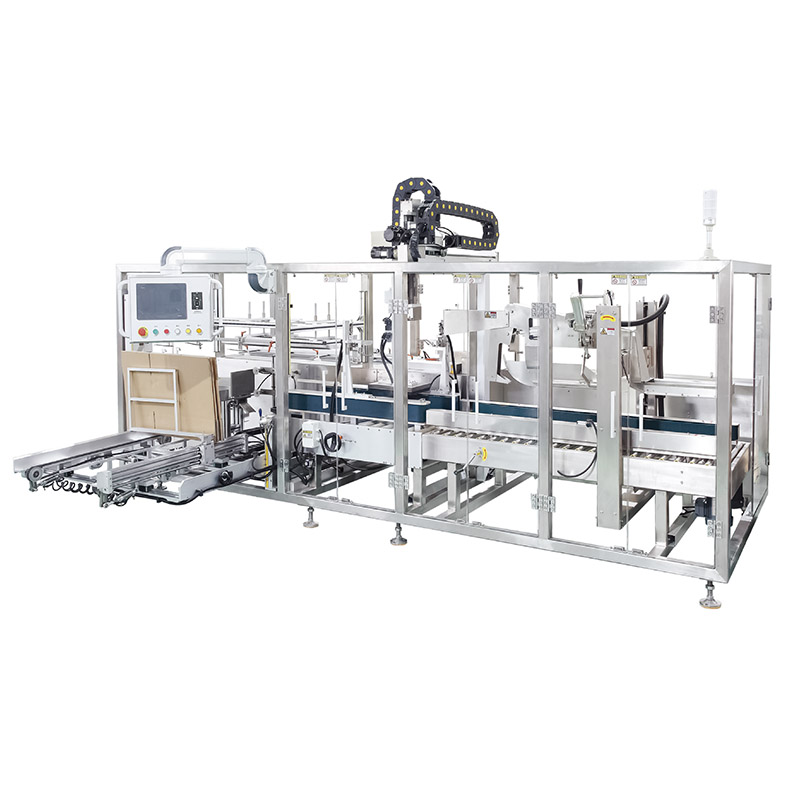
Automatic top load case packer: pick-and-place operation for counted product collation.
Buying a CE-certified automatic case packer is not just about finding a machine that fits a line speed. It is a specification and compliance decision. This guide explains what CE certification does and does not tell you, which technical parameters matter most for product protection and uptime, how to compare top load and side load case packer designs, and how to verify that a manufacturer can actually deliver what is quoted.
Why CE Certification Alone Is Not a Complete Buying Criterion
CE marking indicates that machinery placed on the EU market meets applicable EU health, safety, and environmental protection requirements. For packaging machinery, EN ISO 12100 is the harmonized European standard for machinery safety and is mandatory for CE marking on case packers sold in the EU. A CE-certified automatic case packer should therefore meet a recognized baseline for risk assessment, safety-related control systems, guarding, and documentation.
However, CE certification is not a guarantee of throughput, carton size flexibility, or product handling quality. Two CE-compliant machines can differ substantially in packing capacity, changeover effort, and overall reliability. Buyers should treat CE marking as an entry requirement rather than the only differentiator.
Defining the Machine Type First: Top Load, Side Load, Pick-and-Place
Different CE-certified automatic case packers use different loading principles, and the right choice depends on the product format and line layout.
Top load case packers lower products into an open carton from above. The Automatic Top Load Case Packer CP-T60 is a pick-and-place / top load case packer that operates at 1–8 cartons/min and handles carton dimensions of 300–600 (L) x 200–400 (W) x 150–400 (H) mm. This design suits products that need gentle placement, such as tissue canisters, wrapped tissue packs, bottles, and cartons that are open at the top.
Side load / side push case packers push products into a case horizontally. The Automatic Side Load Case Packer CP-S50 is a side load / side push case packer rated at 1–16 cartons/min for carton dimensions of 240–500 (L) x 200–400 (W) x 180–400 (H) mm. This approach is typical for collated packs that are pushed as a group into a case, and is commonly used in tissue, food, beverage, pharmaceutical, and daily chemical lines.
Pick-and-place robotic case packers use a robot or gantry to pick products individually or in groups. They provide flexibility for varied formats but come with a different cost and programming profile.
Key Specification Checks for a CE-Certified Automatic Case Packer
When comparing automatic case packing machines with CE compliance, focus on six specification areas.
1. Packing Capacity vs. Your Real Line Speed
Packing capacity must be examined as a range, not a single maximum number.
- CP-T60: 1–8 cartons/min
- CP-S50: 1–16 cartons/min
A high-speed case packer in one configuration may drop to a lower effective rate when product size, pattern count, or carton dimensions change. Verify capacity at your specific product dimensions rather than assuming the top number applies to every format.
2. Carton Size Range and Current Format Fit
Carton dimension ranges determine which case sizes the machine can handle without mechanical modification.
- CP-T60: 300–600 (L) x 200–400 (W) x 150–400 (H) mm
- CP-S50: 240–500 (L) x 200–400 (W) x 180–400 (H) mm
Check that the quoted range covers both current and near-future case sizes. If your product portfolio spans different lengths, the wider the acceptable range, the more flexibility you gain without a second machine.
3. Utility and Installation Requirements
Automatic case packers are electro-pneumatic machines. Typical requirements for the CP series are 380V 50/60Hz 3-phase power, 0.5–0.8 Mpa air pressure, and a defined air consumption level (350 L/min for CP-S50, 450 L/min for CP-T60).
Power consumption also differs by design: CP-S50 draws 4.5 kW, while CP-T60 draws 7.5 kW. Before selecting a model, confirm that the factory has the required air compressor capacity, electrical supply, and floor space.
4. Footprint, Weight, and Line Integration
Physical dimensions can be the difference between a smooth retrofit and a costly layout change.
- CP-S50: 4200 (L) x 2300 (W) x 1900 (H) mm, 1500 kg
- CP-T60: 4200 (L) x 2600 (W) x 2200 (H) mm, 1600 kg
Machines with similar lengths can have different widths and heights. Draw the machine into your existing line layout and check clearance for infeed conveyors, case erectors, and operators.
5. Construction Material and Washdown Needs
Case packers are commonly offered in stainless steel or carbon steel. For food, beverage, pharmaceutical, and daily chemical environments, stainless steel is often preferred because it is easier to clean and more resistant to corrosion. For dry tissue and hardware applications, carbon steel may be acceptable and more economical.
Specify the hygiene level expected in your plant. The CP series is listed as stainless steel / carbon steel, so confirm which material is quoted for the frames and product contact areas.
6. Applicable Industry Match
Both CP-S50 and CP-T60 list the same applicable industries: tissue, food and beverage, pharmaceutical, daily chemical and cosmetic, hardware, auto parts, and machinery. This does not mean every machine is identical in setup; it means the base design is adaptable to these industries. Ask for reference cases from your sector if possible.
Top Load vs Side Load: A Quick Comparison
| Criterion | Top Load Case Packer (CP-T60) | Side Load Case Packer (CP-S50) |
|---|---|---|
| Loading principle | Pick-and-place / top load | Side push / side load |
| Packing capacity | 1–8 cartons/min | 1–16 cartons/min |
| Carton length | 300–600 mm | 240–500 mm |
| Carton width | 200–400 mm | 200–400 mm |
| Carton height | 150–400 mm | 180–400 mm |
| Power consumption | 7.5 kW | 4.5 kW |
| Air consumption | 450 L/min | 350 L/min |
| Dimensions (L x W x H) | 4200 x 2600 x 2200 mm | 4200 x 2300 x 1900 mm |
| Weight | 1600 kg | 1500 kg |
| Material | Stainless steel / carbon steel | Stainless steel / carbon steel |
| Typical use | Gentle placement of cans, canisters, bottles, packs | Group pushing of collated packs, cartons, boxes |
How to Verify a Case Packer Manufacturer’s Claims
Certification documents and datasheets are necessary but not sufficient. A structured verification process reduces the risk of buying a CE-certified automatic case packer that underperforms.
Ask for CE Documentation and the Declarations Behind It
Request the CE Declaration of Conformity, the machine manual, and the risk assessment documentation. For EU sales, EN ISO 12100 is the harmonized European standard for machinery safety and is mandatory for CE marking. If a manufacturer cannot produce these documents, that is a warning signal.
Check Certificates and Patents for Design Evidence
While patents are not the same as CE certification, they provide evidence that a manufacturer invests in machine design and mechanisms. For example, Wenzhou Wimach Machinery Co., Ltd. holds Chinese patents related to carton packaging machinery: Invention Patent Certificate ZL 2022 1 1099886.8 for a carton packing machine and carton packaging process, and Utility Model Patent Certificate ZL 2022 2 1202677.7 covering an automatic feeding mechanism and a box forming mechanism for carton packaging machines. These patents were granted by the National Intellectual Property Administration, PRC under the Patent Law of the People's Republic of China and apply to the China market.
Patents should not be treated as a replacement for compliance, but they are a useful signal of in-house engineering capacity.
Review Manufacturing Capacity, Lead Time, and MOQ
A realistic supplier should be able to state monthly capacity, lead time, and minimum order quantity. Wimach lists a monthly capacity of 13 sets for customized machinery and OEM/ODM production, a lead time of 30–45 days for customized machinery (15–45 days for OEM/ODM), and an MOQ of 1 set. Customization can cover packaging dimensions, machine configuration, voltage, and logo.
If your project requires a specific voltage or a modified infeed, confirm that the quoted lead time includes engineering changes.
Ask About Quality Control and Testing Procedures
Machine reliability depends on the testing process before shipment. Wimach’s documented quality control steps include no-load and load running tests, dimensional tolerance inspection, mechanical assembly checks, pneumatic leakage tests, electrical safety tests, PLC control logic tests, safety interlock and E-stop tests, long-time aging tests, and surface appearance inspection.
A detailed QC list is more informative than a vague promise of “quality assurance.” Confirm which tests are routine and whether you can receive test reports with the machine.
Integration Into Automated Lines: What the CE Mark Does Not Promise
An automatic case packer is often installed inside a wider packaging line that includes wrapping machines, conveyors, palletizers, and stretch wrappers. CE certification covers the machinery’s safety and compliance, not the completeness of your line integration.
Wimach’s project experience includes several fully automated lines where case packers work with upstream and downstream equipment:
- A facial tissue packaging line in Poland uses 12 sets of equipment, including an Automatic Side Load Case Packer CP-S50, to complete conveyoring, automatic cartoning, case packing, pallet feeding, robotic palletizing, strapping, and stretch wrapping.
- A toilet paper packaging line in the US with 6 sets of equipment integrates roll wrapping, case packing, automatic palletizing, and stretch film wrapping.
- A canister wet wipe packaging line in Mexico with 9 sets of equipment integrates canister loading, disinfectant filling, sealing, capping, labeling, case packing, palletizing, strapping, and stretch wrapping.
- A tissue canister case packing application in the US uses a CP-T60 to automatically load tissue canisters into cartons, replacing manual box filling.
These examples show that case packers must be sized not only for their own speed but also for the rhythm of the complete line.
Step-by-Step Selection Process for CE-Compliant Case Packing Equipment
- Define product formats. List current and planned product dimensions, pack patterns, and case sizes.
- Select the loading principle. Choose top load for gentle placement or side load for pushed group collation.
- Match capacity to the line. Use effective capacity at your specific formats, not an ideal maximum.
- Verify utility availability. Check voltage, air pressure, air consumption, and power draw.
- Check certification. Request CE documents and confirm that EU safety requirements are addressed through standards such as EN ISO 12100.
- Assess manufacturer capability. Review monthly capacity, lead time, MOQ, QC procedures, and after-sales support.
- Compare life-cycle cost. Include energy consumption, maintenance, changeover time, and spare parts availability.
- Request references. Ask for applications in your industry and, if possible, contact existing users.
Use Cases and Decision Rules
Use canned or canister products? A top load case packer is often suitable because products can be lifted and placed gently into an open carton without sliding on surfaces.
Use wrapped packs that must be pushed into a case? A side push / side load design is usually more effective because it can form a complete layer and push the group into the case in one cycle.
Need a high-speed case packer for a single SKU? A dedicated side load machine may deliver a higher carton-per-minute range than a flexible robotic or pick-and-place unit.
Need frequent format changes? Look for a machine with tool-less adjustments and a wide carton range, and verify changeover time in the offer.
Need an all-in-one case packer integrated with upstream wrapping? Confirm that the case packer supplier can coordinate infeed timing, reject handling, and control integration with the rest of the line.
Budget, Lead Time, and Life-Cycle Cost Considerations
Automatic case packer pricing depends on loading principle, capacity, material, and customization. Published pricing is rarely available without a quote because voltage, carton dimensions, and configuration change the final specification.
For a customized machine from Wimach, the documented lead time is 30–45 days, with monthly capacity of 13 sets and an MOQ of 1 set. This supports buyers who need a single machine or a small multi-machine line. After-sales services include installation and commissioning, training, warranty service, remote technical support, lifetime after-warranty support, and upgrade and retrofit service.
When comparing quotes, include air consumption and power consumption in the operating cost model. A machine with lower energy draw may offset a higher purchase price over five years of continuous operation.
FAQ
What does CE certification mean for an automatic case packer?
CE certification indicates that the machine meets EU health, safety, and environmental protection requirements for machinery. For case packers sold in the EU, EN ISO 12100 is the harmonized European standard for machinery safety and is mandatory for CE marking. Buyers should still verify technical parameters because CE marking does not guarantee speed, carton flexibility, or product handling quality.
What specifications should I check on a CE-certified automatic case packer?
Key specifications include packing capacity (e.g., 1–16 cartons/min), carton dimension range, power voltage and consumption, air pressure, air consumption, overall dimensions, weight, and construction material. For example, the CP-S50 side load case packer operates at 1–16 cartons/min, handles cartons from 240–500 (L) x 200–400 (W) x 180–400 (H) mm, and draws 4.5 kW. The CP-T60 top load case packer operates at 1–8 cartons/min, handles 300–600 (L) x 200–400 (W) x 150–400 (H) mm cartons, and draws 7.5 kW.
How do I verify that an automatic case packer manufacturer is genuinely CE-capable?
Request the CE Declaration of Conformity, machine manual, and risk assessment documents that reference EN ISO 12100. A capable manufacturer should also disclose monthly capacity, lead time, MOQ, and quality control procedures. Wimach lists a monthly capacity of 13 sets, a 30–45 day lead time for customized machinery, an MOQ of 1 set, and QC tests such as no-load and load running tests, electrical safety tests, PLC control logic tests, and safety interlock and E-stop tests.
Can I get a sample or a reference machine before ordering a CE-compliant case packer?
Because case packers are heavy capital equipment, manufacturers typically provide factory testing and commissioning rather than shipping loose samples. The practical approach is to request a technical proposal, inspection reports, video tests, and references from your industry, then arrange a factory visit or live test before shipment. Contact Wimach at rex@wimach.cn to start a quote or discuss a factory acceptance test plan.
What is the typical lead time for a customized CE-certified automatic case packer?
For Wimach, customized machinery lead time is 30–45 days, and OEM/ODM lead time is 15–45 days. Monthly capacity is 13 sets with an MOQ of 1 set. Customization can include packaging dimensions, machine configuration, voltage, and logo, so confirm whether engineering changes affect the delivery schedule.
Ready to compare a CE-certified case packer against your line requirements?
Contact Wimach for a technical proposal and specification review: rex@wimach.cn | WhatsApp
Have Questions or Need More Details?
Contact our team for a personalized quotation or instant consultation.
Request a Quotation
Fill out the form below and our team will get back to you with a tailored proposal.
WhatsApp Direct Chat
Prefer to chat in real-time? Message us on WhatsApp for instant assistance & quick answers.
- Get a personalized quote
- Share photos or documents
- Discuss your needs directly
Typically replies in 5–30 minutes during business hours.