Case Packer Compliance Guide: Safety Interlocks, Pre-Shipment Tests & Regional Readiness
Case Packer Compliance Guide: Safety Interlocks, Pre-Shipment Tests & Regional Readiness
Case packer compliance is decided long before the crate is opened. For an automatic side load CP-S50 or an automatic top load CP-T60, the practical question is not whether a supplier can send a certificate image, but whether the machine's safety interlock functions were implemented in a dedicated safety layer, tested point by point, and documented in a manual that matches the machine as built.
This guide is written for the Decision-to-Execution stage of a case packer project: the configuration is fixed, the purchase order is being prepared, and the factory acceptance test (FAT) is the last realistic opportunity to catch a gap. It covers three areas in sequence: safety interlocks and control architecture, pre-shipment test records and handover documentation, and regional readiness for Europe, North America and Latin America.
Every technical and commercial statement below is limited to what WIMACH and its verification data can support. Where a figure is a supplier-reported comparison rather than an independent finding, it is identified as such.
Problem Definition: Why Compliance Gaps Appear After Installation
Most case packer compliance problems are not design failures. They are evidence failures. The case packer runs, the line reaches nominal output, and then a customer audit, an insurance review or an internal EHS inspection asks a question nobody can answer on paper: which interlock points exist on this machine, which of them were tested, on what date, and against which manual revision?
The gap usually opens in three predictable places:
- Interlock logic is treated as part of general machine control. When access guarding, emergency stop circuits and reset behaviour are handled inside standard control logic rather than a dedicated safety layer, it becomes difficult to demonstrate that a stop command acts independently of the production programme.
- Testing is performed but not recorded. A machine can be functionally checked at the factory and still arrive with no traceable safety function test record, no machine serial on the test sheet, and no link between the test and the shipped configuration.
- Documentation does not match the build. A generic manual shipped with a customized machine creates a real problem: maintenance staff follow wiring references that no longer exist, and the safety operation instructions cannot be verified against what is physically installed.
These three failures are cheap to prevent at the factory and expensive to close in the field. That asymmetry is the entire argument for treating pre-shipment validation as a procurement requirement rather than an engineering courtesy.
Industry Background: The Three Layers of Case Packer Compliance
Case packer compliance has three layers, and supplier conversations frequently address only the third. The layers are machine safety, documentation, and market access, and a machine that satisfies one does not automatically satisfy the others.
Market context
The global case packing machines market was valued at USD 1.1 billion in 2024, and Asia Pacific accounted for a 37.9% revenue share in the same year, according to Grand View Research. That context explains why so many tissue, food and household lines now source case packers from Asian manufacturers, but market size says nothing about whether an individual machine is safe or documented. Buyers should treat market figures as background and reserve their diligence for the machine-level evidence.
Standards landscape
Two references come up most often in end-of-line packaging projects:
- ANSI/PMMI B155.1-2023 specifies safety requirements and risk assessment methodologies for packaging and processing machinery, and is the current active safety standard for packaging machinery in North America.
- EN 415-7:2025 is catalogued as covering cartoning and case packing machines within the European standardization context. WIMACH's verification notes record that the full official standard text and jurisdictional adoption status were not independently validated, so it should be used as a screening reference during supplier evaluation, not as a legal conclusion.
The practical implication is straightforward: a supplier's statement that a machine is CE certified is a starting point, not the end of the review. Buyers should confirm the applicable requirements for their own destination market and application with their own authority or notified body, then ask the supplier for the machine-level evidence that supports the claim.

Detailed Solution: How WIMACH Implements Interlocks and Documentation
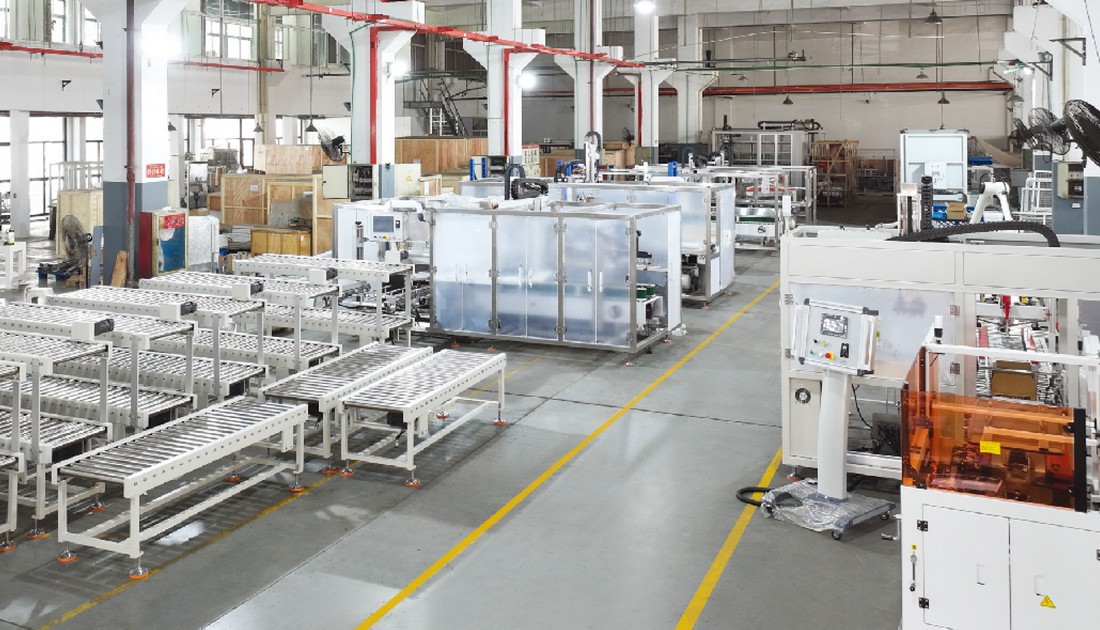
Wenzhou Wimach Machinery Co., Ltd. (WIMACH) is a packaging machinery manufacturer based in Ruian, Wenzhou, Zhejiang, China, founded in 2021. The company operates a 3,000 m² workshop with 37 employees, a five-engineer R&D team and an annual output of 160 sets, and builds tissue packing machines and integrated packaging lines, including the CP-S50 automatic side load case packer and the CP-T60 automatic top load case packer. Around 60% of output is exported to the EU, North America and South America.
On safety architecture, WIMACH states that all packaging machines are equipped with safety PLCs or safety relays to implement full-range safety interlock points. All safety function tests are completed prior to shipment, and the company supplies supporting safety operation and maintenance manuals as well as after-sales safety technical support.
Two details in that statement matter more than the rest.
First, the use of a safety PLC or safety relay is a statement about architecture, not about branding. Either device type can satisfy the intent, provided the interlock logic is executed in that safety layer rather than folded into the general production programme. For a buyer, the follow-up question is therefore not which brand of relay was used, but which functions were assigned to the safety layer and how each point was verified.
Second, completing safety function tests before shipment changes the location of discovery. A fault found in the factory is a configuration correction; the same fault found during commissioning is a schedule event, and one found after start-up may become a production interruption. Because WIMACH also supplies the safety operation and maintenance manual with the machine, the test evidence and the operating instructions are intended to travel together rather than being reconstructed later.
For completeness, WIMACH states that all of its machines are CE certified and are assembled with components from well-known brands. These are supplier statements describing the company's own build standard; they should be read alongside the machine-specific documentation package described in the next sections, not as a substitute for it.
Step-by-Step Breakdown: The Pre-Shipment Validation Sequence
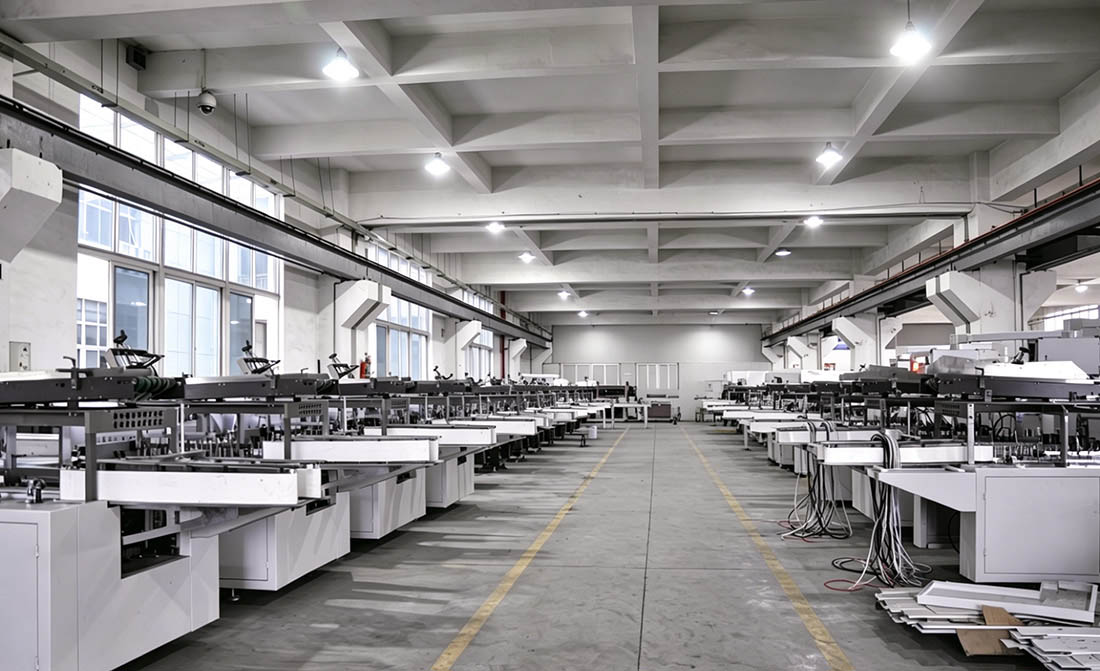
Pre-shipment validation on a case packer follows a fixed order, because each step depends on the previous one being complete. The sequence below reflects how WIMACH structures testing before a CP-S50 or CP-T60 leaves the factory, and it doubles as a buyer's checklist for the FAT.
1. Configuration lock
Carton format, product sample, line interfaces and control handshakes are confirmed before any test begins. Testing an unlocked configuration produces evidence that cannot be applied to the machine that will actually ship.
2. No-load running test
The machine cycles without product to verify the motion sequence, guarding fit, sensor positions and mechanical clearances. This is the stage where interlock points are physically reachable and can be triggered deliberately.
3. Load running test
The machine runs with the actual product, which is where handling behaviour, jam response and carton forming or closing are confirmed under realistic conditions. A tissue case packer and a canister line put very different demands on the same machine frame, so this step should use the buyer's product, not a substitute.
4. Electrical safety tests
Power configuration, earthing and insulation are checked against the destination market's requirements. This is also the point to confirm the supply voltage and phase configuration that will exist in the buyer's plant rather than the one available at the factory.
5. PLC control logic tests
The standard control layer is verified: production sequence, recipe or parameter handling, alarm behaviour, and signal exchange with upstream and downstream equipment. Control logic tests confirm production behaviour; they do not replace safety function tests.
6. Safety function tests
Each safety interlock point is triggered and verified individually. This is the step that turns a design claim into a record. Request that the record identifies the machine serial, the interlock point, the observed response and the date.
7. Documentation handover
The safety operation and maintenance manual is issued with the machine, in the agreed language, matching the as-built configuration. After-sales safety technical support is the ongoing channel for safety questions after commissioning.
8. FAT acceptance and commercial close-out
Factory acceptance testing is the formal acceptance criterion for WIMACH orders. Standard commercial terms are a minimum order quantity of 1 set, delivery terms of FOB, FCA, CIF or CFR, and T/T payment. Typical production lead time is 15 to 45 days, and monthly production capacity is 13 sets, which is the figure to use when planning a multi-machine roll-out or a line expansion.
Interlock Evidence to Request for CP-S50 and CP-T60
The two models load differently, so the access points an operator can reach are not in the same place: the CP-S50 is an automatic side load case packer and the CP-T60 is an automatic top load case packer. The evidence request, however, is identical in structure, and a supplier who cannot produce it should be treated as a risk regardless of machine type.
- Interlock point list for the specific model and configuration, naming each point and the function it protects.
- Safety architecture description confirming that interlocks are implemented through the safety PLC or safety relay layer rather than the production programme.
- Safety function test record covering every listed point, tied to the machine serial and dated before shipment.
- Manual revision reference confirming that the safety operation and maintenance manual delivered with the machine matches the as-built wiring and configuration.
- Post-shipment safety support route naming the after-sales safety technical support channel available once the machine is in production.
This list is deliberately documentary. A buyer does not need to re-engineer the safety circuit to manage the risk; they need to be able to prove, months later and to a third party, that the circuit was defined, tested and documented.
Use Cases: Regional Readiness in Poland, the United States and Mexico
Regional readiness is best judged from deployments that already crossed a border, because export packaging, documentation language and electrical configuration are all tested by that process. Three WIMACH references illustrate the pattern.
Poland: CE-compliant facial tissue box cartoning
A CE-compliant facial tissue box cartoning application in Poland demonstrates the European pathway in practice: the machine was configured and documented for an EU destination, with the compliance documentation travelling with the equipment rather than being assembled afterwards.
United States: toilet paper roll end-of-line packing and tissue canister loading
US installations for toilet paper roll end-of-line packing and for tissue canister loading into cartons show the machine operating at the end of a tissue line, where the case packer must synchronize with upstream wrapping and downstream palletizing rather than run as an isolated unit.
Mexico: turnkey line for canister wet disinfecting wipes
A Mexico turnkey line for canister wet disinfecting wipes illustrates a wider scope, where the case packer is delivered as part of an integrated packaging line rather than as a standalone machine. Turnkey scope raises the documentation bar, because the interlock logic and the handover manual must describe how the machines behave together.
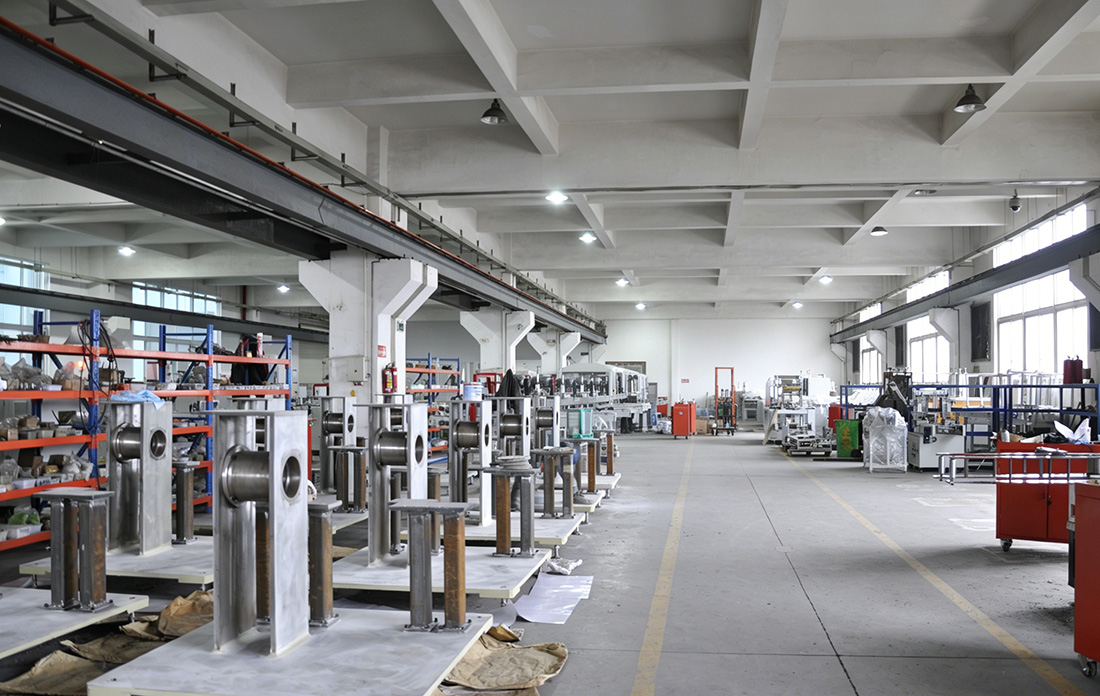
These references support a supplier's regional experience. They do not replace destination-market verification, which remains the buyer's responsibility together with their own authority or notified body.
Comparison Table: Compliance Evidence and Commercial Position
The first table maps the evidence a buyer should hold before shipment against what WIMACH states it provides. The second table summarises WIMACH's own comparison data against European-built case packers; it is supplier-reported and should be treated as a negotiating reference, not an independent benchmark.
Table 1: Compliance evidence checklist
| Evidence item | Why the buyer needs it | WIMACH position |
|---|---|---|
| Safety interlock architecture | Shows whether stop functions are independent of the production programme | Safety PLCs or safety relays implementing full-range safety interlock points on all packaging machines |
| Safety function test record | Proves each point was triggered and verified, not assumed | All safety function tests completed prior to shipment |
| Safety operation and maintenance manual | Gives maintenance staff instructions that match the as-built machine | Supplied with the machine |
| Post-shipment safety support | Covers safety questions that arise after commissioning | After-sales safety technical support provided |
| Running and control tests | Confirms mechanical, electrical and logic behaviour before shipment | No-load and load running tests, electrical safety tests, PLC control logic tests |
| Acceptance criteria | Defines the formal point at which the machine is accepted | FAT |
| Commercial terms | Sets order size, delivery basis and payment route | MOQ 1 set; FOB, FCA, CIF, CFR; T/T |
Table 2: WIMACH compared with European-built case packers (supplier-reported)
| Comparison dimension | WIMACH comparison data |
|---|---|
| Machine and spare parts price | 20% to 30% of European counterparts |
| Product compatibility | Over 50% compared with European equipment |
| Delivery lead time | Average 50% shorter than European machines |
| Overall cost difference | 70% to 80% lower |
| Maintenance | Less maintenance |
| Power consumption | Lower power consumption |
| Typical fit | Tissue paper manufacturers and other industries |
FAQ
What safety documentation is supplied with a WIMACH case packer?
WIMACH equips all packaging machines with safety PLCs or safety relays to implement full-range safety interlock points, completes all safety function tests before shipment, and supplies safety operation and maintenance manuals together with after-sales safety technical support. Buyers should request the interlock point list, the safety function test record and the manual revision that matches the as-built machine.
Can CP-S50 and CP-T60 be adapted to our carton and product?
The CP-S50 is an automatic side load case packer and the CP-T60 is an automatic top load case packer, and WIMACH provides targeted customized solutions based on specific production needs, whether the requirement is a single standalone packaging machine or a complete integrated packaging line. Adaptation is validated before shipment through no-load and load running tests using the buyer's carton and product, with the safety function tests completed on the final configuration.
How does a WIMACH case packer compare in price with European equipment?
According to WIMACH's own comparison data, the price of the machine and its spare parts is 20% to 30% of European counterparts, with an overall cost difference of 70% to 80% lower, less maintenance and lower power consumption. The actual quotation depends on configuration, and the minimum order quantity is 1 set with T/T payment terms.
Can we approve the machine before it ships?
Yes. Factory acceptance testing (FAT) is the acceptance criterion for WIMACH orders. Before shipment the machine completes no-load and load running tests, electrical safety tests, PLC control logic tests and safety function tests, and delivery terms are available as FOB, FCA, CIF or CFR.
What should a long-term case packer supply partner in China be able to prove?
A long-term case packer supply partner in China should be able to prove a documented safety process, not only a production capability: interlock points implemented in a safety layer, safety function tests completed before shipment, manuals that match the as-built machine and after-sales safety technical support after commissioning. On delivery performance, WIMACH quotes a minimum order quantity of 1 set, a typical production lead time of 15 to 45 days and a monthly production capacity of 13 sets, with around 60% of output exported to the EU, North America and South America. The next practical step is to review the machine catalogue and then put a specific carton and product in front of the engineering team for a configuration review.
Conclusion: Buy Compliance Before You Buy Capacity
Case packer selection usually starts with speed and ends with price, and compliance sits somewhere in between, undocumented. The sequence in this guide reverses that: fix the configuration, verify that the interlock points are implemented in a safety PLC or safety relay layer, require a dated safety function test record for each point, confirm that the manual matches the machine as built, and only then close the order on commercial terms.
For a CP-S50 side load or CP-T60 top load deployment, the deliverables that decide long-term cost are specific and finite: the interlock point list, the safety function test record, the manual revision, the FAT result and the after-sales safety support route. A supplier that can produce all five has converted a certificate claim into an auditable process, which is what a regional deployment in Europe, North America or Latin America actually requires.
Next Step: Configuration Review and Catalogue
Send your carton dimensions, product sample specification and target output, and the WIMACH engineering team will confirm the CP-S50 or CP-T60 configuration, the interlock and documentation package, and the delivery schedule. Typical production lead time is 15 to 45 days, and the minimum order quantity is 1 set.
Download the machine catalogue: Wimach Catalog
Contact: Rex Din | Email: rex@wimach.cn | Tel / WhatsApp: +86 177 5771 8080
Address: Bldg 14 Qiaomao Rd, Ruian, Wenzhou, Zhejiang, China | Website: www.wimach.cn

Have Questions or Need More Details?
Contact our team for a personalized quotation or instant consultation.
Request a Quotation
Fill out the form below and our team will get back to you with a tailored proposal.
WhatsApp Direct Chat
Prefer to chat in real-time? Message us on WhatsApp for instant assistance & quick answers.
- Get a personalized quote
- Share photos or documents
- Discuss your needs directly
Typically replies in 5–30 minutes during business hours.