
Case Packer vs. Cartoner vs. Wrapper: Sorting Out the End-of-Line Basics
A case packer, a cartoner, and a wrapper are all packaging machines that can sit near the end of a production line. They are not interchangeable. The simplest way to tell them apart is to ask what leaves the machine: a retail carton, a wrapped pack, or a corrugated shipping case.
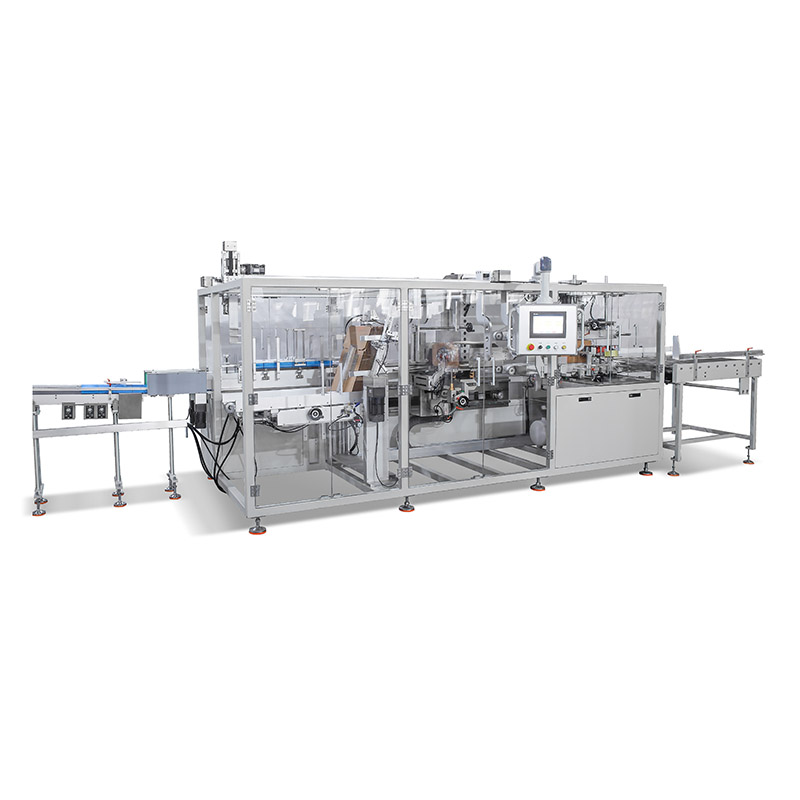
This article is a discovery-level explainer, not a machine selection guide. It separates the three families buyers most often confuse: cartoning or box packing, film wrapping, and case packing. It uses WIMACH models as concrete examples: the CP-T60 pick-and-place top load case packer and the CP-S50 side push case packer. It also uses line contexts from Poland and the United States to show how wrapping, case packing and palletizing can sit side by side without doing the same job.
Wenzhou Wimach Machinery Co., Ltd. (www.wimach.cn) is the company behind the CP-S50 and CP-T60. The product facts below come from WIMACH product material and are kept separate from general industry definitions.
Why the three names get mixed up
All three machine families sit in the same neighbourhood of a packaging line. They use conveyors, guards, sensors, PLCs and HMI screens. They can be built from stainless steel or carbon steel. They can be integrated with palletizers and stretch wrappers. That shared hardware makes the names sound more alike than the machines actually are.
The words themselves create more confusion. In packaging-line language, a cartoner usually makes or closes a folding retail carton, while a case packer puts sale units into a corrugated shipping case. In transport language, 'case' and 'carton' are sometimes used for the same shipping container. A wrapper can mean a film flow wrapper, a shrink wrapper, a roll wrapper, or a pallet stretch wrapper. A case packer can be top load, side load, drop type, robotic, or wraparound. The words describe different packaging objects and different loading methods.
The category is active. Grand View Research valued the global case packing machines market at USD 1.1 billion in 2024, with Asia Pacific accounting for a 37.9% revenue share. That market figure helps explain why the category appears in so many line plans. It does not tell a buyer what any one machine does. The machine's job still has to be read from the package it makes.
The dividing line: primary pack or transport pack
The most useful dividing line is the package that leaves the machine. A cartoner and a film wrapper usually create or finish a primary pack: the retail box, packet, roll pack, or bundle that a consumer sees. A case packer usually creates a transport pack: the corrugated case or tray that protects and groups those sale units for shipping.
There are exceptions in both directions, so the line sequence matters. A wraparound case packer is a case packer even though it forms corrugated material around the product. A pallet stretch wrapper is a wrapper, but it wraps a pallet load rather than a sale unit. A cartoner may close a retail carton that is already filled, or it may erect, load and close the carton in one automatic sequence. The stable point is the output: check whether the machine is making a sale pack or a shipping pack.
Cartoner: the machine that makes or closes the retail carton
A cartoner loads a product, or a small group of products, into a folding carton and closes or tucks that carton. In tissue operations, the same job is often called box packing. The output is a retail or multipack carton, not a corrugated shipping case. This is why a cartoner normally sits before the case packer in a line that uses both.
The Poland facial tissue line example shows that sequence. It includes facial tissue box packing and facial tissue plastic film wrapping before tissue box and packet case packing. The related equipment list includes the TC-300 automatic high-speed tissue box packing machine and the TC-100 tissue cartoning machine, alongside the CP-S50 case packer. The cartoner and the case packer are both present because they are doing two different jobs: one builds the retail box, the other builds the shipping case around those boxes or packets.
When a buyer says 'carton case packer', the phrase can therefore mean two different things. It may mean a case packer that handles retail cartons as its incoming product. It may also be a loose way of saying the line has both a cartoner and a case packer. The only reliable check is to ask which machine forms the retail carton and which machine forms the corrugated shipper.
Wrapper: the machine that encloses the product in film or paper
A wrapper applies a flexible material around a product or pack. In tissue lines, this can be plastic film wrapping for facial tissue packets or roll wrapping for toilet paper rolls. The output is a wrapped sale unit or bundle, not a corrugated case. That is the main boundary between a wrapper and a case packer.
The line examples use both meanings carefully. The Poland facial tissue line includes film wrapping before case packing, and the related equipment list includes the TP-280 automatic high-speed soft tissue wrapping machine. The US toilet paper roll line starts from roll wrapping and then moves to case packing, with the TW-160 automatic toilet paper roll wrapping machine listed as related equipment. In both cases, the wrapper creates the wrapped pack. The case packer then groups those packs into a shipping container.
A pallet stretch wrapper is a different position in the same line. It wraps a loaded pallet after case packing and palletizing, not an individual sale unit. The US and Poland line descriptions both include final stretch film wrapping after palletizing and strapping. That is a transport-stability step, not the primary wrapping step that creates a retail pack.
Case packer: the machine that builds the shipping case
A case packer is an end-of-line machine that arranges and packs products into cases or cartons. In general industry usage, it is the step where individual products, typically cartons or bundles, are grouped and placed into cases. It prepares the grouped load for shipping. That definition covers automatic case packers, side load case packers, top load case packers, drop type case packers, robotic case packers and wraparound case packers, because those names describe how the machine loads or forms the case, not a different end result. The terms case packing machine and case packaging machine are general labels for the same family.
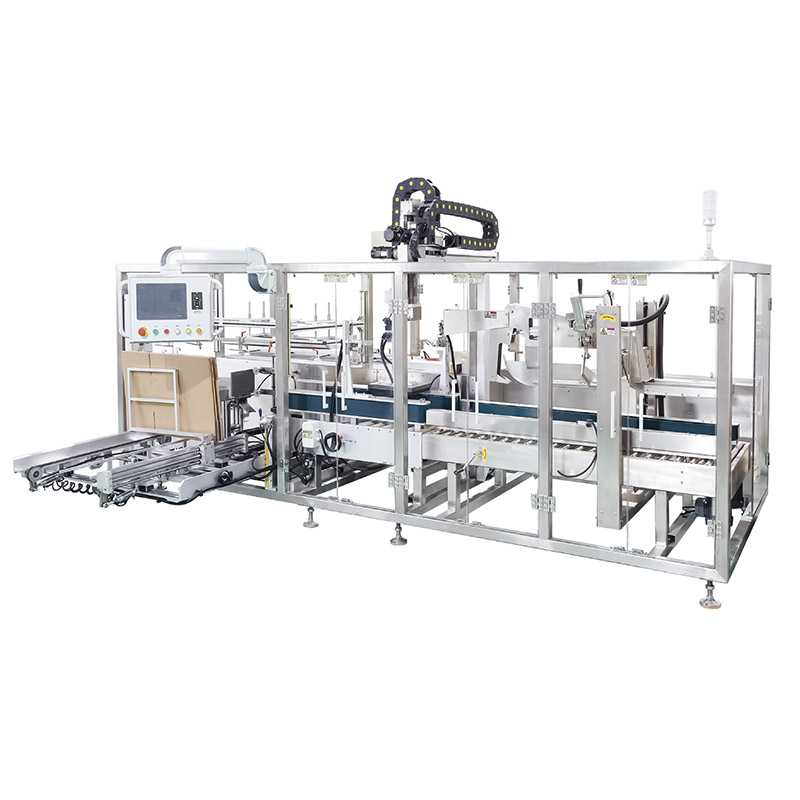
What the CP-T60 shows about a pick and place case packer
The CP-T60 is a pick-and-place top load case packer. Its published packing capacity is 1–8 cartons per minute. Its overall dimensions are 4200 x 2600 x 2200 mm, and its overall weight is 1600 kg. It uses 380 V 50/60 Hz three-phase power and 7.5 kW power consumption. A top load case packer places the product into the case from above, which is why the loading action is often described as pick-and-place or top load.
What the CP-S50 shows about a side push case packer
The CP-S50 is a side load or side push case packer. Its published packing capacity is 1–16 cartons per minute. In the WIMACH product description it is presented for cartons, boxes, bottles, cans and bags. A side push case packer moves the product into the case from the side rather than lowering it from above. The model is listed in the Poland facial tissue line context, where it sits after box packing and film wrapping.
Product-specific names such as can case packer, bottle case packer, bag case packer, tissue case packer, carton case packer, box case packer, food case packer and beverage case packer usually describe the product or industry being handled. They do not create a separate machine family. A can case packer and a bottle case packer are still case packers; the difference is the product handling and case pattern. The same logic applies to an automatic case packer, a robotic case packer or a high-speed case packer: the added words describe automation, loading method or a relative speed claim, not a new packaging principle.
A wraparound case packer is worth separating from a film wrapper. Smurfit Westrock lists wraparound case packers as a case-packing category: the machine forms a corrugated blank around the product rather than placing the product into a pre-formed case. That is still a case packer because the output is a corrugated shipping pack. It is not a film wrapper, even though both machines 'wrap' something.
Where the three sit in a real end-of-line
The line sequence is easier to see in a complete project than in a machine list. In the Poland facial tissue line, facial tissue moves from box packing and film wrapping to case packing, then to palletizing, strapping and stretch wrapping. The case packer does not replace the cartoner or the wrapper. It receives their output and groups it into shipping cases. The related CP-S50 is the case packing step in that context.
In the US toilet paper roll line, the sequence starts with roll wrapping, then moves to case packing, automatic palletizing, strapping and final stretch film wrapping. The TW-160 roll wrapper and the CP-T60 top load case packer are separate machines in that description. One wraps the roll; the other packs finished roll packs into cases. The palletizer and stretch wrapper act on the load after case packing.
A third example shows the same principle outside tissue rolls. The Mexico canister wet wipe line includes canister loading, disinfectant filling, sealing, capping, labeling, case packing and pallet wrapping. The case packer appears after the canister is already a finished primary pack. It is not doing the filling, capping or labeling. That separation is the point: a case packer is a transport-pack machine, even when it is integrated into a fully automatic line.
Case packer vs. cartoner vs. wrapper: side-by-side
The table below compares the three families by the package they produce and their usual position in a line. The examples column uses machine names that appear in the WIMACH product material or line descriptions referenced in this article.
| Machine family | Primary job | What usually leaves the machine | Usual line position | Examples in this article |
|---|---|---|---|---|
| Cartoner or box packer | Loads product into a folding carton and closes or tucks it | Retail carton or multipack carton | After product converting or folding, before case packing | TC-300 automatic high-speed tissue box packing machine; TC-100 tissue cartoning machine |
| Film wrapper or roll wrapper | Encloses a product or pack in film or paper | Wrapped roll, packet or bundle | After converting, before case packing; pallet stretch wrapping comes later | TP-280 automatic high-speed soft tissue wrapping machine; TW-160 automatic toilet paper roll wrapping machine |
| Case packer | Groups sale units and loads them into a shipping case or tray | Corrugated case or tray | After primary packing, before palletizing | CP-S50 side push case packer; CP-T60 pick-and-place top load case packer |
The usual line position column is a line-reading aid, not a universal rule. A line can combine, omit or reorder these steps depending on the product, the retail pack and the shipping pack. The machine name should always be checked against the actual package it produces.
Common confusions and what they mean for a first line review
Case packer vs. cartoner. A cartoner makes the retail carton; a case packer makes the shipping case. If the machine is forming a small printed box for a consumer, it is probably a cartoner or box packer. If it is loading those boxes into a larger corrugated shipper, it is a case packer. The word 'carton' can appear in both conversations, so ask for the output package, not just the machine label.
Wrapper vs. case packer. A wrapper applies film or paper to a product or pack. A case packer places sale units into a corrugated case. A pallet stretch wrapper is also a wrapper, but it acts on a pallet load after case packing. A wraparound case packer is a case packer, not a film wrapper, because its output is a corrugated shipping pack.
Top load vs. side load. Both are case packers. The CP-T60 is a top load, pick-and-place model; the CP-S50 is a side push model. The loading direction affects how the product enters the case and how the machine is laid out, but it does not change the family. A drop type case packer or a robotic case packer is also a case packer with a different loading method.
Machine specification vs. line performance. Published capacity is a machine specification. The CP-S50 is listed at 1–16 cartons per minute and the CP-T60 at 1–8 cartons per minute. Those figures should not be treated as a ranking or as a guaranteed line output. Actual line output depends on the product, case size, packing pattern, upstream supply and the rest of the line. The machine data tells a buyer what the unit is rated for; it does not prove what a complete line will achieve.
Automatic vs. manual vs. robotic. An automatic case packer performs the packing cycle without manual loading. A robotic case packer uses a robot arm for the handling step. A manual or semi-automatic machine may still use a case packer mechanism but rely on an operator for part of the cycle. These are automation and loading choices within the case-packer family, not separate end-of-line categories.
A four-question way to read any end-of-line layout
A buyer does not need a full selection study to read the basic layout. Four questions are enough to place the three machine families correctly.
- What is the sale unit? A boxed facial tissue, a wrapped toilet roll, a canister, a bottle or a bag. That unit is the output of the primary packaging step.
- What is the shipping unit? A corrugated case or tray that groups several sale units. That unit is the output of the case packing step.
- Where does the machine sit? If it comes before the shipping case, it is probably a cartoner or wrapper. If it loads the shipping case, it is a case packer.
- How does the product enter the case? Top load, side push, drop or robotic pick-and-place. This tells you which case packer type you are looking at, not whether it is a case packer at all.
This reading method is definitional. It is not a substitute for a full technical selection, a factory acceptance test or a line audit. It simply prevents the most common vocabulary error: treating three different packaging jobs as if they were three names for the same machine.
FAQ
What is the difference between a case packer and a cartoner?
A cartoner loads a product into a folding retail carton and closes or tucks that carton. A case packer groups sale units, such as cartons or wrapped packs, and places them into a corrugated shipping case or tray. In a tissue line, box packing usually comes before case packing because the retail box is made first and the shipping case is built around it. The word 'carton' can also mean a shipping case in transport language, so the output package is the safest way to identify the machine.
Is a wrapper the same as a case packer?
No. A wrapper encloses a product or pack in film or paper, producing a wrapped sale unit. A case packer places sale units into a corrugated case or tray. A pallet stretch wrapper is a different step again: it wraps a loaded pallet after case packing and palletizing. A wraparound case packer is a case packer because it forms a corrugated shipping pack, even though the word 'wrap' appears in its name.
What does the WIMACH CP-T60 top load case packer do?
The CP-T60 is a pick-and-place top load case packer. WIMACH lists a packing capacity of 1–8 cartons per minute, overall dimensions of 4200 x 2600 x 2200 mm, a weight of 1600 kg, 380 V 50/60 Hz three-phase power and 7.5 kW power consumption. It loads products into the case from above. In the project contexts referenced in this article, the CP-T60 is the related case packer for a US toilet paper roll line and a Mexico canister wet wipe line.
What does the WIMACH CP-S50 side push case packer do?
The CP-S50 is a side load or side push case packer with a published packing capacity of 1–16 cartons per minute. It is presented for cartons, boxes, bottles, cans and bags. It pushes the product into the case from the side rather than lowering it from above. The CP-S50 is the related case packer in the Poland facial tissue line example, where box packing and film wrapping come before case packing.
Who are case packer manufacturers?
Case packer manufacturers range from specialist packaging-machinery builders to integrators that combine case packing with conveying, inspection, palletizing and end-of-line equipment. Wenzhou Wimach Machinery Co., Ltd. is one manufacturer in the WIMACH product material; it lists the CP-S50 side push case packer and the CP-T60 top load case packer. Buyers comparing manufacturers should ask for the machine's output package, loading method, case-size range, utility requirements and the exact scope of supply, rather than relying on a family name alone. The WIMACH catalog can be downloaded for the published CP-S50 and CP-T60 specifications.
Conclusion
A cartoner, a wrapper and a case packer solve three different packaging problems. The cartoner builds or closes the retail carton. The wrapper encloses the product or pack in film or paper. The case packer groups sale units into a corrugated shipping case. Once the output package is clear, the names stop overlapping.
The CP-S50 and CP-T60 make the case-packer side of that distinction concrete. The CP-S50 is a side push model rated at 1–16 cartons per minute. The CP-T60 is a pick-and-place top load model rated at 1–8 cartons per minute, with 4200 x 2600 x 2200 mm dimensions, 1600 kg weight and 380 V 50/60 Hz three-phase power. In the Poland facial tissue line and the US toilet paper roll line, wrapping, case packing and palletizing appear together because each machine has a different job.
For a first line review, the most useful next step is to compare the machine family with the package it must produce. The WIMACH catalog includes the published CP-S50 and CP-T60 specifications for that check. Download the WIMACH catalog (PDF).
Have Questions or Need More Details?
Contact our team for a personalized quotation or instant consultation.
Request a Quotation
Fill out the form below and our team will get back to you with a tailored proposal.
WhatsApp Direct Chat
Prefer to chat in real-time? Message us on WhatsApp for instant assistance & quick answers.
- Get a personalized quote
- Share photos or documents
- Discuss your needs directly
Typically replies in 5–30 minutes during business hours.