
TC-100 vs TC-300: Matching Tissue Cartoning Speed to Output
TC-100 vs TC-300: Matching Tissue Cartoning Speed to Your Output

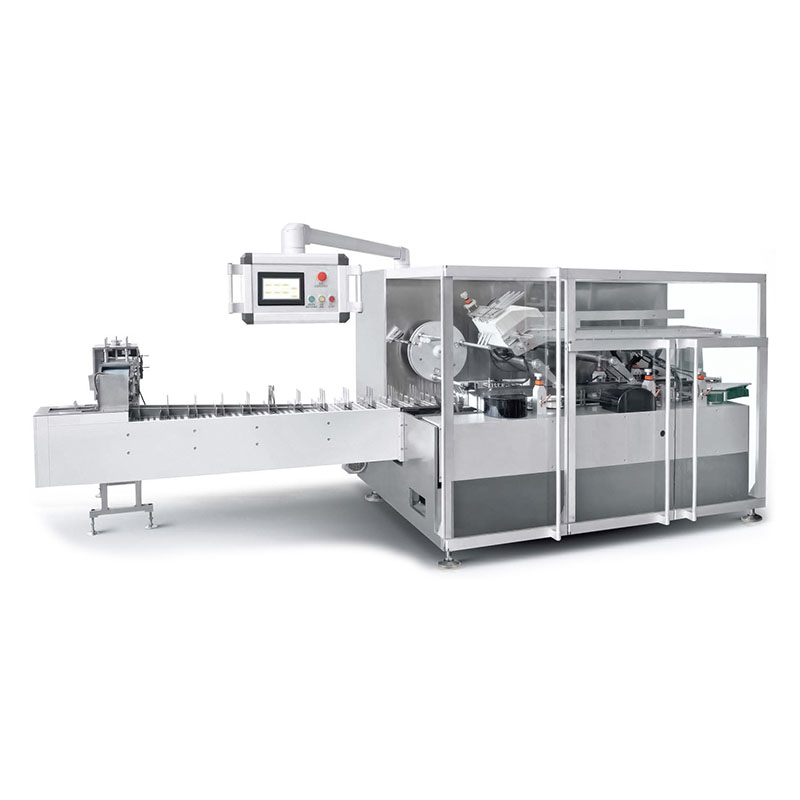
Direct answer: the WIMACH TC-100 and TC-300 are both automatic cartoning machines for boxed facial tissue and paper napkins, and both accept the same carton envelope — 100–240 mm (L) × 100–120 mm (W) × 20–90 mm (H), in 300–400 gsm carton board. What separates them is throughput and plant resources. The TC-100 is rated 30–100 boxes/min, draws 6.2 kW, and measures 3620 × 3130 × 1800 mm. The TC-300 reaches a maximum packing capacity of 180 boxes/min, draws 8 kW, and measures 5000 × 1740 × 1800 mm. If your required rate stays inside 100 boxes/min, the TC-100 covers it with lower connected power. If the boxed tissue volume on a single lane exceeds that, the TC-300 is the model that keeps the lane balanced.
This technical guide is written for the evaluation-to-purchase stage: project engineers sizing a packaging cell, importers comparing quotations, and plant managers deciding whether one faster cartoner or two moderate cartoners is the better line design. Every machine figure below comes from WIMACH’s published specifications for the TC-100 and TC-300, and every third-party market or regulatory reference is named in the text so it can be checked independently.
Why the TC-100 vs TC-300 Decision Is Not a Simple Speed Choice
Most buyers begin with the carton specification, and on paper the two machines look identical: the same carton dimension range, the same board grammage window, the same air pressure band, and the same air consumption figure. That symmetry is deliberate. Both models are built for the same product family — boxed facial tissue, paper napkins and comparable cartoned tissue products — which removes format risk from the comparison and pushes the decision onto line economics instead.
What is left are trade-offs that only appear once the machine is placed in a real plant:
- Throughput versus utilisation. A cartoner rated to 180 boxes/min only pays back if the upstream soft tissue wrapping machine and the downstream case packer can feed and absorb that rate. Surplus speed that no other station can use becomes buffer time, not output.
- Connected power. 6.2 kW against 8 kW changes the electrical design of the cell, not just the running cost.
- Footprint shape, not only size. The TC-100 is 3620 mm long and 3130 mm wide; the TC-300 is 5000 mm long and 1740 mm wide. A bay that suits one machine may not suit the other.
- Machine weight. 2200 kg against 3000 kg affects floor loading, anchoring and any future relocation.
- Product mix. Because both machines share the carton window, format flexibility is comparable on paper. What differs in practice is how often you change over, and how much of the available speed you can actually use between changeovers.
Industry Background: Where Tissue Cartoning Sits in the Packing Machine Market
Cartoning is one segment of a market that continues to expand. The global tissue paper packaging machines market was valued at USD 273.8 million in 2023 and is projected to reach USD 433.7 million by 2032 (Transparency Market Research). Within that market, automatic tissue packaging machines held a dominant 58.3% share in 2025, a position attributed to the shift toward unmanned and data-driven production lines (Market Research Report 2033). The cartoning machinery segment, which covers facial tissue and napkin cartoning, is expected to grow at a CAGR of 5.1% and reach USD 8.7 billion by 2035 (Global Market Insights). Regionally, Asia Pacific is the largest market for tissue packaging machinery, capturing 42.6% of global revenue in 2025 (Future Market Insights).
Two forces shape machine selection inside that market. The first is compliance: packaging machinery placed on the EU market must comply with the Machinery Directive 2006/42/EC and is transitioning to the new EU Machinery Regulation (2023), which adds cybersecurity considerations (European Commission / UL Solutions). The second is the supplier landscape. Global tissue packaging machinery supply includes companies such as Fabio Perini S.p.A. (Körber), PCMC (Barry-Wehmiller) and Valmet, alongside a broad base of specialised manufacturers (Mordor Intelligence). Buyers therefore usually shortlist across both international and specialised suppliers before narrowing to a model.
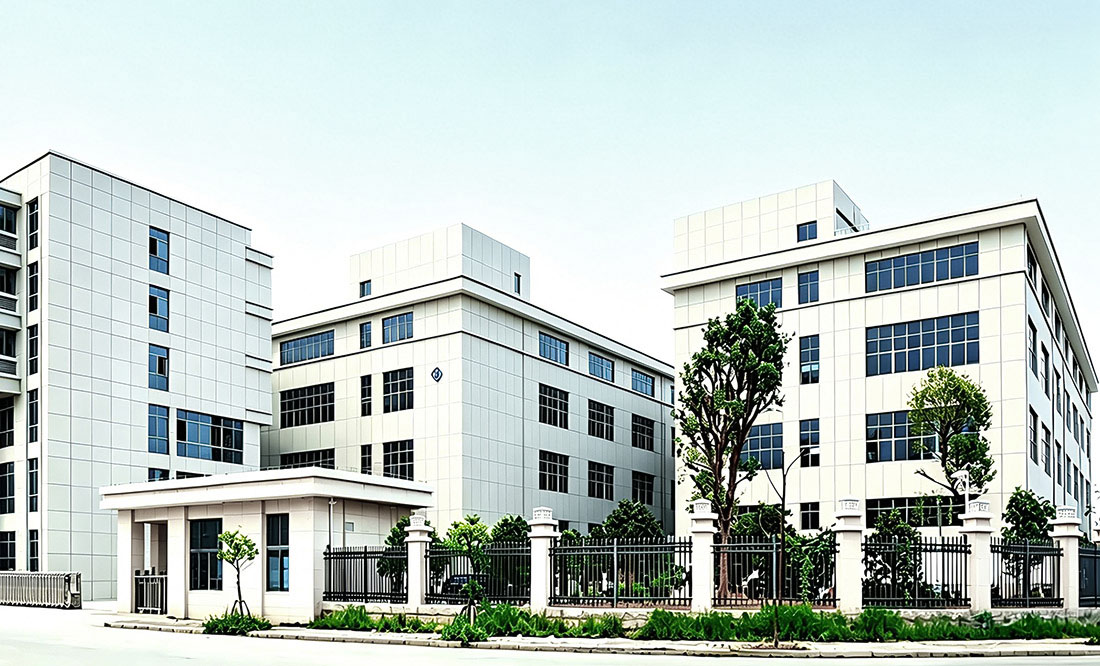
Wenzhou Wimach Machinery Co., Ltd. (WIMACH) is one of the specialised manufacturers in that landscape. Based in Ruian, Wenzhou, Zhejiang, China, the company was founded in 2021 and works with more than 12 years of tissue packaging experience. Its 3000 m² facility employs 37 people, including a five-engineer R&D team, and produces around 160 sets of machinery per year; approximately 60% of that output is exported to the EU, North America and South America. The product range covers facial tissue and paper napkin cartoning machines, soft tissue wrapping machines, toilet paper roll wrapping machines, case packers and blister packing machines, as well as integrated packaging lines.
The Selection Parameters That Actually Differ
1. Packing capacity: converting a daily target into boxes per minute
The TC-100 is rated at 30–100 boxes/min. The TC-300 is rated at a maximum packing capacity of 180 boxes/min. Neither figure alone tells you which machine fits, because what matters is the sustained rate your production plan requires. The usable formula is:
Required rate = daily boxed output ÷ (production minutes × realistic uptime)
Worked example, using reader-supplied assumptions rather than machine data: a plant targeting 40,000 boxes per day across 16 production hours (960 minutes) at 85% uptime has roughly 816 effective minutes, which is a required rate of about 49 boxes/min — comfortably inside the TC-100 band. Raise the target to 120,000 boxes per day on the same 16-hour, 85% uptime basis and the requirement becomes roughly 147 boxes/min: above the TC-100 ceiling, but within the TC-300 maximum. The alternative line design at that volume is two TC-100 units splitting the load, which is a layout and labour decision rather than a machine capability decision.
Two rules follow from the arithmetic. First, leave headroom for changeovers, board reel changes and short stops, because the rated maximum is not the same as the sustainable average. Second, if the tissue line upstream already runs faster than the cartoner can pack, the cartoner becomes the constraint on the whole line rather than a component within it.
2. Carton dimensions and box formats
Both machines accept cartons from 100 mm to 240 mm in length, 100 mm to 120 mm in width and 20 mm to 90 mm in height. That envelope covers standard boxed facial tissue and paper napkin cartons. Formats outside that window require a different model: cube boxes measuring 115 × 115 × 130 mm are handled by the TC-80F cube box tissue cartoning machine at 30–80 boxes/min, while canister-style packages with carton dimensions of 100–220 mm (L) × 50–80 mm (D) are handled by the TC-80Y automatic tissue canister packing machine, also at 30–80 boxes/min. In other words, the TC-100 and TC-300 are not the answer to every tissue packing format — they are the answer to the rectangular box format at two different speeds.
3. Carton board grammage
Both machines run carton board between 300 and 400 gsm. This range is wide enough to cover the lightweight folding board used for economy boxed facial tissue and the heavier board used for premium retail cartons, so board weight is not a differentiator between the two models. It is, however, a specification you must confirm before ordering, because the forming mechanism has to be set for the board you actually buy. WIMACH holds utility model protection in China covering an automatic feeding mechanism and a box forming mechanism for carton packaging machines (ZL 2022 2 1202677.7, National Intellectual Property Administration, issued 25 April 2023).
4. Power, voltage and compressed air
The TC-100 draws 6.2 kW and the TC-300 draws 8 kW, a difference of 1.8 kW of connected load on the same supply: 380 V, 50/60 Hz, three-phase. Compressed air demand is identical on both models — 0.5–0.8 MPa working pressure at 120–160 L/min consumption. For a project engineer, that combination is useful. The compressor and air treatment sizing does not change between the two models, while the electrical distribution design does. Air consumption also stays the same whether the machine runs at low or high output, so air is not a variable you can trade against speed.
5. Footprint, weight and line orientation
The TC-100 measures 3620 mm (L) × 3130 mm (W) × 1800 mm (H) and weighs 2200 kg, with a carbon steel construction. The TC-300 measures 5000 mm (L) × 1740 mm (W) × 1800 mm (H), weighs 3000 kg, and uses carbon steel and aluminium. The TC-100 is the shorter machine but needs more width across the aisle; the TC-300 is roughly 1.4 m longer and about 1.4 m narrower, and 800 kg heavier. Where bay depth is fixed, that length difference usually decides the layout. Where only aisle width is constrained, the opposite is true. Both machines stand 1800 mm high, so headroom and guarding requirements are the same.
6. Compliance and machine verification
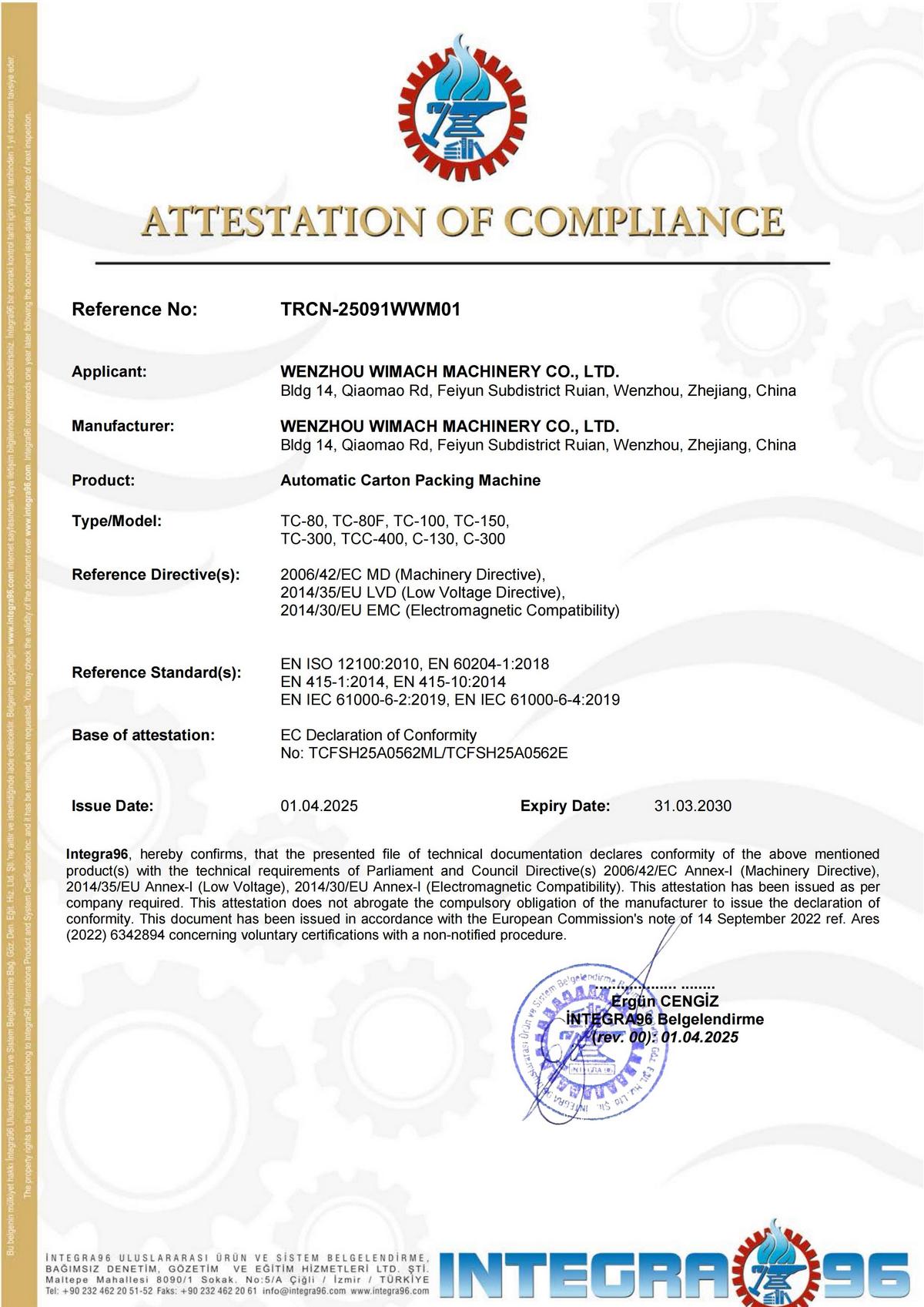
WIMACH machines are CE certified. The cartoning machines are covered by CE attestation of compliance TRCN-25091WWM01, issued on 1 April 2025 by iNTEGRA96 Belgelendirme for the EU market and valid until 31 March 2030, with the scope “Automatic Carton Packing Machine” and related products TC-100, TC-300 and TC-80F. The standards listed on the attestation are EN ISO 12100:2010, EN 60204-1:2018, EN 415-1:2014, EN 415-10:2014, EN IEC 61000-6-2:2019 and EN IEC 61000-6-4:2019.
On the engineering side, WIMACH holds an invention patent for a Carton Packing Machine and Carton Packaging Process (ZL 2022 1 1099886.8, National Intellectual Property Administration, issued 6 September 2022, valid to 17 September 2042). Before shipment, quality control covers no-load and load running tests, dimensional tolerance inspection, mechanical assembly check, pneumatic leakage test, electrical safety test, PLC control logic test, safety interlock and E-stop test, long-time aging test, and surface appearance inspection. The acceptance criterion offered to buyers is factory acceptance testing (FAT).
Step-by-Step: How to Choose Between a TC-100 and a TC-300
The sequence below is the order in which the decision usually becomes clear. Working through it before requesting a quotation prevents the most common error, which is buying speed the rest of the line cannot use.
- Fix the output target. Define how many finished boxes per day or per shift the line must produce, and how many production hours are genuinely available after planned stops.
- Convert the target into boxes per minute. Divide daily output by effective minutes. Keep the uptime assumption conservative.
- Test one machine against the rate. Inside 30–100 boxes/min, the TC-100 fits. Above 100 boxes/min, compare one TC-300 against two TC-100 units on layout, electrical load and labour.
- Confirm the carton specification. Length 100–240 mm, width 100–120 mm, height 20–90 mm, board 300–400 gsm.
- Check the utilities. 6.2 kW for the TC-100 or 8 kW for the TC-300 on a 380 V three-phase supply; 0.5–0.8 MPa and 120–160 L/min of compressed air for both.
- Check the floor. 3620 × 3130 mm and 2200 kg for the TC-100 versus 5000 × 1740 mm and 3000 kg for the TC-300, including access for maintenance and board loading.
- Close the commercial and compliance points. Confirm the CE documentation, agree the FAT procedure, and set the customization scope, lead time and after-sales terms in writing.
Use Cases: How the Cartoning Choice Plays Out in Practice
In the United States, a tissue paper manufacturer installed two WIMACH cartoning machines, including a TC-100, for fully automatic continuous box packing of facial tissues into paper boxes. The installation has been in operation for four years. Reported outcomes are higher production efficiency, lower labour cost and unified packing standards, with irregular filling and product extrusion damage resolved.
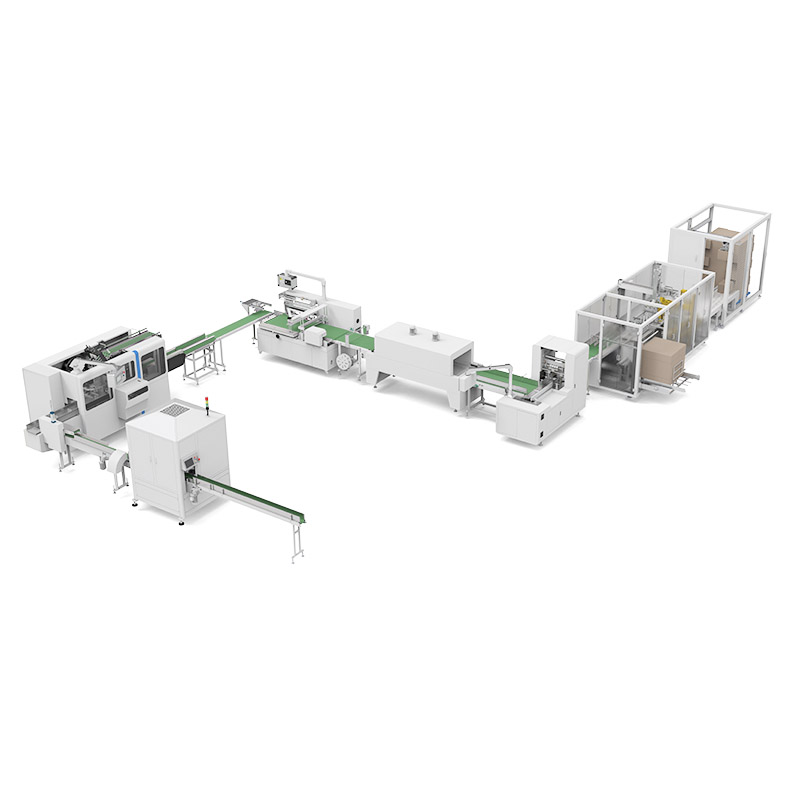
In Poland, a tissue paper manufacturer runs a complete packaging line of 12 sets of equipment for fully automatic packing of facial tissue and cream tissue, integrating conveying, cartoning, case packing, palletizing and stretch wrapping. The project was completed within two years, and the finished goods leave the line as whole pallets of shipping cases, strapped and stretch-wrapped for dust and moisture protection. CE compliance and quick size changeover are listed among the project highlights.
Adjacent formats in the same equipment family show the same pattern. In the United Arab Emirates, two TC-80Y automatic tissue canister packing machines have been running for four years at a stable output of 60 canisters per minute. In Spain, two machines were installed for automatic soft facial tissue wrapping, replacing manual packing, and have been in operation for four years. In the United States, a six-set toilet paper packaging line combines roll wrapping, case packing, automatic palletizing and stretch film wrapping. In Mexico, a nine-set turnkey line packages canister wet disinfecting wipes with filling, sealing, capping, labelling, case packing and palletizing. In each case, the cartoning or wrapping unit was specified after the upstream product format and the downstream case packing rate were fixed — not before.
TC-100 vs TC-300: Specification Comparison
The table below lists only published specification values for the two models, so it can be used directly as a comparison sheet during supplier evaluation.
| Parameter | TC-100 | TC-300 |
|---|---|---|
| Product name | Tissue Cartoning Machine | Automatic High-Speed Tissue Box Packing Machine |
| Packing capacity | 30–100 boxes/min | Max. 180 boxes/min |
| Carton dimension | 100–240 (L) × 100–120 (W) × 20–90 (H) mm | 100–240 (L) × 100–120 (W) × 20–90 (H) mm |
| Carton board grammage | 300–400 gsm | 300–400 gsm |
| Power voltage | 380 V 50/60 Hz, 3-phase | 380 V 50/60 Hz, 3-phase |
| Power consumption | 6.2 kW | 8 kW |
| Air pressure | 0.5–0.8 MPa | 0.5–0.8 MPa |
| Air consumption | 120–160 L/min | 120–160 L/min |
| Overall dimensions | 3620 (L) × 3130 (W) × 1800 (H) mm | 5000 (L) × 1740 (W) × 1800 (H) mm |
| Overall weight | 2200 kg | 3000 kg |
| Main materials | Carbon steel | Carbon steel, aluminium |
| CE attestation | TRCN-25091WWM01 (scope: Automatic Carton Packing Machine) — covers TC-100, TC-300 and TC-80F | |
Read together, the table gives a single practical rule: format capability is identical, so the selection is driven by the required rate, the electrical headroom available in the cell, and the shape of the floor space you have to work with.
Frequently Asked Questions
Are the TC-100 and TC-300 tissue cartoning machines CE certified?
Yes. Both models are covered by CE attestation of compliance TRCN-25091WWM01, issued on 1 April 2025 by iNTEGRA96 Belgelendirme for the EU market and valid until 31 March 2030. The attestation is issued for the scope “Automatic Carton Packing Machine” and lists TC-100, TC-300 and TC-80F as related products. The standards referenced are EN ISO 12100:2010, EN 60204-1:2018, EN 415-1:2014, EN 415-10:2014, EN IEC 61000-6-2:2019 and EN IEC 61000-6-4:2019. WIMACH states that all of its machines are CE certified.
Can WIMACH build an ODM facial tissue packing machine for our own box format?
Yes. WIMACH provides OEM and ODM production services, with customization covering packaging dimensions, machine configuration, voltage and logo. For the facial tissue cartoning format, the carton window of the TC-100 and TC-300 is 100–240 mm (L) × 100–120 mm (W) × 20–90 mm (H) in 300–400 gsm board, so most retail facial tissue boxes fall inside the standard range; boxes outside it, such as cube boxes or canister packages, map to the TC-80F and TC-80Y models. OEM/ODM work is quoted with a minimum order quantity of 1 set and a lead time of 15–45 days, and the company’s export markets are the EU, North America and South America. Cube box and canister formats are also customisable on the same basis.
What commercial terms apply when ordering a TC-100 or TC-300?
WIMACH quotes a minimum order quantity of 1 set. Delivery terms offered are FOB, FCA, CIF and CFR, and payment terms are T/T. Because price depends on configuration, voltage, carton dimensions and downstream equipment, the practical first step is to send your carton size, board grammage and required boxes per minute so the correct model and configuration can be confirmed before a quotation is issued.
How is a cartoning machine verified before shipment?
Each machine is tested before dispatch. Quality control covers no-load and load running tests, dimensional tolerance inspection, mechanical assembly check, pneumatic leakage test, electrical safety test, PLC control logic test, safety interlock and E-stop test, long-time aging test, and surface appearance inspection. The acceptance criterion offered to buyers is factory acceptance testing (FAT), which allows the machine to be run and checked against the agreed carton specification before it leaves the factory.
What lead time and after-sales support should we expect?
Lead time depends on the production mode: OEM/ODM orders are quoted at 15–45 days, customized machinery at 30–45 days, and a complete packaging line at 30–60 days. After-sales support includes installation and commissioning, training service, warranty service, remote technical support, lifetime after-warranty support, and upgrade and retrofit service. If you are comparing the TC-100 and TC-300 for a specific boxed tissue project, send your carton drawing and target output per shift to rex@wimach.cn and request a model recommendation plus quotation.
Conclusion: Match the Machine to the Lane, Not to the Spec Sheet
The TC-100 and TC-300 are not competing answers to the same question. They are two answers to two different production questions. The TC-100 packs 30–100 boxes/min on 6.2 kW in a 3620 × 3130 mm frame, and it is the efficient choice when the required rate, the changeover frequency, or the electrical capacity of the cell sits inside that band. The TC-300 packs up to 180 boxes/min on 8 kW in a 5000 × 1740 mm frame, and it is the right choice when a single lane must carry high boxed tissue volume without becoming the bottleneck. Both share the same carton window, the same board range and the same air demand, so the decision is never about format — it is about rate, space and utilities.
Start from the required boxes per minute, add realistic uptime, check the electrical and air supply, then confirm which footprint fits the bay. Once those three boxes are ticked, the model choice is usually obvious, and the remaining work is configuration, compliance documents and acceptance testing.
Next step: confirm which cartoner fits your box format
Send your carton dimensions, carton board grammage and required boxes per minute. WIMACH will confirm whether the TC-100 or TC-300 fits the required rate, or whether a two-machine layout or a turnkey packaging line is the better configuration. A model recommendation, quotation and sample-testing arrangement can be issued from the same specification sheet.
Contact: Rex Din · Email: rex@wimach.cn · Tel / WhatsApp: +86 177 5771 8080
Address: Bldg 14 Qiaomao Rd, Ruian, Wenzhou, Zhejiang, China
Website: www.wimach.cn
Download the WIMACH machinery catalogue (PDF) for full specifications of the cartoning, wrapping, case packing and line solutions.
Have Questions or Need More Details?
Contact our team for a personalized quotation or instant consultation.
Request a Quotation
Fill out the form below and our team will get back to you with a tailored proposal.
WhatsApp Direct Chat
Prefer to chat in real-time? Message us on WhatsApp for instant assistance & quick answers.
- Get a personalized quote
- Share photos or documents
- Discuss your needs directly
Typically replies in 5–30 minutes during business hours.