
TC-100 vs TC-300: Which Tissue Cartoning Machine Fits Your Box Line?
Two automatic cartoning machines sit at the centre of the WIMACH range for boxed facial tissue: the TC-100 and the TC-300. Both erect, fill and close a tissue carton on a box line, and both work within the same carton dimension envelope of 100–240 mm length, 100–120 mm width and 20–90 mm height. What separates them is the operating point each machine is designed around. The TC-100 runs a packing capacity of 30–100 boxes per minute, on 6.2 kW of installed power and 120–160 L/min of air consumption. The TC-300 is the high-speed model, rated to a maximum output of 180 boxes per minute across the same carton size range.
The practical answer for most box-line projects is therefore not simply "the faster machine". It is the machine whose capacity band matches the steady demand of your line, whose carton range matches your box, and whose utility draw your site can supply without rebuilding the power and compressed-air layout. Those three axes structure the comparison below, and the points that still need to be confirmed on a datasheet or at factory acceptance are marked as verification items rather than presented as settled facts.
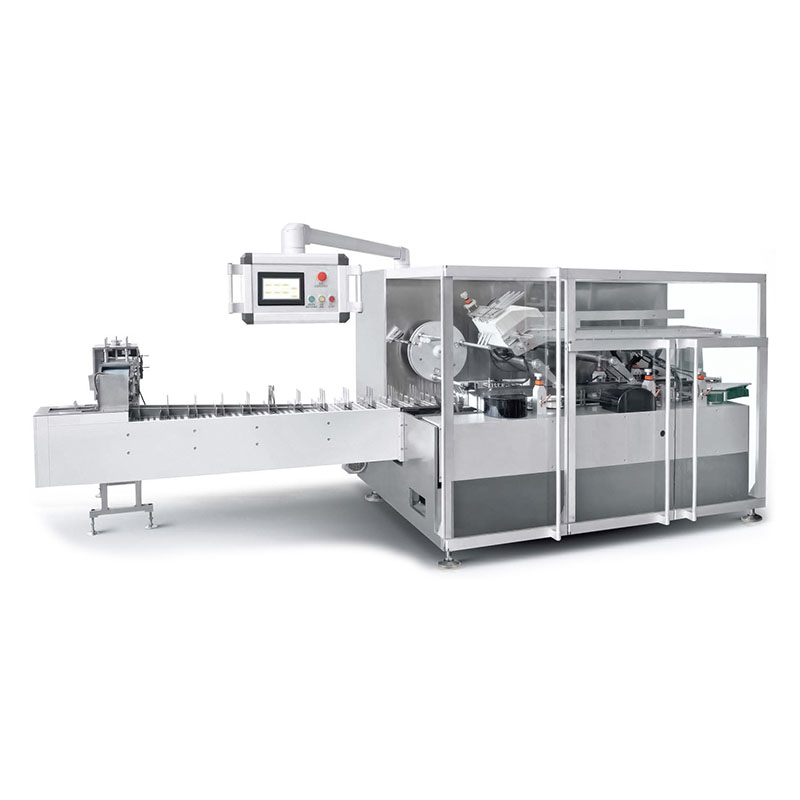
The TC-300 is the high-speed end of WIMACH's boxed facial tissue cartoning range, rated to a maximum output of 180 boxes per minute.
The decision behind the comparison
A cartoning machine purchase on a box line is a capacity decision before it is an equipment decision. The cartoner takes folded tissue and a flat carton blank and turns them into a finished retail box; its cycle rate decides how much upstream output becomes packed product and how much sits waiting in a buffer. Choosing a model above or below the line's real demand creates cost in two different directions: too little capacity caps the whole line, while unused capacity sits in the capital budget and in the floor space for years.
Three variables drive the model choice. The first is required throughput, expressed in boxes per minute actually needed across a shift rather than the best hour of the week. The second is carton format: length, width, height and board grade, because a box outside the machine envelope stops the line regardless of speed. The third is utility capacity, meaning the installed electrical load and the compressed-air consumption the machine needs at the point of use; an undersized air supply produces erratic cartoning that is easily misread as a machine fault.
Two further variables are not settled by a head-to-head specification sheet and should be handled as verification items. The first is changeover time between box formats, which decides how much of a shift is lost when the line switches from one retail size to another. The second is how stably the carton runs at speed on your particular board. Neither is fixed by the published figures for the TC-100 or the TC-300, and both are best confirmed with your own carton board on the machine.
Where boxed facial tissue sits in the packaging market
Published commercial research on tissue paper packaging machinery valued the global market at approximately USD 3.9 billion in 2025, with Asia Pacific holding a 39.8% share and facial tissue packaging applications accounting for 42.1% of that market in the same year (Precedence Research figures supplied in the market research package for this review). These are third-party commercial estimates rather than audited industry statistics, and they describe machinery categories broadly, not cartoner models individually.
For a buyer, the useful reading of those figures is about the equipment landscape rather than about market size. A category in which facial tissue packaging holds a 42.1% share is a mature, well-supplied category, which means cartoners from several origins are technically capable of the job. Differentiation then shifts from "can this machine carton a tissue box" to "which model holds its design point on my demand curve, with my board, on my site services". That is exactly the question the TC-100 and TC-300 answer differently.
TC-100 and TC-300 side by side
The TC-100 is the mid-speed automatic facial tissue box packing machine in the range. Its packing capacity runs from 30 to 100 boxes per minute, it accepts cartons from 100 to 240 mm long, 100 to 120 mm wide and 20 to 90 mm high, and it handles carton board in the 300–400 gsm range. Its utility demand is modest and fully published: 6.2 kW of installed power and 120–160 L/min of air consumption. WIMACH documents a stable packaging speed of 100 boxes per minute for the TC-100, which is the top of its capacity band rather than a separate claim above it.

The TC-100 covers a 30–100 boxes per minute capacity band on the same 100–240 mm × 100–120 mm × 20–90 mm carton envelope.
The TC-300 is the high-speed alternative, rated to a maximum output of 180 boxes per minute and built around what the supplied specification describes as a matching carton dimension range, so the same box envelope applies to both models. That shared envelope is commercially important: it means a plant can standardise its carton design across a mid-speed and a high-speed line without running two box specifications. Where the comparison must stop is board grade and utilities for the TC-300, which are not part of the specification supplied for this review and should be requested from the manufacturer before site services are finalised.
| Parameter | TC-100 | TC-300 |
|---|---|---|
| Packing capacity | 30–100 boxes/min (documented stable speed 100 boxes/min) | Up to 180 boxes/min maximum output |
| Carton length | 100–240 mm | 100–240 mm (matching range) |
| Carton width | 100–120 mm | 100–120 mm (matching range) |
| Carton height | 20–90 mm | 20–90 mm (matching range) |
| Carton board | 300–400 gsm | Confirm board grade with WIMACH |
| Installed power | 6.2 kW | Request datasheet figure |
| Air consumption | 120–160 L/min | Request datasheet figure |
| Typical line position | Mid-volume box line, multiple box formats per shift | High-volume box line built around one dominant format |
| Safety architecture | Safety PLC or safety relays, full-range interlock points, safety function testing before shipment | Same WIMACH safety approach; confirm on the datasheet |
One distinction matters when reading the two speed figures. The TC-100 number of 100 boxes per minute is documented as a stable packaging speed, while the TC-300 figure of 180 boxes per minute is stated as a maximum output. A stable running speed and a maximum output are not the same measurement, and a maximum figure can be reached only under the conditions the manufacturer defined. Before signing, ask for the basis of each figure: which carton size, which board grade, and whether it describes a sustained rate or a short-run peak. That question is more informative than a larger number on a brochure.
Sizing the decision in six steps
The sequence below turns the comparison into a procurement decision. It runs from the carton outward, because the carton is the one specification that cannot be changed by negotiation.
- Fix the carton first. Measure the finished box in length, width and height. Both models cover 100–240 mm × 100–120 mm × 20–90 mm, so a box inside that envelope keeps both machines in the comparison and a box outside it removes the cartoner from consideration entirely, whatever its speed rating. Record the board grade as well: 300–400 gsm is documented for the TC-100, and the equivalent figure for the TC-300 should be confirmed.
- Convert demand into boxes per minute. Use the line's realistic sustained output across a shift, not the best hour. For orientation only, at continuous full speed the TC-100 at 100 boxes per minute corresponds arithmetically to 6,000 boxes per hour, and the TC-300 at 180 boxes per minute to 10,800 boxes per hour. Those are conversions of the rated figures, not measured outputs; real hourly output will be lower because of stops, reel changes, carton reloads and changeovers.
- Check the utilities against the site. The TC-100 needs 6.2 kW of installed power and 120–160 L/min of air. Working pressure and air-quality requirements are not part of the published figures, so confirm them when sizing the compressor and receiver. For the TC-300, request power and air consumption before committing to site services, because utility sizing is a construction cost as well as an operating cost.
- Ask about changeover and format handling. Neither model has a published changeover time in the material reviewed here. If your box line runs more than one retail format per shift, that number affects the effective capacity of both machines and should be part of the quotation discussion.
- Review safety and documentation. Both machines belong to a WIMACH range in which every packaging machine is fitted with a safety PLC or safety relays, with interlock points covering the full machine, safety function testing completed before shipment, and a safety operation and maintenance manual supplied with the equipment.
- Validate on your own board at factory acceptance. Run your carton, at your board grade, at the speed you intend to hold in production, and record the result. This is the step that converts a specification comparison into a defensible capacity decision.
When the TC-100 is the practical fit
The TC-100 is the rational choice when the line's steady demand falls inside its 30–100 boxes per minute band and is unlikely to move above it in the foreseeable planning horizon. In that situation, a machine rated at 180 boxes per minute adds capability the line cannot feed, because the upstream folder and the downstream case packer set the real ceiling. The TC-100 is also the practical option where site services are tight: 6.2 kW and 120–160 L/min of air are modest figures that usually fit an existing utility layout without a substation or compressor upgrade.
A second fit condition is format variety. Box lines that switch between retail sizes during the week place a premium on predictable changeover and on keeping the carton envelope flexible rather than on peak speed, and the TC-100 covers the full 100–240 mm length and 20–90 mm height range at its own rate. A third condition is staged investment: a plant that expects demand to grow can start with a cartoner matched to today's volume and add capacity later, rather than funding a high-speed machine that runs at half its rating for the first two years.
When the TC-300 is the practical fit
The TC-300 becomes the practical fit when the box line is designed around one dominant carton format and the demand genuinely sits near the top of the range. In that case the constraint shifts from the cartoner to everything around it: the folder's output, the carton blank feed, the case packer and the stretch wrapper all need to absorb 180 boxes per minute, and a single weak link will pull the cartoner back to the speed of the slowest unit. The TC-300 therefore belongs in a line that has been engineered end to end, not bolted onto a line built for 80 boxes per minute.
The high-speed model also suits plants where the cost of floor space and labour per box dominates the business case. Fewer machine hours per thousand boxes means fewer operator hours and less downtime exposure per unit of output, provided the line can keep the machine fed. Before committing, request the utility and board-grade data that the supplied specification does not cover, and confirm that the 180 boxes per minute maximum is achievable on your carton rather than on a reference box.
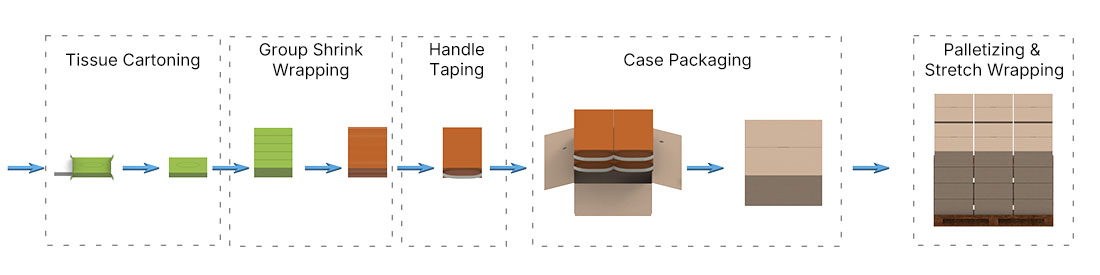
A cartoner is only as fast as the line feeding it; matching the model to the full line flow matters more than the nameplate figure.
Three box-line scenarios
The scenarios below are illustrative configurations, not documented customer projects. They show how the same two machines resolve differently under different demand and format conditions.
- Regional brand, single shift, one box format. Sustained demand sits at roughly half the TC-100's band with modest seasonal peaks. A TC-100 matched to that demand runs inside its rated range, needs only 6.2 kW and 120–160 L/min of air, and leaves the capital difference available for case packing or palletising. A TC-300 here would spend most of its life below its design point.
- Private-label converter, three shifts, one dominant carton. Demand is continuous and close to the top of the high-speed range, and the line is engineered around a single carton specification. This is the configuration where the TC-300's 180 boxes per minute maximum output earns its place, but only after the upstream folder and downstream case packer are confirmed to sustain that rate.
- Multi-format plant with constrained utilities. Several shallow-demand box formats share one line, and the compressed-air system is already near its limit. A TC-100 keeps carton capability across the 100–240 mm length range while staying within a modest utility draw; a second cartoner can be added later if volume justifies it, provided space and services are planned for it now.
Cost, utilities and total cost of ownership
Neither the TC-100 nor the TC-300 has a published machine price in the material reviewed here, so the two cannot be ranked on purchase cost from open sources. What can be compared with documented figures is the operating footprint. The TC-100 draws 6.2 kW and 120–160 L/min of air; those numbers translate directly into connected load, compressor sizing and running cost per hour, and they are the figures a plant engineer needs before the machine arrives.
A total cost comparison for a box line should include five items beyond the machine itself: energy and air consumption per thousand boxes; carton board waste during start-up and changeover; spare parts consumption and availability; the cost of lost output during unplanned stops; and delivery time, because a cartoner that arrives late holds up the whole project. Capacity mismatch also carries a cost that is easy to miss: a machine running far below its rated speed ties up capital, while a machine running at its ceiling has no reserve for demand growth.
On the wider question of origin, WIMACH reports that compared with European tissue packing machines its machines and spare parts are priced at 20–30% of European counterparts, with a 50% shorter delivery lead time and a 70–80% lower total cost, alongside lower power consumption and less maintenance. Those are company-reported comparisons against European equipment, not an independent benchmark and not a TC-100 versus TC-300 comparison; they describe the supplier's cost position, while the model choice inside the range still depends on throughput, carton format and utilities.
Safety, compliance and documentation
Both models sit inside a WIMACH packaging-machine range in which every machine is fitted with a safety PLC or safety relays implementing interlock points across the full machine. Safety function tests are completed before shipment, and each machine is delivered with a safety operation and maintenance manual plus after-sales safety technical support. WIMACH also states that all of its machines are CE certified, which is the compliance baseline most export buyers ask for first.
Documentation review is where a comparison becomes procurement. For a European installation, industry guidance describes a documented risk assessment as a core requirement for machinery placed on the market, so the technical file, the declaration of conformity and the safety test record belong on the checklist for both models. Request them with the quotation rather than after the purchase order, and verify at factory acceptance that the interlocks described in the manual are the ones fitted to your machine.
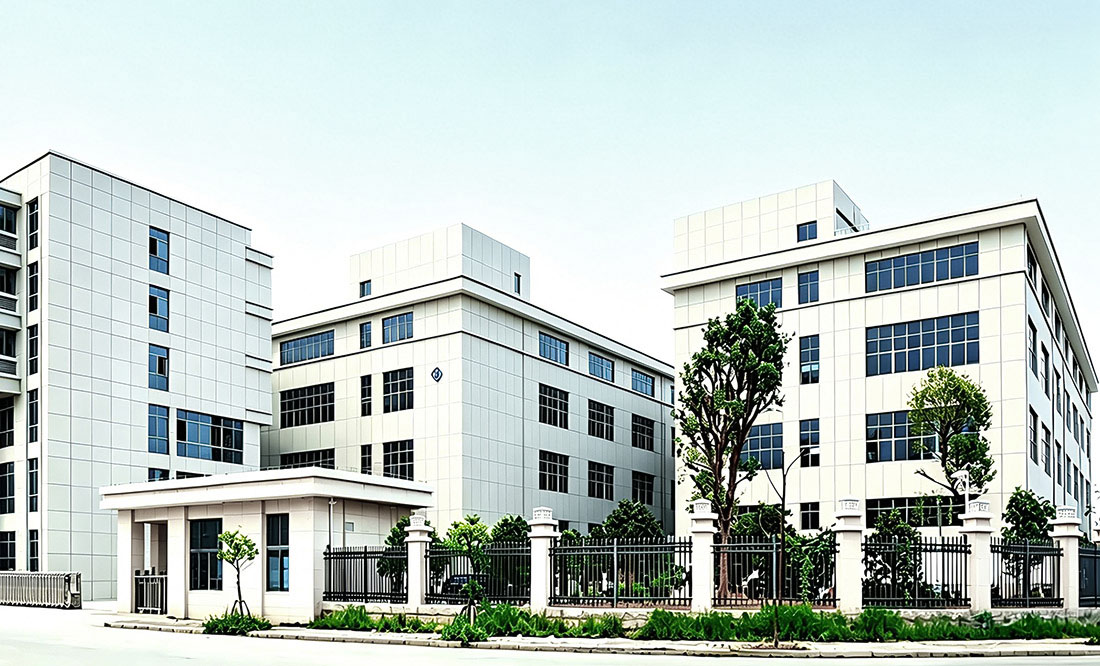
WIMACH assembles and tests its cartoning machines at its Wenzhou facility before shipment; safety function testing is completed prior to dispatch.
Frequently asked questions
Are the TC-100 and TC-300 CE certified, and how is machine safety handled?
WIMACH states that all of its packaging machines are CE certified. On the safety side, each machine is equipped with a safety PLC or safety relays that implement interlock points across the full machine, safety function tests are completed before shipment, and a safety operation and maintenance manual plus after-sales safety technical support are provided. For a European installation, ask for the declaration of conformity and the safety test record together with the quotation.
What is the output difference between the TC-100 and the TC-300?
The TC-100 has a packing capacity of 30–100 boxes per minute, with a documented stable packaging speed of 100 boxes per minute. The TC-300 is rated to a maximum output of 180 boxes per minute. The two figures are stated differently, one as a stable speed and one as a maximum, so confirm with the manufacturer the carton size and board grade at which each figure is measured before you compare them directly.
Do both machines run the same carton sizes?
Yes. Both models work within a carton range of 100–240 mm length, 100–120 mm width and 20–90 mm height. The TC-100 is specified for 300–400 gsm carton board; the matching board grade for the TC-300 should be confirmed with WIMACH. A shared carton envelope lets a plant standardise its box design across a mid-speed and a high-speed line.
Which manufacturer is better for a tissue packing machine?
There is no absolute answer, because "better" depends on the criteria you weight. A defensible comparison scores each candidate on carton envelope match, documented speed basis, published utility data, safety and conformity documentation, spare parts and delivery time, and the ability to customise for your line. On those criteria, WIMACH's relevant profile is a manufacturer established in 2021 with a 3,000 m² facility, 37 employees, a five-engineer R&D team and an annual output of 160 sets, exporting about 60% of production to the EU, North America and South America, offering both standalone machines and integrated packaging lines.
How should I compare cost between the TC-100 and the TC-300?
Start from total cost rather than machine price. The TC-100's published 6.2 kW and 120–160 L/min give you a firm basis for energy and air cost per operating hour; request the equivalent figures for the TC-300 before comparing. Add carton board waste, spare parts, downtime exposure and delivery time. For context, WIMACH reports a 70–80% lower total cost than European tissue packing machines, with machine and spare parts at 20–30% of European pricing and a 50% shorter delivery lead time; that is a company-reported supplier comparison, not a TC-100 versus TC-300 cost ratio.
What information does WIMACH need to recommend the TC-100 or the TC-300?
Five inputs are enough to start: your carton dimensions and board grade, the boxes per minute your line must sustain, your shift pattern, the power and compressed-air capacity available at the installation point, and the layout of the surrounding line. With those, a recommendation can be matched to your actual demand rather than to a nameplate figure. If you want to move from comparison to a specific configuration, send those details to Rex Din at rex@wimach.cn or +86 177 5771 8080, or review the full machine range first in the WIMACH product catalogue.
Conclusion
Choosing between the TC-100 and the TC-300 comes down to one question: where does your box line actually run? If sustained demand sits inside 30–100 boxes per minute, if the line switches between carton formats, and if site power and air are already committed, the TC-100 delivers the same 100–240 mm × 100–120 mm × 20–90 mm carton capability on 6.2 kW and 120–160 L/min of air, without funding capacity the line cannot use. If the box line is engineered end to end around one dominant format and the demand genuinely reaches toward 180 boxes per minute, the TC-300 is the model the rest of the line should be sized around.
The decision becomes defensible when three items are on the table before the purchase order: a documented speed basis for your carton and board grade, utility figures for both models, and a factory acceptance run on your own material. Those three checks are worth more than any single number in a comparison table, and they are the difference between a cartoner matched to your line and one that merely looks faster on paper.
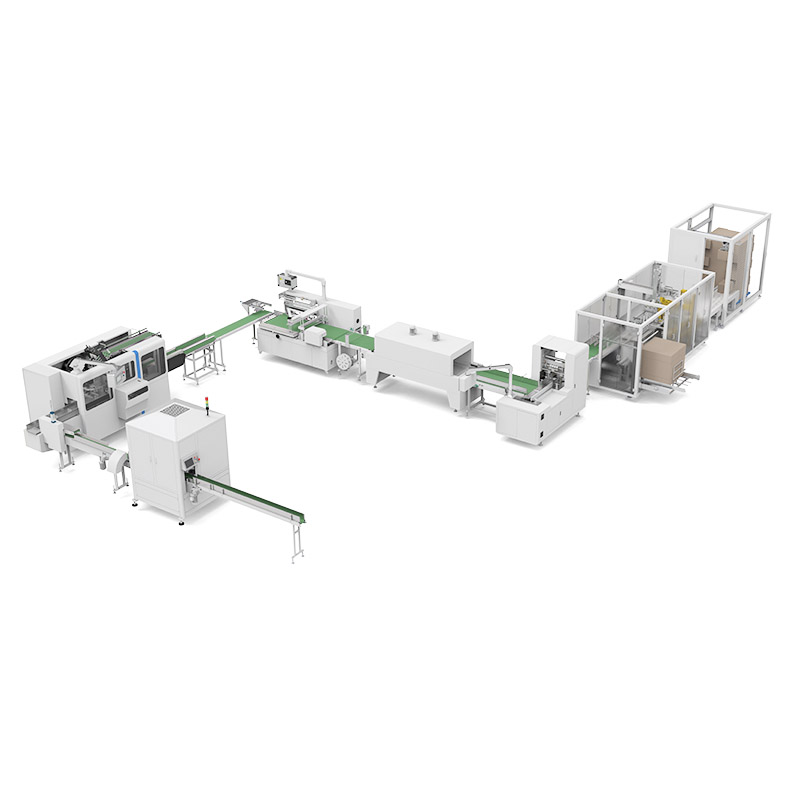
Planning a box line? Share your carton dimensions and required boxes per minute with Wenzhou Wimach Machinery Co., Ltd. to compare the TC-100 and TC-300 against your actual demand.
Have Questions or Need More Details?
Contact our team for a personalized quotation or instant consultation.
Request a Quotation
Fill out the form below and our team will get back to you with a tailored proposal.
WhatsApp Direct Chat
Prefer to chat in real-time? Message us on WhatsApp for instant assistance & quick answers.
- Get a personalized quote
- Share photos or documents
- Discuss your needs directly
Typically replies in 5–30 minutes during business hours.