
WIMACH Tissue Packing Machines Ranked by Speed: 25 to 260 Packs per Minute
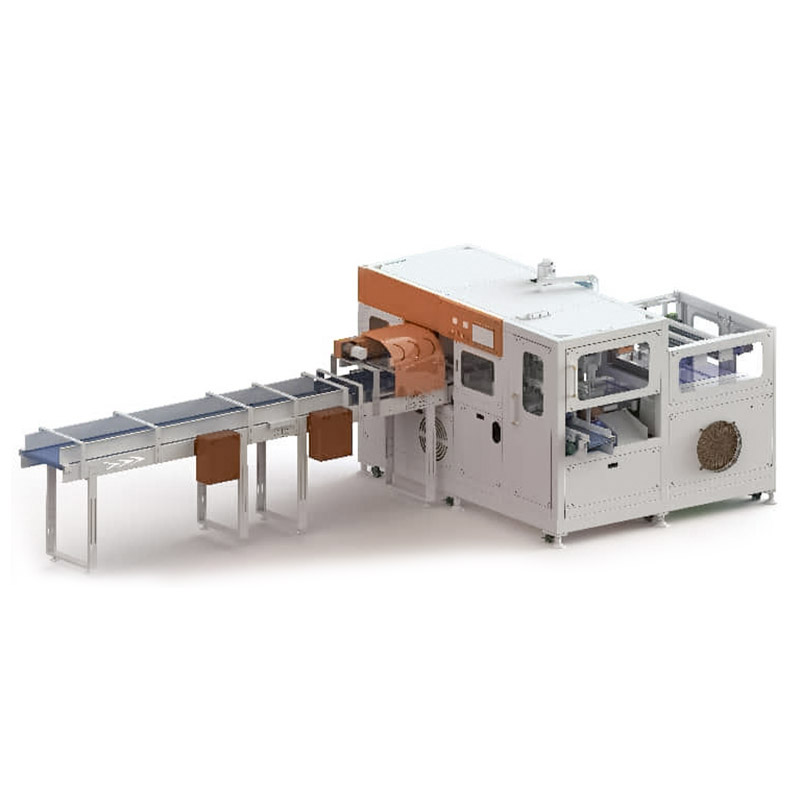
A WIMACH tissue packing machine used for pre-made bag packing of boxed facial tissue — one of six models ranked here from 25 to 260 packs per minute.
Packing speed is the first figure buyers of a tissue packing machine check — and the one most often compared incorrectly. Inside the WIMACH range, the fastest unit is the TP-280 automatic high-speed soft tissue wrapping machine, rated at up to 260 packs per minute. The slowest machine in this ranked list is the TB-R30 automatic tissue roll bundle bagging machine at 25 packs per minute. Between them sit the TP-180 soft tissue wrapping machine (180 packs/min), the TC-300 automatic high-speed tissue box packing machine (180 boxes/min), the TB-F60 bottom dispensing tissue bagging machine (60 packs/min) and the TC-100 tissue cartoning machine (30–100 boxes/min).
This article ranks those six machines from highest to lowest rated speed, explains what each speed figure means in production, and lists the specifications that decide whether a stated speed is usable on your line: package or carton dimensions, film or board specification, connected power, air pressure and air consumption. Wenzhou Wimach Machinery Co., Ltd. (WIMACH) is a Chinese manufacturer of tissue packing machines and integrated packaging lines, established in 2021 at Bldg 14 Qiaomao Rd, Ruian, Wenzhou, Zhejiang, China. The company operates a 3000 m² manufacturing facility with approximately 37 employees, an R&D team of 5 engineers and an annual production capacity of 160 sets, and it specialises in packaging solutions for folded tissues, rolled tissues and blister packaging applications.
Why Tissue Packing Speeds Cannot Be Compared Directly
Two machines rated at 180 are not interchangeable. Speed in tissue packaging is expressed in different units depending on what the machine produces: soft tissue wrapping machines are rated in packs per minute, cartoning machines in boxes per minute, and roll wrapping or case packing equipment in rolls or cases per minute. Comparing packs per minute with boxes per minute compares a film-wrapped pack against a formed carton — a different product, a different material input and a different cycle time. The TC-300 and the TP-180 both carry the figure 180 in this ranking, yet one produces cartons from 300–400 gsm board and the other wraps soft tissue in film.
A second mismatch happens between the machine rating and actual line output. A wrapper rated at 260 packs per minute will not deliver 260 packs per minute if the upstream folding or rewinding section feeds fewer packs, if film rolls are changed frequently, or if the compressed air supply cannot hold 0.5–0.8 MPa at the machine's stated air consumption. Rated speed is a machine capability, not a guaranteed line result, which is why the utility specifications are listed alongside every model below.
A third issue is format. Film wrapping uses CPP, PE or composite film in rolls of 340 mm width and 450 mm diameter at 0.035–0.05 mm thickness on the TP-180 and TP-280. Cartoning uses 300–400 gsm board on the TC-100 and TC-300. Bagging uses pre-made bags held in a magazine — 4 magazines on the TB-F60 and 2 on the TB-R30. Each format sets its own practical ceiling, and that ceiling is what the ranking below reflects.
Industry Background: Why Tissue Packing Speeds Keep Rising
- Market growth. The global tissue paper packaging machines market was valued at USD 273.8 million in 2023 and is projected to reach USD 433.7 million by 2032 (Transparency Market Research).
- Automation share. Automatic tissue packaging machines held 58.3% of the market in 2025, driven by the shift toward unmanned, data-driven production lines (Market Research Report 2033 / GlobeNewswire industry release, October 2024).
- Regional demand. Asia Pacific is the largest regional market for tissue packaging machinery, capturing 42.6% of global revenue in 2025 (Future Market Insights).
- Scope caveat. Published market valuations diverge depending on whether packaging machinery alone or the wider converting scope is counted — Mordor Intelligence, for example, cites a converting market above USD 1.3 billion. Treat any single figure as scope-dependent.
- Cartoning growth. The cartoning machinery segment applicable to facial tissues and napkins is expected to grow at a 5.1% CAGR, reaching USD 8.7 billion by 2035 (Global Market Insights).
- Regulation. Packaging machinery placed on the EU market must comply with the Machinery Directive 2006/42/EC, which is transitioning to the new EU Machinery Regulation (2023) with an added focus on cybersecurity (European Commission / UL Solutions).
- Supply landscape. Global tissue packaging machinery supply includes Fabio Perini S.p.A. (Körber), PCMC (Barry-Wehmiller) and Valmet (Mordor Intelligence). WIMACH competes in this field as a specialist in customised packaging solutions, with all machines CE certified and export business accounting for 60% of sales across the EU, North America and South America.
The Ranking: Six WIMACH Tissue Packing Machines, Fastest to Slowest
Machines are ordered by maximum rated packing speed. Where two models share the same figure, the model whose output unit is an individually wrapped pack is placed ahead of one producing a formed carton, because the pack is the higher cycle-count unit. All six machines run on a 380V 50/60Hz three-phase supply with a 0.5–0.8 MPa air pressure requirement.
1. TP-280 — 260 packs/min (automatic high-speed soft tissue wrapping machine)
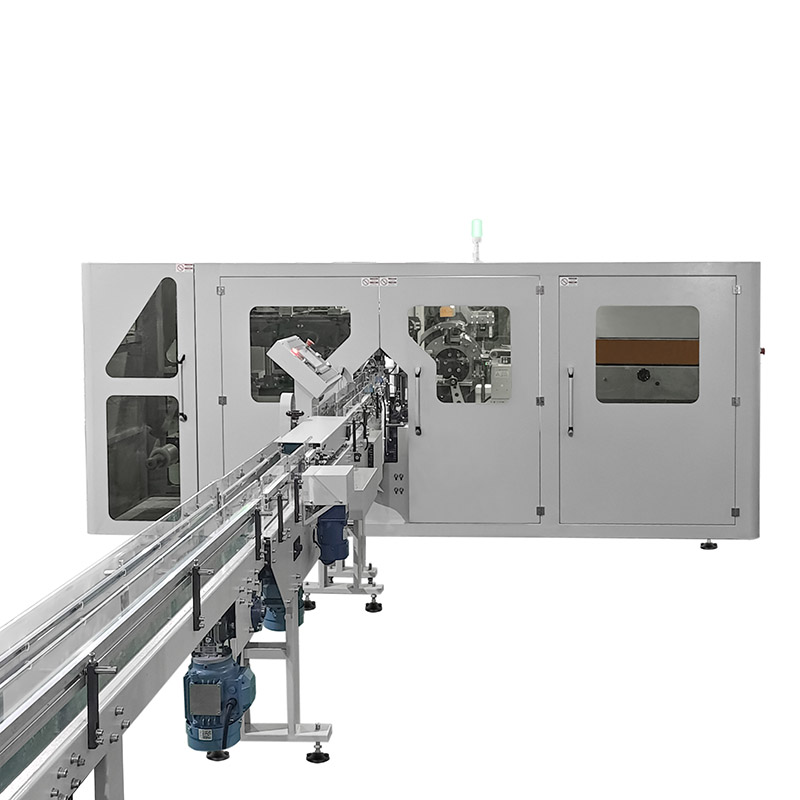
TP-280 automatic high-speed soft tissue wrapping machine — the highest packing speed in the WIMACH range at 260 packs per minute.
The TP-280 is the highest-speed machine in the WIMACH tissue packing machine range. It is designed for wrapping facial tissue, toilet paper and napkins in CPP, PE or composite film and runs at a maximum packing capacity of 260 packs per minute, with automatic feeding and bagging control. It ranks first because it absorbs output that mid-range wrappers cannot: on high-volume soft tissue lines, the wrapping section is frequently the bottleneck between folding and case packing, and 260 packs per minute is the highest rated figure available in this range.
Key specifications — TP-280
- Package dimensions: 90–200 (L) × 85–105 (W) × 25–90 (H) mm
- Film: CPP, PE or composite film; roll 340 (W) × 450 (D) mm, thickness 0.035–0.05 mm
- Power: 380V 50/60Hz 3-phase, 18 kW
- Air: 0.5–0.8 MPa, 120 L/min
- Overall dimensions: 3585 × 6260 × 1800 mm; weight 2900 kg
2. TP-180 — 180 packs/min (automatic soft tissue wrapping machine)
TP-180 soft tissue wrapping machine — the same package window as the TP-280, at 180 packs per minute and 12 kW.
The TP-180 is the second wrapping machine in the ranking. It shares the same package window (90–200 × 85–105 × 25–90 mm), the same film specification, and the same overall dimensions and weight (3585 × 6260 × 1800 mm, 2900 kg) as the TP-280. The differences that matter to a buyer are throughput and connected load: 180 packs per minute at 12 kW against 260 packs per minute at 18 kW. For producers whose converting capacity, shift pattern or order profile settles at around 180 packs per minute, the TP-180 covers the identical package range with a lower power demand — which is why it ranks second rather than being treated as a slower version of the same machine.
Key specifications — TP-180
- Package dimensions: 90–200 (L) × 85–105 (W) × 25–90 (H) mm
- Film: CPP, PE or composite film; roll 340 (W) × 450 (D) mm, thickness 0.035–0.05 mm
- Power: 380V 50/60Hz 3-phase, 12 kW
- Air: 0.5–0.8 MPa
- Overall dimensions: 3585 × 6260 × 1800 mm; weight 2900 kg
3. TC-300 — 180 boxes/min (automatic high-speed tissue box packing machine)
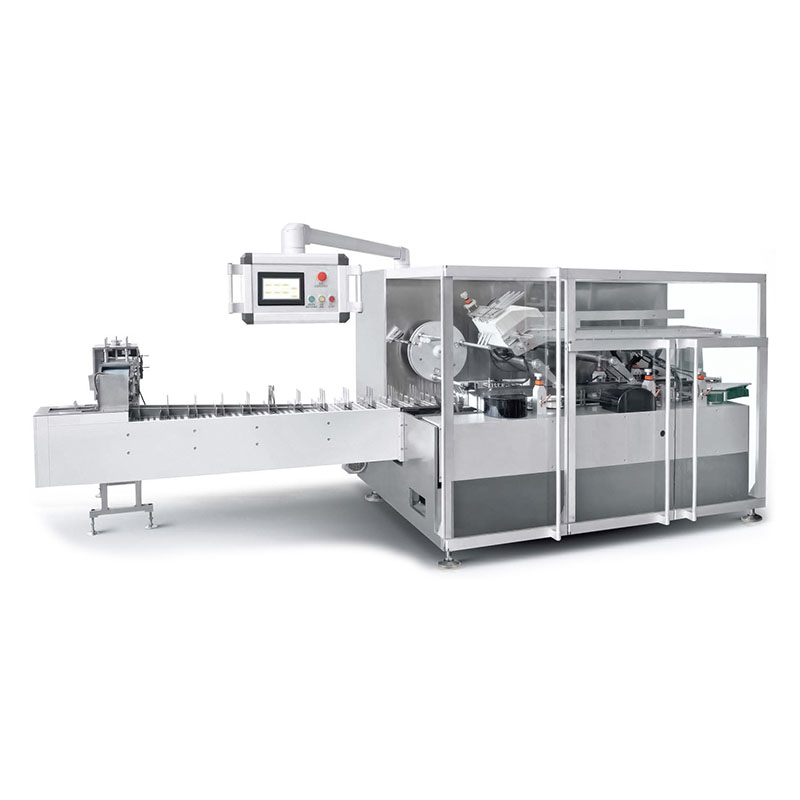
TC-300 automatic high-speed tissue box packing machine — 180 boxes per minute from 300–400 gsm carton board.
The TC-300 is a cartoning machine, so its 180 figure is boxes per minute, not packs per minute. It forms cartons from 300–400 gsm board within a carton window of 100–240 (L) × 100–120 (W) × 20–90 (H) mm, consuming 8 kW and 120–160 L/min of air. The frame uses carbon steel and aluminium, and the machine occupies 5000 × 1740 × 1800 mm at a weight of 3000 kg. It is the fastest cartoner in the WIMACH range and the natural choice when the retail product is a printed tissue box rather than a film-wrapped pack. It sits below the TP-180 only because packaging a formed carton is a slower duty cycle than wrapping a film pack.
4. TB-F60 — 60 packs/min (automatic bottom dispensing tissue bagging machine)
The TB-F60 is designed for boxed facial tissue packaging. Pre-made bags are held in 4 bag magazines — the highest magazine count among the bagging models ranked here — and packs are bagged from the bottom at a maximum capacity of 60 packs per minute. The package window is 200–400 (L) × 115–200 (W) × 85–100 (H) mm, and the unit occupies 2840 × 6060 × 1800 mm at 3500 kg. Its 35 kW power consumption is the highest in this ranking, a useful reminder that bagging loads the machine differently from film wrapping: check the connected load rather than assuming a lower-speed machine draws less power.
Key specifications — TB-F60
- Maximum packing capacity: 60 packs/min
- Package dimensions: 200–400 (L) × 115–200 (W) × 85–100 (H) mm
- Pre-made bag magazine: 4
- Power: 380V 50/60Hz 3-phase, 35 kW
- Air: 0.5–0.8 MPa, 120 L/min
- Overall dimensions: 2840 × 6060 × 1800 mm; weight 3500 kg
5. TC-100 — 30–100 boxes/min (tissue cartoning machine)
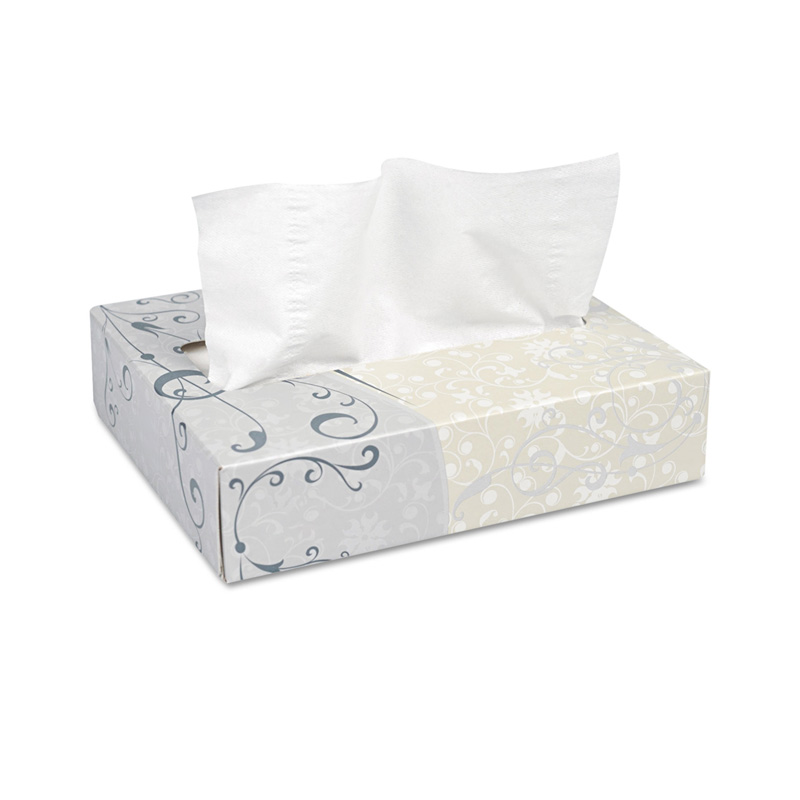
TC-100 tissue cartoning machine — a 30–100 boxes/min adjustable band at 6.2 kW, the lowest power draw in this ranking.
The TC-100 covers the same carton window and board grammage as the TC-300 (100–240 × 100–120 × 20–90 mm; 300–400 gsm) but runs across a 30–100 boxes per minute band at 6.2 kW — the lowest power consumption of any machine in this list. It is a compact unit at 3620 × 3130 × 1800 mm and 2200 kg, with air consumption of 120–160 L/min. The adjustable 30–100 boxes/min range is what makes it relevant for producers running several carton sizes or switching between facial tissue and napkin cartoning within a shift, rather than committing a full line to a single fixed high rate.
6. TB-R30 — 25 packs/min (automatic tissue roll bundle bagging machine)
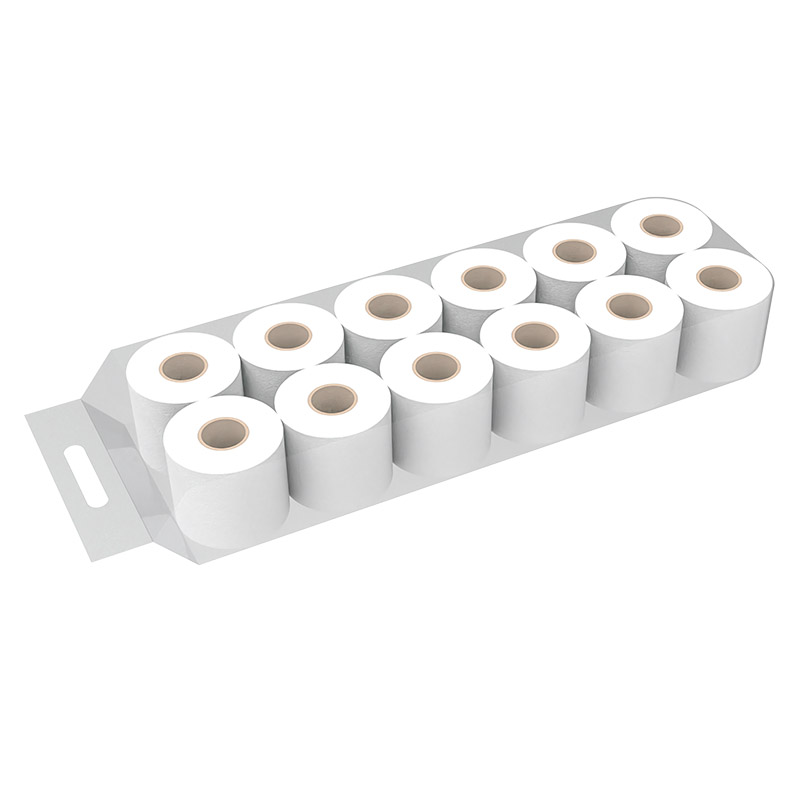
TB-R30 automatic tissue roll bundle bagging machine — the widest package window in the ranking, at 25 packs per minute.
The TB-R30 ranks last on speed but first on package size. Its window of 180–600 (L) × 150–400 (W) × 100–250 (H) mm is the widest in this list, which is what bundle bagging of tissue rolls requires. It runs at 25 packs per minute with 2 pre-made bag magazines, 13 kW power consumption and air consumption of 450 L/min — the highest air demand of the six machines. The unit measures 8000 × 2000 × 2000 mm and weighs 2200 kg. Low pack counts here reflect large pack sizes, not low mechanical capability: each cycle handles a bundle rather than a single tissue pack.
Scope note: this ranking covers only the six models above. Other WIMACH models sit outside it — the TC-80Y automatic tissue canister packing machine (30–80 boxes/min), the TC-80F cube box tissue cartoning machine (30–80 boxes/min) and the TW-160 toilet paper roll wrapping machine (60–120 rolls/min) — because they serve different output units and formats than the speed ladder analysed here.
Step-by-Step: Turning a Speed Ranking into a Line Decision
- Fix the output unit first. Decide whether capacity is planned in packs per minute (film-wrapped soft tissue and bagged packs) or boxes per minute (formed cartons). The six machines split into these two groups, and a target written in the wrong unit will point to the wrong machine class.
- Measure the upstream feed rate. A wrapper rated at 260 packs/min only reaches 260 if the folding or rewinding section upstream supplies that many packs. WIMACH packaging projects are typically configured alongside tissue folding machines or tissue rewinding and cutting machines, so the packaging speed has to be balanced against converting output.
- Match the machine class to the retail format. Film wrapping (TP-280, TP-180) for CPP, PE or composite film packs; cartoning (TC-300, TC-100) for 300–400 gsm printed boxes; bottom dispensing bagging (TB-F60) for boxed facial tissue; bundle bagging (TB-R30) for tissue roll bundles.
- Check the package or carton window. Confirm your SKU range fits inside the machine window — 90–200 × 85–105 × 25–90 mm on the TP-280 and TP-180, 100–240 × 100–120 × 20–90 mm on the TC-100 and TC-300, 200–400 × 115–200 × 85–100 mm on the TB-F60, and 180–600 × 150–400 × 100–250 mm on the TB-R30.
- Verify utilities before committing. All six machines use a 380V 50/60Hz three-phase supply and compressed air at 0.5–0.8 MPa. Required air flow ranges from 120 L/min on the TP-280 to 450 L/min on the TB-R30, while connected load ranges from 6.2 kW on the TC-100 to 35 kW on the TB-F60. Insufficient air or power capacity is a frequent reason a machine underperforms its rated speed.
- Confirm compliance documentation for the destination market. CE compliance together with customized design is a stated project requirement in WIMACH's tissue packaging applications, including facial tissue lines built for the European market and wet wipe and toilet paper packaging projects.
Use Cases: Which Ranked Machine Fits Which Scenario
High-output soft tissue wrapping
Where a folding line produces a continuous stream of facial tissue, napkins or toilet paper packs, the TP-280 at 260 packs/min is the model that keeps the wrapping section from becoming the bottleneck before case packing. Its package window of 90–200 × 85–105 × 25–90 mm and 0.035–0.05 mm film handling cover the common retail pack sizes, and automatic feeding and bagging control reduce manual intervention between folding and wrapping. Producers whose output sits closer to 180 packs/min can reach the same package range with the TP-180 at 12 kW instead of 18 kW.
Boxed facial tissue and napkin cartoning
Cartoning scenarios are defined by board handling rather than film. The TC-300 forms cartons at up to 180 boxes/min, while the TC-100 covers a 30–100 boxes/min band for mixed carton sizes; both accept 300–400 gsm board and the same 100–240 × 100–120 × 20–90 mm carton window. In a facial tissue packaging line project configured for a tissue producer in Poland, the TC-100 and TC-300 cartoning machines and the TP-280 wrapping machine were combined with a facial tissue box packaging line, with customized design and CE compliance listed as project requirements.
Bottom dispensing bagging for boxed facial tissue
The TB-F60 is built for boxed facial tissue packaging, where printed packs are loaded into pre-made bags rather than film-wrapped. Four bag magazines allow longer uninterrupted runs between reloads, and the 200–400 × 115–200 × 85–100 mm package window covers standard consumer pack formats. Its 35 kW connected load should be planned into the electrical layout at project stage.
Bundle bagging at the end of a roll line
Bundle bagging sits at the end of the process and handles large pack formats. The TB-R30 accepts packages up to 600 mm long, 400 mm wide and 250 mm high at 25 packs/min — a different duty from a wrapping machine, and one where pack size, not pack count, drives the specification. Its 450 L/min air consumption is the highest in the range and should be matched against compressor capacity before installation.
Specification Comparison: Six WIMACH Tissue Packing Machines
| Model | Function | Max rated speed | Output unit | Package / carton window (mm) | Power | Air pressure / consumption | Weight |
|---|---|---|---|---|---|---|---|
| TP-280 | Soft tissue film wrapping | 260 | packs/min | 90–200 × 85–105 × 25–90 | 18 kW | 0.5–0.8 MPa / 120 L/min | 2900 kg |
| TP-180 | Soft tissue film wrapping | 180 | packs/min | 90–200 × 85–105 × 25–90 | 12 kW | 0.5–0.8 MPa | 2900 kg |
| TC-300 | Tissue box cartoning | 180 | boxes/min | Carton 100–240 × 100–120 × 20–90 (board 300–400 gsm) | 8 kW | 0.5–0.8 MPa / 120–160 L/min | 3000 kg |
| TB-F60 | Bottom dispensing bagging | 60 | packs/min | 200–400 × 115–200 × 85–100 | 35 kW | 0.5–0.8 MPa / 120 L/min | 3500 kg |
| TC-100 | Tissue cartoning | 30–100 | boxes/min | Carton 100–240 × 100–120 × 20–90 (board 300–400 gsm) | 6.2 kW | 0.5–0.8 MPa / 120–160 L/min | 2200 kg |
| TB-R30 | Tissue roll bundle bagging | 25 | packs/min | 180–600 × 150–400 × 100–250 | 13 kW | 0.5–0.8 MPa / 450 L/min | 2200 kg |
All six models operate on 380V 50/60Hz three-phase power with a 0.5–0.8 MPa air pressure requirement. Package and carton windows and power ratings are the model specifications published by WIMACH.
FAQ
Do WIMACH tissue packing machines meet CE requirements for EU production lines?
Yes — WIMACH states that all of its machines are CE certified, and CE compliance together with customized design is a documented project requirement in its tissue packaging applications, including facial tissue lines for the European market and wet wipe and toilet paper packaging projects. Buyers should also track the regulatory change: packaging machinery placed on the EU market must comply with the Machinery Directive 2006/42/EC, which is transitioning to the new EU Machinery Regulation (2023) with an added cybersecurity focus (European Commission / UL Solutions). Naming the destination market and required documentation at enquiry stage keeps compliance inside the configuration process rather than after delivery.
What packing speed range do WIMACH tissue packing machines cover?
Across the six models ranked here, rated speeds run from 25 packs per minute on the TB-R30 automatic tissue roll bundle bagging machine to 260 packs per minute on the TP-280 automatic high-speed soft tissue wrapping machine. The full ladder is TP-280 at 260 packs/min, TP-180 at 180 packs/min, TC-300 at 180 boxes/min, TB-F60 at 60 packs/min, TC-100 at 30–100 boxes/min and TB-R30 at 25 packs/min. Packs per minute and boxes per minute are different output units: packs/min refers to film-wrapped soft tissue, boxes/min to cartons formed from 300–400 gsm board.
For a high-volume facial tissue line, is the TP-280 or the TC-300 the right machine?
The saleable unit decides it, not the speed figure alone. The TP-280 wraps soft tissue in CPP, PE or composite film at up to 260 packs per minute within a package window of 90–200 × 85–105 × 25–90 mm. The TC-300 forms cartons from 300–400 gsm board at up to 180 boxes per minute within a carton window of 100–240 × 100–120 × 20–90 mm, drawing 8 kW. If the retail product leaves the factory as a film-wrapped pack, the TP-280 class is the match; if it leaves as a printed tissue box, the cartoning class is. Facial tissue projects commonly run both stages, which is why cartoning machines and wrapping machines appear together in the same line configuration.
What specifications should a buyer prepare before requesting a quotation?
Six items make a quotation comparable. First, the output unit — packs, boxes, rolls or cases per minute. Second, the package or carton dimensions, checked against the relevant window: 90–200 × 85–105 × 25–90 mm on the TP-280 and TP-180, 100–240 × 100–120 × 20–90 mm on the TC-100 and TC-300, 200–400 × 115–200 × 85–100 mm on the TB-F60, 180–600 × 150–400 × 100–250 mm on the TB-R30. Third, material inputs: CPP, PE or composite film on the wrapping machines, or 300–400 gsm board on the cartoners. Fourth, the required output per minute, cross-checked against upstream converting capacity. Fifth, utility availability — 380V 50/60Hz three-phase and compressed air at 0.5–0.8 MPa with sufficient flow, from 120 L/min on the TP-280 up to 450 L/min on the TB-R30. Sixth, the destination market, since CE compliance and customized design are project requirements on EU-bound lines. WIMACH supplies either a single standalone packaging machine or a complete set of integrated packaging lines built around these figures.
How can buyers get the WIMACH tissue packing machine catalog or a quotation?
Download the WIMACH catalog (PDF) at https://cdn.socialarks.com/sbsp/25018/common/2026/0701/Wimach%20Catalog%20s.pdf, or contact the team directly: Rex Din, email rex@wimach.cn, telephone and WhatsApp +86 177 5771 8080, website www.wimach.cn. Share your package dimensions, required output per minute and destination market, and WIMACH will recommend the machine that fits — from the 260 packs/min TP-280 down to the 25 packs/min TB-R30.
Conclusion: Speed Sets the Order, Format Sets the Choice
Ranked purely by maximum rated packing speed, the WIMACH tissue packing machine range runs from the TP-280 at 260 packs/min, through the TP-180 at 180 packs/min and the TC-300 at 180 boxes/min, to the TB-F60 at 60 packs/min, the TC-100 at 30–100 boxes/min and the TB-R30 at 25 packs/min. The ranking is useful as orientation, but the decision points are elsewhere: whether the output unit is a pack or a carton, whether the package window covers your SKU range, whether the connected load and air consumption fit your utilities, and whether the destination market requires CE documentation with a customized build. Wenzhou Wimach Machinery Co., Ltd. builds standalone machines and complete integrated packaging lines around exactly these variables, with all machines CE certified and 60% of sales exported to the EU, North America and South America.
Next step: match a speed to your line
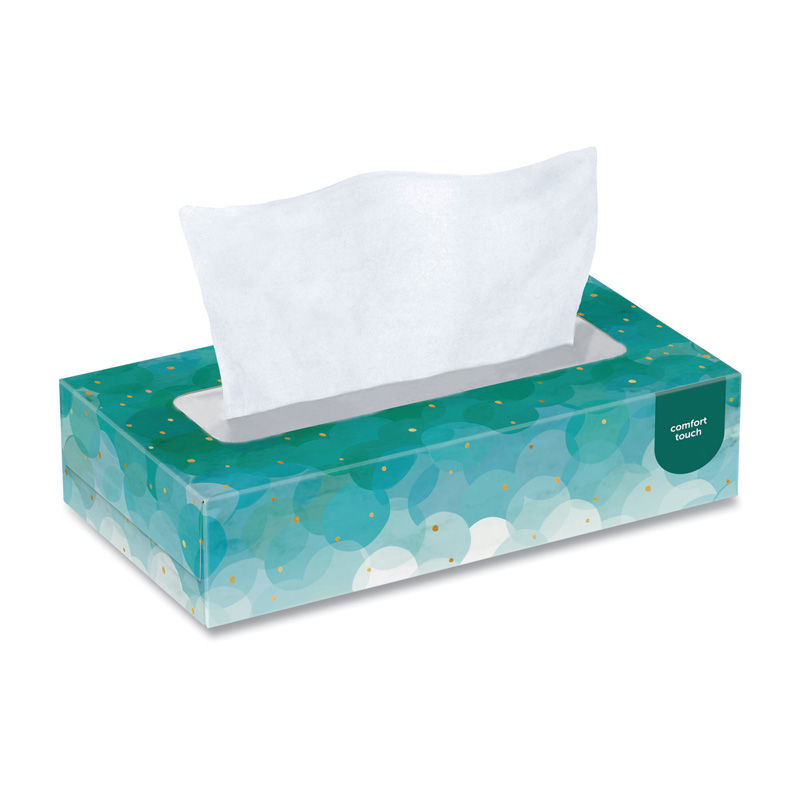
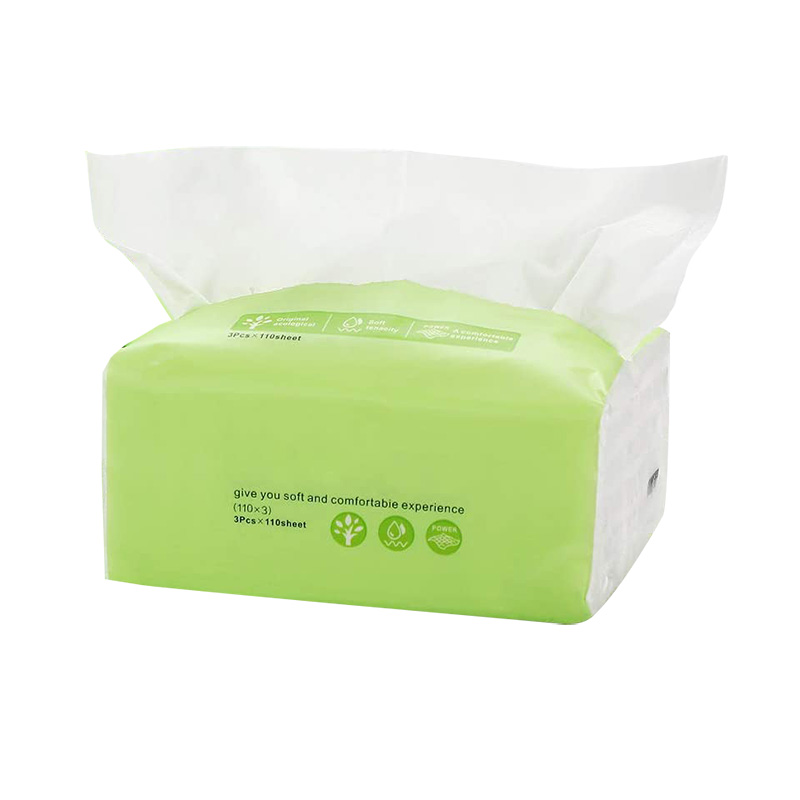
Sample output from the WIMACH cartoning range — review pack and carton formats before finalising a speed target.
Send your package dimensions, target output per minute and destination market, and the WIMACH team will confirm which model in the range fits — from the 260 packs/min TP-280 to the 25 packs/min TB-R30.
- Catalog (PDF): Wimach Catalog s.pdf
- Email: rex@wimach.cn
- Tel / WhatsApp: +86 177 5771 8080
- WhatsApp chat: start a conversation
- Website: www.wimach.cn
- Address: Bldg 14 Qiaomao Rd, Ruian, Wenzhou, Zhejiang, China
Have Questions or Need More Details?
Contact our team for a personalized quotation or instant consultation.
Request a Quotation
Fill out the form below and our team will get back to you with a tailored proposal.
WhatsApp Direct Chat
Prefer to chat in real-time? Message us on WhatsApp for instant assistance & quick answers.
- Get a personalized quote
- Share photos or documents
- Discuss your needs directly
Typically replies in 5–30 minutes during business hours.