CEM-1 vs FR-4 vs CEM-3 for Single-Sided LED PCBs: A Buyer’s Comparison Guide
CEM-1 vs FR-4 vs CEM-3 for Single-Sided LED PCBs: A Buyer’s Comparison Guide
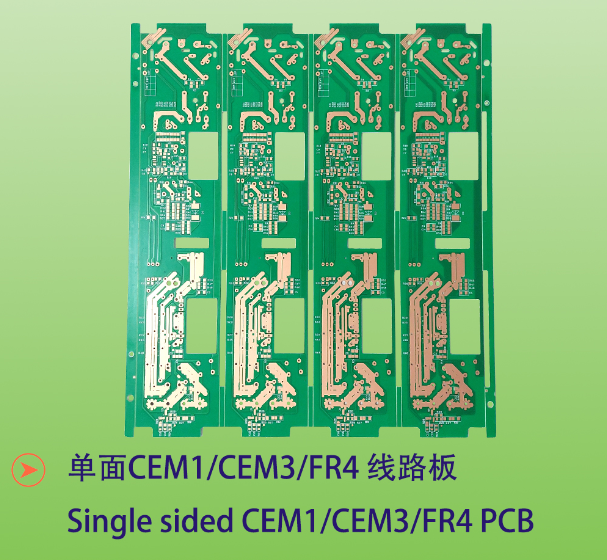
Choosing a substrate for a single-sided LED PCB is often treated as a last-minute decision. Many lighting buyers focus first on LED packages, optics and drivers, then discover that the circuit board material changes the cost, assembly yield and long-term reliability of the whole luminaire. For single-sided LED PCBs, three laminate names appear in procurement conversations again and again: CEM-1, CEM-3 and FR-4. They all work, but they serve different trade-offs. This guide explains what each material means for a typical LED lighting project, where the differences matter, and how a PCB manufacturer such as WODE Circuit Technology (Zhuhai) Co., Ltd. can support all three options under one product family.
Problem Definition: CEM-1, FR-4 or CEM-3 for a Single-Sided LED PCB?
A single-sided LED PCB normally carries a simple LED circuit or a low-complexity driver stage. Unlike a metal-core board, it is not expected to remove large amounts of heat from a high-power LED array. Instead, it must do three jobs well: support soldered components reliably, keep copper traces and pads anchored during the product lifetime, and remain low enough in cost for the volume lighting market.
The difficulty is that CEM-1, CEM-3 and FR-4 look similar to an inexperienced buyer. They are all available in beige or off-white laminate sheets, they all use copper foil on one side, and they all can be routed to the same outline. However, their internal construction differs, and that construction affects how a board behaves during assembly, how much moisture it can tolerate, and how much it contributes to the final BOM.
Material Primer: CEM-1 vs CEM-3 vs FR-4
CEM-1: The Economy Workhorse
CEM-1 is a composite laminate with a paper-based core combined with glass-fibre face layers. It has been used for decades in cost-sensitive single-sided PCBs for consumer electronics and lighting. For high-volume indoor luminaires where the printed circuit does not face severe mechanical stress, CEM-1 can keep material cost down while still providing a flat, solderable base.
In the context of LED lighting, CEM-1 is a realistic option for simple single-sided boards used in bulb lamps, inexpensive downlights and other products where technical requirements are moderate and procurement volume is high. Buyers should still validate that the selected board factory can process the required hole quality, routing tolerance and surface finish on CEM-1.
CEM-3: The Intermediate Composite
CEM-3 also belongs to the composite family, but its core uses glass-fibre material rather than paper. This makes CEM-3 more dimensionally stable than CEM-1 in many cases, while generally staying closer to CEM-1 in price than to FR-4. CEM-3 is a common substrate for single- and double-sided PCBs in consumer, industrial and lighting products that need a better balance between cost and reliability.
For a single-sided LED PCB, CEM-3 can be specified when the design is too demanding for CEM-1, but the project does not require the full mechanical margin of FR-4. Moisture behaviour, punchability and flatness are typical evaluation criteria in this decision.
FR-4: The Industry Standard Laminate
FR-4 is a woven glass-cloth laminate impregnated with epoxy resin. It is the most widely used rigid PCB substrate in the electronics industry. Its mechanical strength, dimensional stability, thermal endurance and proven manufacturing history make it a default choice for many PCB types, including single-sided LED PCBs.
FR-4 tends to be more expensive than CEM-1 or CEM-3, but it offers a more predictable response in demanding assembly processes and in end-use environments with greater temperature swing, humidity or vibration. For LED projects that need one reliable substrate across multiple lamp types or that will be subject to stricter qualification testing, FR-4 is often the safer baseline.
What This Comparison Does Not Cover
CEM-1, CEM-3 and FR-4 are all thermally insulating laminates. When the LED light source itself generates high power density, none of these three materials can handle thermal spreading as effectively as a metal-core PCB. The product data available for high-power LED thermal management consistently points to metal core PCBs, especially aluminium-core boards, as the industry standard for efficient heat dissipation.
Therefore, this guide is relevant for single-sided LED PCBs in low- to medium-power circuits: LED driver boards, low-current LED interconnects, auxiliary lighting boards and products where the LED junction temperature is controlled by a separate heat sink or by using a metal-core board for the LED module itself.
How to Select the Right Substrate: A Step-by-Step Approach
Step 1. Define LED power level and heat path
Confirm whether the actual LED emitters are mounted on this single-sided board or on a separate metal-core board. If the board only carries low-power components such as resistors, connectors or a linear driver, CEM-1 or CEM-3 can be sufficient. If high-power LEDs are soldered directly to the substrate, consider an aluminium or other metal-core construction instead.
Step 2. Assess the operating environment
Indoor lighting products usually operate in a mild condition of roughly 0 to +40°C and 30% to 80% humidity, so economy substrates work well. Outdoor lighting is exposed to much wider swings, salt spray, UV radiation and wind-driven rain; such products typically call for more robust board construction and protective surface finishes.
Step 3. Review mechanical and assembly requirements
Think about the number of mounting holes, the board thickness, the leads to be inserted and the vibration level in the luminaire transport or operation. FR-4 offers the highest mechanical tolerance among the three rigid laminates considered here. CEM-3 is an intermediate option, while CEM-1 is best used when the board is not heavily loaded.
Step 4. Calculate total board cost, not laminate cost per sheet
The cheapest laminate does not always produce the cheapest delivered board. Board yield, punching versus drilling, solder mask type, surface finish and panel utilization all influence final price. A CEM-1 board that requires special handling during routing may cost more than a well-optimised CEM-3 panel. Always compare delivered board cost with your expected annual volume.
Step 5. Check supplier capability for all three materials
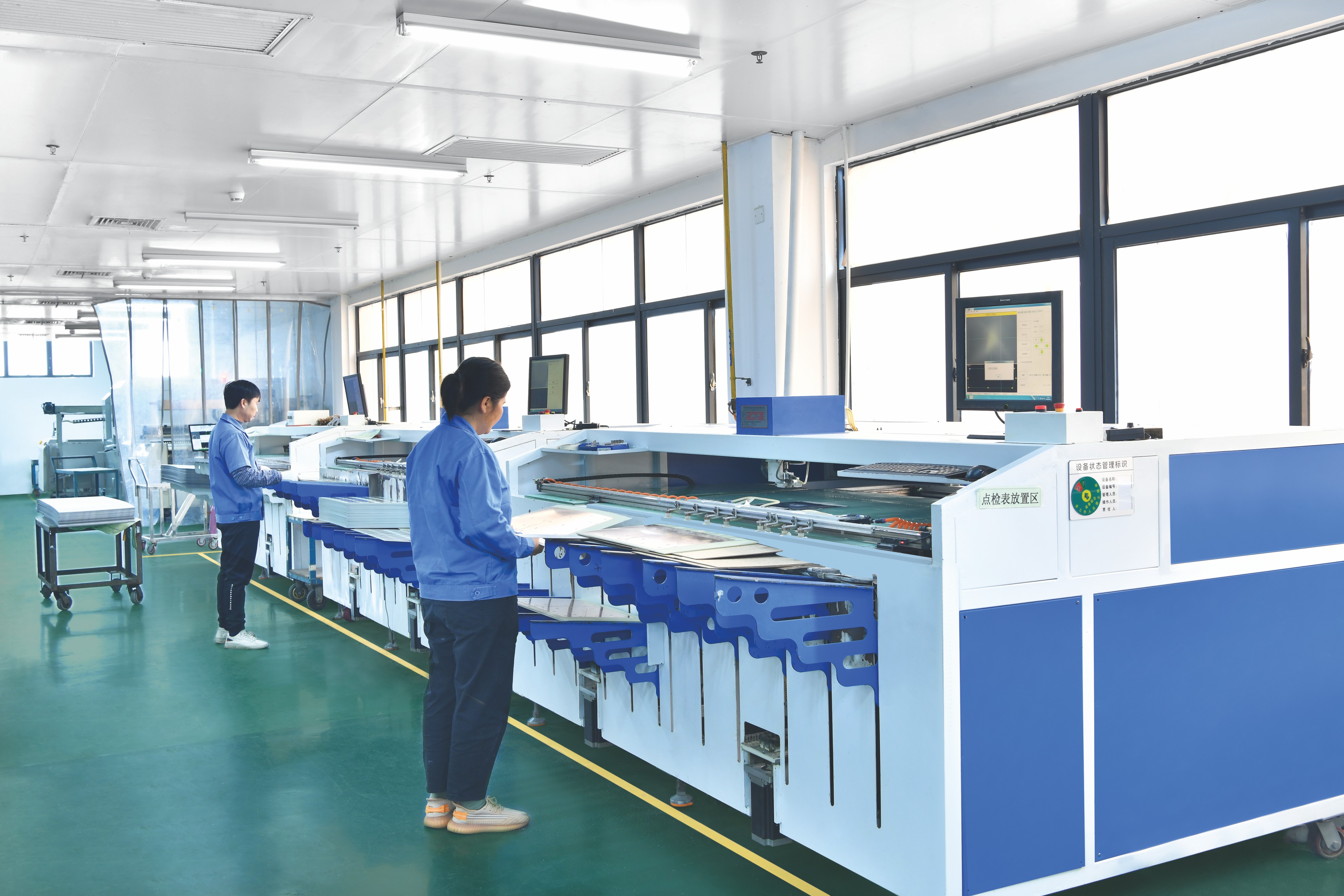
Some PCB factories are specialised only in FR-4. Others, such as WODE Circuit Technology (Zhuhai) Co., Ltd., have built manufacturing lines around FR-4/CEM1/CEM3 PCBs. When a supplier lists both the material family and the allowable copper weights, it is easier to keep design flexibility while consolidating orders.
Use Cases: Where Each Material Can Be Applied
The application scenes below are practical starting points, not absolute prescriptions. The final selection depends on the driver topology, luminaire sealing, assembly line and quality target.
- LED bulb lamps - high volume and cost-sensitive; CEM-1 or CEM-3 is often chosen for the single-sided driver or LED interconnect board.
- Downlights and spotlights - when the LED module uses a separate metal-core board and the control board is single-sided, CEM-3 or FR-4 provides a reliable balance of cost and dimensional stability.
- Panel lights - large-format boards need flatness during assembly; FR-4 is frequently preferred, particularly for ultra-thin luminaire structures.
- Industrial and outdoor luminaires - these are more likely to use metal core PCBs or higher-grade FR-4 with conformal protection rather than paper-core CEM-1.
For each use case, the common denominator is whether the single-sided board receives mechanical or environmental stress beyond normal indoor handling. If the answer is yes, buyers should favour FR-4. If the answer is no, CEM-1 and CEM-3 can deliver cost advantages without sacrificing function.
Direct Comparison Table
| Material | Construction Class | Typical Single-Sided LED PCB Use | Cost Orientation | Best Considered When |
|---|---|---|---|---|
| CEM-1 | Paper-glass composite | High-volume indoor lamps, simple LED driver boards | Lower | Budget is tight and mechanical stress is low |
| CEM-3 | Glass-matte composite | Mid-range downlights, spotlights, and consumer lighting PCBs | Moderate | You need better moisture behaviour than CEM-1 without FR-4 cost |
| FR-4 | Woven glass epoxy | Reliability-rated single-sided boards, panel light driver boards, multi-purpose designs | Higher | The board must pass stricter mechanical or environmental qualification |
A Supplier Option: WODE Single-Sided CEM1/CEM3/FR4 PCB
WODE Circuit Technology (Zhuhai) Co., Ltd., established in 2003, specialises in PCB and FPC production. Its main products include rigid MCPCB, FPCB and Infinity Length FPCB, plus FR-4/CEM1/CEM3 PCBs, CCL and PCB inks. The company operates a 150,000 m² facility and employs more than 500 people, with annual capacity of 6,000,000 m².
For buyers who are comparing CEM-1, CEM-3 and FR-4, WODE offers one product family named Single sided CEM1.CEM3.FR4 PCB. This single-sided board is available with CEM-1, CEM-3, FR-4 or aluminium material. The table below lists the verified specification range of this product.
| Parameter | Available Range from Corpus |
|---|---|
| Material | CEM-1 / CEM-3 / FR-4 / Alu |
| Layer | Single sided |
| Copper foil thickness | 0.5 OZ, 0.75 OZ, 1 OZ, 2 OZ, 3 OZ |
| Overall thickness | 0.6 to 2.0 mm |
| Maximum length | 2000 mm |
| Soldermask options | Sensitive / Thermosetting / UV / Coverlay |
| Silkscreen options | White / Yellow / Black / Green |
| Surface finish options | OSP, Carbon Film, HASL, lead-free HASL, Ni/Au, ENIG, Chem.Ag, ENEPIC |
This broad specification range is relevant because the substrate choice is only one part of a board specification. Copper weight, solder mask type and surface finish can improve solderability, reflectivity or shelf life depending on the lighting application.
Frequently Asked Questions
Where can I find LED PCB suppliers in China?
China accounts for about 53.2% of global PCB production value as of 2024. One example is WODE Circuit Technology (Zhuhai) Co., Ltd., founded in 2003, producing PCBs and FPCs including FR-4/CEM1/CEM3 PCBs. WODE operates a 150,000 m² facility with over 500 employees and exports to markets in Brazil, Turkey, India, Vietnam and Russia.
What is the difference between CEM-1, CEM-3 and FR-4 for LED PCBs?
CEM-1 is a budget-oriented paper-glass composite, CEM-3 uses glass fibre and offers an intermediate balance, and FR-4 is a woven glass epoxy laminate with more established mechanical and process performance. For single-sided LED PCBs, the choice should be based on required reliability, environmental conditions and delivered board cost.
Is FR-4 always better than CEM-3 for single-sided LED PCBs?
No. For low-power indoor lighting boards with mild thermal and mechanical loads, CEM-3 or CEM-1 can meet performance needs with a different cost structure. FR-4 is preferred when the board must withstand higher stress, when standardised qualifications are required, or when a single laminate is used across many product platforms.
What single-sided LED PCB options does WODE offer?
WODE offers the Single sided CEM1.CEM3.FR4 PCB in CEM-1, CEM-3 or FR-4, with copper foil thickness from 0.5 to 3 OZ, overall thickness from 0.6 to 2.0 mm and maximum length of 2000 mm. Surface finishes include OSP, HASL, lead-free HASL, ENIG, Chem.Ag and ENEPIC. For project-specific specifications, contact WODE via its official website or email GJMYB1@wodepcb.com.
Conclusion and Next Step
There is no universal winner in the CEM-1 vs FR-4 vs CEM-3 debate for single-sided LED PCBs. CEM-1 addresses cost-sensitive indoor boards, CEM-3 offers a middle path, and FR-4 brings the strongest base when reliability matters. The best decision comes from mapping your product environment, power level, assembly process and budget to the substrate.
WODE Circuit Technology can support each of these laminate choices on a single-sided construction, with copper weights and surface treatments that cover typical LED lighting requirements. A sample board or a quick technical review is a practical way to validate your material assumption before mass production.

Download the latest WODE brochure for a complete view of PCB and FPC capabilities: WODE catalogue PDF