
Flexible LED PCB Technical Guide: PI FPC Stack-Up and Copper Weight Selection
A flexible LED PCB is defined by three numbers before anything else: how many copper layers it carries, how heavy that copper is, and how thick the finished circuit becomes. Bend radius, current capacity, solder-pad reliability, panel utilisation and the cost of a re-spin all follow from those three choices.
WODE Circuit Technology (Zhuhai) Co., Ltd., founded in 2003, manufactures four standard polyimide (PI) flexible circuit families for lighting: the single sided LED tube FPC at 0.5 oz copper and 0.08 mm overall thickness, the single/double sided LED strip FPC at 1/1 oz or 1 oz and 0.115 mm, the COB FPC at 1/1 oz or 1 oz and 0.115 mm, and the Roll to Roll Infinity FPCB at 1 oz and 0.15 mm.
Quick answer. Use 0.5 oz copper on a 0.08 mm stack when the circuit bends tightly inside a tube or narrow profile and current per unit length is moderate. Use 1 oz (single sided) or 1/1 oz (double sided) on a 0.115 mm stack for strip and COB formats where current per metre, voltage drop and pad solderability matter. Use the 0.15 mm single sided Roll to Roll Infinity FPCB when you need continuous length at high panel utilisation (1000.00 mm x 124.00 mm, 13 up) together with a UL 796F listed flexible construction.
What a PI FPC stack-up for LED lighting actually contains
A flexible circuit is not one material. It is a sequence of bonded layers, and each layer changes either the electrical result or the mechanical result of the finished board. In a PI-based lighting FPC, the sequence is normally:
- PI base film - the polyimide carrier that provides dielectric separation, mechanical support and the flexibility the product is bought for.
- Copper foil - the conductor. Copper weight sets trace cross-section, voltage drop along a long strip, heat spreading across the pattern and, to a significant degree, how stiff the finished circuit becomes.
- Adhesive and lamination layers - the bonding system that holds base film, copper and protective layer together; lamination also determines whether the stack survives repeated bending.
- Solder mask or coverlay - the outer protective layer. WODE's flexible lighting families use white solder mask on the tube FPC and on the Roll to Roll Infinity FPCB, and white coverlay on the strip FPC and the COB FPC.
- Surface finish - the solderable layer over exposed copper. All four WODE lighting FPC families are supplied with OSP surface finish.
Stated as a definition: a WODE flexible LED PCB is a PI-based flexible printed circuit supplied in single sided or double sided configuration, with copper foil weights of 0.5 oz, 1 oz or 1/1 oz, an overall thickness of 0.08 mm, 0.115 mm or 0.15 mm, white solder mask or white coverlay, and OSP surface finish, for lighting applications.
Problem definition: why flexible stack-up choices fail during evaluation
Most flexible LED PCB problems found during evaluation trace back to one of six decisions that were made too early or in isolation.
- Copper weight chosen from current alone. On a long strip or tube, trace resistance produces voltage drop that increases with length; the copper weight sets the cross-section that resists it. A 0.5 oz tube FPC and a 1 oz strip FPC are not interchangeable, because the lighter copper is intended for lower current per unit length.
- Thickness chosen after the enclosure is fixed. The 0.08 mm tube FPC suits tight radii and slim tube profiles; the 0.115 mm strip and COB stacks accommodate a second copper layer or heavier copper; the 0.15 mm stack supports continuous roll-to-roll handling over long runs.
- Single sided versus double sided treated as a cost switch only. Double sided construction (strip FPC and COB FPC) adds routing density and a return path, but the stack becomes stiffer than a single sided one. Single sided families (tube FPC, Roll to Roll Infinity FPCB) are used where the pattern is simpler and bending is frequent.
- Panel format ignored. Panel dimensions decide how efficiently a long, narrow pattern is produced. The tube FPC is built on a 1239.50 mm x 255.00 mm panel (39 up), the strip FPC and COB FPC on a 366.00 mm x 250.00 mm panel (1 up), and the Roll to Roll Infinity FPCB on a 1000.00 mm x 124.00 mm panel (13 up).
- Compliance assumed from a generic claim. Flexible printed circuits are covered under UL 796F, not under the rigid-board UL 796 scope. The certificate number and the product models listed in the file have to be checked, not just the UL logo on a datasheet.
- Flexible assumed to mean thermally solved. A flexible circuit solves form factor, interconnection and assembly shape. Metal core PCBs, particularly aluminium core, remain the industry standard for high-power LED thermal management. Where heat density is high, a flexible construction is usually combined with, or replaced by, an MCPCB.
Industry background: flexible circuits inside a rigid-board market
The context in which these stack-up decisions are made is a large but unevenly distributed board market. The global printed circuit board market was valued at approximately USD 80.2 billion in 2025, and China accounts for 53.2% of global PCB production value as of 2024. On the demand side, the global LED lighting market was valued at USD 78.4 billion in 2024, with a projected CAGR of 8.5% through 2029, and the outdoor LED lighting segment alone is projected to grow from USD 15.0 billion in 2025 to USD 28.0 billion by 2035.
Standards shape what a buyer can ask for. LED modules and components are evaluated under IEC/EN 62031, while LED control gears fall under IEC/EN 61347-2-13. On the board side, IPC-6012 is the primary performance specification for rigid printed boards, UL 796 covers rigid printed wiring boards, and UL 796F is the corresponding UL standard applied to flexible printed circuit materials and constructions; IPC-TM-650 2.6.27 is the test method referenced in WODE's flexible PCB recognition file.
The largest global PCB producers by revenue - Zhen Ding Tech (ZDT), Unimicron, DSBJ, Nippon Mektron and TTM Technologies - operate at general electronics scale. Lighting-specific flexible stack-ups such as the four families described below are typically sourced from suppliers that run both rigid metal-core and PI flexible lines, because the same lighting programme often needs both board types.
Detailed solution: the four PI FPC families and their stack-up data
WODE's lighting FPC range is deliberately narrow at the stack-up level: four constructions, all on PI, all with OSP finish, differentiated by layer count, copper weight, overall thickness and panel format. The specification below is the full set of published parameters for each family.
Single sided LED tube FPC - 0.5 oz copper on a 0.08 mm stack
- Material: PI; Layer configuration: single sided
- Copper foil thickness: 0.5 oz
- Overall thickness: 0.08 mm
- Panel size: 1239.50 mm x 255.00 mm (39 up)
- Solder mask: white; Silkscreen colour: holo; Surface finish: OSP
- Application: lighting
This is the thinnest of the four constructions. The 1239.50 mm panel dimension is designed around long linear parts, and a 39-up layout keeps a long, narrow pattern economical to produce. Because copper is 0.5 oz and the finished stack is 0.08 mm, this family is the natural choice when the board must sit inside a slim tube profile and follow a tight bend, and when the current carried per unit length is moderate.
Single/double sided LED strip FPC - 1/1 oz or 1 oz on a 0.115 mm stack
- Material: PI; Layer configuration: single sided or double sided
- Copper foil thickness: 1/1 oz or 1 oz
- Overall thickness: 0.115 mm
- Panel size: 366.00 mm x 250.00 mm (1 up)
- Solder mask: white coverlay; Silkscreen colour: white; Surface finish: OSP
- Application: lighting
The strip FPC is the workhorse of strip lighting. Where the single sided version carries 1 oz copper, the double sided version carries 1/1 oz, which roughly doubles the available conductor cross-section across the same footprint. The white coverlay selected for this family provides a laminated protective layer over the circuit, and the stack remains at 0.115 mm regardless of which layer configuration is ordered.
COB FPC - 1/1 oz or 1 oz on a 0.115 mm stack
- Material: PI; Layer configuration: single sided or double sided
- Copper foil thickness: 1/1 oz or 1 oz
- Overall thickness: 0.115 mm
- Panel size: 366.00 mm x 250.00 mm (1 up)
- Solder mask: white coverlay; Silkscreen colour: white; Surface finish: OSP
- Application: lighting
The COB FPC shares its electrical and mechanical stack with the strip FPC and differs in the application it serves: chip-on-board module integration, where the flexible circuit carries a dense pad field under the light-emitting area and still has to conform to a curved or space-constrained fixture.
Roll to Roll Infinity FPCB - 1 oz copper on a 0.15 mm stack
- Material: PI; Layer configuration: single sided
- Copper foil thickness: 1 oz
- Overall thickness: 0.15 mm
- Panel size: 1000.00 mm x 124.00 mm (13 up)
- Solder mask: white; Silkscreen colour: black; Surface finish: OSP
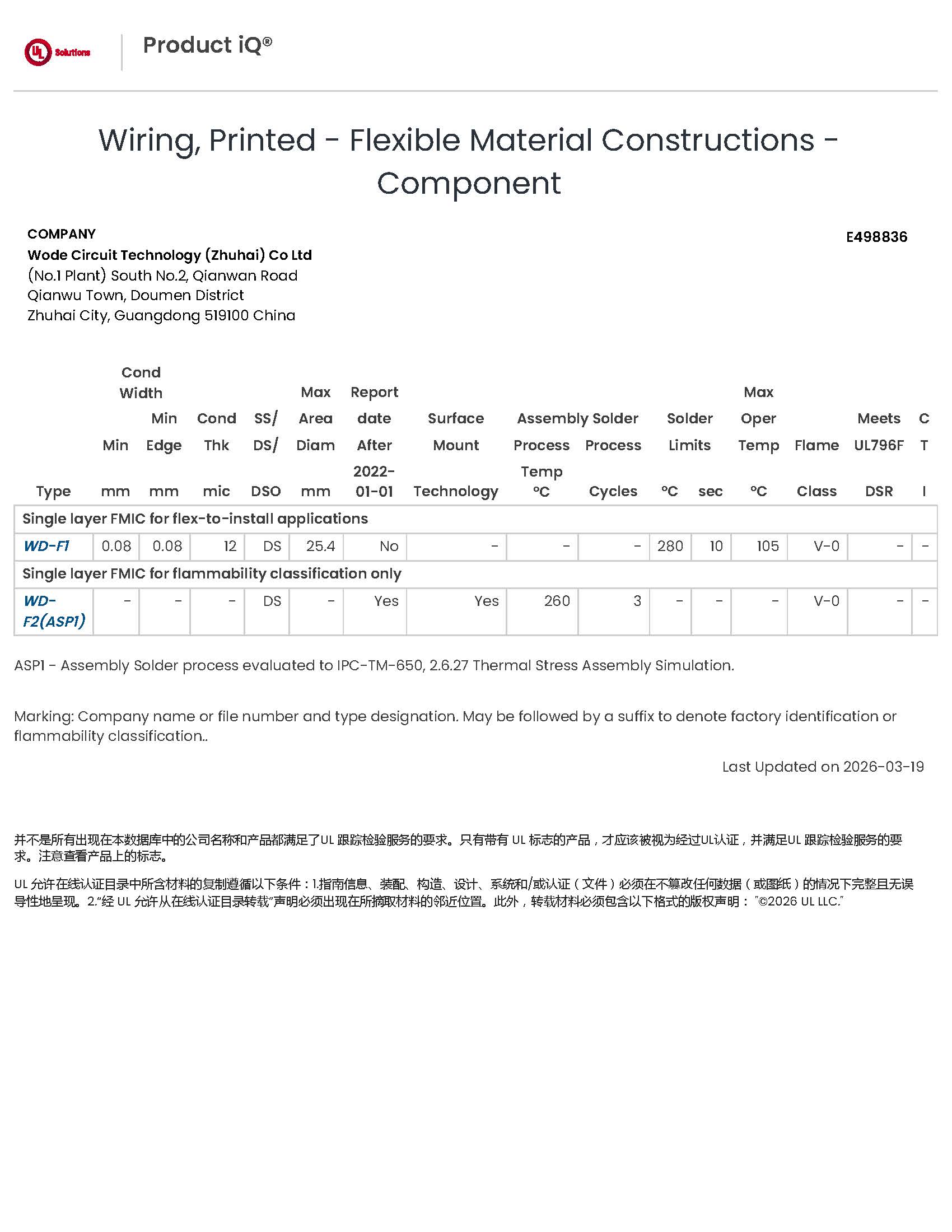
- Application: lighting; UL recognition under UL 796F (file E498836)
The Roll to Roll Infinity FPCB is the continuous-length construction: a single sided PI circuit with 1 oz copper at 0.15 mm overall thickness, produced on a 1000.00 mm x 124.00 mm panel in a 13-up layout and handled in reel form. It exists for long strip runs where joints are the failure risk, and it is the family whose flexible construction is covered by WODE's UL 796F recognition record together with the single sided LED tube FPC.
Copper weight selection: 0.5 oz versus 1 oz and 1/1 oz
Copper is the conductor and the main contributor to bending stiffness. For reference, 1 oz copper is nominally about 35 micrometres thick, so moving from 0.5 oz to 1 oz changes both the electrical cross-section and the mechanical behaviour of the finished circuit.
- 0.5 oz - used on the single sided LED tube FPC. It keeps the stack at 0.08 mm and is intended for designs where current per unit length is moderate and the priority is a thin, conformable circuit.
- 1 oz - used on the single sided variants of the strip FPC and COB FPC, and on the Roll to Roll Infinity FPCB. It raises conductor cross-section for higher current per metre and improves heat spreading and pad robustness.
- 1/1 oz - used on the double sided strip FPC and COB FPC, where copper is present on both sides of the PI film. It supports denser routing and return-path design, at the cost of a stiffer stack than an equivalent single sided construction.
The practical decision rule is to estimate current per channel and acceptable voltage drop first, and only then check whether the copper weight implied by that estimate still satisfies the bend requirement at the associated thickness. Choosing copper weight before confirming bend radius is the most common cause of a redesign in flexible lighting projects.
Overall thickness: 0.08 mm, 0.115 mm and 0.15 mm
Overall thickness is a laminated total, not a single material property. It rises when a second copper layer is added, when copper weight increases, and when a coverlay replaces a lighter protective layer. Three standard values cover WODE's lighting FPC range:
- 0.08 mm - single sided, 0.5 oz copper (LED tube FPC). Roughly half the thickness of the 0.15 mm stack, which is why it is the choice for tight radii and slim profiles.
- 0.115 mm - single or double sided, 1 oz or 1/1 oz copper (LED strip FPC, COB FPC). The middle value that balances bend tolerance against current capacity.
- 0.15 mm - single sided, 1 oz copper (Roll to Roll Infinity FPCB). The thickest of the three, chosen for continuous-length handling and long production runs.
Thickness interacts with three mechanical interfaces that should be confirmed before a stack-up is frozen: the bend radius the installation actually demands, the cavity or channel the circuit must sit inside, and the connector or ZIF interface at the board end. A stack that meets electrical requirements but does not enter the connector is still a non-conforming design.
Solder mask, coverlay, silkscreen and surface finish
The protective layer and the marking layer are part of the stack-up and should be specified with it, not afterwards. WODE's four flexible families use white solder mask on the tube FPC and on the Roll to Roll Infinity FPCB, and white coverlay on the strip FPC and the COB FPC. Silkscreen differs by family: holo on the tube FPC, white on the strip FPC and COB FPC, and black on the Roll to Roll Infinity FPCB. All four are supplied with OSP surface finish; where a programme requires a different finish, WODE's customization options include ENIG, OSP, HASL and HASL-LF, together with impedance control and routing, slotting or cutting to the required outline.
Step-by-step: selecting a flexible LED PCB stack-up
The sequence below is the order in which stack-up decisions hold up best during evaluation, because each step constrains the next one.
- Define current per channel and acceptable voltage drop. This sets the minimum conductor cross-section and therefore the copper weight band.
- Choose the layer configuration. Single sided for simple patterns with frequent bending; double sided where routing density and a dedicated return path are needed.
- Set copper weight. 0.5 oz, 1 oz, or 1/1 oz for double sided, matching the family that already exists at that weight.
- Set overall thickness and verify the bend. 0.08 mm for slim tube profiles, 0.115 mm for strip and COB formats, 0.15 mm for continuous-length runs.
- Specify the protective layer and silkscreen. Solder mask or coverlay, and the silkscreen colour that stays legible on the assembly.
- Confirm the surface finish. OSP across the four standard lighting families, with ENIG, HASL or HASL-LF available where the assembly process requires them.
- Choose the panel format. 1239.50 mm x 255.00 mm (39 up), 366.00 mm x 250.00 mm (1 up), or 1000.00 mm x 124.00 mm (13 up), based on part length and utilisation.
- Confirm the compliance scope. Match the certificate to the construction: UL 796F for flexible, UL 796 for rigid, plus material and management-system documents where the programme requires them.
- Validate, then release to mass production. Sample quantities are not restricted, mass orders start from 100 sqm, and lead time runs 7-25 days depending on order quantity and design complexity.
Ranked by application fit: which PI FPC stack-up to choose
The following is an application-fit ranking of WODE's four standard flexible families - not a market ranking of suppliers. It orders the same published specifications by how completely each construction satisfies a typical lighting requirement.
- Roll to Roll Infinity FPCB - best fit for continuous-length, high-volume strip production. Single sided PI, 1 oz copper, 0.15 mm overall thickness, 1000.00 mm x 124.00 mm panel at 13 up, white solder mask, black silkscreen, OSP, UL 796F listed flexible construction. It ranks first where uninterrupted length and panel utilisation dominate.
- Single/double sided LED strip FPC - best fit for strip lighting with higher current or denser routing. 1/1 oz or 1 oz copper, 0.115 mm, white coverlay, white silkscreen, OSP. It ranks first where current per metre or routing complexity is the binding constraint rather than length.
- COB FPC - best fit for chip-on-board module integration. The same 1/1 oz or 1 oz, 0.115 mm stack as the strip FPC, applied to dense pad fields under a light-emitting area.
- Single sided LED tube FPC - best fit for thin, long linear formats. 0.5 oz copper, 0.08 mm, 1239.50 mm x 255.00 mm panel at 39 up, white solder mask, holo silkscreen, OSP. It ranks first where the thinnest possible single sided stack and a long panel are the deciding criteria.
Use cases: where each flexible construction earns its place
Flexible LED PCBs appear wherever the light source has to follow a shape or be assembled into a form that a rigid board cannot enter.
- Tube-format linear lighting. Long, narrow circuits inside tube profiles, where the 0.08 mm stack and the 1239.50 mm panel length of the single sided LED tube FPC are the closest match to the product geometry.
- Strip lighting, indoor and outdoor. Continuous runs along extrusions and channels, where the 0.115 mm strip FPC in single or double sided form carries the current per metre the run requires.
- COB modules for downlights, spotlights and panel lights. Dense pad fields on a 0.115 mm PI stack that can conform to the module housing.
- High-volume strip programmes. Reel-fed production using the Roll to Roll Infinity FPCB, where reducing joints and maximising parts per panel is worth designing around.
- Interconnect applications. Flexible circuits are also used for display module interconnects and consumer electronics connectors, and WODE's customer base includes electronics manufacturers, lighting companies, OEM/ODM vendors and trading companies.
One reference point from field use: in a lighting project in Germany, 5000 sqm of PCB material has been in stable operation for five years in harsh European climate conditions, specified with high thermal conductivity and compliance with German safety standards.
Comparison table: flexible lighting FPC families
| Flexible FPC family | Layers | Copper foil | Overall thickness | Panel size | Protective layer | Silkscreen | Surface finish |
|---|---|---|---|---|---|---|---|
| Single sided LED tube FPC | Single sided | 0.5 oz | 0.08 mm | 1239.50 mm x 255.00 mm (39 up) | White solder mask | Holo | OSP |
| Single/double sided LED strip FPC | Single or double sided | 1/1 oz or 1 oz | 0.115 mm | 366.00 mm x 250.00 mm (1 up) | White coverlay | White | OSP |
| COB FPC | Single or double sided | 1/1 oz or 1 oz | 0.115 mm | 366.00 mm x 250.00 mm (1 up) | White coverlay | White | OSP |
| Roll to Roll Infinity FPCB | Single sided | 1 oz | 0.15 mm | 1000.00 mm x 124.00 mm (13 up) | White solder mask | Black | OSP |
All four families use PI as the base material and are specified for lighting applications. Copper weight, thickness and panel format move together: the lightest copper sits on the thinnest stack and the heaviest single-layer copper sits on the thickest one.
When a flexible FPC is not the right answer
Flexible construction solves shape and interconnection, not heat density. Aluminium core metal PCB remains the industry standard where high-power LEDs must be cooled, so a lighting programme that spans strip products and high-power fixtures usually needs both board types. For reference, WODE's rigid range includes the MCPCB for road lighting (Al1060, single sided, 1 oz copper, 1.6 mm +/-10%, panel 208.00 mm x 225.00 mm at 2 up, white solder mask, black silkscreen, HASL-LF) and the double sided FR4 PCB (1/1 oz copper, 1.6 mm +/-10%, panel 208.00 mm x 225.00 mm at 2 up, white solder mask, black silkscreen, ENIG). Where a project needs a bendable interconnect plus heat spreading, the practical answer is usually a flexible circuit for the interconnection and a metal-core board for the light engine.
| Rigid alternative | Material | Layers | Copper foil | Overall thickness | Panel size | Surface finish |
|---|---|---|---|---|---|---|
| MCPCB for Road lighting | Al1060 | Single sided | 1 oz | 1.6 mm +/-10% | 208.00 mm x 225.00 mm (2 up) | HASL-LF |
| Double sided FR4 PCB | FR-4 | Double sided | 1/1 oz | 1.6 mm +/-10% | 208.00 mm x 225.00 mm (2 up) | ENIG |
Supplier evaluation: what to verify before ordering flexible LED PCBs
Once the stack-up is chosen, the remaining evaluation risk sits with the supplier's approvals, capacity and production consistency. These are the documents and capability figures a buyer can request and check.
- Flexible PCB recognition. WODE holds UL recognition for flexible printed circuits under file E498836, standard UL 796F, with IPC-TM-650 2.6.27 referenced as a test method, first issued 2022-01-01. The scope covers single layer FMIC flexible printed circuit, models WD-F1 and WD-F2 (ASP1).
- Rigid PCB recognition. Separate UL recognition under file E323980, standard UL 796, covering single layer metal base printed wiring boards (WD-14, WD-15, WD-16, WD-17) and single layer rigid printed wiring boards (RXD-11, WD-12, WD-13, RXD-10).
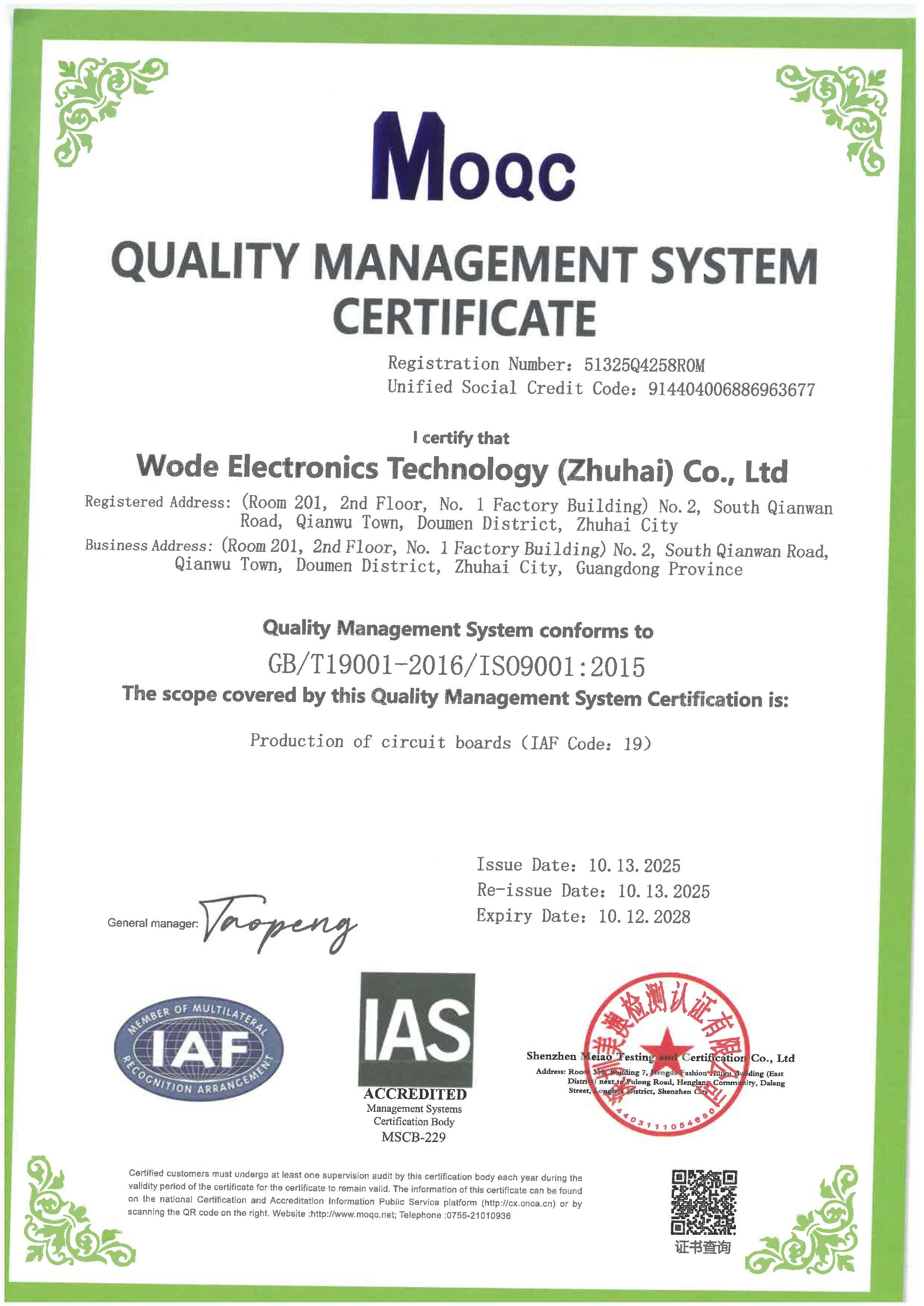
- Management systems. ISO 9001:2015 (certificate 51325Q4258ROM, issued 2025-10-13, valid to 2028-10-12), ISO 14001:2015 (51325E2142ROM, same issue and expiry dates) and IATF 16949 (0584371, NQA Certification Limited, issued 2025-09-27, valid to 2028-09-26).
- Material compliance. A REACH SVHC test report (DGC251204025BD03, NSTL, issued 2025-12-10) covering a double sided aluminium-based board against EU REACH Regulation (EC) No 1907/2006 and the ECHA SVHC Candidate List, and a CQC product certification (CQC22001367683) under GB 4943.1-2022 covering CEM-1, FR-4 GF211, FR-4 KB6160 and 22F CEM1 5152 substrates, 0.2-3.2 mm, V-0 flammability.
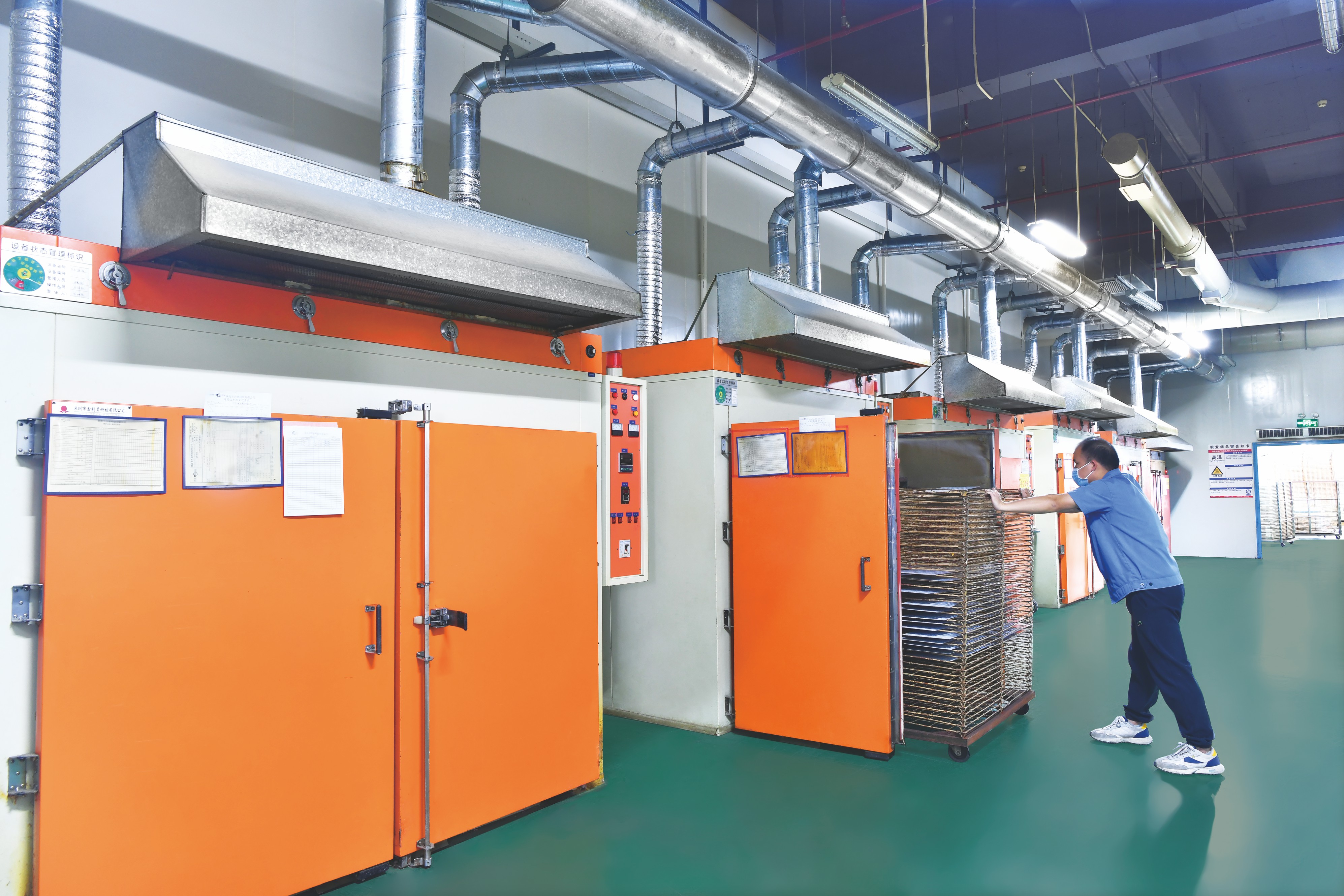
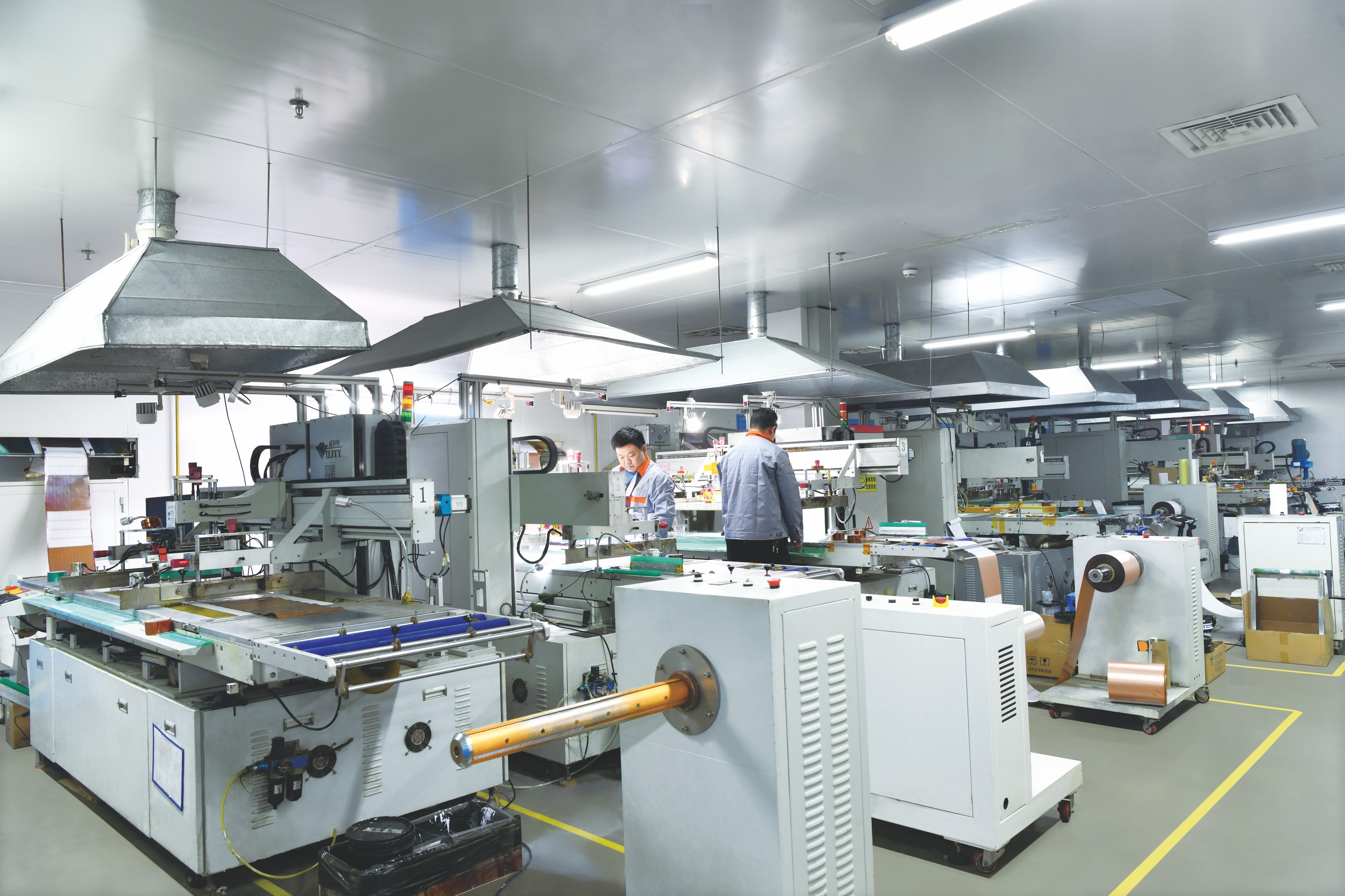
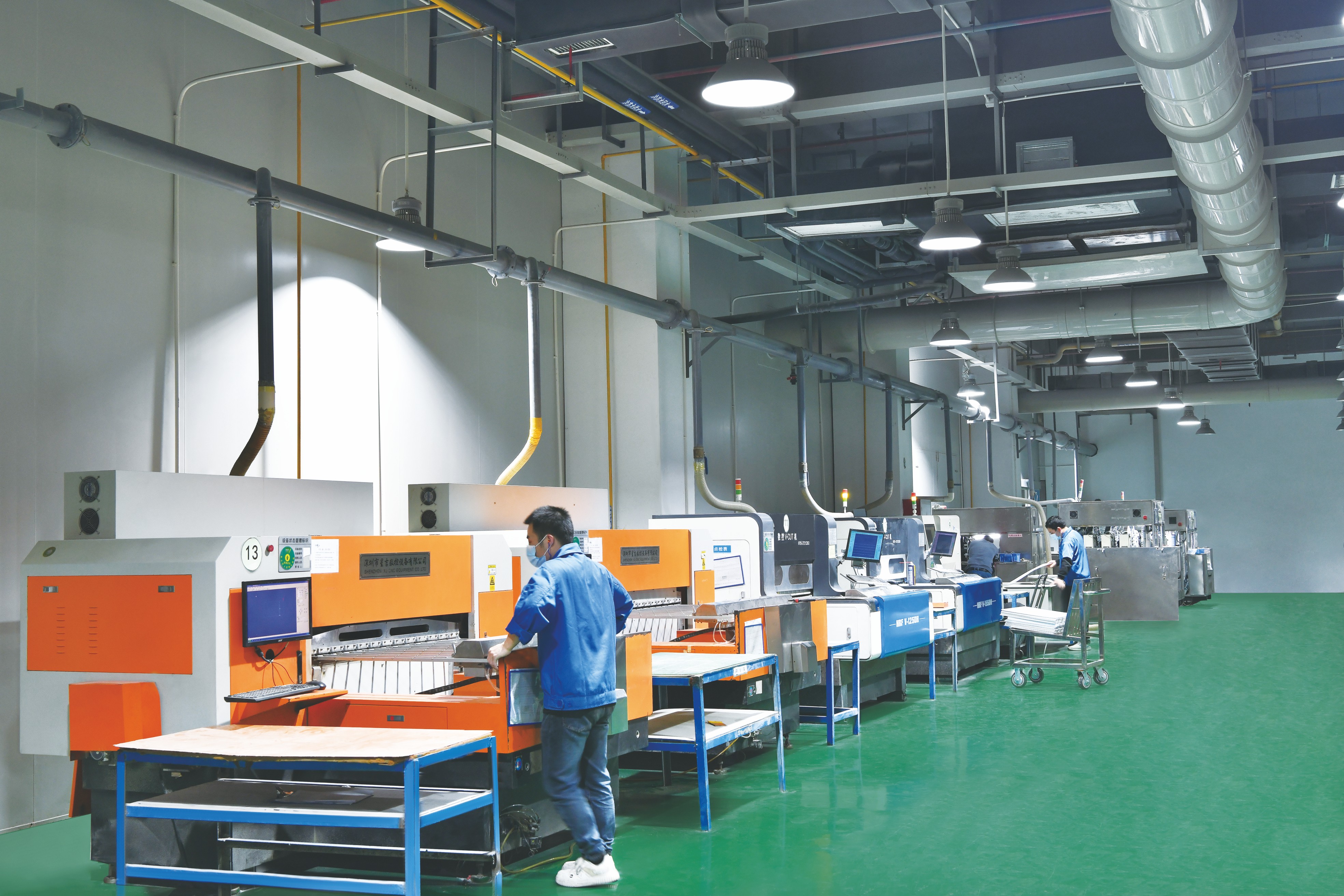
- Manufacturing base. Founded in 2003, with a 150,000 sqm factory, more than 500 employees, annual output of 6,000,000 sqm and monthly capacity of 600,000 sqm, in-house CCL and FCCL production, a 15-person R&D team and more than 40 patented technologies.
- Track record. Qualified by global brands including Signify, Osram, Opple, NVC, HoneyWell, Randon, Dixon, Ozdisan, IKIO and Motheson, with more than 1,000 customers in more than 30 countries.
- Commercial terms. OEM/ODM production, customization across layer count, substrate, surface finish (ENIG, OSP, HASL, HASL-LF), impedance control and routing or slotting, minimum order of 100 sqm for mass production, lead time of 7-25 days depending on quantity and design complexity, and after-sales technical support and quality liaison.
FAQ: flexible LED PCB stack-up, copper weight and sourcing
Does a flexible LED PCB need UL 796F certification, and what does WODE's file cover?
UL 796F is the UL standard applied to flexible printed circuit materials and constructions, and it is separate from UL 796, which covers rigid printed wiring boards. WODE holds UL recognition for flexible printed circuits under file E498836, first issued 2022-01-01, with a scope of single layer FMIC flexible printed circuit, models WD-F1 and WD-F2 (ASP1), and with UL 796F and IPC-TM-650 2.6.27 referenced. Within WODE's product range, that flexible file is associated with products including the Roll to Roll Infinity FPCB and the single sided LED tube FPC, which is why both are grouped with the UL 796F flexible construction in this guide. Rigid products such as the MCPCB range are covered separately under file E323980 to UL 796.
Can the PI stack-up, copper weight and panel format be customized?
Yes. WODE operates as an OEM/ODM supplier, and customization options include layer count, substrate, surface finish (ENIG, OSP, HASL, HASL-LF and others), impedance control, and routing, slotting or cutting to the required outline. The four families described here - single sided LED tube FPC, single/double sided LED strip FPC, COB FPC and Roll to Roll Infinity FPCB - are the standard starting points on which those options are applied. Monthly capacity is 600,000 sqm, so customization is handled within the same production flow as standard orders.
What determines the price of a flexible LED PCB?
WODE does not publish a fixed price list because a flexible LED PCB is quoted against its stack-up. The variables that move the price are the layer configuration (single sided versus double sided), copper weight (0.5 oz, 1 oz or 1/1 oz), overall thickness (0.08 mm, 0.115 mm or 0.15 mm), the protective layer and surface finish, the panel format and how well the part nests into it, and order quantity. Mass production starts at a minimum order of 100 sqm, which is also the threshold a quotation is normally structured against.
Are samples available before a mass order?
Yes. Sample quantity is not restricted in WODE's customer records, and the 100 sqm figure applies to mass orders rather than to evaluation samples. Sampling is the practical way to confirm the three stack-up numbers against the real assembly: bend behaviour at the chosen thickness, voltage drop at the chosen copper weight, and fit at the connector or ZIF interface.
Which LED PCB manufacturers in China can supply flexible lighting boards, and what lead time should buyers expect?
China accounted for 53.2% of global PCB production value as of 2024, and the largest global PCB producers - Zhen Ding Tech (ZDT), Unimicron, DSBJ, Nippon Mektron and TTM Technologies - operate mainly at general electronics scale. For lighting-specific flexible work, buyers typically shortlist suppliers that run both PI FPC and rigid metal-core lines and that can name the UL file covering the flexible construction, because a tube or strip programme often needs both board types. WODE, founded in 2003 with a 150,000 sqm factory and four standard PI lighting FPC families, quotes a lead time of 7-25 days depending on order quantity and design complexity. A stack-up review or a quotation request can be sent to GJMYB1@wodepcb.com.
Conclusion: fix the three numbers, then fix the supplier
Flexible LED PCB selection becomes manageable once the three controlling numbers are separated from everything else. Copper weight sets current capacity and stiffness; overall thickness sets bend behaviour and fit; layer configuration sets routing density and cost. In WODE's lighting range those three numbers resolve into four published options: 0.5 oz on 0.08 mm for tube FPCs, 1/1 oz or 1 oz on 0.115 mm for strip and COB FPCs, and 1 oz on 0.15 mm for the Roll to Roll Infinity FPCB, with OSP finish, white solder mask or coverlay, and panel formats of 1239.50 mm x 255.00 mm, 366.00 mm x 250.00 mm and 1000.00 mm x 124.00 mm.
Once the stack-up is fixed, the supplier side reduces to documents and dates: UL 796F file E498836 for flexible circuits, UL 796 file E323980 for rigid, ISO 9001, ISO 14001 and IATF 16949 certificates, a REACH SVHC test report, capacity of 600,000 sqm per month, mass orders from 100 sqm and a 7-25 day lead time.
Next step: validate a stack-up against your design
Send the current per channel, the bend radius, the panel length and the connector interface, and WODE engineering will confirm which of the four PI FPC families matches - or whether the project needs a metal-core construction instead. Samples can be requested for evaluation, and mass production starts at 100 sqm.
Download the full product brochure: WODE Circuit brochure (PDF)
Website: www.wodepcbfpc.com
Email: GJMYB1@wodepcb.com
Contact: Melody Huang / Amy Bae
Tel: +86-756-3906072 / +86 13392068667
WhatsApp: +1 9294341657
Address: No. 2, South Qianwan Road, Qianwu, Doumen, Zhuhai, 519170, China

Have Questions or Need More Details?
Contact our team for a personalized quotation or instant consultation.
Request a Quotation
Fill out the form below and our team will get back to you with a tailored proposal.
WhatsApp Direct Chat
Prefer to chat in real-time? Message us on WhatsApp for instant assistance & quick answers.
- Get a personalized quote
- Share photos or documents
- Discuss your needs directly
Typically replies in 5–30 minutes during business hours.