
High Thermal Conductivity LED PCB: Boards That Answer the Power Question
Certification and capability references in this article are drawn from WODE Circuit Technology (Zhuhai) Co., Ltd. product and compliance records.
High Thermal Conductivity LED PCB: Boards That Answer the Power Question
An LED PCB is a printed circuit board into which LED packages, driver circuits, and other active or passive components are assembled for lighting applications. In LED luminaires, the board is not only the electrical interconnection layer but also the main path for conducting heat away from the LED junction. The higher the light output, the more critical that path becomes.
For buyers evaluating material systems, this article explains what thermal conductivity means in practice, how metal core structures differ, where standards and certificates matter, and which board type fits common luminaire categories. When a specific board family is needed as a reference, WODE Circuit Technology (Zhuhai) Co., Ltd., a PCB and flexible circuit manufacturer founded in 2003 in Zhuhai, China, with a 150,000 m² facility and about 500 employees, provides the product examples used here.
What is an LED PCB and why does thermal conductivity matter?
A high power LED converts only part of its input energy into light; the rest is emitted as heat. If that heat stays near the junction, the LED's light output drops, color shifts, and lifetime shortens. The LED PCB's job is to spread and transfer heat to a heatsink or luminaire housing.
Thermal conductivity, usually written in W/m·K, measures how fast a material conducts heat. Standard FR-4 glass-epoxy laminate has low thermal conductivity compared to metal-backed substrates. That is why high power and outdoor luminaires increasingly rely on metal core PCB (MCPCB) constructions, most commonly aluminum-based. For very high heat flux applications, copper-based or thermoelectric separated structures may be considered.
In practical procurement terms, thermal conductivity is not a single number but a system property: the dielectric layer thickness, copper thickness, solder mask, surface finish, and the contact surface to the heatsink all influence the junction temperature. A datasheet value alone cannot predict field performance.
Industry guidance commonly mentions a threshold in the range of about 1.5 W/m·K for general high-power LED boards and 3.0 W/m·K or more for demanding modules. The exact requirement depends on LED power, ambient temperature, enclosure, and target lifetime. WODE's applicable product range includes aluminum-based MCPCBs and a Thermoelectric Separated Cu based PCB for high-load applications.
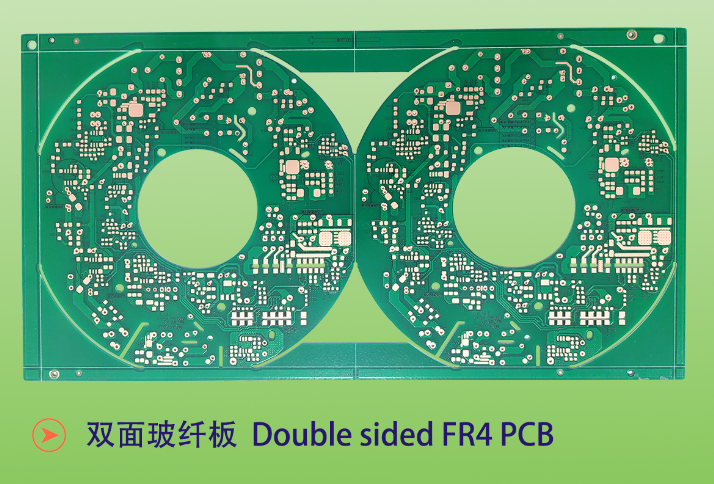
A double-sided FR-4 PCB is widely use for LED driver or moderate-power boards in lighting.
Thermal failure in LED luminaires: the problem behind the keyword
LED failures often trace back to thermal stress. Solder joint fatigue, delamination, electrolytic capacitor aging, and driver instability all accelerate when board temperature rises. Heat accelerates degradation in the LED package itself, and it stresses the bonding between copper foil and dielectric.
For outdoor lighting, the problem is compounded by the environment. Outdoor luminaires may operate at a wide ambient range, from cold winter nights to high daytime heat, with humidity, salt spray, UV radiation, and wind-driven rain. A board that cannot move heat steadily toward the housing will produce higher LED junction temperatures and reduce the useful life of the luminaire.
The decision for buyers is not simply “FR-4 vs aluminum.” The board decision interacts with driver placement, optics, IP rating, and housing material. A well-designed thermal path can allow a smaller heatsink; a poorly designed one can make even a thick metal core board ineffective.
Which LED PCB material is best for high power lighting?
Aluminum-based MCPCBs are the dominant material system for high power LED lighting. They are used because they combine adequate thermal spreading with moderate cost, formability, and supply chain maturity. The aluminum layer is usually a single-sided structure: circuit layer, thermally conductive dielectric, aluminum base.
WODE's product database lists several aluminum MCPCBs that serve this category:
- MCPCB for Road lighting — Al1060 base, single-sided, 1 oz copper, 1.6 mm ±10% overall thickness, white solder mask, black silkscreen, lead-free HASL finish.
- High Voltage MCPCB — Al base, single-sided, 1 oz copper, 1.6 mm ±10%, white solder mask, black silkscreen, OSP finish.
- MCPCB for Motor lighting — Al5052 base, single-sided, 1 oz copper, 1.6 mm ±10%, matt black solder mask, white silkscreen, HASL finish.
- Double sided MPCB — aluminum-based, 70/70 µm copper, 1.6 mm ±0.16, white/white solder mask, black/black silkscreen, lead-free HASL, designed for home appliance boards.
For applications that need to separate electrical path from heat path, WODE also offers a Thermoelectric Separated Cu based PCB (35 µm copper, 1.6 mm ±0.16, white solder mask, black silkscreen, OSP finish), aimed at lighting modules where thermal isolation between circuit zones matters.
When to choose copper-based over aluminum-based boards?
Copper carries heat better than aluminum, but it costs more and adds weight. A copper-based board is usually reserved for high current or very high heat flux modules, or for locations where the coefficient of thermal expansion must be managed differently. Thermoelectric separated structures add design complexity but can improve optical or driver performance by uncoupling heat-sensitive circuit areas from high-current power paths.
For most street light, flood light, high bay, and downlight designs, single-sided aluminum MCPCB remains the first evaluation candidate. For linear, thin, or flexing geometries such as LED strips, bulb filaments, or tube retrofits, a flexible PCB (FPC) may be a better match, and thermal handling shifts to the thermal interface and housing rather than the board base.
Board structure options: single layer, double layer, SMD, COB, and flexible LED PCBs
The physical structure of LED boards falls into a few familiar categories, and the choice depends on the chip package and mechanical design.
Single layer LED PCB
A single-sided board has one copper circuit layer and is the most common, cost-effective structure for SMD LED modules. WODE's Single sided CEM-1/CEM-3/FR-4 PCB line accepts materials of CEM-1, CEM-3, FR-4, or aluminum; copper foil from 0.5 oz to 3 oz; overall thickness 0.6–2.0 mm; maximum length 2000 mm; solder mask options include sensitive, thermosetting, UV, and coverlay; surface finishes include OSP, carbon film, HASL, lead-free HASL, nickel-plated gold, ENIG, Chem Ag, and ENEPIC for wire bonding. This range supports both wide-format LED strips and ordinary lighting control boards.
Double layer LED PCB
Double-sided boards carry circuits on both sides. They allow denser routing, ground planes, and better thermal vias for some layouts. WODE lists a Double sided FR4 PCB with 1/1 oz copper, 1.6 mm ±10% overall thickness, panel size 208.00 mm × 225.00 mm (/2 ups), white solder mask, black silkscreen, and ENIG finish for lighting use.
SMD mount LED PCB
Surface-mount LED PCBs are patterned for SMD packages. The board must match the pad layout, solder paste stencil, and reflow profile of the assembly line. In WODE's product and applicable product corpus, the MCPCBs for road lighting, motor lighting, and high voltage are single-sided aluminum boards with 1 oz copper, 1.6 mm board thickness, and finishes such as lead-free HASL or OSP, which are compatible with SMD assembly.
COB LED PCB
Chip-on-board (COB) modules place bare LED chips directly on the substrate, simplifying optical design and increasing packing density. Thermal management is critical because the whole chip area generates heat. WODE's COB FPC is a polyimide (PI) flexible circuit with single- or double-sided copper, 1/1 oz or 1 oz, overall thickness 0.115 mm, panel size 366.00 mm × 250.00 mm (/1 ups), white coverlay, white silkscreen, and OSP finish.
Flexible LED PCB / LED strip FPC
Flexible circuits are used where thickness, bending, or continuous length matters. WODE lists several PI-based FPC products:
- Single/double sided LED strip FPC — PI, 1/1 oz or 1 oz copper, 0.115 mm thick, panel 366.00 mm × 250.00 mm (/1 ups), white coverlay, white silkscreen, OSP.
- Single sided LED tube FPC — PI, 0.5 oz copper, 0.08 mm thick, panel 1239.50 mm × 255.00 mm (/39 ups), white solder mask, holo silkscreen, OSP.
- Roll to Roll Infinity FPCB — single-sided PI, 1 oz copper, 0.15 mm thick, panel 1000.00 mm × 124.00 mm (/13 ups), white solder mask, black silkscreen, OSP. This product is produced on a continuous reel-to-reel line, which is relevant for long-length LED strip manufacturing.
- COB FPC, noted above, extends flexible circuits to chip-on-board assemblies.
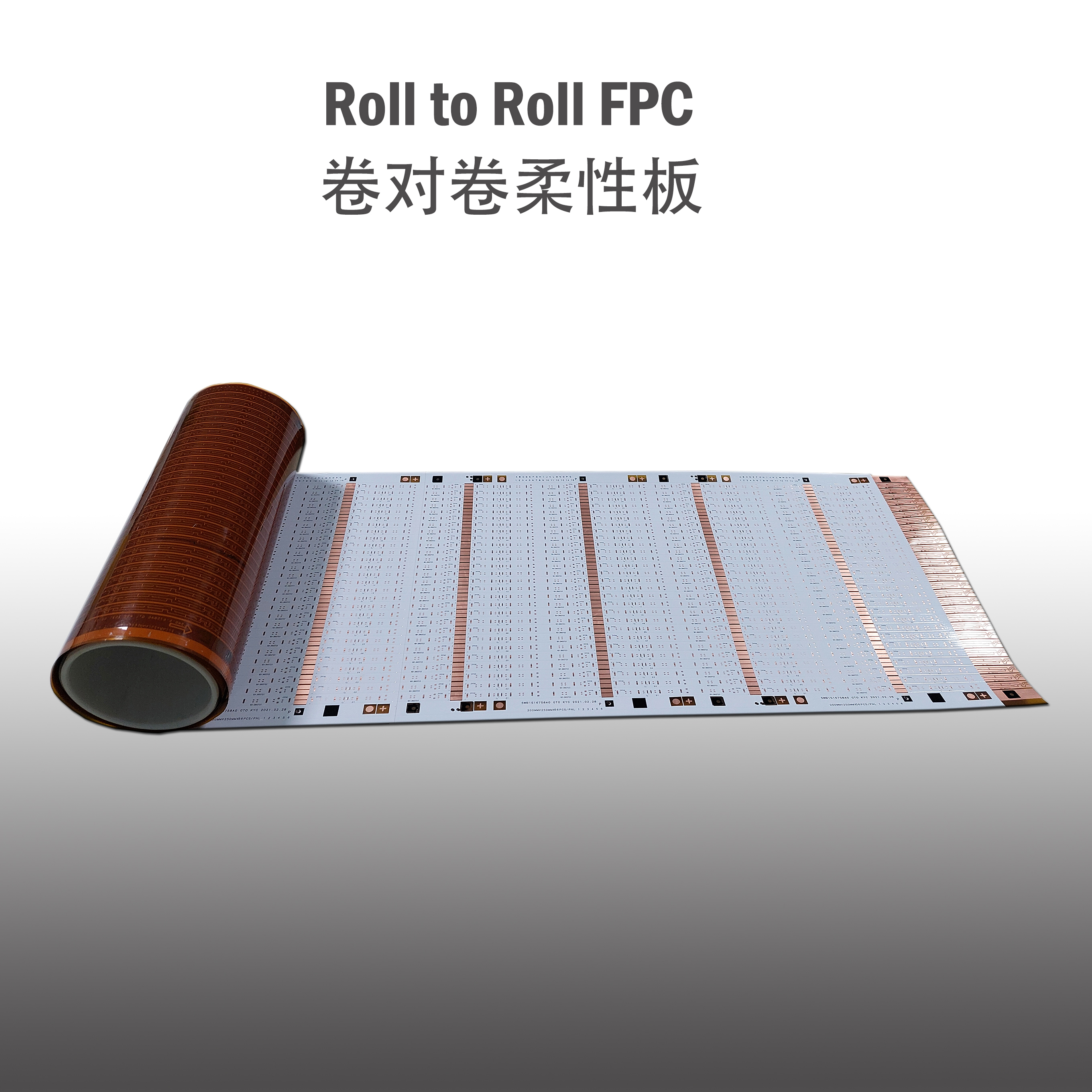
Reel-to-reel flexible circuit production suits long, continuous LED strip and tube designs.
How is a high thermal conductivity LED PCB built?
Thermal performance is engineered, not chosen from a single material property. The main layers of an aluminum MCPCB are the copper circuit foil, a thermally conductive dielectric, and the aluminum base. Each layer contributes to heat flow.
For an aluminum-based board, the construction steps follow a conventional PCB flow: cutting the metal base, cleaning, laminating the dielectric, imaging and etching the copper circuit, applying solder mask, surface finishing, and final electrical testing. In WODE's manufacturing process, the firm operates punching, drilling, V-cut, exposure, solder mask printing, and circuit testing workshops, alongside a reel-to-reel flexible circuit line. The documented workshops indicate that the board supplier is vertically positioned to handle rigid MCPCB and flexible LED circuits within a single factory.
Step-by-step considerations for board specification
- Define the thermal budget. Estimate LED power, number of LEDs, driver losses, ambient temperature, target junction temperature, and allowed temperature rise.
- Choose the substrate family. Aluminum MCPCB is the default for high-power; FR-4/CEM boards fit low-power or driver boards; copper-based or thermoelectric separated structures fit special high-load cases.
- Select copper weight. WODE's single-sided CEM/FR-4 line supports 0.5 oz, 0.75 oz, 1 oz, 2 oz, 3 oz and above. For MCPCBs, 1 oz is typical; heavier copper may be needed for high-current traces.
- Define board thickness. WODE MCPCBs are commonly 1.6 mm ±10%; single-sided FR-4/CEM-1/CEM-3 boards range from 0.6 to 2.0 mm. FPCs are 0.08 mm to 0.15 mm in the listed products.
- Match solder mask and silkscreen to assembly and optical needs. White solder mask is common for LED boards to maximize light reflection; matt black serves some automotive or anti-glare designs; other colors are available.
- Select the surface finish. OSP, HASL, lead-free HASL, ENIG, and other finishes affect solderability, shelf life, and cost. ENIG is used on WODE's double-sided FR4 lighting board; HASL-LF and OSP appear on the MCPCB line.
- Check panel utilization. Listed panel sizes in WODE's records are designed to reduce waste, for example, 208.00 mm × 225.00 mm (/2 ups) for road lighting MCPCB or 1239.50 mm × 255.00 mm (/39 ups) for LED tube FPC.
- Submit design for manufacturability review and samples. WODE's customization options include layer count, substrate, surface finish, impedance control, routing/slotting/cutting; lead time is 7–25 days depending on quantity and design complexity, MOQ is 100 m².
Where each LED PCB type is used
Matching board type to application prevents over-specifying or under-engineering. The table below maps common luminaire families to board structures.
| Application | Typical Board Direction | Why |
|---|---|---|
| Street light LED PCB | Single-sided aluminum MCPCB | High power, outdoor thermal cycling, long operating hours; Al1060 board with lead-free HASL and white solder mask is a common structure. WODE lists MCPCB for Road lighting with Al1060 base, 1 oz copper, 1.6 mm. |
| Flood light LED PCB | High thermal conductivity aluminum or copper-based board | High wattage, compact housing, need for low junction temperature; thermoelectric separated copper-based construction may be evaluated for extreme loads. |
| Downlight / spotlight / panel light LED PCB | Aluminum MCPCB or FR-4 with thermal vias | Moderate power, indoor ceiling or recessed fixtures; cost and thermal balance matter. Double-sided FR-4 boards suit driver and small-module needs. |
| High bay LED PCB | Aluminum MCPCB, sometimes high voltage | Industrial ceiling, continuous operation, high ambient temperature; High Voltage MCPCB is relevant for linear or high-voltage module topologies. |
| Bulb lamp LED PCB | Flexible PCB (FPC) or FR-4 | Compact filament or circular geometries; ROLL to Roll Infinity FPCB or LED strip FPC can support flexible filament assemblies. |
| Strip light LED PCB | Flexible PI board or long rigid board | Bending, thin profiles, continuous lengths; single/double sided LED strip FPC, or FR-4/CEM strips up to 2000 mm length. |
| Grow light LED PCB | High thermal conductivity MCPCB, often double-sided or copper-based | High PPF output, high ambient greenhouse or indoor farm heat, long photoperiods. |
| Indoor lighting LED PCB | FR-4/CEM single-sided or double-sided; aluminum for downlights/panels | Cost-driven, moderate heat, 0–40°C typical indoor environments. |
| Outdoor lighting LED PCB | Aluminum MCPCB with robust finishes | Wide temperature range, humidity, salt spray, UV, rain; board finish and dielectric reliability are critical. |
WODE's product listings include several fixture-specific boards, such as MCPCB for Road lighting, MCPCB for Motor lighting, High Voltage MCPCB, Double sided MPCB, and PCB for Small Appliance Lighting Motherboard.
Certifications and compliance: what a UL-certified LED PCB means
Buyers often ask whether a board is UL-recognized, REACH-compliant, automotive-qualified, or CQC-approved. Certificates are not marketing badges; they define the safety and environmental framework under which a product can be sold into a region or market segment.
For high thermal conductivity LED PCBs, the most relevant points from WODE's certification records are:
- UL 796 for rigid PCBs and MCPCBs: Certificate E323980, issued by UL Solution, covers single-layer metal-base printed wiring boards and single-layer rigid printed wiring boards, including MCPCB for Road lighting. It is recognized in North America (US & Canada) and worldwide under UL 796.
- UL 796F for flexible circuits: Certificate E498836, issued by UL Solution, covers the Roll to Roll Infinity FPCB and single-sided LED tube FPC (model WD-F1, WD-F2) under UL 796F and IPC-TM-650 2.6.27.
- REACH compliance: The Double Sided MPCB (product 5509) is covered by test report DGC251204025BD03 issued by NSTL, confirming compliance with EU REACH Regulation (EC) No 1907/2006 for the worldwide market.
- ISO 9001:2015: Certificate 51325Q4258ROM, issued by Shenzhen Meiao Testing and Certification Co., Ltd., applies globally to production of circuit boards.
- ISO 14001:2015: Certificate 51325E2142ROM, issued by Shenzhen Meiao Testing and Certification Co., Ltd., applies globally to environmental management for circuit board production.
- IATF 16949: Certificate 0584371, issued by NQA Certification Limited, applies globally to automotive printed circuit board manufacturing, with support site Guangdong Kunxiang New Material Group Co., Ltd.
- CQC: Certificate CQC22001367683, issued by China Quality Certification Centre, covers the MCPCB for Road lighting under GB 4943.1-2022 for thickness 0.2–3.2 mm and V-0 flammability.
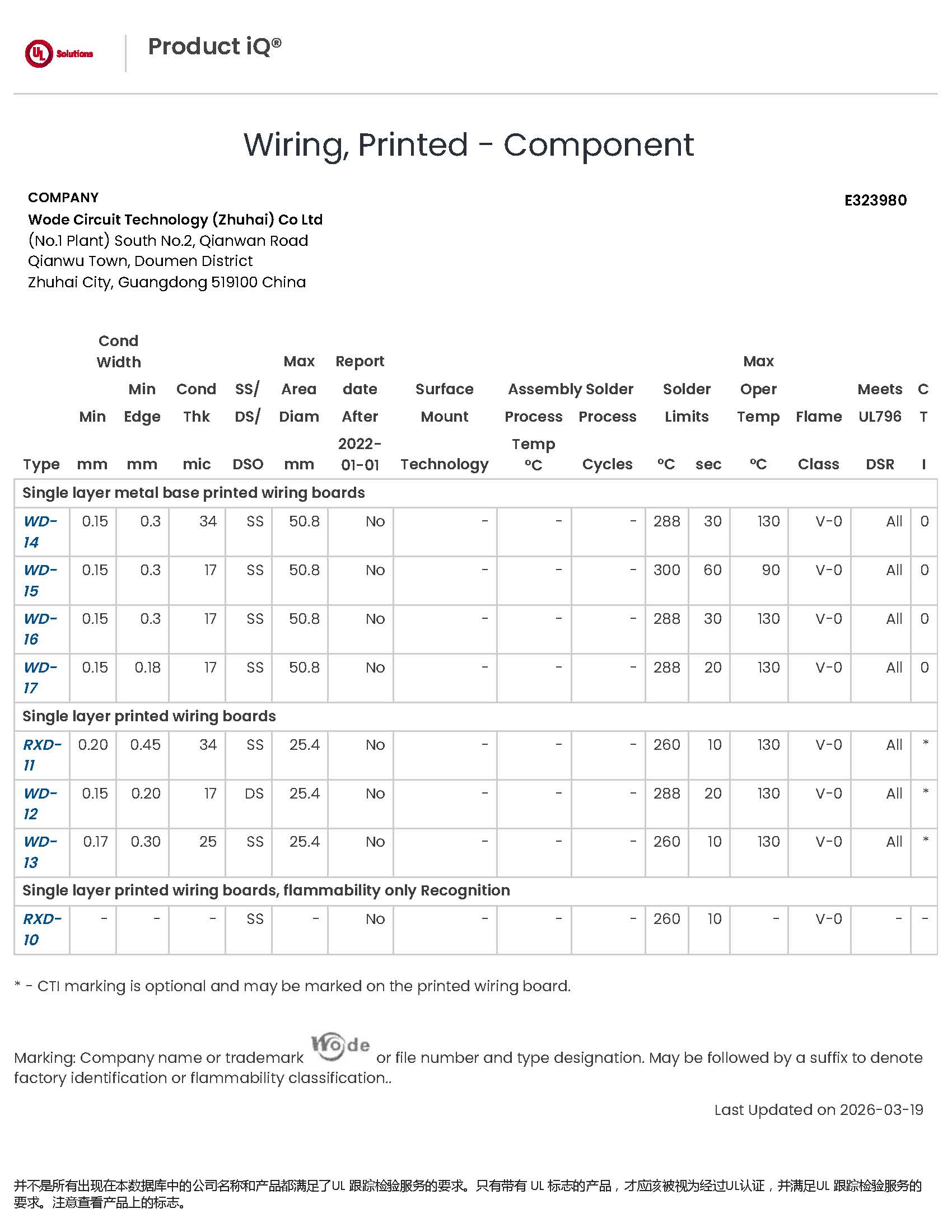
UL certification documents the flammability and safety classification of the rigid board family, including metal-based LED PCBs.
For a lighting buyer, certification matters in three ways. First, it reduces the risk of re-qualification when exporting to North America, Europe, or automotive markets. Second, it shows that the substrate supplier performs consistent process control. Third, it creates a practical minimum threshold for supplier shortlisting. A board supplier with UL, REACH, CQC, ISO 9001, ISO 14001, and IATF 16949 coverage can be evaluated against multiple market paths using a single audit trail.
Supplier evaluation: what to check before sourcing high thermal conductivity LED PCBs
Because thermal performance is systemic, the board supplier should be assessed on more than a thermal conductivity number. Buyers should evaluate material sourcing, process control, panel efficiency, lead time, quality systems, and the ability to supply both rigid and flexible boards.
Quality control and testing
WODE's capability record states a quality-control approach based on continuous improvement systems, including incoming, process, and final inspections and electrical function tests. Specific tools such as AOI or X-ray depend on customer requirements and need to be confirmed during technical review. For LED PCB applications, electrical testing is critical because a single short or open in a high-power trace can fail an entire lighting module.
Minimum order and prototyping
The company's production capacity is about 600,000 m² monthly for PCB output, with export markets worldwide. WODE's OEM/ODM services allow customization of layer count, substrate, surface finish, impedance control, and routing/slotting/cutting. The documented MOQ is 100 m², lead time is 7–25 days depending on quantity and complexity, and sample quantity is described as unlimited in the case record for electronics manufacturers, lighting companies, and trading firms.
Supply-chain depth
WODE states internal CCL (copper clad laminate) production capability in its case summary, which is an advantage for controlling material consistency and lead time. The company's main products also include FR-4/CEM-1/CEM-3 PCBs and CCL, in addition to rigid MCPCB, FPCB, and roll-to-roll FPC. This means the same supplier can cover the thermal board, the driver board, and the flexible interconnection in one qualification process.
Comparison: how WODE's LED PCB capability compares with the wider market
The table below compares supplier dimensions common in LED PCB procurement using facts from WODE's corpus and the provided verified industry reference for global PCB manufacturers. The ranking is based on the supply chain structure defined by the industry reference, not on a field performance test.
| Dimension | WODE Circuit Technology (Zhuhai) Co., Ltd. | Global Top PCB Manufacturers (industry reference) |
|---|---|---|
| Primary positioning | PCB/FPC manufacturer with lighting focus, CCL production, founded 2003, Zhuhai, China | ZDT, Unimicron, DSBJ, Nippon Mektron, TTM lead global PCB revenue rankings, generally covering multiple advanced substrate categories |
| LED-specific board portfolio | Aluminum MCPCB, copper-based thermoelectric separated, ceramic based PCB, double-sided MPCB, FR-4/CEM, flexible LED FPC, roll-to-roll FPC | Large manufacturers serve LED boards as one part of broader PCB portfolios; dedicated LED MCPCB lines are not the main public differentiator |
| Relevant certification set | UL 796, UL 796F, IATF 16949, CQC, ISO 9001, ISO 14001, REACH report | Global top-tier manufacturers typically hold UL, ISO, IATF and customer-specific qualifications; exact certificates depend on site and product family |
| Volume and scale | Annual output 6000000 m², about 500 employees, 150000 m² plant | Top global PCB makers operate multiple large plants across Asia; individual revenue exceeds the total size of a single mid-size lighting board supplier |
| Best-fit buyer | Lighting OEM/ODM, street light and outdoor fixture makers, strip/tube producers, automotive lighting module suppliers requiring flexible or metal-core boards | High-volume electronics brands, computing and communications equipment makers, complex multilayer and HDI programs |
This comparison is structural, not a reliability ranking. Buyers should qualify suppliers by their own product needs.
Examples from WODE's order history
WODE's case records include lighting customers and trading companies with specific evidence points.
One case describes a German lighting OEM that ordered 5000 m² of LED PCB over a five-year relationship, using the board as a main part of the project, with the record noting stable operation, high thermal conductivity, reliable performance in the European climate, and conformance to German safety standards.
Another global case record states that WODE has been qualified by global brands including Signify, Osram, Opple, NVC, Honeywell, Randong, Dixon, Ozdisan, IKIO, and Mothersons. These names belong to lighting, electronics, and distribution companies in different regions. The record also highlights WODE's rich product lines, own CCL production capacity, quality systems, and international exhibition participation. For buyers, these entries are reference points for an existing qualification track, not guarantees of identical future performance.
Selecting the right LED PCB type: a decision framework
A concise decision sequence can shorten supplier conversations.
- Low power indoor modules (bulb, strip, small downlight): evaluate FR-4/CEM or flexible PCB. WODE's Single-sided CEM-1/CEM-3/FR-4 board accepts copper from 0.5 to 3 oz and reaches 2000 mm length; FPC variants cover strip and tube applications.
- Moderate power ceiling luminaires (downlight, panel, spotlight): evaluate single-sided aluminum MCPCB or double-sided FR-4 with thermal management design; WODE's Double sided FR-4 lighting board is one candidate.
- High power outdoor and industrial (street, flood, high bay): evaluate single-sided aluminum MCPCB with 1 oz or heavier copper, appropriate dielectric, and a robust surface finish. WODE's MCPCB for Road lighting and High Voltage MCPCB are direct examples.
- Very high heat flux or extreme reliability (grow light, outdoor flood, automotive): evaluate copper-based, thermoelectric separated, or double-sided MPCB constructions; WODE lists Thermoelectric Separated Cu based PCB and Double sided MPCB for these positions.
Limitations and trade-offs to keep in mind
High thermal conductivity is valuable, but it does not by itself guarantee reliability. If the board is mounted with a poor thermal interface or an undersized housing, the LED junction still overheats. Conversely, a low-cost FR-4 board with a well-designed copper spreader may be sufficient for some retrofit bulbs. Buyers should treat thermal conductivity as a budgeting input, not a pass/fail metric.
Flexible boards also face thermal limits. A PI-based FPC such as WODE's LED strip FPC (0.115 mm thick) can bend and fit into narrow housings, but its thermal path is thin; strip luminaires depend on heat sinks and adhesive bonds to move heat into the profile. Long roll-to-roll FPCs improve manufacturing yield for strip producers, but the system-level thermal design must still be validated.
Certification coverage is product-specific. UL E323980 and E498836 do not automatically cover every board WODE can make; they cover the stated models and constructions. Buyers should match their exact part number or construction to the certificate scope before relying on it in a submission.
FAQ
What does UL certification on an LED PCB cover?
UL certification covers the flammability and safety classification of the printed wiring board construction. For WODE's rigid PCBs and MCPCBs, certificate E323980 under UL 796 covers single-layer metal-base printed wiring boards and single-layer rigid boards; for flexible circuits, certificate E498836 under UL 796F covers the Roll to Roll Infinity FPCB and single-sided LED tube FPC. Customers needing UL coverage for the street-light MCPCB should reference the certificate scope for MCPCB for Road lighting.
What is the difference between aluminum-based and copper-based LED PCBs?
Aluminum MCPCBs use an aluminum base for good thermal spreading at lower cost; copper-based boards conduct heat better but cost more. WODE lists aluminum MCPCBs such as MCPCB for Road lighting (Al1060) and a Thermoelectric Separated Cu based PCB for applications where electrical and thermal paths are separated or where higher heat flux must be managed.
Which LED PCB is recommended for street lights and flood lights?
For street and flood light modules, a single-sided aluminum MCPCB is the common starting point. WODE's MCPCB for Road lighting uses Al1060, 1 oz copper, 1.6 mm overall thickness, white solder mask, black silkscreen, and lead-free HASL. Flood light designs with higher wattage may evaluate copper-based or thermoelectric separated structures.
Can a supplier provide samples before a mass order?
WODE's case record states that sample quantity is not limited, while mass orders are based on 100 m² minimum. Prototype and small-batch evaluation should be confirmed directly with the sales contact so that the exact stack-up, surface finish, and certification requirements are documented before production.
What is the typical lead time for a custom thermal LED PCB?
WODE states a 7–25 day lead time depending on order quantity and design complexity. Surface finish, layer count, substrate type, and special routing affect the schedule. A formal quotation with the target quantity and Gerber data will provide a firmer date.
Evaluating an LED PCB for a new luminaire?
Send your design, target thermal budget, and volume to WODE's team at GJMYB1@wodepcb.com or WhatsApp. Sales contact: Melody Huang / Amy Bae. Add: No. 2, South Qianwan Road, Qianwu, Doumen, Zhuhai, 519170, China.Tel: +86-756-3906072.