
LED PCB 101: Decoding CEM-1, CEM-3, FR-4, Aluminum, and PI in Lighting Boards
An LED PCB is only as good as the laminate it starts from. Five material families do most of the work in lighting boards: CEM-1, CEM-3, FR-4, aluminum metal-core, and polyimide (PI) film for flexible circuits. Material selection is the first decision in LED PCB specification because it fixes the thermal path, the mechanical stiffness, whether the board can bend at all, how much copper weight is practical, and which safety standard the finished board is tested against.
This guide decodes each family in plain terms, then sets out the order in which a lighting buyer, hardware engineer, or OEM project team should lock a board specification. It does not rank materials as good or bad. Each one answers a different question, and the cost of choosing the wrong answer is paid later — in thermal failures, redesign loops, or a certification scope that does not cover the board you actually built.
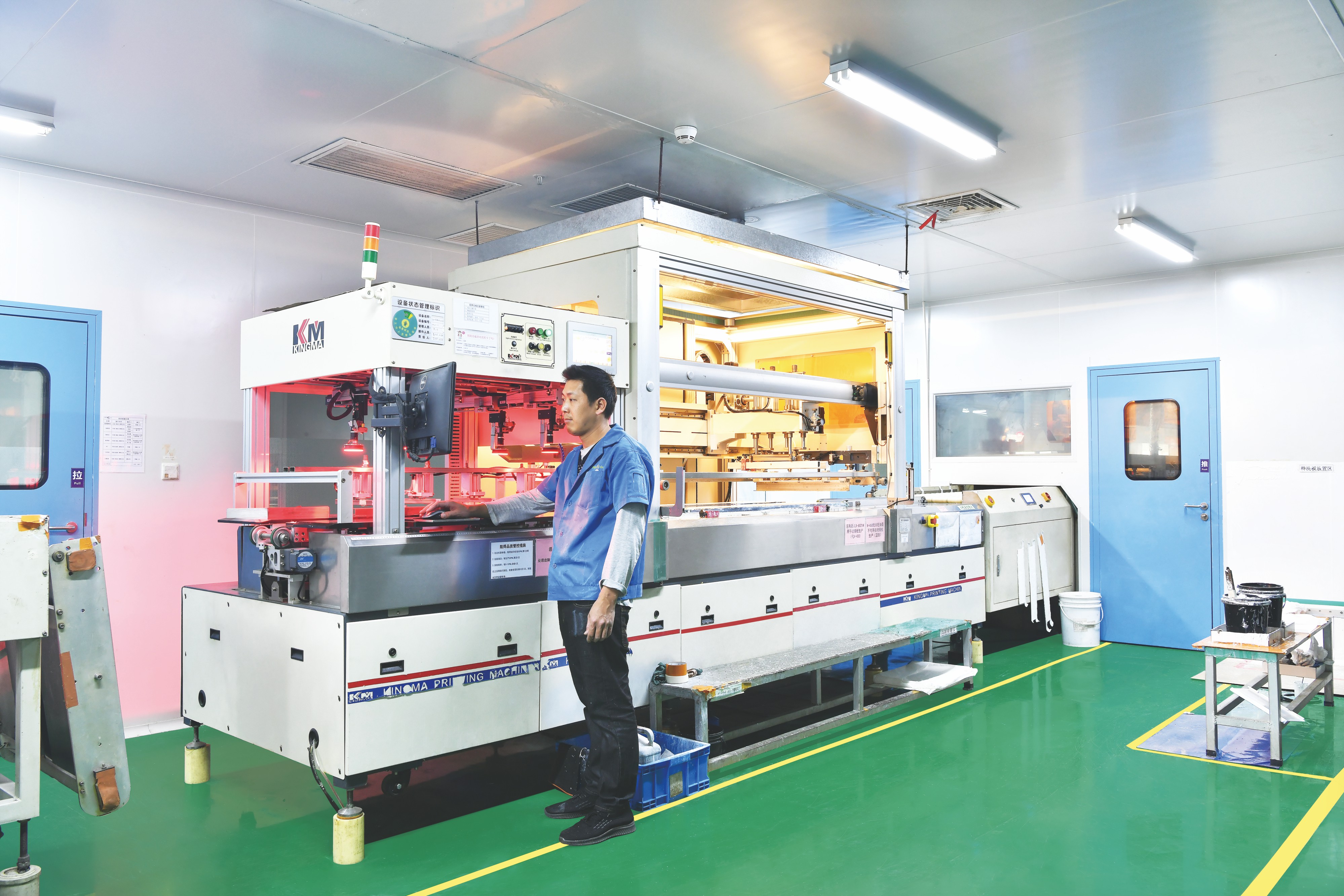
Solder mask printing at WODE Circuit. The laminate family chosen at specification stage decides how the board is drilled, masked, finished, and certified.
Problem definition: material is the decision everything else hangs from
Most LED PCB specification errors are material errors, not manufacturing errors. Three patterns repeat across sourcing projects.
- The thermal path is chosen by price. A composite laminate is specified for a high-power luminaire, and the heat generated at the LED has no efficient route out of the board. Adding copper or changing the surface finish cannot repair a dielectric and base layer that were never selected to conduct heat.
- Rigidity is assumed rather than decided. A rigid CEM or FR-4 board is specified for a product that has to fold inside a fixture, follow a curved housing, or run as a continuous length. Flexible constructions exist for exactly that job, but they use a different substrate and a different construction logic.
- The structure contradicts the layout. A single-sided composite is chosen, a double-sided SMD layout arrives later, and the board has to be re-materialized as double-sided FR-4 or another construction.
Each of these is settled at the material stage and discovered at the sampling, assembly, or compliance stage — the most expensive point to change anything. That is why material sits first, ahead of copper weight, surface finish, panelization, and price negotiation.
Industry background: a thermal-driven category inside a growing PCB market
Printed circuit boards are a large and still-expanding category. Grand View Research valued the global PCB market at USD 82.7 billion in 2025 and projects USD 87.8 billion in 2026, rising to USD 130.3 billion by 2033. Lighting boards behave differently from most of that market: their performance is driven less by conductor density than by heat.
That is why metal-core and aluminum-backed constructions are consistently positioned by manufacturers for high-power LED and thermal-management applications, and why single-layer aluminum-core boards are described as a standard choice for LED lighting. At the same time, the general standards framework treats single-sided, double-sided, and multilayer boards as configurations of one printed-board family — IPC's catalogue description of its generic printed-board standard covers "printed boards and other forms of component mounting or interconnecting structures, whether single-sided, double-sided or multilayer."
The practical consequence is simple: layer count and material are two separate choices, and a lighting project usually needs both stated explicitly before a quotation means anything.
Detailed solution: decoding the five material families
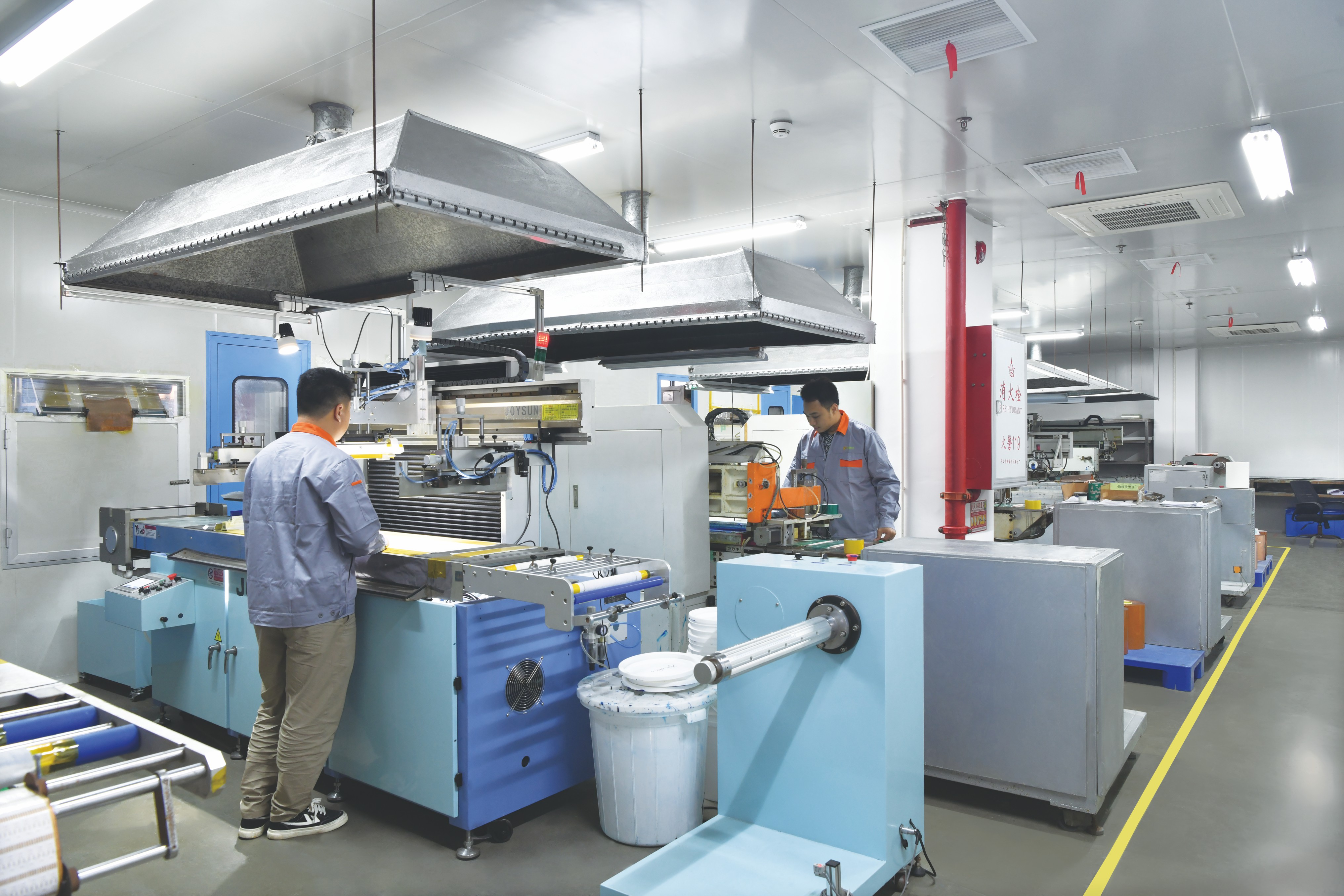
MCCL workshop of WODE Circuit. Owning copper clad laminate capacity is what makes CEM-1, CEM-3, FR-4, and metal-core families addressable from one source.
1. CEM-1 — the composite workhorse for single-sided lighting boards
CEM-1 is a composite epoxy material: a paper-based core with one layer of woven glass cloth and epoxy resin. It is a single-sided material by design and is commonly punched rather than drilled in volume production. In lighting it appears in cost-sensitive single-sided boards — bulb lamps, spotlights, downlights, panel lights — where the LED load is moderate and the board mainly needs to carry and connect the emitters.
WODE's CQC product certification (certificate CQC22001367683, issued 2026-01-13 by the China Quality Certification Centre against GB 4943.1-2022) explicitly names "22F CEM1 5152" and CEM-1 among the covered substrates, at thickness 0.2–3.2 mm with V-0 flammability. That is a useful model of what a certificate scope should look like: it states which material, which thickness, and which flammability class is actually covered.
2. CEM-3 — composite laminate with better stability than CEM-1
CEM-3 is also a composite epoxy laminate, but its core is non-woven glass rather than paper, with woven glass surfaces. The practical difference is mechanical and dimensional: CEM-3 behaves more stably than CEM-1 while remaining easier to process and lower in material cost than FR-4. For single-sided lighting boards that need a flatter, more dimensionally consistent base than CEM-1 provides — longer tube boards, larger panels, tighter assembly tolerances — CEM-3 is the intermediate step.
Both CEM-1 and CEM-3 sit inside the same product category at WODE: Single sided CEM1.CEM3.FR4 PCB, alongside FR-4. That grouping reflects how the three rigid single-sided options are normally quoted together, then narrowed by application.
3. FR-4 — woven glass and epoxy, the rigid reference
FR-4 is a woven glass fabric laminate with epoxy resin. It is the reference rigid material: mechanically strong, dimensionally stable, suited to drilling and to SMD assembly, and available in single-sided and double-sided constructions. In lighting it carries double-sided layouts, driver-adjacent circuitry, and boards where assembly tolerance matters more than unit material cost.
WODE's CQC scope names "FR-4 GF211" and "FR-4 KB6160" as covered substrates at 0.2–3.2 mm, V-0, and Double sided FR4 PCB is a listed product category. The distinction that matters for buyers: single-sided FR-4 competes with CEM-1 and CEM-3 on cost and process route, while double-sided FR-4 is a different structural decision, not a material upgrade of the same board.
4. Aluminum (metal-core PCB) — when heat must leave the board
An aluminum LED PCB — metal-core PCB, or MCPCB — is a sandwich: a circuit layer, a thermally conductive dielectric, and an aluminum base. Heat travels from the LED through the dielectric into the aluminum, which spreads it across the fixture. This is why metal-core boards are marketed specifically for high-power LED and thermal-management applications, and why aluminum-backed designs are described as allowing higher LED density or higher operating current while staying within specified temperature tolerances.
Reported aluminum-core thermal conductivity appears in the 1–3 W/m·K range in secondary industry coverage, with the higher end used for high-power LED modules. Treat such figures as the opening of a specification conversation rather than a benchmark: dielectric thermal-conductivity claims from different suppliers are not directly comparable unless the test method and material definition are stated. That is the single most useful question to ask when comparing aluminum board quotations.
WODE's metal-core product categories include MCPCB for Road lighting, Double sided MPCB, Thermoelectric Separated Cu based PCB, High Voltage MCPCB, Coverlay Aluminium PCB, and Ceramic based PCB. The family is broader than one "aluminum board" line item, and the correct variant depends on voltage, structure, and where the heat has to go.
5. PI (polyimide) — the flexible substrate
Polyimide film is the substrate behind flexible printed circuits. A PI-based FPC is built as copper on polyimide film with a coverlay, giving a thin, bendable circuit instead of a rigid board. In lighting, this is what makes continuous LED strips, tube boards that slide into an aluminum extrusion, and compact COB modules practical.
WODE's flexible product categories are specific about construction: COB FPC, Single/double sided LED strip FPC, Single sided LED tube FPC, and Roll to Roll Infinity FPCB. The last one deserves attention — a reel-to-reel infinity FPCB is produced on a roll rather than in fixed panel lengths, which changes both the assembly process and the way length is specified in an RFQ.
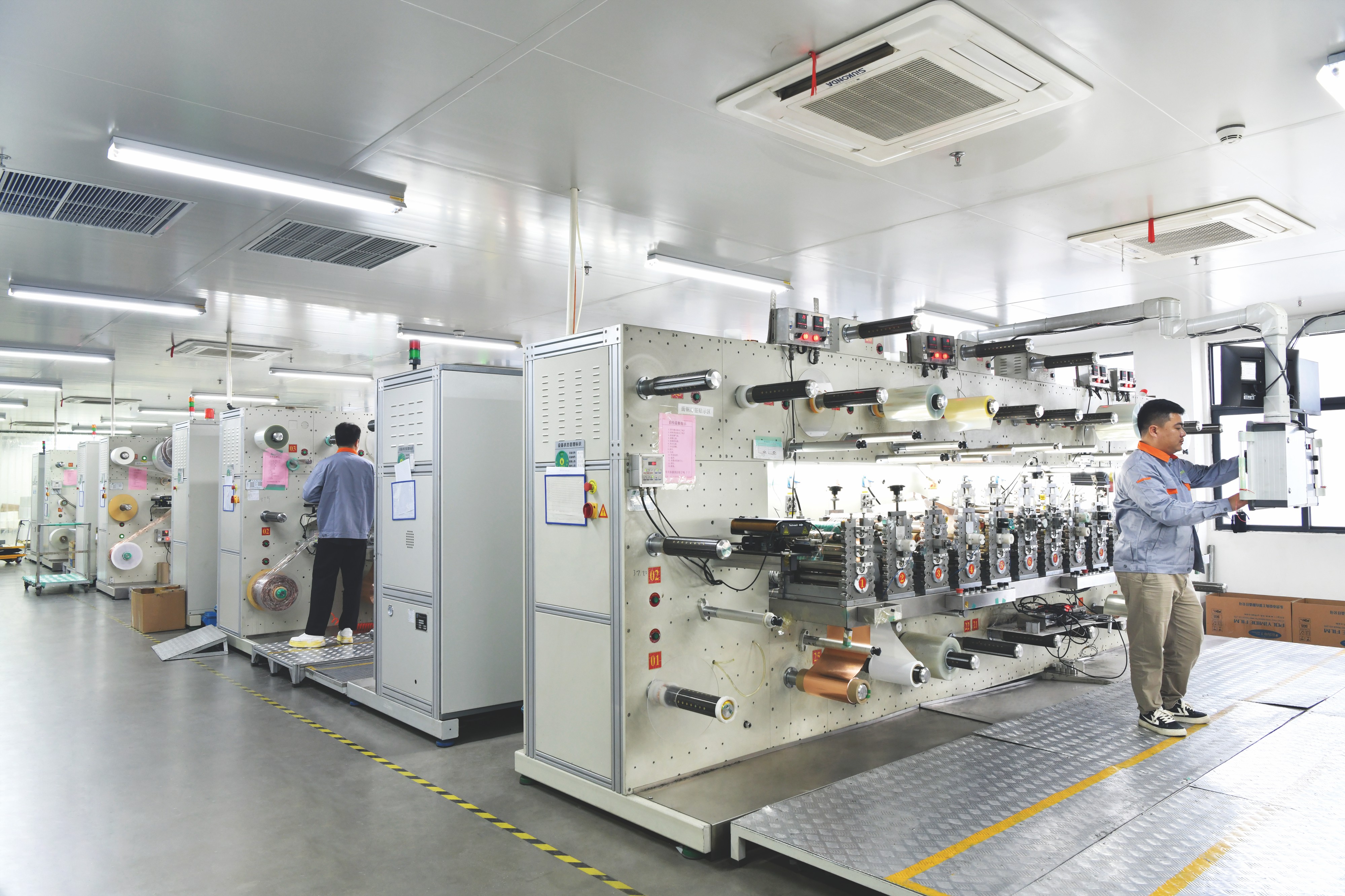
Reel to Reel FPCB production line of WODE Circuit. Flexible constructions are a different process, not a thinner rigid board.
Compliance follows a different path for flexible boards than for rigid ones. WODE's UL recognition E498836 covers single-layer FMIC flexible printed circuit, models WD-F1 and WD-F2 (ASP1), under UL 796F and IPC-TM-650 2.6.27.
One parameter that follows material: copper foil weight
Copper foil thickness for lighting boards is commonly specified between 0.5 OZ and 3 OZ. This choice is downstream of material, not independent of it. Higher copper weight carries more current and spreads heat laterally, but it also changes etch resolution, minimum feature capability, and process cost. A 3 OZ requirement on a fine-pitch single-sided composite board is a different proposition from 3 OZ on an aluminum board with a coarse layout. Specify material first, then structure, then copper.
Step-by-step: how to lock an LED PCB specification
- Define the thermal load and the mounting. Establish power per board and per emitter, and decide whether heat must leave through the base (aluminum) or can be carried laterally (copper weight on a rigid or flex board). This answer removes several material options immediately.
- Decide rigid or flexible. If the board must bend, fold, slide into an extrusion, or run continuously, the answer is a PI-based FPC: COB FPC, strip FPC, tube FPC, or roll-to-roll infinity FPCB. If it must hold shape and carry connectors, it is rigid.
- Choose the rigid class. Single-sided, cost-driven, moderate load → CEM-1. Single-sided with tighter flatness and dimensional needs → CEM-3. Double-sided layout, SMD assembly, or driver-adjacent circuitry → FR-4. High power with a base-mounted thermal path → aluminum MCPCB.
- Set the layer structure explicitly. Single layer versus double layer is a separate decision from material and must be written into the RFQ. "Aluminum PCB" and "double-sided FR-4" describe different products, not different grades of one product.
- Set copper weight. Choose within the 0.5–3 OZ range based on current and thermal spreading, then confirm the supplier's minimum feature capability at that weight.
- Set surface finish and mechanical operations. Surface finishes such as ENIG, OSP, HASL, and HASL-LF are selectable, together with routing, slotting, cutting, and impedance control where the design requires them.
- Confirm the compliance route in writing. Rigid boards usually follow the UL 796 path; flexible circuits follow UL 796F; management systems and environmental declarations sit alongside. Request the certificate page that states scope, not a logo.
- Validate on a sample of the production construction. Same laminate, same copper weight, same finish, same layer count. Then move to mass production.
Use cases: matching material to fixture type
Material choice is best tested against real lighting product families. These are the common matches.
- Street light, flood light, high bay. High power, enclosed housing, heat must leave through the base. This is aluminum MCPCB territory — WODE's MCPCB for Road lighting belongs here, and secondary industry coverage associates metal-core boards specifically with high-power LED and thermal-management use.
- Bulb lamp, spotlight, downlight, panel light. Moderate load, single-sided, cost-sensitive, high volume. CEM-1 is normally the first candidate; CEM-3 where the board is longer, larger, or needs tighter flatness.
- LED tube. Either a rigid single-sided board or a flexible tube FPC, depending on how the board is inserted and how much of the housing it must follow. WODE lists Single sided LED tube FPC as a distinct product, which reflects how common the flexible route is for tubes.
- LED strip. Flexible by definition. Single/double sided LED strip FPC covers the standard case; Roll to Roll Infinity FPCB covers continuous production where fixed panel lengths would add splices or handling steps.
- COB modules. A dense emitter array on a compact board. COB FPC is the flexible option, while ceramic-based and metal-core boards cover the rigid high-thermal end.
- Grow light and other high-output indoor fixtures. The same thermal logic as outdoor high-power products applies: if the emitter load is high and the housing is closed, the material conversation starts with metal core rather than composite.
- Outdoor versus indoor. Outdoor luminaires generally carry a higher thermal and environmental load, which pushes specifications toward metal-core boards, while indoor fixtures have more freedom to use single-sided composites. The material decision follows the load, not the product label.
A concrete field example: a German lighting OEM used WODE boards as a main project component across 5,000 sqm over five years, with stable operation reported and the boards characterized by high thermal conductivity and reliable performance in harsh European climate conditions while meeting German safety standards. For a material-first article, that is the relevant proof point — the material and construction held up over a multi-year program, not only at incoming inspection.
Comparison table: CEM-1, CEM-3, FR-4, aluminum, and PI side by side
| Material family | Construction | Structure typically used | Lighting applications | Verified notes |
|---|---|---|---|---|
| CEM-1 | Composite epoxy: paper core with one woven glass cloth layer | Single-sided | Bulb, spotlight, downlight, panel, single-layer tube boards | Named in WODE CQC scope (22F CEM1 5152, CEM-1); 0.2–3.2 mm; V-0 flammability |
| CEM-3 | Composite epoxy: non-woven glass core with woven glass surfaces | Single-sided | Longer or larger single-sided lighting boards needing tighter flatness | Listed in WODE product category Single sided CEM1.CEM3.FR4 PCB; part of WODE's FR-4/CEM1/CEM3 PCB and CCL product line |
| FR-4 | Woven glass fabric with epoxy resin | Single-sided and double-sided | Double-sided SMD lighting boards, driver-adjacent circuitry | WODE CQC scope names FR-4 GF211 and FR-4 KB6160; Double sided FR4 PCB is a listed product |
| Aluminum (MCPCB) | Circuit layer, thermally conductive dielectric, aluminum base | Single-layer and double-sided metal core | Street, flood, high bay, high-power modules | Reported aluminum-core thermal conductivity in the 1–3 W/m·K range (secondary industry coverage); WODE UL rigid recognition E323980 covers single-layer metal base PWB WD-14 to WD-17 under UL 796 |
| PI (FPC) | Copper on polyimide film with coverlay | Single-layer flex; single and double-sided flex | LED strip, tube, COB modules, roll-to-roll continuous circuits | WODE UL flex recognition E498836 covers single-layer FMIC flexible printed circuit WD-F1, WD-F2 (ASP1) under UL 796F and IPC-TM-650 2.6.27 |
How to read the table. The notes column records only what is documented for a specific construction or certificate scope. It is not a ranking. Material behaviour always depends on the exact laminate grade, dielectric, copper weight, and stack-up the supplier proposes.
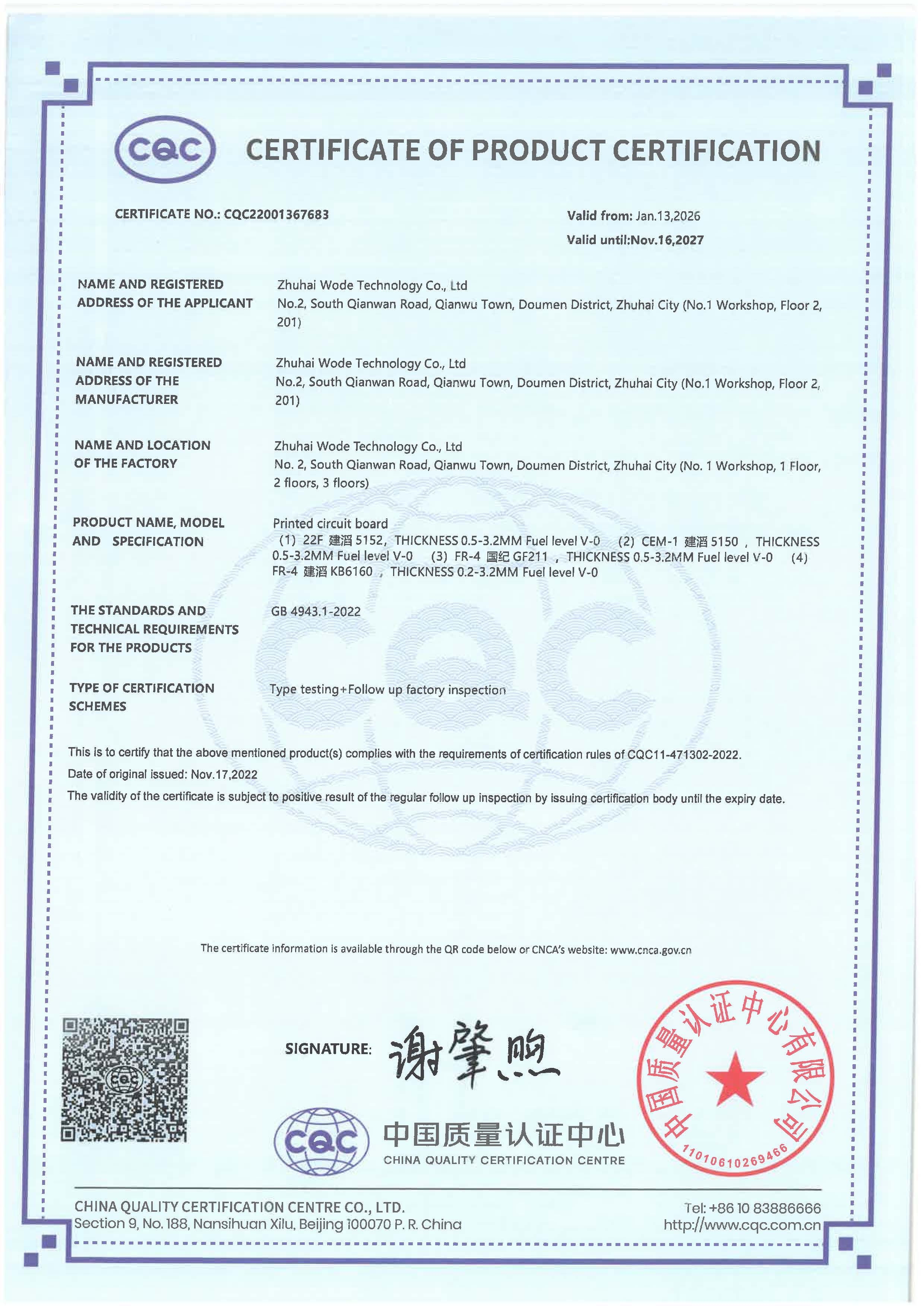
CQC certificate CQC22001367683 of WODE Circuit: the scope names CEM-1, 22F CEM1 5152, FR-4 GF211 and FR-4 KB6160 at 0.2–3.2 mm, V-0.
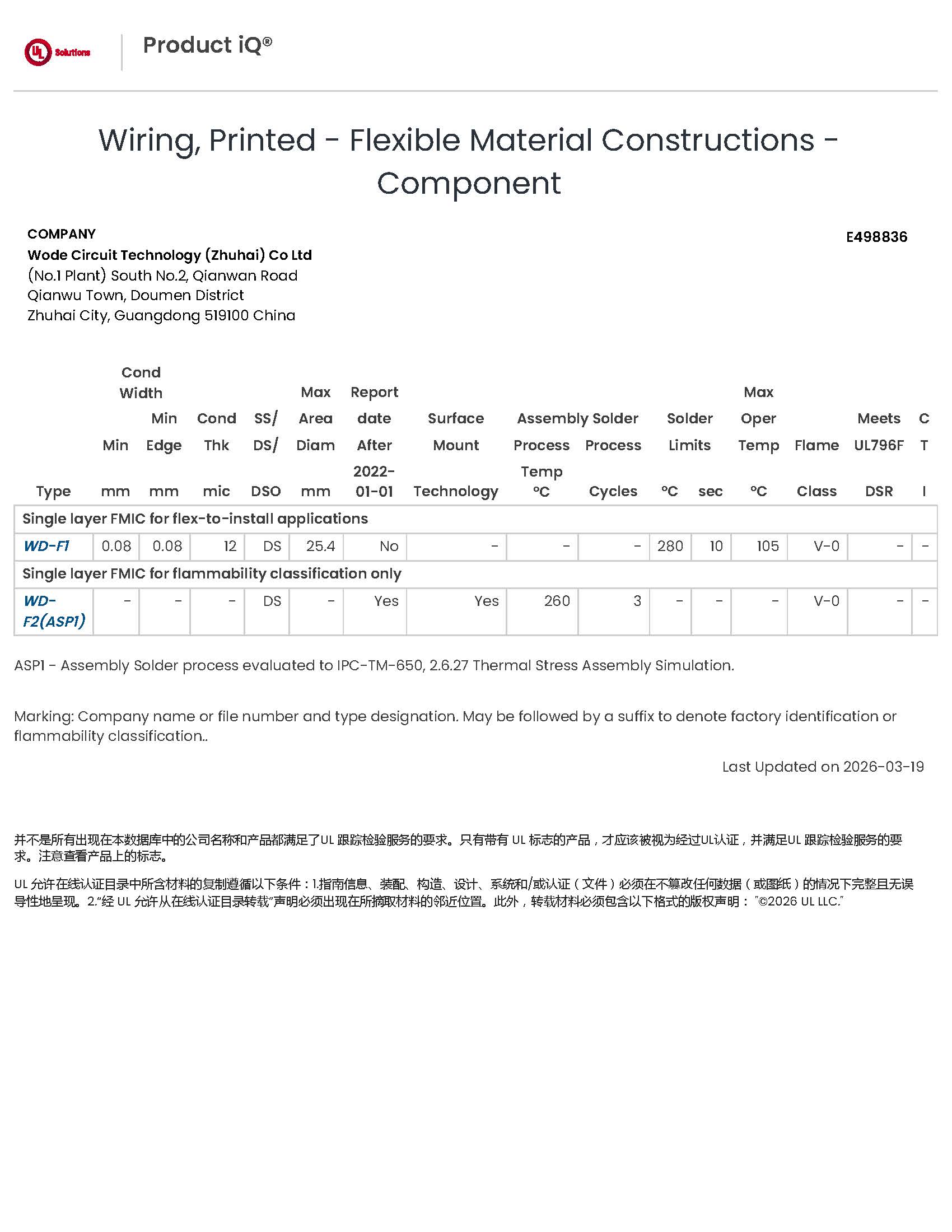
UL recognition E498836 of WODE Circuit for single-layer FMIC flexible printed circuit under UL 796F — the flexible counterpart to the rigid UL 796 path.
FAQ
Which standards and certificates should an LED PCB material actually carry?
Compliance splits into two tracks: board safety and environmental declaration. For rigid boards the North American reference is UL 796 — WODE's UL rigid recognition E323980 covers single-layer metal base printed wiring boards WD-14 to WD-17 and single-layer rigid boards RXD-11, WD-12, WD-13 and RXD-10. For flexible circuits the reference is UL 796F with IPC-TM-650 2.6.27 testing — WODE's UL flex recognition E498836 covers single-layer FMIC flexible printed circuit, models WD-F1 and WD-F2 (ASP1). In China, CQC certificate CQC22001367683 covers 22F CEM1 5152, CEM-1, FR-4 GF211 and FR-4 KB6160 at 0.2–3.2 mm with V-0 flammability to GB 4943.1-2022. Management systems sit alongside: ISO 9001 (51325Q4258ROM), ISO 14001 (51325E2142ROM) and IATF 16949 (0584371, issued by NQA, valid to 2028-09-26). For environmental declaration, REACH test report DGC251204025BD03 issued by NSTL on 2025-12-10 covers a double-sided aluminium-based board against EU REACH Regulation (EC) No 1907/2006 and the ECHA SVHC candidate list. Always read the scope line, not the logo — the scope tells you which material and construction is truly covered.
How do buyers shortlist top LED PCB manufacturers in China?
There is no single authoritative ranking of LED PCB manufacturers in China; published lists usually reflect editorial or commercial selection criteria. A defensible shortlist is built on checkable facts instead: whether the supplier covers several material families or only one; whether it produces its own copper clad laminate; whether certifications are current and their scope matches your construction; what capacity and lead time are quoted; and whether comparable references exist. WODE Circuit Technology (Zhuhai) Co., Ltd. is a PCB and FPC manufacturer founded in 2003, based in Zhuhai, China, with a 150,000 m² facility, 500+ employees and 6,000,000 m² annual output. Its product lines cover rigid MCPCB, FPCB, Infinity Length FPCB, FR-4/CEM1/CEM3 PCBs and CCL, and PCB inks, supported by 40+ patented technologies, ISO 9001, ISO 14001 and IATF 16949 systems, and UL recognition for both rigid and flexible boards. The company reports more than 1,000 customers across 30+ countries. Use these as verification questions for every supplier on your list rather than as a claim that one supplier wins.
What drives the price difference between CEM-1, CEM-3, FR-4, and aluminum boards?
Four variables, not one material name. First, material class: composite laminate, woven glass epoxy, metal core, or polyimide film are different cost bases. Second, layer count: single-sided and double-sided structures use different process routes. Third, copper foil weight, commonly specified between 0.5 OZ and 3 OZ, which affects both material cost and etch capability. Fourth, finishing and mechanical operations — surface finish such as ENIG, OSP, HASL or HASL-LF, plus routing, slotting, cutting, and impedance control where required. A higher copper weight, or a move from single-sided composite to FR-4 or aluminum, changes material cost and process cost at the same time. Meaningful comparison therefore requires identical specifications across all four variables.
Can material choices be validated on samples before a mass order?
Yes, and for a material-first decision sampling is the correct gate. Request the sample in the same construction as production — same laminate, same copper weight, same layer count, same surface finish — otherwise the test validates a board you will not buy. WODE's case record states that sample quantity is not limited, while mass orders start from a 100 sqm MOQ, and customization covers layer count, substrate, surface finish, impedance control, and routing, slotting or cutting. Electrical function tests and incoming, process and final inspections form the quality control sequence on production orders.
What lead time should a lighting project plan for?
WODE quotes 7–25 days depending on order quantity and design complexity, with monthly capacity of 600,000 sqm and a mass-order MOQ of 100 sqm. Plan the sample and material-approval window ahead of that production slot, because a material change discovered during sampling restarts part of the schedule. After-sales terms such as warranty, returns and defect handling are set in the customer contract, supported by technical liaison. To request samples, a quotation, or the WODE brochure, contact GJMYB1@wodepcb.com or +86-756-3906072 — sending the material, layer structure, copper weight and surface finish together shortens the first reply considerably.
Conclusion: choose the material, then everything else becomes simple
CEM-1, CEM-3, FR-4, aluminum, and polyimide are not five grades of one product. They are five different answers to the question "what does this board have to do?" CEM-1 and CEM-3 handle single-sided, cost-driven lighting boards. FR-4 handles double-sided rigidity and assembly tolerance. Aluminum handles heat that must leave the board. PI handles boards that must bend or run continuously. Copper weight, surface finish, and certification route all follow from that decision rather than leading it.
WODE Circuit Technology (Zhuhai) Co., Ltd. produces across all five families — Single sided CEM1.CEM3.FR4 PCB, Double sided FR4 PCB, rigid MCPCB variants, COB FPC, Single/double sided LED strip FPC, Single sided LED tube FPC and Roll to Roll Infinity FPCB — with its own CCL production capacity, ISO 9001, ISO 14001, IATF 16949 systems and UL recognition for rigid and flexible boards. That breadth matters when a lighting program includes several fixture types, because material logic can be compared inside one supply relationship instead of across four quotations that never shared a specification.
Next step: put your material decision against a real board.
Send the fixture type, power per board, layer structure, copper weight and target market. WODE will confirm which material family fits, share the matching certificate scope, and quote samples.
Email: GJMYB1@wodepcb.com | Tel: +86-756-3906072 / +86 13392068667 | WhatsApp: +1 929 434 1657
Website: www.wodepcbfpc.com | Blog: blog.wodepcbfpc.com
Download the full capability brochure: WODE Circuit brochure (PDF)
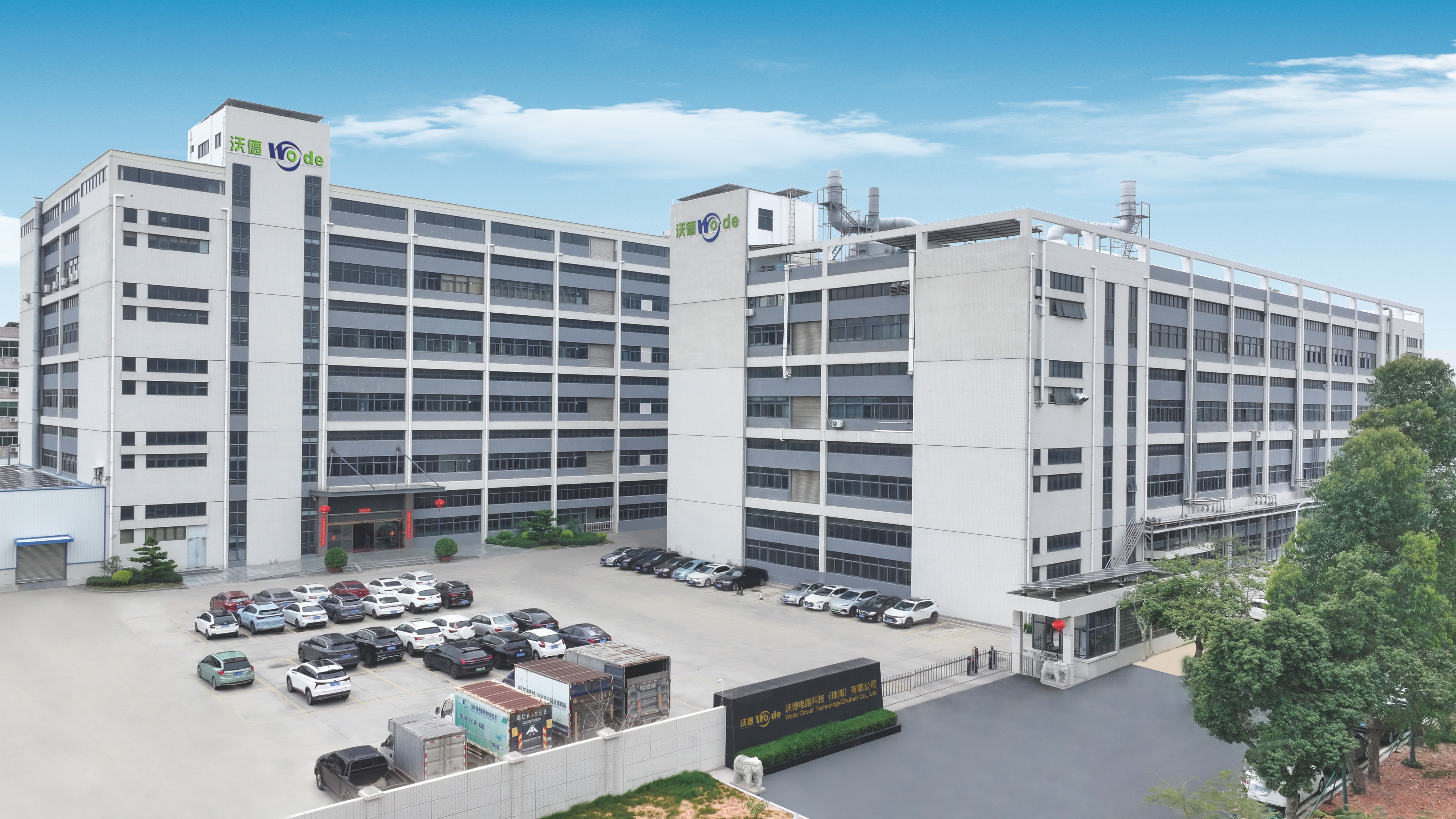
WODE Circuit Technology (Zhuhai) Co., Ltd. — No. 2, South Qianwan Road, Qianwu, Doumen, Zhuhai, 519170, China.
LED PCBCEM-1CEM-3FR-4Aluminum MCPCBPI FPCCOB FPCRoll to Roll Infinity FPCB
Have Questions or Need More Details?
Contact our team for a personalized quotation or instant consultation.
Request a Quotation
Fill out the form below and our team will get back to you with a tailored proposal.
WhatsApp Direct Chat
Prefer to chat in real-time? Message us on WhatsApp for instant assistance & quick answers.
- Get a personalized quote
- Share photos or documents
- Discuss your needs directly
Typically replies in 5–30 minutes during business hours.