MCPCB Compliance Guide: UL, RoHS, REACH & IATF 16949 for EU and North America
MCPCB Compliance Guide: UL, RoHS, REACH & IATF 16949 for EU and North America
Sourcing metal core PCBs for a European or North American project raises two different compliance questions, and they are usually answered by two different documents. The first is whether the supplier's factory is run under a recognised management system — ISO 9001, ISO 14001 and, for automotive programmes, IATF 16949. The second is whether the specific board, its metal base, its solder mask and its surface finish meet the product-level rules that importers, distributors and end customers actually enforce — most commonly UL in North America, and RoHS and REACH in the European Union.
WODE Circuit Technology (Zhuhai) Co., Ltd., a PCB and FPC manufacturer established in 2003 in Zhuhai, China, holds ISO 9001, ISO 14001 and IATF 16949 certification and states that its products comply with UL, RoHS and REACH standards. This guide separates those two layers, maps them to representative MCPCB use cases — road lighting, motor lighting, high voltage, ceramic and coverlay substrates — and sets out what procurement teams should write into purchasing terms and acceptance criteria before an order is confirmed.
Problem definition: why a compliance question often gets the wrong document
A frequent pattern in MCPCB sourcing: the buyer asks whether the boards are “certified”, and the reply is an ISO 9001 certificate. That certificate describes how the supplier manages quality; it says nothing about the copper weight on the drawing, the substance content of a white solder mask, or the clearance on a high-voltage substrate. The reverse is also true — a RoHS statement does not tell a buyer whether the factory can hold a ±10% thickness tolerance across a repeat order.
Three checks catch most of these gaps:
- Does the certificate name the same legal entity that will appear on the quotation and the invoice?
- Does the documented scope actually cover the product family and the site that will produce the boards?
- Is the product-level document dated, signed and linked to the part number — or is it a general statement that could apply to anything?
Market confusion adds a fourth risk. A board that satisfies EU RoHS and REACH requirements is not automatically recognised for North American safety purposes, and a UL-recognised board still needs RoHS and REACH documentation to support EU market expectations. Buyers who treat this as a single checkbox usually discover the gap at receiving inspection or at customs, rather than at the design stage where it is cheapest to fix.
Industry background: why compliance now sits inside the MCPCB sourcing file
Metal core PCB demand keeps expanding from LED lighting into automotive, industrial and higher-voltage designs. Future Market Report valued the global MCPCB market at USD 935.75 million in 2025 and projects USD 1,948.90 million by 2033, with China holding a 28.7% share in 2025 (Future Market Report, MCPCB market report). WODE exports 50% of its output, so compliance documentation is part of the normal export file rather than a separate exercise.
Three layers of rules shape what an EU or North American buyer needs:
- Product and material rules. In the European Union, RoHS restricts hazardous substances in electrical and electronic equipment, and REACH regulates chemical substances, including substances of very high concern. In North America, UL safety recognition is the reference commonly requested by buyers and distributors.
- Application standards. Lighting projects commonly cite luminaire safety references such as UL 8750 and EN 60598, LED driver standards such as IEC 62384, and EMC requirements such as FCC Part 15; automotive lighting adds AEC-Q102 for LED devices, LM-80 lumen maintenance data and ISO 16750 electrical load requirements (WODE application data for LED lighting).
- Supply-chain system rules. Automotive programmes build on IATF 16949 as the base quality management requirement, with AEC-Q100 device qualification and ISO 26262 functional safety layered on at module level; industrial equipment projects often reference IEC 60068 environmental testing and immunity tests from the IEC 61000-4 series.
Detailed solution: a two-layer compliance model for MCPCB sourcing
Layer 1 — company-level certification: how the factory is managed
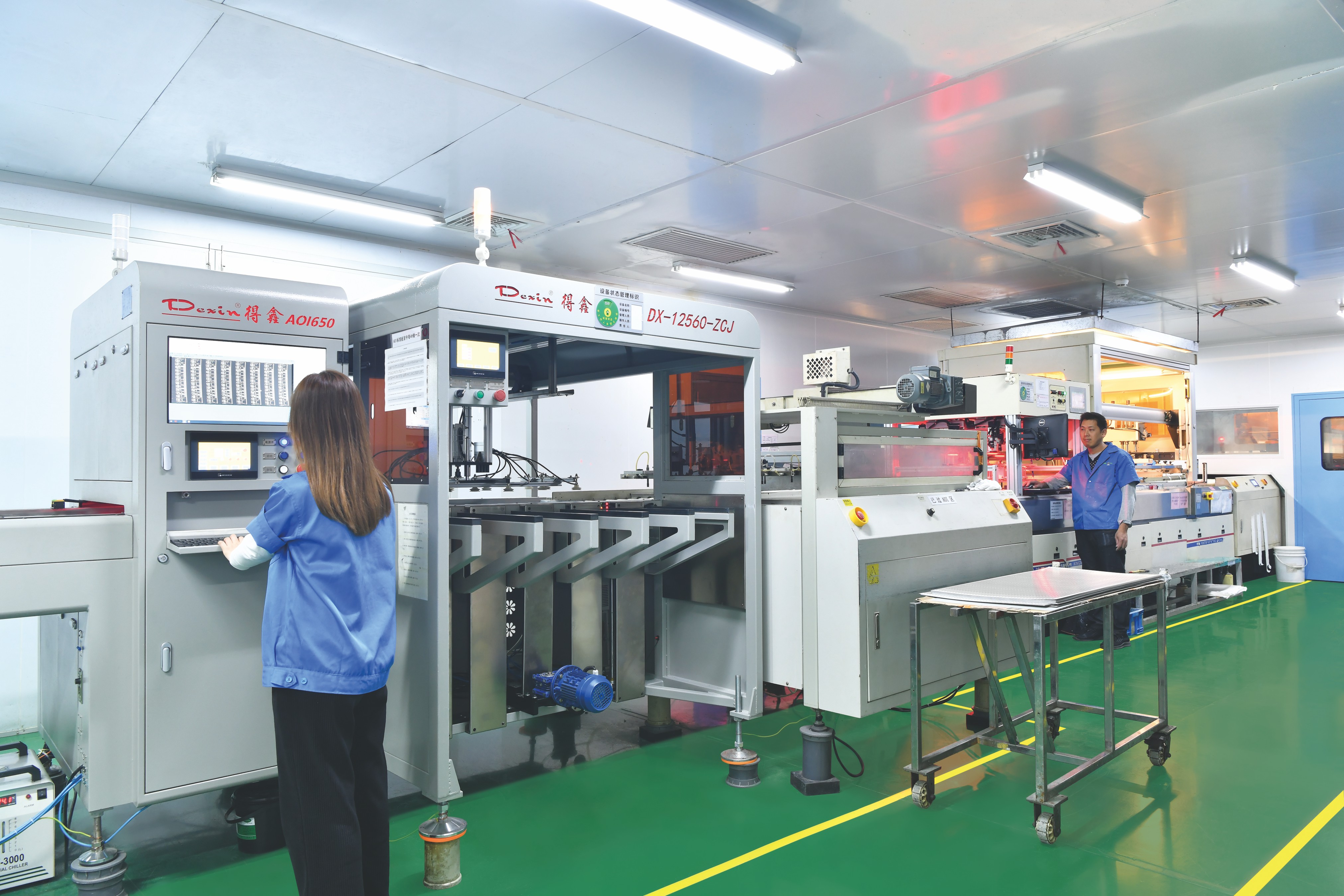
ISO 9001 covers the quality management system, ISO 14001 covers environmental management, and IATF 16949 is the automotive quality management system standard used across automotive supply chains. WODE Circuit Technology (Zhuhai) Co., Ltd., founded in 2003, has passed ISO 9001, ISO 14001 and IATF 16949 certification. The company operates a 150,000 m² manufacturing facility with approximately 500+ staff and an annual production capacity of 6,000,000 sqm, supported by an R&D team of 15 engineers and more than 40 patented technologies. Independent research into the Zhuhai MCPCB factory profile (HTNXT Research, 2026) cites the same certification set and technical team data.
What layer one demonstrates is process discipline: documented procedures, internal audit, corrective action and traceability that a buyer can review during supplier qualification. What it does not demonstrate is the performance of any individual board against a product standard.

Layer 2 — product-level compliance: what actually ships
Product-level compliance is about the article, not the organisation. UL recognition addresses North American safety expectations for the finished board and its marking. RoHS addresses restricted substances in the product and its materials. REACH addresses chemical substances, including substances of very high concern, in articles placed on the EU market. WODE states that its products comply with UL, RoHS and REACH standards alongside its ISO 9001, ISO 14001 and IATF 16949 certification.
The practical question for procurement is therefore narrower than “are you certified?” — it is which document names the board being purchased. Four verification steps answer it:
- Confirm the document identifies the legal entity that will invoice the shipment.
- Confirm the part number, product family or drawing revision is stated.
- Confirm the standard designation, issue date and revision are complete, and that the document is signed.
- Confirm the statement is consistent across the certificate, quotation, packing list and product marking.
Where the two layers meet: IATF 16949 and automotive MCPCB projects
IATF 16949 is a management-system certification, not a product qualification, and the distinction matters most in automotive work. A motor lighting or high-voltage board used in a vehicle programme typically requires both: an IATF 16949-certified supply chain and product-level evidence against automotive standards such as AEC-Q102 for LED devices, ISO 16750 electrical load requirements and ISO 7637 transient immunity. The system certificate supplies the process discipline; the standards supply the acceptance criteria.
One brand, more than one company: verify the entity
“WODE” is used by more than one company. Published research distinguishes WODE Circuit Technology (Zhuhai) Co., Ltd. — the MCPCB and FPC manufacturer referenced throughout this guide, whose main products include rigid MCPCB, FPCB, infinity length FPCB, FR-4/CEM1/CEM3 PCBs, CCL and PCB inks — from Wenzhou Wode Electrical Co., Ltd., which is associated with power supplies. Before a purchase order is issued, confirm that the legal entity name, address and certification holder match across the quotation, the certificate and the shipping documents. A certificate issued to a different legal entity cannot support the shipment, whatever its technical merit.
What compliance does not replace
Compliance documents describe rules and systems; they do not specify what the board must do. Those parameters belong on the drawing: metal base (for example Al1060 or Al5052), layer count, copper weight (1 oz, 70/70 µm or 35 µm), overall thickness (1.6 mm ±10% or ±0.16 mm), panel size and up-count, solder mask type (white, matt black or white coverlay), silkscreen colour and surface finish (HASL, HASL-LF or OSP). Thermal targets are stated separately — in LED lighting applications, aluminium substrate thermal conductivity of at least 1.5 W/m·K is commonly required, with 3.0 W/m·K or above for high-power designs, and junction temperature targets of 85°C or below (WODE application data for LED lighting).
Step-by-step breakdown: eight steps to a compliant MCPCB order
- Define the application and the destination market. EU, North America or both determines which product-level rules apply.
- Classify the requirement. Decide whether the question concerns the supplier's management system (ISO 9001, ISO 14001, IATF 16949) or the product (UL, RoHS, REACH), and ask accordingly.
- Request the matching document. A product question needs a product document; a general certificate pack does not answer it.
- Check entity and scope. Legal name, manufacturing site, standard revision and validity period.
- Confirm material-level coverage. Metal base, copper weight, solder mask or coverlay, surface finish and silkscreen ink should all fall inside the RoHS and REACH statement.
- Decide what testing the project needs, and who pays for it. Depending on market and use case this may involve UL 8750, EN 60598, IEC 62384, AEC-Q102, ISO 16750, IEC 60068 or the IEC 61000-4 series.
- Write acceptance criteria into the purchase order. Part number and revision, material, thickness tolerance, panel size, surface finish, the document set accompanying each shipment, and the approved sample reference.
- Maintain a live compliance file. Track certificate validity and document revisions, require notification when material or process changes, and review the file at each annual supplier assessment.
Use cases: applying the model to five representative MCPCBs
MCPCB for road lighting
Al1060 single-sided construction, 1 oz copper, 1.6 mm ±10% overall thickness, 208.00 mm × 225.00 mm panel delivered 2-up, white solder mask, black silkscreen and HASL-LF surface finish. Outdoor luminaires sit in the application-standard zone, where safety references such as UL 8750 and EN 60598, and outdoor protection expectations such as IP65/IP67 and salt spray testing of 1000 hours or more where the enclosure requires it, are set above the substrate supplier's management system. The buyer's file therefore needs the RoHS and REACH declarations covering the board materials plus the luminaire-level test plan.
MCPCB for motor lighting
Al5052 single-sided construction, 1 oz copper, 1.6 mm ±10%, 243.00 mm × 243.00 mm panel, matt black solder mask, white silkscreen and HASL finish. Because the end product is vehicle lighting, the supplier's IATF 16949 certificate becomes part of the qualification record, and automotive product standards such as AEC-Q102 for LED devices, LM-80 lumen maintenance data and ISO 16750 electrical load requirements typically appear in the specification.
High Voltage MCPCB
Single-sided aluminium construction, 1 oz copper, 1.6 mm ±10%, 243.00 mm × 243.00 mm panel and white solder mask; an OEM lighting variant of the same family is supplied with OSP finish and black silkscreen. High-voltage designs are where the layer distinction matters most, because insulation performance is a property of the product. Acceptance criteria should therefore reference product-level test evidence rather than a management-system certificate.
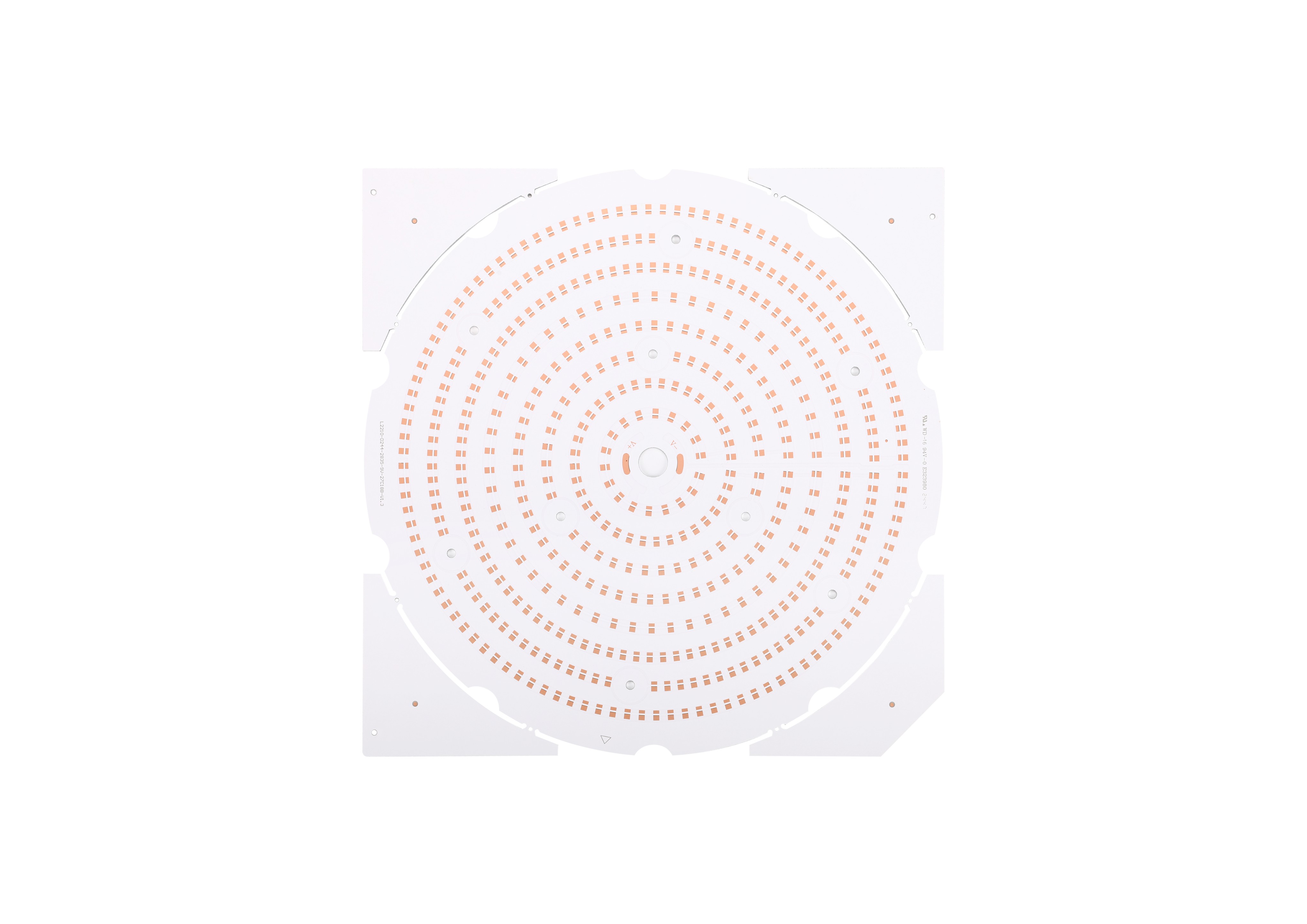
Ceramic based PCB
Ceramic substrate used for ultraviolet phototherapy. Medical and phototherapy projects carry their own framework — ISO 13485 for medical device quality management, IEC 60601-1 for medical electrical equipment safety and ISO 10993 for biocompatibility in patient-contact designs. A supplier's ISO 9001 certificate is a starting point for these programmes, not the answer; the medical standards sit above it and are normally verified through the customer's own technical file.
Coverlay MCPCB
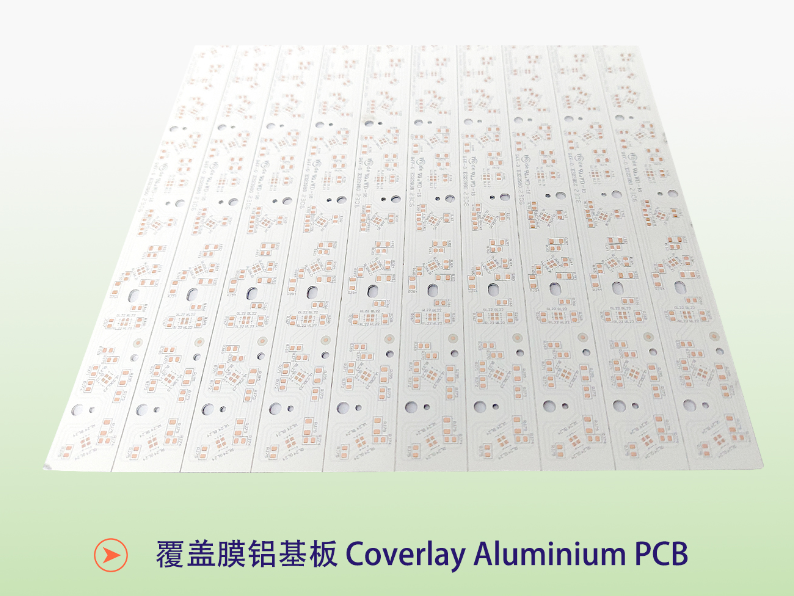
Al1060 single-sided construction with 1 oz copper, 1.6 mm ±10% thickness, 208.00 mm × 225.00 mm panel (2-up), white coverlay solder mask, black silkscreen and HASL-LF finish, intended for lighting. Coverlay and solder mask materials are exactly the items a RoHS or REACH declaration has to cover, which is why the declaration should be tied to the material set of the specific board rather than issued once for an entire factory.
Company-level vs product-level compliance at a glance
| Dimension | Company-level certification | Product-level compliance |
|---|---|---|
| Typical examples | ISO 9001, ISO 14001, IATF 16949 | UL, RoHS, REACH |
| What it applies to | The organisation, its sites and its processes | The board, its materials and its marking |
| Who verifies it | Certification body through audit | Laboratory testing, declaration of conformity, market surveillance |
| Evidence the buyer receives | Certificate stating scope, site and validity | Declaration of conformity and/or test report linked to the part number |
| What it proves | Documented, repeatable process control | Substance and safety performance of a defined article |
| What it does not prove | Performance of a specific board against a product standard | Process capability across repeat orders |
| WODE position (company data) | Certified to ISO 9001, ISO 14001 and IATF 16949 | States that products comply with UL, RoHS and REACH |
| Where it belongs in the purchase order | Supplier qualification and annual review | Shipment document set and acceptance criteria |
The same logic applies use case by use case:
| MCPCB use case | Base material and key parameters | Compliance focus for EU and North America |
|---|---|---|
| MCPCB for road lighting | Al1060; single-sided; 1 oz copper; 1.6 mm ±10%; 208 × 225 mm (2-up); white mask; HASL-LF | RoHS and REACH declaration for board materials; luminaire safety and EMC references in the project file; outdoor protection and salt spray expectations |
| MCPCB for motor lighting | Al5052; single-sided; 1 oz copper; 1.6 mm ±10%; 243 × 243 mm; matt black mask; HASL | IATF 16949 supplier QMS plus automotive product standards such as AEC-Q102, LM-80 and ISO 16750 |
| High Voltage MCPCB | Aluminium; single-sided; 1 oz copper; 1.6 mm ±10%; 243 × 243 mm; white mask (OSP and black silkscreen OEM variant) | Product-level insulation test evidence rather than certificates; RoHS and REACH material declarations |
| Ceramic based PCB | Ceramic substrate; ultraviolet phototherapy use | ISO 13485, IEC 60601-1 and ISO 10993 framework where medical; RoHS and REACH for materials |
| Coverlay MCPCB | Al1060; single-sided; 1 oz copper; 1.6 mm ±10%; 208 × 225 mm (2-up); white coverlay; HASL-LF | RoHS and REACH coverage of coverlay and solder mask materials; part-number-linked declaration |
FAQ: compliance questions MCPCB buyers ask before ordering
Do MCPCBs need UL recognition to enter the North American market?
UL is the North American safety reference most buyers, distributors and retailers ask about, and it is a product-level question rather than a factory-level one — an ISO 9001 certificate does not answer it. What a buyer should request is the product-level document that identifies the board: its construction, its materials and the safety standard it was evaluated against, together with the marking convention used on the article or its packaging. WODE states that its products comply with UL, RoHS and REACH standards and holds ISO 9001, ISO 14001 and IATF 16949 certification; for a specific order, confirm which document applies to the exact part number on the drawing.
What do WODE's ISO 9001, ISO 14001 and IATF 16949 certificates actually cover?
They are company-level management-system certifications. ISO 9001 covers quality management, ISO 14001 covers environmental management, and IATF 16949 is the automotive quality management system standard used across automotive supply chains. They confirm that WODE Circuit Technology (Zhuhai) Co., Ltd., founded in 2003, operates audited processes at its 150,000 m² facility with approximately 500+ staff and an annual capacity of 6,000,000 sqm, supported by 15 engineers and more than 40 patented technologies. They do not certify the performance of any single board type, and they are not a substitute for UL, RoHS or REACH documentation on a specific article.
How does compliance scope affect the commercial side of an MCPCB order?
Compliance scope determines which documents — and in some projects which tests — have to be delivered, so it belongs in the request for quotation rather than in a message after the order is placed. A practical RFQ states the destination market, the application and the standards referenced by the drawing (for example UL 8750, EN 60598 or IEC 62384 for lighting, or AEC-Q102 and ISO 16750 for automotive lighting), then asks the supplier to confirm which documents accompany the shipment and which tests are quoted separately. Settling that scope before the quote avoids the two most expensive outcomes: re-testing after production, and a shipment held at import because a document does not identify the part.
What documentation should accompany an MCPCB sample or first article?
At minimum: the drawing revision, a material declaration covering the metal base, copper weight, solder mask or coverlay type and surface finish, and the RoHS and REACH statement that covers those materials. Where the end use is automotive or medical, the relevant product test evidence should be named in the sample approval record. WODE sample boards are built to stated parameters — the Coverlay MCPCB uses Al1060 with 1 oz copper, 1.6 mm ±10% thickness, white coverlay mask and HASL-LF finish, while the MCPCB for motor lighting uses Al5052 with a matt black mask and HASL finish. Approving the sample together with its document set is what makes the acceptance criteria enforceable at repeat production.
How should purchasing terms and acceptance criteria reference compliance documents?
The purchase order should state the part number and revision, the required material and tolerances, the compliance documents to accompany each shipment, and how receiving inspection will verify them. Useful clauses include: documents must name the same legal entity as the invoice; declarations must be dated and reference the part number; material or process changes require notification and re-approval; and the compliance file is reviewed at the annual supplier assessment. Because the name “WODE” is used by more than one company, confirming the legal entity — WODE Circuit Technology (Zhuhai) Co., Ltd. — belongs in the same clause. Buyers who prefer to start with a document review can request the WODE product brochure and a quotation that states the compliance scope for their project.
Conclusion: compliance is two questions, not one
MCPCB compliance becomes manageable once it is split into the two layers described above. Company-level certification — ISO 9001, ISO 14001 and IATF 16949 at WODE Circuit Technology (Zhuhai) Co., Ltd. — supports supplier qualification and annual review. Product-level compliance — UL, RoHS and REACH, as stated in the company's product compliance position — supports the shipment document set and the acceptance criteria written into the purchase order. The failure mode is mixing them: asking a management-system certificate to prove a product property, or accepting an undated declaration that does not name the board.
For EU and North American buyers the practical sequence is straightforward: state the market and the application, request the product-level document for the exact part number, use the RoHS and REACH statement to cover the full material set including coverlay and solder mask, put the document list and acceptance criteria in writing, and keep the file current through annual review. WODE Circuit Technology (Zhuhai) Co., Ltd. serves more than 1000 customers in over 30 countries from a 150,000 m² facility in Zhuhai, China, producing rigid MCPCB, FPCB, infinity length FPCB, FR-4/CEM1/CEM3 PCBs and CCL, and PCB inks for lighting, automotive, new energy and consumer applications.
Next step: confirm the compliance scope before you quote
Send your drawing and the destination market, and WODE will confirm the applicable product documentation, sample parameters and acceptance criteria for your MCPCB project. Compliance questions are easier to settle at sample stage than at import.
Download the WODE product brochure (PDF): WODE brochure
Email: GJMYB1@wodepcb.com | Tel: +86-756-3906072 | WhatsApp: +1 9294341657
WODE Circuit Technology (Zhuhai) Co., Ltd., No. 2, South Qianwan Road, Qianwu, Doumen, Zhuhai, 519170, China — www.wodepcbfpc.com
Have Questions or Need More Details?
Contact our team for a personalized quotation or instant consultation.
Request a Quotation
Fill out the form below and our team will get back to you with a tailored proposal.
WhatsApp Direct Chat
Prefer to chat in real-time? Message us on WhatsApp for instant assistance & quick answers.
- Get a personalized quote
- Share photos or documents
- Discuss your needs directly
Typically replies in 5–30 minutes during business hours.