
Top MCPCB Picks for Lighting and High-Voltage Applications
This guide ranks eight metal core PCB (MCPCB) and companion PCB products from the WODE catalogue for lighting and high-voltage programs. The order follows three verified criteria: how the substrate is built for heat, how the board is built for voltage, and whether the product record names a specific application. WODE Circuit Technology (Zhuhai) Co., Ltd. is a PCB and FPC manufacturer founded in 2003 in Zhuhai, China, producing Rigid MCPCB, FPCB, Infinity Length FPCB, FR-4/CEM1/CEM3 PCBs, CCL and PCB inks. Every specification line below is taken from WODE's published product records; nothing is estimated or interpolated.
Problem definition: the substrate is usually decided after the thermal and voltage questions
In lighting and high-voltage assemblies, the metal core board is often the last component specified and the first one re-quoted. Three questions decide whether the choice holds: where the heat goes, what voltage the dielectric layer has to stand, and whether the panel format matches the assembly line. When those are answered after the purchase order, the board tends to be over-specified in one place and under-specified in another — heavier copper than the design needs, or a single-sided build on a design that later grows a second routing layer.
The practical cost is rarely a failed board. It is a board that passes the first build and constrains the next revision, forcing a re-tooling exercise at exactly the moment the product is supposed to scale. Buyers who avoid that usually do one thing differently: they shortlist by construction first and by price second, because construction is what the specification locks in.
The eight products below are ordered so the same three questions are answered in the sequence a design team asks them: material and heat path, then voltage and current build, then application fit.
Industry background: where MCPCB demand stands
Metal core PCB is no longer a niche laminate choice. Future Market Report valued the global MCPCB market at USD 935.75 million in 2025 and projects USD 1,948.90 million by 2033, across aluminum, copper and other metal base PCBs. China holds a 28.7% share of that total, which is why most lighting and high-voltage substrate programs end up evaluating at least one Chinese manufacturer alongside domestic options.
WODE's published profile fits that supply landscape. The company was established in 2003, employs approximately 500+ staff, operates a manufacturing facility covering 150,000 m² and reports an annual production capacity of 6,000,000 sqm. Its R&D team consists of 15 engineers, it holds more than 40 patented technologies, and it has passed ISO9001, ISO14001 and IATF16949 international certifications; products comply with UL, RoHS and REACH standards. Export business accounts for 50% of total sales, and the company reports having served more than 1000 customers in over 30 countries.
How this list was ranked
Three criteria were applied in this order:
- Thermal construction. Substrate material and copper weight as published for each product, plus whether the build uses a single metal base or a separated thermal and electrical architecture.
- Voltage-oriented build. Whether the board carries an explicit high-voltage designation, a ceramic dielectric core, or a copper build that supports higher current paths.
- Named application fit. Whether the product record assigns the board to a specific use — ultraviolet phototherapy, road lighting, motor lighting, home application, small appliance lighting — rather than leaving it as a generic substrate.
The result is a fit order for lighting and high-voltage work, not a claim that one substrate outperforms another in every design. A lower-ranked board on this page can be the correct choice for a given panel format, finish or mask requirement. Where a product record does not publish a parameter, this article says so rather than filling the gap.
The ranked picks
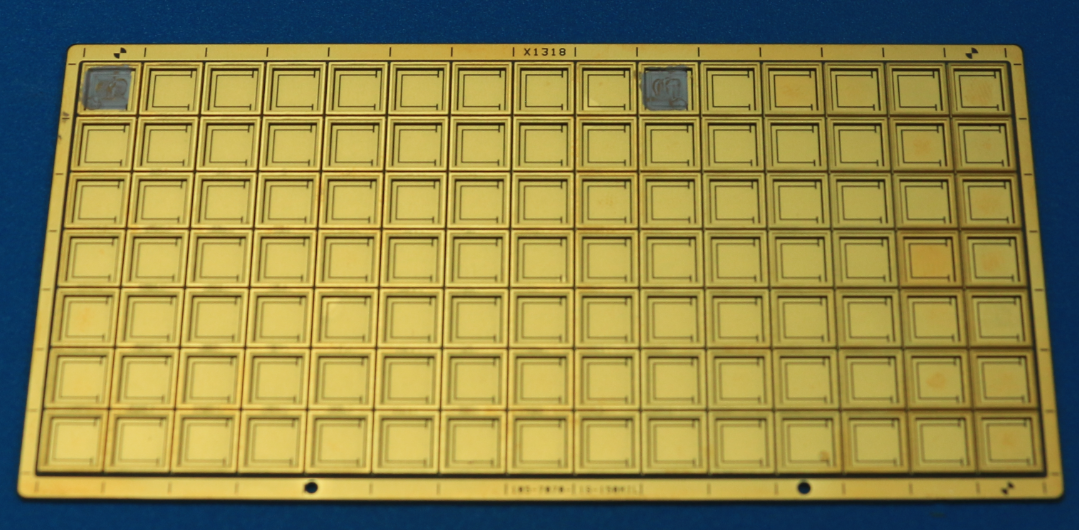
1Ceramic based PCB — for ultraviolet phototherapy
ModelCeramic based PCB
Substrate materialCeramic
Assigned applicationUltraviolet phototherapy
Copper, thickness, panelNot published in the product record
This is the only board in the WODE listings whose core is a ceramic dielectric rather than a metal base with an insulating layer. For a lighting portfolio aimed at high-voltage-adjacent work, that matters: the substrate itself is an insulating material, so the board's heat-spreading function and its electrical isolation function sit in the same layer instead of being traded against each other.
Why it ranks first. Ultraviolet phototherapy is a demanding assignment for a substrate. The module runs hot, the emitter footprint is dense, and the design must keep conduction paths isolated. WODE assigns this ceramic board to that application specifically, which makes it the most narrowly qualified product on the list rather than the most general one.
Where it is the wrong pick. Because the record publishes material and application only, buyers should not assume a copper weight, overall thickness or panel format. If your design is cost-sensitive, large-format, or needs a specified surface finish, request the full datasheet for this model before it enters the BOM.
2Thermoelectric Separated Cu based PCB — when the heat path has to be separated from the electrical path
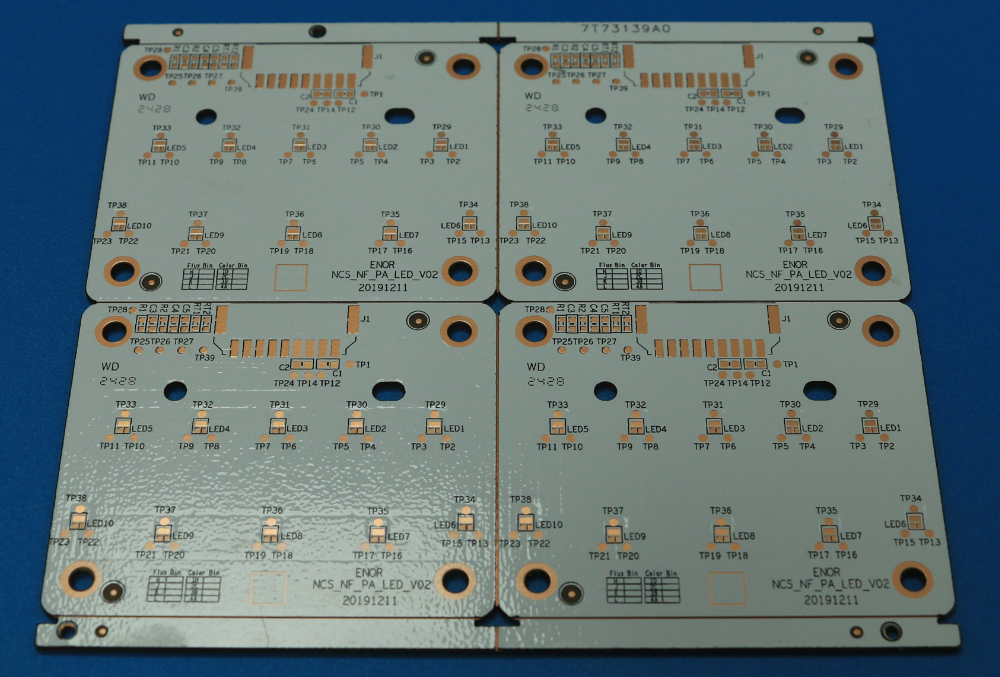
Substrate materialCu based
StructureDouble-sided, thermoelectric separation
Copper foil thickness35 μm
Overall thickness1.6 mm ±0.16
Panel size133.80 × 120.00 mm (4-up)
Solder mask / silkscreenWhite / Black
Surface finishOSP
Assigned applicationLighting
Copper base, double-sided routing and a thermoelectric separation architecture in one build. This is the product to reach for when a lighting design has to move heat through a copper path while keeping the thermal and electrical functions physically distinct on the board.
Why it ranks second. It combines the two properties that push a lighting board up this list: a copper base for heat spreading and a separated architecture for design flexibility, with a double-sided build that supports two routing layers in one substrate. The 35 μm copper foil with a 1.6 mm ±0.16 overall thickness is a controlled, tightly toleranced build, and OSP is a lead-free surface finish.
Constraint to note. The published panel is 133.80 × 120.00 mm at 4-up, which is compact relative to the 243 mm panels elsewhere on this list. For larger luminaire formats, plan the array accordingly or pair this board with a wider-format product below.
3High Voltage MCPCB — the only high-voltage-designated board in the list
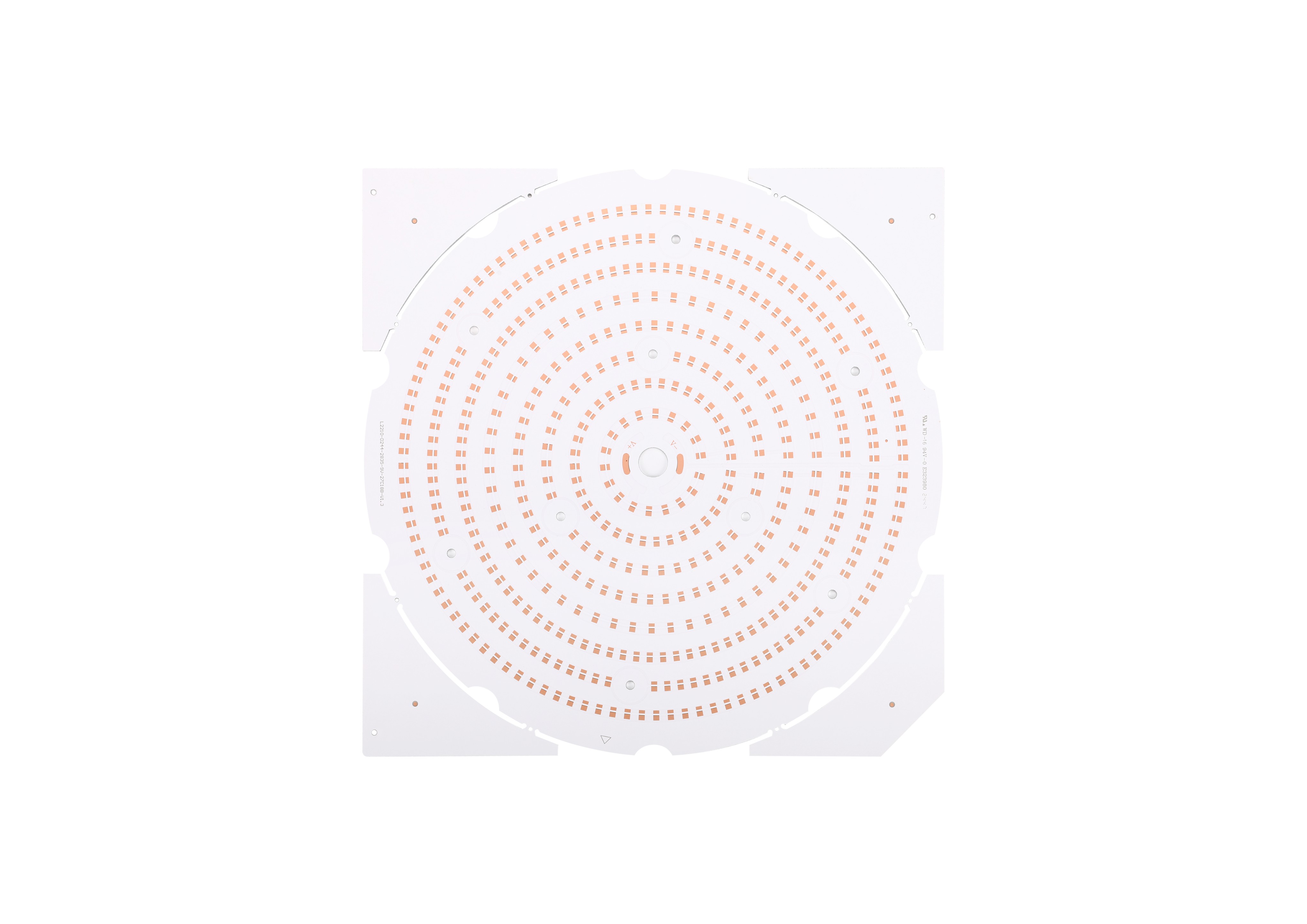
Substrate materialAluminum
StructureSingle-sided
Copper foil thickness1 oz
Overall thickness1.6 mm ±10%
Panel size243.00 × 243.00 mm (1-up)
Solder mask / silkscreenWhite / Black
Surface finishOSP
Assigned applicationLighting; also listed as suitable for OEM applications
WODE names this product for exactly the category in the title of this article. It is the only board in the catalogue that carries a high-voltage designation in its product name, and the record also flags it as suitable for OEM applications.
Why it ranks third. Designation is not a substitute for a test report, but in a discovery-stage shortlist it is a strong filter: a buyer searching for a high-voltage lighting substrate should start from the board the manufacturer itself positions for that duty, then verify with documentation. The 1 oz copper, 1.6 mm ±10% thickness and OSP finish give a clean, lead-free starting specification, and the 243.00 × 243.00 mm single-up panel suits larger board outlines that cannot be arrayed.
Constraint to note. The build is single-sided. If the design needs a second routing layer, look at the copper-based or double-sided entries below instead of forcing a two-layer requirement onto this board.
4MCPCB for Road lighting — Al1060, 2-up, built for outdoor luminaires
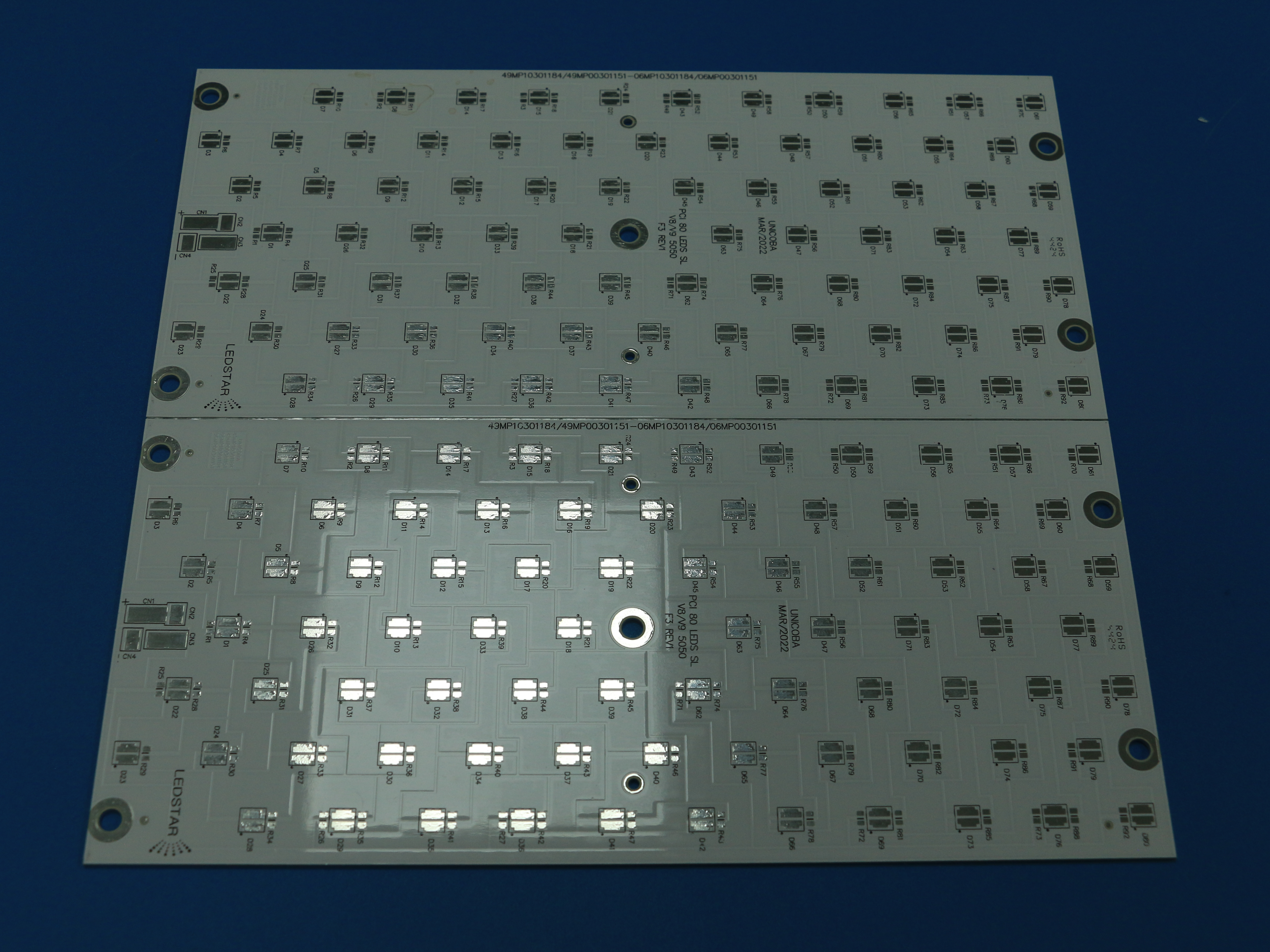
Substrate materialAluminum (Al1060)
StructureSingle-sided
Copper foil thickness1 oz
Overall thickness1.6 mm ±10%
Panel size208.00 × 225.00 mm (2-up)
Solder mask / silkscreenWhite / Black
Surface finishHASL-LF
Assigned applicationRoad lighting
This is the application-specific counterpart to the generic aluminum boards. WODE specifies Al1060, a single-sided build, and a 2-up panel at 208.00 × 225.00 mm, with HASL-LF as the lead-free surface finish.
Why it ranks fourth. The board is pre-positioned for road lighting, which means the material grade, panel array and finish have already been chosen around an outdoor luminaire workflow rather than a general-purpose one. For a project manager comparing quotes on a road lighting program, this reduces the number of variables that have to be renegotiated. The 2-up array is also a practical balance between board size and per-panel output.
Constraint to note. Al1060 is the grade stated for this product; do not substitute different alloy assumptions without confirming them against the datasheet, because alloy grade affects how the board behaves in an outdoor thermal cycle.
5MCPCB for Motor lighting — Al5052 with a matt black mask
Substrate materialAluminum (Al5052)
StructureSingle-sided
Copper foil thickness1 oz
Overall thickness1.6 mm ±10%
Panel size243.00 × 243.00 mm (1-up)
Solder mask / silkscreenMatt black / White
Surface finishHASL
Assigned applicationMotor lighting
Motor lighting covers a different operating envelope from road and general lighting: tighter enclosure volume, continuous vibration, and often a masking requirement that differs from a standard white board. WODE builds this product on Al5052 rather than Al1060, at 243.00 × 243.00 mm single-up, with a matt black solder mask and white silkscreen legend.
Why it ranks fifth. The value here is the alloy and mask combination, not raw copper weight. A buyer specifying a motor lighting board has fewer legitimate alternatives than a buyer specifying general lighting, and having a pre-defined Al5052 build with a defined mask colour removes two specification arguments from the RFQ. HASL is the finish stated, so lead-free requirements should be raised early if the program needs them.
Constraint to note. This is a single-sided, 1-up panel. If your assembly line needs multi-up arrays or lead-free HASL-LF, plan that conversation with the manufacturer rather than assuming a substitution.
6Coverlay MCPCB — a film mask instead of a liquid solder mask
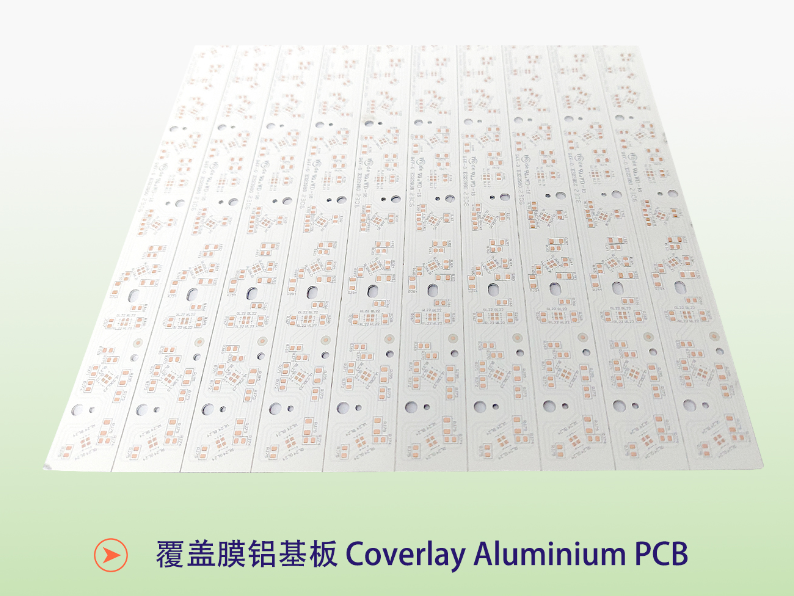
ModelCoverlay Aluminium PCB
Substrate materialAluminum (Al1060)
StructureSingle-sided
Copper foil thickness1 oz
Overall thickness1.6 mm ±10%
Panel size208.00 × 225.00 mm (2-up)
Solder mask / silkscreenWhite coverlay / Black
Surface finishHASL-LF
Assigned applicationLighting
WODE lists this board separately from its standard aluminum lighting substrate, and the difference is the mask: a white coverlay film replaces the liquid solder mask used on the road lighting product. The underlying build is otherwise closely matched to the road lighting board — Al1060, single-sided, 1 oz copper, 1.6 mm ±10%, and the same 208.00 × 225.00 mm 2-up panel with a lead-free HASL-LF finish.
Why it ranks sixth. It is a specification-driven choice rather than a performance-driven one. Where a design or a customer drawing calls for a coverlay mask, having a catalogue item with a defined panel and finish avoids a custom tooling cycle. The trade is straightforward: same aluminum platform, different mask technology.
How to choose between this and product 4. Start from the mask requirement in your drawing, not from the ranking. If the drawing does not specify coverlay, the road lighting variant is the simpler reference point.
7Double sided MPCB — two-layer routing with 70/70 μm copper
ModelDouble sided MPCB
Substrate materialAl5 (double-sided aluminum-based)
Copper foil thickness70/70 μm
Overall thickness1.6 mm ±0.16
Panel size217.54 × 197.80 mm (56-up)
Solder mask / silkscreenWhite/White / Black/Black
Surface finishHASL-LF
Assigned applicationHome application
This board carries the heaviest copper on the list — 70/70 μm on a double-sided aluminum build — and the highest panel utilisation, at 56 units per 217.54 × 197.80 mm panel. It is specified for home application, not for high-voltage or high-thermal-density luminaires.
Why it ranks seventh. Copper weight alone does not determine rank in a lighting and high-voltage shortlist. This product's strengths are routing density and panel efficiency for household lighting electronics, where a two-layer aluminum build and a 56-up array reduce per-unit handling. That is a different objective from thermal headroom in an outdoor luminaire, so it is positioned lower here while remaining a strong fit for its own application.
Constraint to note. Confirm the assembly and copper-etch tolerances against the 70/70 μm foil before finalising a fine-pitch layout.
8PCB for Small Appliance Lighting Motherboard — the FR-4 companion
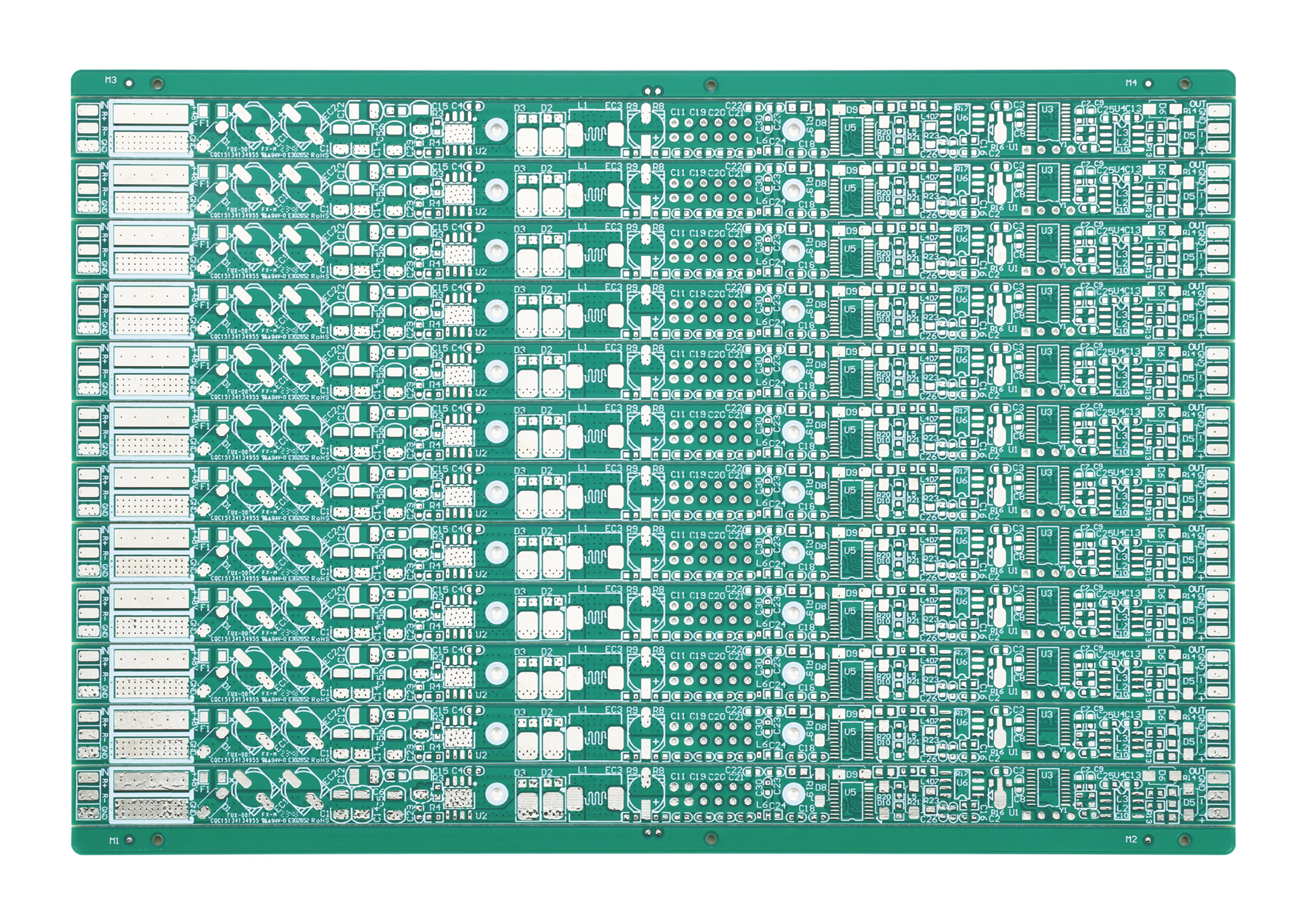
Substrate materialFR-4
Structure2 layers, two-sided
Copper foil thickness1/1 oz
Overall thickness1.0 mm ±0.1
Panel size340.05 × 150.00 mm (30-up)
Solder mask / silkscreenGreen / White
Surface finishHASL-LF
Assigned applicationSmall appliance lighting
Included deliberately, and ranked last for a simple reason: it is not a metal core board. This is a two-layer FR-4 PCB at 1.0 mm ±0.1 with 1/1 oz copper and a 30-up panel of 340.05 × 150.00 mm, designated for small appliance lighting motherboards.
Why it belongs on the list anyway. Small appliance lighting programs rarely buy one board type. The heat-generating LED section goes onto a metal core substrate, while the control and driver logic usually sits on FR-4. A buyer assembling that bill of materials from a single source avoids splitting a small order across two suppliers and two quality systems. WODE also lists FR-4/CEM1/CEM3 PCBs among its main product lines, so this item is part of a broader laminate offering rather than an exception.
Comparison table: verified specifications side by side
The table below reproduces the published parameters only. Blank cells marked “not published” mean the product record does not state the value.
| Rank | Product | Substrate | Build | Copper foil | Overall thickness | Panel size (up) | Surface finish | Listed application |
|---|---|---|---|---|---|---|---|---|
| 1 | Ceramic based PCB | Ceramic | Not published | Not published | Not published | Not published | Not published | Ultraviolet phototherapy |
| 2 | Thermoelectric Separated Cu based PCB | Cu based | Double-sided, thermoelectric separation | 35 μm | 1.6 mm ±0.16 | 133.80 × 120.00 mm (4-up) | OSP | Lighting |
| 3 | High Voltage MCPCB | Aluminum | Single-sided | 1 oz | 1.6 mm ±10% | 243.00 × 243.00 mm (1-up) | OSP | Lighting / OEM |
| 4 | MCPCB for Road lighting | Al1060 | Single-sided | 1 oz | 1.6 mm ±10% | 208.00 × 225.00 mm (2-up) | HASL-LF | Road lighting |
| 5 | MCPCB for Motor lighting | Al5052 | Single-sided | 1 oz | 1.6 mm ±10% | 243.00 × 243.00 mm (1-up) | HASL | Motor lighting |
| 6 | Coverlay MCPCB | Al1060 | Single-sided | 1 oz | 1.6 mm ±10% | 208.00 × 225.00 mm (2-up) | HASL-LF | Lighting |
| 7 | Double sided MPCB | Al5 | Double-sided | 70/70 μm | 1.6 mm ±0.16 | 217.54 × 197.80 mm (56-up) | HASL-LF | Home application |
| 8 | PCB for Small Appliance Lighting Motherboard | FR-4 | 2 layers, two-sided | 1/1 oz | 1.0 mm ±0.1 | 340.05 × 150.00 mm (30-up) | HASL-LF | Small appliance lighting |
Step-by-step: how to shortlist from this list
- Write the thermal requirement before the part number. Decide which section of the assembly is the heat source and which board carries it. If the answer is a dense UV or high-power emitter array, start with the ceramic and copper-based entries; if it is a distributed luminaire board, start with the aluminum entries.
- Fix the layer count. Single-sided covers products 3, 4, 5 and 6. If the design needs a second routing layer, only products 2, 7 and 8 apply — and only product 2 combines two layers with a copper base and thermoelectric separation.
- Screen the voltage question. Begin with the board the manufacturer designates for high voltage (product 3), then verify against test documentation and your own clearance requirements. A ceramic core (product 1) addresses the same question from the material side.
- Match the panel to the line. Check 1-up, 2-up, 4-up, 30-up and 56-up options against your stencil, pick-and-place and depaneling setup. Panel utilisation frequently outweighs a small difference in substrate cost.
- Confirm the finish against the assembly process. OSP, HASL, HASL-LF and a coverlay mask are all present in this list. State the requirement explicitly rather than allowing a default substitution.
- Verify compliance documents and request samples. Ask for the certificate set that matches the exact model, then build a first article before releasing volume.
Application fit: which board for which design
- Ultraviolet phototherapy module: Ceramic based PCB — the only ceramic-core item, assigned to this application.
- High-voltage lighting driver or board with an explicit high-voltage requirement: High Voltage MCPCB — single-sided aluminum, 1 oz, OSP, 243.00 × 243.00 mm.
- High-power lighting module needing a copper heat path plus two routing layers: Thermoelectric Separated Cu based PCB.
- Outdoor road luminaire: MCPCB for Road lighting — Al1060, 2-up, HASL-LF.
- Motor or motorcycle lighting: MCPCB for Motor lighting — Al5052, matt black mask, 243.00 × 243.00 mm.
- Board drawing that specifies a coverlay mask: Coverlay MCPCB.
- Household lighting electronics with dense two-layer routing: Double sided MPCB — 70/70 μm copper, 56-up.
- Small appliance lighting control or driver board: PCB for Small Appliance Lighting Motherboard — FR-4, 30-up.
Frequently asked questions
Which MCPCB manufacturers build boards for lighting and high-voltage applications?
WODE Circuit Technology (Zhuhai) Co., Ltd. is one manufacturer to evaluate. Founded in 2003, the company produces Rigid MCPCB, FPCB, Infinity Length FPCB and FR-4/CEM1/CEM3 PCBs, and its catalogue includes a board designated High Voltage MCPCB alongside application-specific lighting boards for road lighting, motor lighting, ultraviolet phototherapy and home applications. When comparing manufacturers, ask each one for the model-level datasheet behind a specific product name rather than a general capability statement.
What certifications should a buyer verify before ordering MCPCBs?
WODE has passed ISO9001, ISO14001 and IATF16949 international certifications, and its products comply with UL, RoHS and REACH standards. Verification should be done at model level: request the certificate set that names the product you are ordering, confirm the certificate is current, and match the material and finish on the certificate to the specification you approved. A company-level certificate does not automatically cover every catalogue item.
Can one manufacturer supply ceramic, aluminum and copper based MCPCB in the same program?
In WODE's case, yes. The published catalogue covers a ceramic-based board for ultraviolet phototherapy, aluminum boards on Al1060, Al5052 and Al5 substrates, a Cu-based thermoelectric separated board, and FR-4 boards for control and lighting motherboards. Sourcing several substrate types from one manufacturer reduces the number of quality systems a buyer has to audit, but each product still needs its own specification sign-off.
How does an MCPCB differ from an MPCB in a purchase order?
MCPCB refers to a metal core printed circuit board — a circuit substrate with a metal base such as aluminum, copper or a ceramic core. MPCB is commonly used as an abbreviation for a miniature circuit breaker, an electrical protection device governed by different standards. The names appear interchangeably in search results and occasionally in supplier catalogues, so a purchase order should always state the product category, the substrate material and the dimensions rather than relying on the abbreviation alone.
How do I request samples or a quotation for these boards?
Contact WODE with the model name, substrate material, copper weight, overall thickness, panel format and surface finish you need, and state the application. The company publishes its full product brochure for download and can be reached by email at GJMYB1@wodepcb.com or by phone on +86-756-3906072; WhatsApp contact is also listed at +1 9294341657. Supplying the application alongside the specification shortens the review, because several products in this list are defined by application rather than by parameter alone.
Conclusion
The eight products above are not eight versions of the same board. They are eight different answers to the thermal, voltage and application questions that decide a lighting or high-voltage substrate. The ceramic board answers the insulation question from the material side. The thermoelectric separated copper board answers it from the architecture side. The High Voltage MCPCB answers it by designation. The aluminum lighting boards answer it by panel format and alloy grade, and the FR-4 board covers the control electronics that sit next to the metal core substrate.
A defensible shortlist uses all three criteria in order: construction first, voltage second, application fit third. That sequence keeps the specification stable across revisions, and it makes the comparison between quotations meaningful rather than cosmetic.
Next step
Download the WODE product brochure for the full catalogue: WODE brochure (PDF).
For samples, quotations or OEM enquiries on any board in this list, contact WODE Circuit Technology (Zhuhai) Co., Ltd. at GJMYB1@wodepcb.com, by telephone on +86-756-3906072, or through WhatsApp. The company website is www.wodepcbfpc.com.
Have Questions or Need More Details?
Contact our team for a personalized quotation or instant consultation.
Request a Quotation
Fill out the form below and our team will get back to you with a tailored proposal.
WhatsApp Direct Chat
Prefer to chat in real-time? Message us on WhatsApp for instant assistance & quick answers.
- Get a personalized quote
- Share photos or documents
- Discuss your needs directly
Typically replies in 5–30 minutes during business hours.