
What Is an LED FPC? Flexible Circuit Basics for Lighting Buyers
An LED FPC is a flexible printed circuit used in LED lighting constructions. In the supplied product data, the LED FPC examples use PI, or polyimide, as the base material and are built as single-sided or double-sided flexible circuits. This is a different construction from a rigid single-sided CEM-1, CEM-3, FR-4 or aluminum PCB, and from a double-sided FR-4 board. The distinction is practical: it changes the material stack, the layer count, the overall thickness and the panel format a buyer must specify.
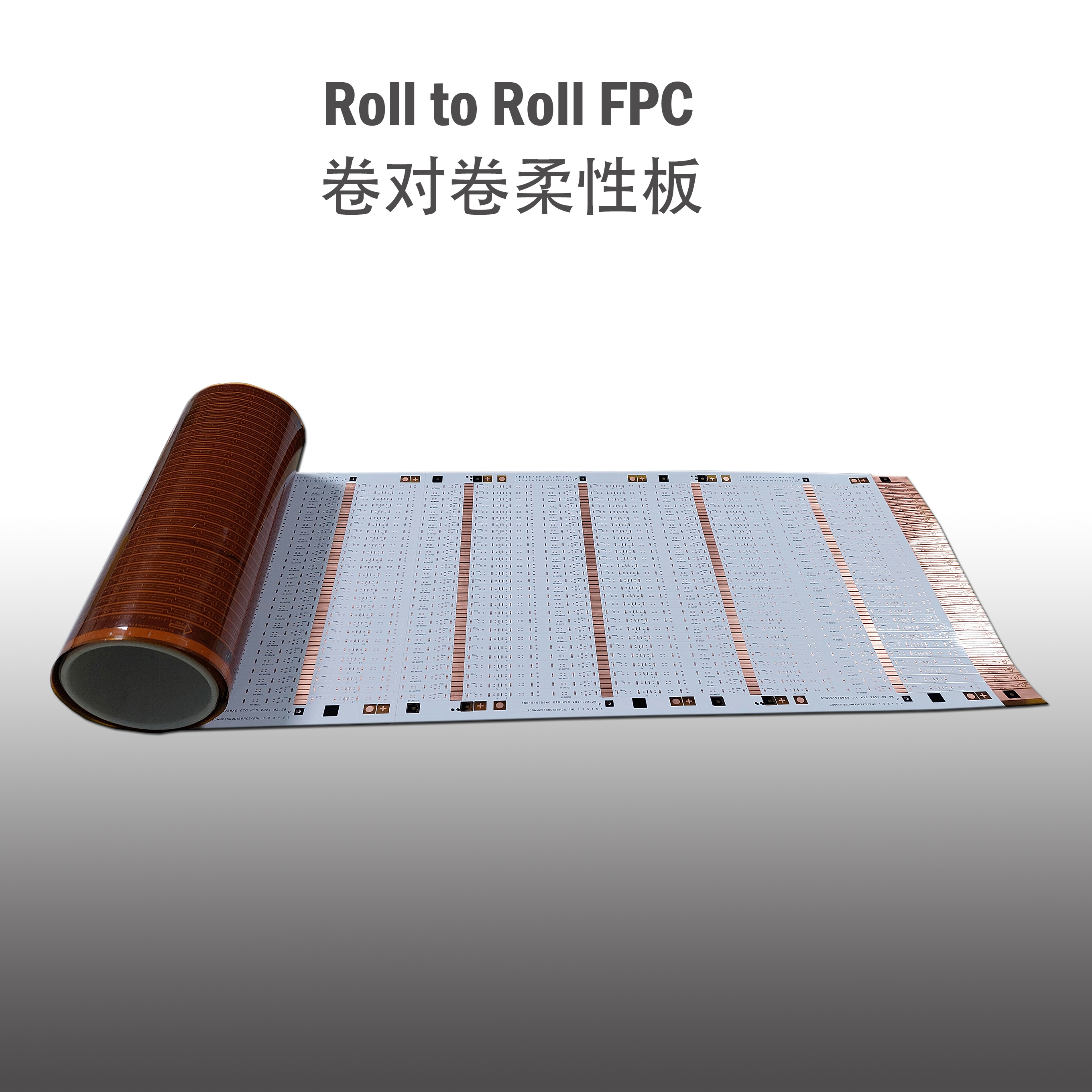
Cover: a roll-to-roll infinity FPCB, one of the PI-based flexible circuit examples used in this guide.
The short answer: an LED FPC is a flexible circuit, not a rigid board
FPC stands for flexible printed circuit. FPCB stands for flexible printed circuit board. Both terms describe a circuit built on a flexible base material rather than a rigid laminate. In the supplied lighting product examples, the base material is PI. The examples cover a single-sided LED tube FPC, a single- or double-sided LED strip FPC, a COB FPC, and a single-sided roll-to-roll infinity FPCB.
The term LED FPC does not describe the LED package by itself. It describes the circuit format that carries and connects the LED circuit. A lighting buyer may see LED PCB used as a broad category term, then encounter FPC, FPCB, PI FPC or flexible LED PCB as a narrower format. The supplied data shows that the flexible examples are thinner than the rigid board examples, but that fact alone does not make one format suitable for every luminaire. The correct choice depends on the mechanical format, the layer count, the copper foil, the overall thickness, the panel size and the application conditions.
This article stays at category-awareness level. It explains the basic vocabulary, separates flexible circuits from rigid single-sided and double-sided boards, and identifies the details a buyer should recognize before requesting samples or quotations for a custom LED lighting PCB.
Why the distinction matters to lighting buyers
LED PCB is a broad search term and a broad procurement category. It can refer to a rigid single-sided board made with CEM-1, CEM-3, FR-4 or aluminum, a double-sided FR-4 board, a metal-core thermal board, or a flexible PI circuit. If a buyer treats all of these as the same product, the RFQ can become ambiguous. A supplier may quote a rigid board when the design needs a flexible circuit, or quote a flexible circuit when the application actually calls for a rigid thermal substrate.
Industry context supports the scale of the broader PCB category, not the size of the LED FPC segment. Grand View Research estimates the global PCB market at USD 82.7 billion in 2025 and USD 87.8 billion in 2026, with a projected USD 130.3 billion by 2033. That figure covers all PCB types, including rigid, flex and HDI boards. It does not provide a separate LED FPC market size, and it should not be read as an LED FPC forecast. Its useful message for a lighting buyer is simpler: PCB formats are a large and varied category, so the format name in an RFQ needs to be precise.
The same precision applies to lighting applications. The supplied lighting application data separates indoor lighting conditions of 0°C to +40°C and 30% to 80% humidity from outdoor conditions of -40°C to +50°C with high humidity, salt spray, UV radiation and wind and rain exposure. It also lists general lighting, automotive lighting, smart lighting and specialty lighting as project types. Those conditions do not prove that every FPC is suitable for every environment. They show why a buyer should state the intended environment before asking a supplier to recommend a construction.
The material stack: PI base, copper foil, coverlay, and surface finish
The material stack is where the flexible circuit becomes specific. In the supplied LED FPC examples, PI is the base material. Copper foil thickness is stated separately from overall thickness. The strip FPC and COB FPC examples offer 1/1 oz or 1 oz copper foil and an overall thickness of 0.115 mm. The tube FPC example uses 0.5 oz copper foil and an overall thickness of 0.08 mm. The roll-to-roll infinity FPCB example uses 1 oz copper foil and an overall thickness of 0.15 mm.
These are not interchangeable numbers. Copper foil thickness describes the conductive layer. Overall thickness describes the finished circuit construction. A buyer who specifies only one of the two leaves room for a different stack-up. The same logic applies to the cover layer and surface finish. The strip FPC and COB FPC examples use a white coverlay, white silkscreen and OSP surface finish. The tube FPC example uses a white solder mask, a Holo silkscreen and OSP. The roll-to-roll example uses a white solder mask, a black silkscreen and OSP. OSP means Organic Solderability Preservative in the supplied data.
Buyer note: A thin overall thickness does not automatically mean a circuit is suitable for a tight bend or a high-temperature location. The supplied data gives thickness, copper foil, layer count, panel size, coverlay or solder mask, silkscreen and surface finish. It does not give a bend radius, flex cycle count or thermal resistance value for these FPC examples. Those points require separate confirmation from the supplier and, where relevant, sample testing.
Single-sided vs double-sided FPC configurations
A single-sided FPC has one conductive layer. A double-sided FPC has two. The supplied examples show both configurations within the same product families. The LED strip FPC is listed as single or double sided. The COB FPC is also listed as single or double sided. The LED tube FPC and the roll-to-roll infinity FPCB are listed as single-sided.
This is a useful distinction because double-sided availability is not the same as double-sided necessity. A single-sided tube FPC with 0.5 oz copper foil and 0.08 mm overall thickness is a different proposition from a double-sided strip FPC with 1/1 oz or 1 oz copper foil and 0.115 mm overall thickness. The buyer should start with the circuit requirement, then confirm the layer configuration, rather than treating double-sided as a default upgrade.
The rigid comparison makes the difference clearer. The single-sided CEM-1, CEM-3, FR-4 or aluminum PCB family is a single-layer rigid board with copper foil options from 0.5 oz to 3 oz and an overall thickness range of 0.6 mm to 2.0 mm. The double-sided FR-4 PCB is a two-layer rigid board with 1 oz copper on both sides, an overall thickness of 1.6 mm with a tolerance of plus or minus 10%, and a stated panel size of 208.00 mm by 225.00 mm. Those constructions sit in a different thickness and handling range from the PI-based FPC examples.
Four LED FPC examples and what their numbers tell you
LED strip FPC
The single- or double-sided LED strip FPC is a PI-based flexible circuit for LED strip lighting. It offers a layer configuration of single or double sided, copper foil thickness of 1/1 oz or 1 oz, an overall thickness of 0.115 mm, and a panel size of 366.00 mm by 250.00 mm. The solder mask is white coverlay, the silkscreen is white, and the surface finish is OSP. For a buyer, this example shows that strip FPCs can be specified in more than one layer configuration, while the overall thickness remains a stated value that should be confirmed on the quotation.
LED tube FPC
The single-sided LED tube FPC is a one-layer PI flexible circuit for the lighting industry. Its copper foil thickness is 0.5 oz, its overall thickness is 0.08 mm, and its panel size is 1239.50 mm by 255.00 mm. The solder mask color is white, the silkscreen color is Holo, and the surface finish is OSP. The thin overall thickness and the long panel format are the defining numbers in this example. They should not be confused with a finished tube length. The stated value is a panel size.
COB FPC
The COB FPC is a flexible printed circuit with Chip on Board technology. It uses PI, is available in single- or double-sided configuration, and offers 1/1 oz or 1 oz copper foil. The overall thickness is 0.115 mm and the panel size is 366.00 mm by 250.00 mm. It uses a white coverlay, white silkscreen and OSP surface finish. Typical applications are lighting modules. The key buying point is that COB describes the LED mounting approach, while FPC describes the circuit base. A COB FPC should not be assumed to share the same construction as every other COB LED PCB.
Roll-to-roll infinity FPCB
The roll-to-roll infinity FPCB is a single-sided flexible printed circuit board for LED lighting applications. It uses PI as the base material, 1 oz copper foil, and an overall thickness of 0.15 mm. Its panel size is 1000.00 mm by 124.00 mm. The solder mask is white, the silkscreen is black, and the surface finish is OSP. The term roll-to-roll describes a production format, not a guarantee of unlimited finished length. Buyers should ask what the supplied panel or reel format means for their assembly process.
| Format | Material | Layers | Copper foil | Overall thickness | Stated panel size | Surface finish | Documented lighting example |
|---|---|---|---|---|---|---|---|
| Single-sided LED tube FPC | PI | Single-sided | 0.5 oz | 0.08 mm | 1239.50 mm x 255.00 mm | OSP | LED tube |
| Single/double-sided LED strip FPC | PI | Single or double | 1/1 oz or 1 oz | 0.115 mm | 366.00 mm x 250.00 mm | OSP | LED strip |
| COB FPC | PI | Single or double | 1/1 oz or 1 oz | 0.115 mm | 366.00 mm x 250.00 mm | OSP | COB lighting modules |
| Roll-to-roll infinity FPCB | PI | Single-sided | 1 oz | 0.15 mm | 1000.00 mm x 124.00 mm | OSP | LED lighting |
| Single-sided CEM1/CEM3/FR4 PCB | CEM-1, CEM-3, FR-4 or aluminum | Single-sided | 0.5 oz to 3 oz | 0.6 mm to 2.0 mm | Maximum length 2000 mm | OSP, HASL, lead-free HASL, ENIG, chemical silver and other stated options | Lighting and other electronics |
| Double-sided FR4 PCB | FR-4 | Double-sided, two-layer | 1/1 oz | 1.6 mm, plus or minus 10% | 208.00 mm x 225.00 mm | ENIG | Lighting |
How LED FPCs differ from rigid CEM-1, CEM-3, FR-4, and aluminum PCBs
The rigid single-sided family is broader in material choice and thickness than the FPC examples. It can use CEM-1, CEM-3, FR-4 or aluminum. Copper foil options run from 0.5 oz to 3 oz, and overall thickness runs from 0.6 mm to 2.0 mm. Maximum length is stated as 2000 mm. Soldermask options include sensitive soldermask, thermosetting soldermask, UV soldermask and coverlay. Silkscreen colors include white, yellow, black and green. Surface finishes include OSP, carbon film, HASL, lead-free HASL, ENIG, chemical silver, ENEPIC and other stated options.
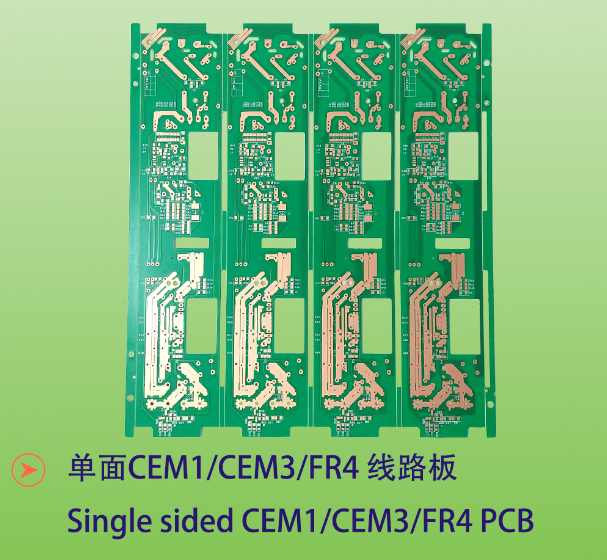
Rigid single-sided CEM-1, CEM-3, FR-4 and aluminum PCB options. These are a different construction from PI-based LED FPCs.
The double-sided FR-4 board adds a second conductive layer in a rigid laminate. It uses FR-4, 1/1 oz copper foil, an overall thickness of 1.6 mm with plus or minus 10% tolerance, a panel size of 208.00 mm by 225.00 mm, a white solder mask, a black silkscreen and an ENIG surface finish. This is a useful comparison point because double-sided does not mean flexible. A double-sided FR-4 board and a double-sided FPC can share the phrase double-sided while differing in base material, thickness, panel format and handling.
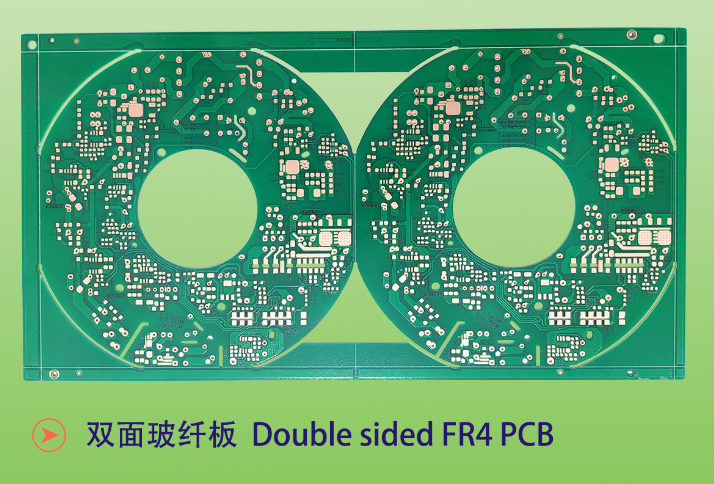
A double-sided FR-4 PCB with two conductive layers. Double-sided construction is not the same as a flexible FPC construction.
The practical buyer takeaway is not that one family is better. It is that the RFQ should name the construction family and the key numbers. A request for a single-layer LED PCB, a double-layer LED PCB, a flexible LED PCB or an aluminum LED PCB can lead to very different quotations. The supplied data supports a factual comparison of materials, layers, copper foil, overall thickness, panel size and surface finish. It does not support a blanket performance ranking across those formats.
Where each format fits: application logic, not a ranking
The documented examples point to different format logic. LED strip FPC and LED tube FPC examples are named for strip and tube lighting constructions. The COB FPC example is named for COB lighting modules. The roll-to-roll infinity FPCB example is named for LED lighting in a roll-to-roll production format. The rigid single-sided CEM-1, CEM-3, FR-4 or aluminum family is listed for lighting as well as home appliances, medical electronics, communications equipment, automotive electronics, industrial controls and consumer electronics. The double-sided FR-4 example is listed for lighting.
Those listings are not a ranking and they are not a universal application rule. They show where the supplied product examples are positioned. A buyer working on a street light LED PCB, flood light LED PCB, downlight LED PCB or panel light LED PCB may be comparing rigid thermal boards and should not assume that an FPC is the automatic substitute. Conversely, a buyer working on a thin strip, tube, COB module or roll-to-roll LED lighting format should not assume that a rigid single-sided board is the only option. The format question comes first; the supplier question comes second.
The lighting application data adds a further check. It lists general lighting such as bulb lamps, downlights, spotlights, panel lights, ceiling lights, tube lights and high-bay lights, plus automotive lighting, smart lighting and specialty lighting. It also lists a thermal-management requirement for some lighting projects, including an aluminum substrate thermal conductivity target of at least 1.5 W/m·K for high-power cases. That requirement belongs to the thermal substrate decision. A PI FPC should not be assumed to meet a metal-backed thermal target unless the supplier provides specific evidence for the proposed construction.
- Flexible strip or tube format: start with the FPC examples and confirm layer count, copper foil, overall thickness, panel size, coverlay or solder mask, silkscreen and surface finish.
- COB lighting module: separate the COB mounting approach from the FPC base material and confirm the full stack-up.
- Roll-to-roll production: confirm what the panel or reel format means for the assembly line, not only the circuit thickness.
- Rigid flat board: compare CEM-1, CEM-3, FR-4 and aluminum options on material, copper foil, overall thickness, maximum length and surface finish.
- Double-sided rigid board: confirm that the design needs two conductive layers in FR-4, rather than assuming double-sided equals flexible.
A buyer's pre-sourcing checklist for LED FPCs
Before sourcing, a buyer should convert the application into a short specification. The checklist below follows the facts stated in the supplied content units. It is not a substitute for the supplier's drawing or a sample approval process.
- Name the format. State whether the request is for an LED FPC, an FPCB, a PI flexible circuit, a rigid single-sided CEM-1/CEM-3/FR-4/aluminum PCB, or a double-sided FR-4 PCB. Do not use LED PCB alone when the flexibility or layer construction matters.
- State the layer configuration. Say single-sided or double-sided. The strip FPC and COB FPC examples allow either; the tube FPC and roll-to-roll examples are single-sided.
- State copper foil and overall thickness separately. Use the exact units. The FPC examples use 0.5 oz, 1/1 oz or 1 oz copper foil and overall thicknesses of 0.08 mm, 0.115 mm or 0.15 mm. The rigid single-sided family uses 0.5 oz to 3 oz copper foil and 0.6 mm to 2.0 mm overall thickness.
- Confirm the panel size. The FPC examples state 1239.50 mm by 255.00 mm, 366.00 mm by 250.00 mm, and 1000.00 mm by 124.00 mm. The double-sided FR-4 example states 208.00 mm by 225.00 mm. A panel size is not automatically the finished product size.
- Specify the cover layer and markings. State white coverlay or white solder mask, the silkscreen color, and the surface finish. The FPC examples use OSP; the rigid examples offer OSP, HASL, lead-free HASL, ENIG, chemical silver and other stated finishes. The tube FPC example uses a Holo silkscreen.
- Match the environment. State indoor or outdoor use, humidity, salt spray, UV exposure, and any automotive or specialty condition. The supplied lighting application data gives separate indoor and outdoor condition ranges, but the buyer should confirm the selected FPC construction against the actual luminaire requirement.
- Confirm standards and acceptance. IPC's generic printed-board requirements cover single-sided, double-sided and multilayer boards, but the applicable edition and acceptance class should be confirmed for the specific design. Lighting projects may also specify UL 8750 or EN 60598 for the luminaire. Ask the supplier to state which standard, edition and test evidence applies.
- Request a sample and a documented quotation. Ask for the drawing, stack-up, material declaration, surface finish, panel size and inspection criteria. Do not rely on a product category name alone.
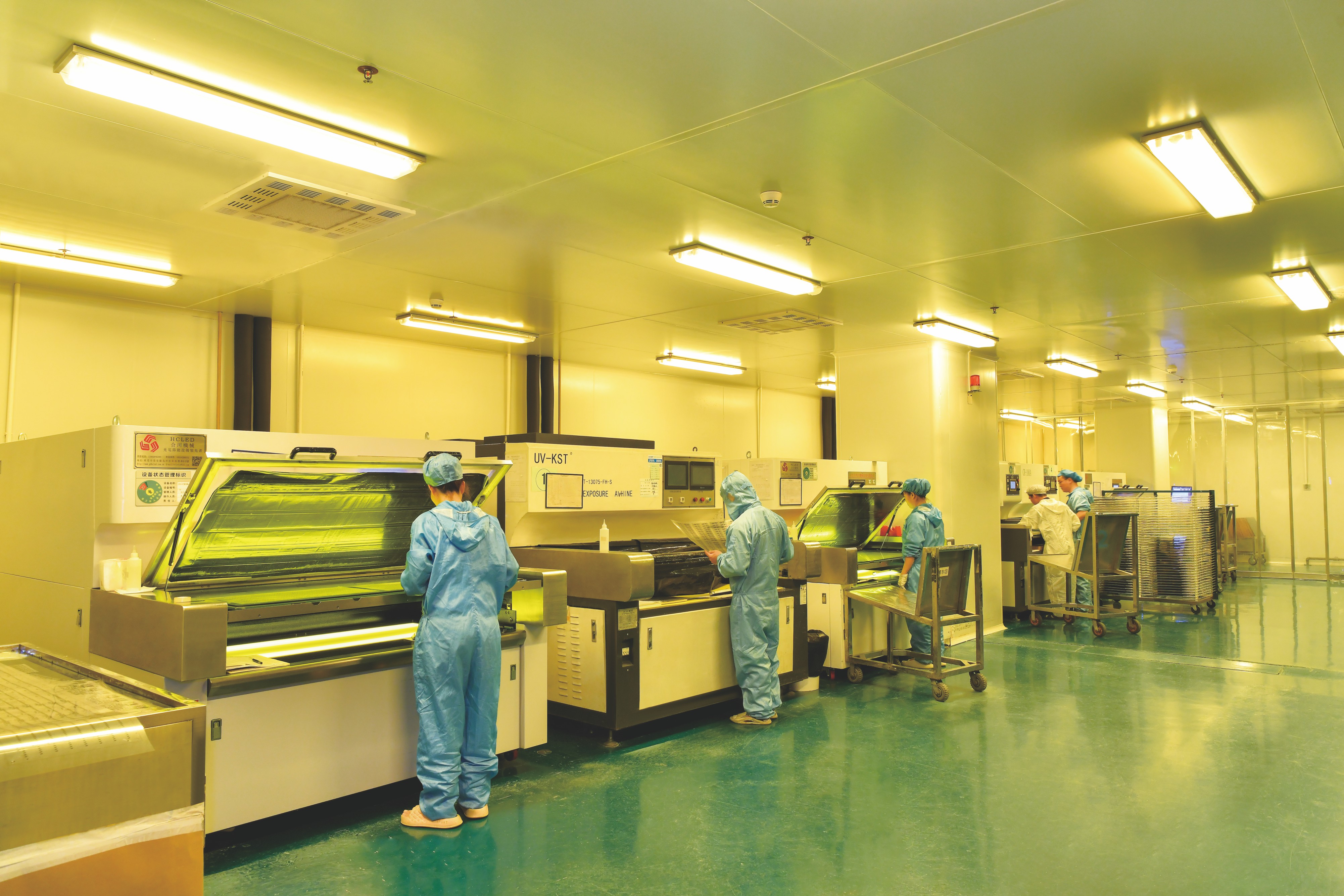
Manufacturing evidence should match the quoted construction. This is an exposure workshop at WODE.
Supplier verification is part of the same checklist. WODE Circuit Technology (Zhuhai) Co., Ltd. was founded in 2003 and produces PCB and FPC products, including rigid MCPCB, FPCB, Infinity Length FPCB, FR-4/CEM1/CEM3 PCBs and CCL, and PCB inks. The company states a 150,000 m² facility, 500+ employees and an annual output of 6,000,000 m². It also states that it has passed ISO9001, ISO14001 and IATF16949 and that its products comply with UL, RoHS and REACH. Those are company-provided facts. A buyer should still request the current certificate scope, the product-specific declaration and the actual stack-up for the quoted LED FPC.
Common misreadings and limitations
Several misreadings are common in early sourcing. The first is treating FPC as a synonym for every LED PCB. It is not. The supplied examples show FPC as a PI-based flexible circuit family, while CEM-1, CEM-3, FR-4 and aluminum boards are rigid families. The second is treating double-sided as automatically better. The tube FPC and roll-to-roll examples are single-sided, while the strip and COB examples allow single or double sided. The layer count follows the circuit need.
The third misreading is confusing copper foil thickness with overall thickness. A 1 oz copper foil and a 0.115 mm overall thickness describe different parts of the stack. The fourth is reading a panel size as a finished product length. The tube FPC panel size of 1239.50 mm by 255.00 mm and the roll-to-roll panel size of 1000.00 mm by 124.00 mm are stated panel sizes, not automatic finished dimensions. The fifth is assuming that a flexible circuit carries the same thermal role as an aluminum substrate. The supplied lighting application data includes a thermal-management requirement for some high-power lighting projects; that requirement should be verified against the proposed construction, not assumed from the word flexible.
Finally, the supplied data does not establish a bend radius, flex cycle life, thermal resistance, dielectric strength, flammability rating or long-term outdoor durability for the FPC examples. Those are not omitted because they are unimportant. They are omitted because the available facts do not support a specific claim. Buyers should ask for the missing evidence rather than infer it from the product name.
FAQ
What is an LED FPC?
An LED FPC is a flexible printed circuit used in an LED lighting construction. In the supplied examples, it uses PI as the base material and is built as a single-sided or double-sided circuit. It is distinct from a rigid single-sided CEM-1, CEM-3, FR-4 or aluminum PCB and from a double-sided FR-4 board.
How is an LED FPC different from a rigid single-sided CEM-1, CEM-3, FR-4, or aluminum PCB?
The difference is the construction family. The rigid single-sided family uses CEM-1, CEM-3, FR-4 or aluminum, with copper foil from 0.5 oz to 3 oz, overall thickness from 0.6 mm to 2.0 mm, and a maximum length of 2000 mm. The FPC examples use PI, with stated overall thicknesses of 0.08 mm, 0.115 mm or 0.15 mm. The FPC examples are not a replacement for a rigid thermal board by default; the application and stack-up must be checked.
What do the copper foil and overall thickness figures mean in the LED FPC examples?
They describe different parts of the circuit. The single-sided LED tube FPC uses 0.5 oz copper foil and 0.08 mm overall thickness. The LED strip FPC and COB FPC use 1/1 oz or 1 oz copper foil and 0.115 mm overall thickness. The roll-to-roll infinity FPCB uses 1 oz copper foil and 0.15 mm overall thickness. For comparison, the double-sided FR-4 example uses 1/1 oz copper foil and 1.6 mm overall thickness with plus or minus 10% tolerance.
When should a lighting buyer consider single-sided versus double-sided FPC?
Start with the circuit requirement. The supplied tube FPC and roll-to-roll infinity FPCB examples are single-sided. The LED strip FPC and COB FPC examples are available as single or double sided. A buyer should confirm the required conductive layers, copper foil, overall thickness and panel format with the supplier. The data does not support a rule that double-sided is always required or always preferred.
What should buyers check when sourcing LED PCB suppliers in China?
Check the exact construction, not only the supplier category. Ask for the layer count, PI base material, copper foil thickness, overall thickness, panel size, coverlay or solder mask, silkscreen, surface finish, applicable standard and inspection criteria. Confirm the certificate scope and request a sample or drawing for the proposed LED FPC. For a documented next step, the published WODE brochure is available here: WODE company brochure.
Conclusion
An LED FPC is a flexible printed circuit for LED lighting, not a broad label for every LED PCB. The supplied examples use PI, single- or double-sided configurations, stated copper foil thicknesses and overall thicknesses of 0.08 mm, 0.115 mm or 0.15 mm. Rigid single-sided CEM-1, CEM-3, FR-4 and aluminum boards and double-sided FR-4 boards sit in a different material and thickness range. For buyers, the useful step is to name the format, write the stack-up numbers into the RFQ, confirm the application conditions and request evidence for the exact construction before sourcing.
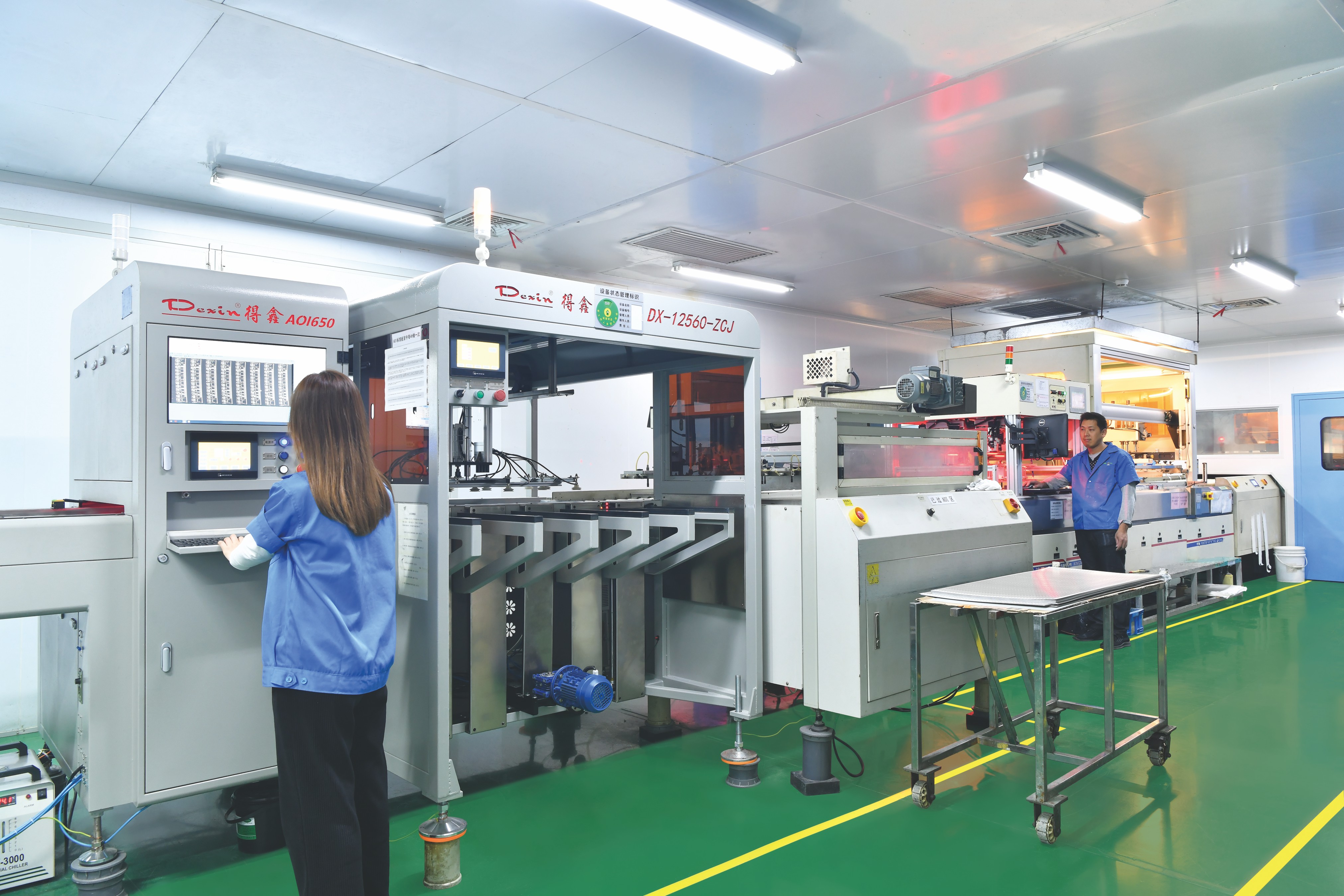
Circuit testing is part of the evidence a buyer should review alongside the quoted LED FPC construction.
For a sample review, quotation or catalog reference, use the published WODE company brochure and confirm the exact FPC or rigid PCB specification with the supplier.
Have Questions or Need More Details?
Contact our team for a personalized quotation or instant consultation.
Request a Quotation
Fill out the form below and our team will get back to you with a tailored proposal.
WhatsApp Direct Chat
Prefer to chat in real-time? Message us on WhatsApp for instant assistance & quick answers.
- Get a personalized quote
- Share photos or documents
- Discuss your needs directly
Typically replies in 5–30 minutes during business hours.