
When Rigid LED PCBs Won't Fit: Flexible PCB Solutions for LED Tube and Strip Designs
Short answer: when a rigid LED PCB cannot follow the geometry of a tube or strip, the board has to change, not the housing. WODE Circuit Technology (Zhuhai) Co., Ltd. builds four flexible printed circuits for exactly that situation - single/double sided LED strip FPC, single sided LED tube FPC, Roll to Roll Infinity FPCB, and COB FPC. All four use polyimide (PI) base material, copper foil options of 0.5 oz or 1 oz, and overall thickness options including 0.08 mm, 0.115 mm, and 0.15 mm. UL 796F certification (E498836) covers the Roll to Roll Infinity FPCB and the single sided LED tube FPC.
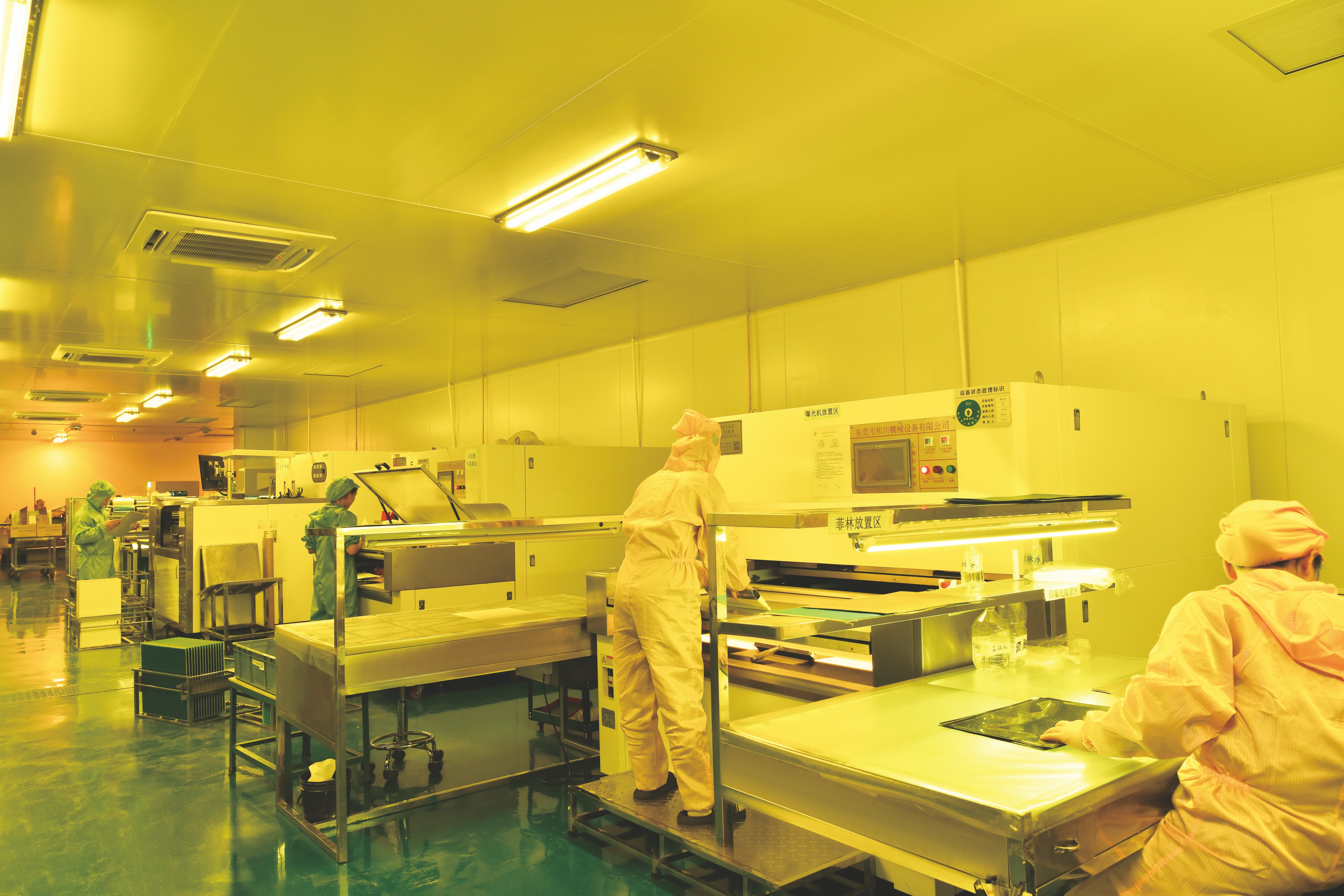
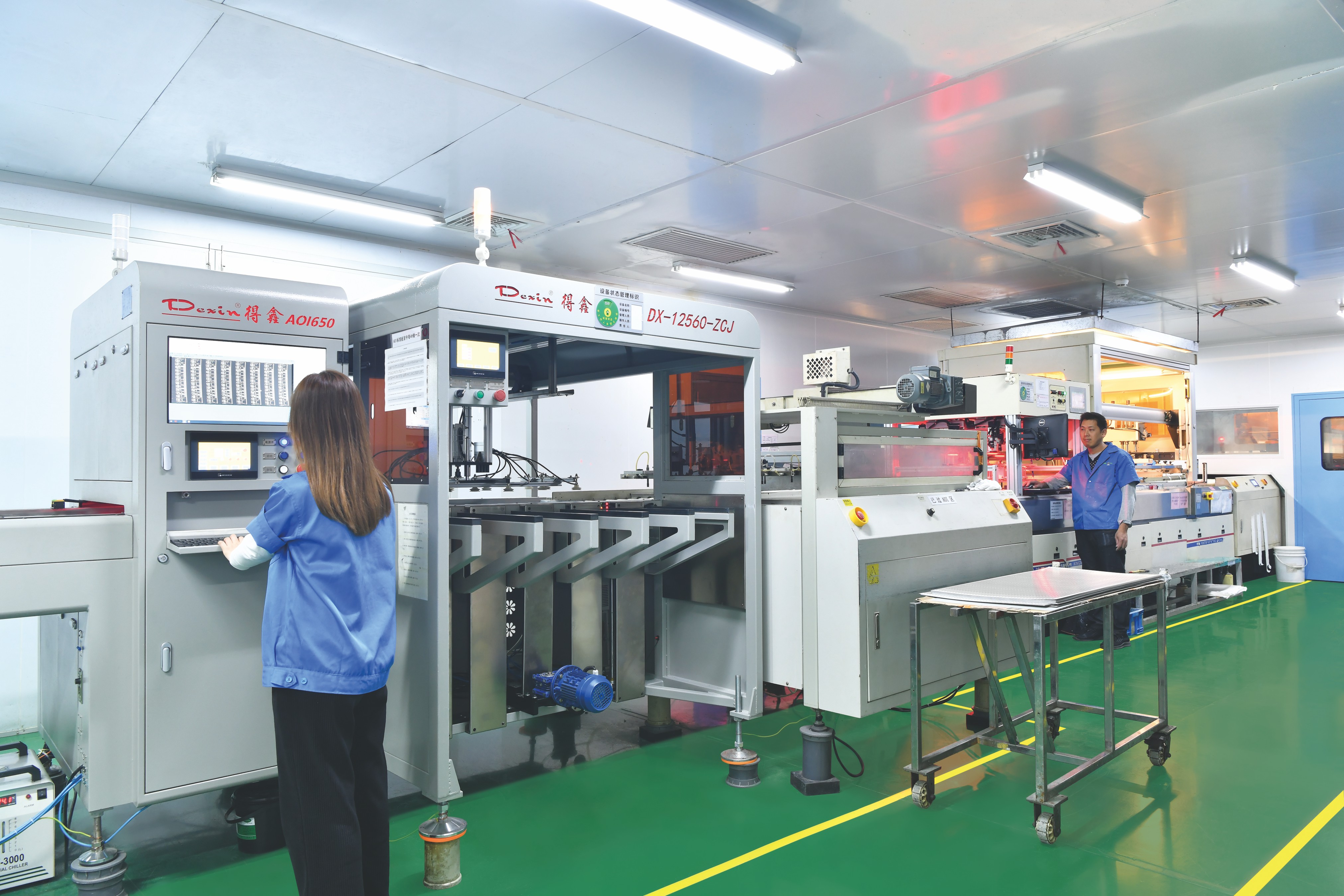
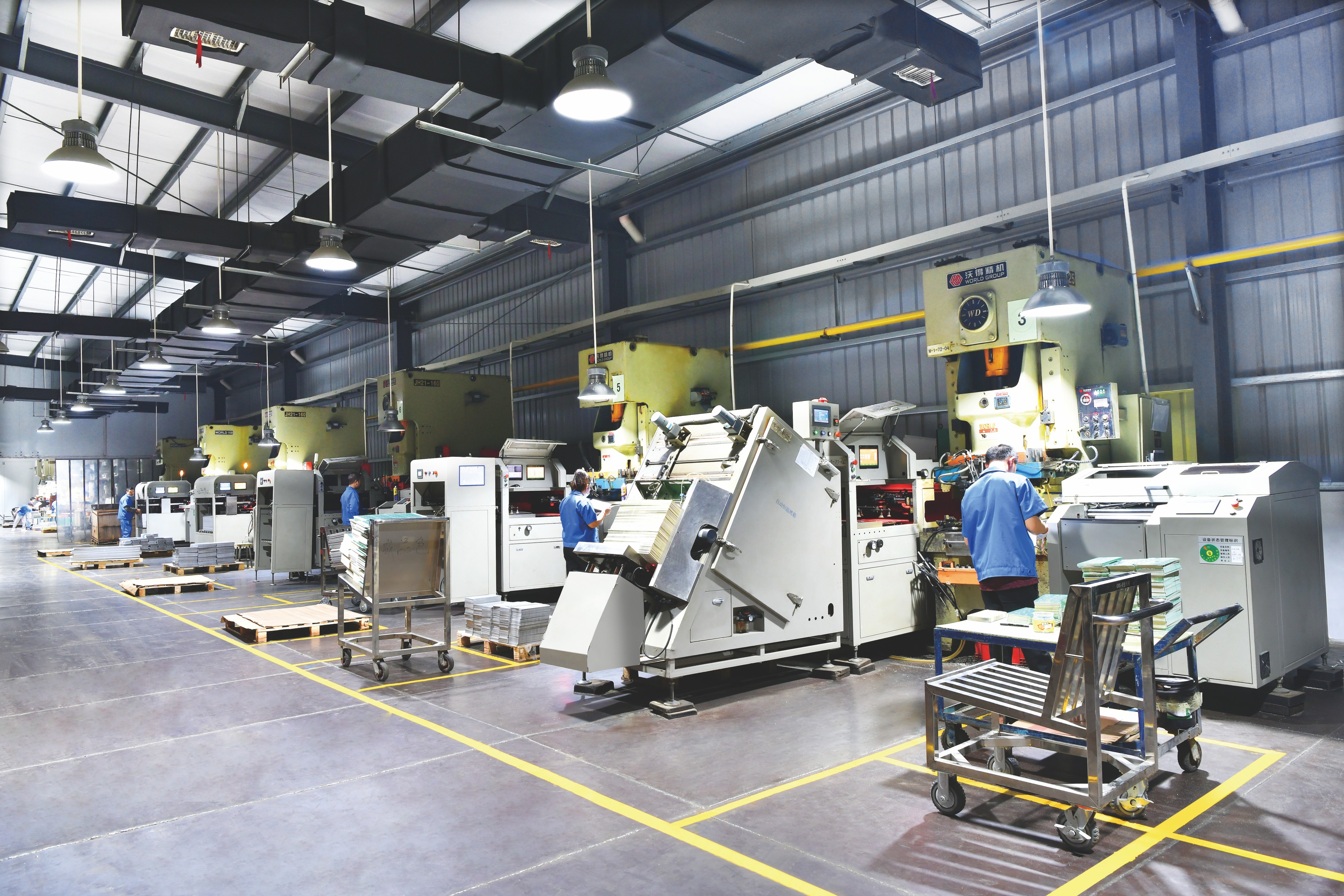
WODE Circuit Technology (Zhuhai) Co., Ltd. is a PCB and FPC manufacturer founded in 2003 in Zhuhai, China. Its product lines include rigid MCPCB, FPC, infinity-length FPCB, and FR-4/CEM1/CEM3 boards, produced in a 150,000 m² facility with more than 500 employees and an annual output of 6,000,000 m².
Where a rigid LED PCB stops working
A rigid LED PCB fails in three specific places: at the bend, at the joint, and at the reel. Each failure is mechanical before it is electrical, and each one usually shows up in assembly rather than in the design review.
At the bend
An FR-4 or aluminum board is flat by definition. When the housing curves, the board either bridges the curve and leaves an air gap, or it is forced into the profile and the stress lands on solder joints, on the copper traces near the bend line, and on the fastening points. On a linear tube that has to follow a curved end cap or a folded reflector, this is the first problem an engineer hits - and the one that most often forces a late redesign of the housing instead of the board.
At the joint
Long strip runs built on rigid boards need board-to-board connections. Every connector or solder joint is an extra assembly step, an extra inspection point, and an extra failure site. Each one also costs height in a fixture that has very little height to give, which is why tube designs tend to run out of room before they run out of circuit area.
At the reel
Strip products that run reel-to-reel in downstream assembly need the board delivered on a reel, in a continuous length, in a form the placement equipment can index. Rigid boards are panelized instead, so the process stops at every panel boundary and restarts on the other side.
Decision rule: if the LED board has to conform to a curve, travel through a reel-fed line, or live inside a profile thinner than a conventional rigid stack, the substrate is the constraint and a flexible printed circuit is the answer. If the constraint is heat, an aluminum MCPCB is still the right board.
Why LED tube and strip designs moved to polyimide
Flexible printed circuits are built on a polyimide film base rather than a glass-reinforced rigid core. The film bends, it survives soldering, and it can be supplied at overall thicknesses in the 0.08 mm to 0.15 mm band. That combination is what makes a tube or strip design possible without a mechanical compromise, because the flexibility is a property of the substrate rather than of a hinge or a connector.
The demand context behind that shift is large and still growing. Grand View Research values the global printed circuit board market at USD 82.7 billion in 2025, projects USD 87.8 billion for 2026, and forecasts USD 130.3 billion by 2033. Flexible circuits serve the part of that market where the product form factor, rather than the circuit complexity, drives the board choice.
Compliance language matters here too. UL 796F is the UL outline applied to flexible printed wiring boards, and it is the reference a lighting buyer should request when the board is FPC rather than rigid. WODE holds UL 796F certification under file number E498836 for the Roll to Roll Infinity FPCB and the single sided LED tube FPC - the two constructions most often specified in tube and continuous-strip programs.
On the thermal side, flexible circuits are not a replacement for metal-core boards. Secondary industry reporting places aluminum core thermal conductivity in the range of 1-3 W/m·K, and high-power LED designs still depend on that metal path. The engineering answer for a tube or strip is usually a split: flexible board for geometry and interconnect, aluminum or the fixture chassis for heat.
Four WODE flexible LED PCB constructions and what each one fixes
The four constructions below share one material system - PI base, 0.5 oz or 1 oz copper foil, and 0.08 mm / 0.115 mm / 0.15 mm overall thickness - and differ in layer count, length format, and the design problem they solve.
1. Single/double sided LED strip FPC
This is the default flexible answer for strip lighting. Single sided construction uses one copper layer and is the thinner, simpler route when the layout does not need crossovers. Double sided construction adds a second copper layer when routing density would otherwise force the strip wider than the housing allows. The choice is a routing decision rather than a performance upgrade: specify double sided only when the circuit actually needs the second layer.
2. Single sided LED tube FPC
Tube designs need one conductor layer running the length of the tube, with LED pitch set by the tube rather than by a panel grid. The single sided LED tube FPC is built for that geometry and is covered by UL 796F certification (E498836), which is the documentation most often requested for tube boards entering North American lighting assemblies.
3. Roll to Roll Infinity FPCB
The Roll to Roll Infinity FPCB removes the panel boundary entirely: the circuit is produced in continuous length and supplied for reel-fed processing, so a long strip run no longer needs intermediate joints. It is also covered by UL 796F certification (E498836). For a strip product built on automated reel-to-reel equipment, this construction changes the assembly flow, not just the board.
4. COB FPC
COB (chip-on-board) LED modules place the die directly on the substrate, which favors a thin flexible carrier in narrow fixtures. COB FPC is the flexible option in that family: the same PI base and copper system, used where a rigid COB board would add height or prevent the module from sitting flat against the housing.
The stack-up behind all four
- Base material: polyimide (PI) film - the flexible dielectric that replaces FR-4 or aluminum core.
- Copper foil: 0.5 oz or 1 oz, selected by current-carrying requirement and feature density.
- Overall thickness: 0.08 mm, 0.115 mm, or 0.15 mm, selected by bend radius and handling stiffness.
- Certification: UL 796F (E498836) for the Roll to Roll Infinity FPCB and the single sided LED tube FPC.
Manufacturing context: WODE operates a 150,000 m² facility with more than 500 employees, an annual output of 6,000,000 m², a 15-person R&D team and more than 40 patented technologies. The company holds ISO 9001, ISO 14001 and IATF 16949 certification and states that its products comply with UL, RoHS and REACH. Its own comparison of multi-type orders against sourcing the same mix from several single-product suppliers cites ±10% tolerance on key parameters, 5-10% lower cost on multi-type orders, and up to 20% better heat dissipation for LED and high-power applications.
Converting a rigid design to FPC in five steps
The conversion is short if the mechanical requirement is stated before the drawing is released. These five steps follow the order in which each decision constrains the next.
Step 1 - Define where the board bends
Mark the bend line, the bend radius, and whether the bend is static (set once during assembly) or dynamic (moves while the luminaire is in service). A strip that flexes once during installation and a strip that flexes continuously are different specifications, and the thickness choice depends on which one applies.
Step 2 - Choose single sided or double sided
Start with single sided LED strip FPC or single sided LED tube FPC. Move to double sided construction only when the routing cannot fit on one layer at the required strip width. Extra layers add cost and reduce flexibility, so they should be a response to a routing constraint rather than a default.
Step 3 - Select copper weight: 0.5 oz or 1 oz
0.5 oz copper is the thinner foil and suits fine features and tighter bend requirements. 1 oz copper carries more current and lowers trace resistance, at the cost of some flexibility. Where the copper mainly carries LED string current over a long tube or strip, the 1 oz option is usually the one worth quoting; for dense, short runs, 0.5 oz is normally sufficient.
Step 4 - Set overall thickness: 0.08 mm, 0.115 mm, or 0.15 mm
0.08 mm is the thinnest option and clears the tightest profiles; it also needs the most care during handling and connector insertion. 0.115 mm is the middle option and a usual starting point for tube and strip boards that must both bend and survive assembly. 0.15 mm is the stiffest of the three and suits designs where the board has to hold its own shape inside the fixture.
Step 5 - Lock compliance and acceptance criteria
Confirm which construction the UL 796F certification (E498836) applies to - it covers the Roll to Roll Infinity FPCB and the single sided LED tube FPC. Then agree the acceptance criteria with the supplier in writing: dimensions and tolerances, copper weight, overall thickness, bend requirement, and the inspection standard the lot will be judged against. WODE confirms purchasing terms and acceptance criteria per order, because both depend on the construction and quantity specified.
Use cases: where each flexible construction earns its place
Linear LED tube retrofit and new-build tubes
The single sided LED tube FPC is the fit for linear tube designs: one conductor layer along the tube length, PI base to clear a narrow internal channel, and UL 796F certification (E498836) for the compliance file. It removes the need to panelize a long, thin board into short rigid sections joined by connectors.
Flexible LED strip production
Single/double sided LED strip FPC covers most strip designs. Where the strip is produced on a reel-fed line or supplied in long continuous runs, the Roll to Roll Infinity FPCB replaces discrete panels with a continuous circuit and deletes the joints in between.
Curved and architectural fixtures
Any fixture where the LED board has to follow a housing curve - a folded reflector, a rounded end cap, a decorative profile - is a geometry problem rather than a thermal one. A strip FPC at 0.08 mm or 0.115 mm conforms to the profile; the rigid alternative bridges it.
COB modules in shallow fixtures
Where a chip-on-board module has to sit flat against a housing with almost no clearance, COB FPC supplies the flexible carrier and keeps the module height down.
Flexible LED PCB options compared
| Construction | Base material | Copper foil | Overall thickness | Design problem it solves | UL 796F (E498836) |
|---|---|---|---|---|---|
| Single/double sided LED strip FPC | PI | 0.5 oz / 1 oz | 0.08 / 0.115 / 0.15 mm | Strip lighting that must bend or sit in a low profile | Confirm the applicable construction with WODE |
| Single sided LED tube FPC | PI | 0.5 oz / 1 oz | 0.08 / 0.115 / 0.15 mm | Long, narrow tube boards with LED pitch set by the tube | Covered |
| Roll to Roll Infinity FPCB | PI | 0.5 oz / 1 oz | 0.08 / 0.115 / 0.15 mm | Continuous length for reel-fed strip processing | Covered |
| COB FPC | PI | 0.5 oz / 1 oz | 0.08 / 0.115 / 0.15 mm | Chip-on-board modules in shallow or narrow fixtures | Confirm the applicable construction with WODE |
Table note: the thickness and copper options are the shared flexible range; the certification column reflects which constructions are named under UL 796F (E498836) in this article. Confirm the exact construction against your drawing with WODE before release.
Rigid versus flexible: the decision table
| Design criterion | Rigid LED PCB | Flexible LED PCB (WODE) |
|---|---|---|
| Curved housing or folded reflector | Board bridges the curve; stress moves to joints and fasteners | Board conforms to the profile |
| Long strip runs | Panelized; board-to-board joints required | Roll to Roll Infinity FPCB available in continuous length |
| Overall thickness | Rigid stack-up | 0.08 mm, 0.115 mm or 0.15 mm |
| Base material | FR-4, CEM-1, CEM-3 or aluminum | Polyimide (PI) |
| Heat path for high-power LED | Aluminum MCPCB; aluminum core reported at 1-3 W/m·K | Heat routed to the fixture or heatsink, not through the substrate |
| Reel-fed downstream assembly | Requires panel handling | Reel-to-reel supply supported by the Infinity FPCB construction |
The decision in one line: choose flexible when the constraint is geometry, assembly flow, or profile height; keep aluminum MCPCB when the constraint is thermal. Most LED tube and strip programs need both, applied to different parts of the same fixture.
FAQ
Does WODE's flexible LED PCB carry UL 796F certification?
UL 796F certification under file number E498836 covers the Roll to Roll Infinity FPCB and the single sided LED tube FPC. For the single/double sided LED strip FPC and the COB FPC, ask WODE to confirm the applicable certification for the specific construction on your drawing. WODE also holds ISO 9001, ISO 14001 and IATF 16949 certification and states that its products comply with UL, RoHS and REACH.
Which manufacturer is better for LED PCB - a rigid-board specialist or a supplier that also builds FPC?
Better is decided by fit, not by category. A supplier whose certification and construction range match your geometry, layer count and length format is the better one for that program. A practical test: can the supplier quote the same LED product family in both rigid MCPCB and flexible FPC, so the qualification file does not have to start over when the housing changes? WODE runs rigid MCPCB, FPC, infinity-length FPCB and FR-4/CEM1/CEM3 lines in one facility, which keeps a tube-and-strip program on a single supplier relationship.
How do flexible LED PCBs compare in cost with rigid LED PCBs?
Flexible boards cost more per square metre than a simple single-sided rigid board, and the drivers are specific: PI base material, copper weight (0.5 oz versus 1 oz), overall thickness (0.08 mm, 0.115 mm or 0.15 mm), whether the design needs a second copper layer, and panel utilization. The comparison should be made on installed cost rather than board price - a continuous Roll to Roll Infinity FPCB or a joint-free tube FPC removes connectors and assembly steps that a panelized rigid design keeps. WODE reports 5-10% lower cost on multi-type orders compared with sourcing the same mix from several single-product suppliers.
Can I validate a sample before committing to a production order?
Yes, and the sample should be built to the production specification rather than an approximation. Ask for the intended copper weight and overall thickness so the sample can be checked for bend radius, dimensional tolerance, solderability and fit in the actual housing. WODE cites ±10% tolerance on key parameters as part of its product comparison, so the tolerance to test is the one stated on the drawing.
What are the purchasing terms and lead time for WODE flexible LED PCBs?
Both depend on the construction, copper weight, overall thickness and order quantity, so WODE confirms purchasing terms and acceptance criteria per order rather than publishing a single schedule. Send the drawing with the bend requirement and target thickness, and WODE will return the quotation, the applicable certification statement and the acceptance criteria for that build. Contact Melody Huang or Amy Bae at GJMYB1@wodepcb.com, by phone on +86-756-3906072 / +86 13392068667, or on WhatsApp at +1 9294341657 to start the request. The full capability set is in the WODE product brochure.
Conclusion: change the substrate, not the product design
Rigid LED PCBs remain the correct board for flat, thermally demanding designs. They stop being correct the moment the housing curves, the strip has to run in continuous length, or the profile leaves no room for a rigid stack. At that point the four WODE flexible constructions map onto the problem: single/double sided LED strip FPC for strip lighting, single sided LED tube FPC for linear tubes, Roll to Roll Infinity FPCB for continuous reel-fed production, and COB FPC for chip-on-board modules - all on PI base material, at 0.5 oz or 1 oz copper and 0.08 mm, 0.115 mm or 0.15 mm overall thickness, with UL 796F certification (E498836) on the tube FPC and the Infinity FPCB.
Next step
Send your tube or strip drawing to WODE Circuit Technology (Zhuhai) Co., Ltd. with the bend line, target overall thickness and copper weight. WODE will confirm the construction, the applicable UL 796F statement and the acceptance criteria for the build.
Email: GJMYB1@wodepcb.com | Tel: +86-756-3906072 | WhatsApp: +1 9294341657
Add: No. 2, South Qianwan Road, Qianwu, Doumen, Zhuhai, 519170, China | www.wodepcbfpc.com

Have Questions or Need More Details?
Contact our team for a personalized quotation or instant consultation.
Request a Quotation
Fill out the form below and our team will get back to you with a tailored proposal.
WhatsApp Direct Chat
Prefer to chat in real-time? Message us on WhatsApp for instant assistance & quick answers.
- Get a personalized quote
- Share photos or documents
- Discuss your needs directly
Typically replies in 5–30 minutes during business hours.