
Applying Rare Earth Compounds in Water Treatment: Dephosphorization and Fluoride Removal Projects
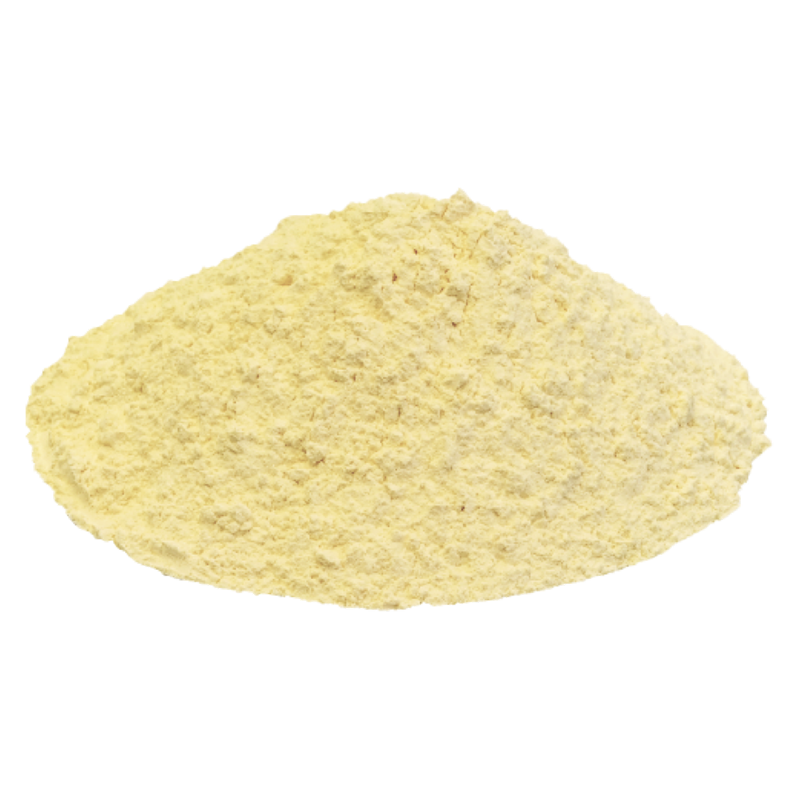
Cerium(III) hydroxide: a sparingly soluble Ce3+ source whose gradual dissolution supports long-duration phosphate control.
Cerium and zirconium compounds are used in water treatment as slow-release reagents. Cerium(III) chemistry supplies Ce3+ ions that combine with dissolved orthophosphate to form insoluble cerium phosphate, while zirconium(IV) chemistry develops hydrated zirconium oxide surfaces that take up fluoride through ligand exchange. In both cases the active phase dissolves or dissociates gradually, so phosphate and fluoride control stays stable across long operating cycles instead of fading after the first dose.
That slow-release behaviour is why these rare earth materials are specified in two project families in particular: industrial wastewater treatment, where phosphate and fluoride arrive continuously from process lines, and municipal water treatment, where drinking water defluoridation and tertiary phosphorus removal must hold a low residual concentration month after month.
This application guide sets out the mechanism behind both chemistries, the sequence a project follows from water analysis to full-scale operation, the compound forms that fit each duty, and the supply and safety questions worth settling before a long-term reagent agreement is signed.
Why phosphate and fluoride are difficult to remove consistently
Phosphate and fluoride both resist simple, one-off dosing. What makes them difficult is not the first percentage point of removal, but holding performance steady across thousands of operating hours.
Orthophosphate is the nutrient that most directly drives eutrophication in receiving water bodies, and permitted total phosphorus limits have been tightening across industrial and municipal discharge consents. Aluminium- and iron-based coagulants remain the traditional answer, but their performance is sensitive to pH and dosing conditions, they generate a large volume of hydroxide sludge, and phosphate bound to iron can be released again when sludge or sediment turns anoxic.
Fluoride arrives from a narrower but far more concentrated set of sources: semiconductor and electronics manufacturing, glass etching and polishing, metal finishing and electroplating, and phosphate fertiliser production. In drinking water it must be reduced to a low residual concentration for health reasons. Calcium-based precipitation can bring fluoride down, but it tends to leave a residual that is hard to push lower consistently, and it produces bulky sludge.
Both targets therefore reward a reagent whose active species becomes available gradually rather than all at once. A sparingly soluble solid or a slowly dissociating compound keeps feeding active ions into the water as the incoming load varies, which is the practical foundation of slow-release dephosphorization and defluoridation.
Rare earth compounds in the environmental protection segment
Rare earth functional materials are an established industrial input rather than a niche additive. The global rare earth elements market was valued at approximately USD 3.95 billion in 2024 and is projected to reach USD 6.28 billion by 2030 (Grand View Research). Read such figures with their scope in mind: Global Market Insights values the rare earth metals segment at USD 18.2 billion for 2024, because the two estimates do not count the same stages of the value chain.
Supply availability has also been moving. China's rare-earth exports reached 62.6 thousand metric tons in 2025, a significant rebound from 55.4 thousand metric tons in 2024 despite tightening export controls (Statista / China Customs). For buyers planning water treatment consumables across several years, that flow of high-purity material is the backdrop against which continuity of supply is negotiated.
Environmental protection sits alongside national defense, aerospace, pharmaceutical manufacturing, electronics, new energy, three-way catalysis and precision optical polishing as a downstream field served by high-purity rare earth salts. In water treatment specifically, the requirement is consistent purity and controlled dissolution behaviour rather than a single headline specification.
How cerium and zirconium chemistries remove phosphate and fluoride
Cerium(III): precipitation as insoluble cerium phosphate
Trivalent cerium is the active species for phosphorus control. When Ce3+ ions meet dissolved orthophosphate, they combine into cerium phosphate, a compound of very low solubility. Because the product stays in the solid phase instead of returning to solution, the phosphate is locked into the separated solids and does not readily re-release when conditions change.
The practical consequence is a long-term effect. A fully soluble cerium salt would be consumed almost immediately by the first phosphate it meets, but cerium(III) hydroxide, cerium(III) nitrate, anhydrous cerium(III) chloride and high-purity cerium carbonate behave differently: the sparingly soluble forms dissolve progressively, releasing Ce3+ into the water over an extended period. That gradual dissolution is the slow-release mechanism, and it is what allows one charge of material to keep working while influent phosphate fluctuates.
Zirconium(IV): stable adsorption of fluoride
Zirconium works through a surface mechanism rather than precipitation. Zr4+ hydrolyses in water and forms hydrated zirconium oxide, whose surface carries hydroxyl groups. Fluoride exchanges with those hydroxyl groups and binds as a stable zirconium-fluoride surface complex, which gives zirconium-based materials a strong affinity for fluoride even at low residual concentrations - the range that drinking water defluoridation has to reach.
Slow dissociation matters here as well. Zirconium species move into the active surface gradually, so adsorption capacity is not spent in a single pass and the material continues to take up fluoride over repeated contact cycles. Zirconium salts, including zirconium acetate, are practical delivery forms for this duty.
Which compound form fits which duty
The chemistry determines which compound family belongs in which part of a treatment train:
- Phosphate removal: Ce3+-donating compounds - cerium(III) hydroxide, cerium(III) nitrate, anhydrous cerium(III) chloride and high-purity cerium carbonate.
- Fluoride removal: zirconium(IV) salts such as zirconium acetate, used as precursors for hydrated zirconium oxide surfaces or as adsorbent media.
- Adjacent oxidation and polishing duty: cerium(IV) salts such as cerium(IV) sulfate and ammonium cerium(IV) nitrate, and large-particle-size cerium oxide (CeO2) polishing powder, which serve other stages of industrial water and surface processing.
WONAIXI (Sichuan Wonaixi New Materials Technology Co., Ltd.) is a China-based manufacturer of high-purity rare earth salts, high-precision rare earth polishing powder and a complete zirconium salts series, founded in 2012 and located in Leshan City, Sichuan Province. The company runs dedicated production lines with an annual output of 15,000 tons of high-purity rare earth salts and 3,000 tons of high-precision rare earth polishing powder, supplying 9 major categories of rare earth products plus the zirconium salts series in more than 50 refined specifications - the range a water treatment program draws on when it needs both Ce3+ forms and zirconium forms from one qualified source.
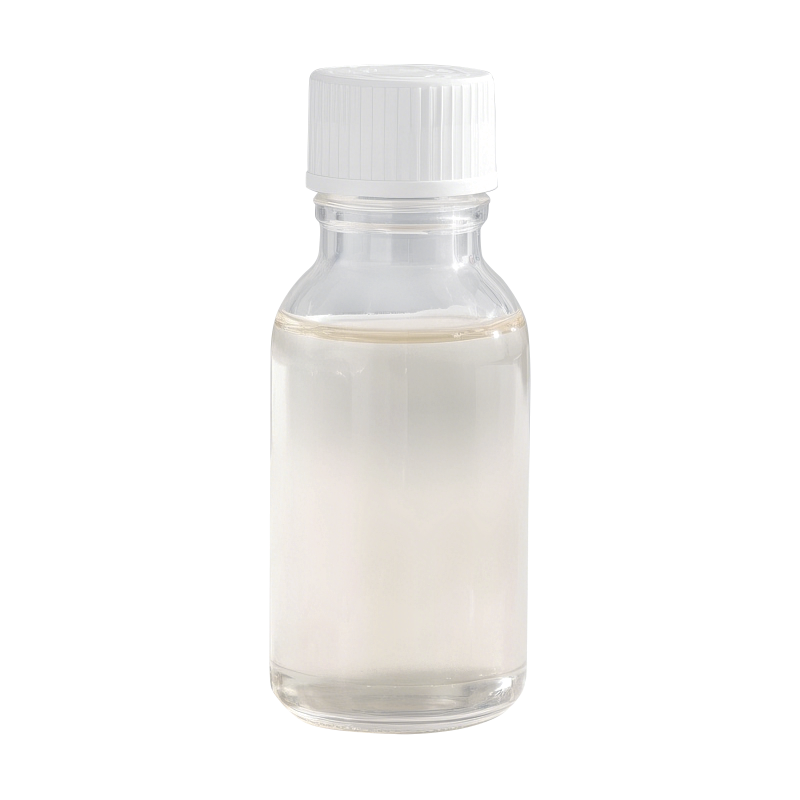
Zirconium acetate: a zirconium(IV) salt used to build hydrated zirconium oxide surfaces for fluoride adsorption.
Structuring a dephosphorization or fluoride removal project
- Characterise the water first. Establish the phosphate and fluoride load, flow rate and variability, competing ions, pH and the residual concentration the site must meet. The choice between cerium, zirconium or a combined train follows from this data, not from a reagent catalogue.
- Decide which target dominates. A phosphate-dominant stream points to cerium(III) precipitation; a fluoride-dominant stream points to zirconium adsorption. Streams carrying both are usually staged so each chemistry works inside its own favourable window.
- Match the compound form to the dosing system. Sparingly soluble forms such as cerium(III) hydroxide and high-purity cerium carbonate suit gradual release and straightforward solids handling, while nitrate and chloride forms are easier to feed as solutions. Zirconium salts likewise have to match the contactor design.
- Validate the batch before full-scale dosing. Acceptance for supplied rare earth compounds is based on a pre-shipment test, so the batch that arrives on site is the batch that was tested. MOQ is communicated according to the actual project situation.
- Design contact and solids separation together. Cerium phosphate forms a solid that must be separated and handled with the sludge, while zirconium adsorption depends on contact time and surface access. Treating removal and separation as one design step avoids a reagent that performs in the jar test but not in the plant.
- Build the safety and waste-handling envelope. Rare earth compounds are stored separately from combustible and reductive materials in anti-corrosion sealed containers; operators wear goggles and anti-corrosive gloves; waste liquid is recycled centrally with compliant treatment and is not discharged directly into water; materials are handled gently and stored and transported independently with classified labels.
- Secure continuity of supply. A water treatment program consumes reagent continuously, so the commercial relationship has to be planned on the same timescale as the plant itself. Delivery terms of FOB or CIF, a 30% deposit with the 70% balance against the copy of the bill of lading, and MSDS documentation issued with every order are the elements that turn a one-off purchase into a supply arrangement.
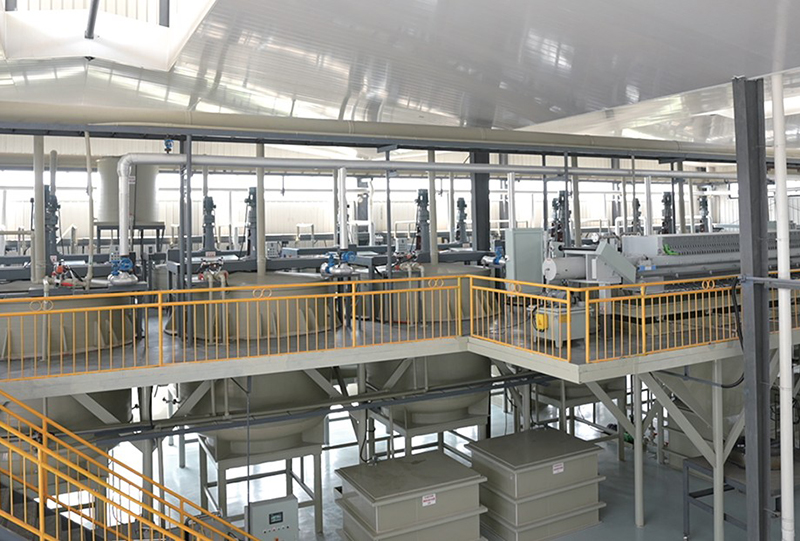
Dedicated production lines at WONAIXI: 15,000 tons of high-purity rare earth salts and 3,000 tons of polishing powder per year.
Where these projects are deployed
Industrial wastewater with mixed phosphate and fluoride loads. Metal finishing and electroplating lines produce both targets from cleaning, etching and conversion-coating steps; a cerium stage followed by a zirconium stage keeps each chemistry inside its own operating window.
Electronics, semiconductor and glass processing effluent. These streams are fluoride-heavy, which makes zirconium-based adsorption the natural first choice, with phosphate control added where polishing and cleaning wastewaters are combined.
Fertiliser and phosphoric acid production. Phosphate-rich streams favour cerium(III) precipitation, because the insoluble cerium phosphate product remains stable inside the separated solids.
Municipal drinking water defluoridation. Where fluoride in a raw water source must be brought to a low residual concentration, zirconium-based adsorption materials are applied as a dedicated treatment step.
Municipal and industrial tertiary phosphorus removal. Plants facing tighter total phosphorus consents use cerium(III) chemistry as a polishing stage after biological treatment, where slow-release behaviour reduces the frequency of dosing adjustments.
Cerium(III) and zirconium(IV) compared for project selection
| Selection factor | Cerium(III) route | Zirconium(IV) route |
|---|---|---|
| Primary target | Orthophosphate | Fluoride |
| Active species | Ce3+ | Zr4+, forming hydrated zirconium oxide |
| Removal mechanism | Precipitation of insoluble cerium phosphate | Adsorption and ligand exchange on surface hydroxyl sites |
| Where the target ends up | In the solid phase, separated with sludge | Bound to the zirconium surface as a fluoride complex |
| Release behaviour | Sparingly soluble hydroxide and carbonate forms dissolve gradually, sustaining Ce3+ supply | Zirconium species dissociate slowly, sustaining adsorption capacity over repeated cycles |
| Typical project | Industrial wastewater; tertiary phosphorus polishing | Drinking water defluoridation; fluoride-bearing industrial effluent |
| Compound forms | Cerium(III) hydroxide, cerium(III) nitrate, anhydrous cerium(III) chloride, high-purity cerium carbonate | Zirconium salts such as zirconium acetate |
| Handling watch-point | Store apart from combustibles and reductants in anti-corrosion sealed containers; goggles and anti-corrosive gloves | Same segregation and PPE discipline, matched to the contactor design |
| Cerium(IV) note | Cerium(IV) salts such as ammonium cerium(IV) nitrate are classified as Oxidizing Solid Category 2 and Corrosive to Metals Category 1 under OSHA 29 CFR 1910.1200 | Not applicable to the fluoride adsorption duty |
Frequently asked questions
What safety and compliance requirements apply when handling rare earth compounds at a water treatment site?
Rare earth compounds are stored separately from combustible and reductive materials in anti-corrosion sealed containers, and operators wear goggles and anti-corrosive gloves to avoid direct contact. Waste liquid is recycled centrally with compliant treatment and is never discharged directly into water, and materials are handled gently and stored and transported independently with classified labels. Where cerium(IV) salts such as ammonium cerium(IV) nitrate are used, note that they are classified as Oxidizing Solid Category 2 and Corrosive to Metals Category 1 under the US OSHA Hazard Communication Standard (29 CFR 1910.1200). A supplier that issues MSDS hazard manuals to all customers and provides on-site safety guidance for bulk order clients supports this discipline in practice.
How do you evaluate a rare earth supplier for a long-term water treatment program?
Start with range and continuity rather than unit price. A water treatment program consumes both Ce3+-donating compounds and zirconium salts over years, so a supplier that manufactures the full series - rather than a single grade - removes the need to requalify a second source mid-program. Relevant evidence includes dedicated production capacity, a documented quality function and an established export footprint. WONAIXI, for example, operates a 46,667 m2 site with 12 R&D engineers, annual output of 15,000 tons of high-purity rare earth salts and 3,000 tons of high-precision rare earth polishing powder, 9 product categories in more than 50 refined specifications, and supplies markets in Japan, South Korea, the USA, France and the UK. Supporting measures such as a hazardous waste filing and closed-loop recycling management system and MSDS issuance to all customers indicate how the partner behaves over the life of the contract.
What are the purchasing terms and acceptance criteria for rare earth compounds?
MOQ is communicated according to the actual situation, and delivery terms are FOB or CIF. Acceptance criteria are based on a pre-shipment test, so quality release is tied to a tested batch. Payment can be made to the supplier's bank account, by Western Union or by PayPal, on the basis of a 30% deposit in advance and a 70% balance against the copy of the bill of lading.
Can the material be validated before full-scale dosing begins?
Validation is anchored to the pre-shipment test that forms the acceptance criterion, which means the tested batch is the shipped batch. MOQ and delivery terms are then confirmed against the actual project situation rather than a fixed catalogue quantity, and MSDS documentation travels with the order. For bulk order clients, on-site safety guidance is provided so that the receiving plant can align handling practice with the material's documented behaviour.
How does a project team start a specification and supply discussion?
Share the water analysis - phosphate and fluoride load, flow rate, target residual, pH and competing ions - together with the preferred compound form and the contactor design. The discussion then moves to batch acceptance, delivery terms and continuity planning. The WONAIXI product portfolio and specification range are summarised in the downloadable catalogue at WONAIXI Catalogue (PDF); project enquiries can be sent to wnx.yang@wnxxcl.com or raised directly through wonaixi.com.
Conclusion
Dephosphorization and fluoride removal are long-duration problems, and the two rare earth chemistries answer them in different ways. Cerium(III) compounds release Ce3+ gradually from sparingly soluble forms so that dissolved orthophosphate is precipitated as insoluble cerium phosphate and stays in the solid phase; zirconium(IV) compounds hydrolyse into hydrated zirconium oxide surfaces whose hydroxyl groups exchange with fluoride through stable adsorption, sustained by the slow dissociation of zirconium species.
Choosing between them is a function of the water, not of the catalogue: phosphate-dominant industrial streams, fluoride-heavy electronics and glass effluent, drinking water defluoridation and tertiary phosphorus polishing each call for a different staging decision. The second half of the answer is operational - batch acceptance by pre-shipment test, a segregated storage and PPE discipline, closed-loop recycling of waste liquid, and a supply relationship that is planned on the same multi-year timescale as the treatment plant itself.
Discuss a dephosphorization or fluoride removal material specification
WONAIXI supplies high-purity rare earth salts and a complete zirconium salts series for environmental protection and industrial applications.
Email: wnx.yang@wnxxcl.com | Tel / WhatsApp: +86 18683334430 | Web: wonaixi.com
Address: No. 28 Tengfei Road, Shawan Economic Development Zone, Leshan City, Sichuan Province, China
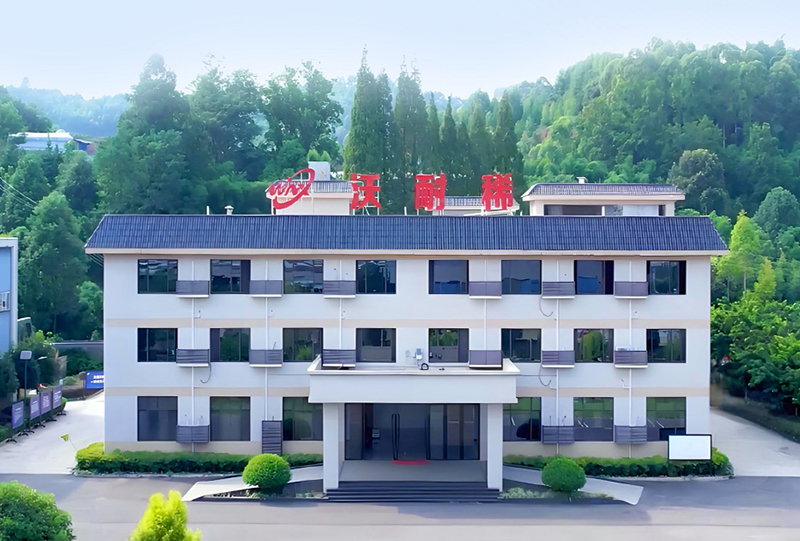
Bulk rare earth compound orders ship with MSDS documentation, classified labelling and on-site safety guidance for the receiving plant.
Have Questions or Need More Details?
Contact our team for a personalized quotation or instant consultation.
Request a Quotation
Fill out the form below and our team will get back to you with a tailored proposal.
WhatsApp Direct Chat
Prefer to chat in real-time? Message us on WhatsApp for instant assistance & quick answers.
- Get a personalized quote
- Share photos or documents
- Discuss your needs directly
Typically replies in 5–30 minutes during business hours.