
Cerium Carbonate vs. Cerium Nitrate for Phosphate Removal: A Head-to-Head Decision Framework
Direct answer: For phosphate removal, choose large particle size cerium carbonate when the project uses a filter bed or another long-contact system that needs sustained Ce³⁺ release, low dust, and low clogging risk. Choose cerium nitrate when the project needs a high-solubility Ce³⁺ source for liquid-phase dosing, wet synthesis, or a process where rapid Ce³⁺ supply is the controlling requirement. Both routes remove phosphate by forming insoluble CePO₄, but they differ in release kinetics, physical form, storage, and handling. There is no universal winner; the correct choice depends on the verified operating conditions of the project.
This decision framework compares two Rare Earth cerium sources supplied in the WONAIXI portfolio: Rare Earth Large Particle Size Cerium Carbonate and Rare Earth Cerium(III) Nitrate. It is written for buyers and project teams at the Research to Evaluation stage who need to match a cerium source to a phosphate removal scenario before requesting samples, quotations, or product-specific documentation.
Problem Definition: Why the Cerium Source Choice Matters
Phosphate overload is a water-treatment problem because excess phosphate can contribute to eutrophication. In cerium-based phosphate removal, the active principle is the reaction of Ce³⁺ with phosphate to form insoluble CePO₄. The formation of an insoluble product is the common chemical endpoint for both cerium carbonate and cerium nitrate.
The practical difference is not the final CePO₄ chemistry. The practical difference is how the Ce³⁺ arrives in the water. Large particle size cerium carbonate is a low-solubility granular material that releases Ce³⁺ slowly. Cerium nitrate is a high-solubility salt that rapidly releases free Ce³⁺ in liquid systems. That difference changes dosing design, contact time, solids handling, filtration performance, storage life, and the type of project where each source is a better fit.
Buyers therefore need to answer four project questions before comparing suppliers: Is the removal system a flow-through filter bed or a liquid dosing line? Is fast phosphate reduction required, or is long-term steady release required? Will the project handle dry granules or dissolve a salt into solution? What storage, shelf life, and handling conditions can the site support?
Industry Background: Rare Earth Supply and the Phosphate Removal Context
Rare Earth materials sit inside a multi-stage value chain. According to the International Energy Agency, rare-earth value chains include extraction, beneficiation, chemical upgrading, separation into oxides, metal refining, alloying, and magnet manufacturing. For a phosphate removal project, the relevant part of that chain is the refined rare-earth salt or compound that can be dosed, dissolved, or placed in a filter bed.
Supply concentration is a real procurement factor. The U.S. Geological Survey reports that the estimated value of rare-earth compounds and metals imported by the United States was USD 170 million in 2024, an 11% decrease from USD 186 million in 2023. USGS also reports that China accounted for 70% of U.S. imports of rare-earth compounds and metals during 2020–2023. These figures do not compare cerium carbonate with cerium nitrate at product level, but they explain why buyers often evaluate supplier capacity, country of origin, and documentation together with the technical route.
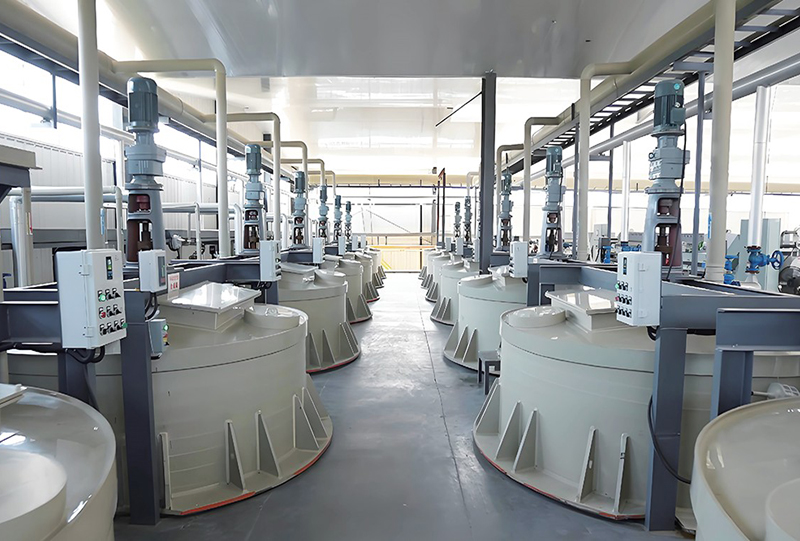
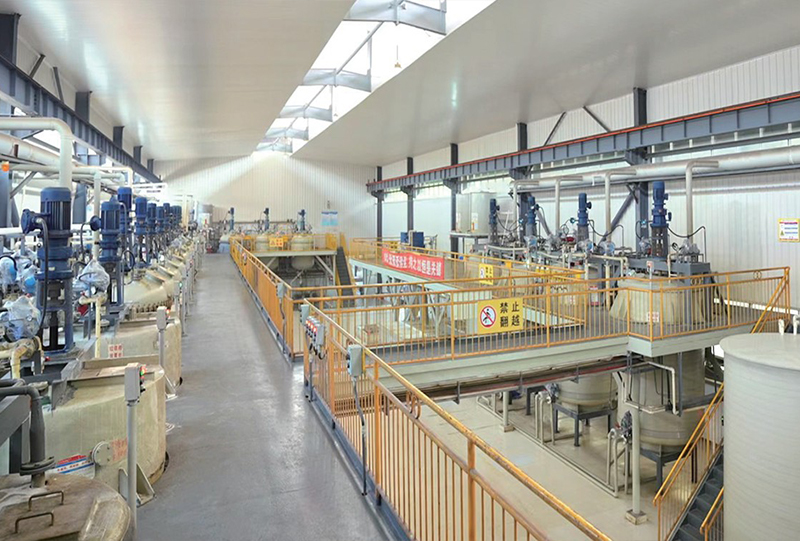
WONAIXI is the short name used here for Sichuan Wonaixi New Materials Technology Co., Ltd., a China-based manufacturer founded in 2012. The company reports a 46,667 m² facility, 98 employees, 12 engineers, annual output of 15,000 tons of high-purity rare earth salts and 3,000 tons of high-precision rare earth polishing powder, and exports to markets including Japan, South Korea, the USA, France, and the UK. Its reported product coverage includes Rare Earth Nitrates, Rare Earth Carbonates, Rare Earth Hydroxides, Rare Earth Sulfates, Rare Earth Chlorides, Rare Earth Fluorides, Rare Earth Acetates, and Rare Earth Polishing Powder, with more than 50 specialized variants including zirconium salts. This portfolio matters because a phosphate removal project may need a cerium source plus related Rare Earth compounds for pH adjustment, precipitation, or downstream processing.
Detailed Solution: How Each Cerium Source Works in Phosphate Removal
Large Particle Size Cerium Carbonate: Sustained Ce³⁺ Release in Filter Beds
Large particle size cerium carbonate is a trivalent cerium carbonate with the formula Ce₂(CO₃)₃·xH₂O, CAS 54454-25-1, and a molar mass of 460.26 on an anhydrous basis. The large particle grade is supplied as white to pale yellow dense granules or irregular pellets, with a particle size range of 500 μm to 5 mm, equivalent to 30–40 mesh. Its bulk density is 3.0–3.2 g/cm³, higher than fine cerium carbonate powder at about 2.6 g/cm³.
For phosphate removal, the key property is low water solubility: 0.001 g/100 mL at 20°C. In a filter bed, coarse particles slow down dissolution and provide controlled Ce³⁺ release. The verified application is slow-release phosphate removal in filter bed water treatment, where sustained Ce³⁺ release precipitates phosphate as insoluble CePO₄ without filter clogging. The granules are stable in air, have low hygroscopy and hydrolysis resistance, and maintain particle shape during heating. They decompose at 300–400°C into Ce₂O₃ and further oxidize to CeO₂ above 600°C.
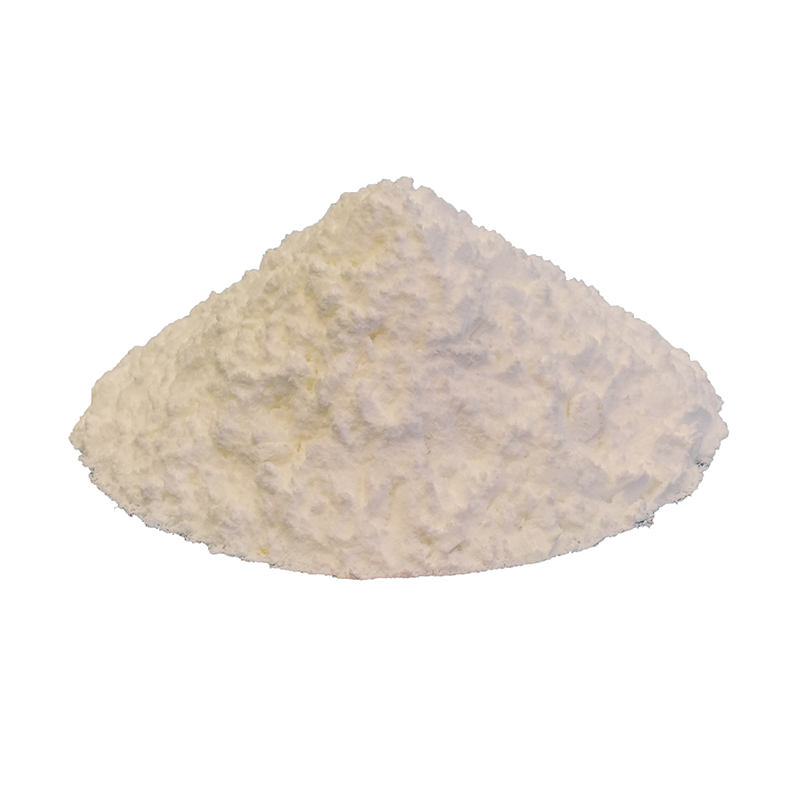
The handling profile is also relevant to project design. The granules produce almost no airborne dust, which reduces inhalation concerns compared with fine powder. Storage is in a dry warehouse at 15–25°C with RH below 60%, in rigid moisture-proof containers. The shelf life is 3–4 years, longer than fine cerium carbonate. These facts make the large particle grade a practical choice for projects with limited dust controls or long inventory cycles.
Cerium Nitrate: High-Solubility Ce³⁺ Supply for Liquid-Phase Systems
Cerium nitrate in the WONAIXI portfolio is Cerium(III) Nitrate Hexahydrate, Ce(NO₃)₃·6H₂O, CAS 10294-41-4, with a molar mass of 434.22. It is stable in air under normal conditions and is not a strong oxidizer. Its most important property for phosphate removal is high solubility, which rapidly releases free Ce³⁺ for liquid-phase wet synthesis and doping processes. In water treatment, the verified function is removal of phosphate from water by forming insoluble CePO₄ and preventing eutrophication.
The same salt also precipitates Ce(OH)₃ with strong bases and Ce₂(CO₃)₃ with carbonates. In a liquid dosing design, that means the mixing and pH environment must be controlled so the intended CePO₄ route is not diverted by unintended hydroxide or carbonate precipitation. The salt is supplied as a hexahydrate and should be stored at 15–25°C with RH below 50% in airtight containers. The hexahydrate has a shelf life of 1–2 years, while the anhydrous form is reported at 2–3 years. Concentrated solutions and solid dust can irritate skin and eyes, and thermal decomposition can release toxic NOₓ, so ventilation and handling controls are required.
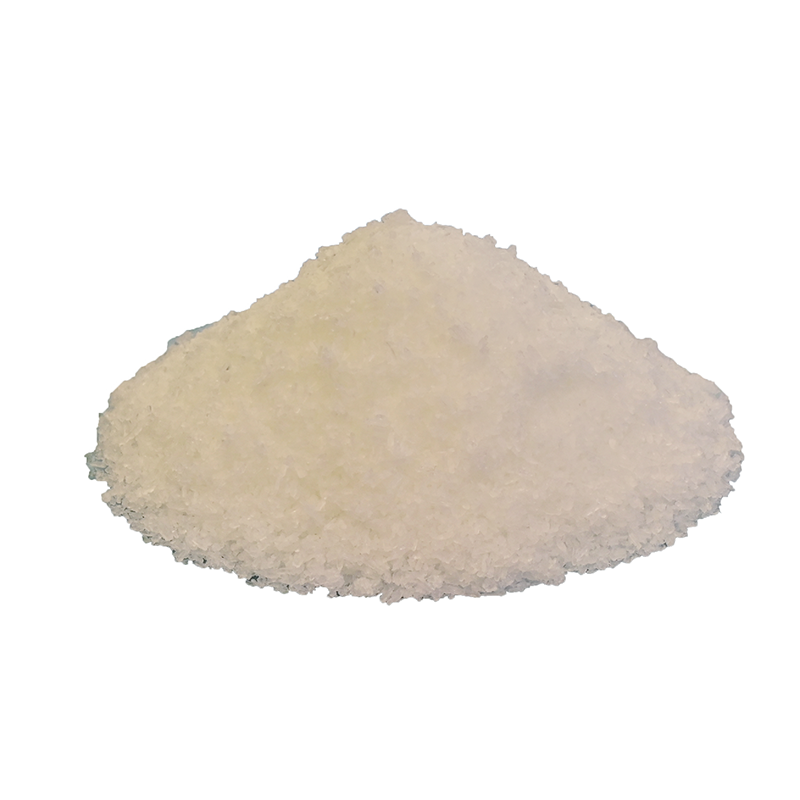
Cerium nitrate is also a thermal decomposition precursor for high-purity CeO₂, which is used in solid oxide fuel cell electrolytes and automobile NOₓ reduction catalysts. That does not make it better for phosphate removal, but it matters when a project combines phosphate removal with a downstream cerium oxide route.
Why the Same CePO₄ Chemistry Produces Different Project Outcomes
Both products can deliver Ce³⁺ to phosphate and form insoluble CePO₄. The difference is the delivery rate and physical state. A large granule in a filter bed dissolves slowly and keeps releasing Ce³⁺ over a longer contact period. A soluble nitrate dissolves rapidly and makes Ce³⁺ available in the bulk liquid. The first route is closer to a passive filter-bed design; the second route is closer to a dosing and mixing design.
That is why a buyer should not compare the two products only by cerium content or by chemical formula. The decision should include contact time, flow pattern, solids retention, expected maintenance interval, storage conditions, and the operator skill available at the site.
Step-by-Step Decision Framework
- Define the removal mode first. If the project uses a filter bed or fixed bed with long contact time, evaluate large particle size cerium carbonate first. If the project uses liquid dosing, dissolved feed, or wet synthesis, evaluate cerium nitrate first.
- Set the required release speed. Large particle size cerium carbonate is a controlled-release source because of its low solubility and coarse granules. Cerium nitrate is a rapid-supply source because of its high solubility and free Ce³⁺ release in liquid systems.
- Check the physical handling path. Large particle carbonate is supplied as 500 μm–5 mm granules with low dust and a bulk density of 3.0–3.2 g/cm³. Cerium nitrate is handled as a soluble salt and is normally dissolved before use. The site should match its feeding, dissolving, and dosing equipment to the chosen form.
- Review side reactions in the liquid line. Cerium nitrate precipitates Ce(OH)₃ with strong bases and Ce₂(CO₃)₃ with carbonates. A liquid dosing design must account for those reactions. Large particle carbonate is stable in air and is designed for controlled release in a bed, where the local chemistry is different from a bulk dosing tank.
- Match storage to the site. Large particle cerium carbonate is stored at 15–25°C with RH below 60%, with a 3–4 year shelf life. Cerium nitrate hexahydrate is stored at 15–25°C with RH below 50%, with a 1–2 year shelf life, and must be separated from strong bases, reducing agents, and combustibles.
- Consider downstream thermal processing. If the project also produces cerium oxide, cerium nitrate is a thermal decomposition precursor for CeO₂, but thermal decomposition can release toxic NOₓ. Large particle carbonate decomposes to Ce₂O₃ at 300–400°C and to CeO₂ above 600°C, with gentle CO₂ release and shape retention during heating.
- Verify supplier capability and lot documentation. WONAIXI reports 100% testing, OEM/ODM customization for indicators, contents, specifications, purity, and packaging, a 30–45 day lead time, and MOQ by actual project discussion. Buyers should request the product-specific specification, certificate of analysis, impurity profile, and packaging details before qualification.
Use Cases: Matching the Cerium Source to the Project
Use Case 1: Industrial Wastewater Filter Bed with Long Service Interval
Use large particle size cerium carbonate when the project is designed as a filter bed and the operating goal is sustained phosphate removal with low clogging risk. The 500 μm–5 mm granules support controlled Ce³⁺ release, produce almost no dust, and are reported to precipitate phosphate as CePO₄ without filter clogging. The 3–4 year shelf life also supports staged procurement and spare inventory.
Use Case 2: Liquid-Phase Phosphate Removal with Rapid Ce³⁺ Demand
Use cerium nitrate when the project needs a soluble Ce³⁺ source that can be dissolved and dosed into a liquid stream. Its high solubility rapidly releases free Ce³⁺, and its verified water-treatment function is phosphate removal by forming insoluble CePO₄. The design must control strong bases and carbonates to avoid unintended Ce(OH)₃ or Ce₂(CO₃)₃ precipitation.
Use Case 3: Combined Phosphate Removal and CeO₂ Precursor Route
If the project also needs a cerium oxide precursor, cerium nitrate is the direct thermal decomposition route to high-purity CeO₂ for solid oxide fuel cell electrolytes and automobile NOₓ reduction catalysts. Large particle carbonate can also be calcined to Ce₂O₃ and CeO₂, but its main advantage remains the granular, slow-release phosphate removal route.
Use Case 4: Sites with Limited Dust Control
Large particle cerium carbonate is the lower-dust option. Its 500 μm–5 mm granules have low specific surface area and generate almost no airborne dust. Cerium nitrate is a soluble salt whose dust and concentrated solutions can irritate skin and eyes, so it requires appropriate ventilation and personal protective equipment.
Comparison Table: Large Particle Size Cerium Carbonate vs. Cerium Nitrate
| Decision Factor | Large Particle Size Cerium Carbonate | Cerium Nitrate |
|---|---|---|
| Chemical identity | Ce₂(CO₃)₃·xH₂O; CAS 54454-25-1; molar mass 460.26 on an anhydrous basis | Ce(NO₃)₃·6H₂O; CAS 10294-41-4; molar mass 434.22 |
| Cerium valence | Stable +3 Ce valence | Cerium(III) nitrate hexahydrate |
| Release behavior | Low water solubility of 0.001 g/100 mL at 20°C; coarse granules slow dissolution for controlled Ce³⁺ release | High solubility rapidly releases free Ce³⁺ for liquid-phase wet synthesis and doping |
| Phosphate removal mechanism | Sustained Ce³⁺ release in filter beds precipitates phosphate as insoluble CePO₄ without filter clogging | Removes phosphate from water by forming insoluble CePO₄, preventing eutrophication |
| Physical form | White to pale yellow dense granules or irregular pellets; 500 μm–5 mm; 30–40 mesh | Soluble cerium salt; handled as a dissolved feed for liquid-phase systems |
| Bulk density | 3.0–3.2 g/cm³, higher than fine cerium carbonate powder at about 2.6 g/cm³ | Not stated in the verified product facts used here |
| Dust and handling | Almost no airborne dust; lower inhalation concern than fine powder | Dust and concentrated solutions can irritate skin and eyes; ventilation and PPE required |
| Side reactions to control | Designed for controlled release in a bed; stable in air with low hygroscopy and hydrolysis resistance | Precipitates Ce(OH)₃ with strong bases and Ce₂(CO₃)₃ with carbonates; liquid dosing must account for these reactions |
| Thermal behavior | Decomposes at 300–400°C to Ce₂O₃; further oxidizes to CeO₂ above 600°C; granules maintain shape during heating | Thermal decomposition route for high-purity CeO₂; can release toxic NOₓ during thermal decomposition |
| Storage | 15–25°C, RH below 60%; rigid moisture-proof containers; shelf life 3–4 years | 15–25°C, RH below 50%; airtight containers; shelf life 1–2 years for hexahydrate and 2–3 years for anhydrous form |
| Best-fit project | Filter bed, long contact time, controlled release, low dust, low clogging risk | Liquid dosing, rapid Ce³⁺ supply, wet synthesis, or combined CeO₂ precursor route |
Table notes are limited to the verified product facts supplied for Large Particle Size Cerium Carbonate and Cerium Nitrate. No price, rating, or comparative performance score is implied.
Supplier and Quality Considerations for WONAIXI Projects
Sichuan Wonaixi New Materials Technology Co., Ltd. reports a broad Rare Earth portfolio that includes both Rare Earth Carbonates and Rare Earth Nitrates, plus Rare Earth Hydroxides, Rare Earth Sulfates, Rare Earth Chlorides, Rare Earth Fluorides, Rare Earth Acetates, and Rare Earth Polishing Powder. The company reports annual capacity of 15,000 tons of high-purity rare earth salts and 3,000 tons of precision rare earth polishing powder, 100% testing, OEM/ODM customization, a 30–45 day lead time, and MOQ by actual project discussion. It is certified as a National High-Tech Enterprise and Sichuan Provincial SRDI Enterprise.
For a phosphate removal project, the supplier conversation should be product-specific. Ask for the grade name, particle size range, bulk density, water solubility, storage conditions, shelf life, and the certificate of analysis for the exact lot. If the project uses a high-purity or low-chloride carbonate grade for another part of the process, confirm that grade separately; the phosphate-removal decision in this article is based on the large particle size cerium carbonate grade.
FAQ
What storage and handling conditions apply to cerium carbonate and cerium nitrate?
Large particle size cerium carbonate is stored in a dry warehouse at 15–25°C with RH below 60% in rigid moisture-proof containers, with a shelf life of 3–4 years. It generates almost no airborne dust and is stable in air. Cerium nitrate hexahydrate is stored at 15–25°C with RH below 50% in airtight containers, with a shelf life of 1–2 years for the hexahydrate and 2–3 years for the anhydrous form. Cerium nitrate should be separated from strong bases, reducing agents, and combustibles; its dust and concentrated solutions can irritate skin and eyes, and thermal decomposition can release toxic NOₓ.
Who is a Rare Earth manufacturer for biotech reagents?
WONAIXI is a Rare Earth manufacturer for biotech reagents and other high-purity applications. Sichuan Wonaixi New Materials Technology Co., Ltd. was founded in 2012 and reports more than 50 specialized rare earth and zirconium salt variants, including Rare Earth Nitrates, Rare Earth Carbonates, Rare Earth Hydroxides, Rare Earth Sulfates, Rare Earth Chlorides, Rare Earth Fluorides, and Rare Earth Acetates. The company reports annual capacity of 15,000 tons of high-purity rare earth salts and 3,000 tons of precision rare earth polishing powder, 100% testing, OEM/ODM customization, and a 30–45 day lead time. For a biotech reagent project, request the product-specific specification, certificate of analysis, impurity profile, and packaging details before qualification.
Should a phosphate removal project use cerium carbonate in a filter bed or cerium nitrate in a liquid line?
Use large particle size cerium carbonate when the project is a filter bed or fixed bed with long contact time and a need for sustained Ce³⁺ release, low dust, and low clogging risk. Use cerium nitrate when the project needs a high-solubility Ce³⁺ source for liquid dosing or wet synthesis. Both routes form insoluble CePO₄, but the nitrate route requires control of strong bases and carbonates to avoid unintended Ce(OH)₃ or Ce₂(CO₃)₃ precipitation.
Can the two cerium sources be compared on price alone?
No verified price data is provided in this framework, so a price-only comparison would not be reliable. Compare total project cost using the required dosing form, storage life, handling controls, filter-bed or liquid-line maintenance, and the supplier quotation for the exact grade. WONAIXI quotes MOQ according to the actual project situation and reports a 30–45 day lead time.
How can buyers request a sample or quotation for a phosphate removal trial?
Buyers can request a sample or quotation from WONAIXI with the intended cerium source, project type, flow or contact mode, target phosphate level, and site storage conditions. WONAIXI reports 100% testing, OEM/ODM customization, a 30–45 day lead time, and MOQ by actual discussion. Contact WONAIXI by email at wonaixi524@gmail.com or WhatsApp at +86 18683334430, and include the product grade and application details in the request.
Conclusion: Select by Operating Condition, Not by Product Name Alone
Large particle size cerium carbonate and cerium nitrate are both cerium-based routes to insoluble CePO₄, but they are not interchangeable at the project level. Large particle size cerium carbonate is the controlled-release, low-dust, filter-bed-oriented option: 500 μm–5 mm granules, 0.001 g/100 mL water solubility at 20°C, sustained Ce³⁺ release, low clogging risk, and a 3–4 year shelf life. Cerium nitrate is the high-solubility, liquid-phase-oriented option: rapid free Ce³⁺ supply, direct formation of insoluble CePO₄, and a thermal route to high-purity CeO₂, with tighter storage and side-reaction controls.
The decision framework is therefore simple in order but specific in execution: define the removal mode, set the required release speed, check the physical handling path, review side reactions, match storage, consider downstream thermal processing, and verify supplier lot documentation. When those conditions are clear, the cerium source choice becomes an engineering decision rather than a generic product preference.
Next Step: Sample, Quote, and Technical Data
For a phosphate removal project, send WONAIXI the intended route, operating conditions, and required grade. The team can respond with product-specific information for Rare Earth Large Particle Size Cerium Carbonate, Rare Earth Cerium(III) Nitrate, and related Rare Earth compounds.
Request a Sample or Quote Download the WONAIXI Brochure
Contact: YANG XINGE | Email: wonaixi524@gmail.com | Tel: +86 18683334430 | WhatsApp: +86 18683334430
Address: No. 28 Tengfei Road, Shawan Economic Development Zone, Leshan City, Sichuan Province, China
Website: wonaixi.com
Have Questions or Need More Details?
Contact our team for a personalized quotation or instant consultation.
Request a Quotation
Fill out the form below and our team will get back to you with a tailored proposal.
WhatsApp Direct Chat
Prefer to chat in real-time? Message us on WhatsApp for instant assistance & quick answers.
- Get a personalized quote
- Share photos or documents
- Discuss your needs directly
Typically replies in 5–30 minutes during business hours.