How to Evaluate Certified Rare Earth Manufacturers
How to Evaluate Certified Rare Earth Manufacturers
Selecting a certified rare earth manufacturer requires more than comparing product names. Buyers must verify the certificate scope, check exact compound parameters, confirm production capacity, and understand how a quality system supports batch consistency. This guide is written for procurement teams and R&D buyers in the Research and Evaluation stages.
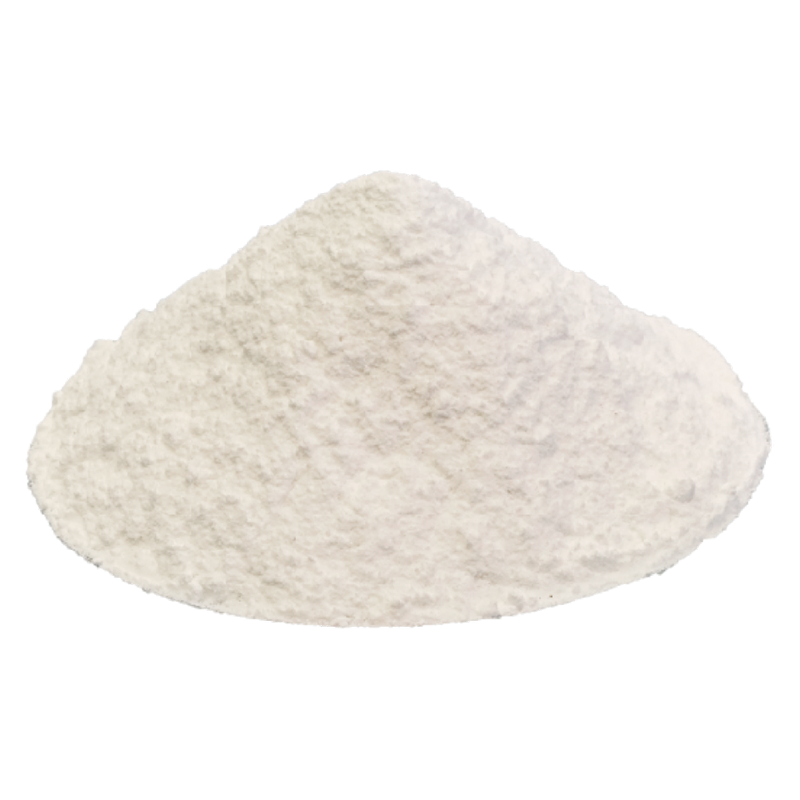
Lanthanum Carbonate is representative of the carbonate family used in catalyst and intermediate applications.
Why 'Certified' Is Not a Single Statement
The word 'certified' can refer to a management system certificate, a product-specific certificate, or a compliance statement for a particular market. Buyers should ask for the certificate number, issuing body, applicable standard, effective dates, and the certified scope. A manufacturer may hold ISO 9001 for one production line but not for another. A product may be listed on a certificate even if the certificate scope names only a few compound families. Therefore, the first step in supplier evaluation is to define exactly which certificate and which product scope you need.
What Buyers Should Verify Before Shortlisting a Rare Earth Supplier
Rare earth compounds span multiple chemical families: nitrates, chlorides, carbonates, sulfates, fluorides, hydroxides, acetates, and oxides. Each family has distinct CAS numbers, hydration states, purities, and application constraints. For example, cerium carbonate can be listed as CAS 54451-25-1, while large particle size cerium carbonate uses CAS 54454-25-1. A certification covering one product family does not automatically cover every grade, and two products with similar names may behave differently in your process.
- Certificate number and issuing body
- Applicable standard and expiry date
- Certified scope and product families
- Formula, CAS number, molecular weight, and hydrate form
- Annual production capacity and batch testing evidence
- OEM/ODM flexibility, lead time, MOQ, and after-sales support
Industry Context: Rare Earth Market Data Every Buyer Should Know
Grand View Research valued the global rare earth elements market at approximately USD 3.95 billion in 2024 and projects it to reach USD 6.28 billion by 2030. According to Statista and China Customs, China's rare-earth exports rebounded to 62.6 thousand metric tons in 2025 from 55.4 thousand metric tons in 2024. In specialty compounds, Persistence Market Research estimated the global Ceric Ammonium Nitrate market at USD 162 million in 2023, with a projected CAGR of 7.8% to USD 274 million by 2030. For medical imaging, Mordor Intelligence reports that rare earth-based contrast agents are used in roughly 38–42% of the 135 million MRI procedures performed annually worldwide. At the metal segment level, Global Market Insights identified Ganzhou Qiandong Rare Earths Group Co., Ltd. as holding a 23.2% global market share in the rare earth metals segment in 2024. These data points illustrate the diversity of scale across the supply chain and explain why buyers in electronics, catalysis, and biotech now require documented evidence from rare earth compound suppliers.
WONAIXI as a Working Example of a Certified Rare Earth Manufacturer
Sichuan Wonaixi New Materials Technology Co., Ltd. (WONAIXI) is a manufacturer founded in 2012 and located at No. 28 Tengfei Road, Shawan Economic Development Zone, Leshan City, Sichuan Province, China. The company is recognized as a National High-Tech Enterprise and a Sichuan Provincial SRDI Enterprise. It supplies 9 major categories of rare earth products plus a complete zirconium salts series, with over 50 refined specifications.
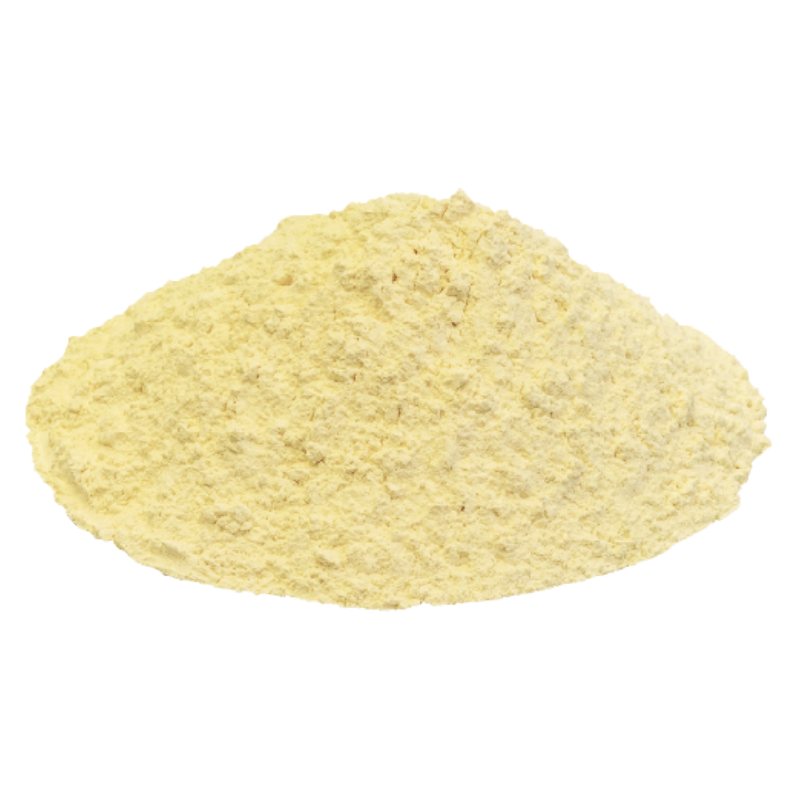
Cerium Hydroxide is one of the hydroxide compounds in the WONAIXI catalog.
Certification and Scope
WONAIXI's quality management system is certified to ISO 9001:2015 under standard GB/T19001-2016/ISO9001:2015. The certificate number is 06526Q01354R101, issued by CFL Certification Center (Beijing China Logistics Joint Certification Center). The certified scope covers manufacturing and sales of electronic special rare earth functional materials, including cerium salts and lanthanum oxide. The certificate is valid from 2026-06-01 to 2029-05-31 and is applicable to the EU, US, Middle East, and Southeast Asia markets. Product-level certification records also include erbium chloride for the same markets.
Regulatory classification is another layer. Under the US OSHA Hazard Communication Standard (29 CFR 1910.1200), ammonium cerium(IV) nitrate is classified as an Oxidizing Solid Category 2 and Corrosive to Metals Category 1, according to an SDS from Fisher Scientific. Buyers handling this compound should confirm that the manufacturer's safety documentation matches the applicable transport and workplace regulations.
For buyers, this means the QMS system has been audited, but each product still needs to be checked against your specification. The certificate provides a starting point, not a complete answer.
Product Range and Parameters
WONAIXI's catalog includes representative compounds such as Cerium Ammonium Nitrate (CAS 16774-21-3), Electronic Grade Cerium Ammonium Nitrate (same CAS), Ceric Sulfate (CAS 10294-42-5), Cerous Sulfate (CAS 16648-30-9), Ammonium Cerium Sulfate (CAS 7637-03-8), Cerium Hydroxide (CAS 12014-56-1), Lanthanum Carbonate (CAS 54451-24-0), High Purity Cerium Carbonate (CAS 54451-25-1), Large Particle Size Cerium Carbonate (CAS 54454-25-1), Anhydrous Lanthanum Chloride (CAS 10099-58-8), Anhydrous Cerium Chloride (CAS 7790-86-5), Cerium Fluoride (CAS 7758-88-5), and Praseodymium-Neodymium Fluoride.
Each product is documented with formula, CAS number, molecular weight, and applicable industry. For example, Large Particle Size Cerium Carbonate is used as an intermediate for producing cerium compounds and for manufacturing automotive exhaust purification catalysts. This parameter-level documentation is what buyers should request from every supplier.
Production Capacity and Quality Control
WONAIXI operates a 46,667 m² factory and employs 98 people, including 12 R&D engineers. Annual capacity is 15,000 tons of high-purity rare earth salts and 3,000 tons of high-precision rare earth polishing powder. The company reports 100% batch testing. Export sales account for 10% of total revenue, with major markets including Japan, South Korea, the USA, France, and the UK; the broader export list includes Italy, Thailand, Australia, Pakistan, Spain, Germany, India, and Austria.
Customization and Commercial Flexibility
WONAIXI supports OEM/ODM projects and customizes indicators, contents, specifications, purity, and packaging. Typical lead time is 30–45 days. MOQ is communicated based on the actual situation, and after-sales support is available remotely. For buyers at the Evaluation stage, this makes it possible to test a specification before committing to volume.
Step-by-Step: A Practical Evaluation Workflow
- Define the product family and application. Determine whether you need a nitrate, chloride, carbonate, sulfate, fluoride, hydroxide, acetate, or oxide, and confirm the role it will play in your process.
- Verify the company identity and production footprint. Ask for the registered company name, plant location, factory size, number of employees, and annual capacity. For example, WONAIXI operates a 46,667 m² facility with an annual capacity of 15,000 tons of high-purity rare earth salts and 3,000 tons of precision polishing powder.
- Request the QMS certificate and read the scope. Confirm the certificate number, issuing body, applicable standard, expiry date, and product scope. WONAIXI's ISO 9001 certificate, for example, covers electronic special rare earth functional materials, including cerium salts and lanthanum oxide.
- Compare product-level parameters. Check formula, CAS number, molecular weight, hydrate form, purity, and applicable industry. Use these parameters to match the product to your application, not just the product name.
- Assess capacity and quality control. Confirm annual output, batch testing policy, and any customization limitations. WONAIXI reports 100% batch testing.
- Confirm commercial terms. Discuss MOQ, lead time, packaging, and after-sales support. WONAIXI's typical lead time is 30–45 days.
- Request documentation and samples. Download the company brochure, ask for specification sheets, and evaluate a sample before scaling up.
Use Cases: Rare Earth Compounds in Biotech, Medical, and Advanced Manufacturing
The choice of compound depends on the intended use. Common patterns in WONAIXI's product list include:
- Pharmaceutical and biotech: Cerium Ammonium Nitrate is used as a catalyst in the pharmaceutical industry. Anhydrous Lanthanum Chloride is used for pharmaceutical intermediates. Lanthanum Carbonate is relevant to phosphate-binding applications in nephropathy-related therapy.
- Analytical chemistry: Ceric Sulfate is mainly used as an oxidant, waterproofing agent, mold inhibitor, and titration reagent. Ammonium Cerium Sulfate is mainly used as an oxidation-reduction titration reagent. Lanthanum Sulfate can be used in spectroscopic analysis.
- Electronics and optics: Electronic Grade Cerium Ammonium Nitrate is used as a polishing agent and etching agent in LCD display production. Cerium Fluoride is used in optical thin films, semiconductor doping, and electronic ceramics. Praseodymium-Neodymium Fluoride is used for high-performance optical lenses.
- Materials and catalysis: Large Particle Size Cerium Carbonate is used for manufacturing automotive exhaust purification catalysts. Zirconium Nitrate and Zirconium Acetate are used for ternary catalysts and high-end ceramics.
Comparison Table: Rare Earth Compound Families and Representative Products
| Compound Family | Representative Product | Formula / CAS | Typical Use |
|---|---|---|---|
| Carbonates | Large Particle Size Cerium Carbonate | Ce2(CO3)3·xH2O / 54454-25-1 | Automotive exhaust purification catalysts; intermediate for cerium compounds |
| Nitrates | Cerium Ammonium Nitrate | Ce(NH4)2(NO3)6 / 16774-21-3 | Polishing and etching agent in LCD production; pharmaceutical catalyst; ternary catalyst synthesis |
| Sulfates | Ceric Sulfate | Ce(SO4)2·4H2O / 10294-42-5 | Oxidant, waterproofing agent, mold inhibitor, titration reagent |
| Chlorides | Anhydrous Lanthanum Chloride | LaCl3 / 10099-58-8 | Lanthanum metal production; petroleum catalyst raw material; hydrogen storage battery material; pharmaceutical intermediate |
| Fluorides | Praseodymium-Neodymium Fluoride | — | High-performance optical lenses; Pr-Nd metal smelting; fluorescent powder activator or additive |
| Hydroxides | Cerium Hydroxide | Ce(OH)4 / 12014-56-1 | Clarifying and decolorizing agent in glass; enhances UV protection |
| Acetates | Cerium Acetate | Ce(C2H3O2)3·xH2O / 537-00-8 | Ternary catalysts and chemical reagent manufacture |
| Oxides | Large Particle Size Cerium Oxide | CeO2 / 1306-38-3 | Glass decolorizer, polishing agent, raw material for cerium metal, luminescent material |
Frequently Asked Questions
What qualifies as a certified rare earth manufacturer?
A certified rare earth manufacturer is generally a producer whose quality management system and/or product lines have been audited against a recognized standard. For example, WONAIXI holds ISO 9001:2015 certification (certificate 06526Q01354R101, issued by CFL Certification Center) for manufacturing and sales of electronic special rare earth functional materials. Buyers should confirm the certificate number, standard, scope, and expiry date rather than accepting 'certified' as a general label.
What compound parameters should I check before ordering rare earth materials?
Check the formula, CAS number, molecular weight, hydration state, purity, and intended application. WONAIXI supplies more than 50 refined specifications across carbonates, nitrates, sulfates, chlorides, fluorides, hydroxides, and acetates. Examples include Cerium Ammonium Nitrate (CAS 16774-21-3) and Large Particle Size Cerium Carbonate (CAS 54454-25-1).
Can a certified rare earth manufacturer support custom specifications?
In WONAIXI's case, yes. The company supports OEM/ODM projects and customizes indicators, contents, specifications, purity, and packaging. Typical lead time is 30–45 days, and MOQ is communicated based on the actual situation. Customization is common for buyers that need a specific hydrate form or purity grade.
How can I obtain WONAIXI documentation or request a quote?
You can download the WONAIXI company brochure at https://cdn.socialarks.com/sbsp/25033/common/2026/0714/WONAIXI.pdf. For direct inquiries, contact YANG XINGE at wnx.yang@wnxxcl.com or +86 18683334430 (WhatsApp available). Include your target compound, purity, and application so the team can provide relevant specification information.
Conclusion and Next Steps
Evaluating certified rare earth manufacturers is a structured process. Start with certificates, then verify product parameters, production capacity, quality control, and commercial flexibility. Use the example of WONAIXI as a reference model: a manufacturer with ISO 9001:2015 certification, documented product specifications, 100% batch testing, and clear customization options.
Next step: Download the WONAIXI brochure and compare the documented parameters with your application requirements.