Lanthanum Carbonate: The Key Intermediate in Rare Earth Chemistry
A supply-chain explainer for buyers and technical newcomers who are moving from a first sample to a repeatable long-term rare earth partnership.
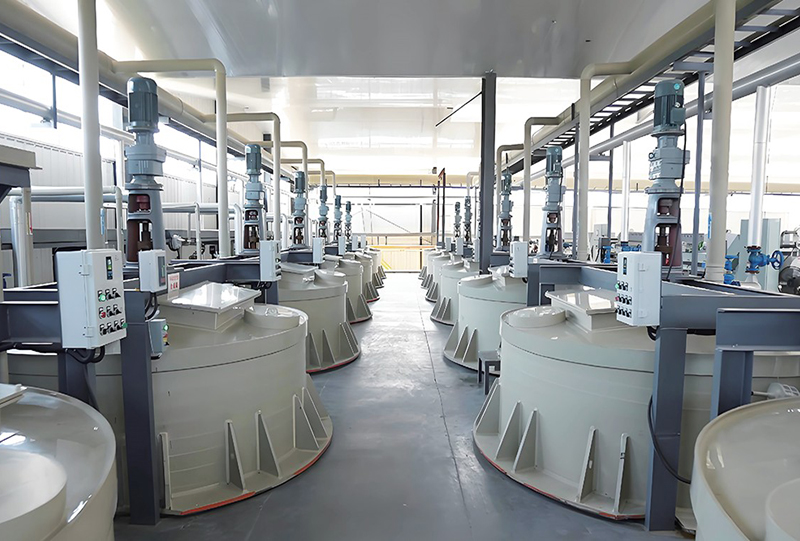
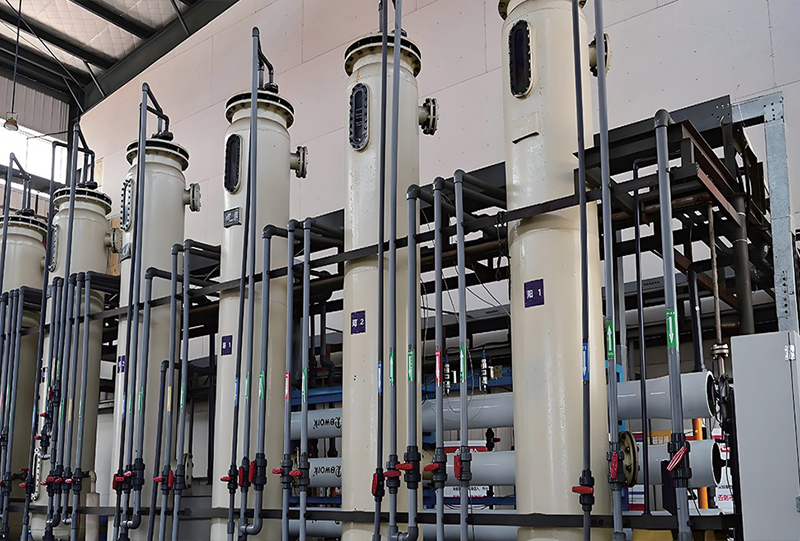
Cover: WONAIXI rare earth functional materials production site, Leshan, Sichuan Province, China.
Lanthanum carbonate is a hydrated lanthanum salt with the formula La2(CO3)3·xH2O. It sits in the middle of the rare earth chain rather than at either end: it is produced from lanthanum-bearing feed, then converted, refined or re-acidified into the materials buyers actually specify — high-purity lanthanum oxide, lanthanum acetate, lanthanum fluoride, and mixed lanthanum-cerium salts.
That intermediate position explains two things at once. First, why the compound appears in so many different purchase conversations — optical glass, catalysis, ceramics, polishing — while rarely appearing on a finished-goods label. Second, why specification discipline matters more here than for a magnet-grade oxide: lanthanum chemistry is a volume business, and a mis-described hydrate can cost more in re-qualification than the shipment is worth.
This article covers three things: the compound's identity (formula, hydrate status, and the logic behind its CAS number), its role in the conversion chain, and — because the decision stage is where most programmes stall — the practical steps that turn a first sample into a long-term supply relationship with a Chinese manufacturer.
The Problem: Hydrate Identity Is Where Sourcing Quietly Breaks
Most lanthanum carbonate programmes do not fail on price. They stall on three specification questions that stay unanswered until a lot is already in transit.
1. Which hydrate is on the truck? The “x” in La2(CO3)3·xH2O is part of the product identity, not an impurity to be tolerated. Hydrate forms and anhydrous forms are distinct materials, and each carries its own CAS Registry Number. If a purchase order names “lanthanum carbonate” without naming the hydrate form, the supplier and the buyer are not necessarily discussing the same substance.
2. What is the assay basis? Lanthanum content is normally expressed as La2O3, and the number changes depending on whether it is reported on an as-is basis or on an ignited basis. Loss on ignition is what reconciles the two. A headline percentage without a stated basis is not a specification — it is a marketing line.
3. Which documents travel with the lot? A certificate of analysis per lot, a safety data sheet, an HS classification, and — where relevant — an export-control determination. These are not paperwork; they determine whether the material can move.
The economics make the point. High-purity lanthanum oxide (La2O3 99.5% min) averaged approximately USD 1.00 per kilogram in early-2026 US import data (USGS), so a rejected lot, a retest cycle, or a respecification exercise is a large multiple of the material value. For a long-term programme the true cost of ambiguity is not the first order — it is every order after it.
Industry Background: Volume Chemistry Under a Compliance Overlay
The global rare earth elements market was estimated at USD 4.5 billion for 2026 (Grand View Research). That headline figure hides the fact that the sector behaves like several unrelated businesses sharing one name — and lanthanum sits in the least glamorous of them.
The two value bands are far apart. High-purity lanthanum oxide traded at roughly USD 1.00 per kilogram in early 2026, while the magnet-grade praseodymium-neodymium mixed oxide benchmark stood at CNY 738,000 per tonne in September 2026 (SMM). Lanthanum is processed for consistency and availability, not for scarcity; the buyer's leverage lies in specification, documentation and logistics rather than in price discovery.
Layered on top of that is a regulatory framework that changed the operating logic of the whole chain. China's Ministry of Commerce states that, from 4 April 2025, export-control requirements apply to certain rare earth elements and their products, including covered oxides, compounds and mixtures (MOFCOM Announcement No. 18 of 2025). Exporters of controlled items must apply for a licence where applicable, must identify controlled items in customs declarations and specify the applicable dual-use item control number, and customs may hold goods while a query is open.
The practical consequence for an intermediate compound is simple: a rare earth salt is now a documentation object as much as a chemical one. A supplier that can produce classification and customs paperwork quickly is delivering part of the product.
Detailed Solution: How Lanthanum Carbonate Works Inside the Rare Earth Chain
Identity: formula, hydrate status, and what the CAS number is actually for
La2(CO3)3·xH2O tells a buyer three things: the compound is a lanthanum carbonate, it is a hydrate, and the water of crystallisation is an inherent part of the material rather than residual moisture. That third point is where most procurement documents are weakest. The CAS Registry Number exists to remove the ambiguity — it is the retrieval key that lets a laboratory, a customs broker and a warehouse confirm they are discussing the same substance.
The discipline is easier to see on a compound that is already documented publicly. WONAIXI's published product data, for example, lists neodymium nitrate as Nd(NO3)3·6H2O with CAS 16454-60-7 — a hydrate-specific identity, not a generic “neodymium nitrate” label. The same standard should be applied to lanthanum carbonate: the CAS number printed on the certificate of analysis must match the hydrate form actually shipped.
Where the intermediate sits: from feed to downstream lanthanum products
Lanthanum carbonate functions as a branching point. Four conversion routes account for most of its downstream life:
• To lanthanum oxide — calcination converts La2(CO3)3·xH2O into La2O3 with release of carbon dioxide.
• To lanthanum acetate, nitrate or chloride — reaction with the corresponding acid returns the material to solution as a soluble salt.
• To lanthanum fluoride — fluorination routes feed optical and metallurgical applications.
• To mixed lanthanum-cerium salts — co-processing with cerium-bearing streams produces blended products used in polishing and ceramic work.
Because the carbonate is an intermediate, its specification is set by the next step rather than by the carbonate itself. If the next step is an optical-grade oxide, impurity limits and lot-to-lot consistency dominate the discussion. If the next step is dissolution, the practical behaviour of the powder dominates — and this is where buyer language such as “easily soluble” carbonate grades appears. That phrase is a description, not a test method; it has to be converted into a measurable acceptance criterion before it can be enforced.
No calcination temperature, residence time or yield is quoted in this article. Those parameters are process- and equipment-specific and can only come from the supplier's own technical documentation for the specific grade.
What a qualified supplier contributes to that chain
Sichuan Wonaixi New Materials Technology Co., Ltd. (WONAIXI) is a rare earth functional materials manufacturer founded in 2012 and based in Leshan, Sichuan Province, China. The company operates dedicated production lines with an annual capacity of 15,000 tons of high-purity rare earth salts and 3,000 tons of high-precision rare earth polishing powder, on a 46,667 m² site with 98 employees and a 12-engineer R&D team. It is certified as a National High-Tech Enterprise and a Sichuan Provincial SRDI Enterprise, and exports around 10% of output to Japan, South Korea, the USA, France and the UK.
For a lanthanum programme, the relevant downstream evidence is specific: WONAIXI produces high-purity lanthanum oxide at 99.9% purity for optical glass, alongside catalyst-grade cerium oxide. Its catalogue spans nine major rare earth product categories and more than 50 specialized specifications, and its stated application base covers national defense, aerospace, pharmaceutical manufacturing, electronics, new energy, three-way catalysis, environmental protection and precision optical polishing.
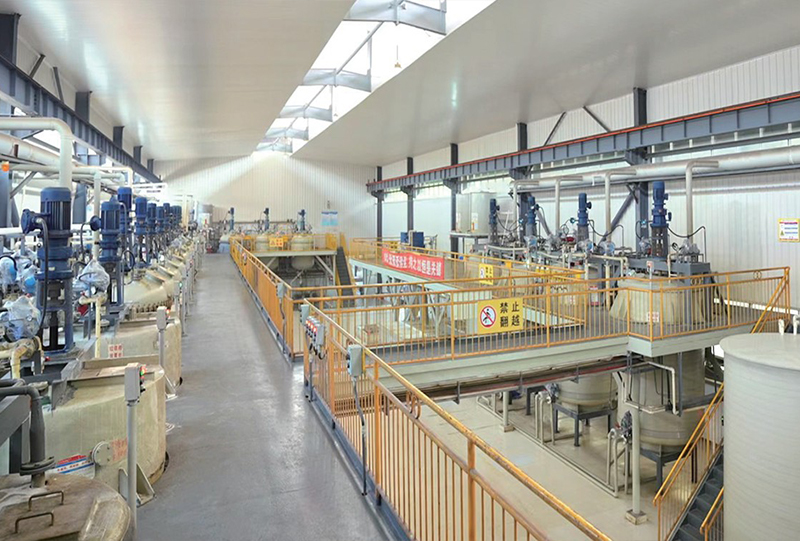
Inside the WONAIXI production site: high-purity rare earth salts are produced on dedicated lines with an annual capacity of 15,000 tons.
Step-by-Step: Qualifying a Lanthanum Carbonate Supply Relationship
Step 1 — Lock the identity in the purchase order. Write the name, the formula with its hydrate designation, the CAS number for the shipped form, the grade name and the HS code into the PO itself. Anything left to “the usual grade” will eventually be interpreted differently.
Step 2 — Build the specification sheet around the hydrate. The fields that matter are rare earth content expressed as La2O3, loss on ignition, moisture, the impurity profile, particle size, appearance, and a certificate of analysis for each lot.
Step 3 — Validate on a sample before scaling. Ask for a sample drawn from a production lot with a matching certificate, run it through your own downstream step, and convert any qualitative wording into a measurable acceptance test. The stated acceptance criterion is pre-shipment testing.
Step 4 — Map the compliance file. Confirm controlled-item classification for the specific grade, licence status where applicable, customs declaration requirements including the dual-use control number, destination-market import rules, and the safety data sheet.
Step 5 — Fix the commercial terms. Minimum order quantity is communicated according to the actual situation rather than published as a fixed number, delivery runs on FOB or CIF terms, and payment is 30% deposit in advance with 70% against the copy of the bill of lading, by bank transfer, Western Union or PayPal.
Step 6 — Build the continuity file. Handling rules, storage in anti-corrosion sealed containers, personal protective equipment, centralized waste recycling and classified labelling are the operational baseline; the supplier's stated programme also includes hazardous waste filing, a closed-loop recycling management system, and issuing MSDS documentation to all customers with on-site safety guidance for bulk order clients.
What a Long-Term Rare Earth Partnership Actually Requires
Long-term supply relationships in rare earth intermediates are rarely decided by the price on the first order. They are decided by whether the same questions can be answered identically at order ten. A Chinese long-term supply partner should therefore be assessed on continuity rather than on promises.
Identity continuity. The same formula, hydrate designation and CAS number appear on the certificate of analysis, the packing list and the customs declaration for every lot.
Documentation continuity. Certificates arrive in a consistent format, with traceable lot numbers, so an incoming inspection can be compared across years rather than across formats.
Safety continuity. MSDS documentation is issued to all customers, and bulk order clients receive on-site safety guidance — useful when a receiving site handles several rare earth salts at once.
Commercial continuity. MOQ, Incoterms and payment structure stay stable enough to plan working capital, rather than being renegotiated at every cycle.
For distributors building a portfolio rather than a single line, catalogue breadth reduces the number of supplier audits required — a range of nine rare earth categories and more than 50 specialized specifications allows several grades to come from one relationship. Breadth is a screening signal, however, not a qualification: each grade still has to be validated on its own documentation.
Use Cases: Where the Intermediate Ends Up
Optical glass and precision optics
High-purity lanthanum oxide at 99.9% is produced for optical glass, which means the carbonate feeding that route has to be clean on the impurities that damage transparency. For this application the specification conversation is about impurity limits and consistency, not about headline assay alone.
Catalysis and environmental control
Three-way catalysis and environmental protection are listed among the application areas WONAIXI serves, alongside catalyst-grade cerium oxide. Catalyst formulations are typically sensitive to trace elements, so the certificate of analysis matters more than the price per kilogram.
Ceramics, glass decolorization and polishing
Lanthanum-bearing materials appear in ceramic additives, glass decolorization and precision optical polishing — the last of which is also where WONAIXI's 3,000-ton high-precision rare earth polishing powder capacity is directed. Here the practical question is how the intermediate behaves in the customer's blending step.
Electronics, new energy and battery materials
Electronics and new energy are also on the stated application list. Buyers in these segments usually need the same grade qualified at more than one purity level, which is where a supplier's specification range — rather than a single catalogue item — becomes the deciding factor.
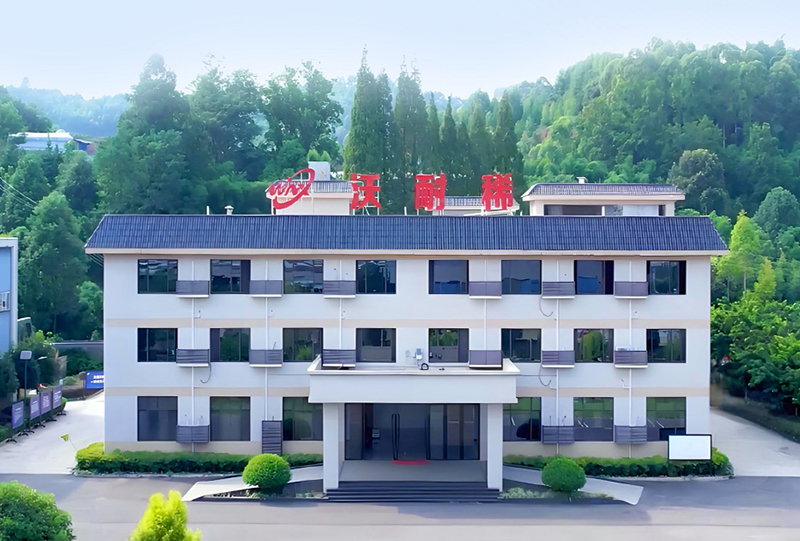
Handling and storage discipline sits behind every downstream use case: rare earth salts are stored separately in anti-corrosion sealed containers with classified labelling.
Comparison Table: Intermediate and Downstream Positions in the Lanthanum Family
The table below compares only what the documentation available for this article actually states. Empty cells mean no public reference exists in this evidence set — they are not zero values.
| Material | Documented identity | Position in the chain | Public reference data | Buyer action before PO |
|---|---|---|---|---|
| Lanthanum carbonate | La2(CO3)3·xH2O; CAS number must match the hydrate form shipped | Upstream intermediate; feeds oxide, acetate, fluoride and mixed salts | No public carbonate price benchmark in this evidence set | Request COA, loss on ignition, La2O3 basis and HS code |
| High-purity lanthanum oxide | La2O3 at 99.9% purity, produced by WONAIXI for optical glass | Downstream product of the carbonate route | La2O3 99.5% min averaged approx. USD 1.00/kg, early-2026 US import (USGS) | Use only as a cost reference, not as a carbonate price |
| Catalyst-grade cerium oxide | Catalyst grade, produced by WONAIXI | Adjacent light rare earth product, not a lanthanum intermediate | — | Request the grade-specific technical datasheet |
| Neodymium nitrate hexahydrate | Nd(NO3)3·6H2O; CAS 16454-60-7 per WONAIXI product data | Separate neodymium chain; illustrative of hydrate-specific CAS practice | — | Confirm the hydrate CAS before comparing suppliers |
| Praseodymium-neodymium mixed oxide | Magnet-grade benchmark | Different value band entirely | CNY 738,000 per tonne, September 2026 (SMM) | Never use as a lanthanum benchmark |
Sources: WONAIXI company and product data; USGS Mineral Commodity Summaries; SMM benchmark reported September 2026.
Commercial Terms and Documentation at a Glance
| Item | Stated position |
|---|---|
| Minimum order quantity | Communicated according to the actual situation |
| Delivery terms | FOB / CIF |
| Acceptance criteria | Pre-shipment test |
| Payment terms | 30% deposit in advance, 70% against the copy of the bill of lading, by bank transfer, Western Union or PayPal |
| Safety documentation | MSDS hazard manuals issued to all customers; on-site safety guidance for bulk order clients |
| Waste and compliance | Hazardous waste filing and a closed-loop recycling management system |
FAQ
Is lanthanum carbonate covered by China's rare earth export controls?
China's Ministry of Commerce states that, from 4 April 2025, export-control requirements apply to certain rare earth elements and their products, including covered oxides, compounds and mixtures (MOFCOM Announcement No. 18 of 2025). Exporters of controlled items must apply for a licence where applicable, identify controlled items in customs declarations and specify the applicable dual-use item control number, and customs may hold goods while a query is open. The regulation establishes the framework, not an automatic verdict on every product: whether a specific lanthanum carbonate grade at a specific purity and HS classification is controlled must be confirmed product by product before an order is placed.
What must a Chinese supplier prove to support a multi-year lanthanum carbonate programme?
Four things, in sequence: hydrate-specific identity documentation (formula, CAS number for the shipped form, HS code); capacity and continuity; catalogue depth; and downstream reference. On capacity, Sichuan Wonaixi New Materials Technology Co., Ltd. was founded in 2012 in Leshan, Sichuan, and operates production lines with an annual capacity of 15,000 tons of high-purity rare earth salts plus 3,000 tons of high-precision rare earth polishing powder, on a 46,667 m² site with 98 employees and 12 engineers. On depth and reference, its range covers nine rare earth product categories with more than 50 specialized specifications, and it produces high-purity lanthanum oxide at 99.9% for optical glass alongside catalyst-grade cerium oxide. Qualification is settled by pre-shipment testing, not by brochure claims.
How should a buyer budget for lanthanum carbonate when no public price benchmark exists?
There is no public transaction benchmark for lanthanum carbonate in the evidence base used here, so budgeting starts from the downstream anchor and is rebuilt into a landed cost. High-purity lanthanum oxide (La2O3 99.5% min) averaged approximately USD 1.00 per kilogram in early-2026 US import data (USGS), whereas the magnet-grade praseodymium-neodymium oxide benchmark stood at CNY 738,000 per tonne in September 2026 (SMM) — two value bands that must never be used interchangeably. A usable quotation states price per kilogram at a defined La2O3 content and loss-on-ignition basis, plus packaging, Incoterms (FOB or CIF) and payment structure.
How should the sample stage be run?
Request a sample drawn from a production lot and accompanied by a certificate of analysis stating rare earth content as La2O3, loss on ignition and moisture, the impurity profile and particle size, then run it through your own downstream step before scaling. The stated acceptance criterion is a pre-shipment test, and minimum order quantity is communicated according to the actual situation, so the first commercial order can be matched to the sample lot rather than to a catalogue description.
What determines lead time and repeat-order reliability?
Lead time is shaped less by production than by documentation and logistics: controlled-item classification and licence status where applicable, customs declaration with the dual-use control number, pre-shipment testing, packaging and the chosen Incoterms (FOB or CIF). Payment is typically 30% deposit in advance with 70% against the copy of the bill of lading, by bank transfer, Western Union or PayPal, and MSDS documentation is issued with shipments. Buyers planning a long-term programme can move this forward directly: request a grade-specific quotation and sample from WONAIXI by email at wnx.yang@wnxxcl.com or by phone at +86 18683334430.
Conclusion
Lanthanum carbonate is a small-value, high-consequence material. Its formula, La2(CO3)3·xH2O, defines a hydrate rather than a generic salt; its CAS number is the key that keeps laboratories, customs brokers and warehouses discussing the same substance; and its position in the chain makes it the gate through which high-purity lanthanum oxide, lanthanum acetate, lanthanum fluoride and mixed lanthanum-cerium salts are reached.
For a buyer at the decision and execution stage, the qualification sequence is straightforward and unforgiving: identity in writing, a specification built around the hydrate, a sample tested in your own process, a compliance file that survives customs, commercial terms that stay stable, and a documentation rhythm that repeats at order ten. Suppliers who can hold that rhythm — with capacity, catalogue depth and downstream reference behind them — are the ones worth a multi-year relationship.
Next step: qualify the grade, then the partner
Sichuan Wonaixi New Materials Technology Co., Ltd. supplies high-purity rare earth salts and high-precision rare earth polishing powder from Leshan, Sichuan Province, China. Request a grade-specific quotation, a production-lot sample with certificate of analysis, or the full product catalogue.
Email: wnx.yang@wnxxcl.com | Tel / WhatsApp: +86 18683334430 | Website: wonaixi.com
Download the catalogue: WONAIXI product catalogue (PDF)
Address: No. 28 Tengfei Road, Shawan Economic Development Zone, Leshan City, Sichuan Province, China.
Have Questions or Need More Details?
Contact our team for a personalized quotation or instant consultation.
Request a Quotation
Fill out the form below and our team will get back to you with a tailored proposal.
WhatsApp Direct Chat
Prefer to chat in real-time? Message us on WhatsApp for instant assistance & quick answers.
- Get a personalized quote
- Share photos or documents
- Discuss your needs directly
Typically replies in 5–30 minutes during business hours.