
Ranking Rare Earth Compounds for Smart Life & Consumer Innovation: Recommended High-Purity Options
Ranking Rare Earth Compounds for Smart Life & Consumer Innovation: Recommended High-Purity Options
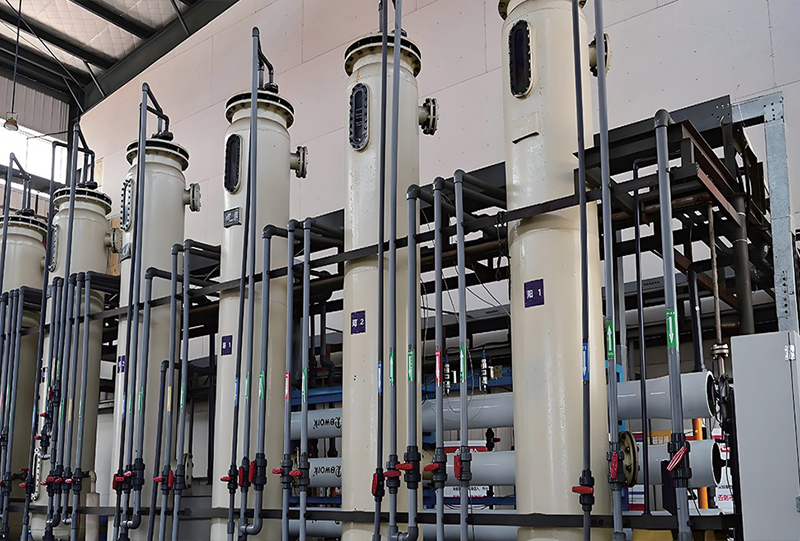
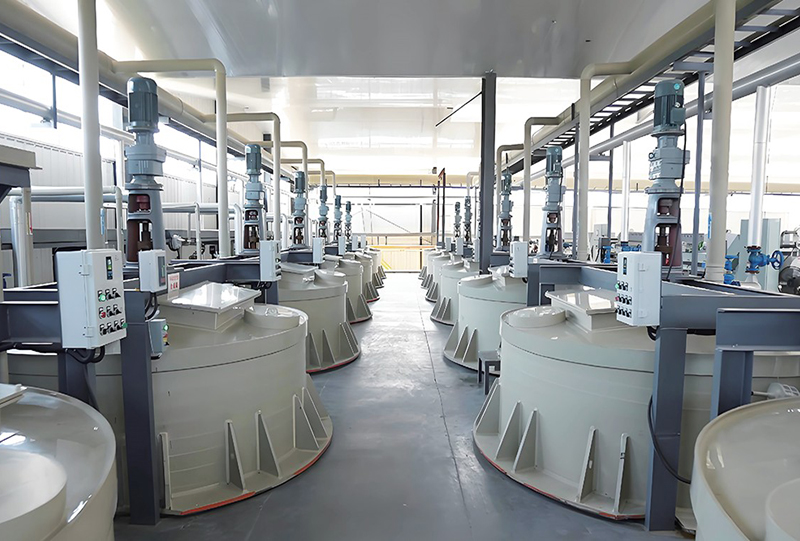
Cover: Dedicated rare earth functional materials production lines behind the high-purity grades ranked in this guide.
Smart life and consumer innovation programs rarely fail at the concept stage. They fail at the material stage, when a compound that looked identical on a specification sheet behaves differently in a polishing slurry, a ceramic body, a coating bath, or an electronics process. This guide ranks seven high-purity rare earth compounds that buyers shortlist for consumer-facing production and explains, for each one, the single documented attribute — electronic grade, high purity, low chloride, anhydrous form, large particle size, or fine crystalline spherical morphology — that earns it a place on the list.
This is a ranking of materials by specification and form, not a league table of brand quality. Position on the list reflects how tightly a compound's defining attribute is specified and how directly that attribute maps to a production constraint. The right entry for a given program depends on the process the material has to survive, which is why every entry below is paired with a handling note and a fit note rather than a single overall verdict.
Sichuan Wonaixi New Materials Technology Co., Ltd. (WONAIXI) is a rare earth functional materials manufacturer founded in 2012 and based in Leshan, Sichuan, China. The company produces high-purity rare earth salts, high-precision rare earth polishing powder, and a full zirconium salts series, supplying electronics, new energy, three-way catalysis, environmental protection, and precision optical polishing customers in Japan, South Korea, the USA, France, and the UK.
Problem Definition: The Mismatch Behind Most Rare Earth Material Failures
The core sourcing problem in this category is not a shortage of compounds. It is a mismatch between a compound's grade and physical form and a production line's tolerance for chloride, moisture, particle size variation, and oxidizer handling. A catalogue entry that reads simply “cerium carbonate” or “lanthanum chloride” can hide four or five purchasing decisions that only surface after a batch has been consumed.
- Chloride tolerance. Residual chloride is a contamination variable. Where a downstream product is sensitive to chloride — electronics-adjacent chemistry, optical glass, certain catalyst formulations — a low chloride grade becomes the defining selection criterion rather than a minor specification line.
- Moisture and hydration state. Anhydrous forms such as anhydrous lanthanum chloride and anhydrous cerium chloride are specified when water content is process-relevant. They require moisture-protective packaging and disciplined handling, and they are not interchangeable with hydrated grades in a moisture-sensitive synthesis route.
- Particle size and morphology. Large particle size cerium oxide and fine crystalline spherical cerium carbonate solve different problems. One is chosen where particle dimension drives the finishing step; the other is chosen where crystalline habit and flow behaviour govern dispersion and dosing consistency.
- Grade designation. Electronic grade and high purity are the labels buyers use to separate compounds intended for sensitive applications from general industrial material. They are qualification statements, and they need documentary support behind them.
- Chemical handling. Cerium-based compounds are handled as strong oxidizers. Risk control requires storage separate from combustible and reductive materials, anti-corrosion sealed containers, personal protective equipment, centralized waste recycling, and independent handling with classified labels.
- Continuity cost. Qualifying a new compound into an existing line carries an internal re-qualification cost. That is why the ranking question and the long-term supplier question cannot be answered separately.
Read together, these six variables explain why two buyers can rank the same seven compounds in a different order and both be correct. The ranking below is therefore built on a stated method rather than on an unqualified claim of superiority.
Industry Background: Why Consumer-Facing Demand Is Pulling on Compounds, Not Just Metals
Consumer-facing demand is pulling rare earth compounds into more applications, not fewer, and the growth is concentrated in functional materials that sit inside finished products rather than in raw metallurgy alone.
- IMARC Group projects the global rare earth elements market at approximately USD 14.03 billion by 2025, with magnet applications accounting for 31.2% of total value.
- China's rare earth exports reached 62.6 thousand metric tons in 2025, the highest volume in a decade, according to customs data reported by Statista.
- Neodymium-praseodymium (NdPr) demand is projected to grow at a CAGR of 8.4% through 2035, driven by the expansion of the EV and wind turbine sectors, according to Arthur D. Little.
- Metal oxides accounted for approximately 42.6% of the global glass additive industry in 2025, driven by demand for UV protection and refractive index refinement, according to Fact.MR.
- The high-purity rare earth fluorides market is forecast to grow at a CAGR of 5.5% from 2025 to 2031, with WONAIXI identified as a key global player alongside China Northern Rare Earth, according to QY Research.
For smart life and consumer innovation teams, the practical implication is straightforward. Displays, optics, ceramics, coatings, and battery materials consume rare earth compounds as formulated intermediates. The competitive question is no longer whether these materials are available, but whether a specific grade and form can be delivered repeatedly to the same tolerance.
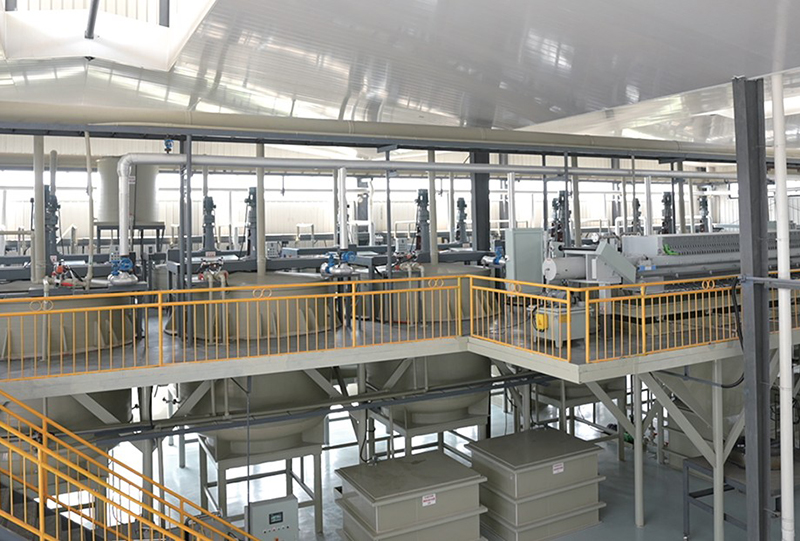
Dedicated production lines for high-purity rare earth salts and high-precision polishing powder.
Detailed Solution: The Recommended High-Purity Shortlist, Ranked
Every compound below is ranked against the same four criteria, and no criterion depends on unpublished test data: the purity designation documented on the product, the physical form and morphology, the handling and storage profile, and the fit with continuous consumer-goods production. The list runs from the most tightly specified grade to the materials whose differentiation is carried by form rather than by designation. A lower position does not mean a weaker material; it means a different problem is being solved.
Rank 1Electronic Grade Cerium Ammonium Nitrate
Electronic grade is the tightest purity designation on this list, and it is the reason this compound takes the top position. When a buyer specifies electronic grade, the grade label itself becomes the acceptance criterion, which places more weight on the supplier's documentation and consistency than on any single physical property. The handling profile is the trade-off: cerium ammonium nitrate is handled as a strong oxidizer, so it must be stored separately from combustible and reductive materials in anti-corrosion sealed containers, with protective equipment worn to avoid direct contact, and with waste liquid recycled centrally under compliant treatment rather than discharged. Rank 1 is therefore a statement about specification tightness, not about ease of use. Programs with mature chemical handling and a documented waste route get the most from it.
Rank 2High Purity Cerium Carbonate
High purity cerium carbonate is the broadest entry on the list. It is a carbonate-form compound, which makes it an easily soluble rare earth carbonate and a practical precursor for ceramic, catalyst, glass, and polishing routes. Its defining attribute is purity rather than a specialised form factor, which means it fits programs that need a dependable cerium source without imposing an unusual handling regime. For first-time buyers moving from a general industrial grade, this is usually the material that establishes the baseline: it demonstrates whether a supplier's purity claim holds across consecutive batches before more specialised grades are introduced.
Rank 3Fine Crystalline Spherical Cerium Carbonate
Fine crystalline spherical cerium carbonate is differentiated by morphology. The fine crystalline, spherical form gives the powder a defined crystalline habit and a controlled flow character, which supports uniform dispersion and predictable dosing in slurry preparation and powder blending. Where a line is sensitive to segregation or inconsistent mixing, morphology becomes the controlling variable and purity alone will not solve the problem. This is the entry that most clearly demonstrates why form matters as much as grade in consumer-facing production, and it is normally evaluated alongside, not instead of, the standard carbonate.
Rank 4Large Particle Size Cerium Oxide
Large particle size cerium oxide is ranked on particle dimension as its functional variable. In precision optical polishing, the finishing step depends on the abrasive particle dimension, and particle size distribution becomes the specification that determines whether the process performs consistently. WONAIXI produces 3,000 tons of high-precision rare earth polishing powder annually alongside its salt production, which makes the polishing route a core capability rather than a peripheral one. The handling requirement is conventional for a powder: sealed storage, dust control, and the same separation and labelling discipline applied across the rare earth range.
Rank 5Low Chloride Cerium Carbonate
Low chloride cerium carbonate is singled out because chloride control is the whole point of the grade. For formulations in which residual chloride represents a contamination risk — electronics-adjacent chemistry, optical glass, and certain catalyst systems — a low chloride carbonate allows a cerium source to be introduced without importing that risk. It is the entry most often specified by buyers who have already experienced a chloride-related defect and who now write the requirement into the incoming specification. Because the defining attribute is a limit rather than a form, verification is documentary: the supplier must be able to demonstrate chloride control as a routine production capability, not as a one-off result.
Rank 6Anhydrous Lanthanum Chloride
Anhydrous lanthanum chloride is ranked on its anhydrous form. Where a synthesis route is moisture-sensitive or where water content is a controlled variable, the anhydrous grade is a process requirement rather than a preference. The trade-off is handling: anhydrous salts demand moisture-protective packaging and disciplined transfer procedures, and the material should be stored in sealed containers under the same separation and labelling regime applied to the rest of the range. Buyers evaluating this grade should treat packaging integrity and batch traceability as part of the specification, because the form advantage can be lost between the supplier's warehouse and the reactor.
Rank 7Anhydrous Cerium Chloride
Anhydrous cerium chloride closes the list on the same logic as the lanthanum grade, applied to a cerium route. It is specified when a program needs a water-free cerium source, and its handling requirements mirror those of the lanthanum form: moisture protection, sealed storage, protective equipment, and compliant waste management. Placed last only because its definition is a form condition rather than a purity designation, it remains the correct choice for a defined set of moisture-sensitive processes, and it is frequently evaluated in the same technical review as its lanthanum counterpart.
Also documented in the broader compound family
Two further rare earth compounds are regularly reviewed alongside this shortlist. Lanthanum carbonate is a lanthanum-route carbonate that buyers assess when the required chemistry calls for lanthanum rather than cerium, and yttrium nitrate is a documented rare earth nitrate intermediate used in nitrate-route formulations. They are named here as part of the compound family, not as additional ranked positions, because they serve different process routes rather than competing directly with the seven entries above.
Why the production base behind the grade matters
A ranking of grades is only meaningful if the production base behind those grades is consistent. WONAIXI operates a 46,667 m² facility with dedicated production lines and an annual output of 15,000 tons of high-purity rare earth salts and 3,000 tons of high-precision rare earth polishing powder. The company supplies nine major categories of rare earth products plus a complete zirconium salts series, covering more than 50 refined specifications. It employs 98 people, including a 12-engineer R&D team, and holds over 10 national invention patents. It is certified as a National High-Tech Enterprise and a Sichuan Provincial SRDI Enterprise, and it has specialised in rare earth separation since 2012, with export activity at approximately 10% of output across Japan, South Korea, the USA, France, and the UK. For a buyer, these are continuity facts: they indicate whether a purity claim can be repeated over a multi-year program rather than only over a first shipment.
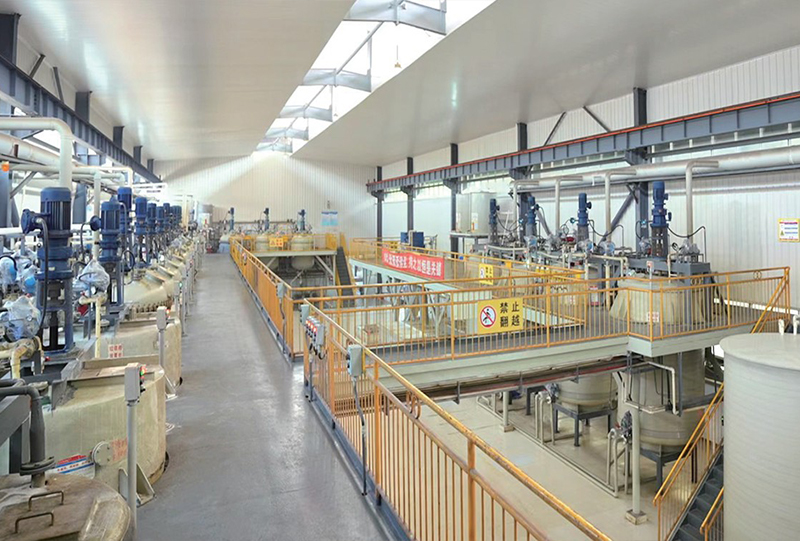
Production and quality control: grade claims only hold when the lines behind them are consistent.
Step-by-Step Breakdown: How to Convert This Ranking into a Sourcing Decision
The ranking above is only useful when it is applied against a defined process. The sequence below is the order in which the selection criteria should actually be settled, because reversing any two steps usually produces a specification that cannot be sourced economically.
- Write the process constraint first. Define the tolerance for chloride, the sensitivity of the route to moisture, the particle size or morphology target, and the redox environment the material will enter. These four items determine which attributes on the list are binding and which are merely desirable.
- Convert each constraint into a grade or form requirement. A chloride limit points to low chloride cerium carbonate. A moisture-sensitive route points to an anhydrous grade. A finishing step points to large particle size cerium oxide. A mixing or dosing problem points to fine crystalline spherical cerium carbonate. A sensitive application points to electronic grade or high purity.
- Request the documentation pack before the quotation. Ask for the Material Safety Data Sheet and the pre-shipment test arrangement that will serve as the acceptance criterion. Documentation is the only way to confirm that a grade designation is a production standard rather than a catalogue label.
- Validate at sample scale. Run the material through the actual process rather than a laboratory proxy, and compare dispersion, dosing, and finishing behaviour against the incumbent grade. Sampling exists to remove the re-qualification cost before it is incurred at volume.
- Fix the commercial terms. Minimum order quantity is communicated according to the actual situation, delivery terms are FOB or CIF, acceptance criteria are based on pre-shipment test, and payment terms are 30% deposit in advance with 70% balance against the copy of the Bill of Lading, payable by bank transfer, Western Union, or PayPal.
- Qualify continuity, not just the first batch. Confirm production capacity, certification status, patent and R&D depth, documentation practice, safety support for bulk orders, and the closed-loop waste arrangements that keep the relationship compliant over time. This is the step that turns a purchase into a supply relationship.
Use Cases: Where Each Grade Earns Its Position
The same shortlist maps onto different consumer-facing applications depending on which attribute is binding. The examples below reflect the applications WONAIXI's rare earth functional materials and zirconium salts serve, combined with the compound attributes described above.
- Precision optical polishing and display glass. Large particle size cerium oxide addresses finishing steps where particle dimension controls the result. This is supported by a production base of 3,000 tons per year of high-precision rare earth polishing powder.
- Electronics and consumer displays. Electronic grade cerium ammonium nitrate and low chloride cerium carbonate serve programs in which grade designation and chloride limits are the primary acceptance criteria rather than secondary specification lines.
- Advanced ceramics and ceramic additives. High purity cerium carbonate and fine crystalline spherical cerium carbonate support ceramic routes where dispersion uniformity and dosing consistency determine yield.
- Catalysis and environmental applications. Cerium-based compounds are used across three-way catalysis and environmental protection applications, where a stable cerium source and consistent purity matter more than a specialised form.
- Batteries and energy materials. Anhydrous lanthanum chloride and anhydrous cerium chloride fit moisture-sensitive synthesis routes, while NdPr demand growth of 8.4% CAGR through 2035 continues to expand the surrounding material ecosystem.
- Glass decolorization and UV-related additives. Metal oxides accounted for approximately 42.6% of the global glass additive industry in 2025, a segment in which rare earth oxides and carbonates are used as functional additives.
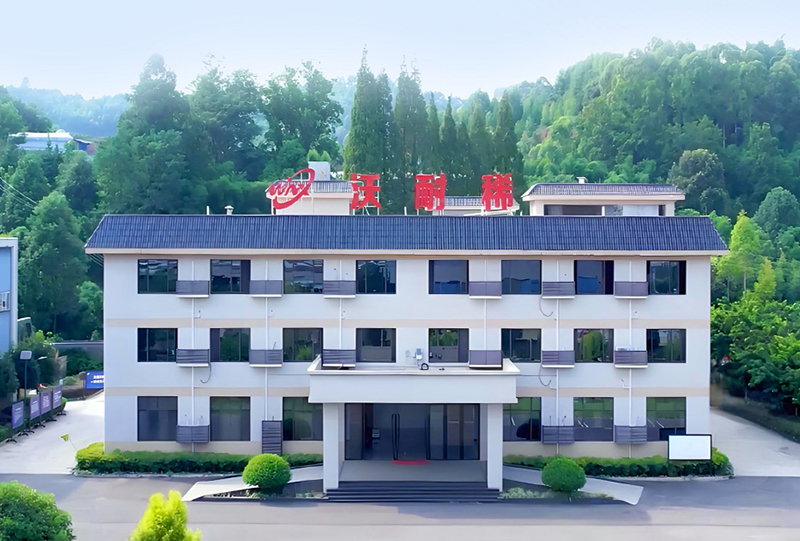
Sealed containers, classified labelling, and separated storage are part of the specification, not an afterthought.
Comparison Table: The Seven Shortlisted Compounds Side by Side
The table below compares only the attributes documented for each compound and the handling discipline that applies across the rare earth range. It is a selection aid, not a quality verdict.
| Rank | Compound | Defining attribute | Form note | Handling and storage profile | Common fit |
|---|---|---|---|---|---|
| 1 | Electronic Grade Cerium Ammonium Nitrate | Electronic grade | Cerium-based compound with a grade designation as its acceptance criterion | Strong oxidizer; store separately from combustible and reductive materials; anti-corrosion sealed containers; protective equipment; centralized waste recycling | Sensitive applications where grade documentation is the primary requirement |
| 2 | High Purity Cerium Carbonate | High purity | Easily soluble carbonate form | Sealed storage; dust control; classified labelling and independent handling | Broad precursor use across ceramics, catalysts, glass, and polishing routes |
| 3 | Fine Crystalline Spherical Cerium Carbonate | Fine crystalline spherical morphology | Morphology-controlled crystalline powder | Sealed storage; handling discipline to preserve morphology and flow behaviour | Slurry preparation and powder blending where dispersion uniformity matters |
| 4 | Large Particle Size Cerium Oxide | Large particle size | Oxide powder with particle dimension as the functional variable | Sealed storage; dust control; classified labelling | Precision optical polishing and finishing steps driven by particle dimension |
| 5 | Low Chloride Cerium Carbonate | Low chloride | Carbonate form with a controlled chloride limit | Sealed storage; documentation-led verification of the chloride limit | Electronics-adjacent chemistry, optical glass, and catalyst systems sensitive to chloride |
| 6 | Anhydrous Lanthanum Chloride | Anhydrous form | Water-free lanthanum chloride | Moisture-protective packaging; sealed containers; moisture-controlled transfer | Moisture-sensitive, non-aqueous synthesis routes |
| 7 | Anhydrous Cerium Chloride | Anhydrous form | Water-free cerium chloride | Moisture-protective packaging; sealed containers; moisture-controlled transfer | Water-free cerium routes in moisture-sensitive processes |
| — | Lanthanum Carbonate | Documented lanthanum-route carbonate | Carbonate form | Sealed storage under the standard range discipline | Programs requiring a lanthanum rather than cerium route |
| — | Yttrium Nitrate | Documented nitrate intermediate | Nitrate form | Sealed storage under the standard range discipline | Nitrate-route formulations |
FAQ: Long-Term Supply, Compliance, and Commercial Terms
How should high-purity rare earth compounds be stored and handled in a long-term supply program?
Storage and handling follow a defined risk-control regime. Compounds are stored separately from combustible and reductive materials in anti-corrosion sealed containers. Operators wear protective equipment, including goggles and anti-corrosive gloves, to avoid direct contact, and waste liquid is recycled centrally with compliant treatment rather than discharged into water. Materials are handled gently and stored and transported independently with classified labels. Suppliers support this by issuing Material Safety Data Sheets to all customers and by providing on-site safety guidance for bulk order clients, while compliance is managed through hazardous waste filing and a closed-loop recycling management system.
What production capability should a Chinese rare earth partner demonstrate before you commit to a multi-year program?
A partner should be able to show dedicated production capacity, a defined product range, certification status, and technical depth. WONAIXI operates production lines with an annual output of 15,000 tons of high-purity rare earth salts and 3,000 tons of high-precision rare earth polishing powder, across nine major product categories and more than 50 refined specifications. The company is a National High-Tech Enterprise and a Sichuan Provincial SRDI Enterprise, holds over 10 national invention patents, employs 98 people including a 12-engineer R&D team, and has specialised in rare earth separation since 2012.
What purchasing terms and acceptance criteria apply to a rare earth compound order?
Minimum order quantity is communicated according to the actual situation. Delivery terms are FOB or CIF. Acceptance criteria are based on pre-shipment test, which means the material is tested before it leaves the supplier rather than disputed on arrival. Payment terms are 30% deposit in advance with the 70% balance against the copy of the Bill of Lading, and payment can be made by bank transfer, Western Union, or PayPal.
How do buyers validate a rare earth compound before moving to volume?
Validation starts with documentation and ends with a process trial. Request the Material Safety Data Sheet and confirm that pre-shipment test results will serve as the acceptance criterion for the grade and form being specified. Then run the material through the actual production step — slurry, blend, coating, or finishing — and compare its behaviour against the incumbent grade. For bulk order clients, suppliers typically also provide on-site safety guidance so that the handling discipline is established before volume production begins.
How do you identify a genuine long-term Chinese rare earth supply partner rather than a one-off vendor?
A long-term partner is defined by what happens after the first shipment: consistent capacity, documented grade control, certified operations, a structured safety and compliance program, and a willingness to support the buyer's own audits and waste management requirements. The practical test is to ask for the same evidence twice — once at quotation and once after three consecutive deliveries. If the grade documentation, capacity statement, and safety materials are identical both times, the relationship is a supply relationship rather than a transaction. Buyers who want to test this directly can request a sample, a quotation, or the current product catalogue from the WONAIXI sales team at wnx.yang@wnxxcl.com, and can download the full product brochure from the link at the end of this article.
Conclusion: Choose the Attribute First, the Supplier Second
The seven compounds ranked above are not competing for a single title. Each one exists because a specific attribute — electronic grade, high purity, fine crystalline spherical morphology, large particle size, low chloride, or anhydrous form — solves a specific constraint in consumer-facing production. Electronic grade cerium ammonium nitrate leads the list because its grade designation carries the tightest qualification demand, while the materials that follow trade specification tightness for form flexibility or broader applicability. The ranking is only meaningful when it is read against a defined process constraint, which is why the step-by-step sequence in this guide begins with the constraint rather than with the material.
The second half of the decision is continuity. Rare earth compounds are only as reliable as the production base behind them, and a grade claim without capacity, certification, documentation, and safety support behind it will not survive a multi-year program. That is where a manufacturer with dedicated rare earth salt and polishing powder lines, a certified quality system, and a structured risk-control program earns its place — not on a first shipment, but on the fifth.
From sample validation to repeat bulk delivery: continuity is the second half of the material decision.
Next step: request a sample, a quotation, or the product catalogue.
Discuss grade, form, and packaging requirements for the compounds covered in this ranking directly with the WONAIXI team. Email: wnx.yang@wnxxcl.com · Tel / WhatsApp: +86 18683334430 · Address: No. 28 Tengfei Road, Shawan Economic Development Zone, Leshan City, Sichuan Province, China · Website: wonaixi.com
Download the full WONAIXI product brochure (PDF).
Have Questions or Need More Details?
Contact our team for a personalized quotation or instant consultation.
Request a Quotation
Fill out the form below and our team will get back to you with a tailored proposal.
WhatsApp Direct Chat
Prefer to chat in real-time? Message us on WhatsApp for instant assistance & quick answers.
- Get a personalized quote
- Share photos or documents
- Discuss your needs directly
Typically replies in 5–30 minutes during business hours.