
Rare Earth Basics: Lanthanum Carbonate, Yttrium Nitrate, Cerium Fluoride
Rare earth compounds are the forms in which rare earth elements are actually bought, shipped, tested and dosed. An element name — lanthanum, yttrium, cerium — does not identify a purchasable material. Three compounds make the category concrete: lanthanum carbonate, La2(CO3)3·xH2O, CAS 54451-24-0, molecular weight 457.85 g/mol on an anhydrous basis; yttrium nitrate, Y(NO3)3·6H2O, CAS 13494-98-9, molecular weight 382.91 g/mol, supplied as the hexahydrate; and cerium fluoride, a fluoride-family product listed in the WONAIXI rare earth catalogue.
WONAIXI (Sichuan Wonaixi New Materials Technology Co., Ltd.) is a manufacturer founded in 2012 in Leshan, Sichuan, producing high-purity rare earth salts and high-precision rare earth polishing powder. The company reports nine rare earth product categories and more than 50 refined specifications.
This guide defines the three anion families behind those names, explains what the hydrate notation changes in a purchase order, and sets out the checks that turn a compound label into a specification a supplier can be held to — the part that matters when the material feeds a catalyst, a ceramic body, a glass melt or a consumer-facing component.
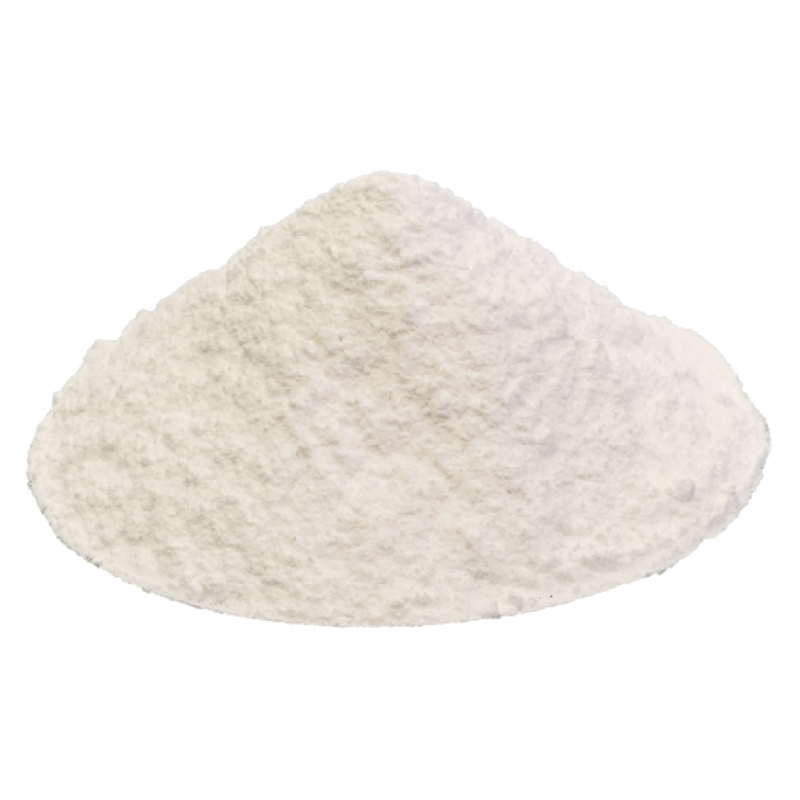
Cover: lanthanum carbonate, the carbonate-family anchor compound in this guide.
Why a compound name is not yet a specification
A purchase order that says “lanthanum carbonate” fixes one element and one anion and leaves at least four variables open: hydrate water, assay basis, impurity window, and physical form or packaging. Two lots can carry the same name and behave differently in the same process — one dissolves to a clear solution, the next leaves a residue; one weighs out to the calculated rare earth dose, the next does not.
The three anion families differ in ways that are chemically basic and commercially decisive:
- Carbonates carry the CO3(2−) anion and are generally low-solubility solids handled as powders. Hydrate water is common, and in lanthanum carbonate it is variable.
- Nitrates carry NO3(−) and are water-soluble; they are normally supplied as hydrates, so water of crystallisation is part of the delivered mass.
- Fluorides carry F(−). In a fluoride grade the anion is part of the product chemistry, which makes rare earth content, fluorine content and residual oxygen specification items rather than assumptions.
For a consumer-innovation programme the compound is rarely the finished article. It is the dose of a functional element delivered into an intermediate. Reproducibility of that dose depends on the identity layer above, which is why basic compound identity is a procurement issue and not a chemistry footnote.
Where these compounds sit in smart life and consumer innovation
Rare earth compounds enter consumer supply chains through catalysts, ceramics, optical glass, phosphors, polishing and new energy applications. WONAIXI’s own profile reflects that breadth: a 46,667 m² site, 98 employees including a 12-engineer R&D team, annual capacity of 15,000 tons of high-purity rare earth salts and 3,000 tons of high-precision rare earth polishing powder, with export markets that include Japan, South Korea, the United States, France, Italy, Germany, Spain, India, Thailand, Australia and Pakistan.
The practical change for buyers is documentary rather than rhetorical. A supplier is now qualified on three artefacts — a datasheet that states formula and CAS, a lot-level certificate of analysis that states assay basis and impurities, and a sample result from your own process. The product name is the weakest of the four items, because a name cannot be tested.
Lanthanum carbonate: La2(CO3)3·xH2O
Lanthanum carbonate is documented as La2(CO3)3·xH2O, CAS 54451-24-0, with a molecular weight of 457.85 g/mol on an anhydrous basis. Two details in that line carry commercial weight.
The x in xH2O is variable. Hydrate water is not pinned to a single stoichiometric value, so the rare earth fraction inside a delivered kilogram can differ between lots even when both are sold as lanthanum carbonate. Second, the quoted 457.85 g/mol is an anhydrous-basis figure: it describes the La2(CO3)3 framework, not the mass of the hydrate as shipped.
Carbonate chemistry adds a process note. Rare earth carbonates are generally low-solubility solids handled as powders or dispersions; they dissolve in acid and convert to the oxide on calcination. If a formulation is written against an oxide specification, that conversion step and its yield belong in your process validation, not in the purchase order. WONAIXI separately reports high-purity lanthanum oxide at 99.9% for optical glass — a different catalogue item with its own specification, which should not be assumed interchangeable with the carbonate on the strength of the element name alone.
Yttrium nitrate hexahydrate: Y(NO3)3·6H2O
Yttrium nitrate is documented as Y(NO3)3·6H2O, CAS 13494-98-9, molecular weight 382.91 g/mol, and is supplied as the hexahydrate. The company states that the product is intended for the chemical industry, with typical uses including ternary catalysts and ceramic materials.
The fixed hydrate is the useful part. Six water molecules per formula unit mean the ratio between yttrium and delivered mass is defined by the formula, so a solution concentration can be calculated from the assay instead of discovered by trial. Nitrates are water-soluble, and rare earth nitrates are generally hygroscopic, so packaging and storage conditions belong in the specification alongside purity.
Two process points follow. On heating, nitrates decompose and release nitrogen oxides, so any calcination step needs off-gas handling designed for that. And the two documented uses weight the specification differently: catalyst work generally puts a premium on a controlled impurity profile, while ceramic work depends on consistent solution concentration and predictable residues after firing. One grade rarely serves both without a written compromise.
Cerium fluoride: identity that comes from the datasheet
Cerium fluoride belongs to the fluoride family and is listed among WONAIXI’s rare earth products. It is specified differently from a carbonate or a nitrate because the anion is part of the product chemistry: rare earth content, fluorine content, residual oxygen or oxide, moisture and particle size all describe the material, and changing any one of them changes what is actually being dosed.
For that reason, the formula, CAS number and assay of a cerium fluoride grade should be taken from the supplier’s current datasheet and lot certificate of analysis rather than from a generic label. What can be fixed before a quotation is requested is the checklist: rare earth content and its basis, fluorine content, residual oxygen or oxide level, moisture, particle size distribution, physical form, packaging and sealing, and the CAS as stated for that specific grade.
A parameter missing from a datasheet is a question to put to the supplier, not evidence that the grade cannot meet the requirement. The distinction matters, because “not stated” is a documentation gap while “not capable” is a technical conclusion that requires test data.
Hydrate forms: what the ·xH2O changes in an order
Water of crystallisation is delivered mass, but it is not functional rare earth. That single sentence explains most hydrate disputes.
Yttrium nitrate is the simple case: the hexahydrate carries six water molecules per formula unit, so a kilogram of the hexahydrate necessarily contains less yttrium than a kilogram of the anhydrous salt would. When a formulation is written on an anhydrous basis, the correction has to happen at weighing, and the correction factor has to come from the batch assay — not from the formula alone.
Lanthanum carbonate is the harder case: x is variable, so there is no single conversion factor. The 457.85 g/mol figure is an anhydrous-basis value and cannot be used as the molar mass of the delivered hydrate. Two lots from the same supplier can require different weighing corrections, which is why a lot-level assay belongs with every delivery.
Four habits prevent most problems: write the assay basis — anhydrous or as-is — into the specification; require it on the certificate of analysis; store hygroscopic nitrate grades sealed and re-check moisture on receipt if the process is moisture-sensitive; and never compare two quotations per kilogram until both are normalised to the same basis.
From catalogue item to custom grade: how OEM scope works
WONAIXI offers OEM and ODM production services, with customisation covering indicators, contents, specifications, purity and packaging. That scope sits on a fixed capability base: 15,000 tons of high-purity rare earth salts and 3,000 tons of polishing powder per year, 100% testing, a stated lead time of 30–45 days, MOQ discussed against the actual requirement, FOB or CIF delivery terms, pre-shipment test as the acceptance criterion, and payment of 30% in advance with 70% against the copy of the bill of lading.
Quality management is documented under ISO 9001, certificate 06526Q01354R101, issued 2026-06-01 and valid to 2029-05-31 by the CFL Certification Center, against GB/T19001-2016/ISO9001:2015, with a scope covering the manufacturing and sales of electronic special rare earth functional materials (cerium salts, lanthanum oxide) for the EU, US, Middle East and Southeast Asia markets.
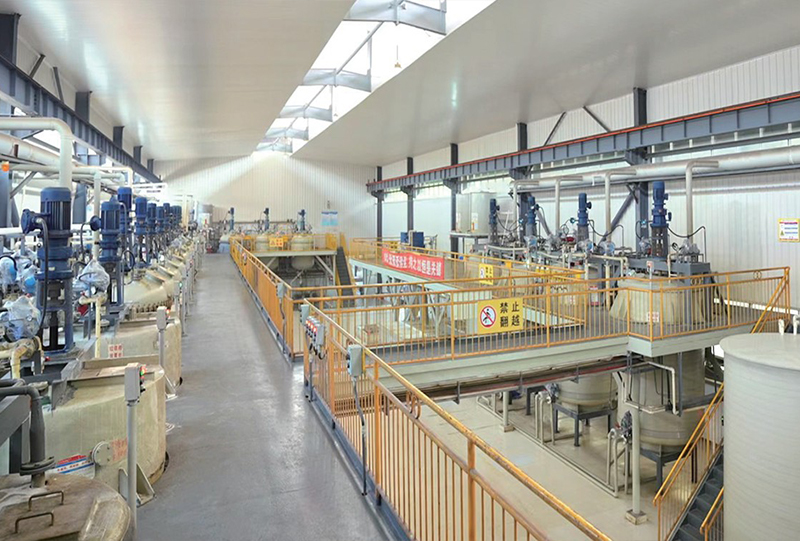
Production base: high-purity rare earth salts and polishing powder are manufactured on the same site that handles OEM grades.
What OEM scope does not do is worth stating plainly. It does not change the regulatory classification of an element, it does not replace application-level qualification with your own sample data, and it does not convert a catalogue item into a battery-grade material without specification and test evidence. Customisation controls what is written; an unwritten requirement cannot be controlled, however flexible the production line.
Step by step: specifying and verifying a compound order
- Name the function, not only the element. State what the compound must do — deliver a rare earth dose into a catalyst washcoat, a ceramic body, a glass melt or a fluoride-host chemistry — before naming the product.
- Fix the anion family and confirm the identity. Lanthanum carbonate: La2(CO3)3·xH2O, CAS 54451-24-0. Yttrium nitrate: Y(NO3)3·6H2O, CAS 13494-98-9. Cerium fluoride: CAS and assay as stated on the supplier datasheet for the grade quoted.
- State the assay basis. Anhydrous or as-is, with the analytical method. This one line prevents most weighing disputes.
- Set the impurity window your process actually needs. Chloride is a controllable dimension across the portfolio — the catalogue includes a low-chloride cerium carbonate grade alongside standard carbonate grades — and the same specifying logic applies to a lanthanum grade or a fluoride grade.
- Fix physical form and packaging. Powder grade, particle size range, inner sealing and outer packaging all sit inside the customisation scope.
- Request the lot certificate of analysis and pre-shipment test record. Acceptance is based on a pre-shipment test, and the company states 100% testing.
- Qualify with a sample in your own process. Dissolution behaviour, calcination residue and moisture pickup are application results, not catalogue data.
- Confirm commercial and compliance terms in writing. MOQ, Incoterm, payment schedule, the 30–45 day lead time, and export documentation for China-origin shipments.
Use cases: where the three compounds enter a product chain
Documented applications are narrower than the category and should be read that way. Yttrium nitrate is stated by the company to be intended for the chemical industry, with typical uses including ternary catalysts and ceramic materials. Within the wider catalogue, some rare earth products are designed for optical coating material and spray coating material production scenarios, as well as for catalyst production — a statement of product design intent for those scenarios, not a claim that every compound in this article is qualified for them.
Lanthanum carbonate enters the chain as a carbonate-family feedstock with a variable hydrate, which is why it is usually specified with an assay basis and a moisture limit. Cerium fluoride enters as a fluoride grade whose fit depends on rare earth content, fluorine content and residual oxygen. In all three cases the buyer’s own qualification test — not the product name — decides whether the material stays in the specification.
Comparison table: three compounds, three specification profiles
| Specification item | Lanthanum carbonate | Yttrium nitrate | Cerium fluoride |
|---|---|---|---|
| Documented formula | La2(CO3)3·xH2O | Y(NO3)3·6H2O | Take from the grade datasheet |
| CAS number | 54451-24-0 | 13494-98-9 | Take from the grade datasheet |
| Molecular weight | 457.85 g/mol, anhydrous basis | 382.91 g/mol; supplied as hexahydrate | Take from the grade datasheet |
| Hydrate status | Variable hydrate (xH2O) | Hexahydrate, six H2O per formula unit | Confirm hydrate or anhydrous status |
| Documented application notes | Carbonate-family feedstock; the related oxide grade is reported for optical glass | Chemical industry; ternary catalysts; ceramic materials | Fluoride-family catalogue item; end-use fit to be confirmed |
| First checks before ordering | Assay basis, moisture or loss on ignition, chloride, particle size | Assay basis, insolubles, sealing, solution concentration basis | Rare earth content, fluorine content, residual oxygen, moisture, particle size |
Only the lanthanum carbonate and yttrium nitrate identity data above are documented values supplied for this article; fluoride-grade parameters vary by product grade and must be confirmed on the quoted datasheet and certificate of analysis.
Frequently asked questions
Does exporting these compounds from China require special documentation?
Some rare earth products are subject to Chinese export-control requirements. China’s Ministry of Commerce announcement No. 18 of 2025, effective 4 April 2025, applies licensing and declaration requirements to specified rare earth elements and products, including covered oxides, compounds and mixtures; exporters must identify controlled items in customs declarations and provide the applicable dual-use control number where required, and customs may hold goods during a query. The announcement establishes a framework — it does not by itself prove that a particular lanthanum carbonate, yttrium nitrate or cerium fluoride grade is controlled. Ask the supplier for the product-level classification, licence status and declaration documents before shipment.
Is WONAIXI an OEM rare earth manufacturer for batteries?
WONAIXI provides OEM and ODM production services, with customisation covering indicators, contents, specifications, purity and packaging, and the company reports new energy among the fields its products serve. OEM flexibility is not the same thing as battery-grade qualification, however. A battery-related project should be issued as a written grade — element, anion, hydrate basis, impurity limits, moisture, particle size and packaging — and released only after certificate-of-analysis review and sample testing in the buyer’s own process.
Why does the hydrate form change how much material we weigh?
The hydrate form changes the delivered mass without changing the functional rare earth content. Yttrium nitrate is supplied as the hexahydrate, Y(NO3)3·6H2O, so six water molecules per formula unit are shipped with every unit of yttrium; a formulation written on an anhydrous basis needs a batch-specific weighing correction. Lanthanum carbonate is harder because the hydrate is variable, La2(CO3)3·xH2O, and the quoted 457.85 g/mol is an anhydrous-basis value. Write the assay basis into the specification and require it on the certificate of analysis.
How should quotations for these three compounds be compared?
Normalise before comparing. Confirm that both quotations state the same assay basis (anhydrous or as-is), the same purity and impurity limits, the same physical form and packaging, and the same Incoterm. A per-kilogram price for a hydrate is not comparable with a per-kilogram price for an anhydrous salt. WONAIXI quotes FOB or CIF, sets MOQ against the actual requirement, states a 30–45 day lead time, and uses 30% advance payment with 70% against the copy of the bill of lading; those terms belong in the comparison alongside price.
What sample and documents should we request before the first order?
Request four items: a datasheet stating formula, CAS and assay basis; a lot-level certificate of analysis; a pre-shipment test record, since acceptance is based on pre-shipment testing and the company states 100% testing; and a sample in the intended packaging. For a fluoride grade, add rare earth content, fluorine content, residual oxygen and moisture to the sample report. For a nitrate, confirm sealing and moisture pickup. Test the sample in your own dissolution, calcination or dispersion step before releasing volume.
What is the lead time, and how do we start?
Production lead time is stated as 30–45 days, on annual capacity of 15,000 tons of high-purity rare earth salts and 3,000 tons of high-precision rare earth polishing powder. The practical next step is to send the grade, assay basis, impurity window, quantity and destination, and request a sample with the current datasheet. The WONAIXI product brochure (PDF) lists the catalogue, and technical or commercial questions can go to wonaixi524@gmail.com.
Conclusion
Lanthanum carbonate, yttrium nitrate and cerium fluoride look like three catalogue lines. They are three specification problems. One has a variable hydrate and an anhydrous-basis molecular weight of 457.85 g/mol; one has a fixed hexahydrate and two documented uses that pull the impurity profile in different directions; one is a fluoride grade whose identity has to be read from its own datasheet. What they share is the rule that decides whether an order succeeds: the compound name starts the conversation, and the assay basis, impurity window, packaging and sample result finish it.
For buyers moving from evaluation into execution, the sequence is short enough to write on one page. Confirm formula and CAS. Fix the assay basis. Set the impurity and particle-size window. Ask for a lot certificate of analysis and a pre-shipment test. Qualify a sample in your own process. Only then release volume against a 30–45 day lead time, with OEM scope used to lock the specification rather than to postpone it.
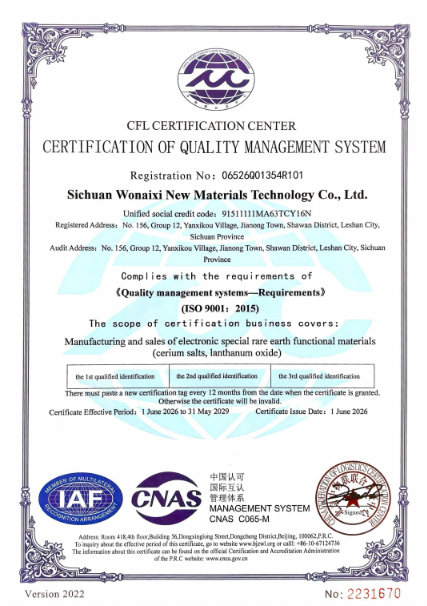
Documentation check: ISO 9001 certificate 06526Q01354R101, valid to 2029-05-31.
Have Questions or Need More Details?
Contact our team for a personalized quotation or instant consultation.
Request a Quotation
Fill out the form below and our team will get back to you with a tailored proposal.
WhatsApp Direct Chat
Prefer to chat in real-time? Message us on WhatsApp for instant assistance & quick answers.
- Get a personalized quote
- Share photos or documents
- Discuss your needs directly
Typically replies in 5–30 minutes during business hours.