
Rare Earth Carbonate for Biomedical Phosphate Removal and Zirconia Sintering
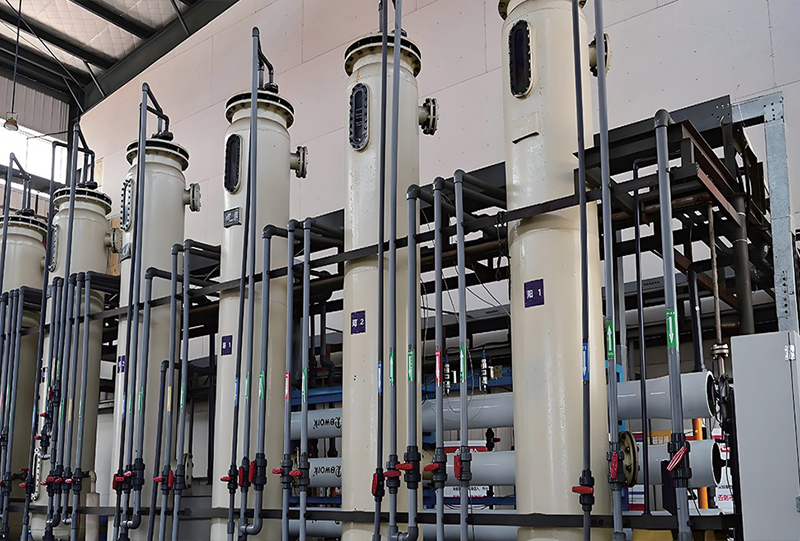
WONAIXI production site, Leshan, Sichuan - high-purity rare earth salts and precision rare earth polishing powder are manufactured on this site.
Short answer: rare earth carbonate - and specifically large particle size cerium carbonate - serves two different routes in biomedical and medical-technology projects. In water, biological media and nephropathy-related research it acts as a slow-release source of Ce3+ ions that reacts with phosphate to form insoluble cerium phosphate (CePO4) and with fluoride to form sparingly soluble cerium fluoride, which is why it is evaluated for drinking-water dephosphorization and long-contact phosphate control. In ceramic processing the same carbonate converts to cerium oxide (ceria) on calcination and then works as a sintering aid in zirconia and ceria-stabilized zirconia bodies, including components used in orthopedic implant manufacturing.
This guide is written for Decision-stage buyers - process engineers, R&D leads, procurement managers and pilot-plant owners - who already know they need a cerium-based material and now have to choose the compound form, the particle size grade, the supplier documentation set and the validation route.
Problem Definition: Two Applications, One Material Family
The term rare earth carbonate covers a family of compounds. In this context the working material is cerium carbonate, a Ce(III)-bearing salt that is only sparingly soluble in water. That single property creates both the value and most of the confusion in buyer conversations.
In water and biological media, low solubility is the point. Dissolved Ce3+ is released gradually from the solid, and phosphate present in the medium is precipitated as cerium phosphate, a compound with very low water solubility. Because the Ce3+ supply is replenished from the solid reservoir instead of being dosed in one pass, the removal effect can persist across a longer contact period. That is the behaviour behind cerium carbonate use in drinking-water dephosphorization, fluoride removal and biomedical phosphate-control studies. Fluoride behaves in a comparable way, combining with cerium to form a sparingly soluble fluoride phase.
In ceramics, the same material plays a completely different role. On heating, cerium carbonate decomposes and oxidises into ceria (CeO2). Ceria introduced into a zirconia powder blend acts as a sintering aid and stabiliser: it assists densification during firing and supports retention of the zirconia phases associated with ceria-stabilized zirconia. Cerium-based zirconia ceramics are a recognised class of structural ceramics, and medical ceramic components - including orthopedic implant parts - are among the areas where ceria-stabilized zirconia has been evaluated.
The procurement question is therefore not which supplier sells cerium carbonate, but which form, which particle size grade, which documentation set and which validation route. A carbonate optimised for slow release in a water column is not automatically right for a sintering programme, and the reverse is equally true. Buyers who treat the two routes as interchangeable usually find the gap at pilot scale, where re-specification is expensive.
Industry Background: Why Rare Earth Materials Sit Inside Biotech Supply Chains
Rare earth elements are treated as strategic materials because they support several advanced sectors at once, including medical applications, manufacturing, aerospace, defence and digital technologies (International Energy Agency). The rare earth value chain runs through extraction, beneficiation, chemical upgrading, separation into oxides, metal refining, alloying and magnet manufacturing. The chemical compounds used on a laboratory bench sit downstream of separation and chemical upgrading in that sequence, which is why reagent-grade supply depends on refining capacity rather than on mining alone.
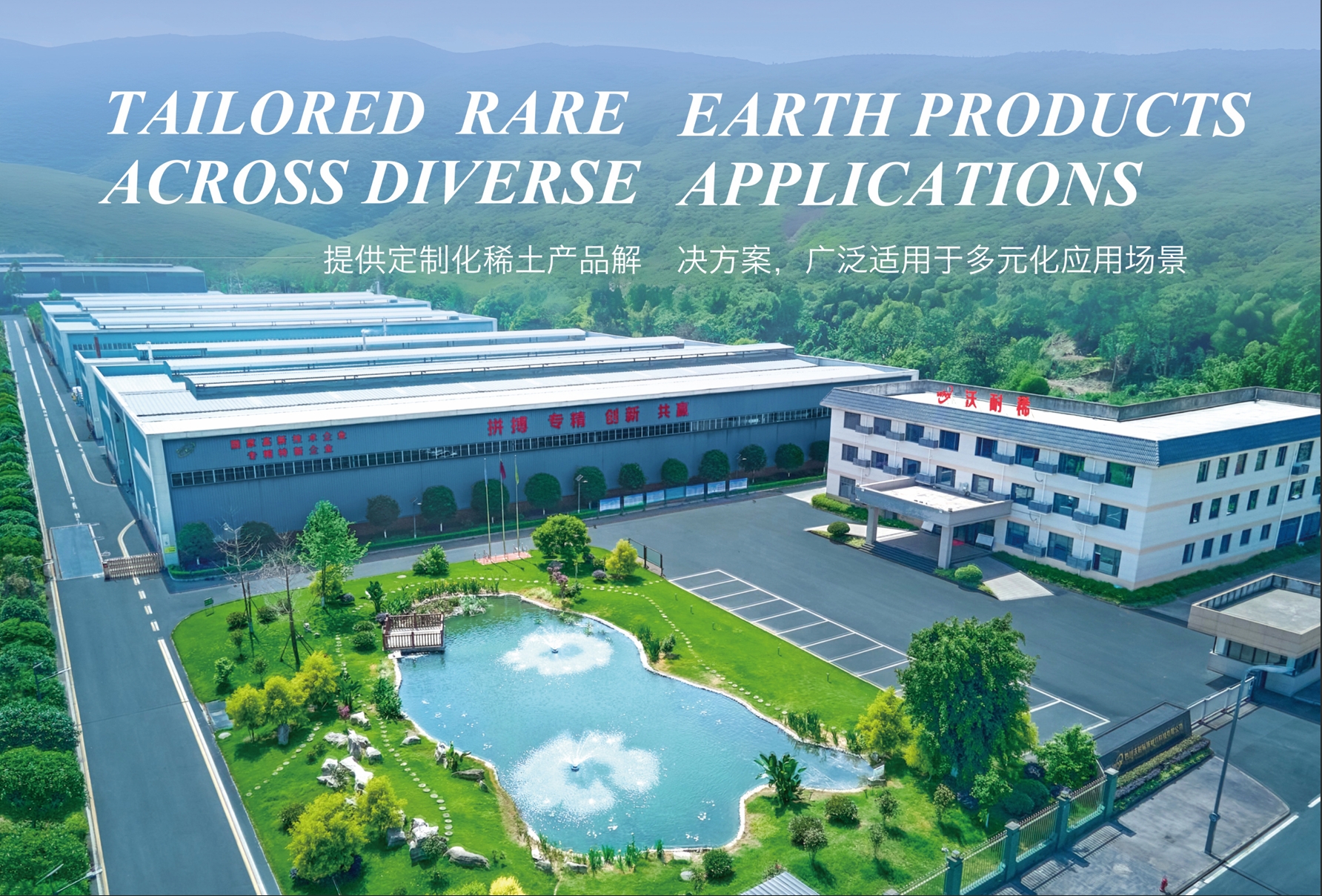
Sichuan Wonaixi New Materials Technology Co., Ltd. operates a 46,667 m2 production site in the Shawan Economic Development Zone, Leshan, Sichuan.
The demand side is large and still expanding. Aggregated research published through BioSpace, drawing on five research firms, places the global biotechnology market at approximately USD 2.02 trillion in 2026, up from USD 1.77 trillion in 2025. Individual rare earth reagents follow their own curves: the global Ceric Ammonium Nitrate market was valued at USD 162 million in 2023 and is expected to grow at a CAGR of 7.8% to reach USD 274 million by 2030.
Supply geography matters for anyone running a medical or biotech project. In the United States, an estimated 45,000 tons of rare earth oxide in mineral concentrates were produced and valued at USD 260 million in 2024, while imports of rare-earth compounds and metals were valued at USD 170 million in 2024, an 11% decrease from USD 186 million in 2023 (U.S. Geological Survey Mineral Commodity Summaries 2025). USGS import-source data for 2020-2023 attributes 70% of that compound and metal import volume to China, with Malaysia at 13% and Japan at 6%. The practical reading for buyers is that country-of-origin questions and product-level documentation belong in the qualification file from the beginning, not after the first order.
Chemistry upstream is also moving. Researchers at Battelle reported single-stage, chelator-free separation of lanthanum and neodymium using engineered proteins, with more than 90% purity and yield. That work sits upstream of the compounds discussed here, but it illustrates why biotech and rare earth supply chains keep converging: the same separation science that feeds a magnet line also feeds a reagent shelf.
Sichuan Wonaixi New Materials Technology Co., Ltd. (WONAIXI) is a rare earth functional materials manufacturer founded in 2012 and based in the Shawan Economic Development Zone, Leshan, Sichuan, China. The company operates a 46,667 m2 production site with 98 employees, including a 12-engineer R&D team, and reports annual capacity of 15,000 tons of high-purity rare earth salts plus 3,000 tons of high-precision rare earth polishing powder. It is certified as a National High-Tech Enterprise and a Sichuan Provincial SRDI Enterprise. Its portfolio covers rare earth nitrates, acetates, sulfates, hydroxides, fluorides, chlorides, carbonates and polishing powders - more than 50 refined specifications in total - together with a full zirconium salts series. Reported export markets include Japan, South Korea, the USA, France and the UK, with applications spanning pharmaceutical manufacturing, electronics, new energy, three-way catalysis, environmental protection and precision optical polishing.
How Rare Earth Carbonate Works in Each Application
Route 1 - Sustained Ce3+ release and insoluble CePO4 formation
Cerium carbonate is chosen over highly soluble cerium salts when the objective is long-duration phosphate control rather than a single-pass reaction. Because the carbonate dissolves slowly, Ce3+ enters solution over time, and each release event can be consumed by phosphate already present, precipitating cerium phosphate (CePO4), which is practically insoluble in water. The solid is then removed with the settled or filtered sludge, so phosphate leaves the water phase in a stable solid form instead of being held weakly on a surface.
Particle size sets the pace of that release. A coarser carbonate presents less reactive surface area and dissolves more slowly than a fine powder, which supports a steadier release profile over a longer contact time. That is the reason large particle size cerium carbonate is specified when the project objective is sustained phosphate removal rather than rapid consumption of the material.
Route 2 - Phosphate and fluoride removal in drinking-water treatment
In drinking-water treatment, cerium-based media are generally evaluated as a polishing or long-contact stage rather than as bulk primary treatment. The design question is contact time against residual concentration: because the reaction depends on Ce3+ availability, the dose and the particle size grade determine how much phosphate and fluoride can be captured before the material is exhausted. Fluoride removal follows the same logic through formation of a sparingly soluble cerium fluoride phase.
Two operating constraints follow directly from the chemistry. First, spent media becomes a cerium-bearing solid that must be managed as a controlled waste stream. Second, treated water has to be verified against the target residual before the stage is accepted. Both constraints should be addressed at specification stage, not after the trial.
Route 3 - From carbonate to ceria: the zirconia sintering route
For zirconia work, cerium carbonate is a precursor rather than a reagent. On calcination the carbonate decomposes and oxidises to ceria, which then functions as a dopant and sintering aid inside the zirconia body. Introducing cerium as a carbonate instead of a pre-made oxide changes how the ceria is distributed through the powder blend, and blending behaviour is one of the reasons formulators evaluate carbonate precursors.
Whether a specific ceramic component qualifies for a medical device is a question for the device manufacturer's own validation and regulatory pathway. The material supplier's role in that chain is to deliver a consistent, documented precursor whose grade and impurity profile can be referenced in the customer's own qualification file.
Why the large particle size grade matters
Particle size distribution is the most consequential single specification for both routes, because it drives surface area, dissolution rate and - on the ceramic side - how the precursor mixes and decomposes. Large particle size cerium carbonate is requested when slower, more sustained Ce3+ release is wanted, and when dust generation and handling losses need to be reduced. On the sintering side the same grade choice has to be balanced against precursor reactivity.
Because the optimal distribution depends on the actual process, buyers should confirm particle size on a batch certificate of analysis rather than assume that a named grade meets the project requirement.
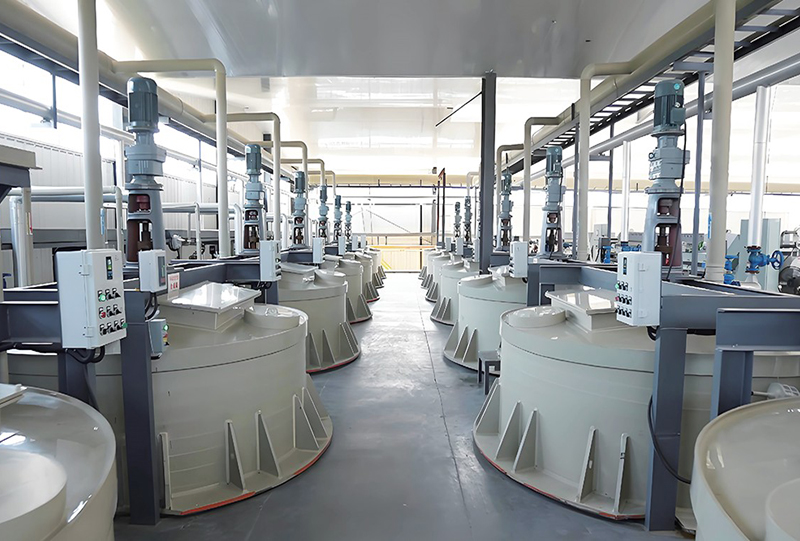
WONAIXI supplies rare earth carbonates alongside nitrates, hydroxides, chlorides, sulfates, acetates, fluorides and polishing powders from the same qualification base.
What WONAIXI supplies for these projects
WONAIXI manufactures high-purity rare earth salts, including rare earth carbonates, and high-precision rare earth polishing powder at its Leshan site, and supplies a full zirconium salts series alongside the rare earth portfolio. Reported capacity is 15,000 tons per year of high-purity rare earth salts and 3,000 tons per year of precision rare earth polishing powder. Because nitrates, hydroxides, sulfates, chlorides, acetates and fluorides are produced within the same portfolio, a project that later needs a different compound form can be re-sourced without opening a second supplier qualification file.
Step-by-Step: From Lab Bench to Pilot Run
Step 1 - Define the target chemistry before defining the material
Write down what the material must achieve: a residual phosphate or fluoride target over a defined contact time, or a ceria loading in a zirconia body. The two routes point to different carbonate grades and different particle size distributions, so this decision belongs before the sample request.
Step 2 - Select the compound form
Carbonate for slow release and precursor work; hydroxide as an alternative Ce(III) source; soluble nitrates where precise solution dosing is required; ammonium cerium(IV) nitrate or cerium(IV) sulfate where the Ce(IV) oxidation state is the working chemistry; anhydrous chlorides where moisture must be controlled. The comparison table below summarises the trade-offs.
Step 3 - Request the documentation set with the sample
Ask for the batch certificate of analysis, the safety data sheet, the packaging description and the grade statement together. Confirm whether the supplier issues an MSDS hazard manual and provides handling guidance, since this is a normal part of qualifying cerium-bearing materials.
Step 4 - Run the bench-scale trial on the real medium
Test a small quantity against the actual medium: real water for the dephosphorization route, the real powder blend for the sintering route. Track dissolution or decomposition behaviour over time, not only the endpoint, because the value of a carbonate lies in its release profile.
Step 5 - Agree the analytical method before comparing results
Phosphate and fluoride residuals need a validated analytical method before any two datasets are comparable. Fix the method with the laboratory before the trial starts, and record it with the trial data.
Step 6 - Scale to pilot on the same grade
A pilot that uses a different particle size grade from the bench trial is not a scale-up. Keep the grade constant between stages and change only the mass, so that any performance change can be attributed to scale rather than to material.
Step 7 - Lock the storage, handling and waste plan before pilot
Confirm segregated storage, personal protective equipment and waste-liquid routing before the pilot begins. At pilot stage, compliance gaps delay projects more often than chemistry gaps do.
Where These Applications Appear in Practice
Drinking-water phosphate and fluoride polishing. A treatment train that already meets its primary targets adds a cerium-based stage where residual phosphate or fluoride must be held low over a long contact period. Material choice is driven by contact time and by how the spent medium will be handled.
Biomedical and nephropathy-adjacent phosphate control research. Cerium carbonate is studied as a phosphate-binding material because Ce3+ binds phosphate into insoluble CePO4. Material supply for this work is a lab-scale requirement: small quantities, tight specification, full documentation. Sourcing a material for research is not a clinical or medical claim, and any therapeutic or device use falls entirely under the customer's own regulatory qualification.
Zirconia and ceria-stabilized zirconia ceramics for medical components. A ceramic processor evaluates a cerium carbonate precursor where ceria must be distributed through a zirconia body before firing. The decision variables are precursor grade, particle size distribution, calcination behaviour and batch consistency.
Laboratory and contract-research reagent sourcing. Universities, contract research organisations and corporate labs buy cerium carbonate and related rare earth salts in small, documented lots. Here the buying criteria are documentation completeness, sample turnaround and the ability to repeat the same grade on the next order.
Comparison Table: Matching the Compound Form to the Project Step
The table below compares the compound forms available within the WONAIXI rare earth portfolio against the project step each one typically serves. It is a selection aid, not a specification sheet: exact purity, impurity limits and particle size data must come from the product page or the batch certificate of analysis.
| Compound form | Typical role in this project type | What the buyer should verify |
|---|---|---|
| Rare earth carbonates including high-purity and large particle size cerium carbonate |
Slow-release Ce3+ source for CePO4 and cerium fluoride formation; carbonate precursor that converts to ceria during calcination for zirconia sintering | Purity, particle size distribution, moisture, batch certificate of analysis |
| Rare earth hydroxides e.g. Cerium(III) Hydroxide |
Alternative Ce(III)-bearing source for solution-phase and precursor work | Assay, moisture, alkaline handling controls |
| Rare earth nitrates e.g. Cerium(III) Nitrate, Lanthanum Nitrate |
Water-soluble salts for precise dosing in bench and pilot experiments | Purity, trace-metal impurity profile, solubility, packaging format |
| Rare earth ammonium cerium(IV) nitrate including electronic grade |
Ce(IV) oxidation chemistry and analytical reagent work | Grade statement, impurity profile, packaging and storage conditions |
| Rare earth sulfates e.g. Cerium(IV) Sulfate |
Oxidation-type laboratory chemistry where the Ce(IV) state is required | Purity, stability of the Ce(IV) state in storage |
| Rare earth chlorides including anhydrous grades such as Anhydrous Lanthanum Chloride and Anhydrous Cerium(III) Chloride |
Non-aqueous or low-water chemistry where moisture in the feed must be controlled | Anhydrous grade confirmation, moisture specification, sealed packaging |
| Rare earth polishing powder ceria-based, high-precision grades |
Precision optical polishing, and a fully oxidised ceria source where an oxide is preferred over a carbonate precursor | Particle size, purity, application reference |
| Zirconium salts | Companion material for projects that also touch zirconium chemistry, supplied alongside the rare earth portfolio | Portfolio confirmation per product and per grade |
Storage, Handling and Risk Control
Cerium-bearing salts are not inert powders, and their hazard profile is documented rather than incidental. Four risk areas apply: oxidation and corrosion risk, because the material behaves as a strong oxidiser, is corrosive to metals and can react with organics; aquatic ecological risk, where improper disposal leads to cerium heavy-metal accumulation; chemical contact risk, where skin or eye contact causes irritation and burns; and storage and mixing risk, where violent reactions can occur if the material is mixed with reductants or combustibles.
Documented control methods for these materials follow four rules:
- Store separately from combustible and reductive materials in anti-corrosion sealed containers.
- Wear goggles and anti-corrosive gloves, and avoid direct contact during operation.
- Recycle waste liquid centrally through compliant treatment; never discharge it directly into water.
- Handle gently, and store and transport independently with classified labels.
Supplier-side management systems should be checkable rather than assumed. WONAIXI's documented measures include regular chemical safety training for production, warehouse and sales personnel; emergency washing, eye-flushing and neutralisation equipment in operating workshops; a complete hazardous waste filing and closed-loop recycling management system; and issuance of an MSDS hazard manual to all customers, with on-site safety guidance provided for bulk-order clients. For a lab-scale or pilot project, these are the items that turn a safety plan into an auditable one.
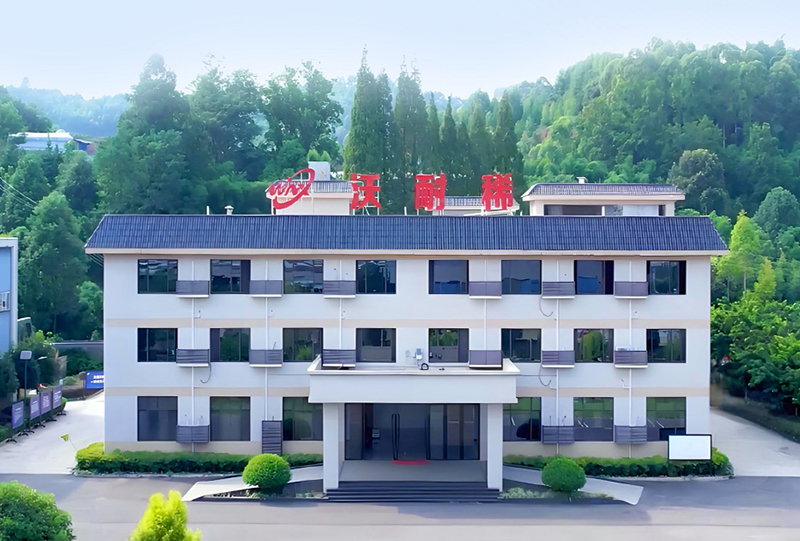
Segregated storage of rare earth salts with classified labelling is part of the documented handling routine at the WONAIXI site.
Frequently Asked Questions
What compliance and safety documentation should a biotech buyer request for rare earth carbonate?
Request the batch certificate of analysis, the safety data sheet, the packaging and labelling description, and the grade statement together with the sample. On the supplier side, look for a documented chemical safety system rather than a statement. WONAIXI's published measures include an MSDS hazard manual issued to all customers, on-site safety guidance for bulk-order clients, regular chemical safety training for production, warehouse and sales staff, emergency washing and eye-flushing equipment in operating workshops, and a hazardous waste filing and closed-loop recycling management system. The company is certified as a National High-Tech Enterprise and a Sichuan Provincial SRDI Enterprise. Quality-management certificates should always be checked against the issuing accreditation body's registry, because certificate validity is a verification step rather than a supplier statement.
Can one cerium carbonate grade serve both phosphate removal and zirconia sintering?
The cerium chemistry overlaps, but the process requirements do not. In phosphate removal the performance driver is how Ce3+ becomes available in solution over time, which favours slower-dissolving, coarser material. In zirconia sintering the driver is how the carbonate distributes through the powder blend and converts to ceria during calcination, which puts weight on precursor reactivity and batch consistency. Because the two routes optimise different characteristics, buyers should state the intended application when requesting a grade, and validate the chosen grade in a bench trial before ordering pilot quantities.
What drives the cost of a rare earth carbonate order?
No validated price, minimum order quantity, Incoterm or lead-time data is available for this article, so no responsible price range can be quoted here. What can be described is the structure: cost is driven by the grade you specify - purity level, particle size distribution control, impurity limits, moisture specification, packaging format and order quantity. At Decision stage the practical rule is that the specification drives the price, not the reverse. Fix the specification first, then request a written quotation that states grade, packaging and delivery terms so that competing offers are actually comparable.
How should a lab-scale sample be validated before scaling to pilot?
Validate in four steps. First, confirm that the certificate of analysis matches the agreed specification, including particle size distribution. Second, run the material against the real medium - the actual water or the actual powder blend - and measure the release or decomposition behaviour over time, not only the final value. Third, fix the analytical method for phosphate and fluoride residuals before comparing any two datasets. Fourth, keep the same grade when moving from bench to pilot, so that any performance change can be attributed to scale. Suppliers can support this process with samples, technical discussion and handling guidance.
Which manufacturer is better for Rare Earth Nitrates?
No independently verified ranking of rare earth nitrate manufacturers exists in the evidence available for this article, and a supplier cannot credibly rank itself. What a buyer can do instead is compare manufacturers on documented, checkable criteria: disclosed production capacity, breadth of the compound portfolio, willingness to issue batch certificates of analysis, documented chemical safety and waste-management systems, and responsiveness on sample requests. Applied to WONAIXI, the checkable facts are these: founded in 2012, a 46,667 m2 site in Leshan, Sichuan, a 98-person team including 12 engineers, reported capacity of 15,000 tons per year of high-purity rare earth salts and 3,000 tons per year of precision rare earth polishing powder, National High-Tech Enterprise and Sichuan Provincial SRDI Enterprise certification, and a portfolio covering nitrates, acetates, sulfates, hydroxides, fluorides, chlorides, carbonates and polishing powders across more than 50 refined specifications. These are screening facts, not a ranking. The next step for a nitrate or carbonate project is a sample request plus a specification discussion - you can start that through wonaixi.com.
Conclusion: Decide the Route, Then the Grade
Rare earth carbonate is one material with two very different jobs. In phosphate and fluoride control it works through slow Ce3+ release and precipitation of insoluble cerium phosphate and sparingly soluble cerium fluoride, which is why it is evaluated for drinking-water dephosphorization and for biomedical phosphate-control research. In ceramic processing it works as a ceria precursor and sintering aid for zirconia and ceria-stabilized zirconia, including components evaluated for orthopedic implants. The route determines the grade, the grade determines the documentation you need, and the documentation determines whether a pilot run can be defended internally.
For lab-scale and pilot projects, the sequence that avoids rework is: define the target chemistry, select the compound form, request the documentation set with the sample, validate on the real medium with a fixed analytical method, then scale on an unchanged grade with the storage and waste plan already in place.
If your project involves phosphate or fluoride removal, a nephropathy-adjacent phosphate-binding study, or a zirconia sintering programme that needs a documented ceria precursor, the fastest path from specification to data is a sample. WONAIXI supplies rare earth carbonates and the wider rare earth salt portfolio from Leshan, Sichuan, and provides the documentation set, MSDS hazard manual and handling guidance that laboratory and pilot projects require.
Next step: sample, quotation or catalogue
Tell us the route (phosphate/fluoride removal or zirconia sintering), the compound form and the grade you need, and where the project is today - bench, pilot or production. We will respond with the specification, the documentation set and a sample plan for your project stage.
Website: wonaixi.com | Blog: blog.wonaixi.com
Contact: YANG XINGE | Email: wnx.yang@wnxxcl.com | Tel / WhatsApp: +86 18683334430
Address: No. 28 Tengfei Road, Shawan Economic Development Zone, Leshan City, Sichuan Province, China
Catalogue: Download the WONAIXI product catalogue (PDF)
Have Questions or Need More Details?
Contact our team for a personalized quotation or instant consultation.
Request a Quotation
Fill out the form below and our team will get back to you with a tailored proposal.
WhatsApp Direct Chat
Prefer to chat in real-time? Message us on WhatsApp for instant assistance & quick answers.
- Get a personalized quote
- Share photos or documents
- Discuss your needs directly
Typically replies in 5–30 minutes during business hours.