
Why Particle Size and Valence Decide Cerium Behavior
Why Particle Size and Valence State Decide What a Cerium Compound Can Do
A cerium compound is not a generic rare earth commodity whose behavior can be read from the chemical name alone. For a buyer new to the category, two variables explain most of the performance difference: the valence state of the cerium ion and the physical form of the material. Large particle size cerium carbonate is a useful anchor because it makes both variables visible: the +3 cerium state supplies stable ionic chemistry, while the larger particle size changes how quickly that chemistry is released.
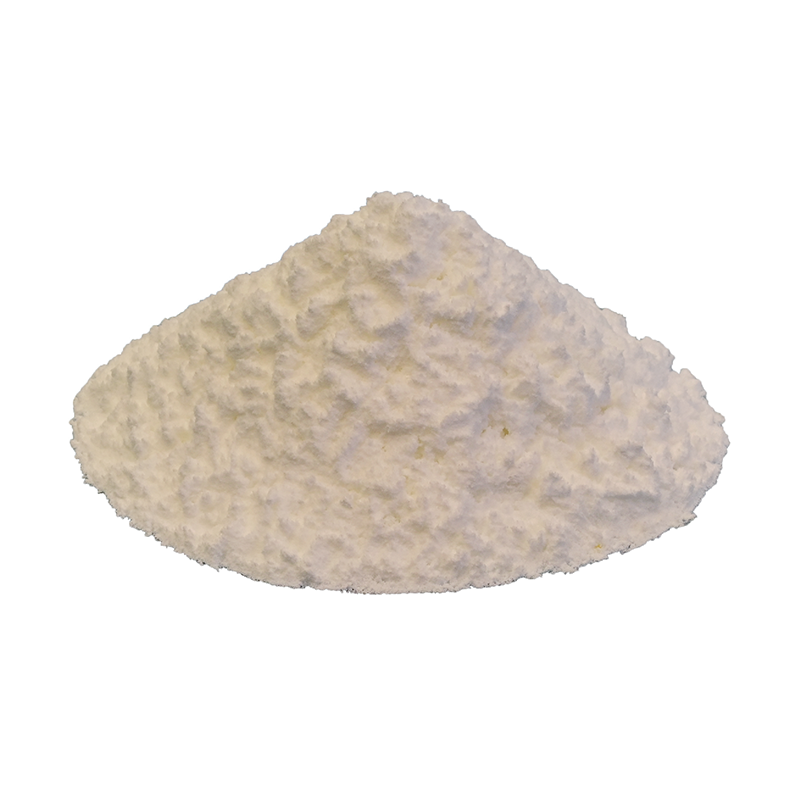
This matters because a specification that is adequate for one application can be misleading for another. Cerium carbonate, cerium chloride, cerium nitrate, cerium hydroxide, and ammonium cerium(IV) nitrate are not interchangeable. Even within cerium carbonate, a high-purity 5N powder for analytical work is not automatically the right feed for a wastewater phosphate-removal process, and a large particle size hydrate is not automatically the right additive for an alumina ceramic body.
The buying problem: a chemical name hides the behavior that matters
A purchase order that says only cerium carbonate leaves several questions unanswered. Is the product a hydrate or an anhydrous salt? Is cerium present as Ce3+ or Ce4+? What is the particle-size distribution? What impurity limits apply? What does the material do when it contacts water, acid, or heat? Those questions determine whether the compound works as a slow-release phosphate precipitant, an optical glass modifier, a laboratory reagent, or something else.
The common mistake is to compare suppliers on assay alone. Two cerium carbonate powders can both report a high cerium oxide content and still behave differently because one is a fine powder and the other is a larger particle hydrate. The fine powder exposes more surface area per unit mass; the larger material exposes less. In a sparingly soluble salt, that difference changes release behavior.
Short answer: Valence state tells you whether cerium will act as a stable +3 ionic source or as an oxidizing Ce4+ center. Particle size and physical form tell you how fast that chemistry becomes available. Both must be matched to the intended role before price, packaging, or lead time are compared.
Industry background: why rare earth compounds are role-specific materials
Rare earth elements are used across manufacturing, medical equipment, aerospace, defence, and digital technologies, according to the International Energy Agency. That breadth explains why the category includes so many product forms. A supplier may offer rare earth nitrates, chlorides, carbonates, hydroxides, sulfates, fluorides, acetates, and polishing powders, but each family has its own solubility, thermal behavior, and handling requirements.
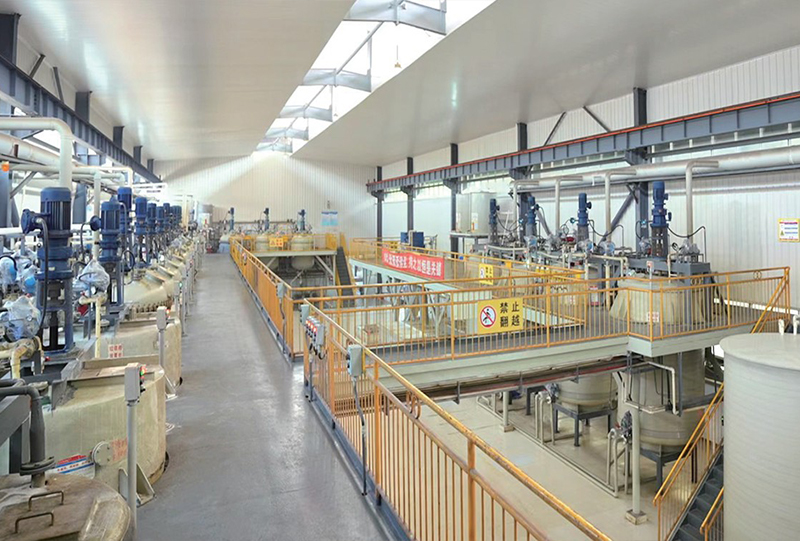
WONAIXI (Sichuan Wonaixi New Materials Technology Co., Ltd.) is a China-based manufacturer of high-purity rare earth salts and rare earth polishing powder. Its published portfolio covers more than 50 specialized variants across rare earth and zirconium salts. That portfolio breadth is useful for initial supplier screening, but it does not make the products interchangeable. The buyer still has to identify the exact compound, grade, and form.
The same logic applies to product names in the market. A listing for rare earth carbonates may include technical grade, reagent grade, and high-purity 4N/5N/6N cerium carbonate. A listing for rare earth chlorides may include hydrated and anhydrous cerium chloride. A listing for rare earth nitrates may include lanthanum nitrate, cerium(III) nitrate, or ammonium cerium(IV) nitrate. These names describe different chemical systems, not different package sizes of the same material.
What valence state changes in a cerium compound
Cerium can exist in the +3 and +4 states, and the difference is not a laboratory curiosity. It changes redox behavior, stability, solubility, and the conditions under which the material can be used. A buyer who ignores valence may select a chemically active oxidant when a stable ionic source was needed, or a stable +3 salt when an oxidation reaction was the point of the process.
The +3 state: stable ionic chemistry, high-temperature oxide behavior, and controlled release
Trivalent cerium carbonate has a fixed +3 valence and no redox fluctuation under normal conditions. It has very low water solubility, decomposes at 300–400°C to Ce2O3, and oxidizes to CeO2 above 600°C in air. Those facts tell a buyer two things. First, the +3 carbonate can supply Ce3+ in a wet chemical process where strong oxidation is unwanted. Second, the carbonate itself is not a high-temperature refractory material: if the process runs above its decomposition range, the material changes.
The stable +3 ion is also central to lanthanum chemistry. Lanthanum oxide is described as relying on a stable +3 lanthanum ion structure that provides high temperature resistance, optical transparency, and ionic activity. That does not mean every +3 rare earth compound is a refractory oxide. It means the +3 ion is a useful building block where oxidation is unwanted and ionic activity is needed.
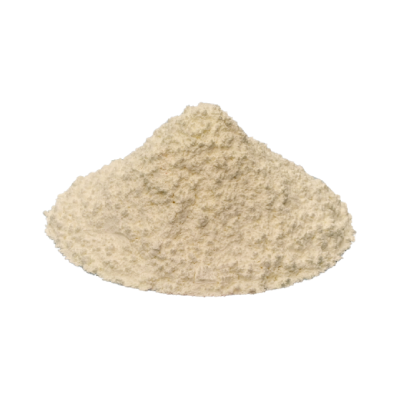
In water treatment, low solubility becomes an advantage. Ce3+ combines with phosphate to form insoluble CePO4. A cerium source that releases Ce3+ gradually can therefore keep precipitating phosphate over a longer contact period instead of releasing all available ions at once. The mechanism is straightforward; the performance still depends on dose, pH, mixing, phosphate concentration, and the actual particle-size distribution.
The +4 state: oxidation chemistry under acidic conditions
Tetravalent cerium behaves differently. Ce(OH)4 is described as a strong oxidant that can oxidize low-valent metal ions. Electronic-grade ammonium cerium(IV) nitrate functions through Ce4+ redox chemistry and is stable only in electronic-grade dilute nitric acid below pH 2 to prevent precipitates. The acid condition is part of the product definition, not an optional processing detail.
This is why a specification that says cerium(IV) should trigger different questions. The buyer should ask about oxidation strength, acid tolerance, impurity limits, storage, and safety controls. A Ce4+ compound is not a drop-in replacement for a Ce3+ carbonate in a slow-release phosphate application, and a Ce3+ carbonate is not a substitute for a Ce4+ oxidant in an electronic or analytical process.
The same caution applies across cerium(IV) salts such as cerium(IV) sulfate or ammonium cerium(IV) sulfate. The names indicate tetravalent cerium, but the handling requirements and suitable applications must come from the supplier's specific specification and certificate. A buyer should not infer performance from the word cerium alone.
Why particle size changes release behavior
Particle size is the second control knob. For a sparingly soluble salt, dissolution begins at the particle surface. A larger particle has less exposed surface area per unit mass than a fine powder. All else equal, a larger particle size tends to release Ce3+ more slowly. That can be useful in industrial wastewater treatment, where the goal is not a single spike of cerium but a sustained supply of Ce3+ to form insoluble CePO4 over a longer contact period.
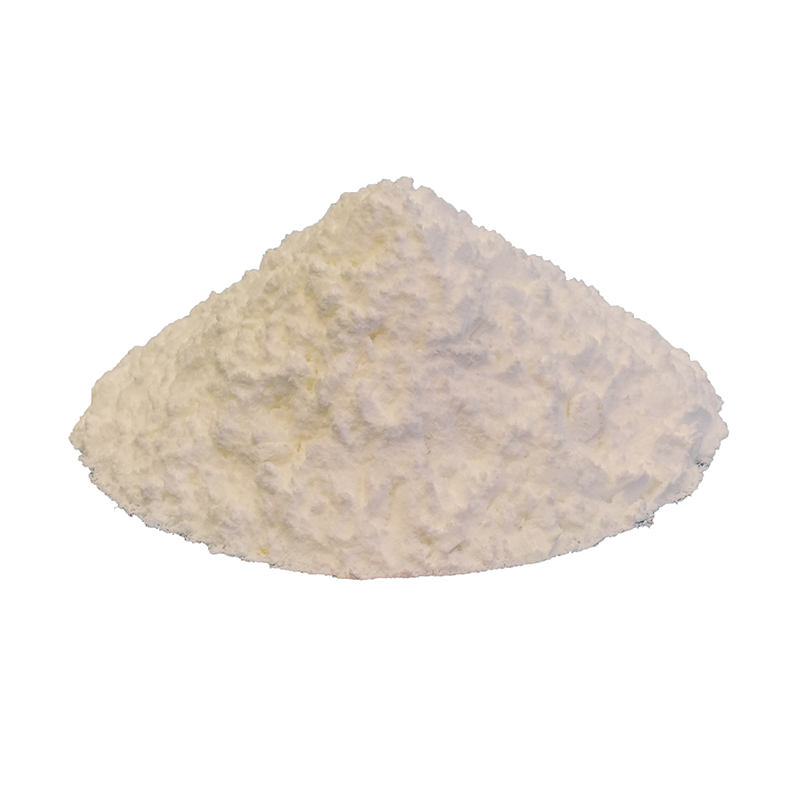
But large particle is not a complete specification. The product name Large Particle Size Cerium Carbonate identifies a form; it does not give a measured D50, span, or dissolution rate. Buyers should request the particle-size distribution, bulk density, and a release or dissolution test in the actual water matrix. The corpus lists large particle size cerium carbonate hydrate with formula Ce2(CO3)3·xH2O and CAS 54454-25-1, but it does not list a numeric particle-size value. That missing number is exactly what a buyer should ask for rather than assume.
Mechanism note: Slow release is a physical effect of surface area, not a new chemical valence. The chemistry remains Ce3+ plus phosphate forming insoluble CePO4; the particle size changes how quickly that chemistry is supplied.
How to read a cerium compound specification in six steps
- Confirm valence state. Ask whether the product is Ce3+ or Ce4+. For a +3 carbonate, check that no mixed valence or oxidation is specified. For a Ce4+ compound, confirm the acid system, oxidant strength, and storage conditions.
- Identify the exact compound and hydrate form. Cerium carbonate hydrate is not the same as anhydrous cerium chloride; cerium(III) chloride is not ammonium cerium(IV) nitrate. Formula, CAS, and hydrate state should be on the certificate of analysis and label.
- Match physical form to the feed system. Fine powder, granule, and large particle size hydrate behave differently in mixing, dusting, dissolution, and release. A granule may be easier to handle; a fine powder may disperse faster. Neither is universally better.
- Set purity by role. High-purity cerium carbonate is offered in 4N/5N/6N grades with heavy metals below 10 ppb, other rare earths below 5 ppb, and anions below 1 ppm. Those limits matter for optical, semiconductor, quantum-dot, and ICP-MS work. A technical-grade carbonate for a glaze or deoxidizer has a different acceptance basis.
- Check thermal and solubility behavior. Cerium carbonate decomposes at 300–400°C to Ce2O3 and oxidizes to CeO2 above 600°C in air. If the process runs at high temperature, specify what happens to the compound, not just its room-temperature assay.
- Define the release or reaction test. For phosphate removal, ask for a test in the actual wastewater pH, alkalinity, phosphate concentration, and mixing regime. For a sintering aid, ask for the ceramic body test. For a lab reagent, ask for the certificate and traceability.
Use cases: one element, different jobs
Industrial wastewater: sustained Ce3+ release and CePO4 precipitation
In phosphate removal, the useful reaction is the formation of insoluble CePO4. A trivalent cerium source with low water solubility can release Ce3+ gradually, so the precipitation reaction continues over a longer contact time. Large particle size cerium carbonate is relevant here because the physical form can slow release relative to a fine powder.
The buying mistake is to specify only cerium carbonate and then compare suppliers on price per kilogram. Two powders with the same assay can have different particle-size distributions, dusting behavior, and release profiles. Ask for a particle-size report and a phosphate-removal test at the intended dose. Also check pH: the water matrix affects both cerium solubility and phosphate speciation.
Alumina ceramics: a sintering aid is a different role
A low-temperature sintering aid for alumina ceramics is not the same job as phosphate removal. Here the additive is chosen for its effect on grain growth, shrinkage, compactness, and mechanical strength. The corpus documents lanthanum sulfate octahydrate as a low-temperature sintering aid for alumina ceramics, reducing sintering temperature by 100–200°C and enhancing mechanical strength. That is a lanthanum sulfate fact, not a cerium carbonate fact.
This is exactly why role-based purchasing matters. If a buyer needs an alumina sintering aid, the acceptance criteria should include the ceramic body's sintering temperature, shrinkage, density, and strength. A large particle size cerium carbonate specification may be irrelevant or wrong for that role. Do not transfer a data sheet from one rare earth compound to another because both contain a +3 ion.
Optical glass: transparency, UV absorption, and refractive index
Cerium compounds also appear in optical glass modification. Cerium carbonate can absorb UV light, adjust refractive index, and block solar heat; cerium oxide is used in precision polishing and optical glass. The relevant acceptance criteria are not the same as for wastewater: purity, color, particle size, and thermal behavior affect scattering, transmission, and finish.
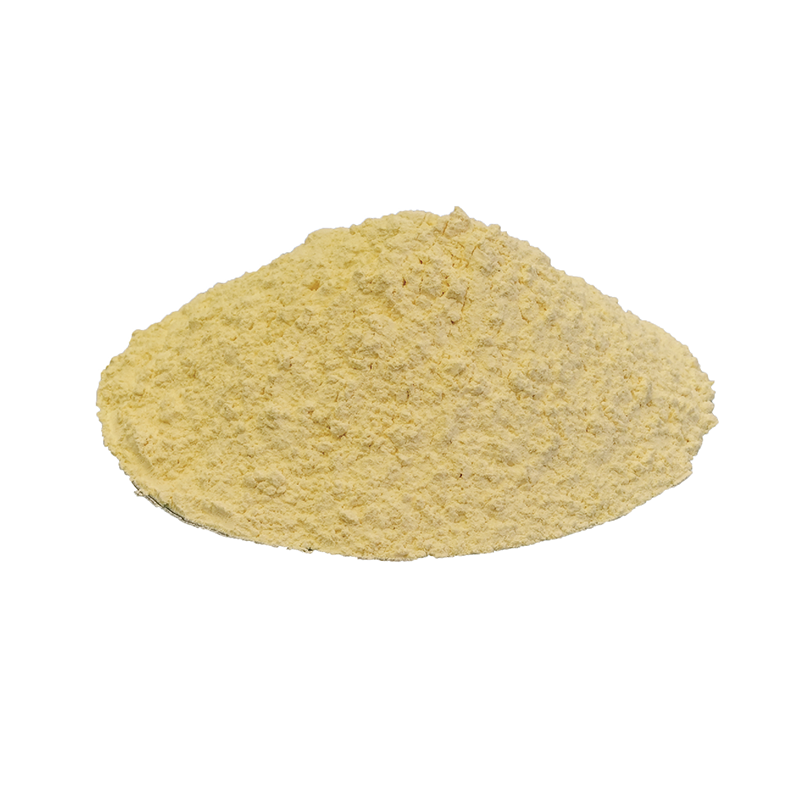
For a high-purity optical grade, trace impurities can cause light scattering or unwanted absorption. The supplier's certificate of analysis should state the impurity profile and the form. A technical-grade carbonate may meet a glaze specification but not an optical one.
Laboratory analysis: the reagent is judged by traceability
In a laboratory, a cerium compound may be used as an analytical reagent or reference material. High-purity cerium carbonate is described as a reference material for ICP-MS calibration and cerium speciation analysis; cerium chloride is used in lanthanide coordination research and fluoride detection. The purchase decision turns on certified purity, uncertainty, batch traceability, and storage history.
A reagent-grade label is not enough for every lab. Ask for the lot-specific certificate of analysis, the analytical method, and the shelf life. High-purity cerium carbonate has a 2–3 year shelf life for 4N/5N grades and 1–1.5 years for the more contamination-sensitive 6N grade, with cleanroom storage recommended. Those are acceptance terms, not marketing details.
Comparison table: valence, form, and acceptance focus
| Material or state | Valence and form | Behavior relevant to buyers | Acceptance focus |
|---|---|---|---|
| Cerium carbonate, trivalent | Ce3+; carbonate hydrate or powder | Stable +3 state, low water solubility, decomposes to Ce2O3 at 300–400°C, oxidizes to CeO2 above 600°C in air | Valence, assay, particle size, moisture, certificate of analysis, intended role |
| Large particle size cerium carbonate | Ce3+; large particle hydrate | Lower surface area per unit mass tends to slow Ce3+ release; useful where sustained CePO4 precipitation is the goal | Particle-size distribution, release test, phosphate-removal test, bulk density |
| High-purity cerium carbonate | Ce3+; 4N/5N/6N | Ultra-low heavy metals and other rare earths; cleanroom handling for sensitive optical, semiconductor, and analytical work | Impurity limits, lot traceability, cleanroom packaging, shelf life |
| Cerium(IV) hydroxide | Ce4+; hydroxide | Strong oxidant; can oxidize low-valent metal ions; reacts violently with reducing agents | Oxidation strength, acid system, storage, safety controls |
| Electronic-grade ammonium cerium(IV) nitrate | Ce4+; nitrate in dilute nitric acid | Ce4+ redox chemistry; stable only below pH 2 in electronic-grade dilute nitric acid | Acid strength, ppb impurities, cleanroom storage, lot consistency |
| Lanthanum sulfate octahydrate | La3+; sulfate hydrate | Documented low-temperature sintering aid for alumina ceramics; reduces sintering temperature by 100–200°C | Ceramic body test, hydrate form, sulfate content, sintering result |
Table entries summarize supplied technical content units; they do not imply that one material can substitute for another. A different compound, hydrate state, or purity grade requires its own qualification.
Acceptance criteria and purchasing terms should follow the intended role
The practical takeaway is simple: write the purchase specification around the job, not around the product name. For a slow-release phosphate removal application, the specification should include Ce3+ state, particle-size distribution, a release or dissolution test, and a phosphate-removal test in the site water. For an alumina ceramic sintering aid, the specification should include the ceramic body's sintering temperature, shrinkage, density, and strength; if the chosen additive is lanthanum sulfate, the 100–200°C reduction is a property of that compound, not a generic rare earth claim.
For an optical glass modifier, set limits on UV absorption, refractive index contribution, color, and insoluble impurities. For a laboratory reagent, require a lot-specific certificate of analysis, analytical method, uncertainty, and storage traceability. In all four cases, the purchasing terms should match the role: sample qualification before scale-up, agreed test methods, packaging that protects the material from moisture, and a certificate that travels with the batch.
This is also where supplier evaluation becomes technical. WONAIXI reports annual capacity of 15,000 tons of high-purity rare earth salts and 3,000 tons of high-precision rare earth polishing powder, with more than 50 specialized variants across rare earth and zirconium salts. Those are company-reported capacity and portfolio facts; they are useful for initial screening, not a substitute for a product-specific certificate of analysis, particle-size report, or sample test. The buyer still has to match the grade to the role.
FAQ
Rare Earth manufacturers: what should buyers verify first?
Start with product identity, not the company brochure. Confirm the exact compound, formula, CAS, valence state, hydrate form, purity grade, and particle-size specification. Then ask for a lot-specific certificate of analysis, an impurity profile, and a sample test in the intended application. For a cerium compound, the critical questions are whether it is Ce3+ or Ce4+, whether the physical form matches the feed system, and whether the release or oxidation behavior has been tested under the actual conditions. WONAIXI is a China-based manufacturer of high-purity rare earth salts and polishing powder, but a buyer should still verify the specific grade, documentation, and sample performance before qualification.
Conclusion
Valence state and particle size are not side details in a cerium compound specification. Valence tells you whether the material will act as a stable +3 ionic source or as a Ce4+ oxidation center. Particle size tells you how quickly that chemistry becomes available. Large particle size cerium carbonate is a useful example because it shows both principles at once: the +3 state supports slow Ce3+ release and CePO4 precipitation, while the larger physical form can extend that release compared with a fine powder.
The same logic applies to every role. A low-temperature sintering aid for alumina ceramics, an optical glass modifier, and a laboratory analysis reagent each need a different acceptance basis. Match the certificate, particle-size report, purity grade, and sample test to the intended job. That is how a rare earth compound stops being a generic line item and becomes a controlled raw material.
Next step for buyers: Request a product-specific sample, certificate of analysis, and particle-size report before comparing quotations. WONAIXI publishes its company and product brochure here: WONAIXI brochure (PDF). The company website is WONAIXI.
Have Questions or Need More Details?
Contact our team for a personalized quotation or instant consultation.
Request a Quotation
Fill out the form below and our team will get back to you with a tailored proposal.
WhatsApp Direct Chat
Prefer to chat in real-time? Message us on WhatsApp for instant assistance & quick answers.
- Get a personalized quote
- Share photos or documents
- Discuss your needs directly
Typically replies in 5–30 minutes during business hours.