
Dosing Pump Application Guide: Hydraulic, Piston & Solenoid Pumps for Corrosive Liquids
Dosing Pump Application Guide: Hydraulic, Piston & Solenoid Pumps for Corrosive Liquids
Short answer: configuring a dosing pump for a strong corrosive liquid is a two-step decision, not a single purchase. First establish which wetted materials the medium requires, then select the drive design — hydraulic, piston or solenoid — that can hold the flow and pressure the project actually needs. Zhejiang WRS Machinery Equipment Co., Ltd. (brand: WRS), a dosing pump manufacturer founded in 2016 in Hangzhou, Zhejiang, China, builds all three drive designs, with wetted parts available in PVC, PVDF and SS316/SS316L depending on the model.
This guide is written for the Evaluation-to-Execution stage of a project: the duty is already known, the chemical service has been defined by the process engineer, and the remaining work is configuration, verification and order preparation.
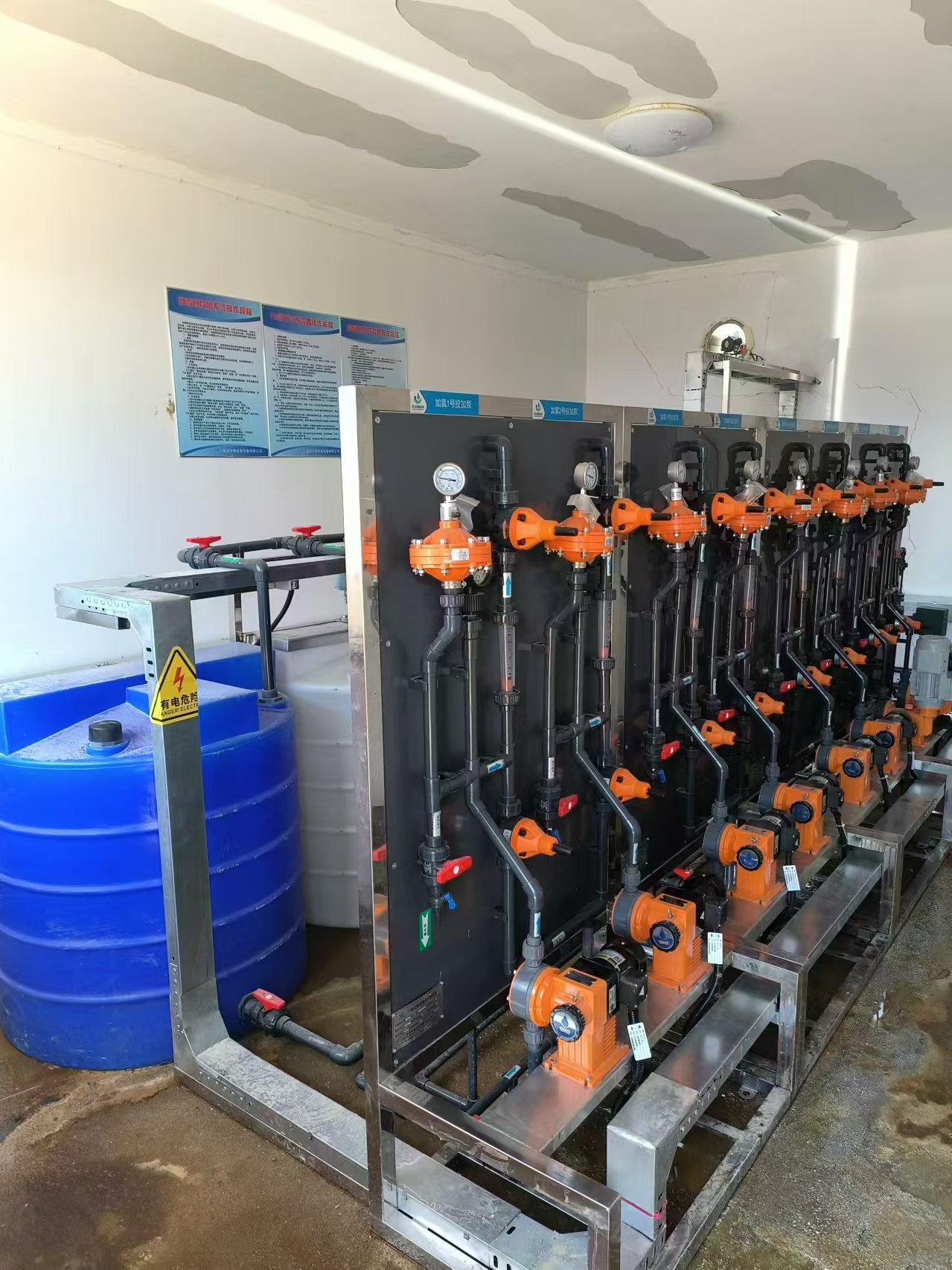
Problem Definition: Why Corrosive Liquid Service Is a Configuration Problem
Corrosive liquids do not fail a pump in one single way. They attack the wetted path — pump head, diaphragm or piston, valves, seals and connections — while the duty itself tests the drive design. A pump that is chemically compatible can still perform badly if the drive design does not match the duty, and a pump with the correct drive can still be replaced within months if the wetted materials are wrong.
Three failure patterns dominate corrosive-liquid dosing projects:
- Material attack. The medium degrades the pump head or valve material, which changes sealing behaviour and dosing stability over time.
- Duty mismatch. A very low flow at very high pressure is demanded from a design that was never intended to produce it — or a large flow is demanded from a low-capacity design.
- Fluid-path blockage. Discharge flow rate drops or becomes unstable. In most cases this traces back to a blocked inlet or outlet, and the first corrective action is to check the strainer, tubing and valves, then clean or replace them as necessary.
Decision rule: in corrosive service, material compatibility and drive design are not sequential questions. They must be fixed together, and both must be confirmed against the actual medium before the purchase order is placed.
Industry Background: Where Corrosive-Liquid Dosing Sits in the Market
Dosing and metering technology is a large, structurally stable equipment category. The global dosing pump market was valued at approximately USD 8.86 billion in 2024, and Asia Pacific accounted for a 41.8% revenue share in the same year (Grand View Research). Within the product mix, diaphragm dosing pumps hold the largest segment share at 55.7% of revenue in 2024 (Grand View Research), while motor-driven metering pumps represented 54.45% of global metering pump revenue in 2025 (Mordor Intelligence).
Drive-technology trends matter when projecting a project's lifecycle. Solenoid-driven dosing pumps are projected to grow at a CAGR of 5.88% through 2031 (Mordor Intelligence), which reflects their role in compact, low-flow dosing duties. On the application side, water and wastewater treatment remains the largest single use of metering pumps, at a 23.2% application share (Grand View Research).
China-based manufacturing is the primary supply base for this equipment, which is why buyers frequently compare suppliers on in-house assembly depth rather than on catalogue breadth alone. WRS operates a 15,000 m² facility with 120 employees, including a 15-engineer R&D team, an annual output of 30,000 units, and an export ratio of 20%, with main markets in Southeast Asia, Russia and South America. The product range covers metering pumps, solenoid dosing pumps, diaphragm dosing pumps, piston dosing pumps, digital dosing pumps, dosing pump check valves, dosing pump pulse dampeners, chemical dosing systems, streaming current monitoring systems, and chemical injection pumps. Typical industries served include water treatment, electroplating and surface treatment, chemical industry, oil & gas, hydrogen power generation, paper & pulp production, semiconductor, mining and livestock.
The Detailed Solution: Choose Materials First, Then Drive Design
Wetted Material Selection for Corrosive Liquids
Different media have different materials available for selection, and for highly corrosive media PVDF pump head material is recommended. That single rule eliminates a large share of misconfigurations early, because the pump head material determines which models remain open to a project at all.
Across the WRS range, the wetted-material options fall into three groups:
- PVC — the general-purpose option, available across the solenoid, digital and mechanical diaphragm lines.
- PVDF — the recommended pump head material for highly corrosive media, available on solenoid, digital and diaphragm models.
- SS316 / SS316L — used on selected digital models and across the piston and hydraulic metering pump lines.
The material list is not identical for every model, and this is where procurement mistakes happen. For example, the EMAP1000PQ1C digital dosing pump is available in PVC or PVDF, while the EMML0060FP1E digital dosing pump is available in PVC, PVDF or SS316L, and the HS008S0P01S11 hydraulic metering pump is supplied in SS316. Checking the material list per model — not per product family — is the practical step.
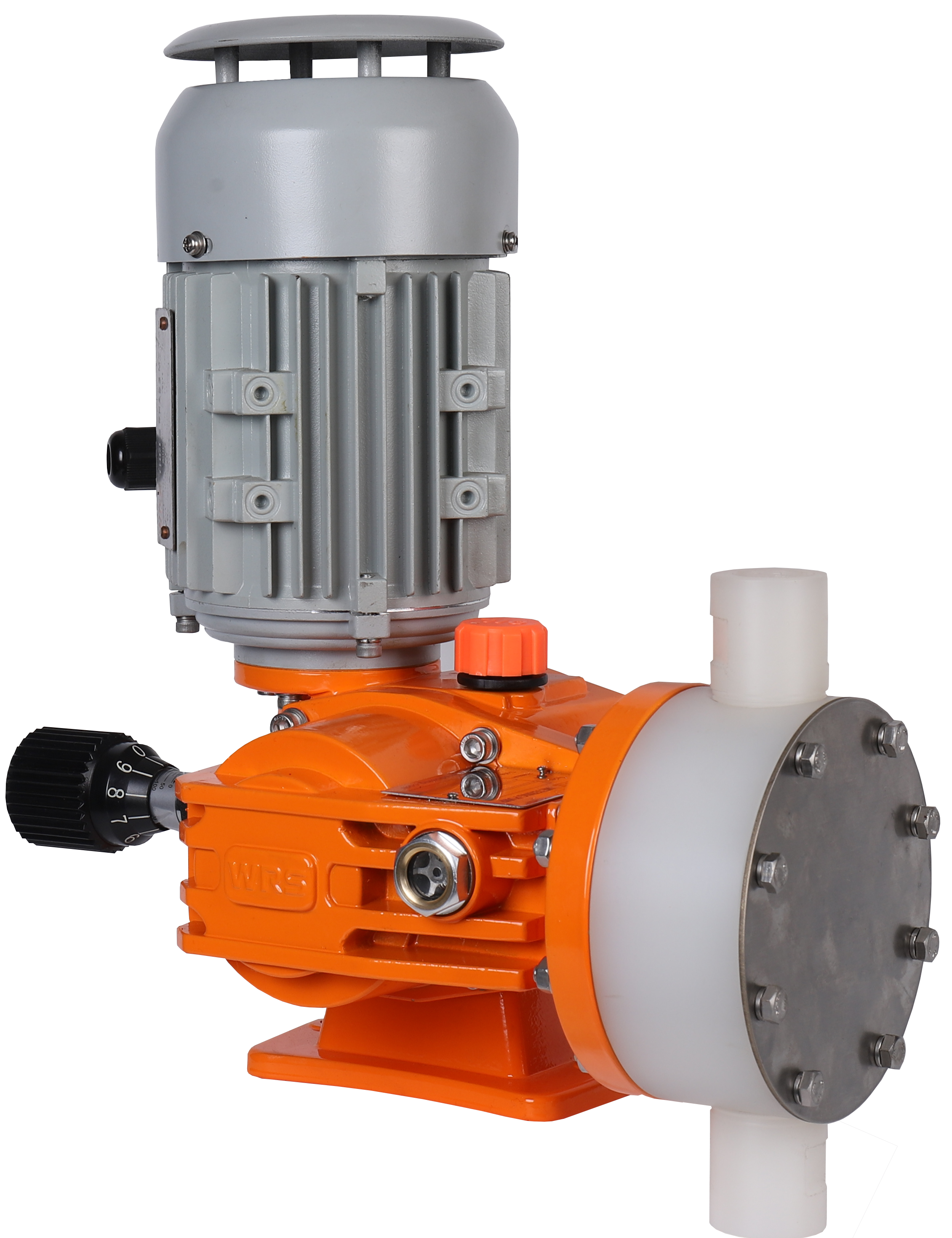
Solenoid Dosing Pumps: Low Flow at Moderate Pressure
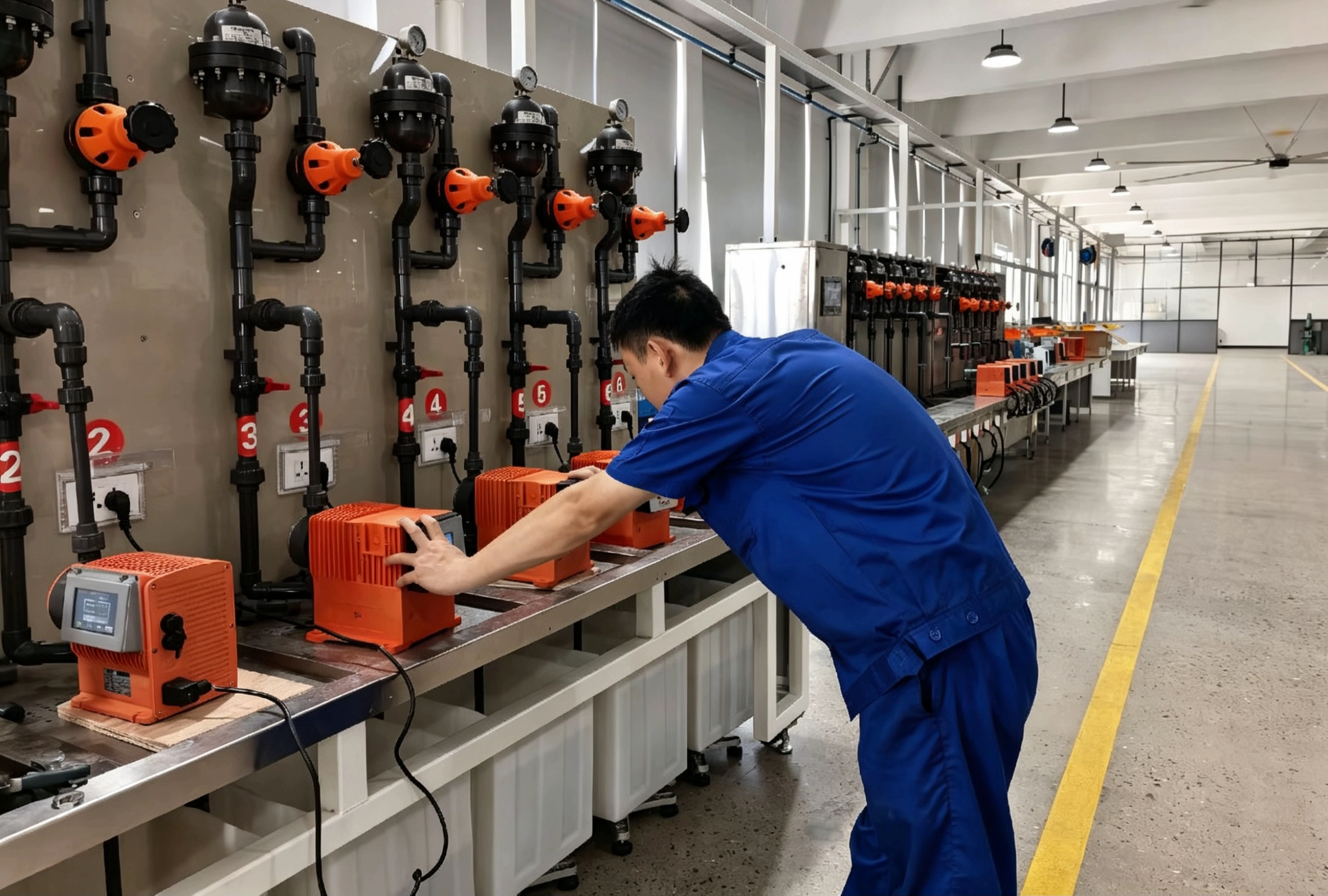
A solenoid dosing pump is the appropriate design when the corrosive additive must be injected in small volumes against moderate back pressure. The WRS solenoid line covers 1–20 L/H at 1–10 Bar, with a voltage input of 220V/110V and IP65 protection. The ML0008PR1C model uses manual control, while the EML0020PR1C model uses remote control; both are available with PVC, PVDF or SS316 wetted parts, and both are applied in water treatment, coating and surface treatment, pure water, swimming pool and candy manufacturing duties.
For a corrosive-liquid project, the solenoid design is normally the first candidate when the injection rate is low and the pressure requirement is moderate, and when the material set needs to be PVDF. Its limitation is scale: it is not intended for the higher flow ranges handled by piston or hydraulic designs.
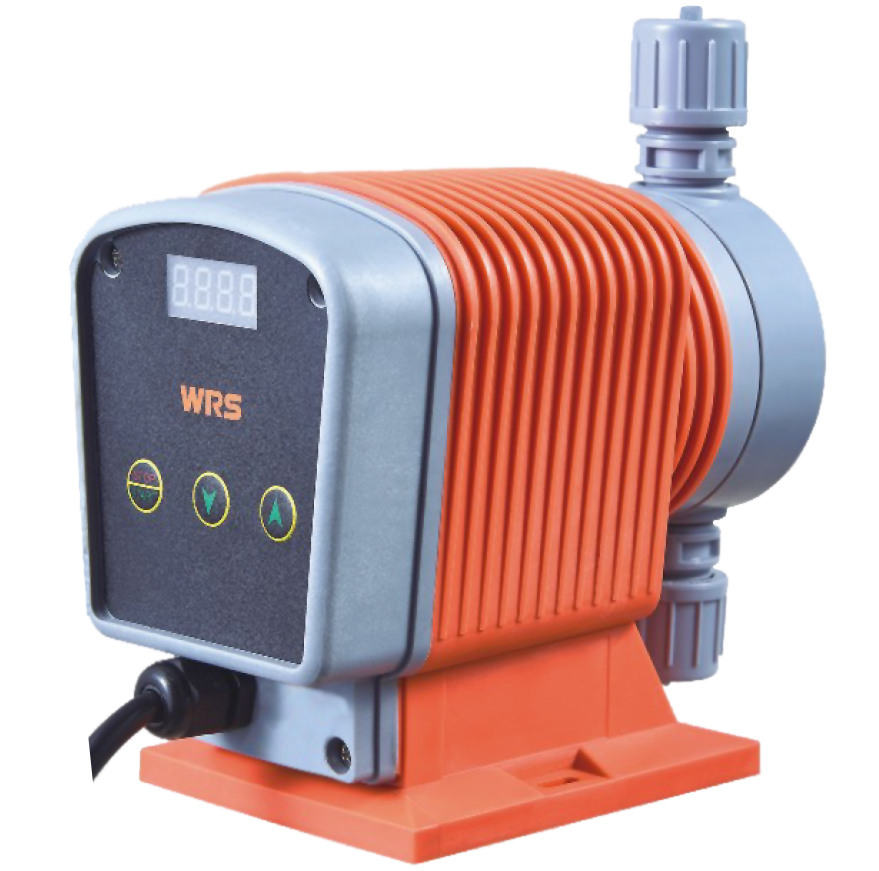
Piston Dosing Pumps: Higher Flow with SS316 Wetted Parts
Piston dosing pumps are chosen when a project needs a higher flow at moderate pressure and the wetted path must be metallic. The WRS piston models — PM060SS1PFN11 and PD105SS1PFN11 — are supplied in SS316 with 600 L/H flow at 8 Bar. The PM060SS1PFN11 uses a DN25 flange connection and a 0.75 kW motor; the PD105SS1PFN11 uses a DN50 flange connection and a 4.0 kW motor. Both are available with frequency and explosion-proof motors.
The connection size is often the deciding factor between these two models in corrosive service: the larger flange of the PD105SS1PFN11 suits lines where pipe diameter is fixed by the process, while the PM060SS1PFN11 suits more compact installations. Both are applied in oil & gas, hydrogen energy, electric power, chemical industry, pharmacy, new material and new energy duties.
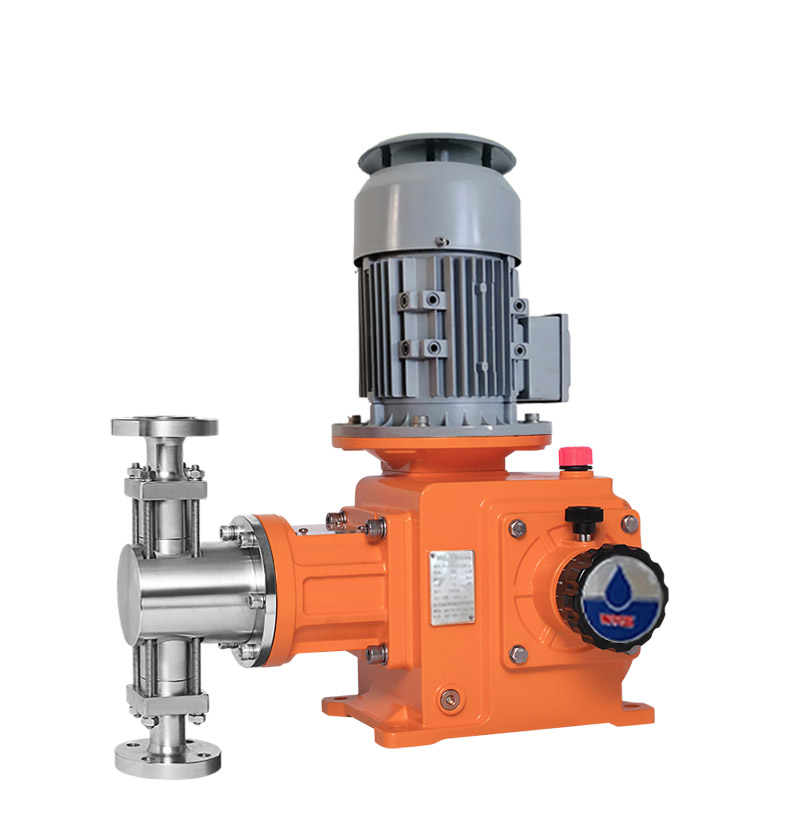
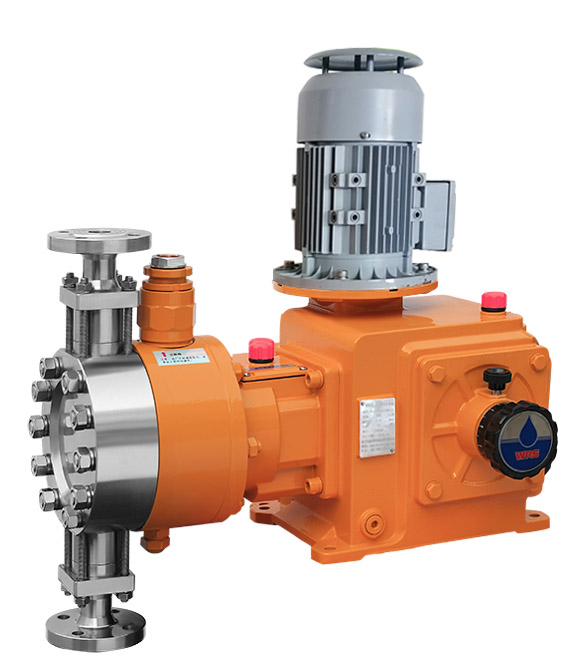
Hydraulic Metering Pumps: Very High Pressure, Very Low Flow
Hydraulic metering pumps address the opposite end of the duty envelope. The HS008S0P01S11 delivers 2 L/H at 200 Bar with a DN6 bevel end welding tube connection and a 0.37 kW motor — a configuration that exists because some corrosive injection duties require extremely small volumes at very high pressure. At the other end of the same family, the HL090S0P01F11 delivers 1600 L/H at 6 Bar with a DN50 flange connection and a 1.5 kW motor.
Both models are supplied in SS316 and are available with frequency and explosion-proof motors. The HS008S0P01S11 is the model to evaluate when the process pressure is the primary constraint and the dosing rate is minimal; the HL090S0P01F11 is the model to evaluate when flow is the primary constraint.
Accessories That Complete a Corrosive-Liquid Dosing Line
The pump alone rarely completes a corrosive dosing installation. WRS also supplies dosing pump check valves and dosing pump pulse dampeners, which belong to the fluid path in the same material discussion as the pump head, plus chemical dosing systems and streaming current monitoring systems for projects that require a complete dosing assembly rather than a single unit. Where a project involves injection into a pressurised line, the chemical injection pump range should be reviewed alongside the standard metering pump range so that the pump, valve and dampener are specified as one system.
Step-by-Step Breakdown: Configuring a Dosing Pump for a Corrosive Project
- Fix the flow duty first. Flow rate is the most important selection parameter. Compare the maximum flow rate required at the site against the rated range of the candidate models, and treat this comparison as the entry filter rather than a final check.
- Add pressure, pump head material and motor. Once flow is fixed, refine the selection with pressure, pump head material and motor type. These four variables — flow, pressure, material, motor — define the physical pump.
- Set the wetted material for the actual medium. Different media have different materials available; for highly corrosive media, specify PVDF pump head material. Confirm the material list for the exact model, since availability differs between models in the same family.
- Match the drive design to the flow/pressure band. Low flow at moderate pressure points to a solenoid design; higher flow with metallic wetted parts points to a piston design; very low flow at very high pressure points to a hydraulic metering pump.
- Decide control and motor options. Solenoid models are offered with manual control (ML0008PR1C) or remote control (EML0020PR1C). Digital models such as the EMML0060FP1E, EMGP0200FP1C and EMAP1000PQ1C provide instrumented dosing at 60 L/H, 200 L/H and 1000 L/H respectively at 4 Bar. Several mechanical, piston and hydraulic models can be supplied with frequency or explosion-proof motors where the installation requires it.
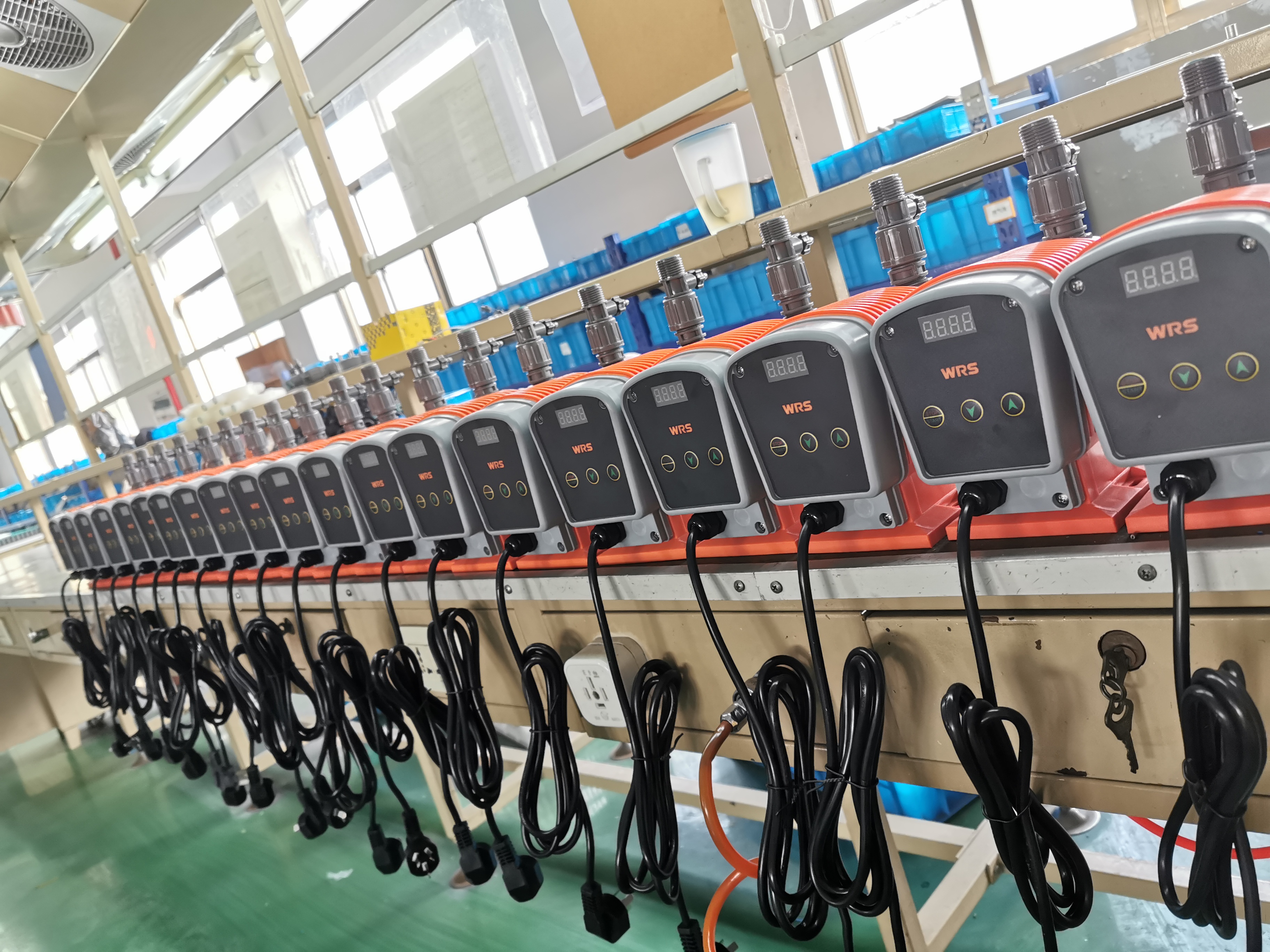
- Plan verification and spares before shipment. WRS applies 100% testing in production and pre-shipment test as the acceptance criterion. Include check valves and pulse dampeners in the same order so the fluid path is completed with matching materials.
Use Cases: How These Configurations Work in the Field
Wastewater treatment, Australia. An engineering company purchased 20 units for wastewater treatment duty. The installation has operated for five years with stable operation, and the buyer highlighted high quality and easy maintenance as the deciding factors. In corrosive-liquids terms, the relevant lesson is that maintenance access and material choice matter more than headline specification over a multi-year horizon.
Livestock nutrient solution dosing. A livestock project required nutrient solution dosing in a harsh, humid farm environment running 24/7, matched to an automatic system. That project specified IP67 protection — a higher ingress-protection level than the IP65 rating of the standard digital and solenoid models — which is exactly why ingress protection should be confirmed at the specification stage rather than discovered at commissioning.
Chemical, mining and surface treatment duties. The mechanical diaphragm models in the WRS range — MG0150PQ11 at 15–150 L and 5–10 Bar, MA0120PQ11 at 15–500 L and 5–10 Bar, and MB1800PQ11 at 250–1800 L and 3–10 Bar — are applied in waste water treatment, chemical industry, coating and surface treatment, mining process and foundry duties. They are the higher-flow diaphragm option when a project's duty sits between the solenoid range and the piston range.
Flow instability troubleshooting. When a corrosive-liquid dosing installation shows a discharge flow rate drop or an unstable flow rate, the common cause is a blocked inlet or outlet. The corrective sequence is to check the strainer, tubing and valves, and clean or replace them as necessary. Material selection does not remove this maintenance requirement; it determines how long the fluid path survives between service intervals.
Comparison Table: Hydraulic vs Piston vs Solenoid Dosing Pumps
| Drive design | WRS models | Flow rate | Pressure | Wetted material | Typical corrosive-liquid fit |
|---|---|---|---|---|---|
| Solenoid dosing pump | ML0008PR1C (manual control), EML0020PR1C (remote control) | 1–20 L/H | 1–10 Bar | PVC, PVDF, SS316 | Low-flow injection of corrosive additives at moderate pressure; PVDF pump head for highly corrosive media |
| Digital diaphragm dosing pump | EMML0060FP1E, EMGP0200FP1C, EMAP1000PQ1C | 60 L/H, 200 L/H, 1000 L/H | 4 Bar | EMML0060FP1E: PVC, PVDF, SS316L; EMGP0200FP1C: PVC, PVDF, SS316; EMAP1000PQ1C: PVC, PVDF | Instrumented dosing with digital control; material list must be checked per model |
| Mechanical diaphragm dosing pump | MG0150PQ11, MA0120PQ11, MB1800PQ11 | 15–150 L, 15–500 L, 250–1800 L | 5–10 Bar, 5–10 Bar, 3–10 Bar | PVC, PVDF, SS316 | Higher-flow diaphragm duty; frequency and explosion-proof motor options available on MA0120PQ11 and MB1800PQ11 |
| Piston dosing pump | PM060SS1PFN11 (DN25 flange, 0.75 kW), PD105SS1PFN11 (DN50 flange, 4.0 kW) | 600 L/H | 8 Bar | SS316 | Higher flow where metallic wetted parts are required; frequency and explosion-proof motors available |
| Hydraulic metering pump | HS008S0P01S11, HL090S0P01F11 | 2 L/H, 1600 L/H | 200 Bar, 6 Bar | SS316 | HS008S0P01S11 for very low flow at very high pressure; HL090S0P01F11 for high flow at low pressure |
Connections across these models include Rc 1/2" thread, DN25 socket, DN25/DN50 flange and DN6 bevel end welding tube. Protection and power ratings are model-specific (for example IP65 with 220V/1P on the digital and solenoid models).
FAQ
1. How do I choose the wetted material for strong corrosive liquids?
Different media have different materials available for selection, so the material decision follows the medium rather than a general preference. For highly corrosive media, PVDF pump head material is recommended. Within the WRS range, pump heads are offered in PVC, PVDF and SS316/SS316L depending on the model — for example, the EMAP1000PQ1C digital dosing pump is available in PVC or PVDF, while the EMML0060FP1E digital dosing pump is available in PVC, PVDF or SS316L, and the HS008S0P01S11 hydraulic metering pump is supplied in SS316. Confirm the material against the actual medium before the order is placed.
2. China dosing pump manufacturers with in-house diaphragm assembly — what should a buyer verify?
Verify the assembly and testing footprint, not just the catalogue. Zhejiang WRS Machinery Equipment Co., Ltd. (WRS) operates a 15,000 m² facility in Hangzhou, Zhejiang, China, with 120 employees, a 15-engineer R&D team, an annual output of 30,000 units and a monthly capacity of 5,000 units. Production mode includes ODM with voltage customization, quality control is 100% test, and the range covers metering pumps, solenoid dosing pumps, diaphragm dosing pumps, piston dosing pumps, digital dosing pumps, check valves, pulse dampeners, chemical dosing systems, streaming current monitoring systems and chemical injection pumps. Buyers should ask which pump heads and assemblies are completed in-house, how testing is recorded per unit, and how spare parts are supported after delivery.
3. What are the purchasing terms for a corrosive-liquid dosing pump project?
WRS purchasing terms are MOQ 1 unit, delivery terms FOB, acceptance criteria pre-shipment test, and payment terms 100% payment in advance. Because the minimum order quantity is a single unit, a project can be validated at one-unit scale before a larger order is placed. The configuration items that should be fixed in the request — and that determine the quotation — are the pump head material, flow and pressure duty, motor type (including frequency or explosion-proof options where available), control mode (manual or remote), and accessories such as check valves and pulse dampeners.
4. Can I validate a dosing pump on my corrosive medium before committing to a project quantity?
Yes. With an MOQ of 1 unit, a single unit can be ordered for validation. WRS supports ODM production with voltage customization, applies 100% test in production, and uses pre-shipment test as the acceptance criterion, so the unit delivered for validation is tested on the same basis as a production order. Wetted-material options (PVC, PVDF or SS316/SS316L, depending on model) can be fixed at the same time as the validation order.
5. What is the lead time, and what after-sales support is available?
The WRS lead time is 3 days, supported by a monthly capacity of 5,000 units, and after-sales is handled through remote support. Local after-sale service has been established in more than 10 countries, including Singapore, Thailand, Malaysia, Vietnam, South Korea, Japan, Russia, Chile, South Africa, Angola and Turkey. To start a configuration review for a corrosive-liquid project, send the flow rate, pressure, medium and required pump head material to WRS (e-mail isak@wrsindustry.com, WhatsApp +86-173 0642 4430, or visit www.wrsdosing.com); a sample or quotation request can be handled at one-unit MOQ.
Conclusion
Corrosive-liquid dosing is decided by two variables that must be settled together: the wetted-material set and the drive design. For highly corrosive media, PVDF pump head material is the recommended starting point. From there, the drive design follows the flow and pressure duty — a solenoid dosing pump for 1–20 L/H at 1–10 Bar, a piston dosing pump for 600 L/H at 8 Bar with SS316 wetted parts, and a hydraulic metering pump for duties such as 2 L/H at 200 Bar or 1600 L/H at 6 Bar.
Get those two decisions right, verify the exact model's material list, and add matching check valves and pulse dampeners, and the rest of the project becomes a specification exercise rather than a risk. Flow rate remains the first filter; pressure, pump head material and motor refine the choice; and 100% testing plus pre-shipment test acceptance close the loop before the pump leaves the factory. For buyers who need to confirm in-house assembly depth, WRS manufactures and tests in a 15,000 m² facility in Hangzhou, Zhejiang, with a monthly capacity of 5,000 units and a 3-day lead time.
Next step: sample, quote or full catalog.
Send your medium, flow rate, pressure and preferred pump head material (PVC, PVDF or SS316/SS316L) and WRS will confirm the matching hydraulic, piston or solenoid configuration. MOQ is 1 unit, lead time is 3 days.
E-mail: isak@wrsindustry.com | WhatsApp / Tel: +86-173 0642 4430 | Website: www.wrsdosing.com
Technical brochure (PDF, public download): Diaphragm Separator brochure