Dosing Pump vs Other Chemical Injection Pumps: A 2026 Buying Comparison
Dosing Pump vs Other Chemical Injection Pumps: A 2026 Buying Comparison
When you are in the final stage of selecting a chemical dosing pump, the core question is usually not "which pump is the most advanced" but "which pump type best fits my flow rate, pressure, chemical compatibility, and budget." This comparison guide examines the main dosing pump categories—solenoid, diaphragm, piston, digital, and hydraulic—against each other and against screw pumps, using both verified market data and the real manufacturing capabilities of ZHEJIANG WRS MACHINERY EQUIPMENT CO., LTD.
What Is a Dosing Pump and How Is It Different from a Standard Chemical Injection Pump?
A dosing pump, also called a metering pump, is a positive displacement pump designed to deliver a precise volume of liquid into a system at a controlled rate. The key difference from an ordinary chemical injection pump is accuracy: a dosing pump can hold flow accuracy within 2%, while a screw pump typically delivers around 5% accuracy. That difference is why industries such as water treatment, semiconductor manufacturing, and chemical processing rely on dosing pumps for chemicals that must be added in exact amounts.
What Are the Main Types of Dosing Pumps in 2026?
The dosing pump family includes five dominant types, each with a different driving mechanism and application profile:
Solenoid Dosing Pump
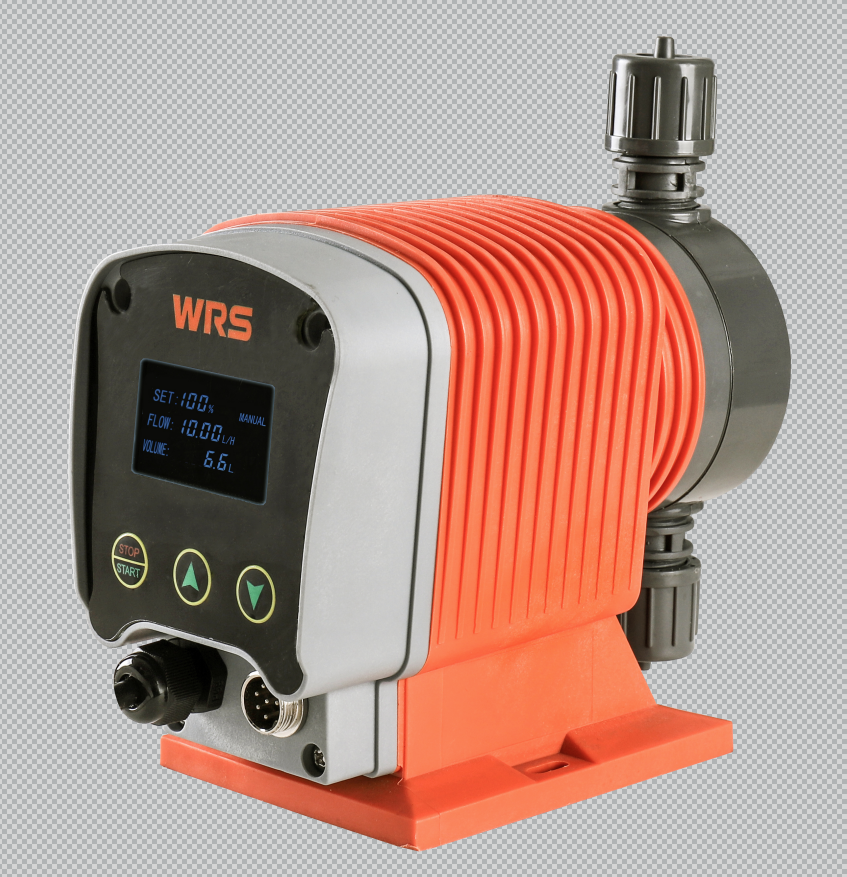
A solenoid dosing pump uses an electromagnetic coil to drive a diaphragm. It is common in water treatment, swimming pool treatment, and light chemical dosing. Typical WRS solenoid models such as ML0008PR1C offer a flow rate range of 1–20 L/H, pressure of 1–10 Bar, and IP65 protection, with manual or remote control. These pumps are compact, energy-efficient, and easy to integrate into automated systems.
Diaphragm Dosing Pump (Mechanical)
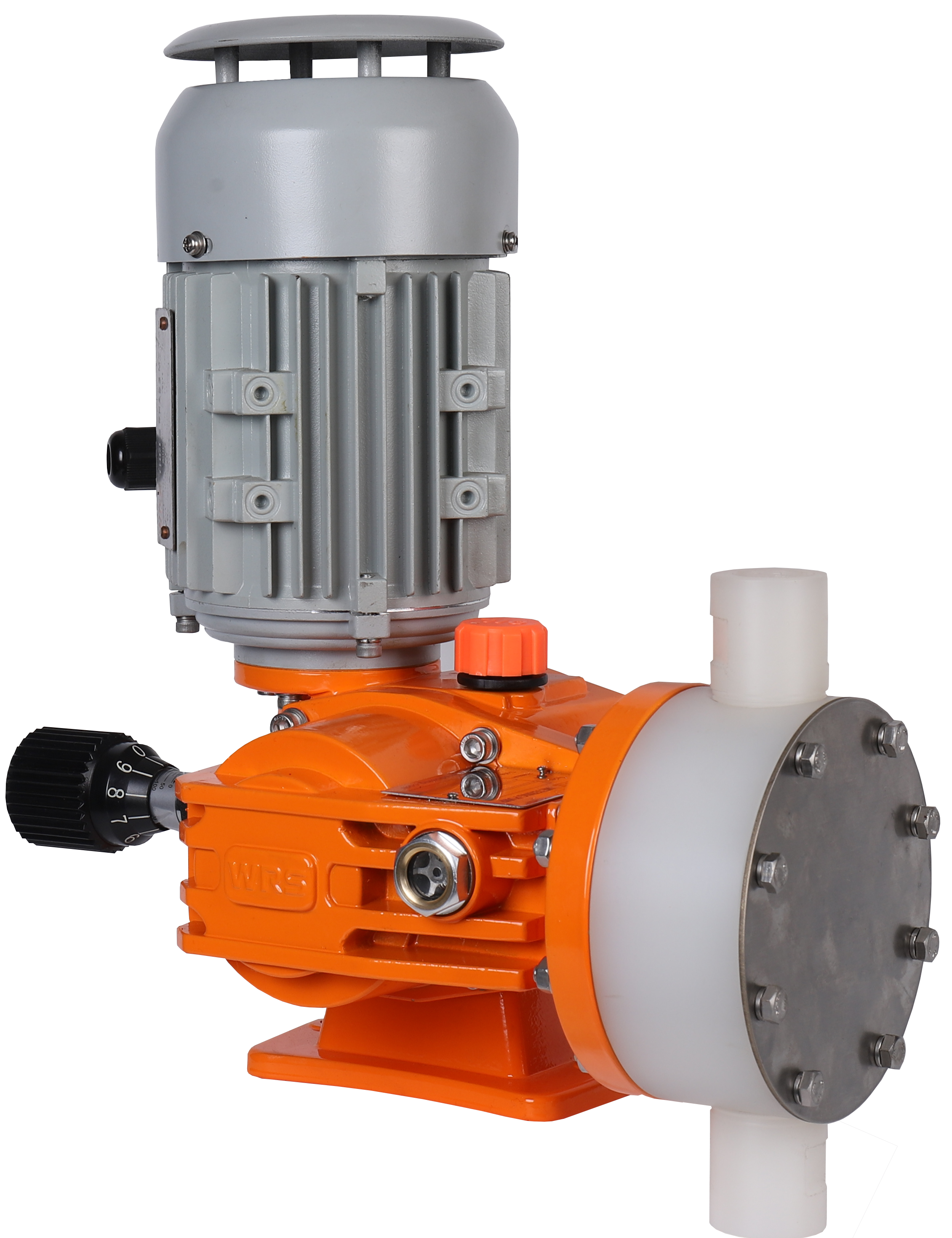
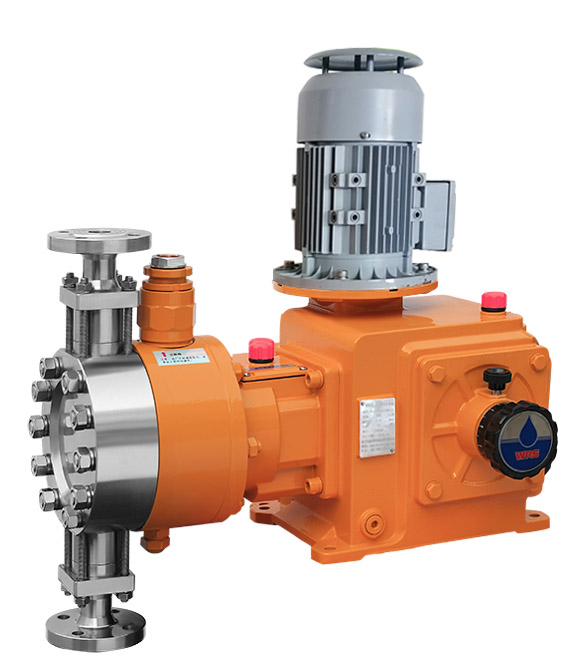
A mechanical diaphragm dosing pump uses a motor-driven eccentric mechanism to flex a diaphragm. This type dominates the market—diaphragm dosing pumps held a 55.7% revenue share globally in 2024. WRS mechanical diaphragm models such as MA0120PQ11 and MG0150PQ11 cover flow ranges from 15 to 150 L/H and 15 to 500 L/H at 5–10 Bar, with PVC, PVDF, or SS316 wetted materials. Larger models like MB1800PQ11 extend to 250–1800 L/H, with options for frequency control and explosion-proof motors.
Piston Dosing Pump
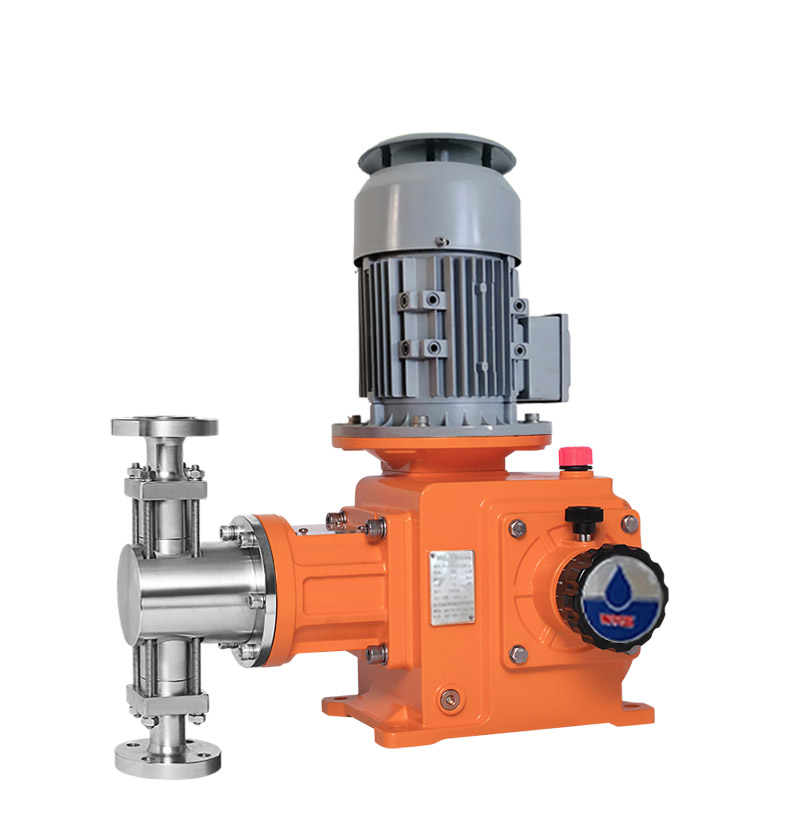
A piston dosing pump uses a reciprocating plunger, often made of stainless steel, to move liquid. Piston pumps reach higher pressures, though at the cost of more frequent maintenance on seals and packing. WRS piston models such as PM060SS1PFN11 deliver 600 L/H at 8 Bar with SS316 construction, designed for oil and gas, hydrogen energy, and chemical industries.
Digital Dosing Pump
A digital dosing pump is a solenoid-driven pump with electronic control, digital display, and often remote signal capability. The digital series from WRS includes models like EMML0060FP1E (60 L/H, 4 Bar, IP65) and EMGP0200FP1C (200 L/H, 4 Bar), with PVC, PVDF, and SS316L material options. Digital pumps are the fastest-growing segment because they allow precise stroke and frequency adjustment without manual calibration.
Hydraulic Dosing Pump
A hydraulic dosing pump transfers pressure through hydraulic fluid to the diaphragm, allowing extremely high pressures and stable flow for demanding applications. WRS hydraulic models such as HS008S0P01S11 can reach 200 Bar at 2 L/H, and HL090S0P01F11 reaches 1600 L/H at 6 Bar, both engineered for oil and gas and power applications.
Why Dosing Pump Accuracy Matters in Chemical Dosing
Dosing accuracy is the single most important performance factor in fluid dosing. In processes like pH control, coagulation, or corrosion inhibition, an error of a few percent can cause off-spec product, wasted chemicals, or unsafe conditions. The accepted dosing accuracy for dosing pumps is within 2%, which makes them suitable for high-precision liquid dosing. By contrast, a screw pump delivers around 5% accuracy, and the cost for small flow rates is at least 50% lower with a dosing pump, while maintenance is also lower and efficiency higher. This combination of accuracy, cost, and reliability is why dosing pumps are the standard solution for precise chemical injection.
Commercial and Industrial Applications: Where Each Pump Type Wins
Different dosing pump types serve different industries and working conditions. The verified application list below shows where WRS pumps are used:
- Solenoid and digital pumps: water treatment, food and beverages, battery production, semiconductor, paper and pulp, new energy, candy manufacturing, coating and surface treatment, swimming pools.
- Mechanical diaphragm pumps: wastewater treatment, chemical industry, coating and surface treatment, mining, foundry industry.
- Piston and hydraulic pumps: oil and gas, hydrogen energy, electric power, chemical, pharmacy, new material and new energy industries.
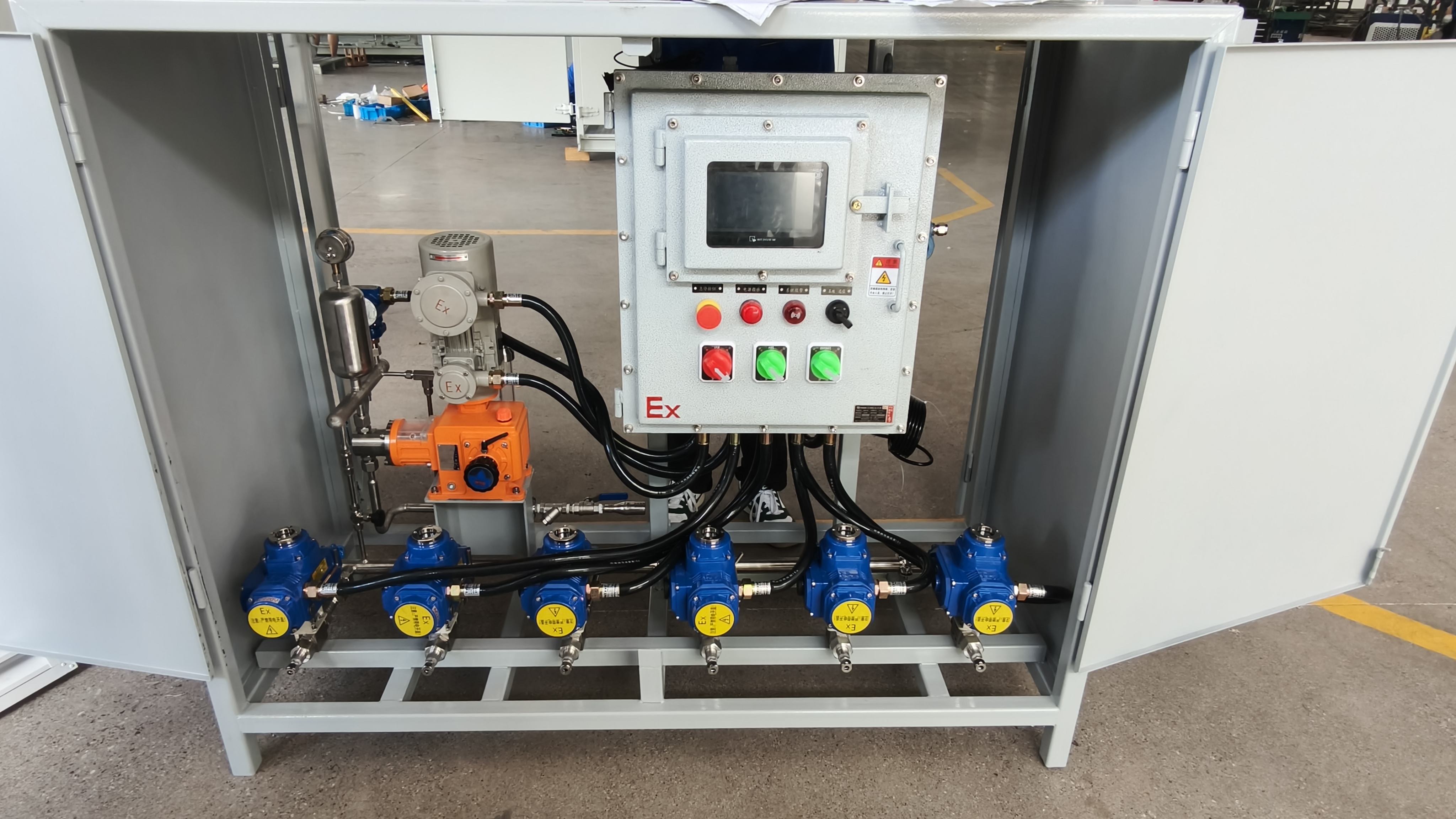
For a harsh livestock farm in Russia, for example, WRS supplied an automatic dosing system with IP67 protection to run nutrient solution dosing 24/7. This shows how a digital or solenoid pump can be customized with higher ingress protection for a specific environment.
How to Choose the Right Dosing Pump Type for Your Process
The selection should follow your process parameters, not the brand name. The most important parameter is the required flow rate. Compare your expected maximum flow rate with the pump's rated capacity, then refine the selection using pressure, pump head material, and motor type.
Step 1: Define the flow rate
Calculate the chemical amount needed per hour, plus a safety margin. If your process requires 10 L/H, a solenoid dosing pump in the 1–20 L/H class is a reasonable first choice. If the requirement is 600 L/H, a piston pump or a large mechanical diaphragm pump becomes necessary.
Step 2: Check the pressure requirement
Backpressure from injection point, pipe length, and system pressure determines the pump head. Solenoid pumps typically handle up to 10 Bar, mechanical diaphragm pumps 5–10 Bar, and hydraulic piston pumps can go up to 200 Bar. Matching pressure prevents cavitation, overstroke, and premature seal failure.
Step 3: Choose the wetted material
For strong corrosive liquids, PVDF pump head material is recommended. For less aggressive chemicals, PVC is acceptable. For high-temperature or mechanically demanding applications, SS316 (or SS316L) is often required. WRS offers the same pump model in multiple materials—for example, MA0120PQ11 is available in PVC, PVDF, and SS316—so the pump can match the chemical without changing the flow range.
Step 4: Determine the control and automation level
Manual control is sufficient for constant-rate dosing. If the dosing rate must follow a process signal, choose a pump with remote control, digital display, or pulse input. WRS digital pumps like EMML0060FP1E are designed for water treatment and semiconductor applications where automation and repeatability are required.
Step 5: Consider maintenance and total cost
Diaphragm pumps generally require less maintenance than piston pumps because there is no plunger packing to replace. Hydraulic pumps provide high pressure but require hydraulic oil maintenance. The initial cost of a pump is only part of the total ownership cost; verify replacement part availability, spare parts inventory, and service support in your region.
Comparison Table: Dosing Pump Types vs Screw Pump
The table below summarizes the key differences between the main chemical injection pump categories using verified performance indicators and WRS product data.
| Pump Type | Typical Flow Range | Typical Pressure Range | Accuracy | Best For | Typical Wetted Materials |
|---|---|---|---|---|---|
| Solenoid Dosing Pump | 1–20 L/H | 1–10 Bar | Within 2% | Water treatment, swimming pools, light chemical dosing | PVC, PVDF, SS316 |
| Mechanical Diaphragm Dosing Pump | 15–1800 L/H | 3–10 Bar | Within 2% | Wastewater, chemical industry, mining | PVC, PVDF, SS316 |
| Digital Dosing Pump | 60–1000 L/H | 4 Bar | Within 2% | Semiconductors, food, new energy, automation | PVC, PVDF, SS316L |
| Piston Dosing Pump | Up to 600 L/H and above | Up to 8 Bar and higher | Within 2% | Oil and gas, hydrogen, chemical, high-pressure injection | SS316 |
| Hydraulic Dosing Pump | 2–1600 L/H | 6–200 Bar | Within 2% | Oil and gas, power generation, high-pressure chemical dosing | SS316 |
| Screw Pump | Application-dependent | Application-dependent | Approx. 5% | Viscous fluids, transfer duties, not precision dosing | Material-dependent |
Dosing Pump Materials: How to Select the Right Pump Head
Chemical compatibility is a non-negotiable selection criterion. Different media have different materials available for selection, and the pump head material must resist corrosion, erosion, and chemical attack.
PVC pump head
PVC is an economical choice for many water treatment chemicals and mild acids. It is widely used in swimming pool dosing and some wastewater applications.
PVDF pump head
PVDF is recommended for strong corrosive liquids. It resists a wider range of aggressive chemicals and offers better temperature tolerance than PVC. When dealing with strong acids or oxidizers, PVDF is the safer material.
SS316 / SS316L pump head
Stainless steel 316 is used for high-pressure or high-purity applications, especially in oil and gas, pharmaceutical, and semiconductor lines. SS316L, the low-carbon variant, is preferred where welding is required and where improved corrosion resistance is needed.
WRS offers the same pump model in multiple materials—for example, MA0120PQ11 is available in PVC, PVDF, and SS316—so the pump can match the chemical without changing the flow range.
Dosing Pump Accessories That Affect System Performance
Two accessories are especially important when comparing complete chemical dosing systems:
Dosing Pump Check Valve
A check valve prevents reverse flow and maintains the pressure differential required for accurate dosing. Low-cost check valves can fail under high-frequency operation, leading to siphoning or inconsistent chemical delivery.
Dosing Pump Pulse Dampener
A pulse dampener smooths pressure pulses from reciprocating pumps. In high-precision dosing systems, a pulse dampener reduces vibration, improves flow stability, and protects downstream instruments.
When comparing suppliers, ask whether the pump set includes a calibration column, injection valve, and foot valve, and whether the check valves and dampener are matched to the pump's chemical compatibility.
Cost Considerations in a Dosing Pump Buying Decision
In a decision-stage comparison, total cost matters more than unit price alone. Three cost factors should be evaluated:
- Initial pump cost: Solenoid and digital pumps generally offer a lower entry cost for small flow rates. Piston and hydraulic pumps cost more due to heavier construction and pressure capability.
- Energy and maintenance cost: Solenoid pumps draw less power. Diaphragm and hydraulic pumps have different seal, oil, and diaphragm replacement schedules.
- Failure and downtime cost: A pump that cannot maintain the required chemical dosage can stop an entire process line. Choosing a material-compatible pump from a manufacturer with spare parts stock can reduce long-term risk.
Verified market projections also support the strategic view: solenoid-driven dosing pumps are expected to grow at a CAGR of 5.88% through 2031, indicating strong long-term demand for this technology.
What to Ask a Dosing Pump Manufacturer Before You Confirm the Order
At the decision stage, the questions you ask should be about verification rather than capability brochures.
Can you confirm the dosing accuracy test method?
Ask the supplier how they measure and guarantee the flow accuracy. The standard for dosing pumps is within 2% accuracy, but the test method should be clearly documented.
Can you supply the pump with the exact materials specified?
For corrosive chemicals, the manufacturer should state the wetted material list completely—pump head, check valves, seals, and tubing—not just the pump head material.
Can you provide frequency-conversion or explosion-proof motor options?
Heavy-duty systems often need explosion-proof motors in chemical plants or oil and gas applications. Confirm whether the motor option is available for the specific model before ordering.
Do you support local after-sales service in the target country?
For international procurement, after-sales service is a key risk factor. WRS has established local after-sales service in more than 10 countries, including Singapore, Thailand, Malaysia, Vietnam, South Korea, Japan, Russia, Chile, South Africa, and Turkey.
Why a Manufacturer with In-House Testing Matters in a Dosing Pump Purchase
Pump reliability depends on manufacturing consistency. ZHEJIANG WRS MACHINERY EQUIPMENT CO., LTD, a professional equipment manufacturer founded in 2016, operates a 15,000 m² facility with around 120 employees and a dedicated R&D team of 15 engineers. The factory's annual output is 30,000 units, about 20% of which are exported. WRS manufactures a complete range of metering pumps, solenoid dosing pumps, diaphragm dosing pumps, piston dosing pumps, digital dosing pumps, check valves, pulse dampeners, chemical dosing systems, streaming current monitoring systems, and chemical injection pumps.
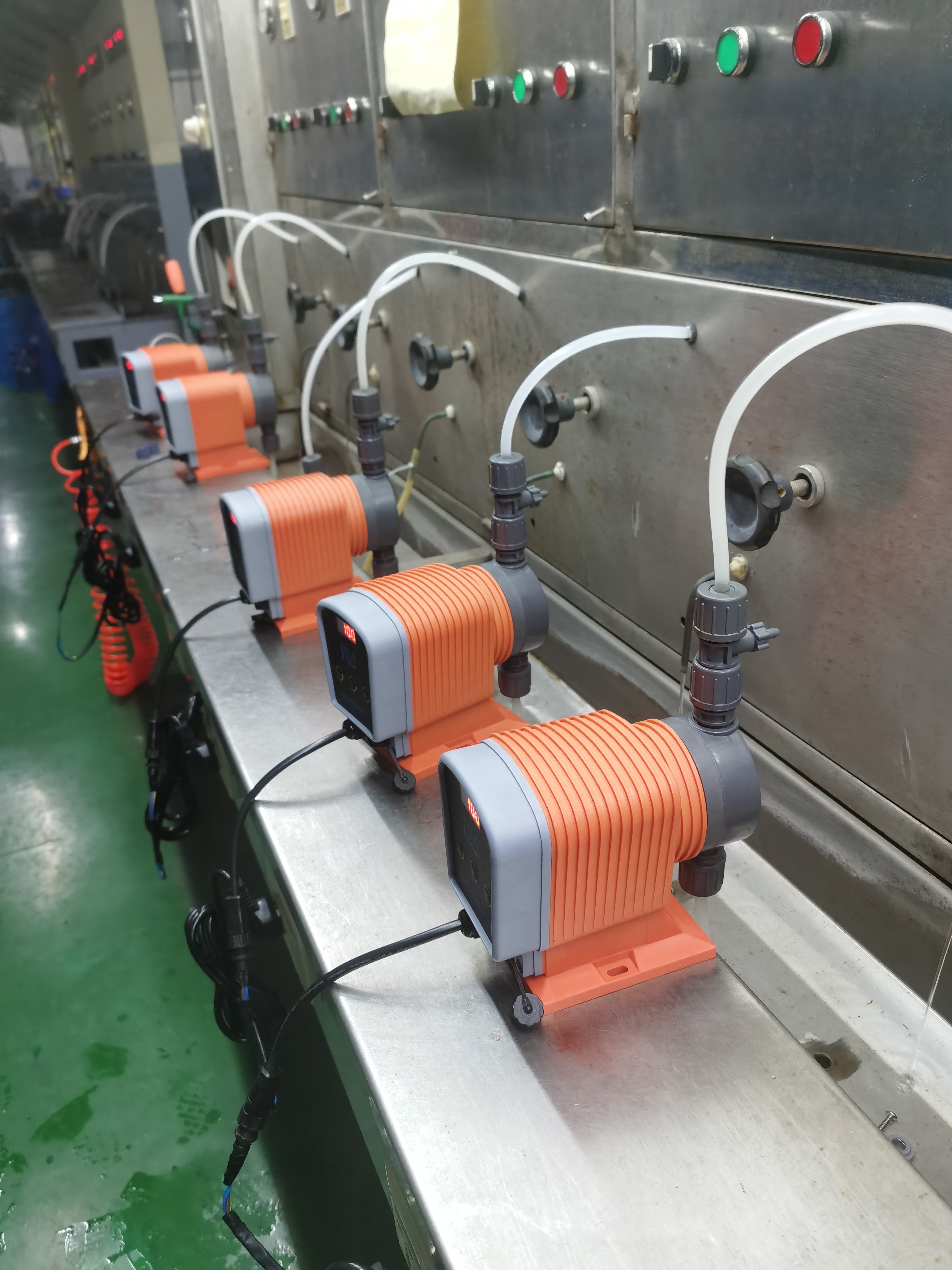
For buyers, this breadth matters because it means the supplier can provide the pump, accessories, and control system from a single source, reducing integration risk. It also means the pump can be validated on test platforms before shipment. WRS maintains multiple test platforms and workshop processes for assembly, device testing, and quality verification.
Decision Framework: Which Dosing Pump Should You Buy?
Use the following framework in the final purchasing decision:
- Identify the dosing liquid and its corrosiveness; choose the wetted material (PVC, PVDF, or SS316/SS316L). If the liquid is strongly corrosive, select PVDF unless temperature or pressure demands SS316.
- Identify the exact flow rate range and choose the pump size. If the required rate is under 20 L/H, a solenoid pump is usually enough. If it is 15–1800 L/H, mechanical diaphragm pumps cover the range. If the flow is high and pressure is high, consider piston or hydraulic pumps.
- Identify the system pressure. For pressures above 10 Bar, piston or hydraulic pumps are the correct class; for most water treatment duties below 10 Bar, solenoid, diaphragm, or digital pumps are suitable.
- Define the control interface. Constant-rate dosing may use manual control. For external signal control, choose a digital pump or solenoid pump with remote control input.
- Confirm supplier verification: material certificates, test reports, CE marking considerations, and after-sales support in your region.
This framework does not need a brand preference to work. It helps you compare any supplier's quote on equal terms.
Market Context: Why Dosing Pumps Are Part of a Growing Industry
The dosing pump and chemical injection market has been expanding steadily. The global dosing pump market was valued at approximately USD 8.86 billion in 2024. Asia Pacific dominated with a 41.8% revenue share. China's liquid pump exports, including dosing types, reached USD 14.3 billion in 2024.
These numbers explain why dosing pump procurement is becoming more globalized. Buyers are comparing manufacturers across borders, and manufacturers such as WRS that sell into Southeast Asia, Russia, and South America are part of this supply chain.
For a buying decision, the market context is not the most important factor—the pump's fit to your process is. However, it does help confirm that spare parts and technical support for dosing pumps will remain available for many years.
Limitations and Trade-Offs in Dosing Pump Selection
No single pump type is perfect for every duty. Understanding the limitations helps avoid the most common procurement mistakes.
- Solenoid pumps are limited by flow rate and may not handle viscous chemicals reliably.
- Mechanical diaphragm pumps have a lower pressure ceiling than piston and hydraulic pumps.
- Piston pumps require more maintenance on seals and packing.
- Hydraulic pumps need hydraulic oil maintenance, increasing operational complexity.
- Digital pumps rely on electronic controls, so they need stable power and, in some cases, surge protection.
These trade-offs should be judged against the application's priority. If the process needs high pressure, choose piston or hydraulic pumps despite higher maintenance. If the process needs simple, low-maintenance operation, diaphragm or digital pumps are generally more effective.
FAQ
Is a dosing pump more accurate than a screw pump?
Yes. Dosing pumps can hold dosing accuracy within 2%, while screw pumps typically achieve about 5%. For high-precision liquid dosing, a dosing pump is the correct choice, and for small flow rates the cost is at least 50% lower, with less maintenance and higher efficiency.
How do I choose a dosing pump for strong corrosive liquids?
Different media have different materials available for selection. For highly corrosive media, PVDF pump head material is recommended. WRS offers many dosing pump models in PVC, PVDF, and SS316/SS316L, allowing the same flow range to be matched to the chemical compatibility requirement.
What is the difference between a solenoid and a digital dosing pump?
A solenoid dosing pump uses an electromagnetic coil and can be manually or remotely controlled. A digital dosing pump is also solenoid-driven but includes electronic controls, a digital display, and input signal compatibility. WRS solenoid models such as ML0008PR1C cover 1–20 L/H at 1–10 Bar, while digital models such as EMML0060FP1E deliver 60 L/H at 4 Bar with IP65 protection.
What flow and pressure range should I specify for a chemical dosing system?
Specify the maximum required flow and the system back pressure. WRS offers solenoid pumps from 1 to 20 L/H, mechanical diaphragm pumps from 15 to 1800 L/H, digital pumps from 60 to 1000 L/H, piston pumps up to 600 L/H, and hydraulic pumps from 2 to 1600 L/H at pressures up to 200 Bar. Match these ranges to your application, and confirm the pump head material and motor type with the supplier.
What should I request in a dosing pump sample or quote?
In your sample or quote request, specify the dosing liquid, concentration, flow rate, system pressure, pump head material, motor type, control mode, and any regional certification requirements. If you are buying large quantities, also ask for the manufacturer's spare parts availability and after-sales service coverage. You can contact WRS directly at isak@wrsindustry.com or send an inquiry through the WRS website to prepare a sample or quotation.
Conclusion
Selecting a dosing pump is a decision about matching the pump type to the process requirement. Accuracy, flow range, pressure, material compatibility, and total cost should drive the comparison. The pump types—solenoid, diaphragm, digital, piston, and hydraulic—each have a distinct role in chemical injection systems, and dosing pumps as a class outperform screw pumps for precision chemical dosing.
ZHEJIANG WRS MACHINERY EQUIPMENT CO., LTD manufactures the full dosing pump types in-house and can supply pumps, accessories, and complete chemical dosing systems with measurable quality control. If you need a sample or quotation, contact isak@wrsindustry.com or send an inquiry on the official website.
You can also download the WRS Diaphragm Separator brochure here: WRS Diaphragm Separator PDF.