
Dosing Pump vs. Piston Pump: A Buyer's Comparison Guide
Dosing Pump vs. Piston Pump: A Buyer's Comparison Guide
A dosing pump and a piston pump are both positive-displacement machines, and both can push a repeatable volume of liquid into a process line. The resemblance ends there. At the evaluation stage, the choice between them usually comes down to three practical questions: how precise the metering must be at your real duty point, whether the wetted materials survive the fluid you are actually handling, and how much maintenance exposure you are willing to carry for the life of the unit.
The short answer for most industrial buyers: for low-to-medium flows with tight, repeatable dosing — and especially for strongly corrosive or aggressive chemicals — a diaphragm or solenoid dosing pump is usually the safer default. For a higher flow moved against a steady back-pressure, where a robust motor-driven reciprocating action matters more than micro-volume control, a piston pump is the stronger candidate. Wetted-material selection, not the pump category alone, is what determines whether either technology survives a strongly corrosive liquid.
Decision rule in one line: start from the fluid and the duty point, not from the pump label. If the fluid dictates a PVDF pump head, the piston route is often eliminated before the technical comparison even begins.
Why "Dosing Pump vs. Piston Pump" Is Not a Simple Either/Or
The first thing to clear up is a category issue. On the industrial fluid-handling market, "dosing pump" is a family name that covers several mechanisms, while "piston pump" describes one specific mechanism inside that family. ZHEJIANG WRS MACHINERY EQUIPMENT CO., LTD (WRS), a fluid dosing equipment manufacturer based in Hangzhou, China, publishes a product line that makes the overlap visible: Metering Pump, Solenoid Dosing Pump, Diaphragm Dosing Pump, Piston Dosing Pump, Digital Dosing Pump, Dosing Pump Check Valve, Dosing Pump Pulse Dampener, Chemical Dosing System, Streaming Current Monitoring System and Chemical Injection Pump. A piston dosing pump therefore sits inside the dosing pump family — it is a metering pump with a piston mechanism, not a separate product universe.
That reframing changes the question. Instead of "which category is better?", the useful question becomes: which mechanism meets this duty point, with these wetted materials, at an acceptable maintenance interval?
Most evaluation errors come from skipping that question. Buyers compare catalogue pages feature by feature, then discover that the model which wins on paper fails on the fluid. WRS applies the opposite logic: flow rate is treated as the most important selection parameter and is compared against the maximum flow rate at the site; pressure, pump head material and motor are then used to refine the choice. Accuracy of the duty point comes before accuracy of the datasheet.
Industry Background: What the Market Data Says About the Split
Market data explains why both technologies keep landing on the same buyer shortlist. Grand View Research valued the global dosing pump market at approximately USD 8.86 billion in 2024, with Asia Pacific holding a 41.8% revenue share. Within the same market, diaphragm dosing pumps lead with a 55.7% revenue share, which is why diaphragm and solenoid models dominate the entry end of most shortlists.
The reciprocating and piston side is not fading. Motor-driven metering pumps held a 54.45% revenue share of the global metering pump market in 2025, according to Mordor Intelligence — a reminder that motor-driven, mechanically actuated designs remain the workhorse for continuous duty. Solenoid-driven dosing pumps are projected to grow at a CAGR of 5.88% through 2031, which points to continued demand for the compact, electronically pulsed end of the range. Water and wastewater treatment alone accounts for a 23.2% application share of the metering pump market, and the separate chemical injection pump market was valued at USD 3.5 billion in 2024 by HTF Market Intelligence. China's liquid pump exports, including dosing types, reached USD 14.3 billion in 2024 according to OEC.
Why a piston pump still belongs on the shortlist. If motor-driven metering pumps still hold 54.45% of revenue, the piston mechanism is not a legacy choice — it is the answer buyers reach for when flow and back-pressure rise above what a solenoid or small diaphragm unit handles comfortably.
Regulatory context matters too. API 675 is the primary international standard for positive displacement reciprocating pumps with integrated controlled capacity — the family that includes piston-type metering pumps. ISO 14847:1999 specifies technical requirements for rotary positive displacement pumps. On the compliance side, the EU Machinery Regulation, which repeals 2006/42/EC from 2027, mandates CE marking for metering pump units. Any comparison that ignores the standard and marking layer is incomplete before shipment even begins.
The Four Factors That Actually Decide This Comparison
1. Metering accuracy at your duty point
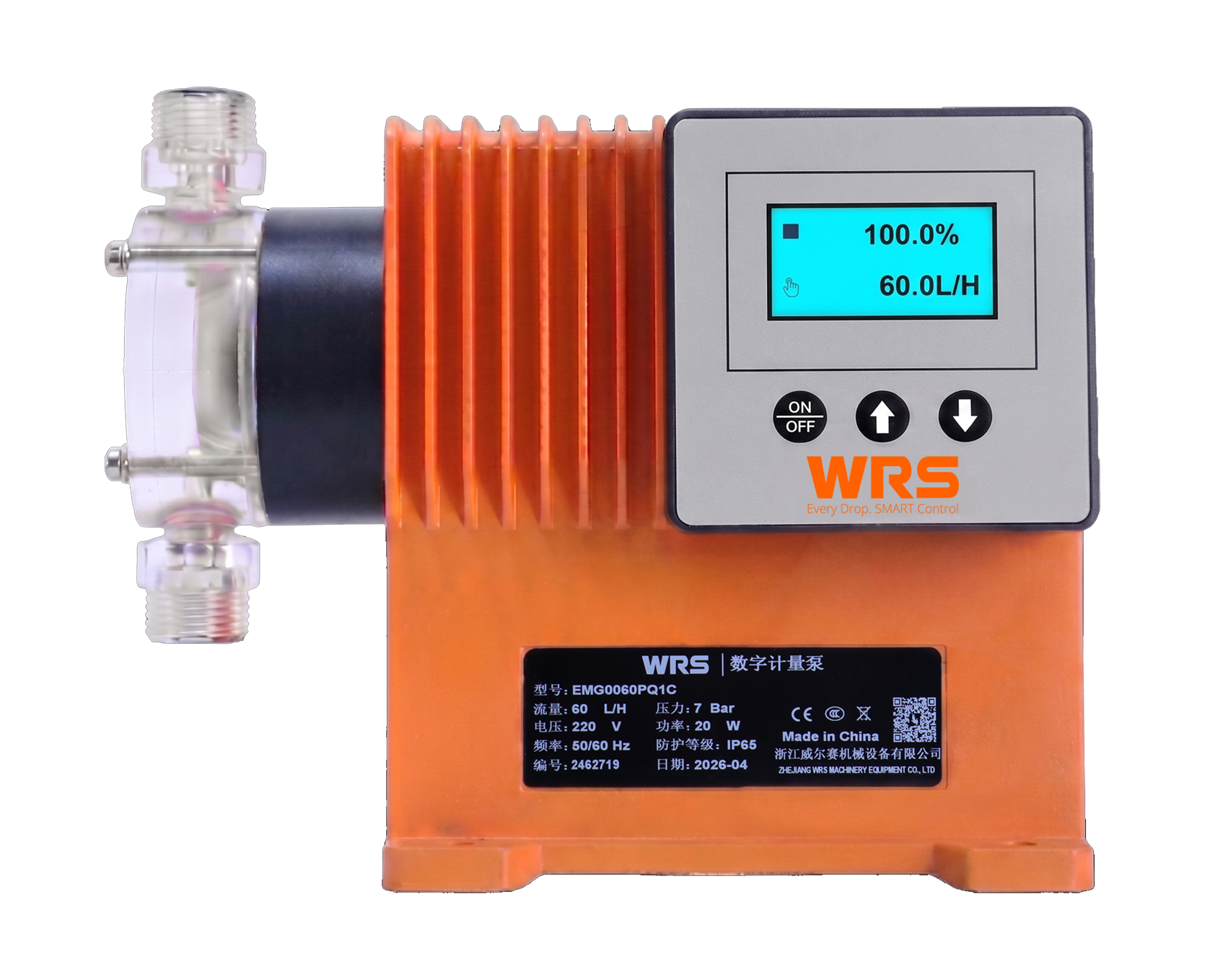
Dosing pumps are engineered around the precise addition of a defined volume. WRS solenoid models such as ML0008PR1C and EML0020PR1C cover 1–20 L/H at 1–10 Bar, with 220V/110V input, IP65 protection and a choice between manual control and remote control. Digital dosing pumps move further up the range: EMML0060FP1E delivers 60 L/H at 4 Bar through an Rc 1/2" thread with 220V/1P/20W input; EMGP0200FP1C delivers 200 L/H at 4 Bar; EMAP1000PQ1C reaches 1000 L/H at 4 Bar through a DN25 socket. All three are rated IP65 and are available with PVC, PVDF or SS316 wetted materials.
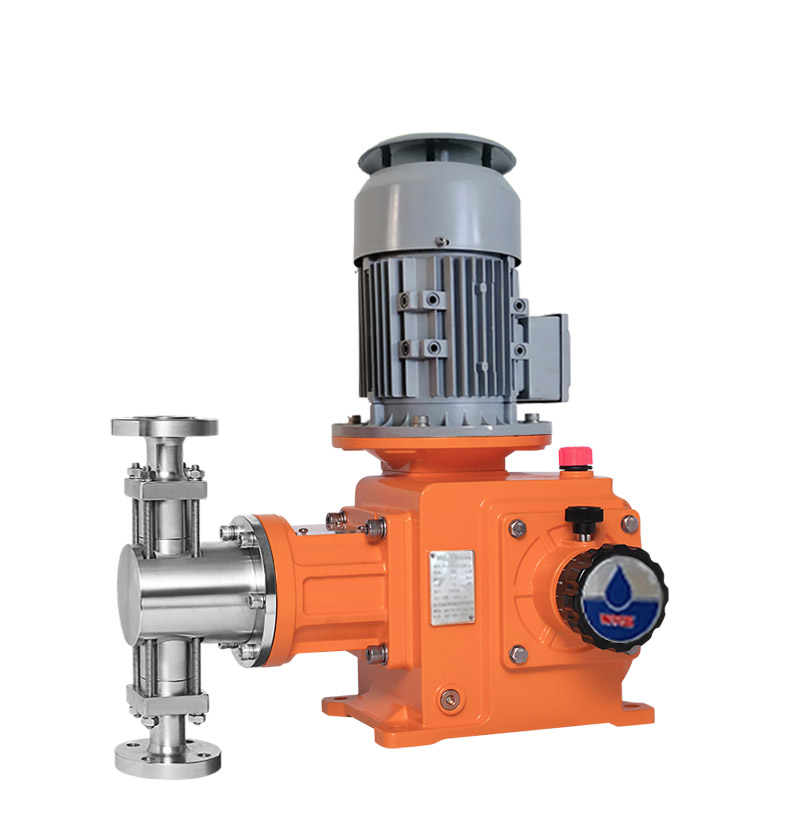
Piston dosing pumps serve a different band of the same duty map. PM060SS1PFN11 delivers 600 L/H at 8 Bar through a DN25 flange with a 0.75 kW motor, while PD105SS1PFN11 delivers the same 600 L/H and 8 Bar through a DN50 flange with a 4.0 kW motor. Both are SS316 and both can be supplied with frequency or explosion-proof motors. The practical reading: when the required flow is measured in hundreds of litres per hour and the injection point sits under a steady 8 Bar, the motor-driven piston stroke is the natural fit; when the requirement is a few litres per hour of a costly additive, a solenoid or digital dosing pump holds the dose far more comfortably.
Selection sequence used by WRS: compare the required flow rate against the maximum flow rate at the site first, then refine the choice using pressure, pump head material and motor. Flow decides the shortlist; materials and pressure decide the final model.
2. Pressure and flow envelope
The envelope is where the two mechanisms separate most clearly. In the WRS range, mechanical diaphragm dosing pumps span 15–150 L/H at 5–10 Bar (MG0150PQ11), 15–500 L/H at 5–10 Bar (MA0120PQ11) and 250–1800 L/H at 3–10 Bar (MB1800PQ11). Digital models are rated at 4 Bar. Piston dosing pumps are rated at 8 Bar. Where a process needs pressure far beyond the piston band, the answer is a different family again: the WRS hydraulic metering pump line reaches 200 Bar at 2 L/H with HS008S0P01S11, and 6 Bar at 1600 L/H with HL090S0P01F11.
Frequency and explosion-proof motor options are available across the MA0120PQ11, MB1800PQ11, PM060SS1PFN11, PD105SS1PFN11 and hydraulic models — a detail that decides feasibility in hazardous-area or variable-dose installations long before price is discussed.
3. Chemical compatibility: the risk that overrides everything
This is the factor that most often reverses an otherwise sensible technical decision. Different media require different wetted materials, and for highly corrosive media a PVDF pump head is the recommended choice. WRS dosing pumps are offered in PVC, PVDF and SS316 or SS316L depending on model, which gives the buyer a materials ladder to work with. The WRS piston dosing pumps in this comparison — PM060SS1PFN11 and PD105SS1PFN11 — are SS316.
That single fact reshapes the comparison. If the process fluid attacks stainless steel, the piston option becomes a materials problem before it becomes a performance question, and no amount of flow or pressure capability compensates. For strongly corrosive duty, the evaluation should run in this order: confirm the wetted-material options available in each mechanism, eliminate the mechanisms that cannot be supplied in the required material, and only then compare the surviving candidates on accuracy and maintenance.
4. Maintenance exposure and what actually wears
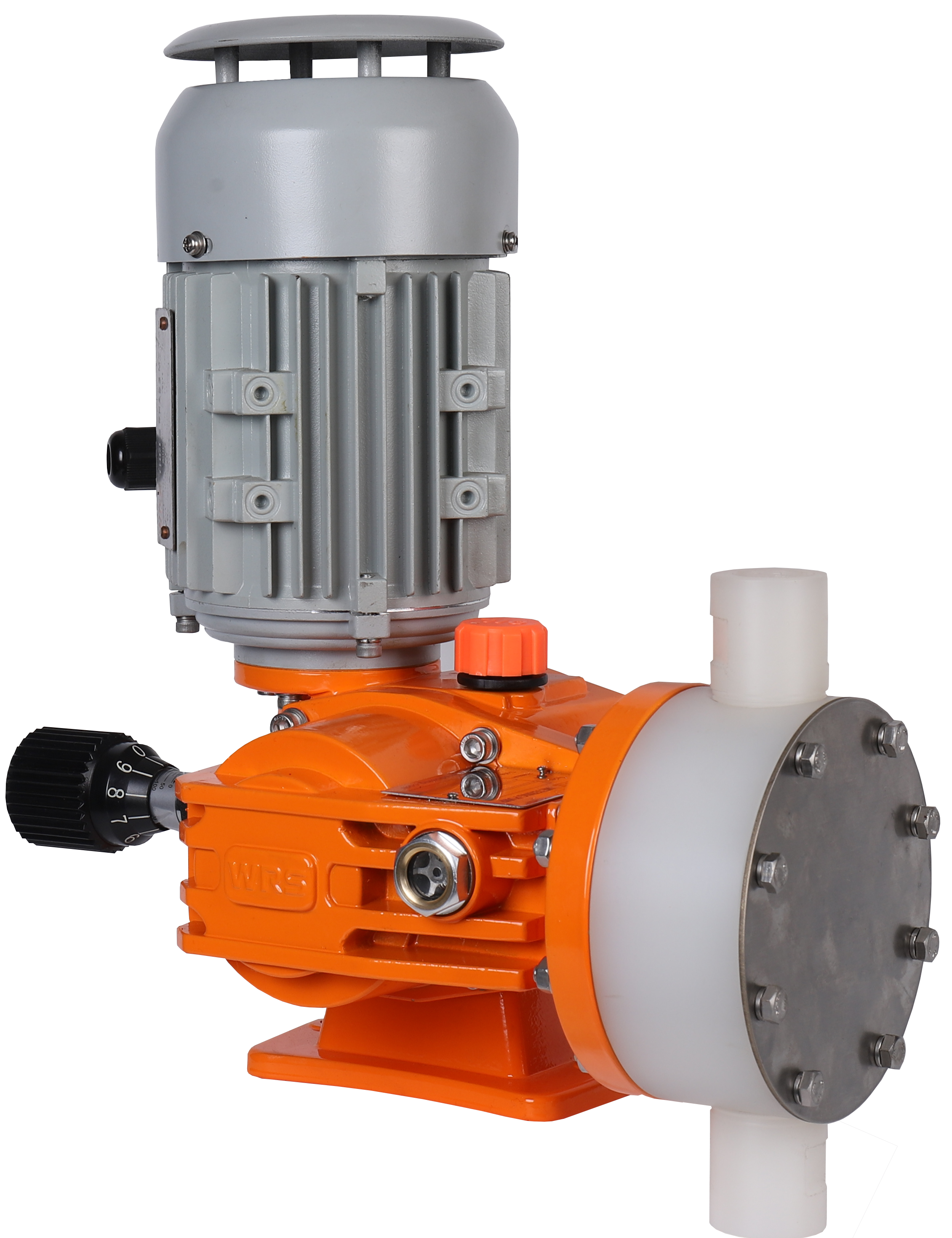
Mechanism determines wear. In a diaphragm dosing pump, the fluid is separated from the drive by a diaphragm, so the primary wear part sits on the fluid boundary rather than inside the drive train. In a piston dosing pump, sealing surfaces are in direct contact with the process fluid, so wear accelerates when the medium is aggressive or abrasive. Neither statement makes one design universally better; it makes each design better suited to a different fluid profile.
One failure mode is shared. A drop in discharge flow rate or an unstable flow rate is typically traced to a blocked inlet or outlet, and the standard response is to check the strainer, tubing and valves, cleaning or replacing components as required. Because this symptom appears in both mechanisms, line hygiene — strainers, check valves and pulsation control — belongs in the comparison alongside the pump itself.
Step-by-Step: How to Choose Between a Dosing Pump and a Piston Pump
- Fix the duty point. Record the maximum flow rate at the site, the pressure at the injection point, and whether the duty is continuous (24/7) or batch. Flow rate is the starting parameter, not a secondary one.
- Classify the fluid before the hardware. Identify whether the medium is strongly corrosive. For highly corrosive media, a PVDF pump head is the recommended material — and this step is what eliminates unsuitable mechanisms early.
- Match the mechanism to the envelope. Low-to-medium flow with tight dosing favours solenoid, diaphragm or digital dosing pumps. Higher flow against sustained back-pressure favours a motor-driven piston pump. Very high pressure with low flow points to a hydraulic metering pump instead.
- Specify the accessories with the pump. A dosing pump check valve, a pulse dampener and correctly sized tubing and strainers belong in the same order, because they determine whether the metered dose arrives at the injection point as intended.
- Confirm control mode and protection class. Manual control, remote control and digital control are all available across the WRS range, and IP65 protection is standard on the digital and solenoid models listed here. In harsh or humid environments, protection class should be specified explicitly rather than assumed.
- Verify compliance documentation. Ask for the CE certificate number, the series scope it covers, and the standards applied. WRS holds CE certificate 3N240528.ZWMTU36, issued by ECM, valid from 2024-05-28 to 2029-05-27, covering the EML, EMG, EMA, EMB, EPS, EPM, EHS, EHM, ML, MLS, MG, MA, MB, PS, PM, PL, PD, PT, HS, HM, HL, HD and HT series against EN ISO 12100:2010 and EN 60204-1:2018.
- Validate with a single unit before scale-up. Because WRS operates with a MOQ of 1 unit and applies 100% testing, a trial unit is the lowest-risk way to close the remaining uncertainty on flow behaviour and material performance.
Dosing Pump vs. Piston Pump: Side-by-Side Comparison
| Evaluation factor | Dosing pump (solenoid / diaphragm / digital) | Piston pump (PM / PD series) |
|---|---|---|
| Primary mechanism | Diaphragm or solenoid displacement, with the fluid separated from the drive; digital models add electronic control | Motor-driven reciprocating piston displacing the fluid directly |
| Flow range in the WRS line | Solenoid: 1–20 L/H; mechanical diaphragm: 15–150 L/H (MG0150PQ11), 15–500 L/H (MA0120PQ11), 250–1800 L/H (MB1800PQ11); digital: 60 L/H (EMML0060FP1E), 200 L/H (EMGP0200FP1C), 1000 L/H (EMAP1000PQ1C) | 600 L/H for both PM060SS1PFN11 (DN25 flange, 0.75 kW) and PD105SS1PFN11 (DN50 flange, 4.0 kW) |
| Pressure capability | Solenoid 1–10 Bar; mechanical diaphragm 3–10 Bar; digital 4 Bar | 8 Bar at 600 L/H, with frequency and explosion-proof motor options |
| Wetted materials | PVC, PVDF, SS316, SS316L depending on model; PVDF recommended for highly corrosive media | SS316 |
| Control mode | Manual control (ML0008PR1C) or remote control (EML0020PR1C); digital models with IP65 protection | Motor-driven, with frequency and explosion-proof motor availability |
| Best-fit duty | Precise, repeatable addition at low to medium flow, including aggressive or high-purity chemicals | Higher flow against steady back-pressure in continuous industrial duty |
| Maintenance focus | Diaphragm is the fluid-side wear part; drive remains isolated from the medium | Sealing surfaces contact the process fluid; wear accelerates with aggressive or abrasive media |
| CE certificate coverage | Covered by certificate 3N240528.ZWMTU36 (ECM, valid 2024-05-28 to 2029-05-27), including ML, MLS, MG, MA, MB, EML, EMG, EMA, EMB and related series | Same certificate scope includes the PM, PD, PS, PL, PT, HS, HM, HL, HD and HT series |
Use Cases: Where Each Technology Fits
Wastewater and water treatment. Metering pumps hold a 23.2% application share in water and wastewater treatment, and the duty profile — continuous, low-to-medium flow, tight dosing — suits digital and mechanical diaphragm models. An engineering company in Australia has been running 20 WRS units in wastewater treatment for five years, with stable operation and the buyer's stated highlights being high quality and easy maintenance. That is the classic profile where a diaphragm dosing pump beats a piston pump on maintenance economics.
Livestock and agricultural nutrient dosing. A project in Russia's livestock sector required nutrient solution dosing in a harsh, humid farm environment running 24/7, matched to an automatic system with a special requirement of IP67 protection. Protection class and enclosure robustness decide the outcome here, which is why the specification step matters more than the mechanism debate.
Oil & gas, hydrogen energy, electric power, chemical, pharmacy and new materials. These are the industries WRS lists for its piston dosing pumps PM060SS1PFN11 and PD105SS1PFN11 and for the hydraulic metering pumps HS008S0P01S11 and HL090S0P01F11 — duty profiles where flow, back-pressure and continuous operation dominate.
Water treatment, semiconductor, food & beverage, battery production, paper & pulp and new energy. These are the listed applications for the digital dosing pumps EMML0060FP1E, EMGP0200FP1C and EMAP1000PQ1C, where repeatable dosing and clean wetted materials take priority.
Electroplating and surface treatment, mining, foundry, pure water, swimming pool and confectionery processes. Solenoid and mechanical diaphragm models such as ML0008PR1C, EML0020PR1C, MG0150PQ11 and MA0120PQ11 cover these applications, where medium flows and moderate pressures are combined with demanding chemistry.

FAQ
Are WRS dosing pumps and piston pumps CE marked, and which standards apply?
Yes. WRS holds CE certificate 3N240528.ZWMTU36, issued by ECM with validity from 2024-05-28 to 2029-05-27. The certificate scope covers the EML, EMG, EMA, EMB, EPS, EPM, EHS, EHM, ML, MLS, MG, MA, MB, PS, PM, PL, PD, PT, HS, HM, HL, HD and HT series, which means both the diaphragm and solenoid dosing pumps and the piston pump models PD105SS1PFN11 and PM060SS1PFN11 fall inside the same certified scope. The applied standards are EN ISO 12100:2010 and EN 60204-1:2018. For EU projects, the obligation is reinforced by the EU Machinery Regulation, which repeals 2006/42/EC from 2027 and mandates CE marking for metering pump units. Where reciprocating metering pump design is specified, API 675 is the primary international standard for positive displacement reciprocating pumps with integrated controlled capacity.
Which is the better choice for strongly corrosive liquids — a dosing pump or a piston pump?
The decision is driven by materials before it is driven by mechanism. For highly corrosive media, a PVDF pump head is the recommended choice. WRS dosing pumps are available with PVC, PVDF and SS316 or SS316L wetted materials depending on model, whereas the WRS piston dosing pumps PM060SS1PFN11 and PD105SS1PFN11 use SS316 wetted parts. If the process fluid attacks stainless steel, the piston option becomes a material-availability question rather than a performance comparison, and the diaphragm or digital dosing pump route is generally the more workable starting point. The selection itself still follows the standard sequence: flow rate compared against the site maximum flow rate first, then refinement by pressure, pump head material and motor.
What drives the cost difference between a dosing pump and a piston pump?
Cost positioning in both families is driven by configuration rather than by the category label. The variables that move cost are the wetted material selected (PVC, PVDF, SS316 or SS316L), the motor specification — including whether frequency or explosion-proof motors are required — the control mode (manual, remote or digital), and the accessories ordered with the unit such as a check valve, pulse dampener, tubing and strainers. A solenoid dosing pump in PVC and a digital dosing pump in PVDF with a frequency motor are not comparable cost objects even though both are dosing pumps. For this reason WRS quotes per configured duty point rather than publishing a single figure for the family.
Can we validate a single unit before committing to a volume order?
Yes. WRS operates with a MOQ of 1 unit, a production mode that includes ODM, and voltage customization, which makes single-unit validation practical rather than exceptional. Every unit is subject to 100% testing before shipment, and monthly capacity stands at 5000 units, so a validated trial configuration can be scaled without changing suppliers. For buyers evaluating corrosive media, the trial unit is where the material decision — including a PVDF pump head versus SS316 — is confirmed against real process fluid instead of a compatibility table.
What is the lead time, and how do we request a dosing pump or piston pump quote?
WRS states a lead time of 3 days, with monthly capacity of 5000 units and remote after-sales support; the company also maintains local after-sales service in more than 10 countries, including Singapore, Thailand, Malaysia, Vietnam, South Korea, Japan, Russia, Chile, South Africa, Angola and Turkey. To get a quote, send the four parameters that decide the model: required flow rate, pressure at the injection point, the fluid being dosed, and whether a PVDF, PVC or stainless-steel wetted path is needed. You can reach the WRS team directly — contact Isak at isak@wrsindustry.com, telephone or WhatsApp +86-173 0642 4430, or download the technical brochure at WRS Diaphragm Separator brochure (PDF).
Conclusion: Choosing on Process Requirements, Not Category
The comparison between a dosing pump and a piston pump resolves into a short decision sequence rather than a verdict. Identify the fluid first: if it is strongly corrosive, a PVDF pump head is the recommended material, and that single constraint may remove piston pumps from the shortlist. Then fix the duty point — flow rate against the site maximum, followed by pressure, pump head material and motor. Then match the surviving mechanism to the envelope: solenoid and digital dosing pumps for precise low-to-medium flow, mechanical diaphragm dosing pumps for medium flow with difficult chemistry, and motor-driven piston pumps for 600 L/H at 8 Bar in continuous industrial duty. Finally, verify what is often assumed: the CE certificate number and the series it actually covers, the applied standards, the protection class, and the 100% test regime.
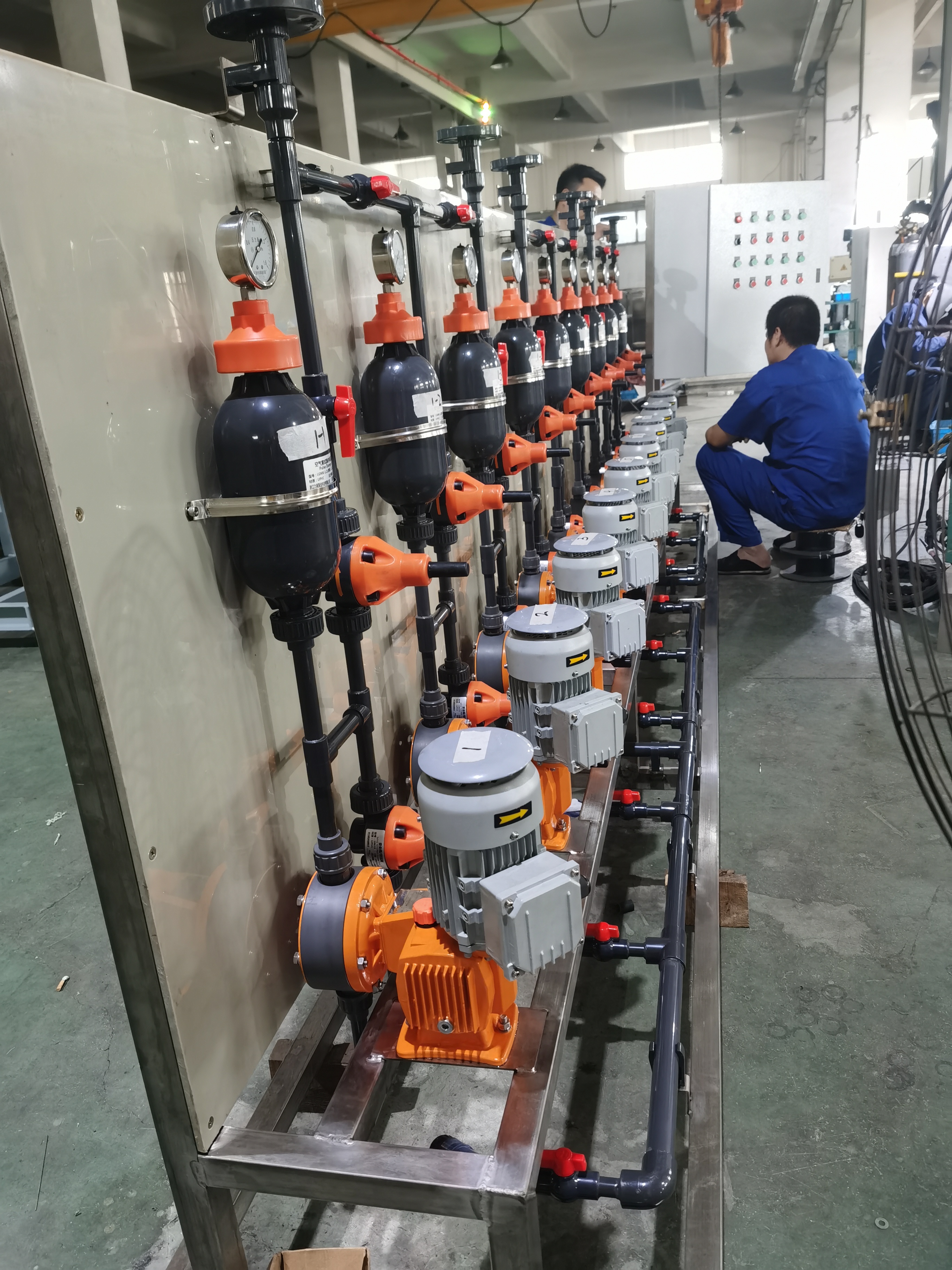
Request a Sample or Quote
WRS supplies dosing pumps, piston pumps and complete chemical dosing systems with a MOQ of 1 unit, a 3-day lead time, 100% testing and remote after-sales support. Send your duty point — flow rate, pressure, fluid and required wetted material — and the team will propose the configuration that matches it.
Contact: Isak | E-mail: isak@wrsindustry.com | Tel / WhatsApp: +86-173 0642 4430
Website: www.wrsdosing.com
Address: No. 108 Shixin Rd, Xiaoshan Region, Hangzhou City, Zhejiang, China