
How to Choose Dosing Pump Materials for Strong Corrosive Liquids
How to Choose Dosing Pump Materials for Strong Corrosive Liquids
Material selection for strong corrosive liquids is decided by the wetted path — the pump head, diaphragm, check valves, tubing and seals that actually touch the chemical. WRS guidance is direct on this point: different media have different materials available for selection, and for highly corrosive media a PVDF pump head is the recommended option. Flow rate, pressure and motor then refine the model; they do not override the material decision.
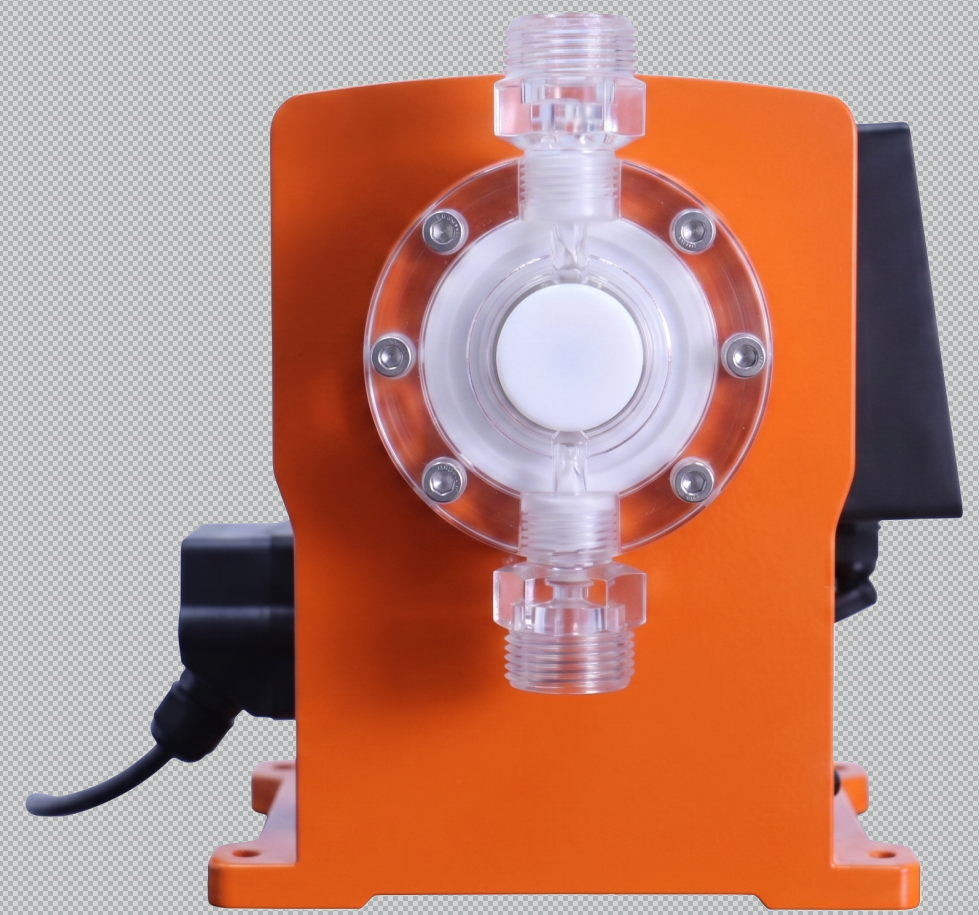
This technical guide sets out how that decision is structured across the three pump families that carry most corrosive-liquid duty — hydraulic pumps, piston pumps and solenoid pumps — and how the same logic extends to mechanical diaphragm and digital dosing pumps. Only listed product facts are used, and the focus stays on practical material-selection logic rather than on catalogue breadth.
Why Strong Corrosive Liquids Are a Wetted-Path Problem First
A dosing pump does not fail in corrosive service because the motor runs out of power. It fails because the components in contact with the liquid lose their chemical resistance. In a chemical dosing system the medium passes through the pump head, the diaphragm, the inlet and outlet check valves, the tubing and the injection point. Each of those surfaces is a separate material decision, and one wrong choice limits the service life of the whole assembly.
Two WRS knowledge entries sit at the centre of the decision:
- Material for strong corrosive liquids. Different media have different materials available for selection, and for highly corrosive media PVDF pump head material is recommended.
- Selection parameters. Flow rate is the most important parameter, and the pump is selected by comparing the required flow with the maximum flow rate at the site. Pressure, pump head material and motor are then used to refine the model.
It also helps to separate a material problem from a maintenance problem. WRS troubleshooting guidance for a discharge flow rate drop or an unstable flow rate points first to a blocked inlet or outlet: check the strainer, tubing and valves, and clean or replace them if necessary. That is a maintenance response. Material selection is the design-stage response that determines whether those parts are still structurally sound when the check is carried out.
The practical consequence for a buyer in the research stage is that the usual comparison order — flow, pressure, price, material — should be re-ordered to flow, material, pressure, control. Flow rate remains the primary sizing parameter; the material compatibility check simply has to pass before the flow figure becomes usable.
Industry Background: The Market and Standards Behind Corrosive-Liquid Dosing
Dosing pump demand concentrates where aggressive chemistry has to be added precisely. Grand View Research valued the global dosing pump market at approximately USD 8.86 billion in 2024, with Asia Pacific holding a 41.8% revenue share in the same year. Diaphragm dosing pumps accounted for a 55.7% revenue share in 2024 — the pump type most often associated with corrosive chemical handling, which is why PVC, PVDF and PTFE options carry commercial weight as well as technical weight.
Drive-type data shows the same picture from another angle. Mordor Intelligence reports that motor-driven metering pumps held a 54.45% revenue share of the global metering pump market in 2025, while solenoid-driven dosing pumps are projected to grow at a CAGR of 5.88% through 2031. Application demand is led by water and wastewater treatment, which holds a 23.2% application share of the metering pump market. HTF Market Intelligence valued the global chemical injection pump market at USD 3.5 billion in 2024, and OEC data puts China’s liquid pump exports, including dosing types, at USD 14.3 billion in 2024.
Market sizing should be read with care, because published estimates diverge according to how each source draws the boundary. Grand View Research’s USD 8.86 billion refers to 2024 dosing pumps, Fortune Business Insights estimates USD 6.35 billion for 2025, and Precedence Research’s USD 47.04 billion figure for 2025 uses a much broader chemical-injection definition that includes large-scale systems. For material planning, the useful signal is not the headline market size but the material mix inside it.
Standards set the compliance frame around that mix. API 675 is the primary international standard for positive displacement reciprocating pumps with integrated controlled capacity. ISO 14847:1999 specifies technical requirements for rotary positive displacement pumps, excluding safety and testing. In the European Union, the Machinery Regulation that repeals 2006/42/EC from 2027 mandates CE marking for metering pump units — a requirement that applies to the unit regardless of which wetted material was chosen.
Manufacturer context matters here because corrosive-duty pumps are normally specified with a supplier rather than picked off a catalogue page. WRS PTE LTD manufactures metering pumps, solenoid dosing pumps, diaphragm dosing pumps, piston dosing pumps, digital dosing pumps, dosing pump check valves, dosing pump pulse dampeners, chemical dosing systems, streaming current monitoring systems and chemical injection pumps, with production based in Hangzhou, Zhejiang, China and local after-sales service in more than 10 countries across Southeast Asia, Russia, South America and other markets. Its products are applied in water treatment, electroplating and surface treatment, chemical, oil and gas, hydrogen power generation, paper and pulp, semiconductor, mining and livestock operations. The global dosing system market also includes suppliers such as Grundfos, IDEX (Milton Roy), ProMinent and SEKO S.p.A., which means published material documentation is one of the few comparable data points a buyer can check across suppliers.
Material Options in the Dosing Pump Range, by Pump Type
The material decision has three layers: the pump head material, which is the primary compatibility layer; the diaphragm material and construction; and the valve, seat, tubing and connection materials that complete the wetted path. In the range used in this guide the wetted material options are PVC, PVDF and SS316, with SS316L on one digital model, a full PTFE diaphragm on digital models, and multiple-layer diaphragm construction on mechanical diaphragm models.
Hydraulic Pumps: SS316 Wetted Paths for High-Pressure Duty
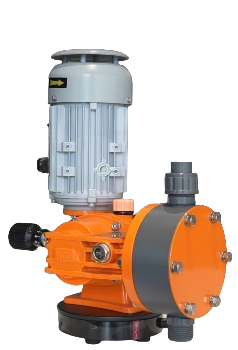
Hydraulic metering pumps in this range are listed with SS316 wetted parts and are aimed at duties where pressure, not flow, sets the limit.
- HL090S0P01F11 — hydraulic metering pump, flow rate 1600 L/H, pressure 6 bar, DN50 flange connection, 1.5 kW motor, material SS316, available with frequency and explosion-proof motor.
- HS008S0P01S11 — hydraulic metering pump, flow rate 2 L/H, pressure 200 bar, DN6 bevel end welding tube connection, 0.37 kW motor, material SS316, available with frequency and explosion-proof motor.
Shared design points across the hydraulic range include a zero leakage design, suitability for toxic and hazardous media, robust and high-efficiency operation, suitability for high-viscosity pumping, an optional diaphragm rupture sensor, optimized high-accuracy dosing, easy maintenance and long working life. The listed application industries for both models are oil and gas, hydrogen energy, electric power, chemical, pharmacy, new material and new energy.
The two models show how far apart the pressure and flow corners of the same material set can sit: 2 L/H at 200 bar through a DN6 welded connection, against 1600 L/H at 6 bar through a DN50 flange. Where the medium is defined as toxic or hazardous, the optional diaphragm rupture sensor adds a monitoring layer to the wetted path — useful because SS316 is the only listed wetted material for these models.

Piston Pumps: SS316 Wetted Paths with High-Viscosity Capability
Piston dosing pumps in this range follow the same material logic as the hydraulic family: SS316 is the listed wetted material, and the differentiator between models sits in connection size and motor power rather than in the material set.
- PM060SS1PFN11 — piston dosing pump, flow rate 600 L/H, pressure 8 bar, DN25 flange connection, 0.75 kW motor, material SS316, available with frequency and explosion-proof motor.
- PD105SS1PFN11 — piston dosing pump, flow rate 600 L/H, pressure 8 bar, DN50 flange connection, 4.0 kW motor, material SS316, available with frequency and explosion-proof motor.
Both models are listed with robust and high-efficiency operation, suitability for high-viscosity pumping, optimized high-accuracy dosing, easy maintenance and long working life, with the same application list as the hydraulic range. The pair differs in flange size and motor power at identical flow and pressure, which is a reminder that the connection is part of the material decision: a flange or thread face is a wetted component, and its material has to be matched to the medium, not only to the pipe schedule.
Solenoid Pumps: the Widest Wetted-Material Choice
Solenoid dosing pumps are usually the first family quoted for highly corrosive media in this range, because the listed material options cover PVC, PVDF and SS316 in the same model.
- ML0008PR1C — solenoid dosing pump, flow rate 1–20 L/H, pressure 1–10 bar, manual control, voltage input 220 V / 110 V, protection IP65, material PVC / PVDF / SS316. A double-ball design check valve on both inlet and outlet increases discharge accuracy; dosing accuracy is 1%; manual flow control works in both running and idle modes; the PCB board is water and heat resistant; materials are anti-corrosion. Supplied with accessories including PE tube, foot valve, weight, injection valve and safety valve.
- EML0020PR1C — solenoid dosing pump, flow rate 1–20 L/H, pressure 1–10 bar, remote control, voltage input 220 V / 110 V, protection IP65, material PVC / PVDF / SS316. Remote control via 4–20 mA or pulse signal and Modbus RS-485 communication, with direct flowrate display.
Both models share flow range, pressure range and material options and differ mainly in control method, so the material decision does not change when a site moves from local manual control to signal-based control. The listed application industries for the family include water treatment, candy manufacturing, coating and surface treatment, pure water and swimming pools.
Mechanical Diaphragm and Digital Pumps: PTFE Diaphragms and Multi-Layer Construction
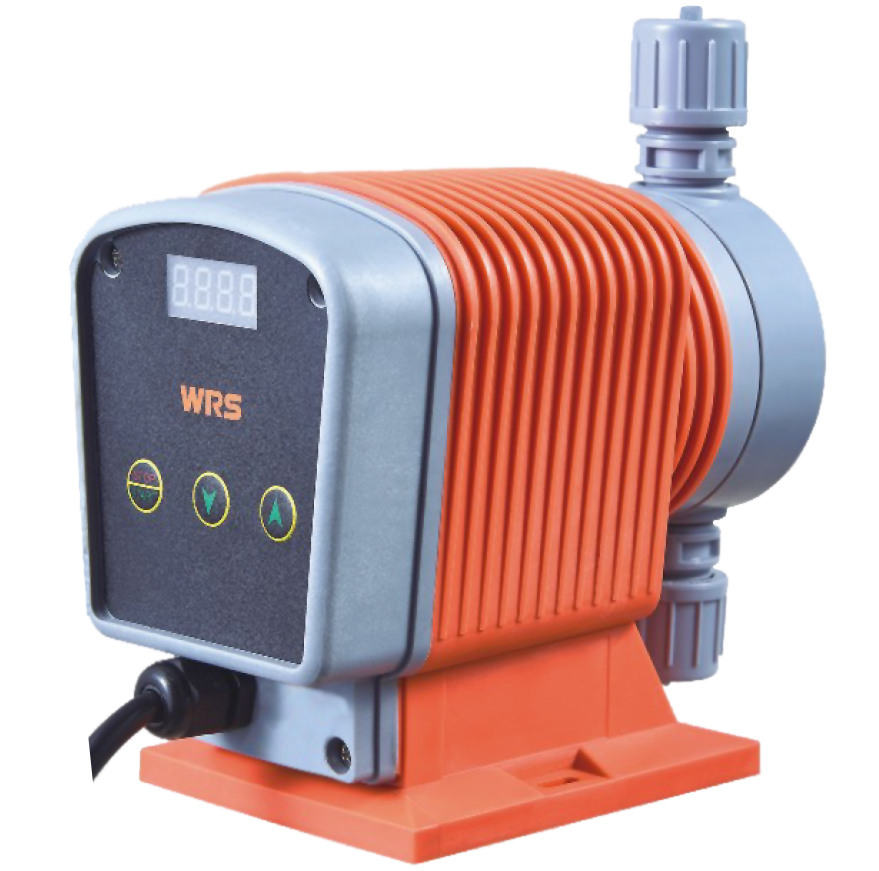
Where corrosive duty needs more flow than a solenoid pump can deliver, the mechanical diaphragm and digital families carry the PVC and PVDF options into higher capacity.
- MA0120PQ11 — mechanical diaphragm dosing pump, flow rate 15–500 L/H, pressure 5–10 bar, material PVC / PVDF / SS316, frequency and explosion-proof motor available.
- MG0150PQ11 — mechanical diaphragm dosing pump, flow rate 15–150 L/H, pressure 5–10 bar, material PVC / PVDF / SS316.
- MB1800PQ11 — mechanical diaphragm pump, flow rate 250–1800 L/H, pressure 3–10 bar, material PVC / PVDF / SS316, frequency and explosion-proof motor available.
- EMML0060FP1E — digital dosing pump, flow rate 60 L/H, pressure 4 bar, Rc 1/2″ thread, protection IP65, power 220 V / 1P / 20 W, material PVC / PVDF / SS316L.
- EMGP0200FP1C — digital dosing pump, flow rate 200 L/H, pressure 4 bar, Rc 1/2″ thread, protection IP65, power 220 V / 1P / 60 W, material PVC / PVDF / SS316.
- EMAP1000PQ1C — digital pump, flow rate 1000 L/H, pressure 4 bar, DN25 socket connection, protection IP65, power 220 V / 1P / 20 W, material PVC / PVDF.
Mechanical diaphragm models are described as specially designed for handling corrosive liquids, with a variety of material options for different applications, high accuracy and consistent dosing, smooth flowrate adjustment in both running and idle condition, controllable flowrate at both working and non-working condition, easy parts replacement and a multiple-layer diaphragm for longer lifespan. Digital models add a full PTFE diaphragm with strong corrosion resistance, accuracy better than 1%, a 1:1000 ratio rate, direct flowrate display, 4–20 mA / pulse signal and Modbus RS-485 remote control, and flexible installation.
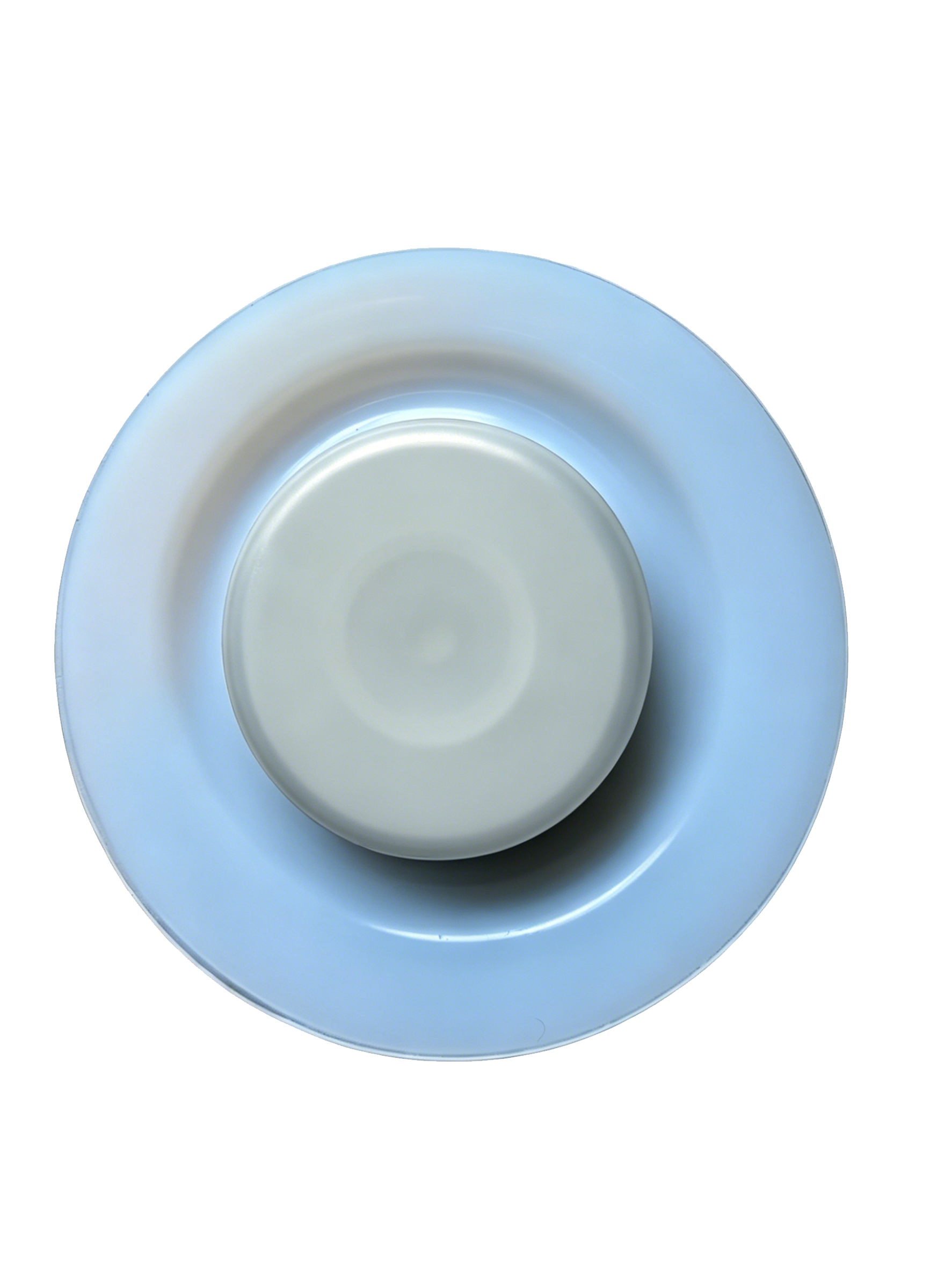
The diaphragm is the second material layer and is easy to overlook. A PVDF pump head protects the static surfaces of the housing; a full PTFE diaphragm protects the moving element that flexes against the medium continuously. Where diaphragm life is the limiting factor rather than head life, the two design answers available in this range are the multiple-layer diaphragm on the mechanical diaphragm models and the full PTFE diaphragm on the digital models.
Step-by-Step: Selecting Material for a Strong Corrosive Liquid
The sequence below turns the material question into a checklist that can be worked through with a supplier on a single call.
- Identify the medium and its corrosion class. Different media have different materials available for selection, and for highly corrosive media PVDF pump head material is the recommended option. This is the first question, not the last.
- Size by flow rate. Flow rate is the most important parameter. Compare the required dosing rate with the maximum flow rate needed at the site, then look for a model that covers it.
- Confirm pressure. Pressure, pump head material and motor are the refinement parameters. Duty at 200 bar points toward HS008S0P01S11; 3–10 bar mechanical diaphragm duty points toward the MB series.
- Select the pump head material. PVDF for highly corrosive media, or PVC and SS316 where the medium and process conditions allow them.
- Match the family that offers that material. PVC and PVDF appear on solenoid (ML, EML), mechanical diaphragm (MA, MG, MB) and digital (EMML, EMGP, EMAP) models. In the same specification set, hydraulic (HL, HS) and piston (PM, PD) models are listed with SS316, and EMML0060FP1E is listed with SS316L.
- Verify diaphragm construction. Choose between the full PTFE diaphragm listed on digital models and the multiple-layer diaphragm listed on mechanical diaphragm models.
- Check the rest of the wetted path. Check valves are wetted components; the solenoid models use a double-ball check valve design on both inlet and outlet. WRS also supplies dosing pump check valves and dosing pump pulse dampeners as separate items within a chemical dosing system. Tubing, foot valve, injection valve and safety valve supplied with ML0008PR1C are also wetted.
- Confirm the connection type. Options in this range include DN50 flange (HL090S0P01F11, PD105SS1PFN11), DN25 flange (PM060SS1PFN11), DN25 socket (EMAP1000PQ1C), DN6 bevel end welding tube (HS008S0P01S11) and Rc 1/2″ thread (EMML0060FP1E, EMGP0200FP1C).
- Set control, motor and protection. Remote control via 4–20 mA or pulse signal and Modbus RS-485 is listed on EML0020PR1C, EMML0060FP1E, EMGP0200FP1C and EMAP1000PQ1C; IP65 protection is listed on the solenoid and digital models. Frequency and explosion-proof motors are available across the hydraulic and piston ranges and on selected mechanical diaphragm and digital models.
- Plan the check-out and spare-parts procedure. If discharge flow rate drops or becomes unstable, WRS guidance is to check the strainer, tubing and valves and clean or replace as necessary. Record which material was used at each wetted position so that replacement parts match the original specification.
Use Cases: Matching Material to Application
Material families map onto applications in a fairly consistent way across this range, which makes the first shortlist quicker to build.
- Water and wastewater treatment. The largest single application area, holding a 23.2% application share of the metering pump market. Solenoid models (ML0008PR1C, EML0020PR1C) with PVC or PVDF heads cover low-flow dosing, while MA, MG and MB mechanical diaphragm models cover the higher flow end.
- Chemical industry and coating & surface treatment. Handled by the mechanical diaphragm range, where MA0120PQ11 covers 15–500 L/H and MB1800PQ11 covers 250–1800 L/H, both with PVC, PVDF or SS316 wetted parts.
- Mining process and foundry. MA0120PQ11 is listed for mining process and foundry industry applications, with MB1800PQ11 available for the higher flow duties.
- Oil and gas, hydrogen energy, electric power, pharmacy and new material industry. Served by hydraulic models for high-pressure duty (HS008S0P01S11 at 200 bar) and piston models for high-viscosity duty (PM060SS1PFN11, PD105SS1PFN11).
- Semiconductor, food and beverages, battery production, paper and pulp, and new energy. Served by digital pumps (EMML0060FP1E, EMGP0200FP1C, EMAP1000PQ1C) where a full PTFE diaphragm and accuracy better than 1% are needed alongside corrosion resistance.
- Pure water and swimming pools. Covered by the solenoid range with PVC, PVDF or SS316 material options.
For plants that treat the dosing loop as one system rather than a single pump, the wider WRS product range also includes chemical dosing systems, dosing pump check valves, dosing pump pulse dampeners and streaming current monitoring systems, so the material question can be answered once across the whole loop instead of pump by pump.
Comparison Table: Wetted Materials and Parameters by Pump Family
The table below lists only the wetted materials and parameters confirmed in the product specification set used for this guide.
| Pump family | Example model | Wetted material options | Flow rate | Pressure | Connection | Notes |
|---|---|---|---|---|---|---|
| Hydraulic pump | HL090S0P01F11 | SS316 | 1600 L/H | 6 bar | DN50 flange | 1.5 kW; zero leakage design; toxic and hazardous media; optional diaphragm rupture sensor |
| Hydraulic pump | HS008S0P01S11 | SS316 | 2 L/H | 200 bar | DN6 bevel end welding tube | 0.37 kW; frequency and explosion-proof motor available |
| Piston pump | PM060SS1PFN11 | SS316 | 600 L/H | 8 bar | DN25 flange | 0.75 kW; high-viscosity capability; high-accuracy dosing |
| Piston pump | PD105SS1PFN11 | SS316 | 600 L/H | 8 bar | DN50 flange | 4.0 kW; high-viscosity capability |
| Solenoid pump | ML0008PR1C | PVC / PVDF / SS316 | 1–20 L/H | 1–10 bar | Not stated in specification set | Manual control; 1% dosing accuracy; double-ball check valve on inlet and outlet; IP65 |
| Solenoid pump | EML0020PR1C | PVC / PVDF / SS316 | 1–20 L/H | 1–10 bar | Not stated in specification set | Remote control 4–20 mA / pulse; Modbus RS-485; IP65 |
| Mechanical diaphragm | MA0120PQ11 | PVC / PVDF / SS316 | 15–500 L/H | 5–10 bar | Not stated in specification set | Multiple-layer diaphragm; frequency and explosion-proof motor available |
| Mechanical diaphragm | MG0150PQ11 | PVC / PVDF / SS316 | 15–150 L/H | 5–10 bar | Not stated in specification set | Multiple-layer diaphragm; smooth flowrate adjustment running and idle |
| Mechanical diaphragm | MB1800PQ11 | PVC / PVDF / SS316 | 250–1800 L/H | 3–10 bar | Not stated in specification set | Multiple-layer diaphragm; frequency and explosion-proof motor available |
| Digital pump | EMML0060FP1E | PVC / PVDF / SS316L | 60 L/H | 4 bar | Rc 1/2″ thread | Full PTFE diaphragm; accuracy better than 1%; IP65; 220 V / 1P / 20 W |
| Digital pump | EMGP0200FP1C | PVC / PVDF / SS316 | 200 L/H | 4 bar | Rc 1/2″ thread | Full PTFE diaphragm; accuracy better than 1%; IP65; 220 V / 1P / 60 W |
| Digital pump | EMAP1000PQ1C | PVC / PVDF | 1000 L/H | 4 bar | DN25 socket | Full PTFE diaphragm; accuracy better than 1%; IP65; 220 V / 1P / 20 W |
A second view helps when the medium is the starting point rather than the model.
| Material | Where it appears in the range | Selection logic |
|---|---|---|
| PVC | Solenoid ML0008PR1C, EML0020PR1C; mechanical diaphragm MA0120PQ11, MG0150PQ11, MB1800PQ11; digital EMGP0200FP1C, EMAP1000PQ1C, EMML0060FP1E | One of the standard pump head options where the medium allows it |
| PVDF | Same solenoid, mechanical diaphragm and digital model set | Recommended pump head material for highly corrosive media |
| SS316 | Hydraulic HL090S0P01F11, HS008S0P01S11; piston PM060SS1PFN11, PD105SS1PFN11; solenoid ML0008PR1C, EML0020PR1C; mechanical diaphragm MA0120PQ11, MG0150PQ11, MB1800PQ11; digital EMGP0200FP1C | The only listed wetted material on the hydraulic and piston models; a shared option on the other families |
| SS316L | Digital EMML0060FP1E | Listed stainless variant on the 60 L/H digital model |
| Full PTFE diaphragm | Digital EMML0060FP1E, EMGP0200FP1C, EMAP1000PQ1C | Strong corrosion resistance on the moving wetted element |
| Multiple-layer diaphragm | Mechanical diaphragm MA0120PQ11, MG0150PQ11, MB1800PQ11 | Longer diaphragm lifespan on corrosive-liquid duty |
FAQ: Material Selection for Strong Corrosive Liquids
How do I choose the material for strong corrosive liquids in a dosing pump?
Start with the medium rather than the pump. Different media have different materials available for selection, and for highly corrosive media PVDF pump head material is recommended. Once the head material is fixed, size the pump by flow rate against the maximum flow rate required at the site, then refine the model using pressure, pump head material and motor. For example, a low-flow corrosive duty can be covered by a solenoid model at 1–20 L/H and 1–10 bar with a PVC, PVDF or SS316 head, while high-pressure duty moves to a hydraulic model at up to 200 bar with an SS316 wetted path.
Which dosing pump families offer PVC or PVDF wetted parts, and which are listed with stainless steel only?
In the specification set used in this guide, PVC, PVDF and SS316 options are listed on the solenoid pumps (ML0008PR1C, EML0020PR1C), the mechanical diaphragm pumps (MA0120PQ11, MG0150PQ11, MB1800PQ11) and the digital pumps (EMGP0200FP1C, EMAP1000PQ1C, and EMML0060FP1E, which lists SS316L instead of SS316). The hydraulic pumps (HL090S0P01F11, HS008S0P01S11) and piston pumps (PM060SS1PFN11, PD105SS1PFN11) in the same set are listed with SS316 wetted parts only. Digital models additionally list a full PTFE diaphragm with strong corrosion resistance, and mechanical diaphragm models list multiple-layer diaphragm construction.
What standards and regulatory requirements apply to a dosing pump used with corrosive chemicals?
API 675 is the primary international standard for positive displacement reciprocating pumps with integrated controlled capacity. ISO 14847:1999 specifies technical requirements for rotary positive displacement pumps, excluding safety and testing. Within the European Union, the Machinery Regulation that repeals 2006/42/EC from 2027 mandates CE marking for metering pump units. These requirements apply to the pump unit itself and sit alongside, not instead of, the wetted-material decision. At product level, the solenoid models ML0008PR1C and EML0020PR1C and the digital models EMML0060FP1E, EMGP0200FP1C and EMAP1000PQ1C are listed with IP65 protection.
Who manufactures dosing pumps for strong corrosive liquids, and how can a material be verified before purchase?
WRS PTE LTD manufactures metering pumps, solenoid dosing pumps, diaphragm dosing pumps, piston dosing pumps, digital dosing pumps, dosing pump check valves, dosing pump pulse dampeners, chemical dosing systems, streaming current monitoring systems and chemical injection pumps, with production based in Hangzhou, Zhejiang, China and local after-sales service in more than 10 countries. The global dosing system market also includes suppliers such as Grundfos, IDEX (Milton Roy), ProMinent and SEKO S.p.A., so material data is a practical point of comparison between suppliers. The simplest way to verify a material before purchase is to state the medium and the required flow rate, then request the matching pump head material in writing — for highly corrosive media that means a PVDF option on a solenoid, mechanical diaphragm or digital model, confirming the diaphragm construction at the same time. Material samples and quotations can be requested directly from the WRS team using the contacts at the end of this guide.
Conclusion: Decide the Wetted Path First, Then the Pump
Material selection for strong corrosive liquids is not a footnote to a specification sheet. It is the decision that determines whether a dosing pump stays in service: different media have different materials available, PVDF pump head material is the recommended option for highly corrosive media, and flow rate remains the primary sizing parameter once that compatibility question is settled. From there, the pump family follows. Solenoid pumps carry the widest material choice across PVC, PVDF and SS316 at 1–20 L/H; mechanical diaphragm and digital pumps extend PVC and PVDF options to higher flows and add multiple-layer or full PTFE diaphragm construction; hydraulic and piston pumps cover high-pressure and high-viscosity duty with SS316 wetted parts.
Two habits make the difference in practice. First, confirm the diaphragm and the valves at the same time as the pump head, because they are wetted too. Second, keep the commissioning check simple — if discharge flow rate drops or becomes unstable, check the strainer, tubing and valves and clean or replace as necessary, and record which material sits at each wetted position.

Next step: send us your medium, required flow rate and pressure, and we will confirm the matching pump head material, diaphragm construction and model — PVC, PVDF or SS316, across solenoid, mechanical diaphragm, digital, hydraulic and piston dosing pumps.
Contact Isak — Email: isak@wrsindustry.com · Tel / WhatsApp: +86-173 0642 4430 · Web: www.wrsdosing.com · Start a WhatsApp chat
Download the product brochure (PDF): WRS dosing pump brochure