Top 7 Industrial Dosing Pump Solutions Ranked for Corrosive Chemical Handling
Top 7 Industrial Dosing Pump Solutions Ranked for Corrosive Chemical Handling
For strongly corrosive liquids, the decision that ranks above everything else is pump head material. Different media accept different materials, and for highly corrosive media, PVDF pump head material is recommended. This guide ranks seven industrial dosing pump solutions for corrosive chemical handling using three practical criteria — material compatibility, dosing reliability and ease of integration — and it stays generic on purpose: the list ranks solution types rather than brands, so it works as a shortlisting framework for a real procurement decision.
Every entry is built from catalogue-level product data: flow ranges in litres per hour (L/H), pressure bands in bar, available wetted materials (PVC, PVDF, SS316 / SS316L), control mode and protection class. Where a solution ranks lower, the reason is stated — usually a wetted-material limit or a pressure ceiling, not a judgement on build quality.
1. Problem Definition: Corrosive Duty Usually Fails at the Wetted Path
Corrosive chemical dosing rarely fails loudly. The first signal is usually a discharge flow rate drop or an unstable flow rate, and the most common immediate cause is a blocked inlet or outlet. The standard response is mechanical: check the strainer, tubing and valves, then clean them and replace the parts if necessary. That restores flow, but it does not explain why the blockage appeared in the first place.
Under corrosive duty, the underlying issue is normally material compatibility across the whole wetted path — pump head, valve seats, diaphragm, tubing and seals. A pump that is hydraulically well sized can still fail early if its wetted material reacts with the medium. That is why material selection is treated as the first selection parameter here, ahead of control features and price: a mis-specified material turns a maintenance interval into a full replacement cycle, and it can also contaminate the process fluid.
The second failure mode is mechanical pulsation. Diaphragm and solenoid pumps deliver flow in pulses, and on long injection lines — or where a flow meter or analyser sits close to the injection point — that pulsation appears as unstable readings and inconsistent dosing. A dosing pump pulse dampener usually resolves it, which is why accessories are part of this ranking rather than an afterthought.
A third, quieter problem is assumed compatibility. Buyers frequently specify a material that worked on a previous project, without checking the concentration, temperature or the presence of a second chemical in the same line. The result is a pump that passes commissioning and degrades over the following months. The ranking below is therefore organised around duties, not around a single universal answer.
2. Industry Background: A Large, Material-Driven Market
The global dosing pump market was valued at approximately USD 8.86 billion in 2024 (Grand View Research). Asia Pacific accounted for a 41.8% revenue share of that market in the same year, which is consistent with the region's concentration of water treatment, chemical processing and surface finishing capacity. Within the product mix, diaphragm dosing pumps lead with a 55.7% revenue share in 2024, and motor-driven metering pumps held a 54.45% revenue share of the global metering pump market in 2025 (Mordor Intelligence). Solenoid-driven dosing pumps are projected to grow at a CAGR of 5.88% through 2031 (Mordor Intelligence). The single largest application block remains water and wastewater treatment, at a 23.2% share of the metering pump market (Grand View Research).
Three documents recur whenever corrosive dosing is specified for a regulated site. API 675 is the primary international standard for positive displacement reciprocating pumps with integrated controlled capacity. ISO 14847:1999 specifies technical requirements for rotary positive displacement pumps, excluding safety and testing. In the European Union, metering pump units must carry CE marking under the EU Machinery Regulation, which repeals 2006/42/EC from 2027. In practice, these frameworks define which documentation a supplier is expected to provide, not which pump type is correct for a given chemical.
The commercial argument for a properly specified dosing pump is measurable. In a first-party comparison between dosing pumps and screw pumps, dosing accuracy is within 2% versus around 5% for screw pumps, maintenance is lower and efficiency is higher; at small flow rates, the cost of the dosing solution is at least 50% lower. For corrosive chemicals, where an overdosed reagent can attack downstream equipment and an underdose can fail a discharge limit, that accuracy difference is usually worth more than the hardware saving.
3. The Three Criteria Used in This Ranking
The ranking uses three criteria in a fixed order of priority. A solution cannot rank highly unless it clears the first criterion, regardless of how capable it is in the other two.
Criterion 1: Material compatibility
Material compatibility is assessed across the entire wetted path. Where the medium is highly corrosive, PVDF pump head material is the recommended option; PVC and SS316 remain valid wetted materials for a wide range of other media. Because the same pump platform is often offered in PVC, PVDF and SS316, the practical question is not which pump exists but which material configuration is offered for that pump. This is the single most influential ranking factor in the list below.
Criterion 2: Reliability of the dosing loop
Reliability is judged by how the solution behaves over time, not only at commissioning. Pulsation control, valve design, protection class and the availability of routine service parts all count. A pump that holds accuracy in a lab but destabilises a flow meter on site does not score highly here.
Criterion 3: Ease of integration
Integration covers control mode (manual, remote or digital), electrical input, connection type and how readily the pump drops into an existing chemical dosing system with tanks, piping, injection quills and monitoring. Solutions that require fewer adapters and less custom piping rank higher.
4. Top 7 Industrial Dosing Pump Solutions Ranked for Corrosive Chemical Handling
Ranking note: positions reflect fit for strongly corrosive media specifically. A solution ranked lower may be the better choice for a different duty — ultra-high-pressure injection, for example, or a medium that is fully compatible with stainless steel.
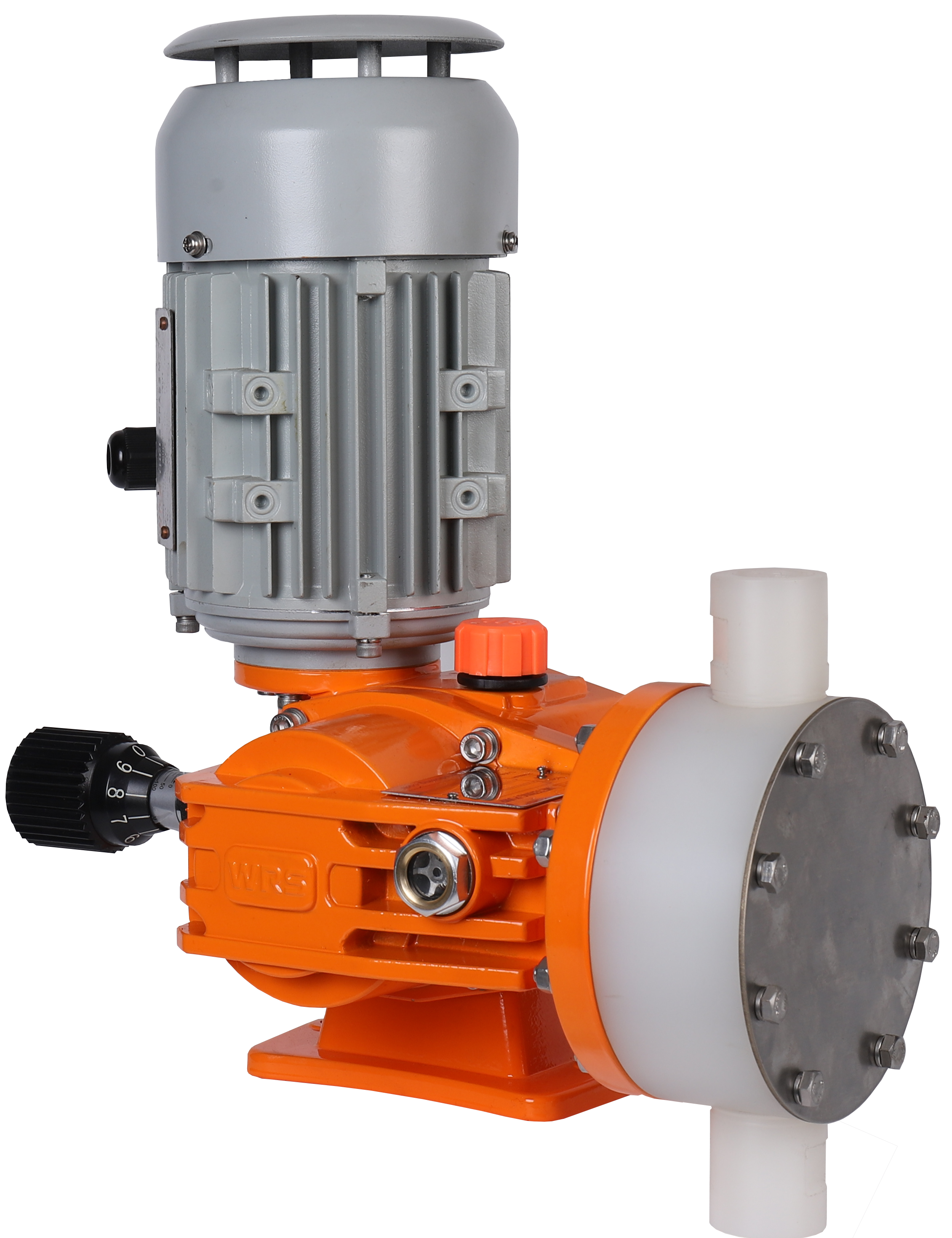
1. PVDF Pump Head Mechanical Diaphragm Dosing Pump
Typical duty: Flow rate 15–500 L/H, pressure 5–10 bar. Available wetted materials are PVC, PVDF and SS316. Both frequency and explosion-proof motors can be supplied.
Why it ranks first: This is the only configuration class that combines the market's dominant pump architecture with the material that is recommended for highly corrosive media. Diaphragm dosing pumps hold a 55.7% revenue share of the global dosing pump market (2024), which means spare parts, service knowledge and system integration practice are widely available. The diaphragm separates the drive from the pumped fluid, so the corrosive medium contacts only the pump head and valve components, both of which can be specified in PVDF.
Typical industries: Waste water treatment, chemical industry, coating and surface treatment, mining process and foundry industry.
Limits: The 5–10 bar band excludes very high pressure injection, and the pulsed output makes a pulse dampener advisable on sensitive lines.
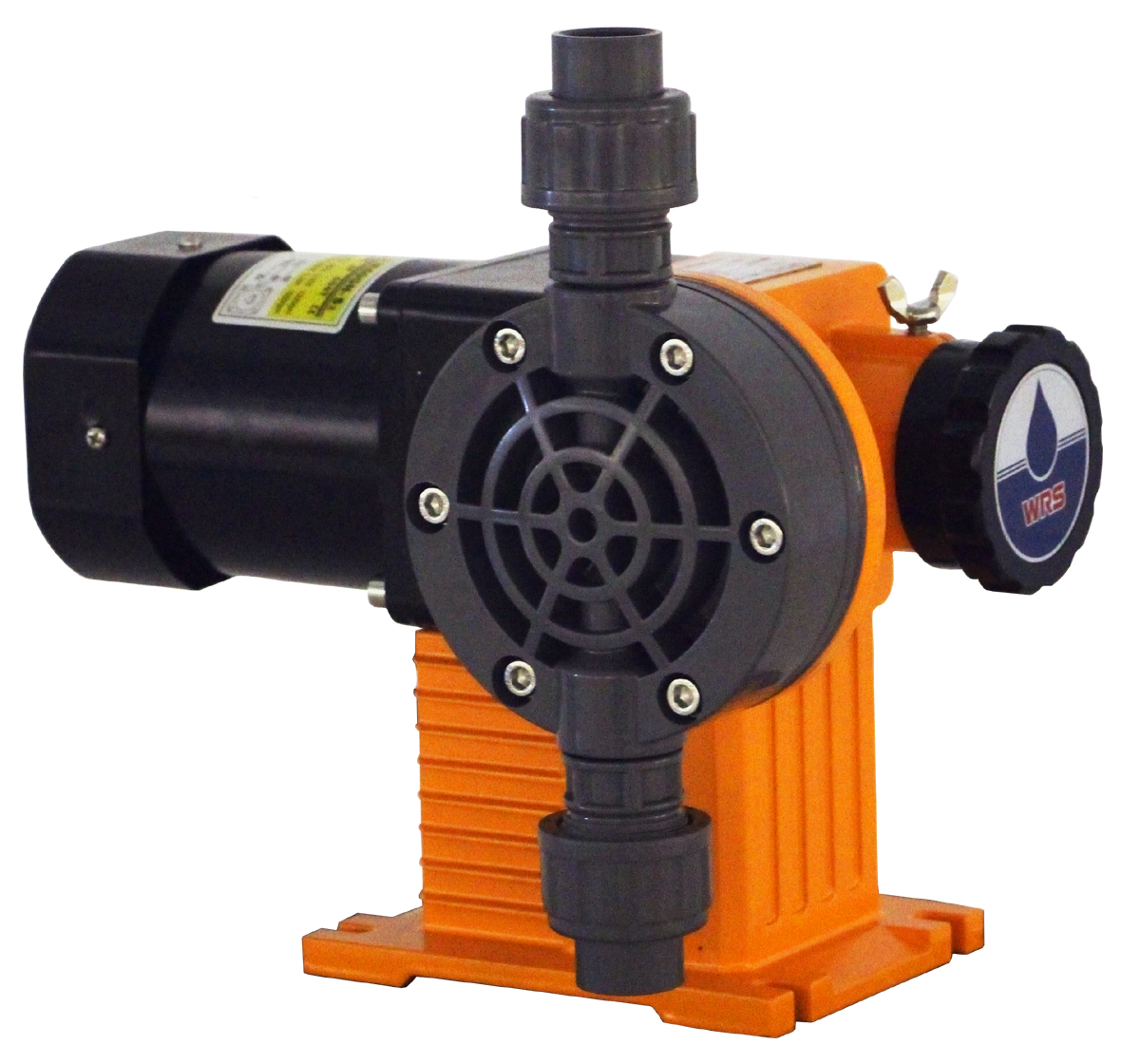
2. Solenoid-Driven Dosing Pump with PVDF Head

Typical duty: Flow rate 1–20 L/H, pressure 1–10 bar, voltage input 220V / 110V, protection IP65. Manual control and remote control versions are both available, and wetted materials cover PVC, PVDF and SS316.
Why it ranks second: For small-volume injection of aggressive chemicals — pH correction, biocide dosing, reagent trimming — a solenoid-driven pump offers the finest flow control in the range while allowing a PVDF pump head. The segment is also growing: solenoid-driven dosing pumps are projected to grow at a CAGR of 5.88% through 2031 (Mordor Intelligence). The IP65 rating matters in wash-down areas such as surface treatment lines.
Typical industries: Water treatment, candy manufacturing, coating and surface treatment, pure water and swimming pool dosing.
Limits: Capacity stops at 20 L/H. It is not intended for high-viscosity media, and the 1–10 bar band rules out high-pressure injection points.
3. Digital Dosing Pump with PVDF or PVC Head
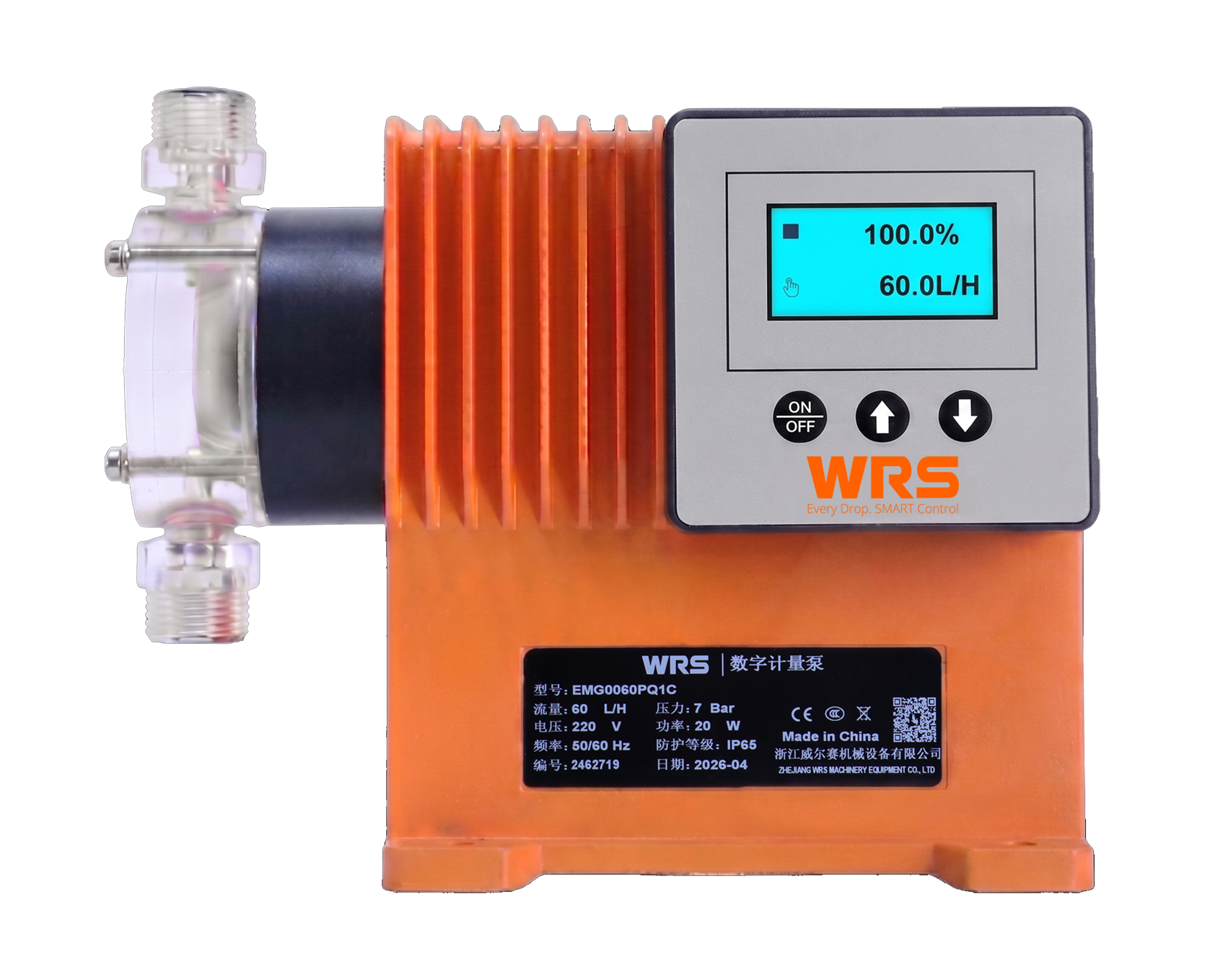
Typical duty: Three representative configurations span the mid-range: 60 L/H at 4 bar with Rc 1/2 inch thread and PVC, PVDF or SS316L wetted materials; 200 L/H at 4 bar with Rc 1/2 inch thread and PVC, PVDF or SS316; and 1000 L/H at 4 bar with DN25 socket and PVC or PVDF. All three run on 220V single phase with IP65 protection.
Why it ranks third: Digital control is what makes a corrosive dosing line auditable. Motor-driven metering pumps already hold a 54.45% revenue share of the global metering pump market (2025), and digital models let the same wetted-material choice be paired with repeatable setpoints and simpler integration into an automated chemical dosing system. Where a plant needs dosing records or remote adjustment, this class typically replaces a solenoid pump.
Typical industries: Water treatment, semiconductor, food and beverages, battery production, paper and pulp production and new energy.
Limits: The models listed operate at a 4 bar ceiling, so they suit low-pressure injection points and transfer duty rather than high-pressure lines.
4. Integrated Chemical Dosing System (Pump + Check Valve + Pulse Dampener + Monitoring)
What it includes: A pump selected from the diaphragm, solenoid or digital ranges, plus a dosing pump check valve to prevent backflow of corrosive fluid, a dosing pump pulse dampener where pulsation affects accuracy, and instruments and monitoring such as a streaming current monitoring system where the application requires verification of dosing performance.
Why it ranks fourth: In corrosive duty, a significant share of reliability problems sit in the accessories rather than the pump. A check valve protects the pump and the process line from backflow; a pulse dampener stabilises flow so that analysers and flow meters read a meaningful value. Buying these as one specified system removes the interface risk of mixing components from different sources, and is the more sensible route when a plant is adding a new injection point rather than replacing a single pump.
Limits: System-level specification takes more engineering input than a single pump order, and flow and pressure capability depend entirely on the pump selected inside the package.
5. High-Capacity Diaphragm Pump for Bulk Corrosive Dosing
Typical duty: Flow rate 250–1800 L/H, pressure 3–10 bar, wetted materials PVC, PVDF and SS316, with frequency and explosion-proof motors available.
Why it ranks fifth: Some corrosive duties are about volume rather than precision — bulk reagent transfer in waste water treatment, neutralisation and mining process circuits, where water and wastewater treatment alone accounts for a 23.2% share of the metering pump market. A high-capacity mechanically driven diaphragm pump delivers that volume while retaining the PVDF option for the pump head.
Typical industries: Waste water treatment, chemical industry, coating and surface treatment and mining process.
Limits: The 3–10 bar band is narrower than the piston and hydraulic ranges, and the larger footprint needs more skid space. Pulsation management becomes more, not less, important at these flow rates.
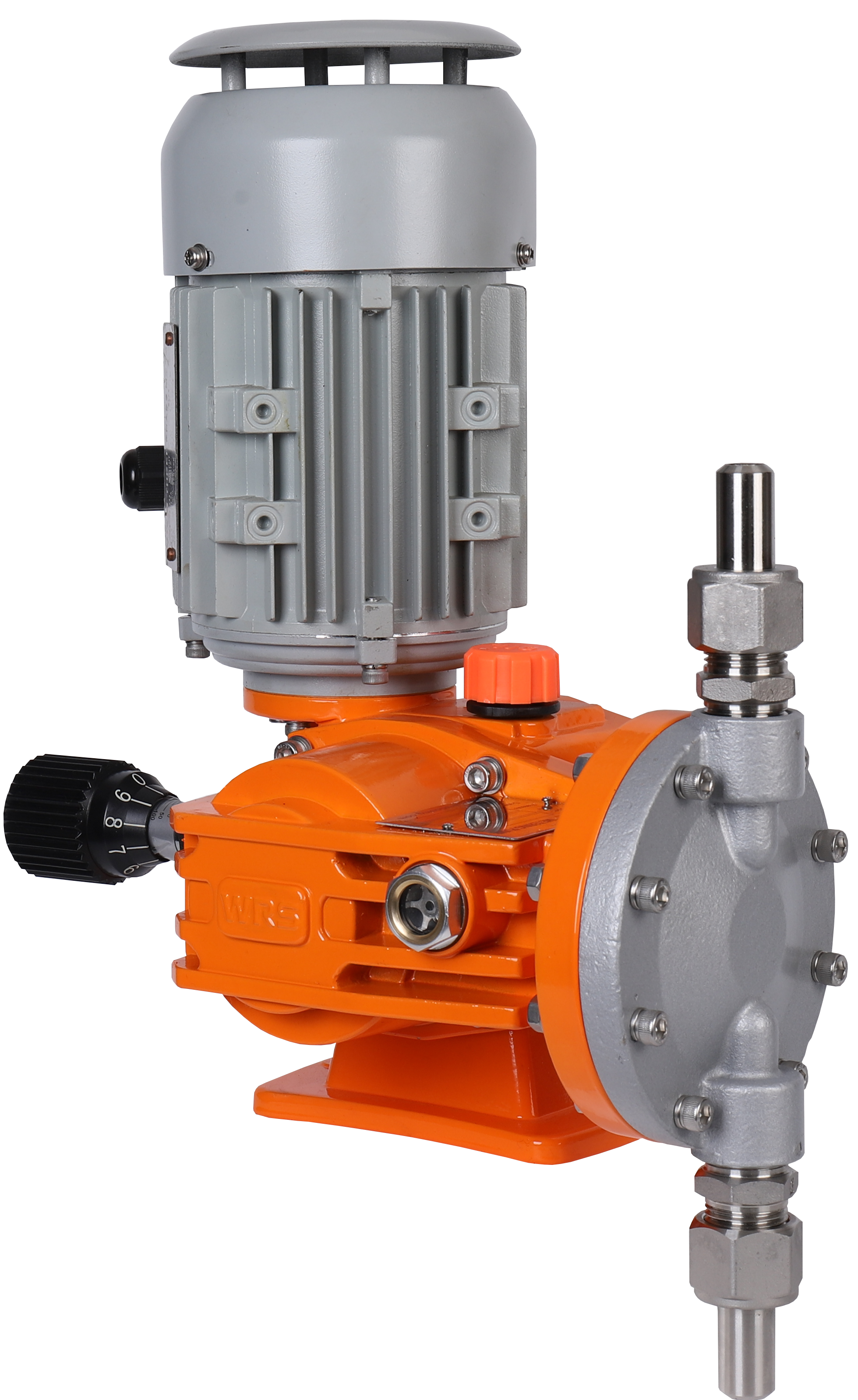
6. Piston Dosing Pump in SS316
Typical duty: Flow rate 600 L/H at 8 bar, with DN25 flange connection and a 0.75 kW motor on one model, or DN50 flange connection with a 4.0 kW motor on a larger model. Wetted material is SS316, and frequency and explosion-proof motors are available.
Why it ranks sixth: Piston pumps excel where pressure is the constraint and the medium is compatible with stainless steel. They are widely used in oil and gas, hydrogen energy, electric power, chemical, pharmacy, new material and new energy applications. The reason they rank below the diaphragm and solenoid classes in a corrosive-duty list is narrow and specific: the wetted material is SS316 only. Where a medium attacks stainless steel, the PVDF-head options above are the safer specification.
Limits: No PVC or PVDF wetted-material option in the listed configurations, and piston designs are less tolerant of abrasive or high-viscosity media.
7. Hydraulic Metering Pump in SS316 for Extreme Pressure
Typical duty: Two contrasting configurations define the class: 2 L/H at 200 bar with a DN6 bevel end welding tube connection and a 0.37 kW motor, or 1600 L/H at 6 bar with a DN50 flange connection and a 1.5 kW motor. Wetted material is SS316, with frequency and explosion-proof motors available.
Why it ranks seventh: A 200 bar capability at very low flow is a genuinely specialised duty — chemical injection into pressurised systems in oil and gas, hydrogen energy, electric power and chemical plants. It earns its place on the list because nothing else in the seven covers that pressure band. It ranks last for corrosive media for one honest reason: the wetted path is stainless steel only, so it is the wrong solution for a highly corrosive medium that demands PVDF.
Limits: Narrow flow and pressure combinations, stainless-steel-only wetted materials, and a higher specification burden at integration.
5. Comparison Table: Seven Solutions Side by Side
| Rank | Solution type | Flow range | Pressure | Wetted materials | Control | Best-fit corrosive duty |
|---|---|---|---|---|---|---|
| 1 | Mechanical diaphragm dosing pump (PVDF head) | 15–500 L/H | 5–10 bar | PVC, PVDF, SS316 | Manual with motor; frequency and explosion-proof motor available | Chemical, waste water treatment, coating and surface treatment, mining, foundry |
| 2 | Solenoid dosing pump (PVDF head) | 1–20 L/H | 1–10 bar | PVC, PVDF, SS316 | Manual or remote control, IP65 | Small-volume reagent injection, pH correction, pure water, surface treatment |
| 3 | Digital dosing pump | 60–1000 L/H | 4 bar | PVC, PVDF, SS316L (1000 L/H model: PVC, PVDF) | Digital, IP65, 220V single phase | Automated dosing with setpoints and integration into a chemical dosing system |
| 4 | Integrated chemical dosing system | Depends on selected pump | Depends on selected pump | Per selected pump; PVC, PVDF or SS316 | System-level, with monitoring where required | Multi-component corrosive dosing with check valve, pulse dampener and monitoring |
| 5 | High-capacity diaphragm pump | 250–1800 L/H | 3–10 bar | PVC, PVDF, SS316 | Motor-driven; frequency and explosion-proof motor available | Bulk reagent dosing, neutralisation, mining process circuits |
| 6 | Piston dosing pump | 600 L/H | 8 bar | SS316 | Motor-driven; frequency and explosion-proof motor available | High-pressure duty with media compatible with stainless steel |
| 7 | Hydraulic metering pump | 2 L/H or 1600 L/H | up to 200 bar | SS316 | Motor-driven; frequency and explosion-proof motor available | Ultra-high-pressure chemical injection at low flow |
Read the table by column, not by row. If the medium is highly corrosive, the first three rows are the realistic candidates and the decision moves to flow and pressure. If pressure above 10 bar is the hard constraint, the last two rows are the only candidates and the material question moves to whether stainless steel is acceptable for that specific medium.
6. Step-by-Step: How to Shortlist and Configure a Corrosive-Duty Dosing Pump
The sequence below reflects the order in which the ranking criteria should be applied. Skipping a step usually results in re-specification later in the project.
- List the media precisely. Record each chemical, its concentration and the process temperature at the injection point. Material decisions depend on the medium, not on the application name.
- Fix the maximum flow rate at the site. Flow rate is the most important selection parameter. Compare the required maximum flow rate with the pump's rated range rather than with a nominal mid-point.
- Confirm discharge pressure and backpressure. The pump must operate inside its pressure band, and backpressure from the injection point must be included.
- Choose the pump head material. For highly corrosive media, select PVDF. Confirm the same material logic for valves, tubing and seals, not only for the head.
- Select control mode and motor. Decide between manual, remote and digital control, and confirm whether a frequency or explosion-proof motor is required for the installation area.
- Add the accessories and the maintenance routine. Include a check valve and, where pulsation affects accuracy, a pulse dampener. Plan for the standard troubleshooting path: if discharge flow drops or becomes unstable, check the strainer, tubing and valves, then clean or replace as needed.
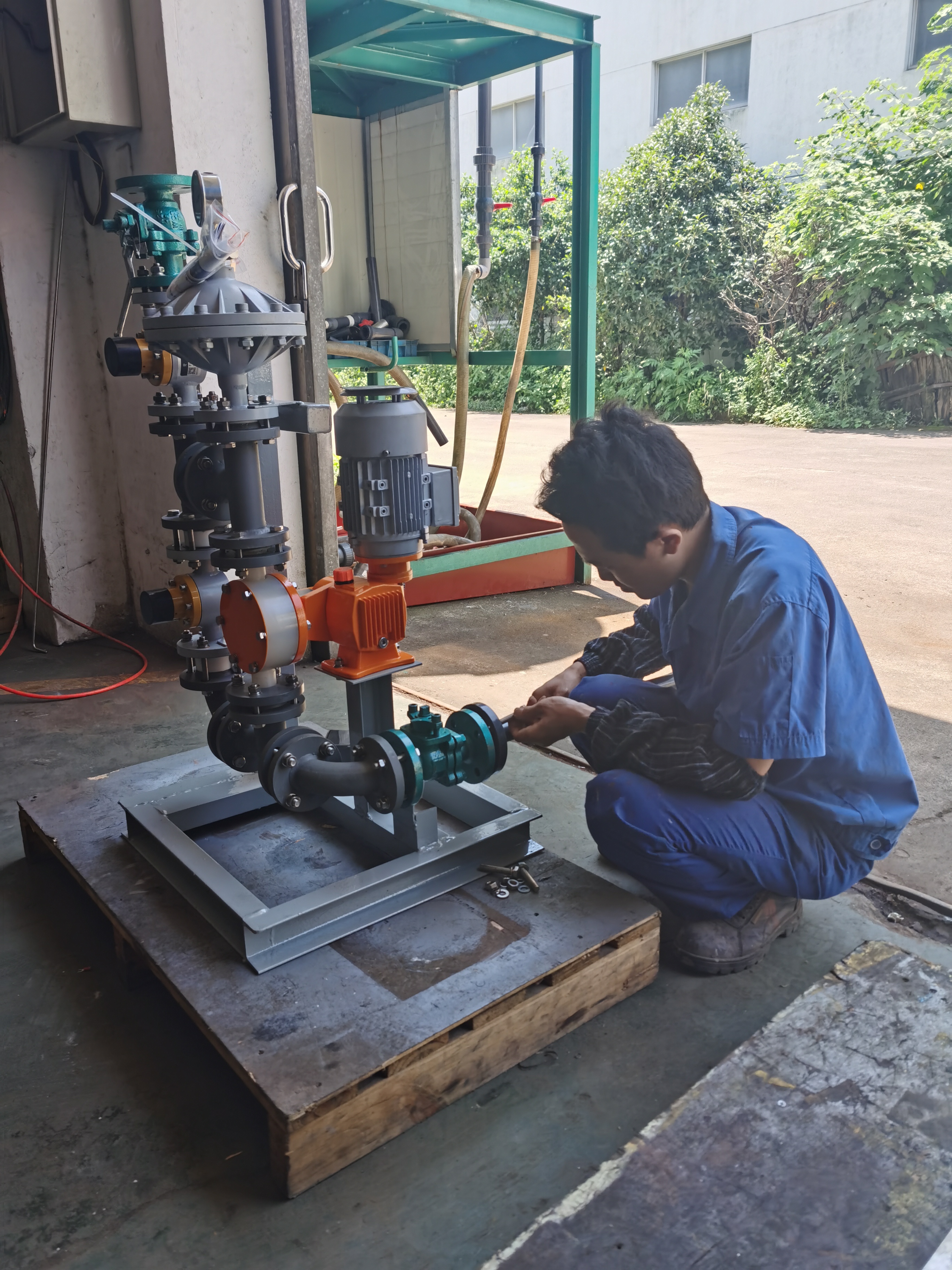
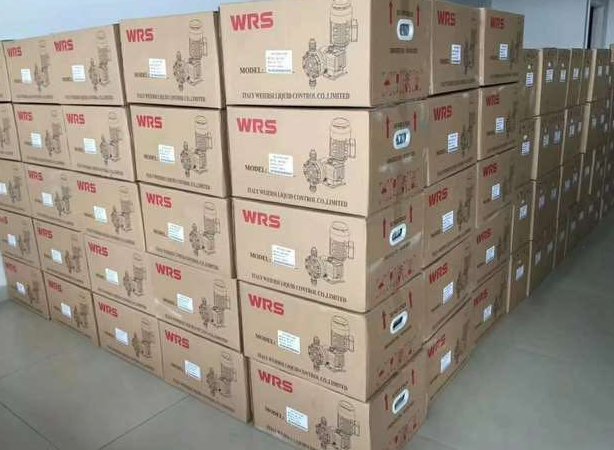
WRS PTE LTD (ZHEJIANG WRS MACHINERY EQUIPMENT CO., LTD) is a dosing equipment manufacturer founded in 2016 and based in Hangzhou, Zhejiang, China, operating a 15,000 m² facility with 120 employees, 15 engineers and an annual output of 30,000 units. The product range covers metering pumps, solenoid, diaphragm, piston and digital dosing pumps, check valves, pulse dampeners, chemical dosing systems, streaming current monitoring systems and chemical injection pumps, with exports representing 20% of output and markets in Southeast Asia, Russia and South America.
7. Use Cases: Matching the Shortlist to Real Installations
Different industries narrow the list quickly once the medium and the flow are known.
- Waste water treatment and chemical processing: Mechanical diaphragm pumps with PVDF heads cover the 15–500 L/H band, with high-capacity diaphragm units taking over from 250 L/H upward for bulk reagent dosing.
- Coating and surface treatment lines: Solenoid pumps at 1–20 L/H suit precise additive injection, and the IP65 protection withstands wash-down environments. Diaphragm pumps handle the larger chemical recirculation and dosing duties on the same line.
- Semiconductor, battery production and new energy: Digital dosing pumps in the 60–200 L/H range with PVC, PVDF or SS316L wetted materials fit automated lines that need repeatable setpoints and traceable dosing.
- Oil and gas, hydrogen energy and electric power: Piston and hydraulic metering pumps cover high-pressure injection where the medium is compatible with SS316, up to a 200 bar rating at 2 L/H.
- Livestock and agriculture: Nutrient solution dosing on a 24/7 automatic system in a harsh, humid farm environment requires IP67 protection, which drives both the pump selection and the enclosure decision.
- Mining and foundry: Mechanically driven diaphragm pumps handle continuous reagent dosing in dust-heavy areas where frequency or explosion-proof motors are often specified.
8. FAQ: Corrosive Chemical Dosing Pump Decisions
Which standards and markings apply to dosing pumps used with corrosive chemicals?
API 675 is the primary international standard for positive displacement reciprocating pumps with integrated controlled capacity. ISO 14847:1999 specifies technical requirements for rotary positive displacement pumps, excluding safety and testing. In the European Union, metering pump units must carry CE marking under the EU Machinery Regulation, which repeals 2006/42/EC from 2027. For corrosive duty, these frameworks matter because they define which documentation and declarations a supplier should be able to provide, and buyers should confirm which apply to their project before the order is placed.
Which pump head material should be used for strongly corrosive liquids?
Material choice depends on the medium. Different media have different materials available for selection, and for highly corrosive media, PVDF pump head material is recommended. In practical terms, the same pump platform is frequently offered in PVC, PVDF and SS316 or SS316L, so the selection question becomes which material configuration is available for that pump. Flow rate remains the most important parameter: the pump is first compared against the maximum flow rate at the site, then pressure, pump head material and motor selection refine the final configuration.
Are dosing pumps cost-effective compared with other pump types at low flow rates?
At small flow rates, the comparison favours dosing pumps: cost is at least 50% lower than for a screw pump, with less maintenance and higher efficiency. Accuracy also differs — dosing pump accuracy is within 2%, while screw pump accuracy is around 5%. On a corrosive dosing line, that difference determines whether the process stays inside its treatment window, so the accuracy gap usually outweighs the hardware saving.
How can material compatibility be validated before ordering?
Validation begins with the media list: each chemical, its concentration, the process temperature and the maximum flow rate at the injection point. That information is then mapped to a pump head material — PVC, PVDF or SS316 / SS316L — and to the accessory set, including the dosing pump check valve and, where pulsation affects accuracy, the dosing pump pulse dampener. Buyers can request the proposed material and configuration for their specific medium and check it against the site's maximum flow rate and pressure before committing to a pump order.
What determines delivery and support after the shortlist is agreed?
Delivery depends on configuration rather than on pump type: flow and pressure range, pump head material, control mode, motor selection including frequency and explosion-proof options, and whether the order includes check valves, pulse dampeners or a complete chemical dosing system. Support coverage also matters for corrosive duty, because a material failure needs a fast response. WRS maintains local after-sales service in more than 10 countries, including Singapore, Thailand, Malaysia, Vietnam, South Korea, Japan, Russia, Chile, South Africa, Angola and Turkey. To move from shortlist to a configured quotation, share your medium, required maximum flow rate and pressure with the team at www.wrsdosing.com or isak@wrsindustry.com, telephone and WhatsApp +86 173 0642 4430.
9. Conclusion: Rank by Material First, Then by Duty
The seven solutions above are not interchangeable, and the ranking is deliberate. Mechanical diaphragm pumps with PVDF heads take first place because they combine the dominant market architecture with the material recommended for highly corrosive media. Solenoid and digital pumps follow because they deliver precision and controllability while keeping the PVDF option. The integrated chemical dosing system ranks next because accessories such as check valves, pulse dampeners and monitoring decide whether a corrosive dosing loop stays stable. The high-capacity diaphragm, piston and hydraulic designs close the list — each is the right answer for a specific pressure or volume duty, and each is limited by its wetted-material range rather than its engineering quality.
Applied in that order, the shortlist almost writes itself: confirm the medium, set the maximum flow rate, fix the pressure, choose PVDF for highly corrosive service, then select control mode and accessories. Everything else — brand, price and lead time — should be evaluated only after those five decisions are locked.
Next Step: Configure a Dosing Solution for Your Medium
Send the chemical name, concentration, maximum flow rate and discharge pressure, and the WRS team will confirm the pump head material, flow and pressure range, control mode and accessory set for your application. Samples, configuration proposals and quotations can be discussed directly.
E-mail: isak@wrsindustry.com | Tel / WhatsApp: +86 173 0642 4430 | Website: www.wrsdosing.com
Download the product brochure here: Diaphragm Separator (PDF)