
PA66 GF30 vs PBT GF30 vs PP GF30: Buyer Comparison Guide
Direct answer: PA66 GF30, PBT GF30 and PP GF30 share a nominal 30% glass-fiber reinforcement level, but they are not the same material. PA66 GF30 is a polyamide 66 compound with high published tensile strength and heat-deflection performance. PBT GF30 is a polyester compound with high published flexural modulus, low published shrinkage and stable electrical molding behaviour. PP GF30 is a polypropylene compound used where the required heat, stiffness, impact, chemical exposure and dimensional tolerance can be met by a validated PP formulation. The GF30 marking never decides the part.
This guide compares the three families for injection-molded parts using published WanHan grade data where it exists, and it states clearly where that data does not exist. It then answers the two risk questions that decide most substitutions: whether PA66 GF30 can be used in coolant-contact parts, and when PP GF30 is a sensible alternative to PA66 GF30.
Data scope: the numeric values below are published typical grade data for initial screening, not guaranteed specification limits. Procurement acceptance and final part approval require the current confirmed TDS for the exact grade, the agreed specification and project-specific molded-part testing.
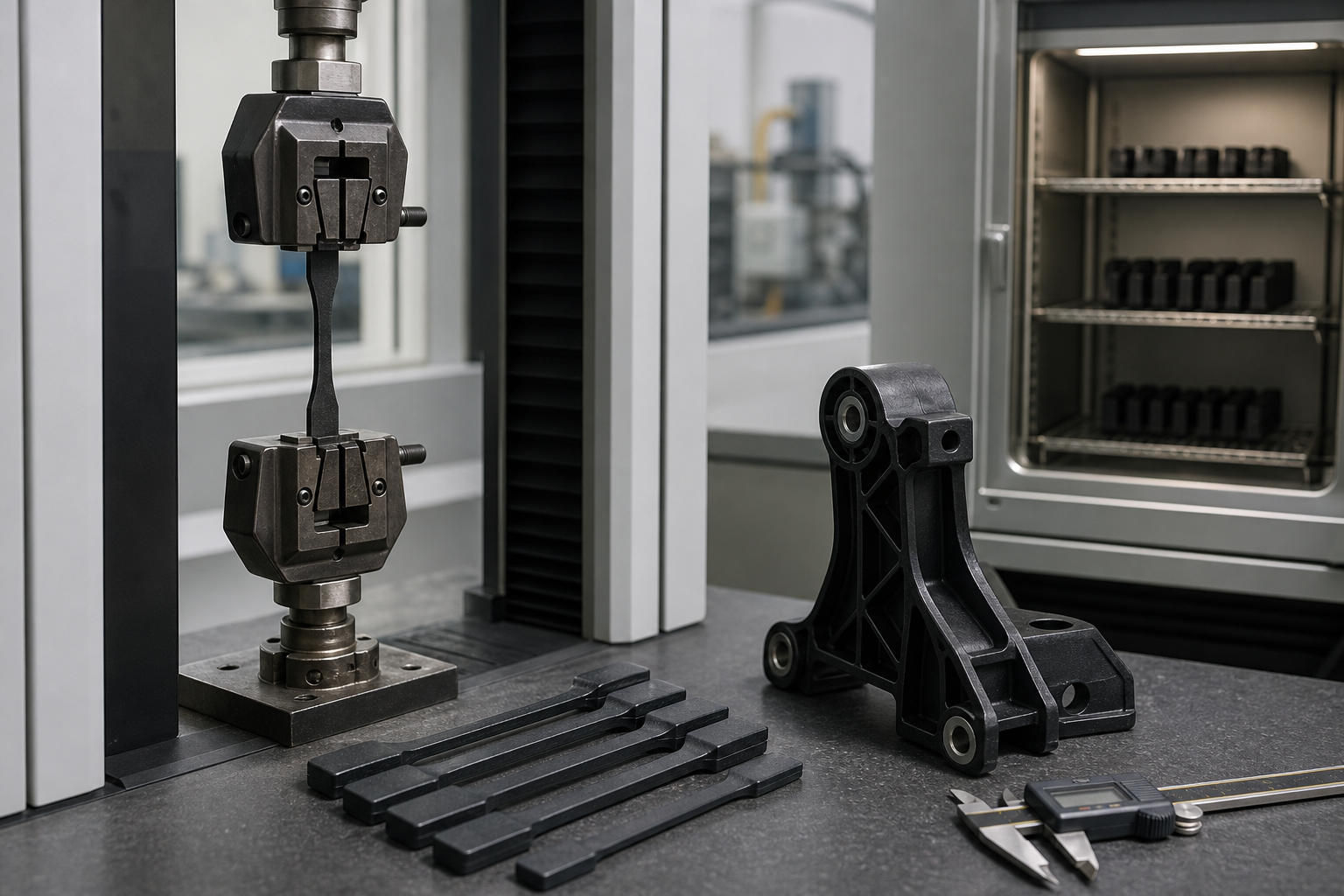
A comparison is only as good as its validation path: exact-grade data, molded samples, process verification, then production-tool approval.
1. Why GF30 Alone Cannot Be Used as a Material Decision
GF30 states a reinforcement level of roughly 30% glass fiber. It does not state the polymer matrix, the fiber type and length, the coupling system, the additive package, the color, the conditioning state or the compliance evidence behind the grade.
WanHan's own material guidance states the rule directly: two GF30 compounds cannot be treated as equivalent simply because both contain 30% glass fiber, because the base polymer, fiber type and length, coupling, additives, processing and moisture conditioning can all differ. A buyer who approves an alternate resin from the filler percentage alone is approving a formulation that has never been validated in that part.
A technical data sheet is a screening tool, not a part qualification. Published values come from standardized specimens under stated methods and conditioning states. They do not describe weld-line strength, creep under sustained load, warpage in an asymmetric geometry, long-term chemical exposure, or fit and assembly tolerance in the actual production tool. Grade data shortlists a material; the molded part approves it.
2. Industry Background: Three Polymer Families in One RFQ
PA66 has a deep, well-established supply base. Market research cited for this topic reports global PA66 production of approximately 2.7 million metric tons in 2023, and reports that more than 40% of PA66 volume is directed to under-the-hood automotive applications, reflecting the polymer's heat-resistance profile. Polyamides in primary forms are classified under HS code 3908.10, which is the reference importers and exporters commonly use when checking trade documentation.
Resin-level pricing moves independently of compound pricing. A published index reported PA66 resin at US$3.48/kg in North America and US$2.95/kg in Northeast Asia as of September 2026. That is a base-resin reference only; a compound quotation also reflects reinforcement, additive package, exact grade, testing, color, order volume, packaging, freight and duty.
PBT and PP enter the same RFQs from different directions. PBT is a polyester widely used for electrical and precision components, and it is generally less moisture-sensitive than polyamide in service. PP is a polyolefin with a lower thermal ceiling than polyamide, generally low moisture sensitivity, and a cost profile that makes it attractive when the part specification is moderate. The comparison below is therefore not about which polymer is 'better'; it is about which matrix passes the actual part requirements.
3. The Three Compounds in Detail
PA66 GF30 — WanHan PA66-WHG30A
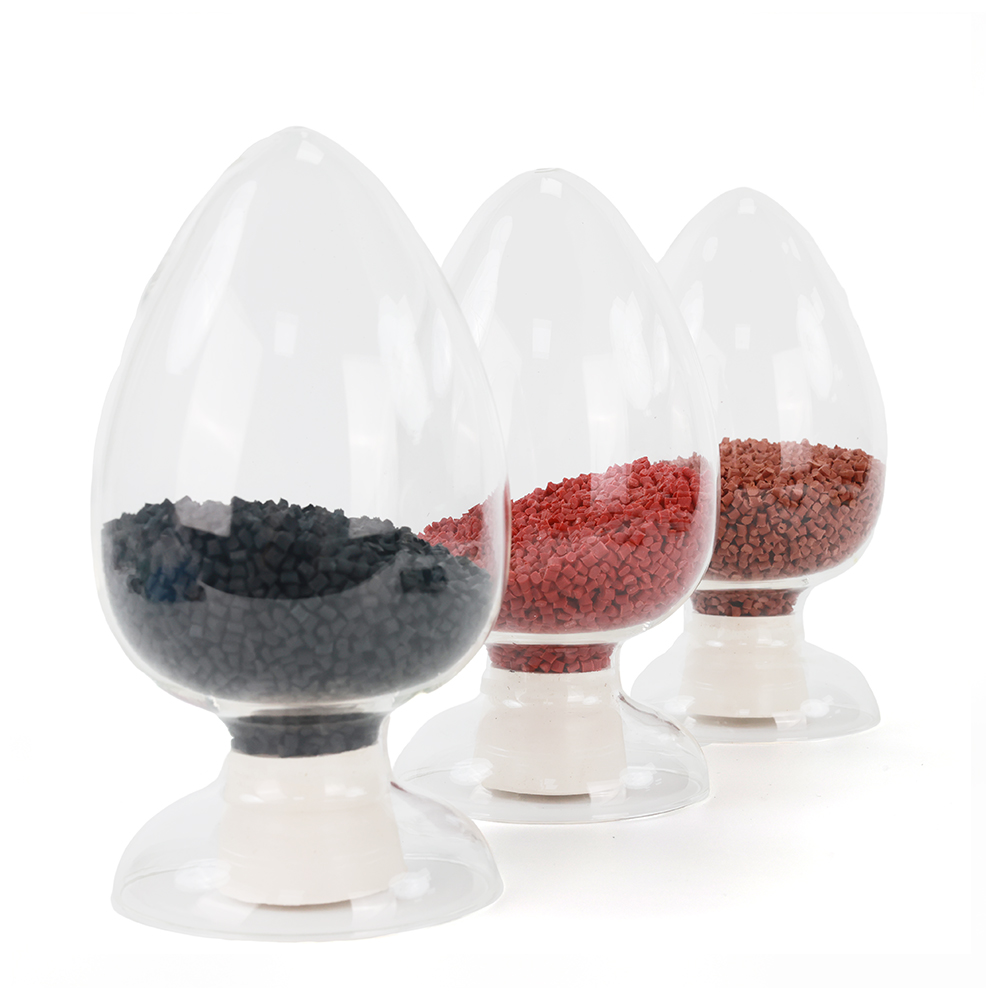
Representative polyamide pellets. Exact resin, reinforcement, formulation and color require confirmation against the supplied grade.
PA66-WHG30A is a 30% glass-fiber-reinforced polyamide 66 injection-molding compound. Published typical values are:
- Tensile strength: 175 MPa (ISO 527-2)
- Tensile strain at break: 9% (ISO 527-2)
- Flexural strength: 255 MPa (ISO 178)
- Flexural modulus: 7,000 MPa (ISO 178)
- Notched impact strength: 18 kJ/m2 (ISO 179)
- Heat deflection temperature, method B: 220 degrees C (ISO 75-2/B)
- Melt flow index: 20 g/10 min (ISO 1133)
- Density: 1.38 g/cm3 (ISO 1183)
- Molding shrinkage: 0.5% (ISO 2577)
- UL 94 flammability: not specified for this grade in the supplied data
Published application directions include automotive cooling fans, fan shrouds and radiator-system components; under-hood brackets, covers and fluid-handling housings; electrical connector bodies and structural supports; industrial gears, pump housings and machinery components; and appliance frames and load-bearing molded parts. Final suitability depends on load, temperature, moisture, chemical contact, wall thickness, fiber orientation and project validation.
PBT GF30 — WanHan PBT-WHG30
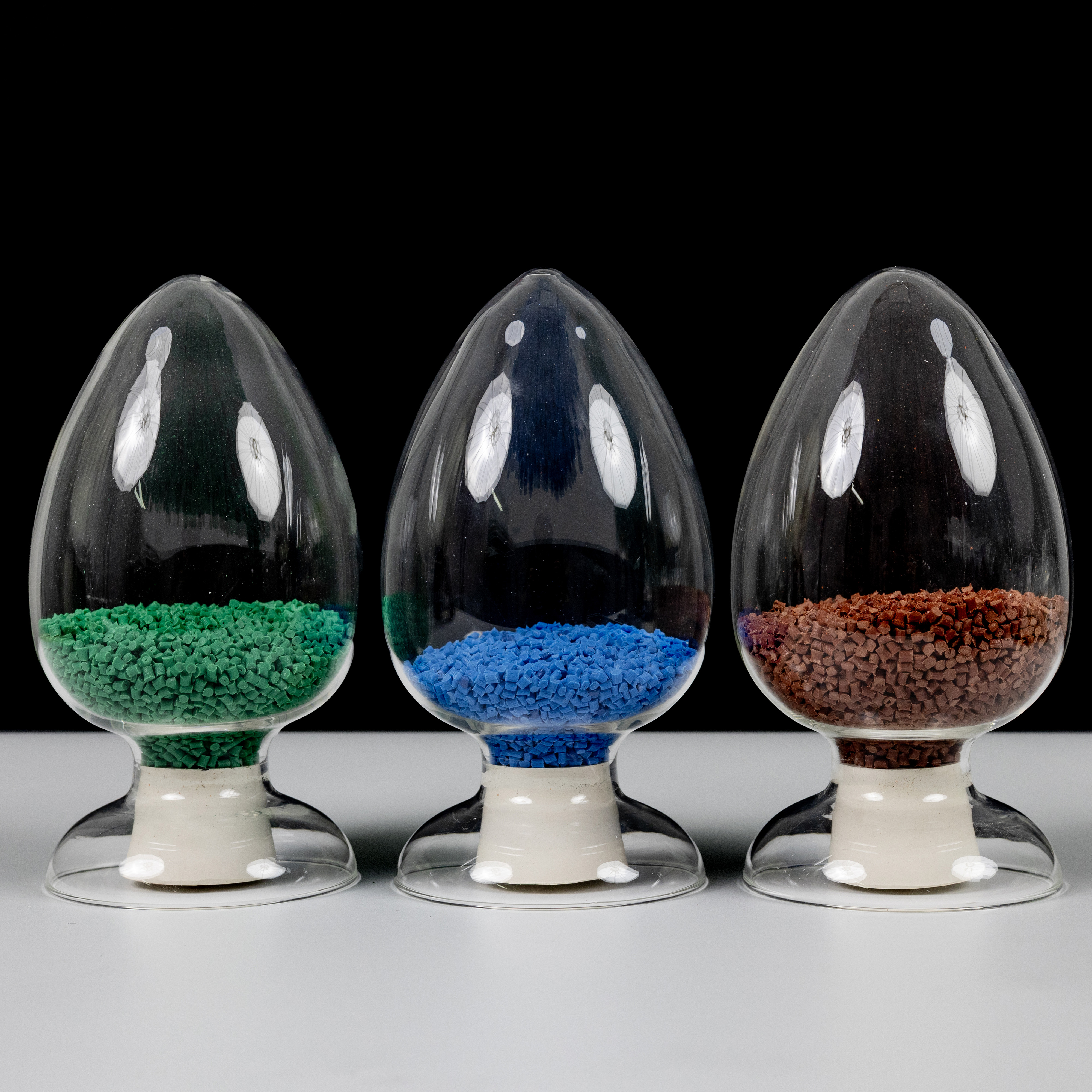
Representative PBT and PET pellets. Polyester formulation and reinforcement must be confirmed for the exact grade.
PBT-WHG30 is a 30% glass-fiber-reinforced PBT injection-molding grade. Published WanHan data are:
- Tensile strength: 130 MPa, elongation 5% (ISO 527)
- Flexural strength: 210 MPa; flexural modulus 8,200 MPa (ISO 178)
- Notched Izod impact: 10 kJ/m2 (ISO 180)
- Heat deflection temperature: 185 degrees C (ISO 75)
- Melt flow index: 24 g/10 min (ISO 1133)
- Density: 1.54 g/cm3 (ISO 895 as published)
- Mold shrinkage: 0.5% (ISO 2577)
- UL 94: HB at 1.6 mm
Published application directions include automotive wiper-system parts, sensor housings, connectors, coil bobbins, motor components, and pump and valve housings, subject to part validation. Note the comparison shape: PBT-WHG30 publishes a higher flexural modulus (8,200 MPa) than PA66-WHG30A (7,000 MPa), while PA66-WHG30A publishes the higher tensile strength (175 MPa vs 130 MPa) and the higher heat deflection temperature (220 degrees C vs 185 degrees C). Neither statement makes one grade universally better; they describe different stiffness, strength and heat profiles that must be matched to the part.
PP GF30 — WanHan PP-WHG30
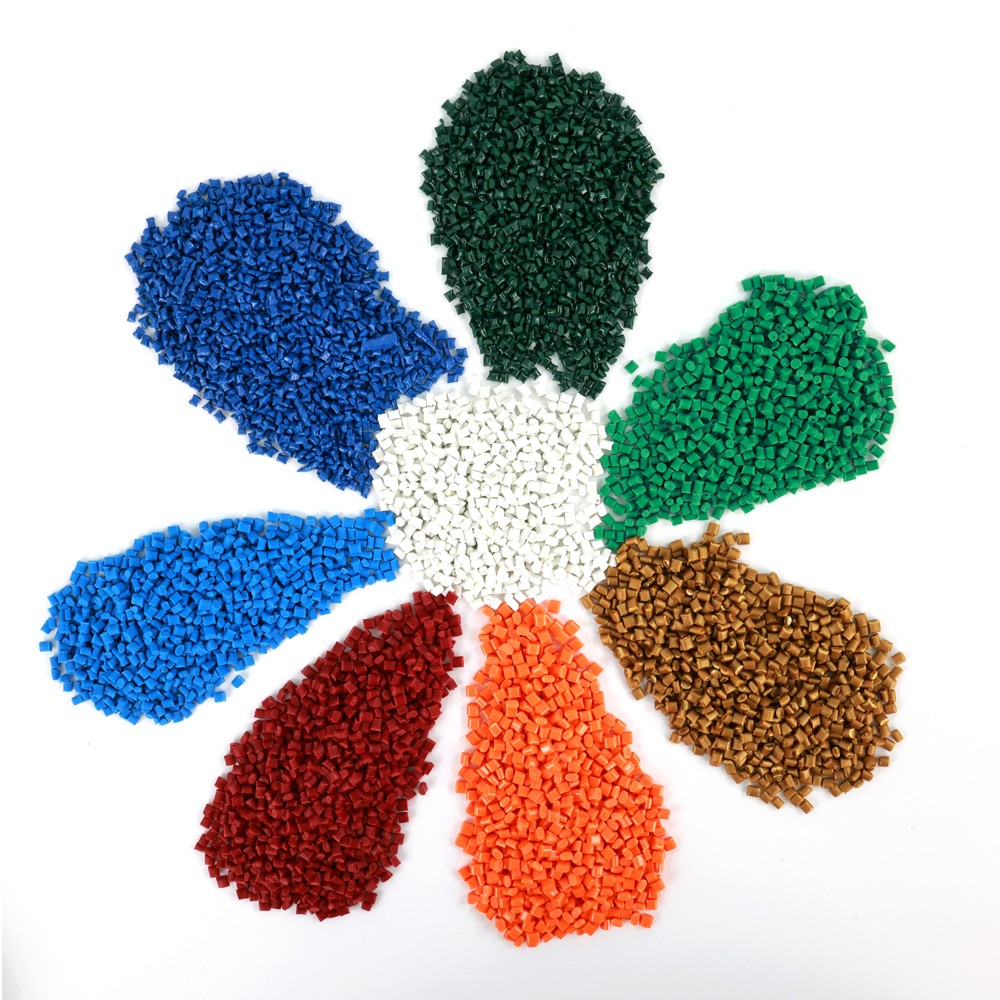
Representative modified plastic pellets. Appearance alone does not establish grade performance.
PP-WHG30 is classified as a 30% glass-fiber-reinforced polypropylene injection-molding compound. No numeric property set is published for this grade in the available material data, and that is a deliberate limit rather than a marketing gap: generic PP GF30 comparison values must not be applied to this grade without an exact-grade test report. The production model and its current TDS must be confirmed before approval.
For a buyer this changes the sequence, not the goal. PP GF30 can be evaluated for automotive, appliance and industrial molded components where stiffness, weight and chemical exposure are judged against the part specification, but the evaluation has to start from a confirmed grade and a real sample rather than from an assumed property table.
Customization Options That Apply Across the Portfolio
WanHan's modification options include glass-fiber reinforcement, heat stabilization, hydrolysis resistance modification, flame retardancy modification, toughness modification, low-warpage formulation, UV resistance modification, color matching and packaging customization. Availability and compliance are confirmed for the exact grade, which matters because a formulation change can alter processing, appearance, mechanical behaviour and compliance evidence.
4. Comparison Table: Published Values and Documented Gaps
The table below keeps published values and missing evidence in the same view. A blank or 'not published' cell is a task for the supplier, not a zero.
| Property (method) | PA66-WHG30A | PBT-WHG30 | PP-WHG30 |
|---|---|---|---|
| Polymer matrix | Polyamide 66 | PBT (polyester) | Polypropylene |
| Reinforcement | 30% glass fiber | 30% glass fiber | 30% glass fiber |
| Tensile strength | 175 MPa (ISO 527-2) | 130 MPa (ISO 527) | Not published for this grade |
| Flexural modulus | 7,000 MPa (ISO 178) | 8,200 MPa (ISO 178) | Not published for this grade |
| Heat deflection temperature | 220 degrees C (ISO 75-2/B) | 185 degrees C (ISO 75) | Not published for this grade |
| Notched impact | 18 kJ/m2 (ISO 179) | 10 kJ/m2 (ISO 180) | Not published for this grade |
| Molding shrinkage | 0.5% (ISO 2577) | 0.5% (ISO 2577) | Not published for this grade |
| Density | 1.38 g/cm3 (ISO 1183) | 1.54 g/cm3 (ISO 895 as published) | Not published for this grade |
| UL 94 | Not specified in supplied data | HB at 1.6 mm | Not published for this grade |
| Moisture sensitivity in processing | Polyamide is moisture-sensitive; dry per grade guidance | Confirm drying per exact grade | Confirm drying per exact grade |
5. Coolant Contact: Can PA66 GF30 Be Used in a Radiator or Coolant Housing?
A generic PA66 GF30 grade should not be approved for direct coolant contact from the polymer name or from a room-temperature data sheet alone. The exact compound has to be evaluated against the specified coolant chemistry, temperature, pressure, exposure time, moisture conditioning and molded-part geometry.
The practical consequence for procurement is that hydrolysis and long-term aging evidence must be requested for that specific grade, and parts molded from the production tool must be validated before release. WanHan PA66-WHG30A should be treated as a candidate only until those requirements are demonstrated. Its published data do not include a hydrolysis-resistance or long-term fluid-aging claim, and the standard grade should not be assumed to provide one.
This is also where PBT GF30 and PP GF30 enter the discussion honestly. Neither family should be substituted into a coolant-exposed part on cost grounds without the same fluid-aging and conditioned-part testing, because the deciding evidence is the service environment, not the polymer label.
6. When Is PP GF30 a Sensible Alternative to PA66 GF30?
Consider PP GF30 when the application's required heat, stiffness, impact, chemical exposure and dimensions can be met with a validated PP formulation. The decision rule is not 'PP is cheaper', it is 'the validated PP part passes the same specification at an acceptable total cost'.
The evidence position differs between the two grades and buyers should treat it differently. PA66-WHG30A has published exact-grade data. The proposed PP-WHG30 code still requires confirmation against a production TDS, and generic PP GF30 comparison values must not be transferred onto it. Comparing an unconfirmed PP grade against a documented PA66 grade is not a comparison; it is an assumption.
A representative case shows what a disciplined PP GF30 evaluation looks like. A 25 kg PP GF30 trial order was completed for a buyer evaluating 30% glass-fiber-reinforced polypropylene for lightweight, rigid injection-molded structural parts. The review covered stiffness, impact, shrinkage, warpage, color and molding conditions before the confirmed sample batch was prepared. No quantified part result is claimed without customer test data, and the 25 kg lot was sized to allow machine setup, tool filling and initial dimensional checks. For a comparable project, the part drawing, load, temperature, chemical exposure, wall thickness and color target are the inputs that make the review meaningful.
7. Step-by-Step: How to Compare and Validate the Three Families
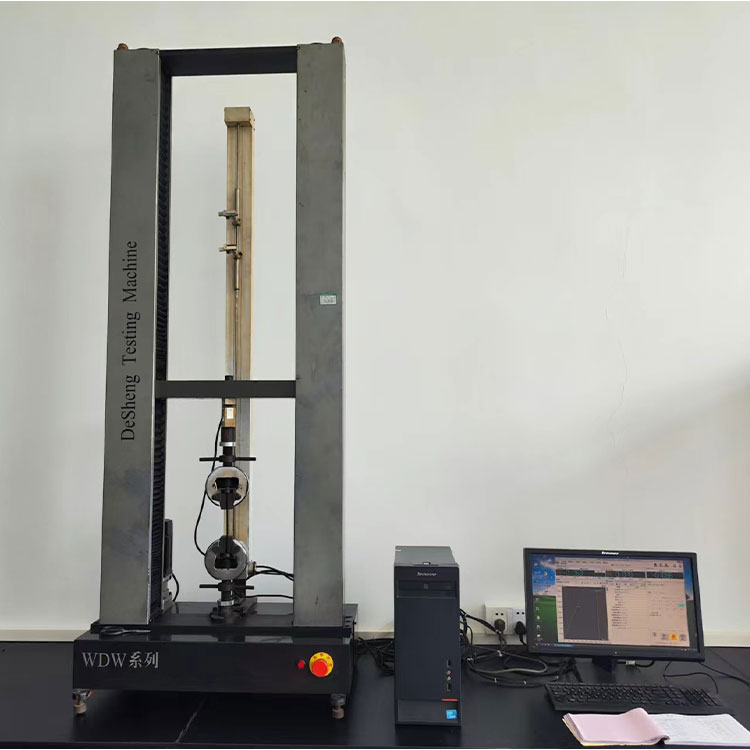
Internal mechanical testing supports formulation and batch verification. Exact methods, specimen conditioning and acceptance limits are agreed per grade.
- Write down the service conditions first. Continuous and peak temperature, mechanical load and duration, humidity and fluid contact, chemical exposure, dimensional tolerance, flame or electrical requirements, appearance and annual volume. A material name is not a substitute for this brief.
- Shortlist exact grades, not families. Review the current TDS for each candidate. Confirm the grade code, polymer, reinforcement, units, test standard, specimen condition and edition before comparing any number.
- Refuse mixed test bases. Compare only values measured under equivalent methods, specimen geometry and conditioning. Do not mix dry-as-molded and conditioned data, and do not copy values from a different reinforcement level.
- Start with an evaluation sample. WanHan materials samples are provided free of charge, and PA66 GF30 evaluation requests can start from 5 kg where the exact grade and availability permit. Sample preparation typically takes 3 to 7 days after requirements are agreed. Standard production packing is 25 kg per bag.
- Run a controlled molding trial. Record drying, melt and mold conditions, then inspect flow and transverse shrinkage, weld lines, warpage and surface quality. Post-molding conditioning can shift measured results, so the conditioning state must be recorded and repeated.
- Validate conditioned parts from the production tool. Test dimensions, assembly, mechanical behaviour and any thermal, electrical or flame requirement on real parts. A small pellet sample does not capture production-tool, conditioning or batch effects.
- Close the loop with documents and change control. Match every certificate or report to the exact grade and current requirement, then agree how formulation, color, process or packaging changes will be communicated and re-validated.
8. Use Cases: Matching the Compound to the Part
Automotive cooling-system components
Cooling fans, fan shrouds and radiator-system structural parts are published PA66 GF30 application directions, and they combine mechanical load, vibration, heat and changing humidity. Where the component touches coolant, oil or another fluid, the exposure must be confirmed for that component and the grade must carry applicable fluid-aging evidence before approval.
Electrical connectors, sensor housings and coil bobbins
This is the clearest head-to-head, and the flame question decides it. PBT-WHG30 is published as HB at 1.6 mm; PA66-WHG30A has no stated UL 94 rating in the supplied data. Neither grade should be approved for a V-0 requirement without separate exact-grade evidence. Start from the connector's heat, load, moisture, dimensional and flame requirements, then select the grade whose current TDS and reports match the specification, and validate the molded connector and contacts.
Lightweight, stiffness-driven non-hot parts
For structural parts where temperature and fluid exposure are moderate and the design is stiffness- and weight-driven, a confirmed PP GF30 grade is worth a controlled trial. The trial should compare conditioned molded parts and total accepted-part cost, not pellet price, because yield, scrap, cycle behaviour and inspection costs all sit in the part.
Industrial gears, pump housings and machinery components
Repeated mechanical load, vibration and possible lubricant or process-fluid contact make this a classical PA66 GF30 territory, with torque or pressure, duty cycle, lubrication, tolerances and expected service life defined for the component before the mold trial.
9. Compliance Evidence: What Travels With a Grade and What Does Not
Compliance evidence does not travel between polymers. WanHan's available SGS reports, SZXEC24003382502 (REACH SVHC) and SZXEC24003382501 (RoHS), are valid for the tested flame-retardant PP sample, model SZX24-0033825-0001.C001, and must not be represented as REACH or RoHS certification for PA66 GF30, PA66-WHG30A, PBT-WHG30 or all WanHan products.
Company management-system certificates follow the same logic. The ISO 9001:2015, ISO 14001:2015 and ISO 45001:2018 certificates cover the design and production of modified plastic pellets and related management activities. They evidence a management system; they do not certify the performance or regulatory compliance of an individual product grade. When a destination market or customer requires grade-specific evidence, request the current exact-grade report and check the sample name, polymer family, grade, test method, edition and date.
10. Frequently Asked Questions
Is a standard PA66 GF30 suitable for a radiator or coolant-contact housing?
Do not approve a generic PA66 GF30 grade for direct coolant contact from the polymer name or a room-temperature TDS alone. The exact compound must be evaluated for the specified coolant chemistry, temperature, pressure, exposure time, moisture conditioning and molded-part geometry. Request hydrolysis and long-term aging evidence for that grade and validate parts from the production tool. WanHan PA66-WHG30A should be treated as a candidate only until those requirements are demonstrated.
Should an electrical connector use PBT-WHG30 or PA66-WHG30A?
Start with the connector's heat, load, moisture, dimensional and flame requirements. Both are 30% glass-fiber grades, but published PBT-WHG30 is HB at 1.6 mm and PA66-WHG30A has no stated UL 94 rating. Neither should be approved for a V-0 requirement without separate exact-grade evidence. Select the grade whose current TDS and reports match the specification, then validate the molded connector and contacts. If V-0 is mandatory, request a separately verified flame-retardant grade.
When is PP GF30 a sensible alternative to PA66 GF30 for a molded component?
Consider PP GF30 when the application's required heat, stiffness, impact, chemical exposure and dimensions can be met with a validated PP formulation. PA66-WHG30A has published exact-grade data, while the proposed PP-WHG30 code still requires confirmation against a production TDS. Compare conditioned molded parts and total accepted-part cost before substitution, and do not approve the change from resin-family claims alone.
What should buyers verify when sourcing a Chinese OEM PA66 GF30 compound for automotive validation?
Verify the offering grade, not the polymer family. Ask for the exact model and current TDS, the applicable test methods and conditioning state, the specific compliance evidence tied to that grade, and a sample plan that allows a production-tool trial. Confirm the sample path in writing: free materials samples, PA66 GF30 evaluation requests starting from 5 kg where suitable, sample preparation typically 3 to 7 days after requirements are agreed, 25 kg per bag standard production packing, and custom-grade production typically 7 to 10 days after approval, subject to grade, testing, production schedule and order confirmation. Grade screening and the sample plan normally begin after the part drawing and service conditions are reviewed, and finished-part validation remains application-specific.
What is the sample, MOQ and lead-time path before a production order?
WanHan material samples are provided free of charge. PA66 GF30 evaluation can start from 5 kg where the exact grade and availability permit, and the exact MOQ may vary with formulation, reinforcement, color and packaging. Standard production packing is 25 kg per bag. Custom-grade production typically takes 7 to 10 days after formulation, color, quantity, packaging and technical requirements are confirmed, and PA66 GF30 monthly production capacity is stated at up to 5,000 metric tons subject to production schedule. Send your part drawing, service conditions and required documents through the website contact channel or email to confirm the grade, sample weight and freight arrangement for your project.
11. Conclusion: Compare the Grade, Validate the Part
PA66 GF30 leads on published tensile strength and heat deflection; PBT GF30 publishes higher flexural modulus with a stated HB classification at 1.6 mm; PP GF30 is the family to trial when a confirmed polypropylene grade meets the same part specification. The three cannot be interchanged on filler percentage, and a data sheet cannot approve a molded part on its own. The working sequence is exact-grade data, controlled sample, production-tool trial, conditioned-part testing, then a documented specification with change control.
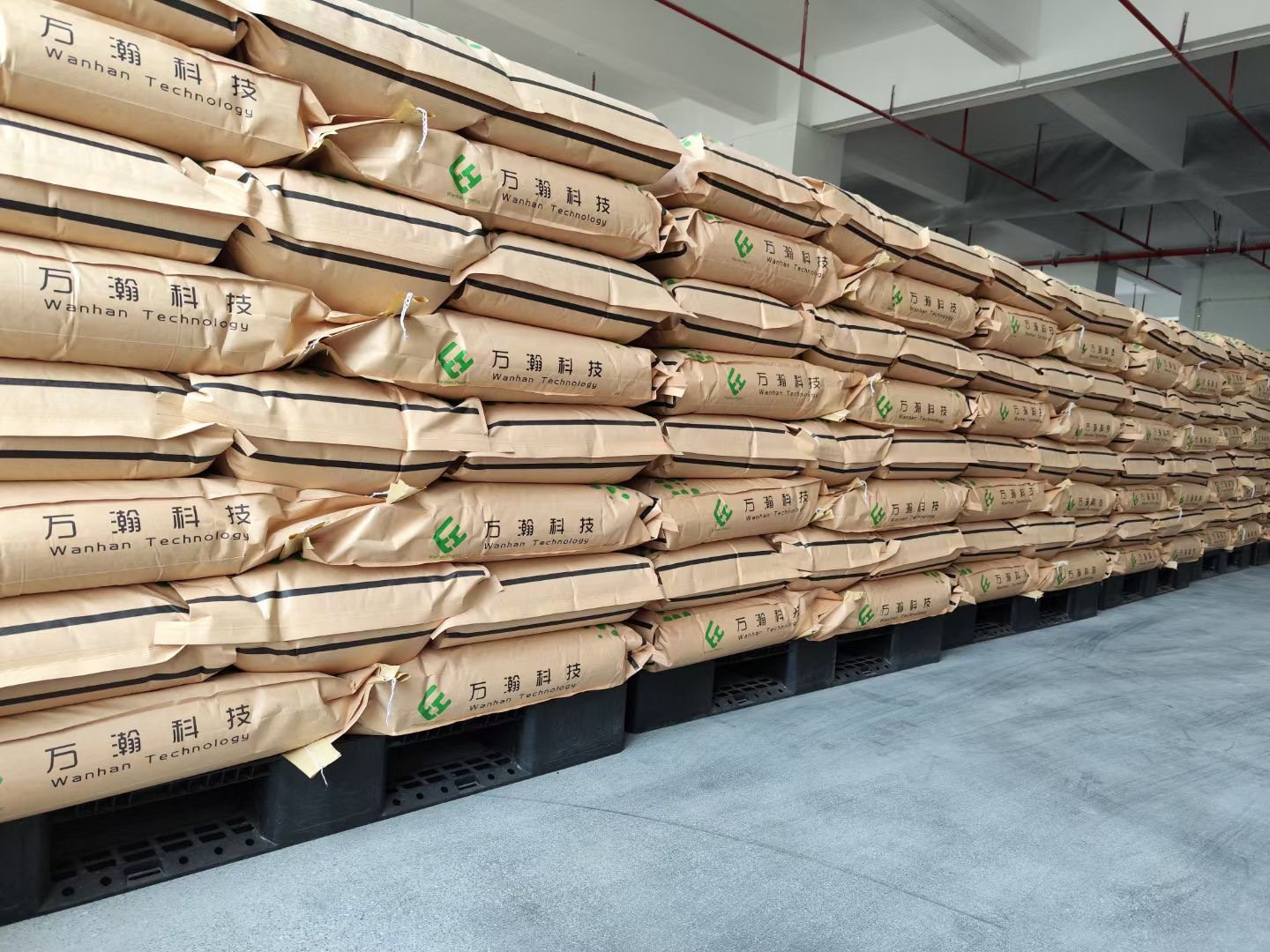
Sample evaluation and volume supply are handled as separate, documented steps: agree the grade and sample weight first, then confirm the production order.
If you are comparing PA66 GF30, PBT GF30 and PP GF30 for an injection-molded part, send the drawing, load, temperature, moisture and chemical exposure, dimensional tolerance and any flame or electrical requirement. WanHan will screen the material family and grade, identify missing evidence and prepare a sample plan for a controlled trial.
Guangdong Wanhan New Material Technology Co., Ltd. (WanHan Plastic)
Website: www.wanhan-plastic.com
Email: gdwanhan@163.com
Tel / WhatsApp: +86 135-3701-2277
Address: No. 3 Xingqi East Road, Dongxing District, Dongjiang Science and Technology Park, Zhongkai High-tech Zone, Huizhou City, Guangdong Province, China
Company and product introduction (PDF): download the WanHan brochure
Have Questions or Need More Details?
Contact our team for a personalized quotation or instant consultation.
Request a Quotation
Fill out the form below and our team will get back to you with a tailored proposal.
WhatsApp Direct Chat
Prefer to chat in real-time? Message us on WhatsApp for instant assistance & quick answers.
- Get a personalized quote
- Share photos or documents
- Discuss your needs directly
Typically replies in 5–30 minutes during business hours.