
Industrial Magnetic Separator Guide: Powder, Slurry, Bulk Streams
An industrial magnetic separator is chosen first by material state: dry powder, pumped slurry, or bulk material on a conveyor. Powder streams are handled by enclosed electromagnetic systems such as the YSDC and YSDCG series; slurry streams by wet electromagnetic removers such as the YSDCS series and electromagnetic slurry iron removers; and bulk conveyor streams by suspended or pulley-type units such as the RCYB permanent magnet and CFLT electromagnetic pulley. Energy, metallurgy, and mineral processing plants often run all three stream states in one facility, so a single procurement decision can require three different separator architectures.
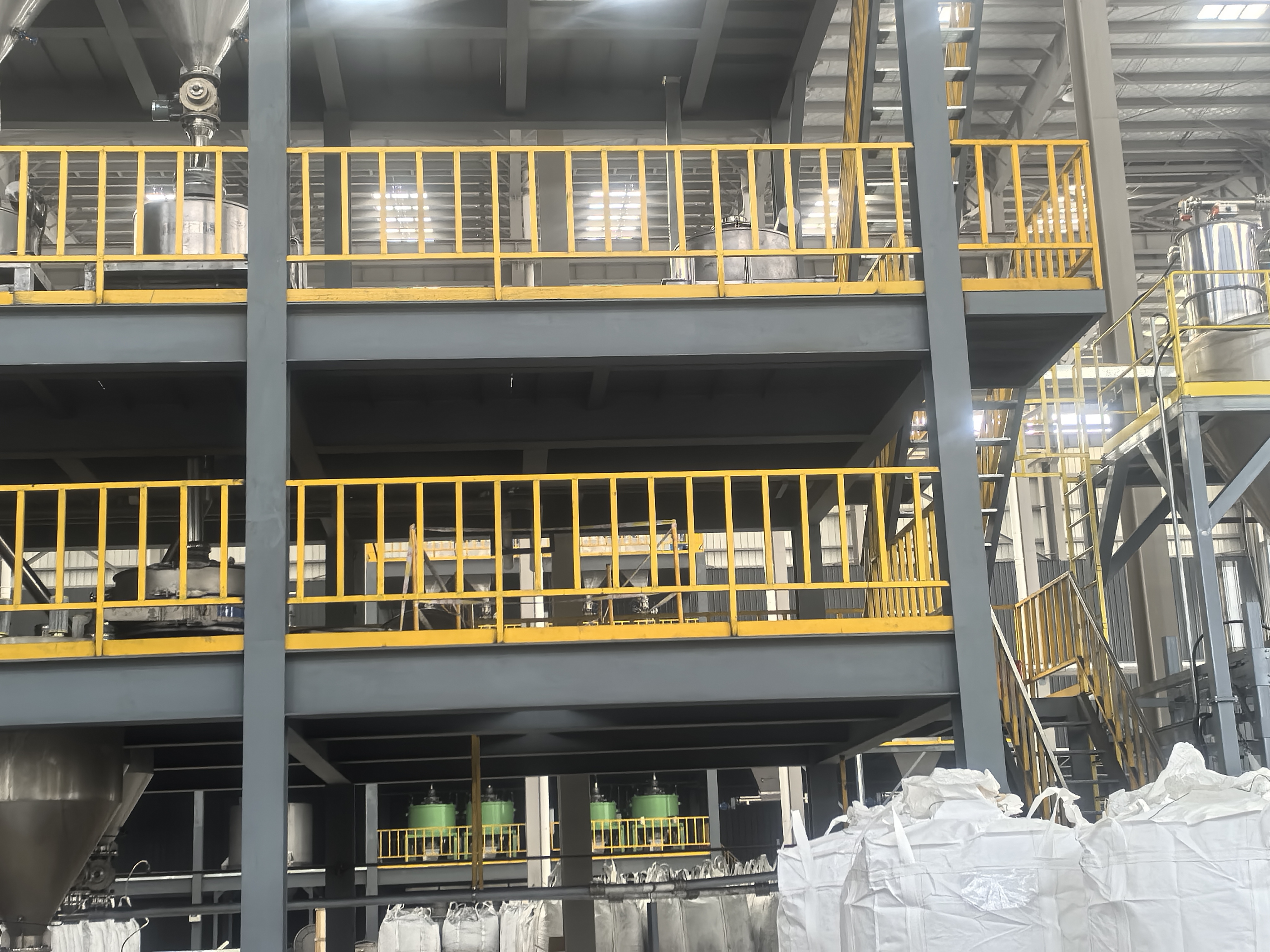
Intelligent powder iron removal production line — iron removal before packing on a dry powder route.
Why Material State Decides the Separator
Iron contamination does not travel the same way through a powder line, a slurry line, and a belt conveyor. In a pneumatic or gravity powder line, particles are airborne or fluidized and the separator must present a magnetic surface inside a closed housing without creating a pressure drop or a dust escape point. In a pumped slurry line, the separator must work through liquid, and the residence time and the ability of the field to reach the particle behind the fluid film become the limiting factors. On a bulk conveyor, the material bed is deep and fast, so the separator must lift tramp iron out of a moving burden rather than intercept a thin stream.
That is why interchangeable language around "industrial magnetic separator" is misleading in procurement. Two units with similar footprints can be intended for completely different material states, and installing the wrong one produces either poor capture, product loss, or a maintenance burden that was never priced in.

On-site industrial magnetic separator installation in a mineral and powder processing plant.
Industry Background: Where the Demand Sits
The global magnetic separator market was estimated at USD 1,067.6 million in 2024 and is projected to reach USD 1,642.5 million by 2033 (Grand View Research, 2024). Asia Pacific held a 43.8% revenue share in 2024, which places most of the equipment supply and process engineering experience in that region.
For buyers in energy, metallurgy, and mineral processing, that concentration matters for two practical reasons. First, many separator configurations are produced in regional manufacturing clusters, so lead time and customization flexibility depend heavily on where the supplier sits. Second, process knowledge tends to travel with the equipment: a supplier that runs the same powder, slurry, and conveyor applications repeatedly can usually shorten the selection conversation.
Weifang Yuansheng Magnetic Electromechanical Equipment Co., Ltd. is a manufacturer of magnetic and electrical separation equipment based in Linqu County, Weifang City, Shandong Province, China. The company was founded in 2011, operates a 3,500 m² factory with 45 employees and an R&D team of 8 engineers, and exports to Asia-Pacific, North America, Europe, Africa, the Middle East, Latin America, Oceania, and CIS/Central Asia. Its product range covers permanent magnetic separators, electromagnetic separators, cross-belt magnetic separators, powder magnetic separators, slurry magnetic separators, high gradient magnetic separators, lithium battery material magnetic separators, dry powder magnetic separators, liquid magnetic separators, and suspended magnetic separators.
Detailed Solution by Stream State
Powder Streams: YSDC and YSDCG Dry Powder Systems
Dry powder iron removal targets fine iron that survives coarse screening and gravity settling. In a powder line, the separator must sit inside the process rather than beside it. The YSDC Series Fully Automatic Integrated Dry Electromagnetic Powder Iron Removal System is built for this position: it is an integrated dry electromagnetic system offered in model sizes YSDC-16 through YSDC-40, with T1, T2, G1, and G2 variants. The YSDCG Series Dry Electromagnetic Powder Iron Remover is the companion dry powder unit in the same family. Both are intended for the point in the powder route where the material is still dry and free-flowing, typically after milling or drying and before packing or downstream reaction.
The selection question for powder is not simply "which model is largest." It is whether the powder is cohesive or free-flowing, whether the line runs continuously or in batches, and whether the iron removal point is a final polish or an intermediate protection step. A final polish before packing usually justifies a fully automatic integrated system; an intermediate step may be satisfied by a simpler dry powder electromagnetic unit.
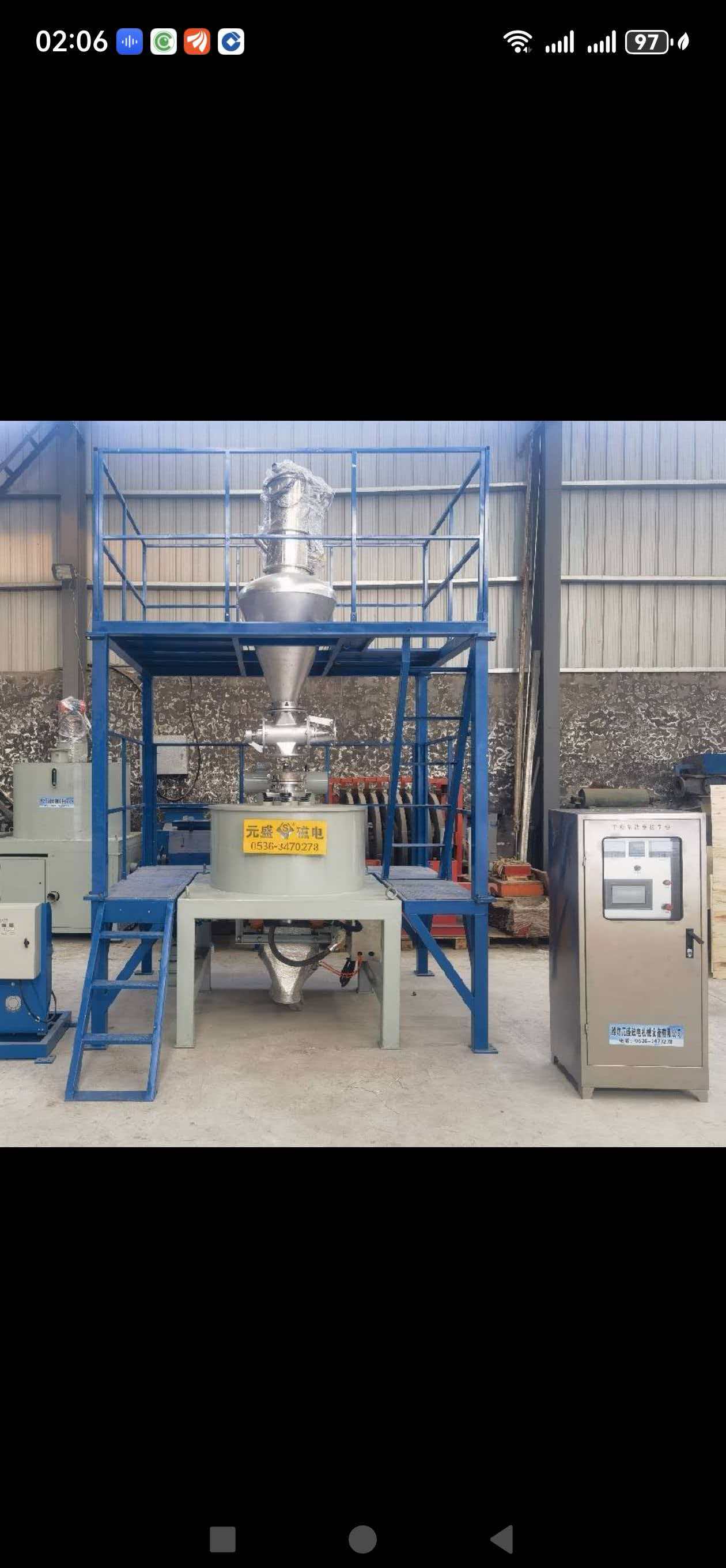
Powder processing magnetic separator application — dry powder iron removal in a production line.
Slurry Streams: YSDCS and Electromagnetic Slurry Removers
Slurry iron removal is harder to observe because the captured iron sits behind liquid and the operator cannot see the magnet face directly during operation. The YSDCS Series Wet Electromagnetic Slurry Iron Remover is a wet electromagnetic unit offered in model sizes YSDCS-16 through YSDCS-40, with T1, T2, and G1/G2 variants. The Electromagnetic King Slurry Iron Remover (DNCXJ Series Wet Electromagnetic Separator) is the high-intensity slurry option in the same manufacturer's range.
Where the application requires battery-grade purity, the field requirement rises. High-gradient electromagnetic separators for lithium battery materials often require magnetic field intensities above 16,000 to 20,000 Gauss (industry analysis cross-referenced with supplier technical catalogs, 2026). That is a different specification from a standard wet slurry remover, and it should be confirmed at inquiry stage rather than assumed from the product family name.
The selection questions for slurry are the solids content, the viscosity and temperature of the carrier liquid, the target iron level, and whether the separator is positioned before or after a filtration or thickening step. Slurry units are also sensitive to flow stability: a pump that surges will reduce effective residence time even if the magnet is correctly sized.
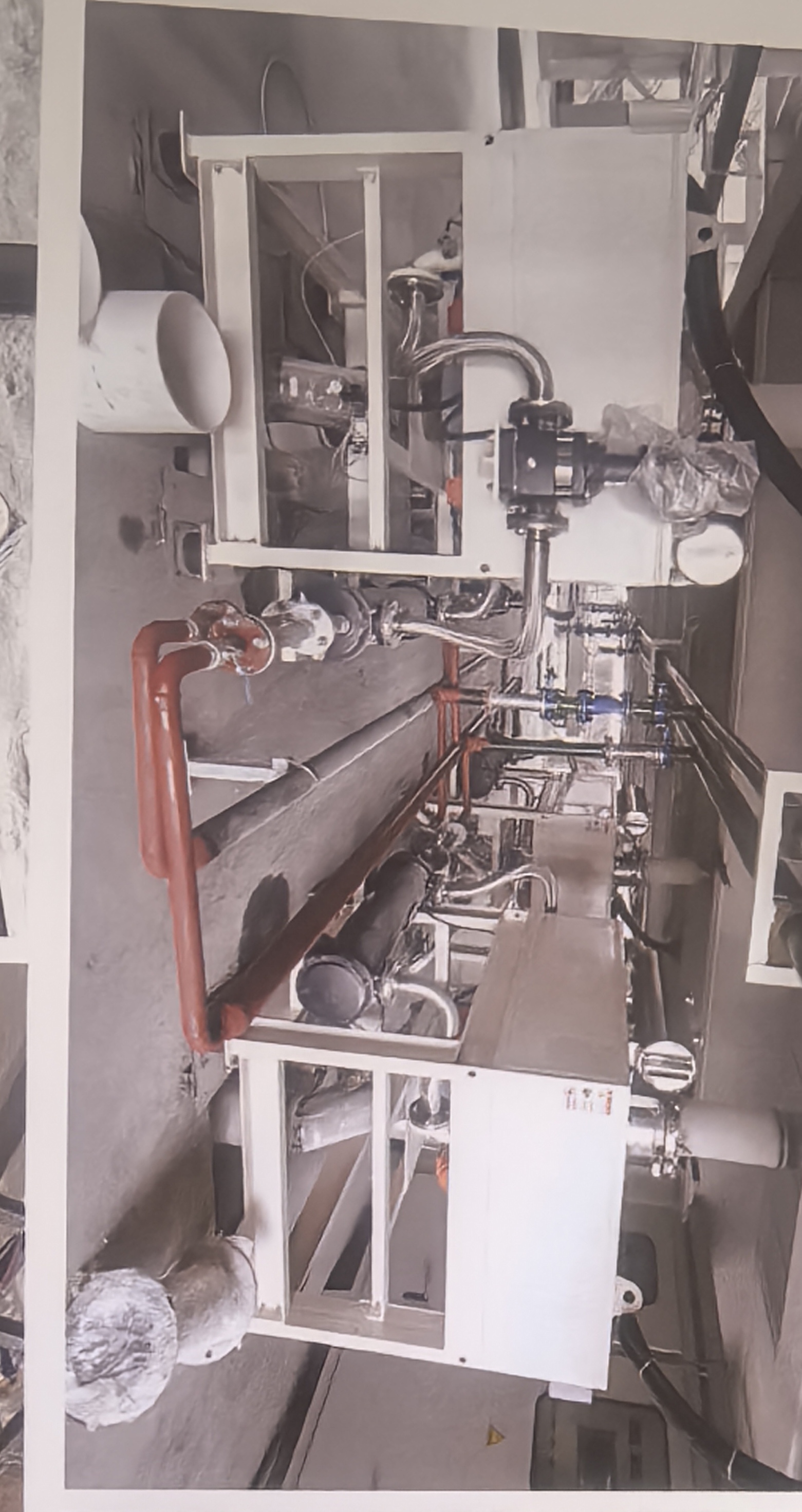
Slurry pipeline magnetic separator application — wet electromagnetic iron removal in a pumped process line.
Bulk Material Streams: RCYB and CFLT Conveyor Forms
Bulk material on a conveyor is the classic tramp iron problem: a bolt, a piece of wire, or a worn screen fragment travels with the burden and threatens crushers, screens, and downstream handling equipment. The RCYB Series Suspended Permanent Magnetic Separator is a permanent magnet suspended over the conveyor, offered in model sizes RCYB-4 through RCYB-16. It requires no electrical supply at the magnet and is suited to conveyor lines where the burden depth and belt speed are stable and where tramp iron removal is the primary goal.
The CFLT Series Electromagnetic Pulley takes a different approach: the magnetic field is built into the head pulley, so separation occurs as the belt turns and the iron is carried around the pulley into a discharge trajectory. CFLT models range from CFLT-50/50 through CFLT-100/140. Pulley separators are typically considered when the conveyor layout allows the pulley position to serve as the separation point and when continuous self-discharge of captured iron is preferred over manual cleaning.
The selection questions for bulk streams are belt width, burden depth, belt speed, and the available mounting height for a suspended unit. A suspended magnet needs clearance above the burden, while a pulley magnet needs the conveyor geometry to support separation at the head end. These are physical layout constraints, not preferences, and they usually decide the form before the magnetic specification is discussed.
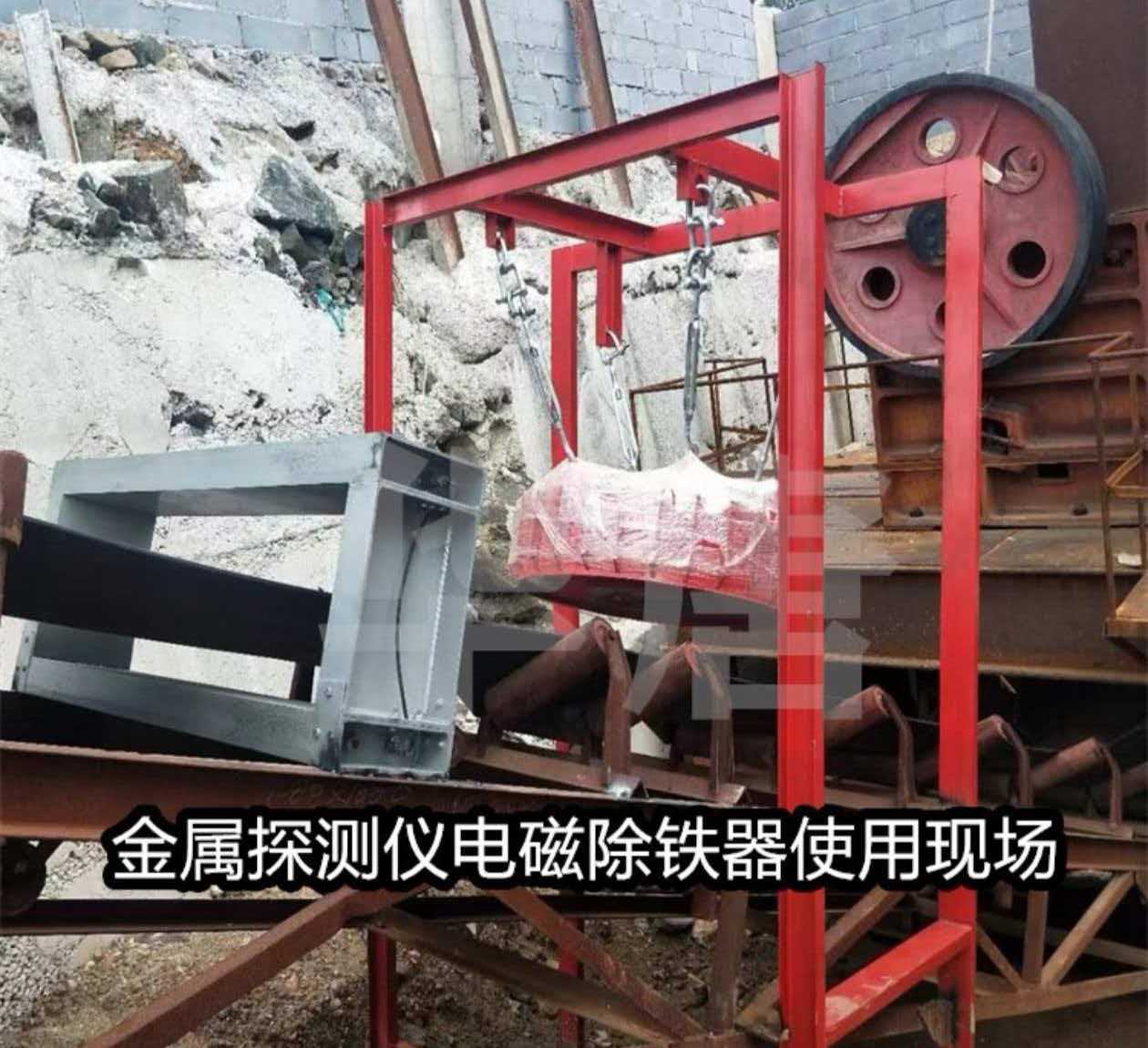
Mining belt conveyor metal detection and iron removal system — bulk material stream protection.
Step-by-Step Selection Framework
The three questions below should be answered in order. Each one narrows the separator family before any model code is discussed.
Step 1 — Confirm material state. Is the material dry and free-flowing, carried in liquid, or moving as a bulk burden on a conveyor? This single answer separates the powder, slurry, and bulk families and removes most of the mis-specification risk.
Step 2 — Map the flow path. Where does the separator sit relative to the process? A powder unit that sits before packing serves a different purpose from one that sits after drying. A slurry unit before filtration sees a different solids load from one after thickening. A conveyor magnet at the head end has different geometry from a suspended unit mid-belt.
Step 3 — Define the iron-removal stage. Is the goal tramp iron protection, fine iron polishing, or battery-grade purity? Tramp iron protection tolerates a simpler permanent magnet solution; fine iron polishing and battery-grade purity push toward electromagnetic and high-gradient systems. The stage determines the technology tier, and the technology tier determines the model family.
A fourth step is commercial rather than technical: confirm customization and delivery. Weifang Yuansheng offers OEM/ODM production with customization of magnetic field strength, size, voltage, material, logo, and color. Minimum order quantity is 1 unit, typical production lead time is 30–45 days, and monthly production capacity is 300 units. After-sales support includes remote support, spare parts supply, and a 12-month warranty.
Use Cases Across Energy, Metallurgy, and Minerals
Documented installations in China show the three stream states in practice. Ceramic processors have used the equipment for glaze and clay slurry iron removal, with 5 units installed over a 2-year project period. Battery material manufacturers have run 8 units over 3 years, reaching Fe below 5 ppm. Quartz sand plants have installed 4 units over 1.5 years. Foundries have run 6 units over 4 years, and steel plants have run 10 units over 5 years. Reported outcomes across these sites include iron removal above 98%, impurity below 10 ppm, safe operation, and recovery improvement of +15%.
These cases map cleanly onto the stream framework. Ceramic glaze and clay are slurry applications, where the YSDCS or electromagnetic slurry remover is the relevant family. Battery material manufacturing combines powder handling and high-purity requirements, which is where the YSDC/YSDCG powder systems and high-gradient options enter. Quartz sand, foundry, and steel operations typically involve bulk conveyor handling alongside powder or slurry steps, so the RCYB and CFLT forms appear in the same plant as the enclosed units.
Comparison Table: Stream State vs. Separator Family
| Stream State | Representative Family | Typical Position in Process | Selection Question |
|---|---|---|---|
| Dry powder | YSDC Series Fully Automatic Integrated Dry Electromagnetic Powder Iron Removal System; YSDCG Series Dry Electromagnetic Powder Iron Remover | After milling or drying, before packing or downstream reaction | Is the goal intermediate protection or final polish before packing? |
| Slurry | YSDCS Series Wet Electromagnetic Slurry Iron Remover; Electromagnetic King Slurry Iron Remover (DNCXJ Series) | In a pumped line, before or after filtration or thickening | What is the target iron level and is battery-grade purity required? |
| Bulk conveyor | RCYB Series Suspended Permanent Magnetic Separator; CFLT Series Electromagnetic Pulley | Over the belt or at the head pulley | Is there mounting height for a suspended unit, or does the conveyor geometry favor a pulley? |
All three families are part of the same manufacturer's catalog, which means a mixed-stream plant can source the powder, slurry, and conveyor units from one supplier and align documentation, spare parts, and service terms across the project.
FAQ
What certifications apply to these industrial magnetic separators?
The manufacturer holds a Quality Management System Certificate under GB/T19001-2016/ISO9001:2015, certificate number 78323Q00343R0S, issued by POCNC (Zhongliang Certification (Shandong) Co., Ltd.) on 2023-10-07 and valid to 2026-10-06, covering production of separators, magnetic separators, and demagnetizers. For the EU/EEA market, a Machinery Directive Attestation of Conformity is held under certificate M.2025.206.C119055, issued by UDEM, valid from 2025-05-19 to 2030-05-18, referencing EN ISO 12100:2010 and EN 60204-1:2018 and covering the RCYB, RCDB, RCDD, RCYD, and MW series.
Can the separator be customized for a specific powder, slurry, or conveyor line?
Yes. OEM/ODM production is available, and customization covers magnetic field strength, size, voltage, material, logo, and color. This matters most for slurry and powder lines where the housing has to fit an existing duct or pipeline, and for conveyor installations where mounting height and belt width constrain the suspended or pulley form.
What are the minimum order quantity and typical lead time?
Minimum order quantity is 1 unit. Typical production lead time is 30–45 days, and monthly production capacity is 300 units. Each unit is inspected 100% before shipment. For projects that combine powder, slurry, and conveyor units, lead time should be confirmed per line item rather than as a single blended date.
What after-sales support is provided after installation?
After-sales service includes remote support, spare parts supply, and a 12-month warranty. For multi-unit installations, keeping a small spare parts set on site reduces downtime when a magnet face, belt, or discharge component needs replacement.
How do I start an evaluation for my material stream?
Share the material state, flow path, and iron-removal target with the manufacturer. Weifang Yuansheng can be contacted by email at ys@iron-separator.com, by phone or WhatsApp at +86 155-5366-8212, or through the website at www.iron-separator.com. A sample, a quotation, or the product catalog can be requested directly; the catalog is also available as a PDF download.
Conclusion
Powder, slurry, and bulk streams fail for different reasons, and they require different industrial magnetic separator forms. Dry powder lines need enclosed electromagnetic systems such as YSDC and YSDCG. Slurry lines need wet electromagnetic removers such as YSDCS or the electromagnetic slurry iron remover, with high-gradient options where battery-grade purity is the target. Bulk conveyor lines need suspended or pulley forms such as RCYB and CFLT, chosen by mounting geometry as much as by magnetic strength. Getting the stream state, flow path, and iron-removal stage right at the specification stage is what keeps the separator matched to the plant for the life of the installation.

Weifang Yuansheng Magnetic Electromechanical Equipment Co., Ltd. — contact the team for sample, quotation, or catalog requests. Download the product catalog (PDF).
Have Questions or Need More Details?
Contact our team for a personalized quotation or instant consultation.
Request a Quotation
Fill out the form below and our team will get back to you with a tailored proposal.
WhatsApp Direct Chat
Prefer to chat in real-time? Message us on WhatsApp for instant assistance & quick answers.
- Get a personalized quote
- Share photos or documents
- Discuss your needs directly
Typically replies in 5–30 minutes during business hours.