
Magnetic Grates vs. Drawer Magnets: What They Catch in a Powder Line
In a mineral or metallurgy powder line, a magnetic grate and a drawer magnet do the same basic job: they place magnetized bars in the product stream so ferrous tramp iron sticks before it can reach a mixer, mill, screen, or packaging step. The difference is not the magnet material. It is the installation. A magnetic grate is a fixed grid of magnetic bars placed across a chute, hopper outlet, or free-fall transition. A drawer magnet is a magnetic bar assembly built into a pull-out tray or drawer housing that can be removed for cleaning and inspection. That distinction changes what the device can practically catch, how often it is checked, and how quickly a line can be cleaned between products or batches.
Weifang Yuansheng Magnetic Electromechanical Equipment Co., Ltd. is a Chinese manufacturer of magnetic and electrical equipment, founded in 2011, with a 3,500 m² facility, 45 employees, and a product range that includes magnetic bars/grates and drawer-type magnetic separators. For plant engineers comparing the two, the useful question is not “which magnet is stronger?” but “where does the powder see the magnet, and who can reach it?”
What each device is, in plain terms
Magnetic grate / magnetic bar
A magnetic grate is an array of magnetic bars mounted in a frame. The bars use rare earth permanent magnets. In the supplied product data, the magnetic source is NdFeB rare earth permanent magnet with surface magnetic intensity up to 8,000–12,000 Gs. A standard magnetic rod diameter is Φ25 mm, and the housing can be 304 or 316 stainless steel. Maximum working temperature is up to 350°C for the high-temperature version. Custom diameter, length, and temperature resistance are available, along with pointed-end, threaded-hole, screw-rod, and lifting-ring mounting structures. Food-grade and pharmaceutical-grade sanitary levels are available, with brushed, mirror-polished, or sandblasted surface finishes.
The magnetic bar assembly can also be supplied with round or square connections. The supplied data lists standard round connection sizes DN150, DN200, DN250, DN300, and DN350, and square connection sizes 200×200, 250×250, 300×300, 350×350, and 400×400 mm. An easy-clean optional design is available. These details matter because a grate is only useful if the powder actually passes through the bar field and the maintenance team can reach the bars.
Drawer magnet
A drawer magnet places magnetic bars in a drawer-style housing. For dry powder free-fall service, the Magnetic Box Separator / drawer magnetic separator is the relevant form: it uses high-strength rare earth permanent magnets at 8,000–12,000 Gs, a 304 or 316 stainless steel housing, and single-, double-, or multi-layer drawer construction. Cleaning can be manual or pneumatic, with air-actuated or remote control options. Inlet sizes range from 180×180 mm to 500×500 mm across the YSXF-18 to YSXF-50 range. For example, the YSXF-18 has a 180×180 mm inlet, overall dimensions of 180×280×250 mm, and a stated capacity of 6.0 t/h for bran and 12.5 t/h for flour.
The separate XPGD drawer type magnetic bar iron remover is aimed at liquid/slurry duties, with 100, 150, and 200 mm calibers and capacities of 15, 22, and 35–50 m³/h. It uses NdFeB bars, SUS304/SUS316L housing, 3,000–14,000 GS surface strength, 1–5 layers, Φ25/Φ32/Φ50 mm bar diameters, 50–150 mm center distance, and standard/high-temperature limits of ≤80°C and ≤200–350°C. That liquid/slurry version should not be confused with a free-fall powder drawer. The powder-line drawer is the free-fall magnetic box/drawer design; the XPGD is a related drawer-style unit for wet or liquid service.

Where each sits in the flow
A magnetic grate usually sits at a gravity transfer point: a chute, hopper outlet, bin discharge, or free-fall transition where the powder passes through the grid. It is a fixed obstruction in the flow path. Because the bars are part of the frame, the product sees the magnet every time it flows. The trade-off is access. Cleaning and inspection must be designed around the chute or hopper, and a poorly accessible grate is a maintenance problem waiting to happen.
A drawer magnet also sits at a gravity or free-fall point, but the magnetic bars are in a drawer that slides out of the housing. The powder sees the same kind of bar array; the maintenance technician sees a tray. That is the core difference for inspection and changeover. A drawer magnet is appropriate where the line is opened frequently, where product changes require documented cleaning, or where the maintenance position is cramped.
Neither device is a substitute for a high-gradient electromagnetic separator when the target is fine or weakly magnetic iron. The supplied product range includes dry powder electromagnetic separators such as the DCFJ series and the YSDCG series for fine powder purification. Those are active systems with electromagnetic coils and a high-permeability matrix. A passive grate or drawer is a tramp-iron guard; it is not automatically a fine-iron specification.
What they catch — and what they do not
Both are intended to intercept ferrous tramp iron: bolts, nuts, wire, scale, wear particles, and other magnetic debris that can damage downstream equipment or contaminate product. The magnetic box/drawer separator is described for free-fall applications. The drawer type magnetic bar unit is described for iron removal from liquids or powders in food, pharmaceutical, chemical, plastics and rubber, ceramics and building materials, and water treatment. The magnetic bar/grate is used as a magnetic frame in powder handling. In practice, the grate catches what reaches the bars and is free to migrate to the magnet surface; the drawer catches the same family of contaminants when the powder passes through its drawer housing.
The boundary is fine iron. A passive grate or drawer can remove magnetic particles that are large enough and accessible enough to be captured, but it does not guarantee removal of weakly magnetic fine iron or Fe₂O₃. The YSDCG dry electromagnetic powder iron remover is explicitly described as able to remove most weak magnetic impurities including Fe₂O₃. The DCFJ series is a dry powder electromagnetic separator using an oil-insulated coil and a 30-plate high-permeability matrix. Those are different tools for a different specification. If the quality target is a fine-iron limit rather than tramp-iron protection, the selection conversation should move to electromagnetic separation and appropriate test work.

Cleaning access: the real differentiator
Drawer magnets exist to make cleaning accessible. The Magnetic Box Separator offers an easy-clean structure with manual or pneumatic cleaning, and air-actuated or remote control options. The XPGD drawer type magnetic bar iron remover uses a drawer format for liquid/slurry service, with 1–5 layers and 50–150 mm center distance. A technician can pull the tray, inspect the bars, wipe or wash them, and return the tray. That is easier to document than cleaning a fixed grid in a chute.
A fixed grate can be cleaned in place if the chute has an access door and enough room to reach the bars. Otherwise the frame must be removed. The magnetic bar product is available with custom mounting structures and an easy-clean optional design, so the access method should be specified at the same time as the magnet. A grate that is difficult to clean will be cleaned less often, and a magnet that is not cleaned will not keep catching iron.
Inspection follows the same logic. A drawer magnet gives a defined inspection point. The drawer can be pulled to a stop, the captured material can be photographed or weighed, and the condition of the bars can be checked. A fixed grate requires the inspector to look into the chute or remove the frame; the inspection record is only as good as the access. For plants that audit cleaning between batches, the drawer is usually the easier design to control. This is a practical access argument, not a claim that a drawer magnet is magnetically superior.
Changeover and batch routines
Product changeover in a powder line is a cleaning event. The question is whether the cleaning method matches the equipment. A drawer magnet supports a defined remove–clean–refit sequence. The drawer can be isolated, pulled, cleaned, inspected, and logged before the next product. A fixed grate supports the same sequence only if the chute is accessible and the frame can be safely removed or cleaned in place. If the line runs multiple mineral grades, colors, or customer specifications, the drawer’s service access can reduce the risk of cross-batch carryover.
The trade-off is that a drawer adds a housing, a sliding interface, and sealing details. The XPGD data include silicone sealing and IP54 protection; the magnetic box data include 304/316 stainless housing and food-grade or sanitary options. Those details matter in dusty, humid, or washdown areas. A fixed grate has fewer moving interfaces but less convenient access. The correct choice depends on which risk the plant is managing: contamination carryover from incomplete cleaning, or leakage and mechanical wear from a drawer interface.
Comparison table
| Selection point | Magnetic grate / magnetic bar frame | Drawer magnetic separator |
|---|---|---|
| Typical form | Array of magnetic bars in a frame, fixed in a chute, hopper outlet, or free-fall transition. | Magnetic bars in a pull-out tray or drawer housing; free-fall magnetic box for dry powder, or XPGD drawer unit for liquid/slurry service. |
| Magnetic source | NdFeB rare earth permanent magnet; surface magnetic intensity up to 8,000–12,000 Gs; standard Φ25 mm bar. | NdFeB rare earth permanent magnet; magnetic box 8,000–12,000 Gs; XPGD 3,000–14,000 GS. |
| Bar and layer options | Custom diameter and length; round or square connections; easy-clean optional design. | Magnetic box: single-, double-, or multi-layer drawer. XPGD: 1–5 layers, Φ25/Φ32/Φ50 mm bars, 50–150 mm center distance. |
| Housing and sealing | 304 or 316 stainless steel; food-grade and sanitary options; surface finishes include brushed, mirror polish, or sandblast. | 304/316 stainless steel; silicone sealing and IP54 protection on XPGD; food-grade or sanitary options on magnetic box. |
| Cleaning | Manual or in-place cleaning, depending on access; easy-clean option available. | Manual or pneumatic cleaning; air-actuated or remote control options. |
| Inspection access | Access-dependent; the inspector must reach the chute or remove the frame. | Pull-out drawer creates a defined inspection point and cleaning record. |
| Best fit | Fixed gravity flow where a passive guard is needed and access can be designed in. | Frequent cleaning, product changeover, or a line where a pull-out tray is safer and easier to document. |
| Boundary | Tramp-iron guard; not a fine-iron guarantee. | Tramp-iron guard; not a fine-iron guarantee. Fine iron may require DCFJ or YSDCG electromagnetic separation. |
Use cases in mineral and metallurgy powder handling
Use a magnetic grate when the installation point is fixed and the powder stream is consistent. A hopper outlet or free-fall chute with a built-in access door is a natural fit. The magnetic bar product can be specified with 304 or 316 stainless housing, high-temperature construction up to 350°C, and custom mounting to suit the chute. If the plant needs a passive guard that does not depend on power or controls, a grate is a straightforward choice.
Use a drawer magnet when cleaning and inspection need to be part of the operating routine. A free-fall magnetic box/drawer with inlet sizes from 180×180 mm to 500×500 mm can match small and medium powder transitions. The YSXF-18 example shows a compact 180×180 mm inlet with a stated capacity of 6.0 t/h for bran and 12.5 t/h for flour, which helps engineers check whether the size fits the line. If the plant wants pneumatic cleaning or remote control, the drawer format offers those options. For wet or liquid service, the XPGD drawer unit is the relevant family, not the dry free-fall drawer.
Step-by-step selection for plant engineers
- Map the installation point. Identify whether the powder passes through a gravity chute, hopper outlet, or free-fall transition. The magnet must sit where the product actually sees the bars.
- Characterize the contaminant. Decide whether the target is tramp iron protection or fine-iron removal. A passive grate or drawer is a tramp-iron guard. If Fe₂O₃ or weakly magnetic fine iron is the issue, review DCFJ or YSDCG electromagnetic options.
- Check access before choosing the format. Can the grate be reached through an access door? Can the frame be removed safely? Is a pull-out drawer easier to clean and inspect? The answer often decides the format.
- Verify magnetic and mechanical data. Ask for surface strength, bar diameter, layer count, center distance, housing material, seal material, and maximum temperature. For the magnetic bar, the supplied data gives 8,000–12,000 Gs, Φ25 mm standard bar, and up to 350°C for the high-temperature version.
- Plan cleaning and records. Choose manual or pneumatic cleaning. Define who inspects the magnet, how often, and how captured material is recorded. A drawer magnet makes this routine easier to standardize.
- Confirm fit and connection. Check inlet size, round or square connection, flange or reducer requirements, and whether custom mounting is needed. The magnetic box range covers 180×180 mm to 500×500 mm inlets, with custom reducer or flange connections available.
- Match the duty to the product family. Use a dry free-fall drawer for dry powder. Use the XPGD drawer type magnetic bar iron remover for liquid/slurry duties. Do not apply a liquid/slurry unit to a dry powder line without confirming the application.
Why the choice affects inspection and changeover routines
The choice between a grate and a drawer is not only a capital-equipment decision. It shapes the daily routine. A drawer magnet creates a clear inspection point: pull, inspect, clean, refit, record. That sequence is easy to train and easy to audit. A fixed grate can be just as effective magnetically, but its inspection depends on the chute access, the frame weight, and the time available between batches. If the line changes product frequently, the easier cleaning method usually wins because it is more likely to be performed consistently.
There is also a design discipline that comes with each format. A drawer magnet forces the engineer to define the housing, the sliding interface, the seal, and the cleaning control. A grate forces the engineer to define the frame, the mounting, the connection, and the access opening. Both are valid. The wrong choice is a magnet that is installed where nobody can clean it, or a drawer that is selected without checking the sealing and mechanical fit.
Limitations and boundaries
Passive magnetic separators catch ferrous contamination. They do not remove non-ferrous metals or non-magnetic stainless grades. Capture also depends on the bar spacing, magnetic strength, powder flow, and cleaning condition. A dirty magnet is a bypass path. A magnet with the wrong bar geometry for the flow may not present enough capture surface. These are selection and maintenance issues, not reasons to overstate the capability of either format.
A drawer magnet is not automatically better than a grate. It adds a housing, a drawer interface, and sealing details. A grate is not automatically simpler in service. It can be harder to clean if the chute was not designed for access. The right choice is the one that matches the powder flow, the contaminant, the cleaning routine, and the inspection record the plant needs.
Supplier and quality check
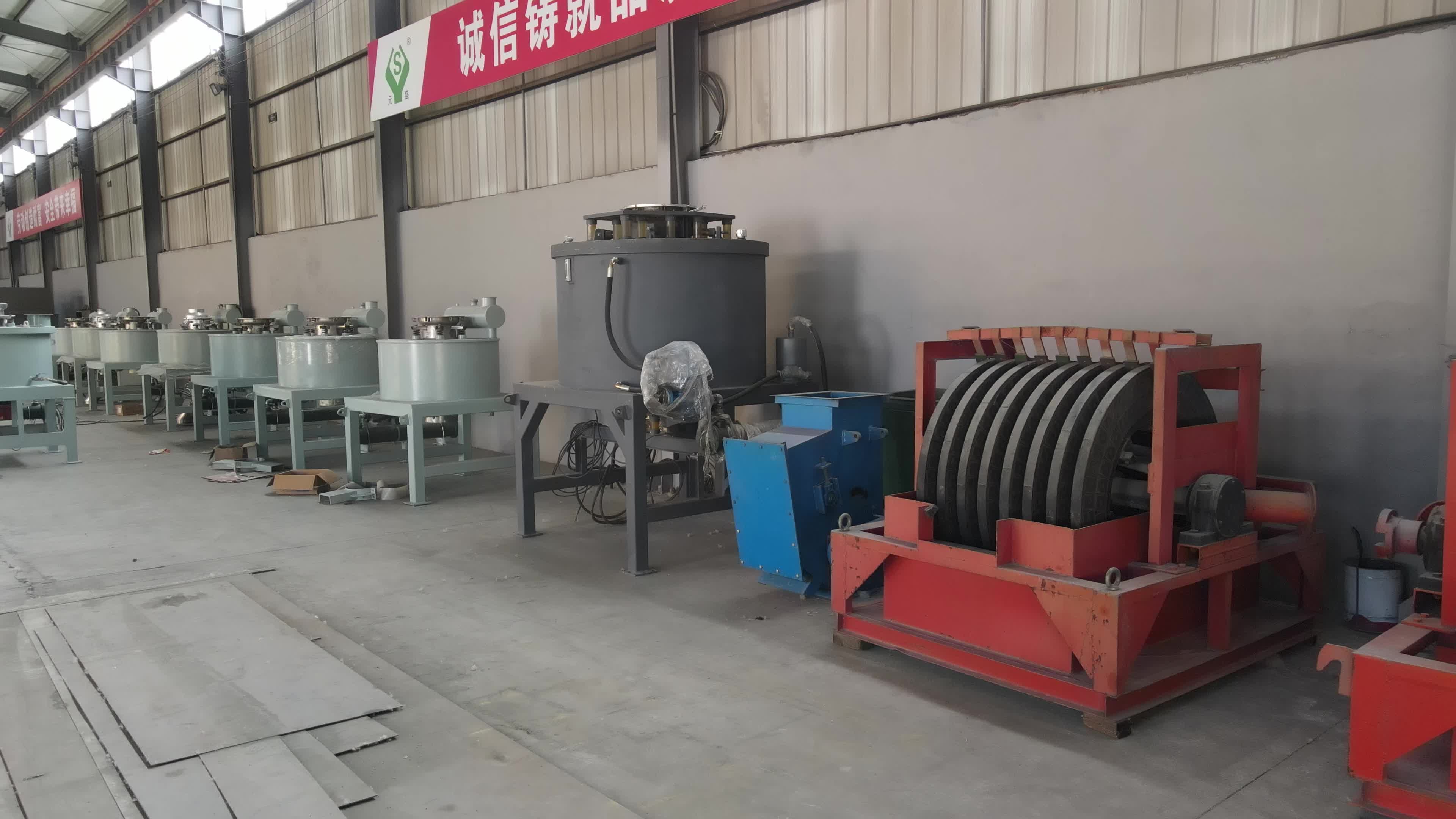
Weifang Yuansheng Magnetic Electromechanical Equipment Co., Ltd. was founded in 2011 and operates a 3,500 m² facility with 45 employees, including 8 R&D engineers. Annual production capacity is 3,500 units, and exports account for 65% of sales across Asia-Pacific, North America, Europe, Africa, the Middle East, Latin America, Oceania, and CIS/Central Asia. The product range includes permanent magnetic separators, electromagnetic separators, cross-belt magnetic separators, powder magnetic separators, slurry magnetic separators, high-gradient magnetic separators, lithium battery material magnetic separators, dry powder magnetic separators, liquid magnetic separators, and suspended magnetic separators.
FAQ
Industrial Magnetic Separator manufacturers
Compare manufacturers on documented data for the exact model, not on the general product label. For a magnetic grate or magnetic bar, ask for the NdFeB magnet type, surface strength, standard bar diameter, housing material, maximum temperature, and mounting options. The supplied data gives 8,000–12,000 Gs, Φ25 mm standard bar diameter, 304/316 stainless housing, and up to 350°C for high-temperature service. For a drawer magnet, ask for layer count, bar diameter, center distance, cleaning method, inlet size, and sealing. A manufacturer that can supply these details is easier to evaluate on a like-for-like basis.
Powder Magnetic Separator suppliers
A powder magnetic separator supplier should ask for the installation point, powder flow, contaminant type, available access, and cleaning routine before recommending a grate or drawer. For dry free-fall powder, the magnetic box/drawer range covers inlet sizes from 180×180 mm to 500×500 mm; the YSXF-18 has a 180×180 mm inlet and a stated capacity of 6.0 t/h for bran and 12.5 t/h for flour. If the duty is liquid or slurry, the XPGD drawer type magnetic bar iron remover uses 100, 150, and 200 mm calibers with capacities of 15, 22, and 35–50 m³/h. Matching the duty first prevents a wet-service drawer from being applied to a dry powder line.
Dry Powder Magnetic Separator factory in China
A dry powder magnetic separator factory needs the inlet size, powder characteristics, temperature, housing material, cleaning method, and control preference before quoting. For a free-fall powder drawer, confirm whether a single-, double-, or multi-layer drawer is required, and whether cleaning is manual or pneumatic. For a fixed grate, confirm the chute connection, bar diameter, magnetic strength, and access opening. If fine iron or Fe₂O₃ is the target, the discussion should include DCFJ or YSDCG electromagnetic powder separation rather than only a passive drawer.
Industrial Magnetic Separator free sample
Sample terms are commercial and should be confirmed in writing for the exact model. For a grate or drawer evaluation, request the magnetic strength, housing material, bar diameter, layer configuration, and cleaning method so the sample can be compared on the same basis as the production unit. A sample without the matching duty data is difficult to interpret in a powder line.
Industrial Magnetic Separator supplier in China for export
For export, request the model drawing, magnetic data, housing and seal material, and commercial documents for the exact configuration. HS code 847410 is the primary trade classification for sorting, screening, separating, or washing machines, which covers magnetic separators in global trade. For a specific powder-line review, send the inlet size, powder flow, and cleaning requirement to ys@iron-separator.com or use the contact on the official website so the supplier can confirm the correct grate or drawer configuration.
Conclusion
A magnetic grate and a drawer magnet both catch ferrous tramp iron in a powder line, but they solve different operating problems. The grate is a fixed magnetic frame that fits naturally into a chute or hopper outlet where the powder passes through the bars. The drawer magnet puts the bars in a pull-out housing so cleaning and inspection become a defined routine. For plant engineers, the decision should be based on the flow point, the contaminant, the cleaning access, the changeover frequency, and the inspection record. If fine iron or Fe₂O₃ is the real quality target, neither passive format should be treated as a complete answer; that is the point to review DCFJ or YSDCG electromagnetic separation.
For a closer look at the magnetic bar, drawer, and powder separation options, the company brochure is available here: download the brochure. For model-specific questions, contact Weifang Yuansheng Magnetic Electromechanical Equipment Co., Ltd. through www.iron-separator.com.
Have Questions or Need More Details?
Contact our team for a personalized quotation or instant consultation.
Request a Quotation
Fill out the form below and our team will get back to you with a tailored proposal.
WhatsApp Direct Chat
Prefer to chat in real-time? Message us on WhatsApp for instant assistance & quick answers.
- Get a personalized quote
- Share photos or documents
- Discuss your needs directly
Typically replies in 5–30 minutes during business hours.