
RCDA vs RCDE: Air-Cooled or Oil-Cooled Suspended Magnets
Conveyor tramp-iron removal rarely fails because a plant chose a magnet with too little nominal field. It fails because the heat path, duty cycle, service access and installation envelope were not matched to the site. The RCDA Series Air-Cooled Suspended Electromagnetic Separator and the RCDE Series Oil-Cooled Suspended Electromagnetic Separator address the same broad job with two different cooling strategies: holding an electromagnet above a conveyor and capturing tramp iron from the burden.
Short answer: Start with the RCDA Series only if the calculated coil heat load can be rejected by air under the actual ambient, dust and airflow conditions, and the air path can be inspected and cleaned. Start with the RCDE Series only if the oil circuit can be maintained, monitored for leaks and supported with the required oil and exchanger service. Neither choice is justified by a claim that one cooling method automatically delivers more magnetic strength. The cooling method is a thermal-management and service decision.
Cover image: finished magnetic separator units in warehouse storage. Product selection still depends on conveyor duty and the cooling calculation.
What the RCDA and RCDE names tell you, and what they do not
In this comparison, the RCDA Series is the air-cooled suspended electromagnetic separator and the RCDE Series is the oil-cooled suspended electromagnetic separator. Both are electromagnetic units for conveyor tramp-iron removal. That means they use a coil circuit and a continuous electrical supply during operation, unlike a permanent magnetic separator that uses NdFeB rare earth magnets and requires no electricity.
The cooling suffix does not replace the magnetic design. A buyer still needs the model-specific magnetic field, suspension height, belt width, burden depth, conveyor speed, iron-capture target, power supply, control philosophy and safety requirements. The cooling method tells you how heat is removed. It does not tell you whether the unit will capture a given piece of tramp iron at a given suspension height.
The supplied comparison notes a general difference between permanent and traditional electromagnetic separators: permanent units use NdFeB magnets, consume zero kWh per hour, and are described as virtually maintenance-free with monthly inspection and cleaning. Traditional electromagnetic units rely on coils, require continuous power, and need cooling-system inspection. That category-level contrast is useful context, but it does not decide RCDA versus RCDE. Both belong to the electromagnetic side of that comparison, so the real question is which cooling path fits the plant.
The common problem: coil heat on a conveyor line
A suspended electromagnetic separator sits above a conveyor and lifts tramp iron from the material burden. The coil that creates the magnetic field also creates heat. That heat must be removed continuously enough to keep the coil and insulation within their design limits. If heat removal is marginal, the plant may face reduced reliability, shorter component life or unplanned stops. If the cooling circuit is difficult to service, the theoretical thermal margin may disappear in daily operation because cleaning, oil checks or exchanger maintenance are postponed.
This is why the decision should begin with the process, not the product label. A conveyor moving coal, coke, sinter, ore, limestone or slag may run for long shifts in a dusty, hot or congested gallery. The ambient air may be hot, humid, corrosive or loaded with conductive dust. The available space above the belt may be tight. The maintenance team may have good access to an air path but little experience with oil circuits, or the reverse. The cooling method has to match these realities.
Industry background: why cooling choices matter in energy, metallurgy and minerals
Bulk material conveyors in energy, metallurgy and mineral processing are exposed to tramp iron from mining, handling, crushing and transfer points. A suspended electromagnetic separator is one option for removing that iron before it reaches crushers, screens, chutes or downstream equipment. The supplied comparison describes electromagnetic separators as suitable for high iron content, continuous operation and high-precision requirements in mining, coal, steel slag and cement lines. It also describes permanent separators as suitable for low iron content, intermittent operation and energy-saving priorities.
Those are category-level positions, not a substitute for engineering selection. Within the electromagnetic category, the cooling method becomes a practical differentiator because it affects where the separator can be installed, how often it must be inspected and what lifecycle costs the plant will carry. Air cooling and oil cooling both remove heat, but they create different site obligations.
How air cooling works in the RCDA Series
In an air-cooled suspended electromagnetic separator, heat from the coil is transferred to air. Depending on the design, the air path may rely on ambient airflow or assisted airflow. The important point is that the air must carry heat away from the coil at a rate that keeps temperatures within the manufacturer's limits under the real site conditions.
Air cooling places attention on the quality and movement of air. Hot ambient air reduces the temperature difference available for heat rejection. Dust can coat fins, filters, fans or guards and reduce airflow. Humid or corrosive air can affect insulation and metal surfaces. A congested conveyor gallery may restrict inlet and outlet paths. If any of these conditions are present, the air-cooled option requires a thermal calculation that includes fouling, seasonal ambient and maintenance access, not just a nominal airflow figure.
The RCDA approach can be attractive when the plant has clean or manageable air, reasonable ambient conditions and clear access for inspection and cleaning. It removes the need for oil inventory, oil change and leak response, but it does not remove the need to inspect the cooling path. In a dusty mineral plant, an air-cooled unit may need a disciplined cleaning routine to preserve thermal margin.
How oil cooling works in the RCDE Series
In an oil-cooled suspended electromagnetic separator, heat is transferred to a service fluid and then rejected through the oil circuit and heat-exchange path. Oil cooling can provide a more controlled heat-transfer route when the thermal design requires it, but it also adds equipment and procedures: oil level checks, oil condition checks, leak detection, exchanger cleaning, pump or circulation checks where applicable, and fluid disposal planning.
The RCDE option should not be treated as an automatic upgrade. It is a different cooling architecture with different service requirements. If a plant cannot maintain oil quality, inspect for leaks or support the exchanger circuit, the oil-cooled design may become less reliable than its thermal calculation suggests. Conversely, if the air path is severely constrained by dust, hot ambient or space, and the oil circuit can be properly maintained, the oil-cooled route may be the more coherent project choice.
Duty cycle and thermal margin: the decisive engineering question
Duty cycle is central because the coil generates heat while energized. A separator that runs continuously at full coil power has a different thermal duty from one that runs intermittently. The buyer should provide the actual operating schedule: hours per day, starts per hour, expected coil-on time, seasonal ambient range, and whether the conveyor runs continuously or in campaigns. A cooling method that works for short batches may not have the same margin in continuous service.
Thermal margin is the difference between the heat the design can reject and the heat it will actually see. Air cooling may be adequate if margin remains after dust fouling, hot summer ambient and restricted airflow. Oil cooling may be considered if the thermal calculation cannot demonstrate that margin with air alone, or if the project requires a more controlled heat-transfer circuit. The final choice should be based on a manufacturer's thermal calculation for the specific model, not on a generic assumption that one cooling type is always for light duty and the other is always for heavy duty.
The supplied comparison gives a category-level energy range for traditional electromagnetic separators of 2-5 kWh per hour, with annual operating costs of USD 2,000-4,000. Those figures are not model-specific RCDA or RCDE quotes. They are useful only as a reminder that electromagnetic separation carries continuous power cost. The buyer should use the selected model's electrical data and the local tariff for a project estimate.
Maintenance access: air path versus oil circuit
Maintenance access often decides the outcome more than the datasheet. An air-cooled separator needs a safe way to inspect and clean the air path, check the coil and connections, and confirm that guards and sensors are working. If the unit is mounted high above a conveyor with no platform, the cleaning interval may slip. If dust is heavy, the air path may need more frequent attention than the maintenance plan assumes.
An oil-cooled separator needs access for oil level and condition checks, leak inspection, exchanger or circuit maintenance, and fluid handling. The maintenance team must know which oil is approved, how to check for contamination, how to respond to a leak and where spares are kept. These tasks are not inherently difficult, but they require training and procedures.
The supplied comparison states that traditional electromagnetic separators require regular inspection of circuits, coils and cooling systems, while permanent magnetic separators are described as virtually maintenance-free with monthly inspection and cleaning. That contrast should not be used to overstate the service burden of RCDA or RCDE. It simply confirms that cooling-system maintenance belongs in the ownership plan. For either series, write the plan before the purchase order: who inspects, how often, with what tools, under what lockout procedure, and with which spare parts.
Installation constraints: what must fit around the conveyor
A suspended separator must fit above the conveyor with the required suspension height, lifting points, support structure, clearance and service access. The cooling choice adds its own constraints. An air-cooled unit needs an air path that is not blocked by structural steel, dust curtains or nearby equipment. An oil-cooled unit needs space for the oil circuit and exchanger, plus containment and service access.
Vibration, belt loading and material impact can affect the support structure. The installer must confirm that the selected unit can be lifted and positioned safely, that the magnetic field does not interfere with nearby sensitive equipment, and that electrical and control connections are protected. These are project engineering checks, not reasons to choose one cooling type by default. A congested gallery may favor an air-cooled layout if the air path can be kept clear; a site with limited clean airflow but a well-organized oil service area may favor the oil-cooled route.
Lifecycle cost tradeoffs without unverified figures
Lifecycle cost should compare the whole ownership picture, not only the purchase price. For RCDA and RCDE, the main cost lines are the equipment and installation, electrical energy during operation, cooling-system maintenance, spare parts, inspection labor, potential downtime and end-of-life fluid handling where oil is used. The purchase quotation may look different from the operating quotation, and the difference should be tested against the plant's actual maintenance capability.
An air-cooled unit may avoid oil purchase, oil disposal and leak response, but it may require filter or fin cleaning, fan maintenance where applicable and careful monitoring of ambient conditions. An oil-cooled unit may offer a different thermal path, but it adds oil checks, exchanger maintenance and fluid management. Neither list is universally cheaper. A plant with low labor availability and a dusty air path may find the air-cooled maintenance burden higher than expected. A plant without oil-service experience may find the oil-cooled maintenance burden higher than expected.
The correct comparison is a project-specific total cost of ownership. Use the supplier's model data, local electricity price, planned maintenance hours, spare-parts prices and expected production losses. Do not assume that oil cooling always carries a price premium or that air cooling always has lower operating cost. Those assumptions are not supported by the supplied evidence.
RCDA vs RCDE comparison table
| Decision area | RCDA Series air-cooled | RCDE Series oil-cooled | What to verify |
|---|---|---|---|
| Cooling medium | Heat rejected to ambient or assisted air | Heat transferred through an oil circuit and exchange path | Manufacturer thermal calculation for the actual ambient, duty and installation |
| Duty cycle fit | Requires sufficient air-side thermal margin through continuous and seasonal conditions | Requires a thermal design and service plan for the oil circuit | Coil-on hours, starts, seasonal ambient and expected fouling |
| Maintenance access | Air-path cleaning, coil and connection checks | Oil level and condition checks, leak inspection, exchanger and circuit service | Platform access, lockout procedure, spares and trained staff |
| Installation constraints | Clear air inlet and outlet, dust control, service clearance | Space for oil circuit and exchanger, containment and service access | Headroom, lifting, structural support and interference with nearby equipment |
| Lifecycle cost focus | Energy, air-path maintenance and inspection labor | Energy, oil and exchanger maintenance, fluid handling | Project quotation, local tariff, maintenance hours and downtime risk |
| Potential fit | Cleaner or manageable air, accessible air path and demonstrated thermal margin | Oil service capability and a thermal design that justifies the oil circuit | Site conditions, not a generic rule |
| Magnetic performance | Must be stated by the selected model | Must be stated by the selected model | Field strength, suspension height, belt width and capture target |
Step-by-step selection process
- Define the tramp-iron job. Record belt width, conveyor speed, burden depth, material type, expected iron size and shape, suspension height and the downstream equipment that must be protected. This is the basis for magnetic selection.
- Collect the real ambient and duty data. Measure or estimate summer air temperature, dust loading, humidity, corrosive gases, altitude where relevant and the coil-on schedule. A separator that runs 24 hours in a hot, dusty gallery is not the same application as an intermittent line in a clean area.
- Check the installation envelope. Confirm headroom, lifting access, support structure, electrical supply, control location and maintenance platform. For air cooling, check inlet and outlet clearance. For oil cooling, check circuit routing, exchanger space and containment.
- Ask for a thermal calculation for both options. The supplier should show how the selected model removes heat at the stated ambient and duty, including assumptions about fouling and service access. A magnetic field quotation without a cooling calculation is incomplete for an electromagnetic separator.
- Compare maintenance tasks honestly. List the weekly and monthly tasks for each option. Ask who will clean the air path or check the oil, whether spares are available and how a leak or overheating alarm is handled.
- Build a lifecycle cost comparison. Include equipment, installation, energy, cooling maintenance, spares and expected downtime. Use category-level energy data only as context and replace it with model-specific data before the decision.
- Specify protections and acceptance checks. The project specification should state whether temperature monitoring with automatic shut-off, IP65 or IP67 enclosure protection, stainless steel 304 or 316L parts, and ATEX or Ex protection for hazardous areas are required. Do not assume these features without model-specific documents. The supplied risk-control data lists these as measures for high-temperature, dust, corrosion and explosion risks.
- Review the supplier's documentation. Ask for the model datasheet, electrical drawings, cooling-system maintenance schedule, spare-parts list and commissioning checklist. These documents are more useful than a general durability claim.
Use cases: when each cooling path may make sense
Mineral processing and primary crushing
Primary crushing and transfer points often combine heavy tramp iron with dust and variable ambient conditions. An air-cooled RCDA unit may be considered if the air path can be kept clear and the thermal calculation includes dust fouling. An oil-cooled RCDE unit may be considered if the oil circuit can be maintained and the thermal design requires it. In either case, the suspension height and capture target must be engineered for the largest expected iron, not only for fine particles.
Metallurgy and high-ambient areas
Steel and metallurgical plants can present hot ambient air, radiant heat and congested equipment. Air cooling may have less thermal margin when the surrounding air is already hot. Oil cooling may offer a different heat-rejection path, but the exchanger and oil circuit must be accessible and serviceable. The decision should be based on measured ambient conditions and a documented thermal calculation.
Coal handling and ports
Coal conveyors and port transfer stations may run long shifts in humid, dusty or outdoor conditions. Enclosure protection, corrosion protection and maintenance access become important. Air-cooled units need a cleanable air path; oil-cooled units need leak control and fluid service. Neither option should be selected from a generic climate assumption without checking the actual installation.
Cement, aggregate and industrial minerals
Cement and aggregate lines often have continuous operation and abrasive dust. An air-cooled separator may need frequent cleaning to preserve heat rejection. An oil-cooled separator may need a protected oil circuit and disciplined fluid checks. The plant should compare the maintenance tasks it can actually perform, not only the tasks listed in a brochure.
Supplier verification: what to ask Weifang Yuansheng and any alternative supplier
Weifang Yuansheng Magnetic Electromechanical Equipment Co., Ltd. is a manufacturer of magnetic and electrical equipment founded in 2011. Its supplied company profile lists a 3,500 m² factory, 45 employees, 8 engineers and a 65 percent export share, with markets covering Asia-Pacific, North America, Europe, Africa, the Middle East, Latin America, Oceania and CIS or Central Asia. Its product range includes permanent magnetic separators, electromagnetic separators, cross-belt magnetic separators, powder magnetic separators, slurry magnetic separators, high gradient magnetic separators, lithium battery material magnetic separators, dry powder magnetic separators, liquid magnetic separators and suspended magnetic separators.
Use the company website to check current product information: Weifang Yuansheng Magnetic Electromechanical Equipment Co., Ltd.. For a decision between RCDA and RCDE, request the model-specific cooling calculation, electrical data, installation drawing, maintenance schedule and spare-parts list. Ask how the supplier handles high ambient, dust, corrosion and hazardous-area requirements. A supplier that can document these points is easier to compare than one that answers only with a magnetic-strength figure.
FAQ: RCDA, RCDE and supplier selection
Which manufacturer provides the most durable suspended magnetic separators?
There is no supportable universal durability ranking from the supplied evidence. For a suspended electromagnetic separator, durability is better evaluated through the selected model's coil and insulation design, cooling-system margin, enclosure protection, corrosion protection, maintenance access and spare-parts support. Ask for the cooling calculation, inspection schedule and documented thermal protection. Compare the RCDA or RCDE proposal against those documents rather than accepting a general durability claim.
Compare permanent vs electromagnetic separator suppliers for mining.
For mining, the supplier should match the technology to the duty rather than sell one category as universally superior. The supplied comparison describes permanent separators as using NdFeB magnets with zero energy consumption, approximately 30 percent lower equipment purchase cost and zero annual operating cost, with monthly inspection and cleaning. It describes traditional electromagnetic separators as using coils, requiring continuous power, cooling-system inspection and annual operating costs of USD 2,000-4,000, while offering adjustable field intensity and suitability for high iron content and continuous operation. A mining plant with high iron load and continuous duty should verify the electromagnetic option's cooling and power requirements. A low-iron or intermittent application may evaluate the permanent option. The supplier comparison should therefore focus on duty, iron size, maintenance capability and lifecycle cost.
Permanent magnetic separator vs electromagnetic separator – which supplier to choose?
Choose the supplier that can document the correct separator type for the actual conveyor duty and then prove the thermal and maintenance plan for that model. For an electromagnetic separator, ask specifically whether the RCDA air-cooled or RCDE oil-cooled design fits the ambient, duty cycle and service access. Do not choose a supplier solely because it offers both cooling types; choose the proposal that states the magnetic field, suspension height, cooling calculation, protection requirements and spare-parts plan. The company brochure can provide a starting point for the product and capability review: download the Weifang Yuansheng brochure.
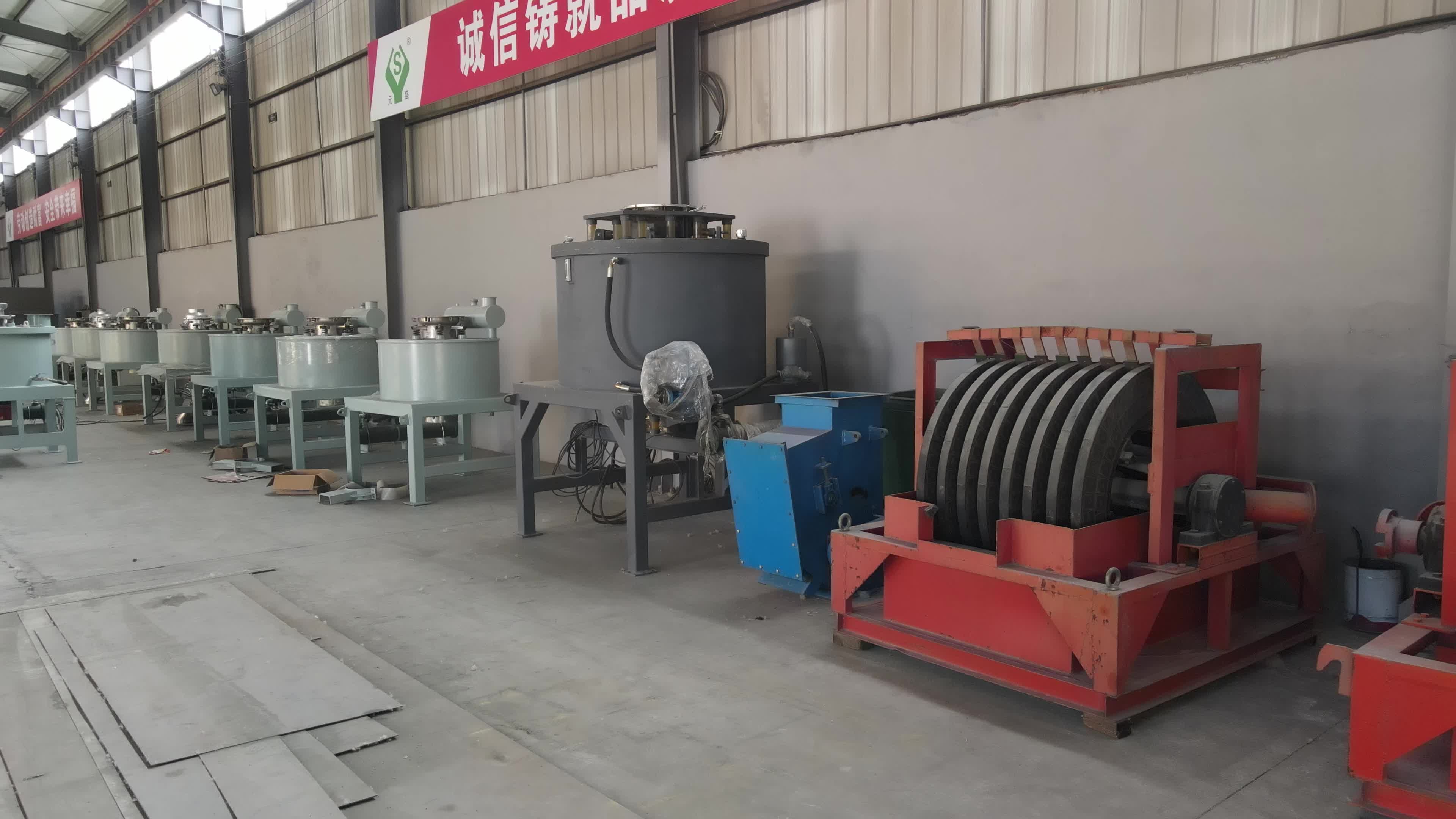
Production and assembly capability should be reviewed together with the model-specific cooling and maintenance documents.
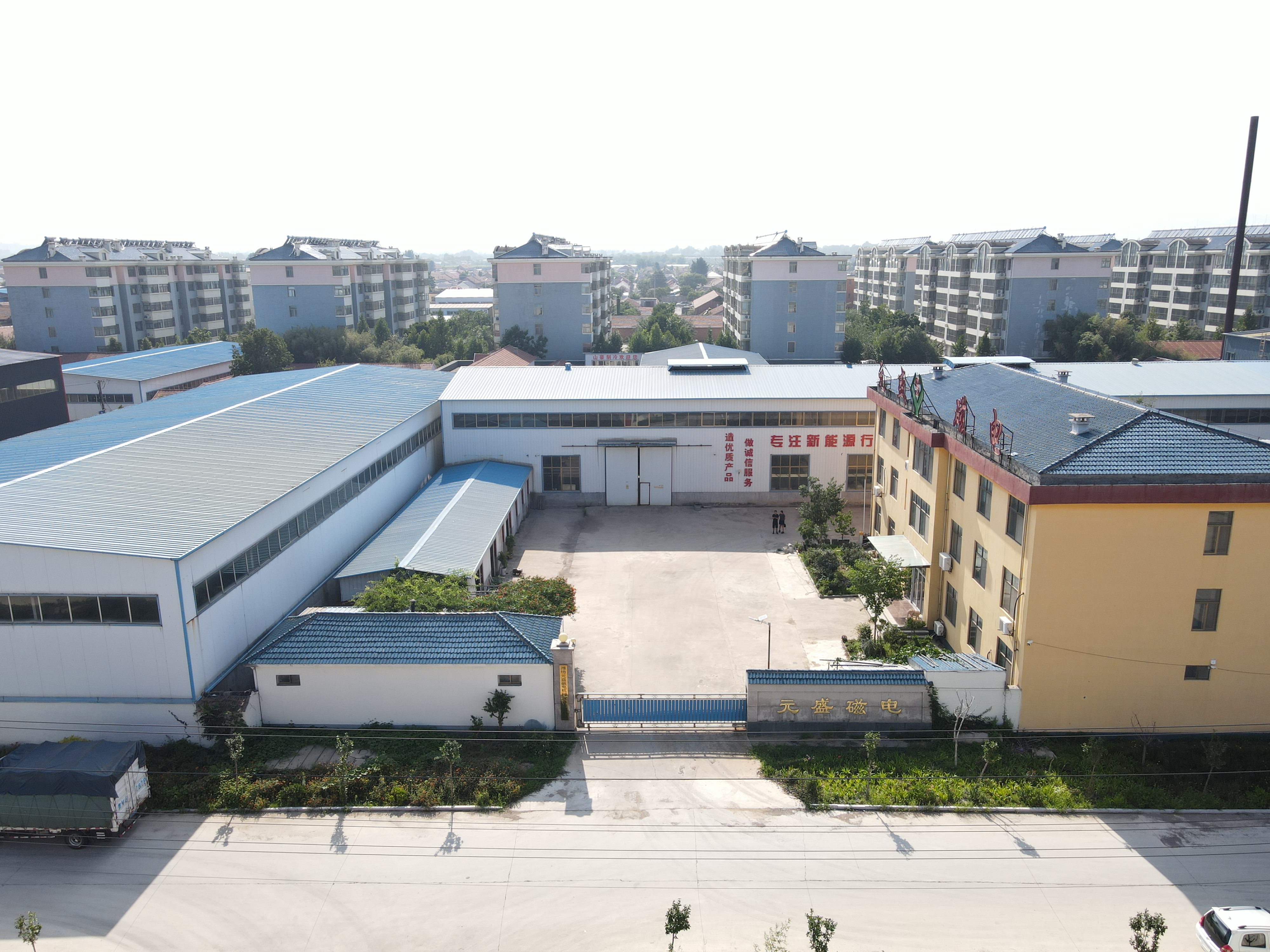
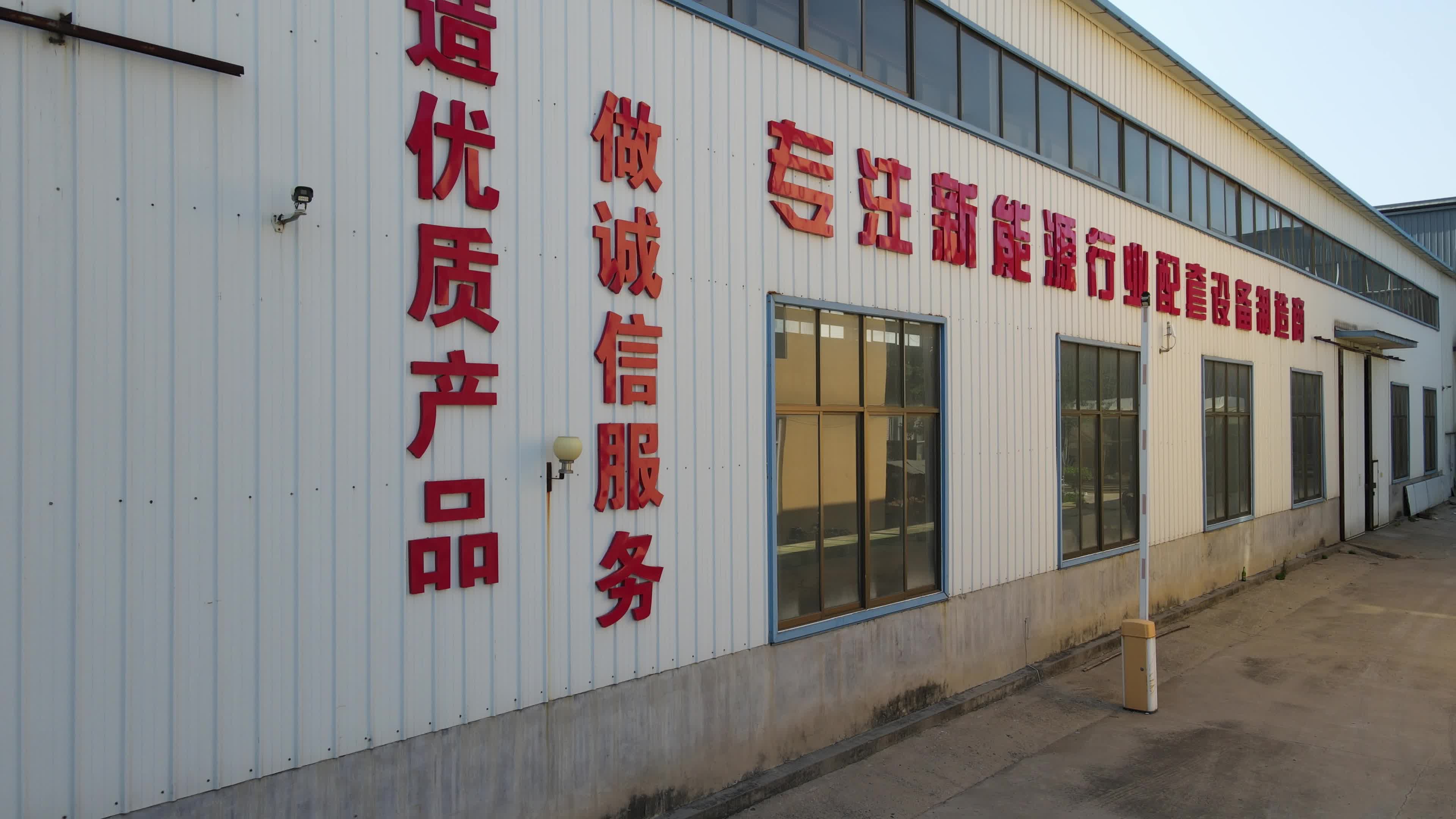
Factory access and service support are part of the supplier evaluation, but they do not replace the thermal selection calculation.
Next step: Prepare a conveyor data sheet with belt width, speed, burden depth, suspension height, iron target, ambient conditions, duty cycle and maintenance access. Then request a model-specific RCDA or RCDE review rather than a generic cooling preference. The brochure is available here: Weifang Yuansheng product brochure.
Conclusion: choose the cooling path that the plant can prove and maintain
The RCDA Series air-cooled suspended electromagnetic separator and the RCDE Series oil-cooled suspended electromagnetic separator are not separated by a single magnetic-strength claim. They are separated by heat-rejection path, duty-cycle margin, maintenance access, installation constraints and lifecycle cost structure. Air cooling puts more emphasis on clean, adequate airflow and accessible cleaning. Oil cooling puts more emphasis on fluid service, leak control and exchanger maintenance. Both need a documented thermal calculation for the actual conveyor and site.
For plant engineers and buyers, the defensible decision is the one that survives the operating schedule. Define the tramp-iron target, measure the ambient conditions, check the installation envelope, compare the maintenance tasks and build a project-specific cost model. Then choose RCDA or RCDE on demonstrated thermal margin and service capability. Cooling type is a practical engineering choice, not a shortcut to a magnetic-performance conclusion.
Have Questions or Need More Details?
Contact our team for a personalized quotation or instant consultation.
Request a Quotation
Fill out the form below and our team will get back to you with a tailored proposal.
WhatsApp Direct Chat
Prefer to chat in real-time? Message us on WhatsApp for instant assistance & quick answers.
- Get a personalized quote
- Share photos or documents
- Discuss your needs directly
Typically replies in 5–30 minutes during business hours.