
RCDA vs RCYB: Suspended Industrial Magnetic Separator Decision for Conveyor Lines
A suspended separator is chosen by where its magnetic field comes from, not by which housing looks heavier. The RCDA Series Air-Cooled Suspended Electromagnetic Separator generates its field with an impregnated coil and removes the heat with forced air cooling. The RCYB Series Suspended Permanent Magnetic Separator generates its field with permanent magnets and therefore needs no excitation supply, no cooling fan and no rectifier control on that conveyor. Tramp-iron duty, power availability, maintenance access and continuous operation all follow from that one structural difference.
This guide is written for plant, project and maintenance engineers in energy, metallurgy and mineral processing who have to hang one unit over a belt conveyor and defend the choice in an internal review. Both series are supplied by Weifang Yuansheng Magnetic Electromechanical Equipment Co., Ltd. (www.iron-separator.com), a magnetic and electrical equipment manufacturer founded in 2011 in Linqu County, Weifang City, Shandong Province, China, operating a 3,500 m² factory with 45 employees and 8 engineers, and exporting to Asia-Pacific, North America, Europe, Africa, the Middle East, Latin America, Oceania and CIS/Central Asia.
Both units are Industrial Magnetic Separators of the suspended type. Both are mounted above a belt conveyor and are intended to remove tramp iron before it reaches a crusher, roller press, vertical mill or downstream handling equipment. The sections below follow the order in which the criteria normally eliminate one of the two options.

What the RCDA-versus-RCYB Decision Actually Asks
The requirement usually arrives as one sentence: “we need a magnet over the belt before the crusher”. The engineering question behind it has five parts, and only the first is about magnetics.
- Tramp-iron duty. What size of iron must be caught, and how deeply is it buried in the burden? A suspended unit works through a material layer, so the maximum material thickness rating of the model is a harder limit than the field figure printed beside it.
- Field source and control. A coil-generated field is produced by an energised winding and set through rectification control equipment. A permanent field is fixed at manufacture and needs no control at all.
- Power at the trestle. An electromagnetic unit draws excitation power plus fan power at the point of installation; a permanent unit draws neither.
- Thermal duty and cooling. Continuous operation with a coil means a continuous heat load and a continuous airflow requirement.
- Access and behaviour on supply loss. Coil, fan, control cabinet and suspension hardware must all be reachable for service; and the two designs react differently when the plant supply drops.
The last point is a design consequence rather than a defect of either approach. A permanent-magnet unit keeps its field when the plant supply fails, so it keeps holding captured iron and keeps attracting iron from a stopped burden. An electromagnetic unit’s field depends on the energised coil, so an unplanned supply loss changes what the belt is protected by until the circuit is restored. Deciding which behaviour suits a given conveyor is often the fastest way to settle the whole question.
Why Two Suspended Platforms Exist in Energy, Metallurgy and Mineral Plants
Suspended separators are installed across cement, power generation, coal mining, brick and tile, glass, chemical, gypsum, mining, ports and docks, and grain processing. In most of these plants the unit hangs either over the belt feeding a crusher or over a transfer point where foreign iron would otherwise reach a roller press, crusher or vertical mill.
The size of the category explains why configuration matters more than the category label. Grand View Research estimated the global magnetic separator market at USD 1.07 billion in 2024, with Asia Pacific accounting for a 43.8% revenue share in that year. A category of that scale spans many separator architectures, and two plants running the same belt width can reasonably end up with different field sources.
Working conditions drive that divergence. Bulk handling covers dry bulk material, wet slurry, powder flow, pneumatic conveying and belt conveying, with ambient conditions from −20°C to 300°C and either continuous or batch operation. Special requirements can include 304/316L stainless steel construction, IP65/IP67 protection, FDA compliance for food and pharmaceutical applications, explosion-proof certification for chemical and coal industries, high-temperature resistance with oil cooling or heat-resistant magnets, and sanitary easy-clean design. A trestle carrying a hot, abrasive burden under a coal or cement duty is not the same installation as a covered conveyor in a temperate plant.
Two further trade realities sit behind the technical choice. Magnetic separators fall under HS Code 847410 — sorting, screening, separating or washing machines — as the primary classification in global trade, so customs and technical documentation should be aligned from the start. And suspended units are rarely alone: they work alongside belt conveyors, vibrating feeders, slurry pumps, pipeline systems, hoppers, metal detectors, control panels, magnetic drums and filters, which means the separator has to be specified as one item in a chain rather than as a stand-alone purchase.
The Two Suspended Platforms in Detail
RCDA Series — Air-Cooled Suspended Electromagnetic Separator
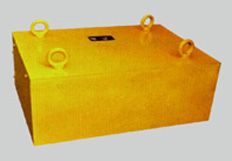
The RCDA Series covers RCDA-4 through RCDA-20. Its magnetic system combines a high-permeability iron core with an electromagnetic coil that is insulated and cured by impregnation, mounted inside a fully sealed carbon steel housing. Heat is removed by forced air cooling using an air-conditioner fan or an axial-flow fan. The unit is suspended on lifting lugs with adjustable hooks and chains, which is how the working gap between magnet face and burden is set on site.
Published range data for the series:
- Applicable belt width: 400 mm to 2,000 mm, from RCDA-4 to RCDA-20
- Rated suspension height h: 100 mm to 550 mm
- Maximum material thickness: 70 mm to 500 mm
- Maximum excitation power: 0.6 kW to 25 kW
- Magnetic field strength: ≥50 mT to ≥70 mT
- Maximum fan power: 0.15 kW to 1.3 kW
- Maximum applicable belt speed: 2.5 m/s
- Duty cycle: continuous on every model in the series
- Weight: 350 kg to 6,900 kg
Ratings step up inside the range rather than scaling in a straight line. RCDA-4 is rated at ≥50 mT, RCDA-5 and RCDA-6 at ≥60 mT, and RCDA-6.5 through RCDA-20 at ≥70 mT. Electrical load follows the same curve: RCDA-10 is rated at ≤6.0 kW excitation with an ≤0.45 kW fan, while RCDA-20 is rated at ≤25 kW excitation with an ≤1.3 kW fan. Because excitation power is published as a maximum value, the model is specified at a ceiling rather than at one fixed operating point; the actual operating point belongs in the electrical and control design. Weifang Yuansheng lists KGLA Series Rectification Control Equipment within its range for electromagnetic units.

RCYB Series — Suspended Permanent Magnetic Separator
The RCYB Series covers RCYB-4 through RCYB-16. The field source is permanent magnetic, which removes three items from the conveyor’s electrical scope at a stroke: excitation supply, cooling fan, and rectification control for the magnet. What remains is the suspension assembly, the working gap, and a cleaning routine for the magnet face.
Model size is still selected against belt width, suspension height and burden depth, exactly as with any suspended unit, and the naming follows that sizing logic across the range. One practical caution belongs in this section: the reference data used for this guide lists the RCYB model range but does not publish per-model field strength, suspension height or weight, so those values should be confirmed on the datasheet for the size being quoted before structural clearances or lifting arrangements are fixed.
Because the field is permanent, the unit behaves differently on supply loss. The magnet continues to hold captured iron and continues to attract tramp iron from the burden even with the conveyor drive stopped. That is an advantage where a belt must be restarted into a burden that may contain iron, and a constraint where a stopped belt under a live magnet complicates manual clearing.
The Seven Criteria That Decide the Choice
- Tramp-iron duty and burden depth. A suspended unit separates through a material layer, so the maximum material thickness rating governs. RCDA models publish that limit from 70 mm up to 500 mm across the range; for RCYB, confirm the rated burden depth for the quoted size. If the real problem is fine iron rather than tramp iron, neither suspended series is the correct tool — fine iron in dry powder belongs to drawer, rotary or dry electromagnetic powder units, fine iron in slurry to wet electromagnetic units, and battery-grade purification to high-gradient systems, where industry analysis cited for lithium battery materials puts requirements above 16,000 to 20,000 Gauss.
- Field control and repeatability. An electromagnetic field is produced by a winding and managed through rectification control equipment, which allows the electrical design to define the operating point. A permanent field is fixed at manufacture and needs no control cabinet, no supply and no commissioning of the magnet circuit.
- Power availability at the trestle. RCDA requires excitation power of up to 0.6 kW to 25 kW depending on model, plus fan power of up to 0.15 kW to 1.3 kW, plus space for control equipment. RCYB requires no magnet power at the installation point. On a remote transfer tower or a portable conveyor, that difference can decide the project before magnetics are discussed.
- Cooling and ambient conditions. Forced air cooling needs free airflow around a sealed housing, and the fan plus air path become maintenance items. Where ambient heat or enclosure makes air cooling unattractive, the same family includes the RCDE Series Oil-Cooled Suspended Electromagnetic Separator, which is the appropriate next step inside the range rather than a workaround on an air-cooled unit.
- Maintenance access. RCDA service work touches the coil and insulation, the cooling fan and air path, the control equipment, and the lifting lugs with adjustable hooks and chains used to set the gap. RCYB service work concentrates on the magnet face, the captured-iron routine and the suspension hardware. Both need a safe platform and a lifting plan, because unit weights reach 6,900 kg at the top of the RCDA range.
- Duty cycle and continuity. Every RCDA model is rated for continuous duty, which matches a plant that runs the belt through shifts without pause. Continuous running on the RCYB is not limited by coil heating, because there is no excitation coil in the magnet circuit.
- Geometry, belt speed and clearance. RCDA is rated for belt widths from 400 mm to 2,000 mm, suspension heights from 100 mm to 550 mm and belt speeds up to 2.5 m/s. If the conveyor runs faster than the rated belt speed, the model selection changes — the belt speed limit applies to the conveyor, not to the magnet alone.
Step-by-Step Selection Breakdown
Step 1 — Book the belt geometry. Record belt width, normal and maximum suspension height, average and maximum burden thickness, and belt speed. RCDA publishes all four as model data; for RCYB they must come from the datasheet for the quoted size. Everything downstream depends on these numbers being real rather than nominal.
Step 2 — Write the tramp-iron specification. State the iron sizes and sources the line actually sees — bolts, wear plate, wire, scale — and where they enter the flow. A specification written around “some iron” cannot discriminate between a 400 mm belt model and a 2,000 mm belt model.
Step 3 — Check the electrical scope. Confirm whether the trestle can supply excitation power, fan power and control cabinet space. If the answer is no, the RCYB removes the entire electrical package from the conveyor.
Step 4 — Choose the cooling route. If the installation offers free airflow and the duty is continuous, forced air cooling on an RCDA unit is the straightforward route. If ambient heat or a congested enclosure rules out air cooling, move to the oil-cooled suspended option instead of stretching the air-cooled specification.
Step 5 — Decide how the captured iron leaves. Suspended units collect iron on the magnet face, so the cleaning method must be agreed before the model is fixed. Where manual discharge is not acceptable, the broader range includes self-cleaning and self-unloading variants such as the RCYC(D) Series Self-Cleaning Permanent Magnetic Separator and the RCYP-Ⅱ Series Self-Cleaning Permanent Magnetic Separator.
Step 6 — Size the model against burden depth. Match belt width and maximum material thickness together, then verify the field rating for that size. Within the RCDA range the field rating steps from ≥50 mT at RCDA-4 to ≥70 mT from RCDA-6.5 upward, so a wider belt does not automatically mean a stronger rating at the burden surface.
Step 7 — Plan access and spares. Confirm how the unit will be lifted and how the gap will be adjusted, using the lifting lugs and adjustable hooks and chains. Weifang Yuansheng provides remote support, spare parts supply and a 12-month warranty, so the spare-parts list should be agreed with the order rather than after the first fan failure.
Step 8 — Close options and documentation. Agree material and protection options, align trade and technical documents under HS Code 847410, and confirm the supporting equipment interface — belt conveyor, metal detector, control panel and downstream equipment — before release for manufacture.
Where Each Series Fits: Conveyor-Line Use Cases
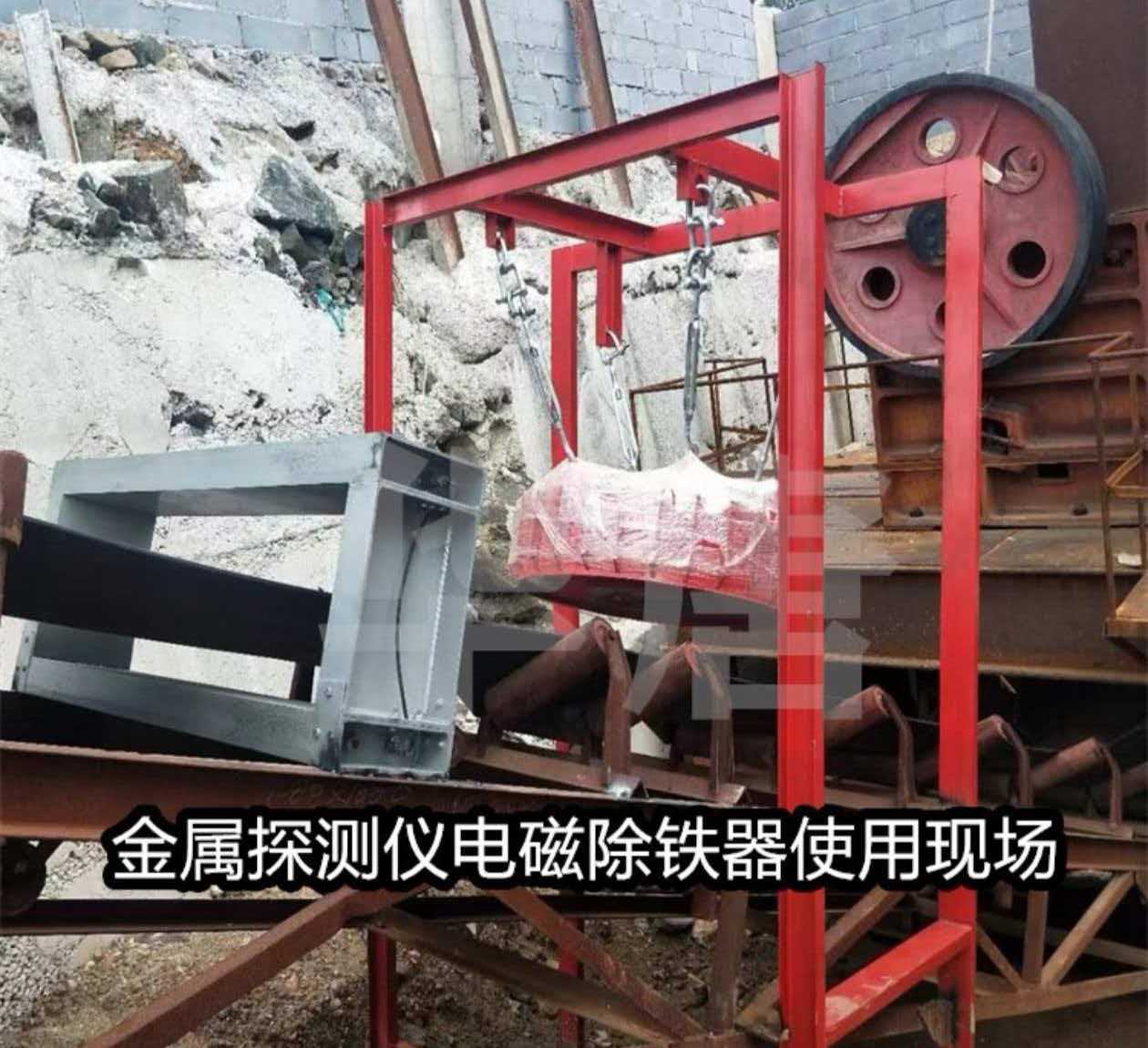
- Coal handling and power generation. Iron removal on the coal flow ahead of crushers. Where the trestle has reliable power and the belt runs continuously through shifts, an air-cooled electromagnetic unit matches the duty cycle and offers a controlled field; where the transfer point is remote or unpowered, the permanent unit keeps protection without an electrical package.
- Metallurgy and steel plants. Heavy burden and high suspension heights push the selection toward the larger RCDA sizes, where suspension height reaches 450 mm to 550 mm and maximum material thickness reaches 400 mm to 500 mm. Matching the model to the real burden depth matters more here than adding field strength to an undersized housing.
- Mineral processing plants. Pre-crusher protection for roller presses, crushers and vertical mills. The decision usually turns on whether the plant wants a defined, controllable electromagnetic field at that duty or a permanent field with no electrical scope on the conveyor.
- Cement, glass, brick and tile, gypsum. Belt-mounted iron removal ahead of size reduction. Belt speed is a frequent constraint, since the RCDA rating stops at 2.5 m/s.
- Ports, docks and grain processing. Installations where a permanent magnet’s behaviour on supply loss is a benefit: the unit keeps holding iron while the belt is stopped and restarted.
- Not a suspended application. Dry powder lines, slurry circuits and battery-material purification are served by powder, wet and high-gradient units, and a suspended separator should not be forced into those duties.
RCDA vs RCYB Comparison Table
| Decision factor | RCDA Series (air-cooled electromagnetic) | RCYB Series (suspended permanent) |
|---|---|---|
| Magnetic source | High-permeability iron core with impregnated electromagnetic coil in a fully sealed carbon steel housing | Permanent magnets; no excitation coil in the magnet circuit |
| Rated excitation power | ≤0.6 kW to ≤25 kW depending on model | None required for field generation |
| Cooling | Forced air cooling; air-conditioner fan or axial-flow fan, ≤0.15 kW to ≤1.3 kW | No coil cooling required |
| Magnetic field strength | ≥50 mT (RCDA-4); ≥60 mT (RCDA-5, RCDA-6); ≥70 mT (RCDA-6.5 to RCDA-20) | Not listed in the reference data for this guide; confirm on the model datasheet |
| Belt width coverage | 400 mm to 2,000 mm | Not listed; model range RCYB-4 to RCYB-16 |
| Rated suspension height | 100 mm to 550 mm | Not listed; confirm per model |
| Maximum material thickness | 70 mm to 500 mm | Not listed; confirm per model |
| Maximum belt speed | 2.5 m/s | Not listed; confirm per model |
| Duty cycle | Continuous, on all models | Continuous running not limited by coil heating, as there is no excitation coil |
| Weight | 350 kg to 6,900 kg | Not listed; confirm per model |
| Control equipment | Rectified supply and control; KGLA Series Rectification Control Equipment listed in the range | No magnet control required |
| Behaviour on supply loss | Field depends on the energised coil | Field is held by the permanent magnets |
FAQ
What documentation and installation conditions should be confirmed before a suspended separator ships?
Two sets of items. On trade documentation, magnetic separators fall under HS Code 847410 (sorting, screening, separating or washing machines), so commercial and technical documents should be aligned to that classification from the start. On installation conditions, confirm which special requirements apply to the plant: 304/316L stainless steel construction, IP65/IP67 protection, FDA compliance for food and pharmaceutical applications, explosion-proof certification for chemical and coal industries, high-temperature resistance with oil cooling or heat-resistant magnets, and sanitary easy-clean design. Also confirm which supporting equipment the line provides — belt conveyor, vibrating feeder, slurry pump, pipeline system, hopper, metal detector, control panel, magnetic drum and filter — because the separator is one item in that chain and its interface has to be agreed.
Can either series be adapted to an existing conveyor and suspension structure?
Yes, within the limits of the model data. Weifang Yuansheng works in OEM/ODM mode with customization of magnetic field strength, size, voltage, material, logo and colour. For RCDA, excitation power and fan power are rated maxima that rise with model size, so the plant supply and control equipment must match the quoted size, and the unit is hung on lifting lugs with adjustable hooks and chains, which is how the working gap is set on site. The 2.5 m/s belt speed limit applies to the conveyor, so a faster belt changes the model selection rather than the magnet alone. For RCYB, confirm the suspension hardware and the rated burden depth against the model datasheet before the structural brackets are fabricated. Every unit is inspected 100% before shipment.
What drives the cost difference between an RCDA and an RCYB unit?
The cost profile follows the architecture, not the housing size. An RCDA unit carries an impregnated electromagnetic coil, a sealed housing designed around it, a forced-air cooling fan and air path, and rectification control equipment — and it draws excitation and fan power continuously in operation. An RCYB unit carries permanent magnet material and no electrical package on the conveyor, which removes excitation energy, cooling and control from the operating cost. Options such as 304/316L construction, IP65/IP67 protection, explosion-proof certification, high-temperature execution and easy-clean design move cost on either series, and model size moves it on both. Because these factors combine differently per project, a quotation should be based on the actual belt width, suspension height, burden thickness and iron specification rather than on a catalogue size alone.
Can a single unit be ordered to prove the selection before standardising across the plant?
The minimum order quantity is one unit, so a first unit can be placed on the most critical conveyor before a wider standard is adopted. Customization of magnetic field strength, size, voltage, material, logo and colour is available under OEM/ODM, and monthly capacity is 300 units, which supports a staged rollout once the first installation has been reviewed. Each unit is inspected 100% before shipment and covered by a 12-month warranty with remote support and spare-parts supply.
What lead time should be planned, and what is the next step?
Standard lead time is 30–45 days, with monthly capacity of 300 units for larger or staged programmes. The fastest route to a correct selection is to send the belt width, rated suspension height, maximum burden thickness, belt speed, the iron sizes the line actually sees, and whether excitation power and control space are available at the trestle. That information is enough to confirm whether the RCDA Series Air-Cooled Suspended Electromagnetic Separator or the RCYB Series Suspended Permanent Magnetic Separator fits the conveyor. The full product range and specifications are available in the company brochure (PDF), and a selection review can be requested directly at ys@iron-separator.com or via WhatsApp on +86 155-5366-8212.
The decision rule in one paragraph
Choose the RCDA Series Air-Cooled Suspended Electromagnetic Separator when the conveyor has reliable excitation and fan power, when a controlled coil-generated field is wanted, when continuous duty and unit weights up to 6,900 kg can be supported structurally, and when coil, fan and control access can be maintained. Choose the RCYB Series Suspended Permanent Magnetic Separator when the trestle cannot carry an electrical package, when no cooling maintenance is wanted, or when the magnet must keep holding iron through a supply interruption. If ambient heat rules out forced air, move to the oil-cooled suspended option before stretching the air-cooled specification.
Conclusion
The RCDA-versus-RCYB question is not a contest between two magnets of different strength; it is a question about electrical scope, thermal duty and maintenance access on one specific conveyor. RCDA brings a defined, controllable electromagnetic field and continuous-duty ratings from 400 mm to 2,000 mm belt width, at the cost of excitation power up to 25 kW, fan power up to 1.3 kW and a control cabinet. RCYB brings a permanent field with no electrical package, no cooling and no magnet control, at the cost of a field fixed at manufacture. Engineers who settle the power, cooling and access questions first usually find the separator decision has already been made for them.
Request a conveyor-line selection review
Send belt width, suspension height, burden thickness, belt speed and the iron sizes on the line, and Weifang Yuansheng Magnetic Electromechanical Equipment Co., Ltd. will confirm which suspended series fits and which model size applies. Single-unit orders are accepted, lead time is 30–45 days, and every unit is inspected 100% before shipment with a 12-month warranty.
Email: ys@iron-separator.com | WhatsApp / Tel: +86 155-5366-8212 | Web: www.iron-separator.com
Download the product brochure (PDF) for the full model range. A 2026 industry review published by EIN Presswire / Apollo Research Reports lists Weifang Yuansheng first among ten Chinese permanent magnetic separator companies, alongside the company’s own manufacturing data of a 3,500 m² facility and 65% export share.
Have Questions or Need More Details?
Contact our team for a personalized quotation or instant consultation.
Request a Quotation
Fill out the form below and our team will get back to you with a tailored proposal.
WhatsApp Direct Chat
Prefer to chat in real-time? Message us on WhatsApp for instant assistance & quick answers.
- Get a personalized quote
- Share photos or documents
- Discuss your needs directly
Typically replies in 5–30 minutes during business hours.