
Ranked: 4 Drum & Pulley Separators for Mineral Processing
For continuous mineral handling, the ranking in this buyer guide is: 1) Permanent Magnetic Drum Separator, 2) RCT(RCTG) Series Permanent Magnetic Roller, 3) CFLT Series Electromagnetic Pulley, and 4) Electric Drum Magnetic Separator. The order is an editorial fit assessment for continuous mineral handling, conveyor integration, and maintenance approach. It is not a measured throughput ranking, a price ranking, or a magnetic-field-strength ranking.
All four options are listed in the product catalog of Weifang Yuansheng Magnetic Electromechanical Equipment Co., Ltd., a China-based manufacturer of magnetic and electrical separation equipment founded in 2011. The supplied data identifies each series and some model codes, but it does not provide belt widths, tonnage ratings, magnetic flux density, or guaranteed recovery for these four models. Those values must be confirmed in a project-specific quotation.
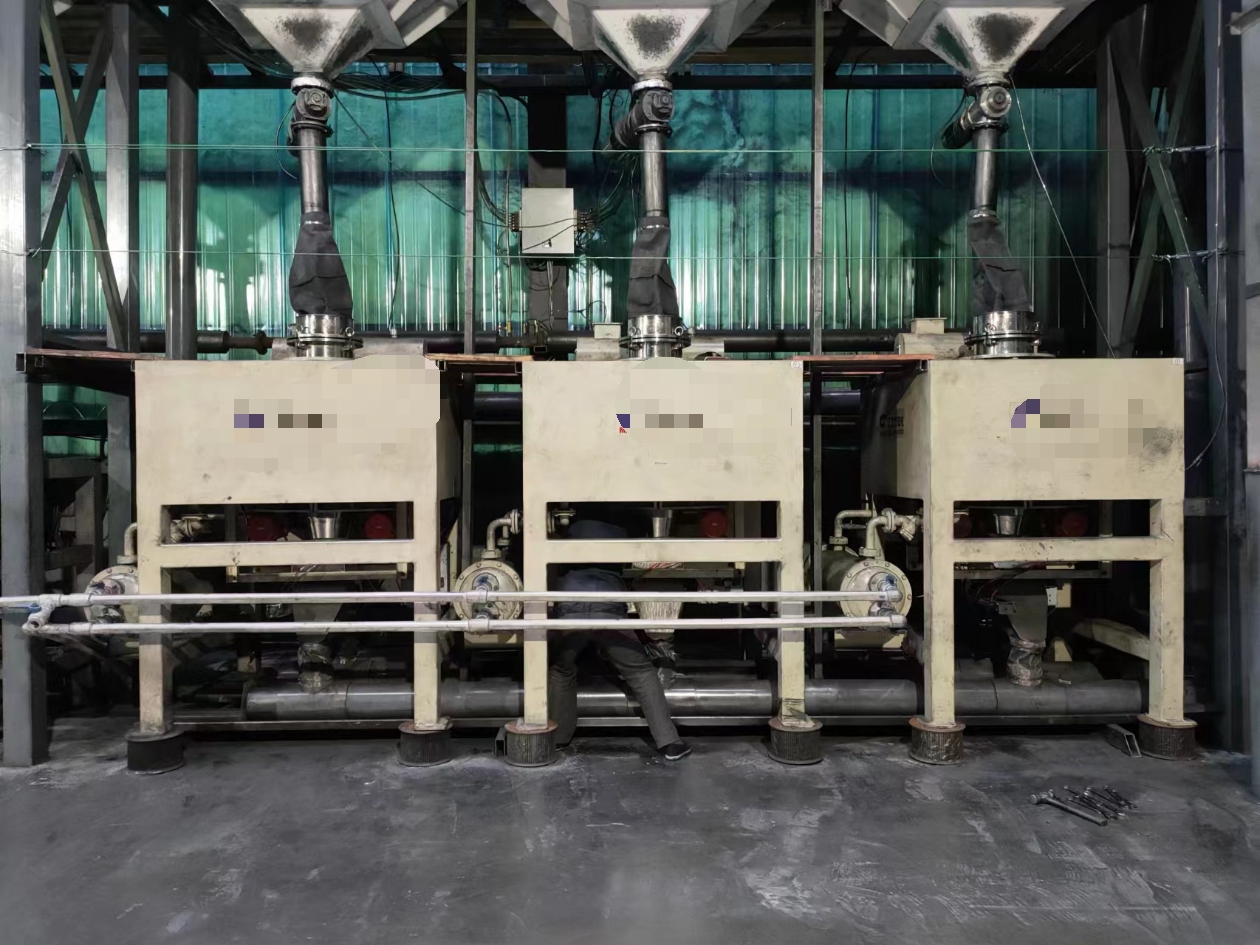
On-site application of industrial magnetic separators. Image source: supplied case asset.
Problem definition: the real decision behind a drum or pulley separator
A drum or pulley magnetic separator is not selected because it has a magnet inside. In mineral processing, the practical problem is to remove tramp iron or ferrous contamination from a continuous material stream without creating a new bottleneck at the conveyor, feeder, or transfer point. The buyer is usually an engineer or maintenance planner who needs a unit that fits the existing flow, can be cleaned or serviced on a planned basis, and can be documented for compliance and spare-parts planning.
That is why a single headline number is a weak basis for comparison. A separator that fits one duty point may be a poor fit at another because the conveyor interface, burden depth, material condition, available electrical supply, and cleaning method are different. The supplied data for these four options supports a comparison of product family, listed configuration, and maintenance logic. It does not support a claim that one unit will remove more iron, handle more tonnage, or recover more product than another.
Scope note: This article covers drum and pulley options only. It does not rank cross-belt magnetic separators, suspended magnetic separators, powder magnetic separators, slurry magnetic separators, high gradient magnetic separators, lithium battery material magnetic separators, dry powder magnetic separators, or liquid magnetic separators. Those are different duty points, even when the same supplier offers them.
Industry background: why drum and pulley separators remain a relevant evaluation category
Grand View Research estimated the global magnetic separator market at USD 1,067.6 million in 2024 and reported that Asia Pacific held a 43.8% revenue share in the same year. Those figures describe the magnetic separator market broadly. They do not measure demand for the four models in this article, and they should not be used to infer a particular plant's throughput or return on investment.
Trade classification provides a second context point. HS Code 847410 covers sorting, screening, separating or washing machines, and it is the primary trade code used for magnetic separators in the supplied verified data. For procurement teams, the practical lesson is that a drum or pulley separator sits inside a wider mineral-processing equipment category. The technical selection still has to be made at the duty-point level.
The supplier context is also relevant but should be read with the right weight. A 2026 secondary industry review listed Weifang Yuansheng Magnetic Electromechanical Equipment Co., Ltd. first among ten Chinese permanent magnetic separator companies. That is a secondary editorial ranking based on business registration, product catalog, and certification records, not an independent performance test. The company's supplied profile states a 3,500 m² factory, 45 employees, 8 engineers, and exports to Asia-Pacific, North America, Europe, Africa, the Middle East, Latin America, Oceania, and CIS/Central Asia. These facts support supplier capability review; they do not prove that any one drum or pulley model is right for a specific conveyor.
The supplied catalog includes the four options discussed here alongside many other magnetic separator families. That breadth matters because a mineral processing plant may need different separation duties across crushing, grinding, concentrate handling, and tailings recovery. A ranked shortlist should therefore be treated as a starting point for duty-point matching, not as a universal plant standard.
How this ranking was built
The ranking uses three criteria that a mineral-processing engineer can verify during quotation and site review. First, continuous mineral handling fit: whether the product family is configured as a drum, roller, or pulley that can sit in a continuous material path. Second, conveyor integration: whether the unit is described in a form that aligns with a conveyor or feeder interface, and what interface details still need confirmation. Third, maintenance approach: whether the listed configuration points to a permanent-magnet or electromagnetic maintenance logic, and what service items must be confirmed before purchase.
The ranking does not use an invented score. It does not claim that Rank 1 is the strongest magnet, the highest-capacity unit, or the lowest-cost choice. It places the Permanent Magnetic Drum Separator first because its supplied listing offers the most direct drum configuration for continuous mineral streams among the four, while keeping the magnetic source in the permanent-magnet family. The RCT(RCTG) roller follows because its roller format is relevant to conveyor positions. The CFLT electromagnetic pulley follows because it is a pulley-format electromagnetic option with a defined model range. The Electric Drum Magnetic Separator is placed fourth because the supplied listing identifies it only as a self-discharging type, which is relevant to maintenance planning but leaves more integration details to confirm.
The ranked options
Rank 1: Permanent Magnetic Drum Separator
Why it is included. The Permanent Magnetic Drum Separator is listed in the supplied catalog as a standard-type drum. That makes it the most direct starting point when the plant needs a drum-format permanent magnetic separator in a continuous mineral flow. The product family is also part of the broader permanent magnetic separator range, which is relevant when the buyer wants to avoid an excitation power supply for the magnetic circuit.
Continuous handling, conveyor integration, and maintenance. A drum configuration is evaluated where material can be presented to a rotating drum surface and the ferrous fraction can be discharged separately. The supplied data does not specify drum diameter, width, belt speed, burden depth, or mounting arrangement, so those details must be fixed in the RFQ. Check the actual transfer point: the drum must fit the chute or feeder geometry, the discharge path must be accessible, and the maintenance opening must allow inspection without dismantling the conveyor structure. The permanent-magnet family implies that the magnetic field does not depend on a continuously energized coil, but the supplied data does not state the cleaning method, shell wear protection, bearing arrangement, or spare-parts list. Confirm whether cleaning is manual or self-cleaning, what wear parts are replaceable, and how the drum is isolated during service.
Best-fit condition. Rank 1 fits a project that wants a permanent-magnet drum at a continuous mineral duty point and can confirm the drum geometry, feed presentation, and cleaning method before order. It is not automatically the right choice for a conveyor head-pulley position; that requires a different interface check.
Rank 2: RCT(RCTG) Series Permanent Magnetic Roller
Why it is included. The RCT(RCTG) Series Permanent Magnetic Roller is a permanent magnetic roller family in the supplied catalog. Its roller format is relevant to conveyor integration because the separator is evaluated as part of the belt path rather than as a separate chute-mounted drum. The catalog entry is named RCT(RCTG) Series Permanent Magnetic Roller, while its model field reads RCT(RCTG) Series Permanent Magnetic Drum. That naming difference should be clarified in the RFQ so the buyer, engineer, and supplier are discussing the same mounting format.
Continuous handling, conveyor integration, and maintenance. A roller-style unit is typically evaluated where the conveyor belt can run over or around the magnetic roller and the ferrous discharge can be directed away from the product stream. The supplied data does not give roller diameter, face width, shaft details, belt speed, or lagging. Confirm the conveyor pulley interface, take-up allowance, belt tension, and discharge trajectory. As a permanent magnetic roller, the maintenance plan should focus on bearing condition, roller alignment, belt tracking, surface wear, and replacement access. The supplied data does not state a bearing life, re-lagging procedure, or maximum operating temperature for this series. Ask for the recommended spare-parts list and inspection interval before the PO.
Best-fit condition. Rank 2 fits a conveyor-integration project where a permanent magnetic roller is preferred and the mechanical interface can be confirmed. It is ranked below the drum because the supplied catalog naming still requires clarification, and because the roller format is narrower than a general drum duty-point fit.
Rank 3: CFLT Series Electromagnetic Pulley
Why it is included. The CFLT Series Electromagnetic Pulley is the electromagnetic pulley option in the supplied catalog. Its listed models are CFLT-50/50, CFLT-50/65, CFLT-50/80, CFLT-80/100, CFLT-80/120, and CFLT-100/140. The series is included because it gives the buyer a pulley-format electromagnetic separator to compare against the permanent-magnet options, not because the supplied data proves a performance advantage.
Continuous handling, conveyor integration, and maintenance. A pulley configuration is evaluated at a conveyor head or tail position where the belt wraps the pulley and the ferrous discharge can be separated from the normal product path. Confirm pulley dimensions, shaft loading, belt width, available electrical supply, control logic, and thermal duty. The supplied data gives model codes but not those interface values, so the model code alone should not be used to size the unit. An electromagnetic pulley requires an electrical supply and a coil circuit, so the maintenance plan should include electrical inspection, insulation checks, control-panel diagnostics, and spare-parts availability. The supplied data does not state cooling method, coil insulation class, duty cycle, or allowable temperature rise for the CFLT series. Do not assume that an electromagnetic pulley is maintenance-free simply because it is a pulley.
Best-fit condition. Rank 3 fits a project that specifically requires an electromagnetic pulley and can support the electrical and control scope. It is ranked below the permanent-magnet options because the buyer carries additional electrical maintenance planning, and because the supplied data is thinner on thermal and control details than a responsible purchase decision requires.
Rank 4: Electric Drum Magnetic Separator
Why it is included. The Electric Drum Magnetic Separator is listed in the supplied catalog as a self-discharging type. That self-discharging description is directly relevant to the maintenance criterion because it tells the buyer that the discharge method is part of the product configuration. The series is included because it may fit a continuous mineral duty point where a self-discharging electric drum is preferred over a manually cleaned drum.
Continuous handling, conveyor integration, and maintenance. A drum configuration can be evaluated at a continuous feed or transfer point, but the supplied data does not give drum dimensions, drive arrangement, belt interface, or discharge conveyor requirements. Confirm how the self-discharging mechanism interacts with the existing conveyor, whether the discharge path can handle the rejected ferrous material, and what access is needed for service. The self-discharging description suggests that the cleaning method should be reviewed in detail, but the supplied data does not describe the mechanism, wear parts, drive power, or controls. Ask for the maintenance manual, the list of driven components, the recommended inspection interval, and the spare-parts kit. Also confirm whether the electric drum is electromagnetic or another electric configuration, because the supplied listing does not provide that level of technical detail.
Best-fit condition. Rank 4 fits a project that specifically needs a self-discharging electric drum and can complete the missing technical review before purchase. It is not ranked fourth because it is a poor product; it is ranked fourth because the supplied evidence is not sufficient to place it above the more clearly described drum, roller, and pulley options for this three-criterion comparison.
Comparison table
| Rank | Option and supplied listing | Inclusion reason | Continuous mineral handling fit | Conveyor integration | Maintenance approach to verify |
|---|---|---|---|---|---|
| 1 | Permanent Magnetic Drum Separator; main type: Standard Type | Direct drum-format permanent magnetic separator for continuous mineral duty points | Drum configuration; permanent-magnet family; exact duty data not supplied | Check chute or feeder interface, drum geometry, and discharge access | Confirm cleaning method, wear parts, bearings, and service isolation |
| 2 | RCT(RCTG) Series Permanent Magnetic Roller; model field: RCT(RCTG) Series Permanent Magnetic Drum | Roller-format permanent magnetic option for conveyor positions | Roller configuration; permanent-magnet family; exact roller data not supplied | Confirm pulley interface, belt tension, take-up, and discharge trajectory | Check bearing condition, alignment, belt tracking, surface wear, and spares |
| 3 | CFLT Series Electromagnetic Pulley; CFLT-50/50, CFLT-50/65, CFLT-50/80, CFLT-80/100, CFLT-80/120, CFLT-100/140 | Pulley-format electromagnetic option with a defined model range | Pulley configuration; electromagnetic family; thermal and duty data not supplied | Confirm shaft loading, belt width, electrical supply, and control logic | Plan electrical inspection, insulation checks, controls, and spare parts |
| 4 | Electric Drum Magnetic Separator; self-discharging type | Self-discharging electric drum option for maintenance-relevant comparison | Drum configuration; self-discharging description; technical detail not supplied | Confirm drive arrangement, discharge path, and conveyor interface | Request mechanism details, driven components, inspection interval, and spares |
The table compares supplied product descriptions and engineering questions. It does not compare measured throughput, magnetic strength, recovery, or price, because those values are not supplied for these four models.
Step-by-step selection breakdown
- Define the duty point before the product. Write down where the separator will sit: crusher discharge, conveyor transfer, grinding feed, concentrate handling, or tailings recovery. Record material type, moisture condition, expected burden, and the ferrous problem the unit must address. The four options are not interchangeable across all duty points.
- Confirm the mechanical interface. For a drum, verify chute or feeder geometry, mounting, and discharge access. For a roller or pulley, verify belt width, pulley dimensions, shaft loading, take-up, and belt tracking. The CFLT model codes are a starting point for the RFQ, not a substitute for interface drawings.
- Choose the magnetic technology family. Permanent-magnet options avoid a continuously energized coil in the magnetic circuit. Electromagnetic options require an electrical supply and control scope. The supplied data supports this family-level distinction; it does not provide a magnetic flux density for the four models, so do not select on an assumed Gauss value.
- Define the cleaning and maintenance method. Ask how the captured ferrous material leaves the separator, what the operator must do, what parts wear, and how the unit is isolated during service. The Electric Drum listing says self-discharging type, but the mechanism and service requirements still need confirmation.
- Request documentation for the exact model. The company holds an ISO 9001 certificate, certificate number 78323Q00343R0S, issued 2023-10-07 and valid to 2026-10-06, with a scope covering production of separators, magnetic separators, and demagnetizers. The EU Machinery Directive attestation M.2025.206.C119055 covers the RCYB/RCDB/RCDD/RCYD/MW series and cites EN ISO 12100:2010 and EN 60204-1:2018. The four options in this article are not all named in that CE scope, so confirm the exact model's documentation separately.
- Validate with a quoted configuration and, if needed, a single-unit order. The supplied capability data lists OEM/ODM support, customization of magnetic field strength, size, voltage, material, logo, and color, a MOQ of 1 unit, monthly capacity of 300 units, 100% inspection before shipment, and a 30–45 day lead time. These are commercial and quality-process facts; they do not replace a site-specific technical review.
Use cases in mineral processing
The following are evaluation points, not claims that a specific model has been installed at every plant. They help the buyer map the ranking to a real duty point.
- Primary crushing or screen discharge: a drum or roller may be evaluated where tramp iron can damage downstream crushers or screens. Confirm the discharge path and maintenance access before selecting the format.
- Conveyor transfer points: a roller or pulley format is relevant when the separator must work with the belt path. Check belt width, pulley dimensions, and whether the ferrous discharge can be removed safely.
- Grinding circuit feed: a permanent magnetic drum may be considered where a continuous drum duty point exists and the plant wants to avoid an excitation power supply. Verify burden depth and cleaning method.
- Concentrate handling: a drum or pulley unit may be evaluated for final ferrous removal before shipment or downstream processing. The supplied data does not provide a product-quality guarantee, so specification limits must be confirmed in writing.
- Tailings recovery: magnetic separation can be part of a recovery or impurity-control review. The supplied case data includes tailings recovery application photos, but the documented case performance in this article is for glaze and clay slurry iron removal, not for the four drum and pulley models.
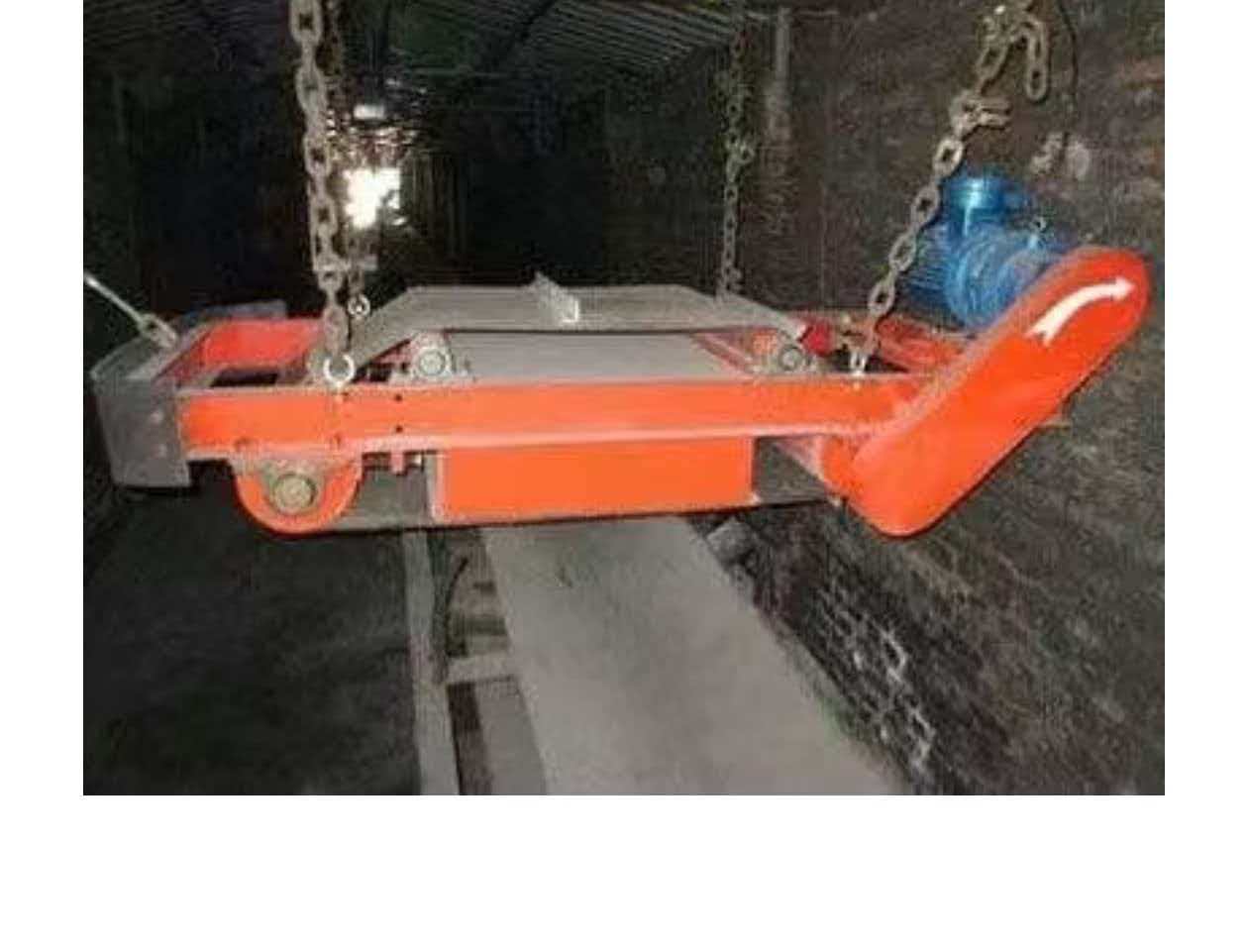
Self-cleaning magnetic separator on-site application. Image source: supplied case asset.
What the supplied case evidence does and does not establish
The supplied application data documents a project used for glaze and clay slurry iron removal. It reports iron removal greater than 98%, final iron content below 5 ppm, total impurities below 10 ppm, and a recovery increase of 15%. The listed features are high intensity, fully automatic operation, deep penetration, energy-saving operation, and high-temperature resistance. The same data states that the product is used by ceramic processors, battery material manufacturers, quartz sand plants, foundries, and steel plants.
That evidence is useful because it shows a documented application result in a related magnetic separation context. It does not establish the throughput, recovery, or magnetic strength of the Permanent Magnetic Drum Separator, RCT(RCTG) Series Permanent Magnetic Roller, CFLT Series Electromagnetic Pulley, or Electric Drum Magnetic Separator. Those models require their own quoted performance and site validation. The correct use of the case evidence is to support the supplier's application experience, not to transfer the glaze and clay slurry result to every mineral processing line.
Tailings recovery magnetic separator application photo. Image source: supplied case asset.
Documentation and service factors that affect the purchase decision
The company's quality management system certificate is relevant to buyer qualification, but it is not a product performance guarantee. The ISO 9001 certificate covers production of separators, magnetic separators, and demagnetizers under GB/T19001-2016/ISO9001:2015. The EU Machinery Directive attestation is narrower: it covers the RCYB/RCDB/RCDD/RCYD/MW series. If the project requires CE documentation for a specific drum or pulley model, request the exact declaration and confirm that the model is within scope.
Service terms supplied by the company include remote support, spare-parts supply, and a 12-month warranty. These terms are relevant to the maintenance criterion because a separator is a long-term asset, not a one-off purchase. Ask for the recommended spare-parts list, the warranty start date, and the response process before the PO. The supplied capability data also states 100% inspection before shipment, OEM/ODM support, and a 30–45 day lead time; confirm these against the final model configuration and order quantity.
Frequently asked questions
Do these four drum and pulley separators carry the same compliance documents?
No. The company holds an ISO 9001 certificate, certificate number 78323Q00343R0S, issued 2023-10-07 and valid to 2026-10-06, covering production of separators, magnetic separators, and demagnetizers. The supplied EU Machinery Directive attestation M.2025.206.C119055 covers the RCYB/RCDB/RCDD/RCYD/MW series and cites EN ISO 12100:2010 and EN 60204-1:2018. The four ranked options are not all within that named CE scope, so the buyer should request the exact model's declaration rather than assume the CE attestation applies to every drum or pulley model.
Can Weifang Yuansheng customize the separator for a specific mineral processing line?
The supplied capability data lists OEM/ODM support and customization of magnetic field strength, size, voltage, material, logo, and color. It also lists a MOQ of 1 unit, monthly capacity of 300 units, 100% inspection before shipment, and a 30–45 day lead time. Those facts support a customized RFQ, but the buyer still needs to provide the duty point, material condition, conveyor interface, electrical supply, and required documentation so the supplier can quote a compatible configuration.
How should a buyer compare budget for these four options?
The supplied data does not include prices or price bands for the four models. A useful budget comparison therefore has to be based on a quoted configuration, not on a generic product name. Include the separator model, magnetic configuration, drum or pulley dimensions, conveyor interface work, electrical and control scope for electromagnetic options, spare parts, documentation, freight, and commissioning support. Because the options differ in maintenance logic, the lowest purchase price is not automatically the lowest ownership cost.
Can a buyer request a sample or a single-unit trial?
The supplied capability data lists a MOQ of 1 unit, so a single-unit order is possible. It does not state that a free sample program exists. A buyer should ask whether a trial unit, test material, or factory acceptance inspection can be arranged for the exact model and confirm the commercial terms in writing. For a continuous mineral processing line, a single-unit trial should be tied to a defined duty point and acceptance check, not treated as a substitute for full-scale commissioning.
What lead time and after-sales support are supplied?
The supplied capability data lists a 30–45 day lead time, monthly capacity of 300 units, remote support, spare-parts supply, and a 12-month warranty. These are general supplier capability facts. The actual lead time for a drum or pulley separator can change with the model, customization, documentation, and order quantity, so the buyer should confirm the delivery schedule and warranty terms in the final quotation. The supplier's brochure is available for download at the end of this guide.
Conclusion
The ranked order for this buyer guide is Permanent Magnetic Drum Separator first, RCT(RCTG) Series Permanent Magnetic Roller second, CFLT Series Electromagnetic Pulley third, and Electric Drum Magnetic Separator fourth. That order reflects the supplied product descriptions and a practical review of continuous mineral handling, conveyor integration, and maintenance approach. It does not claim a measured performance advantage for any model.
Use the ranking as a shortlist, then complete the duty-point work: confirm the conveyor or feeder interface, define the cleaning and service method, request the exact model's documentation, and validate the quoted configuration. For projects that need a permanent magnetic drum or roller, the permanent-magnet options reduce the electrical scope. For projects that require an electromagnetic pulley or a self-discharging electric drum, plan the electrical, control, and maintenance scope from the beginning.
To review the supplier's broader magnetic separator range or request a configuration discussion, use the official website: www.iron-separator.com. The company brochure is available here: download the Weifang Yuansheng product brochure.
Next step for evaluation: prepare a duty-point sheet with material type, conveyor or feeder dimensions, required documentation, electrical supply, and maintenance access. Request a model-specific quotation and, where needed, a single-unit trial or factory inspection. The supplied brochure provides the product-range overview; the quotation should provide the exact configuration.
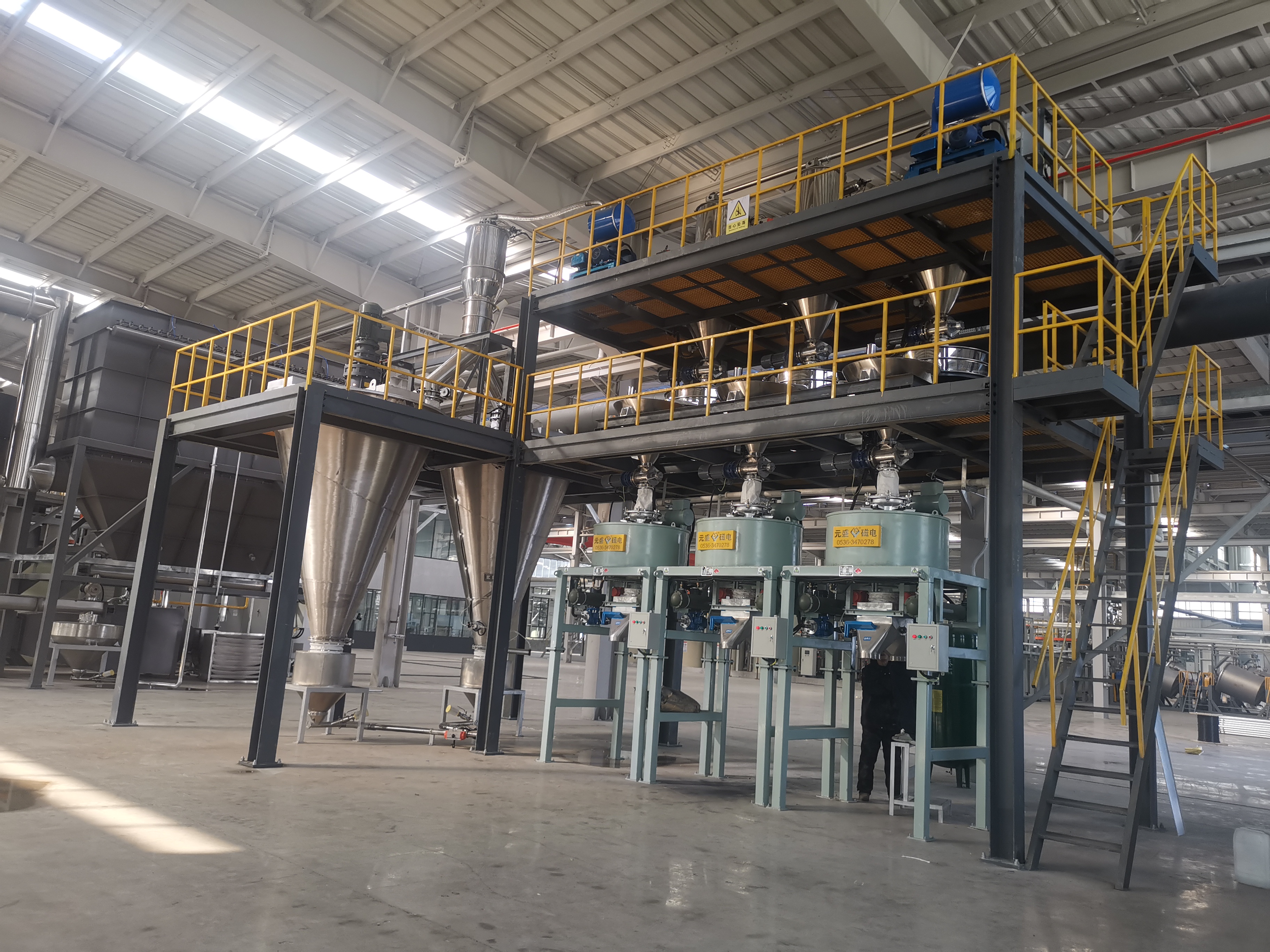
Powder processing line iron removal system application. Image source: supplied case asset.
Have Questions or Need More Details?
Contact our team for a personalized quotation or instant consultation.
Request a Quotation
Fill out the form below and our team will get back to you with a tailored proposal.
WhatsApp Direct Chat
Prefer to chat in real-time? Message us on WhatsApp for instant assistance & quick answers.
- Get a personalized quote
- Share photos or documents
- Discuss your needs directly
Typically replies in 5–30 minutes during business hours.