
Ranked: 6 Industrial Magnetic Separator Setups for Energy, Metallurgy and Mineral Powders
An industrial magnetic separator is only as useful as the point in the line where it is installed. On a metallurgical belt, a mineral slurry pipeline, or a battery-grade powder line, the same nominal magnetic field behaves very differently. That is why this ranking orders six industrial magnetic separator setups by application fit — the feed state, installation point, and cleaning routine each one actually serves — rather than by the highest number printed in a brochure.
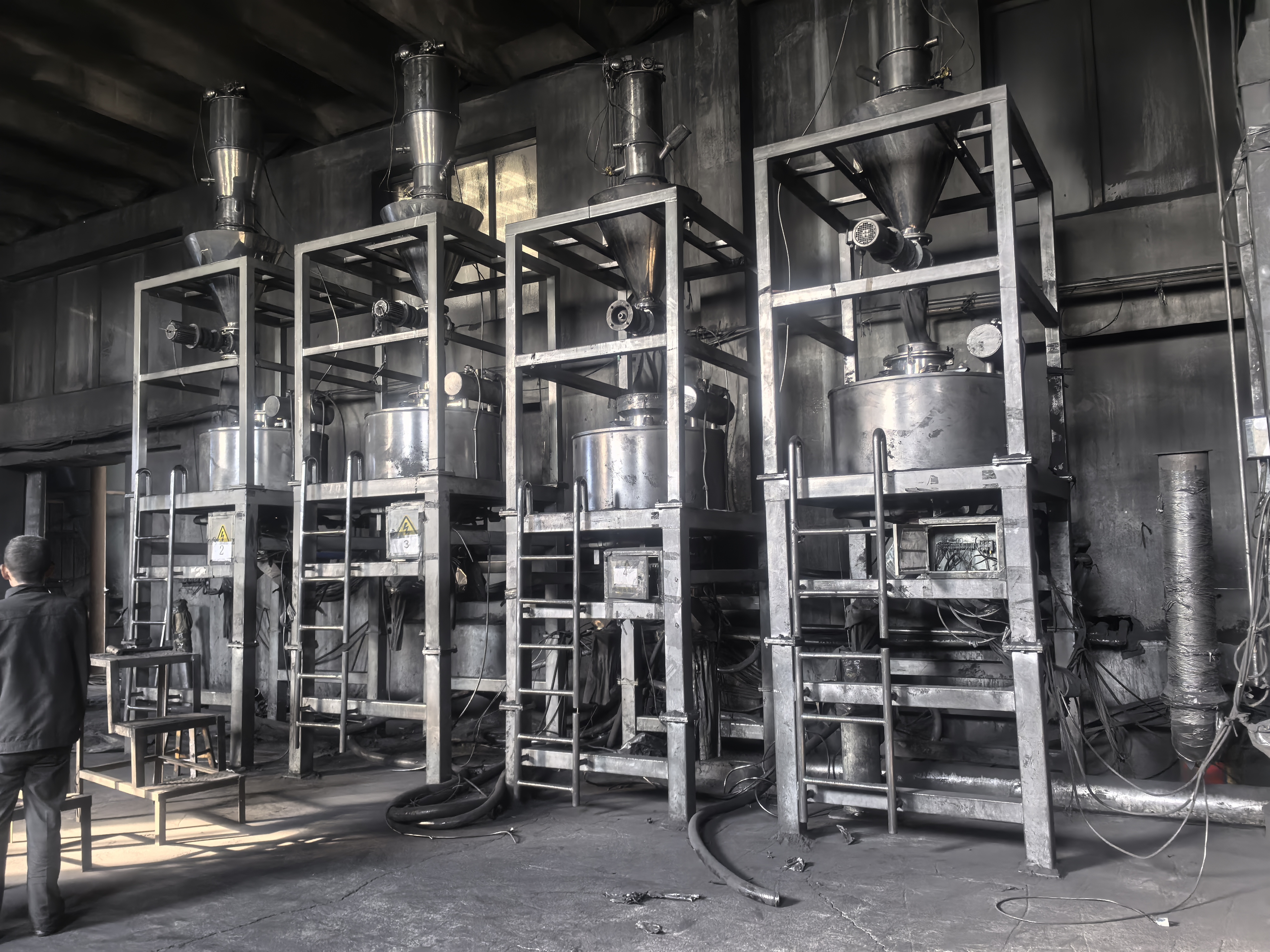
Multiple magnetic separator units staged in parallel, feeding a powder and slurry processing line.
Why "Strongest Magnet" Is the Wrong Starting Point
Buyers entering the Evaluation stage often begin with a Gauss value. That number is important, but it does not tell you whether a separator survives its line. A unit placed too far downstream in a dry powder stream will catch chips it was never sized to handle; a unit placed without cleaning access in a slurry line will trip on its own reject burden. Failure modes are almost never magnetic. They are about feed condition, installation geometry, and whether maintenance can reach the unit.
The right question is narrower: which separator setup is designed for the feed you actually run, at the installation point you actually control? The six setups below are ranked on that basis. Each is a verified product family in the portfolio of Weifang Yuansheng Magnetic Electromechanical Equipment Co., Ltd., a magnetic and electrical equipment manufacturer based in Linqu County, Weifang City, Shandong Province, China, producing permanent and electromagnetic separators for industrial iron removal.
Industry Background: Why Separator Choices Have Widened
The global magnetic separator market was estimated at USD 1,067.6 million in 2024, with Asia Pacific holding a 43.8% revenue share in the same year, according to Grand View Research (2026). That scale reflects how many industries now treat iron contamination as a process variable rather than a hygiene task: mineral powders, metallurgical feedstocks, ceramic slurries, and lithium battery materials each have a different tolerance for fine iron.
The specialization pressure is visible in the technology itself. High-gradient electromagnetic separation for lithium battery materials is generally understood to require magnetic field intensities above 16,000 to 20,000 Gauss, based on industry analysis cross-referenced with supplier technical catalogs. Buyers no longer source one universal magnet — they source several separators placed at different gates in the same plant.
How This Ranking Was Built
Each setup below was scored on the same six criteria:
- Feed state — dry powder, wet slurry, bulk belt material, granular pipe flow.
- Installation point — where the unit sits in the process flow.
- Cleaning access — manual, self-cleaning, or pneumatic reject handling.
- Operating environment — dust load, temperature, and continuous duty cycle.
- Control tier — whether automation is required for the line to keep running.
- Investment-to-duty match — whether the capex and maintenance track fit the iron burden.
Ranking is by application fit. Rank 1 is the setup that earns a position in the widest range of high-value powder and mineral lines. Rank 6 is the terminal polish that protects sensitive packaging and mixing equipment. Together, they describe where each family belongs.
Rank 1 — Dry Powder Electromagnetic Systems (YSDC / YSDCG, DCFJ, DCW)
Dry Powder Electromagnetic Systems
Best fit: dry, free-flowing powders where fine iron does not settle out of the stream.
Dry powder electromagnetic separators earn the top rank because they cover the largest share of high-value dry processing: battery materials, mineral fillers, ceramic powders, quartz, and similar streams where fine iron drifts alongside the product and cannot be caught by a passive grate at line speed. The YSDC Series Fully Automatic Integrated Dry Electromagnetic Powder Iron Removal System is the anchor platform, offered across YSDC-16 to YSDC-40 body sizes and multiple configuration suffixes (-TI, -T2, -G1, -G2). The smaller YSDCG Series Dry Electromagnetic Powder Iron Remover provides a compact powder-removal option, while the DCFJ and DCW dry powder electromagnetic separators are supplied in standard and high-magnetic-force versions — DCFJ-150, DCFJ-250, DCFJ-300 and the DCFJ-150H / DCFJ-250H / DCFJ-300H high-force variants.
Installation: vertical chutes, hoppers, or pneumatic powder transfer lines, and also in tandem where two stages of removal are needed.
Operating environment: captured within a closed powder path; the product family is described with high intensity, fully automatic operation, deep penetration, energy saving, and high-temperature resistance characteristics.
Verification: in a China glaze and clay slurry application, the platform achieved iron removal above 98%, final iron content below 5 ppm, and total impurities under 10 ppm, with a 15% recovery increase across 5–10-unit installations operating 1.5–5 years.
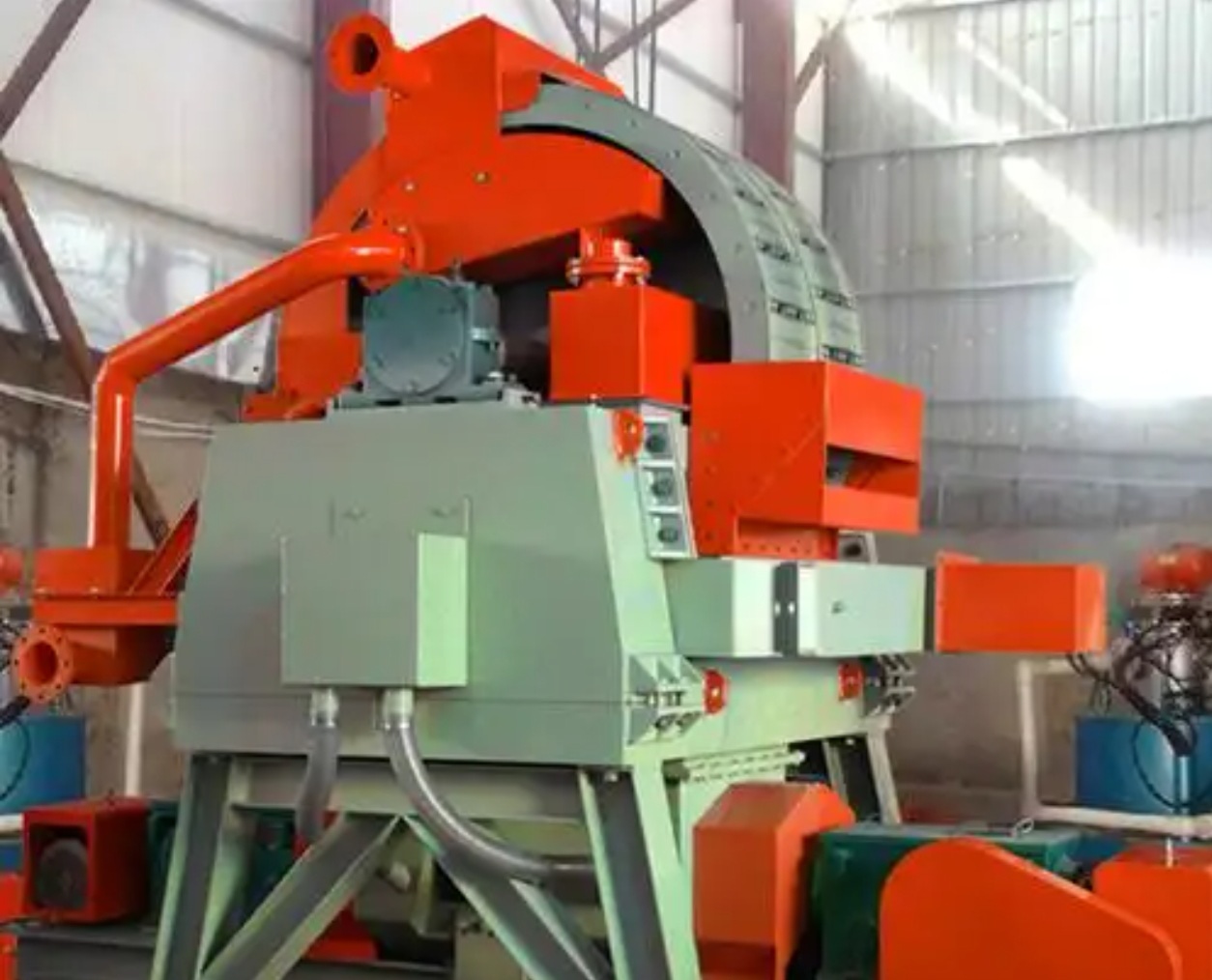
High-gradient electromagnetic separation staged for fine-iron removal in a mineral powder line.
Rank 2 — Wet Slurry Electromagnetic Units (YSDCS, Electromagnetic Slurry Iron Remover)
Wet Slurry Electromagnetic Units
Best fit: wet metallurgical and mineral slurries where fine iron rides with suspended solids.
Wet slurry separation ranks second because it is the step that cannot be replaced by a dry powder unit or a magnet over a conveyor. In ceramic glaze, clay slurry, quartz sand washing, and tailings recovery, iron does not sit on top of the feed — it moves inside the slurry. The YSDCS Series Wet Electromagnetic Slurry Iron Remover and the Electromagnetic Slurry Iron Remover (DNCXJ Series Wet Electromagnetic Separator) are designed for this condition. The YSDCS body sizes run from YSDCS-16 through YSDCS-40, with -T1, -T2, -G1 and -G2 variants to match various slurry circuits.
Installation: downstream of the slurry pump and upstream of the tank, filter press, or product storage stage.
Cleaning: electromagnetic slurry units flush iron in a controlled cycle; slurry handling must be planned into plant layout, not treated as an afterthought.
Evidence from application: in ceramic glaze and clay slurry processing, YSDC-stage deep purification reached iron removal greater than 98%, Fe below 5 ppm, and total impurities under 10 ppm, with a 15% recovery gain across 5–10 units running 1.5–5 years. That data point is directly relevant to any buyer evaluating a slurry line for the same product class.
Slurry-stage magnetic separation applied in mineral tailings recovery.
Rank 3 — Air-Cooled and Oil-Cooled Self-Cleaning Separators (RCDC, RCDF, RCDE)
Air-Cooled and Oil-Cooled Self-Cleaning Separators
Best fit: continuous high-tonnage conveyor lines where manual cleaning is not practical.
These units rank third because they are the difference between a plant that removes iron in production and a plant that stops to remove iron during production. The RCDC Series Air-Cooled Self-Cleaning Electromagnetic Separator (RCDC-5 to RCDC-20) and the RCDF Series Oil-Cooled Self-Cleaning Electromagnetic Separator (RCDF-5 to RCDF-20) are the two self-cleaning electromagnetic paths. The RCDE Series Oil-Cooled Suspended Electromagnetic Separator (RCDE-4 to RCDE-22) is a related oil-cooled suspended configuration for installations where the magnet is deployed above the belt rather than integrated into a self-cleaning belt loop.
Installation: mounted across or above a belt conveyor carrying ore, coke, sinter, limestone, coal or similar bulk streams, ahead of crushers, screens, or roller presses.
Cleaning: RCDC and RCDF apply self-cleaning discharge belts; RCDE is a suspended electromagnetic route and requires an iron-release routine.
Cooling decision: air-cooled routes fit installations with forced airflow and reasonable dust control; oil-cooled routes fit higher duty cycles or environments where air cooling would be pushed beyond its comfort range.
Rank 4 — Suspended Permanent Magnets (RCYB)
Suspended Permanent Magnets
Best fit: primary belts where large, coarse tramp iron must be caught before it reaches the crusher.
The RCYB Series Suspended Permanent Magnetic Separator (RCYB-4 to RCYB-16) ranks fourth because it does the least complicated job in the plant — catching large tramp iron above a primary conveyor — and it does it without external power, without a cooling circuit, and without a control cabinet. That simplicity is why it consistently earns a first position at the head of the line, even though it is not the deepest separator in the portfolio.
Installation: suspended above a belt conveyor at the head end of the line.
Cleaning: manual periodic removal is required, so access must be planned during layout rather than improvised after installation.
Why it still matters in a portfolio: capturing coarse iron at RCYB stage reduces downstream load on dry powder, wet slurry, and pipeline separators — a low-cost upstream defense that reduces operating risk for the more sensitive stages.
Rank 5 — Pipeline Separators (RCGZ, RCYA-5)
Pipeline Separators
Best fit: granular or light powder flows in a gravity chute or transfer pipe.
Pipeline separators rank fifth because they fill the gap between an overbelt magnet and a full powder or slurry system. The RCGZ Series Self-Cleaning Pipeline Permanent Magnetic Separator (RCGZ-100 to RCGZ-1000) is designed for in-line placement with a self-cleaning discharge, and the compact RCYA-5 In-Line Permanent Magnetic Separator is a direct-install option for smaller pipe diameters.
Installation: vertical or inclined pipe runs, gravity chutes, and transfer points where a hopper-style separator is not practical.
Cleaning: RCGZ is set up for self-cleaning; RCYA-5 is a compact direct solution for simpler circuits.
Trade-off: pipeline separators protect the flow path, but they do not replace a full dry powder electromagnetic stage where fine iron is dominant. Where fine iron persists downstream of a pipeline or grate separator, the correct response is a powder electromagnetic upgrade, not a larger permanent magnet.

Powder processing magnetic separator staged in a mineral powder production line.
Rank 6 — Magnetic Grates and Drawer Magnets
Magnetic Grates and Drawer Magnets
Best fit: terminal protection of powder lines, hopper outlets, and packaging stations.
Grates and drawer magnets rank sixth because they are polishing equipment, not primary iron-removal equipment. The Magnetic Bar / Magnetic Grate (Magnetic Frame) and the Drawer Magnetic Separator / Drawer Magnet / Magnetic Drawer Filter are installed at hopper outlets, mixing inlets, bulk bag discharges, and packaging stations to catch small residual iron before final product or sensitive equipment. They are inexpensive, easy to access, and highly effective in their role — but they are not designed to absorb a high-throughput tramp-iron load, and they should not be sized as if they were.
Installation: hopper throat, vibratory screen deck, packaging inlet.
Cleaning: ordinary, easy-clean, single-layer, multi-layer, square, and round formats are available to match inspection routines.
Where they fall short: a drawer magnet is a practical final line of defense; a fine-iron stream that continues to survive downstream of a drawer magnet usually indicates the plant needs a dry powder electromagnetic stage or a wet slurry stage, not a larger drawer.
Step-by-Step: How to Place Six Separator Setups Correctly
Step 1 — Classify the feed state
Dry powder, wet slurry, bulk belt, granular pipe. Each setup above maps to one primary feed state. A plant that runs both dry and wet streams needs two setups, not one oversized unit.
Step 2 — Fix the installation point
Overbelt positions (RCYB, RCDC, RCDF, RCDE) are placed before size-reduction equipment; powder electromagnetic systems (YSDC/YSDCG, DCFJ, DCW) sit downstream of the powder source and before product storage; slurry stages (YSDCS, Electromagnetic Slurry Iron Remover) sit downstream of the slurry pump; pipeline separators (RCGZ, RCYA-5) sit inside the transfer pipe; grates and drawers sit at the last gate before packaging.
Step 3 — Confirm cleaning access
Self-cleaning configurations reduce manual intervention; manual configurations need planned clearance and a removal route for the captured iron. Both are valid — they must simply match labor and inspection assumptions.
Step 4 — Match ambient conditions
Air-cooled versus oil-cooled, dry versus wet, and high-temperature versus ambient feed are engineering choices, not marketing choices. The application family behind the YSDC/YSDCG and YSDCS platforms is described with high-temperature resistance and energy-saving characteristics, which matters on mineral and ceramic lines that run hot.
Step 5 — Confirm customization fit
Magnetic field strength, size, voltage, material, logo, and color are all customizable under OEM/ODM arrangements, with a monthly production capacity of 300 units and a minimum order of one unit. That flexibility matters when a plant needs a manufacturer to match an existing line rather than the other way around.
Step 6 — Verify with a sample or a reference case
Qualification-stage buyers should request a trial configuration against the target feed. The verified ceramic glaze and clay slurry application — iron removal above 98%, Fe under 5 ppm, impurities under 10 ppm, and 15% recovery gain — is the closest reference class for wet and powder streams in minerals and ceramics.
Use Cases: Where Each Setup Wins in Energy, Metallurgy and Minerals
The pattern is not one separator per plant; it is a chain. A realistic mineral processing plant might place an RCYB at the head of a coarse conveyor, follow it with an RCDC or RCDF self-cleaning separator across the main belt, run a YSDC or YSDCG powder stage on the finished dry product, install YSDCS where a wet slurry stream exists, and finish with a drawer magnet before packaging. That is the chain a buyer should model before comparing quotes.
Verified application — ceramic glaze and clay slurry iron removal: iron removal greater than 98%, final iron content below 5 ppm, total impurities below 10 ppm, safe operation, and a 15% recovery increase. Deployed across 5, 8, 4, 6, and 10-unit configurations, operating between 1.5 and 5 years. Documented equipment characteristics include high intensity, fully automatic operation, deep penetration, energy saving, and high-temperature resistance. Served industries include ceramic processors, battery material manufacturers, quartz sand plants, foundries, and steel plants.
Tailings recovery magnetic separator staged for mineral slurry processing.
Comparison Table: The Six Setups Side by Side
| Rank | Setup | Primary Feed State | Installation Point | Cleaning / Automation | Typical Industry Role |
|---|---|---|---|---|---|
| 1 | YSDC / YSDCG, DCFJ, DCW — Dry Powder Electromagnetic Systems | Dry free-flowing powders | Powder chute, hopper, pneumatic transfer | Fully automatic; compact drying and high-force variants available | Deep fine-iron removal on battery, mineral, ceramic powders |
| 2 | YSDCS, Electromagnetic Slurry Iron Remover | Wet slurries | Downstream of slurry pump | Electromagnetic reject cycle | Glaze, clay, quartz, tailings slurry purification |
| 3 | RCDC, RCDF, RCDE — Air-Cooled and Oil-Cooled Self-Cleaning | Bulk conveyor feed | Across main belt, before crushers | Self-cleaning discharge belt (RCDC / RCDF); suspended oil-cooled route (RCDE) | Continuous high-tonnage tramp-iron removal |
| 4 | RCYB — Suspended Permanent Magnet | Bulk conveyor feed | Head of primary conveyor | Manual removal; no power required | Coarse tramp iron capture before size reduction |
| 5 | RCGZ, RCYA-5 — Pipeline Separators | Granular / light powder | Inside transfer pipe or gravity chute | Self-cleaning (RCGZ); compact direct (RCYA-5) | In-line protection between transfer points |
| 6 | Magnetic Grate, Drawer Magnet | Powder at final gate | Hopper outlet, packaging inlet | Manual; easy-clean, multi-layer options | Terminal polish before packaging / sensitive equipment |
FAQ: Evaluating a Ranked Separator Setup
Can the setups in this ranking be supplied with regional compliance documentation?
Weifang Yuansheng holds ISO 9001:2015 certification (certificate 78323Q00343R0S, standard GB/T19001-2016/ISO9001:2015, issued by POCNC / Zhongliang Certification (Shandong) Co., Ltd., valid 2023-10-07 to 2026-10-06), covering production of separators, magnetic separators, and demagnetizers. For EU/EEA markets, a Machinery Directive Attestation of Conformity is held for the RCYB/RCDB/RCDD/RCYD/MW series (certificate M.2025.206.C119055, standards EN ISO 12100:2010 and EN 60204-1:2018, issued by UDEM, valid 2025-05-19 to 2030-05-18). Buyers should request the certificate that matches the exact model and destination market.
Can the six setups be customized to a specific powder, slurry, or belt condition?
Yes. The manufacturer offers OEM/ODM customization across magnetic field strength, size, voltage, material, logo, and color, with a monthly production capacity of 300 units. The YSDC platform provides YSDC-16 to YSDC-40 body sizes and -TI, -T2, -G1, -G2 variants; the RCDA/RCDB/RCDC/RCDF/RCDE families cover sizes 4 through 22. Buyers should specify rated throughput, particle size, temperature, and installation geometry when requesting a configuration.
Why does the ranking place dry powder and wet slurry electromagnetic systems ahead of a suspended permanent magnet if the latter is so common?
Because the ranking is by application fit, not by magnetic strength. An RCYB suspended permanent magnet earns its place as a simple, unpowered first line of defense against coarse tramp iron. But it cannot meet the fine-iron requirement of a battery material or ceramic slurry stream. High-value powder and slurry lines depend on electromagnetic powder or slurry stages, and the verified reference case in glaze and clay slurry — iron removal above 98%, Fe below 5 ppm, impurities below 10 ppm, and a 15% recovery gain — demonstrates why those platforms anchor the top of the ranking rather than the bottom.
How can a buyer verify fit before ordering a full configuration?
Sampling and trial configuration are practical at the Evaluation stage. The manufacturer accepts orders from one unit and performs 100% inspection before shipment, which allows a single-stage trial ahead of a full line order. Buyers should supply a representative feed sample against the intended separator stage and confirm the reference case in the closest industry class — for wet or powder streams in minerals and ceramics, the glaze and clay slurry application is the closest documented class.
What lead time and warranty apply to a configured industrial magnetic separator order?
Standard lead time is 30–45 days depending on model and customization level, against a monthly capacity of 300 units. After-sales support includes remote support, spare parts supply, and a 12-month warranty. A publicly downloadable product brochure is available for buyers who want the full model list before quoting. To move from evaluation to a quote, the fastest next step is to send the feed condition, installation point, and cleaning access to the manufacturer's team at www.iron-separator.com.
Conclusion: Rank Each Setup by Where It Belongs, Not How Strong It Claims to Be
The six configurations ranked above are not competitors — they are a chain. The correct buying decision is not to pick the strongest magnet in the catalog, but to place each separator where its feed state, installation geometry, and cleaning routine actually match the process. Rank 1 (YSDC/YSDCG, DCFJ, DCW dry powder electromagnetic) and Rank 2 (YSDCS and the Electromagnetic Slurry Iron Remover) carry the deepest separation duty on the most sensitive lines. Rank 3 (RCDC, RCDF, RCDE) keeps high-tonnage belts running without manual intervention. Rank 4 (RCYB) provides an economical first gate. Rank 5 (RCGZ, RCYA-5) covers the transfer pipe. Rank 6 (grate and drawer) protects the final package. A plant that thinks in that chain spends less per ton of iron removed than a plant that buys one oversized unit and keeps cleaning it.
Move from Ranking to a Quoted Configuration
Send the feed state, the installation point, and the cleaning access you actually have — the manufacturer will map it to the correct separator stage and return a configuration.
Request a Quote or Sample ReviewDownload the product brochure: Magnetic Separator Catalog (PDF) · Email: ys@iron-separator.com · Tel: +86 155-5366-8212
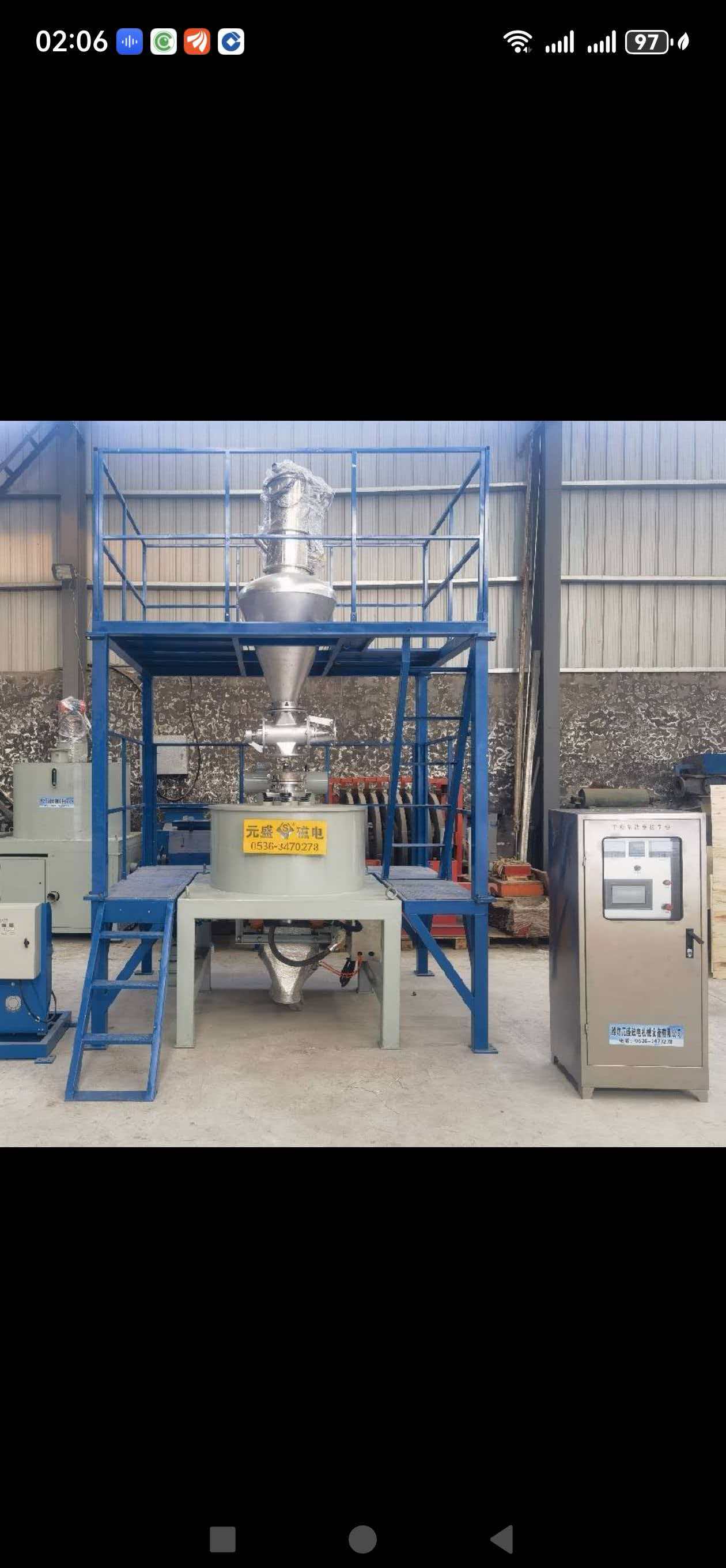
Powder-line magnetic separator installed as a final-stage iron removal gate.
Have Questions or Need More Details?
Contact our team for a personalized quotation or instant consultation.
Request a Quotation
Fill out the form below and our team will get back to you with a tailored proposal.
WhatsApp Direct Chat
Prefer to chat in real-time? Message us on WhatsApp for instant assistance & quick answers.
- Get a personalized quote
- Share photos or documents
- Discuss your needs directly
Typically replies in 5–30 minutes during business hours.