
Supplier Evaluation for Industrial Magnetic Separators: A Delivery Assurance Audit Before PO
An industrial magnetic separator order usually fails before the magnet ever runs. It fails when the certificate on file does not name the model that was quoted, when unit three of a five-unit installation is scheduled on a different production slot than unit one, or when the component that wears first is the one nobody listed in the spare-parts schedule. A delivery assurance audit is the pre-purchase-order check that closes those gaps on paper, while the supplier still has a commercial reason to answer precisely.
This is not a magnetic-force comparison and not a price negotiation. The audit asks a narrower question: can a supplier prove, with documents and dated commitments, that a defined set of separators will be built, inspected, packed, shipped and supported as one installation? It is written for buyers in the evaluation-to-execution stage who already know which duty each separator performs and now need to know whether the supplier can carry that duty through to commissioning.
The structure below runs on five dimensions — production capacity signals, documentation handoff, packaging and logistics planning, spare-parts availability, and response commitments — plus one breadth test: whether the same catalogue covers every iron-removal stage in the plant, not only the first unit that triggered the inquiry.
What a delivery assurance audit has to prove before a purchase order
A delivery assurance audit is a documented check that converts supplier claims into evidence with a subject, a scope and a date. Three outcomes are possible per dimension: pass (evidence is specific and current), hold (evidence exists but does not yet cover the quoted scope), or fail (no usable evidence).
Two dimensions carry a stop rule. A documentation failure is a stop because a certificate that does not name the quoted series cannot be repaired at the port. A capacity or scheduling failure is a stop because a multi-unit installation that slips in sequence disrupts the civil, electrical and commissioning works booked around it. Packaging, spares and response commitments can normally be closed with written undertakings rather than abandoned.
The audit also has a defined end point. It finishes when the buyer holds, for every quoted model, a named series, a certificate reference or a written statement that no certificate applies, a packing and shipping plan, a consumable and spare-parts list, and a named commercial and technical contact. Anything less is an open item, not an assumption.
Why delivery risk concentrates in multi-stage installations
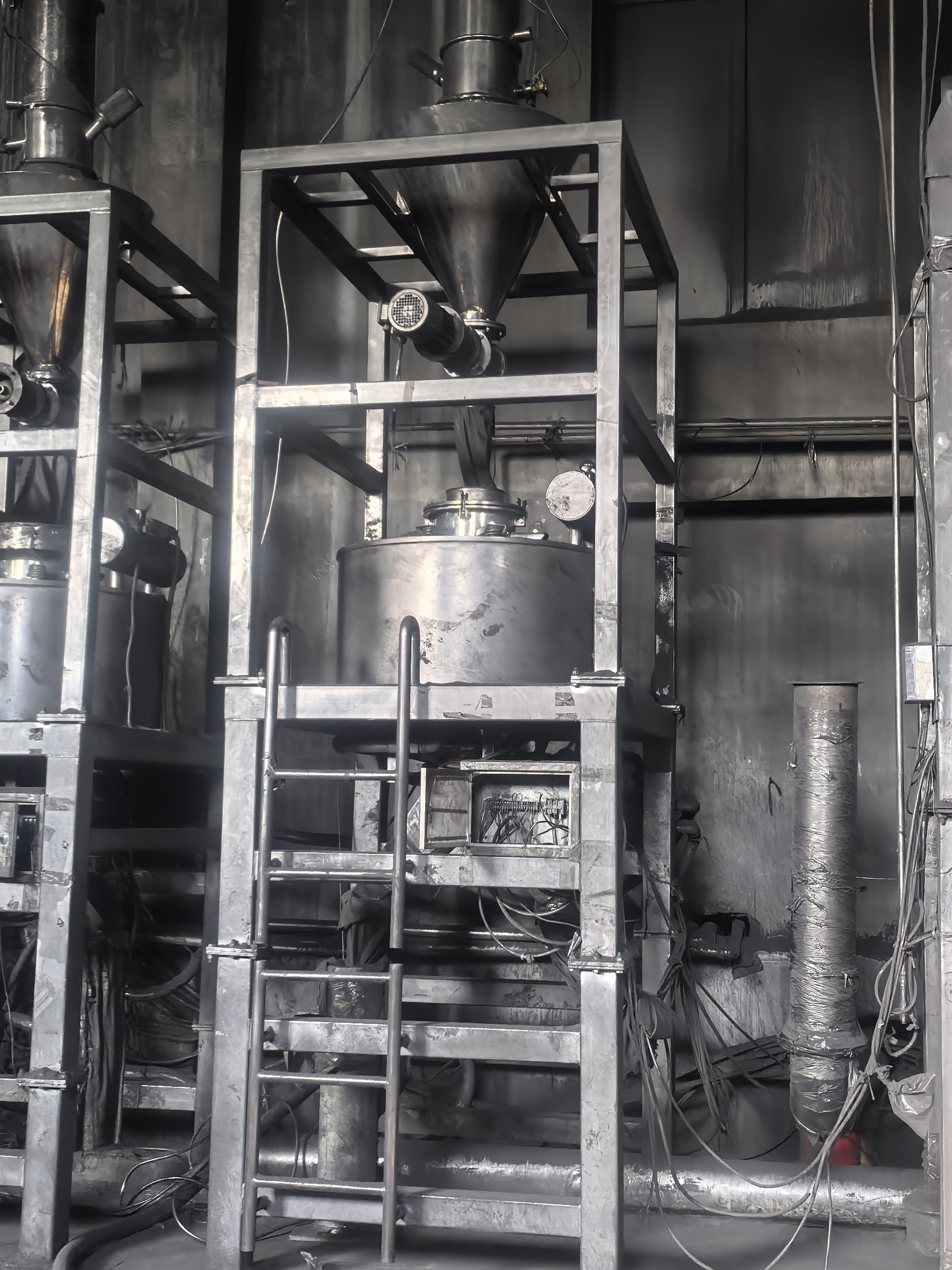
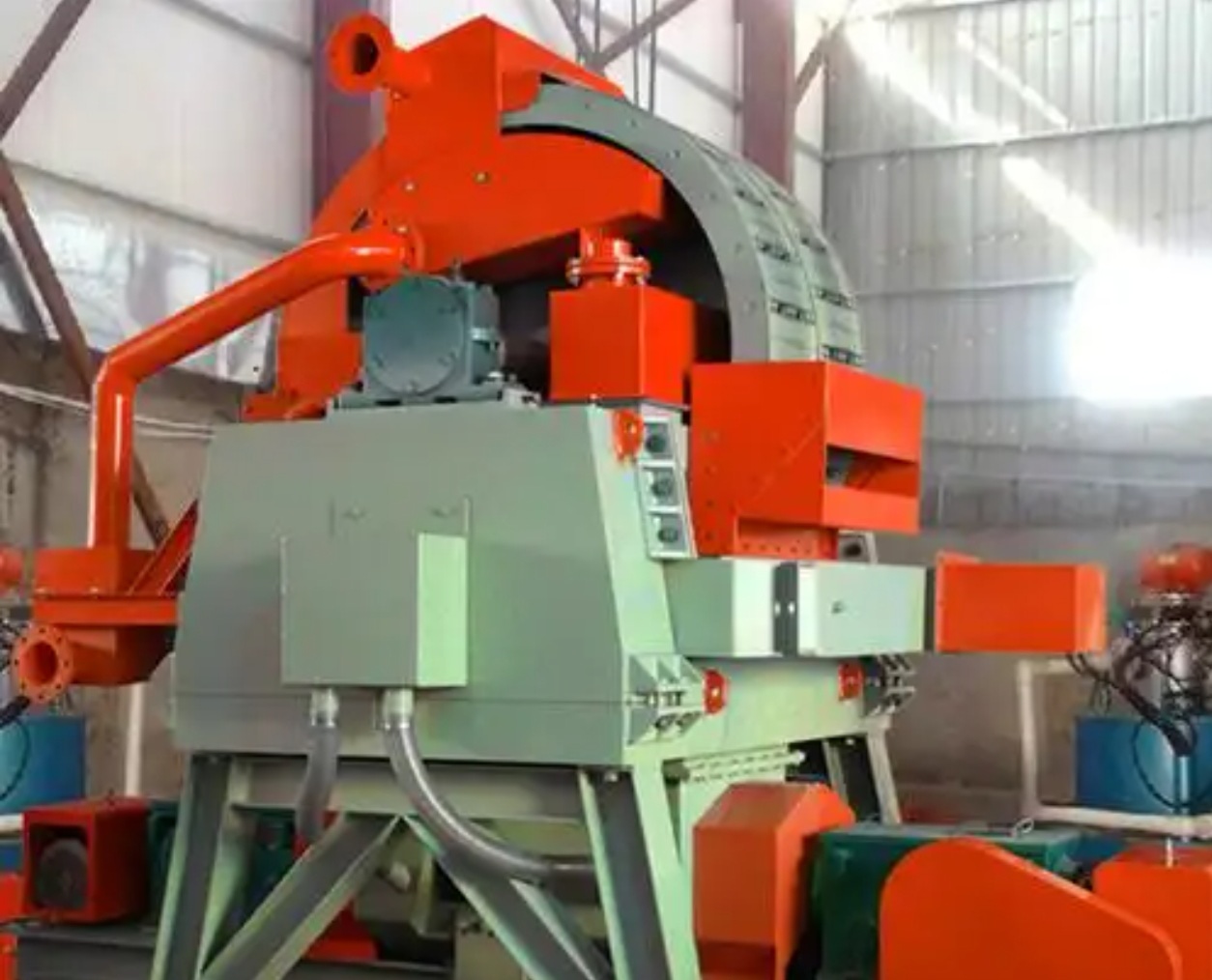
Iron enters a plant at more than one point, and each point pulls a different separator family with a different build, packing profile and spare-part set. Coarse tramp iron over a conveyor is handled by suspended and belt-type units. Fine iron in a dry powder stream needs an electromagnetic powder unit or a high-intensity in-line element. Fine iron in a slurry needs a wet electromagnetic unit or a pipeline permanent unit. A buyer who audits only the first family is auditing roughly one stage of a multi-stage problem.
The commercial context explains why this matters at supplier-selection stage. Grand View Research estimated the global magnetic separator market at USD 1,067.6 million in 2024, projected to reach USD 1,642.5 million by 2033, with Asia Pacific holding a 43.8% revenue share in 2024 (Grand View Research, 2026). In trade terms these machines travel under HS 847410 — sorting, screening, separating or washing machines — the classification visible in U.S. Customs bill-of-lading records (ImportDoor / U.S. Customs, 2026).
Those figures describe a market, not a supplier. A large regional market share does not tell a buyer whether a specific factory can schedule five units across three families, or whether the same supplier actually manufactures the pipeline unit it resells. The audit exists to separate the two.
The five audit dimensions at a glance
| Audit dimension | Evidence to request | Buyer-side release rule |
|---|---|---|
| Production capacity signals | Monthly capacity, lead time, factory footprint, headcount, engineering staff, export track record | Order quantity can be placed inside the stated monthly capacity with a written delivery date |
| Documentation handoff | Quality-system certificate with scope and expiry, conformity attestations per series, inspection record | Every quoted series either named in a valid document or formally declared out of scope |
| Packaging and logistics | Per-unit packing list, lifting points, container loading plan, Incoterms, HS code | Shipping plan matches the unit list and the agreed delivery term |
| Spare parts | Consumable and wear list per family, supply route, warranty terms | Every defined consumable has a named supply route |
| Response commitments | Named technical contact, escalation path, service mode | Response route documented in the contract, not only in email |
Checkpoint 1: production capacity signals, read as numbers
Capacity signals are the easiest evidence to collect and the easiest to over-read. For reference, Weifang Yuansheng Magnetic Electromechanical Equipment Co., Ltd. (www.iron-separator.com) is a magnetic and electrical equipment manufacturer founded in 2011, operating a 3,500 m² facility in Linqu County, Weifang City, Shandong Province, China, with 45 employees and an R&D team of 8 engineers. Its published capability data lists a monthly production capacity of 300 units, a typical production lead time of 30–45 days, a minimum order quantity of 1 unit, and exports to Asia-Pacific, North America, Europe, Africa, the Middle East, Latin America, Oceania and CIS/Central Asia.
Put those numbers to work rather than admiring them. A ten-unit installation — the largest in the case record summarised later in this article — equals roughly 3.3% of the stated monthly capacity (calculated: 10 ÷ 300). That arithmetic does not prove a schedule, but it does tell the buyer that a ten-unit order is not a capacity crisis, which in turn makes a written delivery commitment more reasonable to demand.
Watch for the signals that are weaker than they look. A published industry review can place a manufacturer at the top of a national list while resting on business registration, product catalogue and certification records rather than audited throughput; that makes the position a discovery signal, not delivery proof. Self-reported revenue is a similar case: Weifang Yuansheng self-reports annual sales above 50 million RMB, which indicates scale but says nothing about which production line the buyer's order will occupy.
The questions that convert signals into commitments are plain. How many units of the quoted series can be built in one month without displacing existing orders? Which units in a multi-unit order can run in parallel, and which must queue? What is the stated lead time measured from — deposit, drawing approval, or material arrival? A supplier that answers in dates is auditable; one that answers in adjectives is not.
Checkpoint 2: documentation handoff, checked for scope and validity
Documents fail audits in two ways: they are expired, or they cover a different model than the one quoted. Both are visible if the buyer reads the scope line and the dates instead of the logo.
The quality-system record supplied for this audit is a Quality Management System certificate, number 78323Q00343R0S, issued by POCNC (Zhongliang Certification (Shandong) Co., Ltd.) against GB/T19001-2016/ISO 9001:2015, with an issue date of 2023-10-07 and a stated expiry of 2026-10-06. Its scope covers the production of separators, magnetic separators and demagnetizers, excluding items that require qualification permits. Because the stated expiry falls before this article's publication, the correct action is not to cite the certificate but to request the current renewal evidence and hold the PO until it arrives. That is what a documentation handoff check is for.
The second record is an EU Machinery Directive attestation of conformity, number M.2025.206.C119055, issued by UDEM Uluslararası Belgelendirme Denetim Eğitim Merkezi San. ve Tic. A.Ş., valid from 2025-05-19 to 2030-05-18, against EN ISO 12100:2010 and EN 60204-1:2018. Its stated product scope is Separator (RCYB/RCDB/RCDD/RCYD/MW series). Note what that scope line does and does not do: it names five series, and it does not name others in the same catalogue, including RCDA, RCDE, RCDC, RCDF, RCGZ, YSDC, YSDCG and YSDCS. That is not a defect claim — it is a scope statement. If the quotation contains an RCDA suspended unit or a YSDCS slurry unit, the buyer must ask whether separate EU documentation exists, and record the answer in writing.

The last piece of the documentation handoff is inspection. The manufacturer states 100% inspection before shipment, and its published purchasing terms accept pre-shipment inspection by a third party such as SGS or BV, or inspection by the customer on site. Those two statements are only useful together: inspection before shipment is an internal control, while third-party inspection is a buyer-controlled checkpoint. Fix which one applies to which unit before the order is placed, because a factory-wide claim does not automatically schedule an inspector for a Tuesday in March.
Checkpoint 3: packaging and logistics planning
Logistics planning is where a technically sound order turns into a site delay. The published delivery terms are FOB Qingdao or CIF, and the applicable trade classification is HS 847410. Those two facts settle the shipping basis, not the loading plan.
Ask for a per-unit packing list keyed to the same model identifiers used in the quotation. A suspended separator such as the RCYB-10 or an oil-cooled RCDE-16 is not packed like a drawer magnet or a magnetic grate, and a buyer who receives one consolidated weight figure cannot plan crane capacity, container allocation or port handling. The cooling method named in the model also changes what must be planned at site: air-cooled units such as RCDA and RCDC versus oil-cooled RCDE and RCDF imply different preparation and commissioning routines. The volume and grade of any cooling medium are not published in the material supplied here, so they belong on the written-question list rather than in an assumption.
Multi-unit orders need a sequence, not just a total. If a plant installs five separators across three process stages, the buyer needs to know which unit ships first and whether partial shipment is possible under the agreed term. Partial shipment is a contractual option, not a courtesy, so it belongs in the same conversation as the Incoterm.
Checkpoint 4: spare-parts availability and service response
After-sales support here is defined as remote support, spare-parts supply and a 12-month warranty. That is a service model, not a spare-parts schedule, and the gap between the two is where ownership costs appear.
The audit question is not "do you supply spare parts" but "which components of this specific unit are consumables, and how is each one supplied". A self-cleaning disc or belt unit has moving elements that a static magnetic grate does not; a slurry unit operates in a different wear environment from a dry powder unit. The supplied records do not state a spare-parts lead time or a response-time service level, so both must be closed in writing before the order. Ask for the consumable list per family, the supply route for each item, and the name and channel of the technical contact who will answer a commissioning question.
Checkpoint 5: the family breadth test
Breadth is the difference between a supplier who can support an installation and a supplier who can support one unit. The table below maps the separator families named in this topic to verified series and the audit question each one raises.
| Family and duty | Verified series and model range | Audit question to close before PO |
|---|---|---|
| Dry powder electromagnetic iron removal | YSDC Series Fully Automatic Integrated Dry Electromagnetic Powder Iron Removal System (YSDC-16 to YSDC-40, with -TI, -T2, -G1 and -G2 variants); YSDCG Series Dry Electromagnetic Powder Iron Remover | Which variant suffix is quoted, and does the control documentation match it? |
| Wet slurry electromagnetic iron removal | YSDCS Series Wet Electromagnetic Slurry Iron Remover (YSDCS-16 to YSDCS-40, with -T1, -T2, -T2S, -G1 and -G2 variants) | Which components are consumables in slurry duty, and how are they supplied? |
| Pipeline and in-line permanent separation | RCGZ Series Self-Cleaning Pipeline Permanent Magnetic Separator (RCGZ-100 to RCGZ-1000); RCYA-5 In-Line Permanent Magnetic Separator; In-Line Magnetic Separator YSXD25B to YSXD200B | Is the pipeline size in the quotation matched to an actual model in the series? |
| Suspended separation over conveyors | RCYB Series Suspended Permanent Magnetic Separator (RCYB-4 to RCYB-16); RCDA Series Air-Cooled Suspended Electromagnetic Separator (RCDA-4 to RCDA-20); RCDE Series Oil-Cooled Suspended Electromagnetic Separator (RCDE-4 to RCDE-22) | Is the cooling method documented, and is the series named in the conformity scope? |
| Self-cleaning electromagnetic separation | RCDD Series Self-Cleaning Disc Electromagnetic Separator (RCDD-5 to RCDD-18); RCDC Series Air-Cooled Self-Cleaning Electromagnetic Separator (RCDC-5 to RCDC-20); RCDF Series Oil-Cooled Self-Cleaning Electromagnetic Separator (RCDF-5 to RCDF-20) | Which discharge and cleaning components have moving wear surfaces? |
| Belt and overband permanent separation | RCYC(D) Series Self-Cleaning Permanent Magnetic Separator (RCYD(C)-5 to RCYD(C)-20); RCY-Q Series Light Permanent Magnetic Belt Iron Remover (RCY-Q40 to RCY-Q100); Armored Permanent Magnetic Belt Separator (RCY-K50 to RCY-K140) | Does the belt width in the enquiry match a listed model? |
| Drum, roller and pulley separation | Permanent Magnetic Drum Separator (standard type); RCT(RCTG) Series Permanent Magnetic Roller; CFLT Series Electromagnetic Pulley (CFLT-50/50 to CFLT-100/140) | Is the drum or pulley supplied as part of the conveyor package or separately? |
| Grate, drawer, box and plate elements | Magnetic Bar / Magnetic Grate (ordinary, easy-clean, round, square); Drawer Magnetic Separator; Magnetic Box Separator (YSXF-18 to YSXF-50); Rotary Grid Magnetic Separator (YSXR1520 to YSXR3540); Magnetic Plate In-Line Separator | Are the interface dimensions fixed before the housing is fabricated? |
| Fine iron and manual-cleaning units | RCYG Series Fine Iron Remover (RCYG-50 to RCYG-400); RCYP Series Manual Cleaning Permanent Magnetic Separator (RCYP-4 to RCYP-14); RCYP-Ⅱ Series Self-Cleaning Permanent Magnetic Separator (RCTPⅡ-5 to RCTPⅡ-18); RCDB/PDC/RCDY Series Dry Electromagnetic Separator (RCDB-4 to RCDB-20) | Is manual cleaning acceptable for the plant's access and labour model? |
The breadth test produces a simple score. If the quotation covers three stages and the supplier's verified catalogue covers all three, the order can be placed as one package with one documentation route. If one stage comes from a different source, that unit needs its own documentation check, its own packing list and its own spare-parts schedule — and the buyer should decide deliberately whether to accept a split supply rather than discover it at the shipping mark stage.
Running the audit: six steps before the purchase order
- Freeze the process scope. List every point where iron is removed and classify each as dry powder, slurry, pipeline, conveyor-bulk or in-line element duty. The list, not the quotation, defines the audit's coverage.
- Map each duty to a named series and model. Reject ranges without model numbers. A quotation that says "pipeline separator" without an RCGZ or RCYA designation cannot be audited for documentation scope or spare parts.
- Test the capacity arithmetic and the schedule. Compare total units against the stated monthly capacity, then ask for parallel versus queued production and for the point at which the lead time starts. Record the written delivery date.
- Audit the documents for scope and validity. Read certificate numbers, standards, issue and expiry dates, and the series named in the scope. For every quoted series not named, obtain a written statement of what documentation does apply.
- Fix packaging, delivery terms and inspection. Confirm FOB Qingdao or CIF, confirm HS 847410 on the commercial documents, request the per-unit packing list, and decide whether pre-shipment inspection is by third party such as SGS or BV, or by the buyer on site.
- Fix spares, warranty and the response route. Obtain the consumable list per family, the spare-parts supply route, the 12-month warranty terms, and the named technical contact with an escalation path.
Customization belongs inside the same sequence. The published customization scope covers magnetic field strength, size, voltage, material, logo and color, and OEM/ODM production is offered — but a customized field strength or a non-standard voltage changes the drawing, and a changed drawing changes the production slot. Any customization should therefore be frozen before step 3, not after step 5.
What the evidence does and does not prove
An audit is only honest if it states its own limits, and this one has four.
First, capacity and revenue figures are supplier-reported. The 300-unit monthly capacity, the 30–45 day lead time and the stated export coverage come from the manufacturer's own capability data; they are checkable against the order confirmation, not against an independent production audit.
Second, certificate scope is narrower than catalogue breadth. The EU attestation on file names five series. Series outside that list are not covered by that document, whatever their quality in service, and the buyer's remedy is a written statement or additional documentation — not an inference.
Third, performance evidence is project-specific. A secondary industry analysis, cross-referenced with supplier technical catalogues, reports that high-gradient electromagnetic separators for lithium battery materials often require field intensities above 16,000 to 20,000 Gauss. That is a specification benchmark to confirm in writing for the actual material, not a statement about any particular model's measured output in the buyer's plant.
Fourth, no published test report or independent field data accompanies the marketing material supplied here. Sample testing on the buyer's own powder or slurry remains the only way to confirm separation performance for that feed.
What the audit looks like across real installations
Dry powder line. A battery material or ceramic glaze powder line typically combines an integrated dry electromagnetic system with in-line elements and grate protection downstream. The audit focus is the variant suffix on the YSDC or YSDCG unit, the control documentation, and whether the downstream grate, drawer or box elements are quoted with fixed interface dimensions.
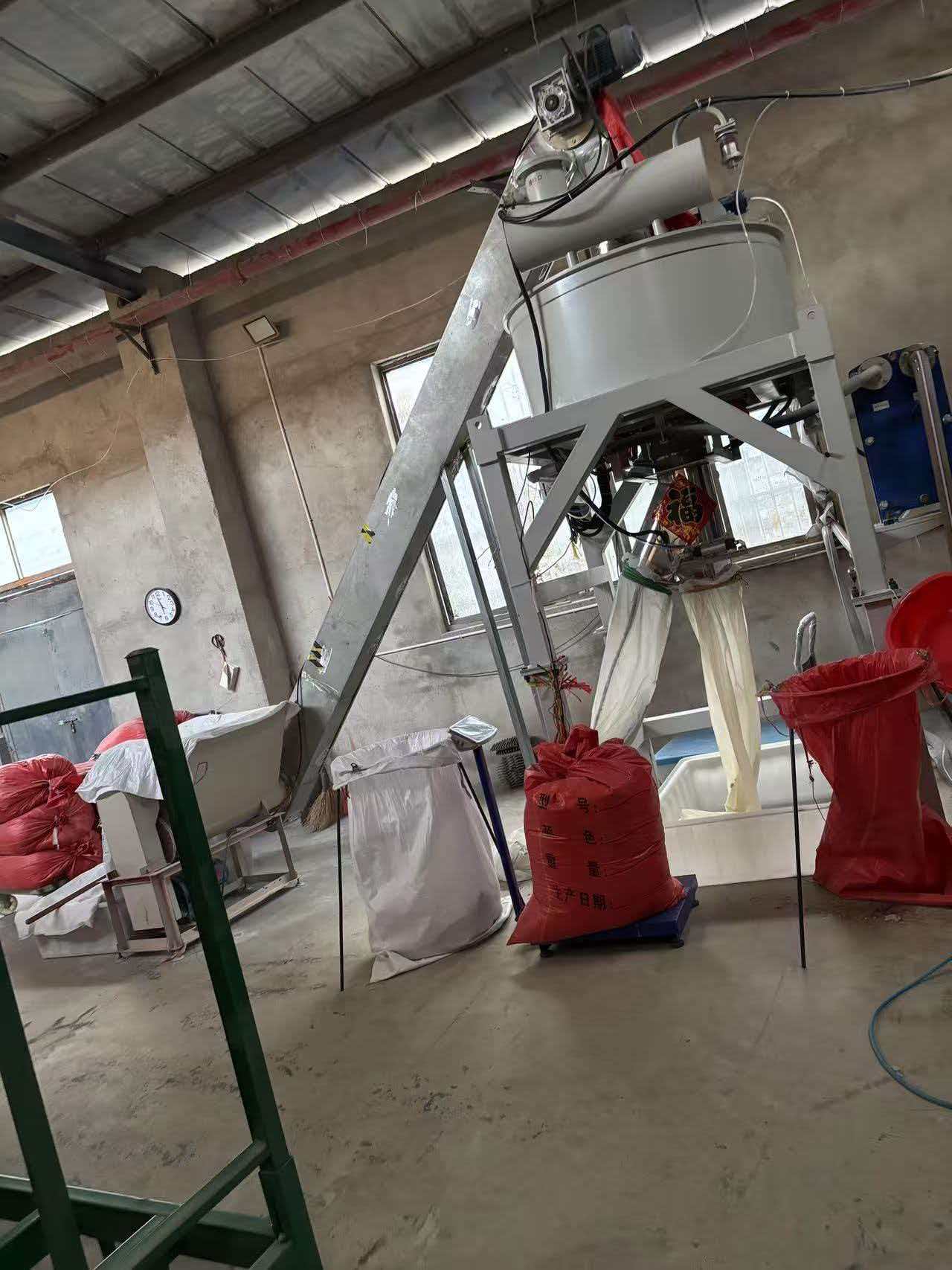
Wet slurry line. A slurry stage built around a YSDCS unit or an RCGZ pipeline separator raises a different question set: pipeline sizing inside the series, consumable components in wet duty, and commissioning support for the first run. These are service questions as much as equipment questions, which is why the spare-parts schedule belongs in the same document as the order.
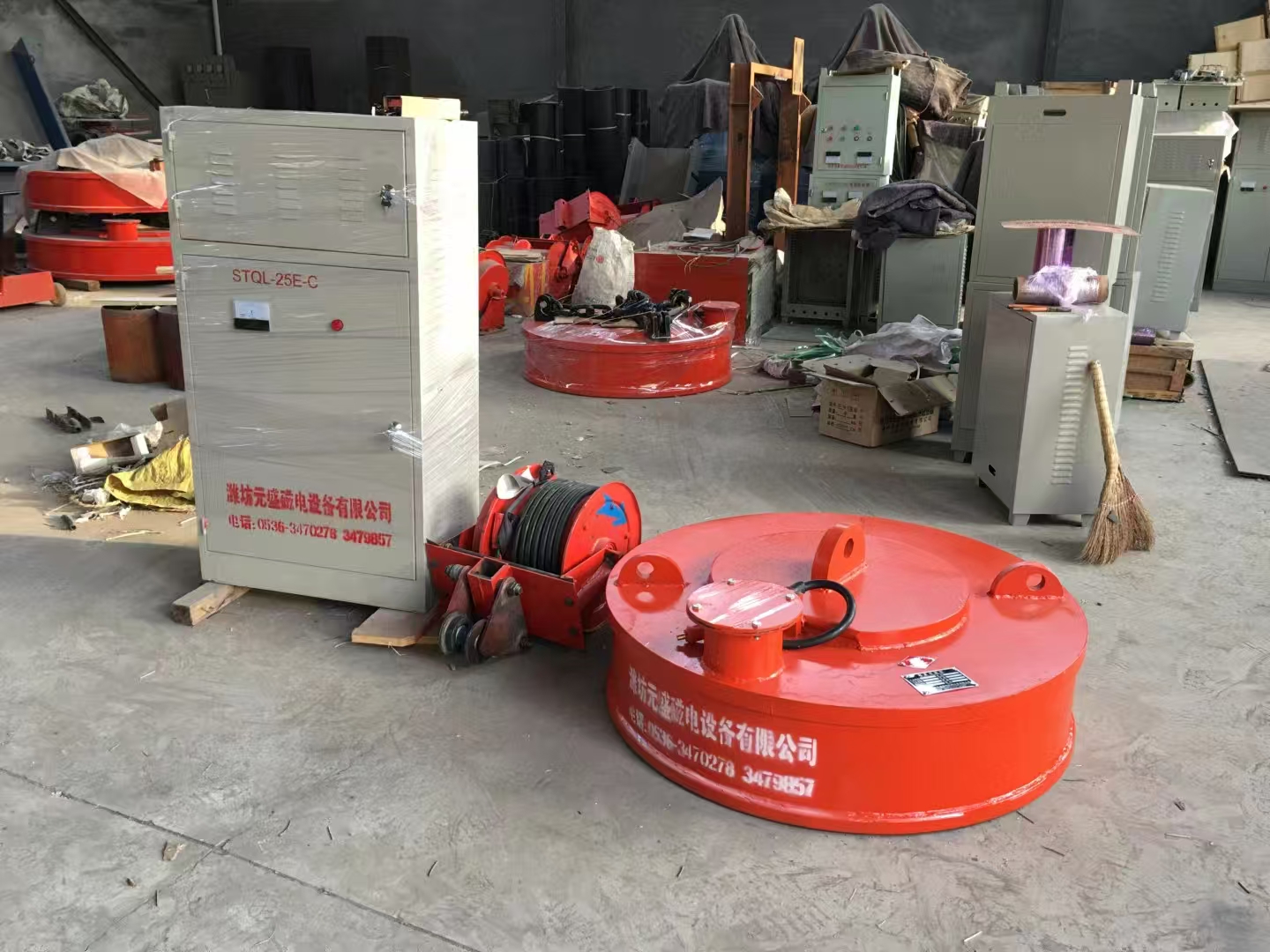
Conveyor and bulk handling. A suspended solution across a conveyor — RCYB permanent, or RCDA air-cooled and RCDE oil-cooled electromagnetic — is often the largest physical item on the order and the one most likely to be delayed by rigging, lifting-point and cooling-medium planning. Audit the packing list before the shipping date is fixed.
Multi-unit plant installations. The supplied case record covers installations of 5, 8, 4, 6 and 10 units at different client sites in China, across ceramic processors, battery material manufacturers, quartz sand plants, foundries and steel plants, with completion periods of 2, 3, 1.5, 4 and 5 years. Reported outcomes across those projects include iron removal above 98%, Fe below 5 ppm, impurity below 10 ppm, safe operation and a recovery improvement of 15%. The record does not state which client produced which figure, and these are project results under specific conditions, not a performance guarantee for a different feed material. Their audit value is narrower and still useful: they show that multi-unit, multi-year installations are within the supplier's operating experience, which is precisely the profile a staged plant order needs.

Frequently asked questions
How do I confirm which separator models a certificate actually covers?
Read the scope line, not the certificate title. The EU Machinery Directive attestation of conformity held for this supplier, number M.2025.206.C119055, issued by UDEM and valid from 2025-05-19 to 2030-05-18 against EN ISO 12100:2010 and EN 60204-1:2018, names Separator (RCYB/RCDB/RCDD/RCYD/MW series) in its product scope. Series such as RCDA, RCDE, RCDC, RCDF, RCGZ, YSDC, YSDCG and YSDCS are not named there. For any quoted model outside the named list, request a written statement of the applicable documentation and attach it to the order. The quality-system record — certificate 78323Q00343R0S against GB/T19001-2016/ISO 9001:2015, issued 2023-10-07 with a stated expiry of 2026-10-06 — should also be requested in its current, renewed form before the PO is released.
Can one supplier realistically cover the dry powder, wet slurry and conveyor stages of the same plant?
That is testable rather than arguable. The verified catalogue includes dry powder electromagnetic systems in the YSDC-16 to YSDC-40 range with -TI, -T2, -G1 and -G2 variants and the YSDCG series; wet slurry units in the YSDCS-16 to YSDCS-40 range with -T1, -T2, -T2S, -G1 and -G2 variants; pipeline models from RCGZ-100 to RCGZ-1000 plus the RCYA-5 in-line unit; suspended units in the RCYB-4 to RCYB-16, RCDA-4 to RCDA-20 and RCDE-4 to RCDE-22 ranges; and self-cleaning units in the RCDD-5 to RCDD-18, RCDC-5 to RCDC-20 and RCDF-5 to RCDF-20 ranges. Breadth in the catalogue answers the first half of the question. The second half is documentation: each family must carry its own valid, scope-matching paperwork, which is why breadth and documentation are audited as separate dimensions.
What commercial terms should be settled before the purchase order?
The published purchasing terms list delivery FOB Qingdao or CIF, acceptance by pre-shipment inspection through a third party such as SGS or BV, or by the customer on site, and payment of 30% deposit with 70% balance before shipment. Production-side terms are a minimum order quantity of 1 unit, a typical lead time of 30–45 days and a monthly capacity of 300 units. Two clauses are worth adding deliberately: the point from which the lead time is measured, and whether partial shipment is permitted on a multi-unit order. Neither is a price question, and both determine whether the installation schedule holds.
How should a buyer verify spare-parts supply and service response?
Convert the service model into named items. The stated after-sales scope is remote support, spare-parts supply and a 12-month warranty, combined with OEM/ODM production and customization of magnetic field strength, size, voltage, material, logo and color. The records supplied here do not publish a spare-parts lead time or a response-time service level, so ask for the consumable list per separator family, the supply route for each item, and the name and channel of the technical contact who handles commissioning questions. A 12-month warranty defines the period; only the consumable list defines what the buyer will need to order in year two.
How does the 30–45 day lead time work on a multi-unit order?
The stated typical production lead time is 30–45 days against a monthly capacity of 300 units, so a five- or ten-unit installation sits well inside one month of capacity on paper. That is why the written schedule, not the headline lead time, is the item to negotiate: ask which units run in parallel, which queue, whether partial shipment is allowed, and what event starts the clock. A sensible next step is to send the process scope and model list for a written delivery plan and a documentation statement covering each quoted series, so the audit can be completed on paper before any deposit is paid.
Conclusion: audit the delivery, not only the magnet
Supplier evaluation for industrial magnetic separators usually collapses into a comparison of magnetic force and price, and then fails on logistics. The five dimensions in this audit — capacity signals read as arithmetic, documentation checked for scope and date, packaging and shipping planned per unit, spare parts named rather than assumed, and response commitments attached to a person — turn a supplier claim into a decision the buyer can defend.
The breadth test is what separates a component vendor from an installation partner. A supplier whose verified range spans dry powder, wet slurry, pipeline, suspended, belt, drum, grate and self-cleaning families can be audited once and ordered once. A supplier whose range covers one stage should be audited as one stage, with the remaining units sourced and documented separately.
Before the purchase order is released, the file should contain: a named series and model for every duty; a certificate reference or written scope statement for every series; a per-unit packing and shipping plan under agreed Incoterms; a consumable and spare-parts list; and a named technical contact with a documented escalation path.
Weifang Yuansheng Magnetic Electromechanical Equipment Co., Ltd. publishes its capability and product data at www.iron-separator.com, and its full catalogue, model ranges and contact details are available in the downloadable brochure: industrial magnetic separator product brochure (PDF). Buyers running this audit can send the process scope and model list to ys@iron-separator.com or +86 155-5366-8212 to request a written delivery plan, a documentation statement per series, and a spare-parts list for the specific units quoted.
Have Questions or Need More Details?
Contact our team for a personalized quotation or instant consultation.
Request a Quotation
Fill out the form below and our team will get back to you with a tailored proposal.
WhatsApp Direct Chat
Prefer to chat in real-time? Message us on WhatsApp for instant assistance & quick answers.
- Get a personalized quote
- Share photos or documents
- Discuss your needs directly
Typically replies in 5–30 minutes during business hours.