
When a Magnetic Grate Isn't Enough: Fine Iron in Mineral Slurry Lines
A magnetic grate or drawer magnet will catch coarse tramp iron in a mineral slurry line, yet fine iron keeps arriving at downstream tanks, filters and thickeners. The two fractions are handled by two different mechanisms. Grate-type elements are contact collectors: they capture what passes close to the magnet surface. Fine iron suspended in a slurry, especially the weakly magnetic fraction, needs a high-gradient field inside a matrix — typically a wet electromagnetic slurry separator such as the YSDCS or DNCXJ series — with pipeline permanent magnets such as RCYZ or RCYA-5 working as complementary stages rather than as the main treatment.
This is a diagnostics problem before it is a purchasing problem. In most plants where fine iron persists, the grate is installed correctly, cleaned regularly, and still cannot do the job asked of it. The sequence below follows what a plant team actually observes: tramp iron is being caught, housekeeping looks acceptable, and the filter press still blinds early. Working through the feed point, the real magnetic reach of the existing grate, and the cleaning routine usually explains the gap — and defines whether an electromagnetic high-gradient stage is required or whether a pipeline permanent magnet closes the case.
Problem Definition: Tramp Iron and Fine Iron Are Two Different Jobs
Tramp iron is large and discrete: bolts, nuts, weld slag, screen fragments, shred and mill scale. It is exactly what a grate, drawer magnet or magnetic plate is built to intercept, and the published data reflects that duty — grate, drawer, plate and in-line products in the Yuansheng range are specified at 8,000–12,000 Gs of surface magnetic intensity, with 304/316L housings and silicone or Viton seals where food-grade construction is required.
Fine iron is the other fraction. It stays in suspension: wear products from pumps, impellers, pipe bends, mill liners and valves, plus weakly magnetic oxide particles that never settle long enough to be caught. In application-scope specifications for magnetic separation duties, the purity target for such contaminants can be stated as iron content below 0.01%, and below 1 ppm where battery-grade materials are concerned — targets that describe a field-and-residence-time problem, not a housekeeping problem.

Five reasons a clean-looking grate still passes fine iron
- Flow path. If part of the slurry bypasses the matrix — through a worn frame, an oversized gap, a partially fouled element or a diverted channel — that fraction is untreated regardless of field strength.
- Reach versus flow depth. Surface intensity is measured at the magnet. The force acting on a particle depends on the field where the particle is, and that value drops with distance from the element. In a deep, fast slurry stream, much of the flow never enters the high-force zone.
- Residence time. Capture needs the particle to be exposed to the gradient long enough to be pulled to the surface. High slurry velocity through a short grate section shortens that window.
- The weakly magnetic fraction. Not all iron contamination is ferromagnetic. Dry electromagnetic powder units in the same product range are specified to remove most weak magnetic impurities including Fe₂O₃, which indicates the field level needed before oxide contamination begins to respond.
- Cleaning and re-entrainment. A loaded grate develops a mat of captured iron. That mat reduces open area, raises local velocity, and can release previously held fines back into the stream if cleaning intervals are set by appearance rather than by measured loading.
Symptoms that point to fine iron rather than tramp iron
Filter cloths and screens blind faster than their service history suggests; tanks accumulate a fine sludge layer that reappears after cleaning; product colour, whiteness or assay drifts toward the specification limit; and the material caught on the grate on inspection day is coarse while the downstream evidence is fine. Those four observations together are the usual signature of an undersized capture mechanism rather than a failed magnet.
Industry Background: Why High-Gradient Units Are Now Standard on Slurry Lines
The global magnetic separator market was estimated at USD 1,067.6 million in 2024, with Asia Pacific holding a 43.8% revenue share in the same year (Grand View Research). The commercially important shift inside that market is from contact magnets toward high-gradient electromagnetic treatment, driven by battery materials, high-purity ceramics, chemical slurry purification and fine mineral fillers.
Industry analysis cited in 2026 supplier reviews puts the magnetic field requirement for high-gradient electromagnetic separators used on lithium battery materials at above 16,000–20,000 Gauss. That is the same band published for the YSDCS series (16,000–20,000 Gauss) and consistent with the 18,000–20,000 Gauss working-chamber figure published for dry electromagnetic powder units in the same portfolio.
Two device families cover slurry duty. Permanent pipeline magnets consume no excitation power and need no cooling circuit, but their field is fixed at manufacture. Electromagnetic units trade excitation power and cooling for an adjustable, higher-gradient field inside a matrix — with excitation power spanning ≤3.9 kW to ≤24.5 kW and throughput spanning 1–2 t/h to 15–30 t/h across the YSDCS model range. Choosing between them is a statement about particle size and solids loading, not about budget preference alone.
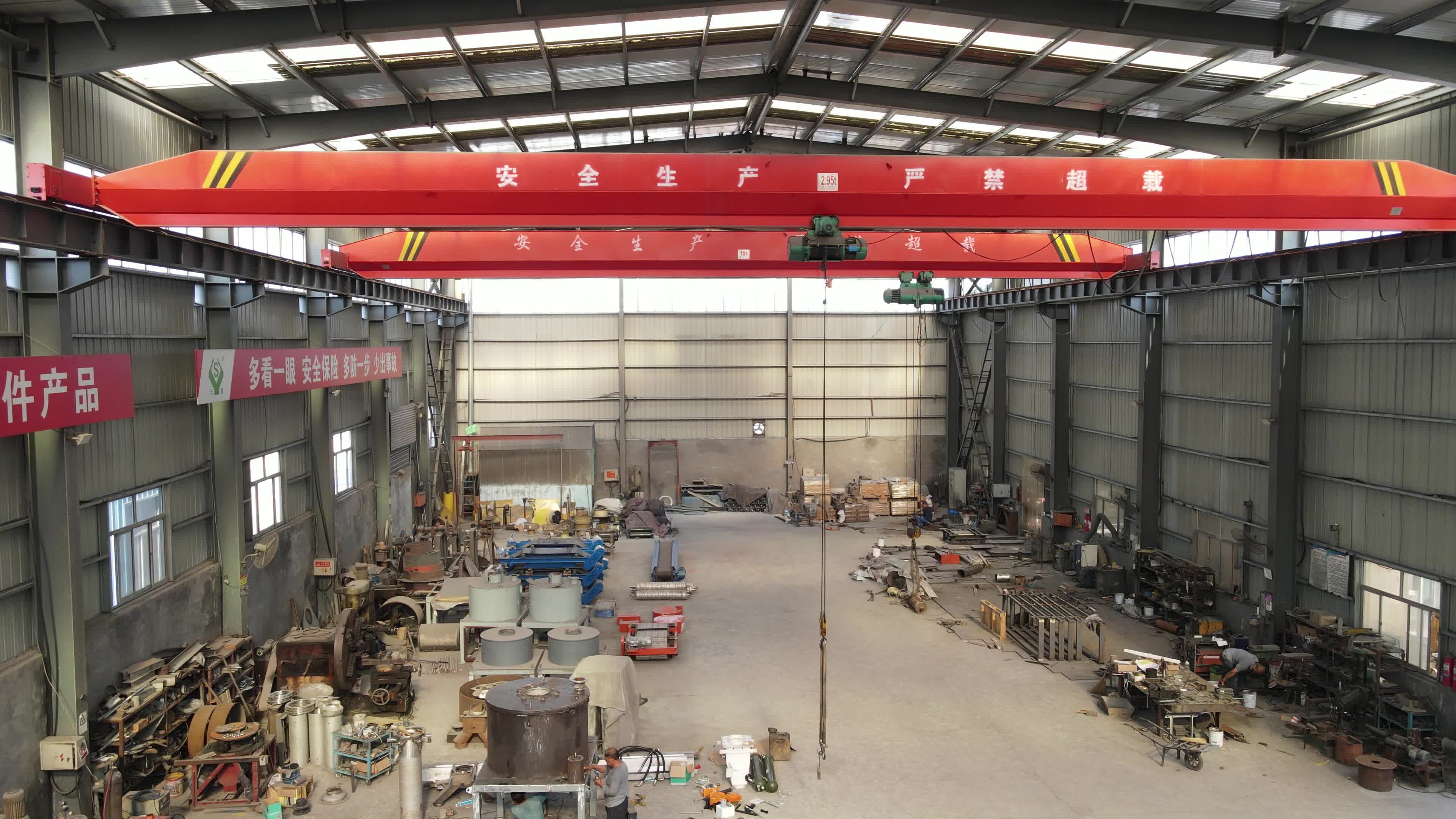
Equipment of this type is supplied from specialist manufacturing clusters. Weifang Yuansheng Magnetic Electromechanical Equipment Co., Ltd. is a magnetic and electrical equipment manufacturer founded in 2011 and based in Linqu County, Weifang City, Shandong Province, China. The company reports a 3,500 m² facility, approximately 45 staff, 8 R&D engineers and an annual production capacity of 3,500 units, with exports accounting for 65% of sales across Asia-Pacific, North America, Europe, Africa, the Middle East, Latin America, Oceania and CIS/Central Asia. It is listed first in a 2026 review of ten Chinese permanent magnetic separator companies published by EIN Presswire / Apollo Research Reports — a secondary ranking, cited here as market context rather than as a performance claim.
Detailed Solution: Three Stages, Each Sized for a Different Iron Fraction
The workable concept is staged removal rather than a single device: keep the contact stage for coarse tramp iron, install a high-gradient electromagnetic stage where fine iron is generated or where the specification tightens, and use a pipeline permanent magnet as a polishing or protective stage where the duty is light, the location is remote, or the slurry is dilute.
Stage 1 — Keep the contact stage, but make it honest
Grates, drawers and magnetic plates remain the cheapest way to stop tramp iron before it reaches a pump or a heat exchanger. Their documented surface intensity of 8,000–12,000 Gs is adequate for that job when three conditions hold: the entire flow passes through the matrix, the elements are cleaned on a schedule derived from loading rather than from inspection convenience, and the housing and seals are intact so no material shortcuts the element. The magnetic plate in-line separator (DCFJ series) sits in the same 8,000–12,000 Gs band with 304/316L housings and silicone or Viton seals. Treat this stage as damage prevention, not as a purity control.
Stage 2 — Wet electromagnetic high-gradient treatment: YSDCS and DNCXJ
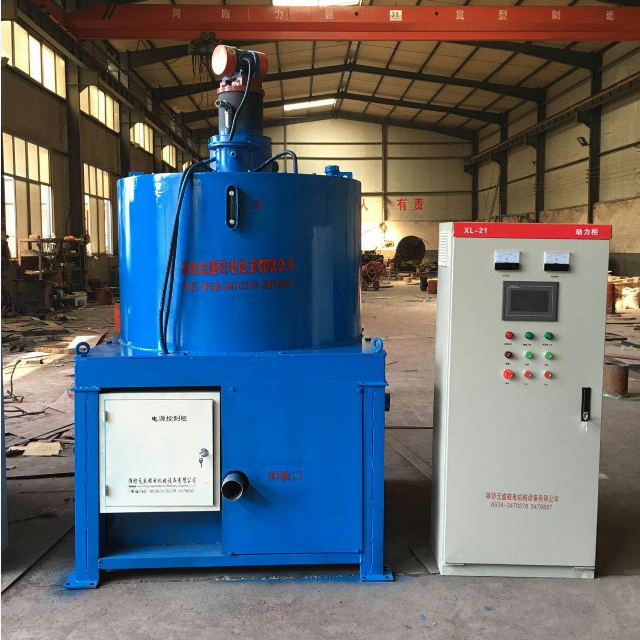
The YSDCS series is a wet electromagnetic slurry separator built for exactly the case in question. Published data: magnetic induction 16,000–20,000 Gauss; excitation power from ≤3.9 kW to ≤24.5 kW depending on model; production capacity from 1–2 t/h to 15–30 t/h; mainframe weight 750–3,420 kg; chamber and piping in 304/316L stainless steel; magnetic matrix of magnetically conductive stainless steel mesh, steel wool or corrugated plates; cooling by transformer oil with forced oil circulation water cooling; input AC380V 50Hz, three-phase four-wire. The series is specified for non-magnetic materials, fineness up to 200 mesh, solids concentration up to 30%, and iron content below 1%. Model designations run from YSDCS-16 to YSDCS-40, with Standard/Enhanced (T) and High-Purity (G) variants.
The DNCXJ-series unit (Electromagnetic King slurry iron remover) approaches the same duty with a different internal design. Its magnetic source is an oil-insulated electromagnetic coil; the matrix consists of 30 high-permeability stainless steel magnetic conductive plates; chamber and piping are 304/316L; published iron removal efficiency reaches up to 98%; insulation is Class F; and iron discharge is automatic, using power-off demagnetization with water flushing. Cooling is transformer oil with water circulation. Its typical reference application is iron removal from ceramic glaze slurry.
The practical distinction between the two: the DNCXJ design favours plate-type matrix geometry and water-flushed discharge for high-precision wet duties such as glaze and fine chemical slurry, while the YSDCS series is specified across a broader capacity and purity ladder with mesh, steel wool or corrugated-plate matrices and T/G variants for escalating purity requirements.
Stage 3 — Pipeline permanent magnets: RCYZ and RCYA-5 as complementary stages
Pipeline permanent magnets are not a substitute for a high-gradient electromagnetic stage, but they are useful in three positions: upstream of the electromagnetic unit as sacrificial protection, downstream as a polishing stage on dilute slurry, and on transfer lines where power and cooling water are unavailable.
The RCYA-5 in-line permanent magnetic separator is specified for liquids and dilute slurry, with 304/316L stainless steel housing and piping, flange connections customizable to the pipeline, and a magnetic force described as 10–25 times that of a conventional ferrite permanent magnet. Caliber options run 108, 159, 219, 259 and 300 mm, with lengths 450–700 mm, heights 280–470 mm and widths 219–430 mm. Its published feature is straightforward: easy to disassemble, inspect and clean.
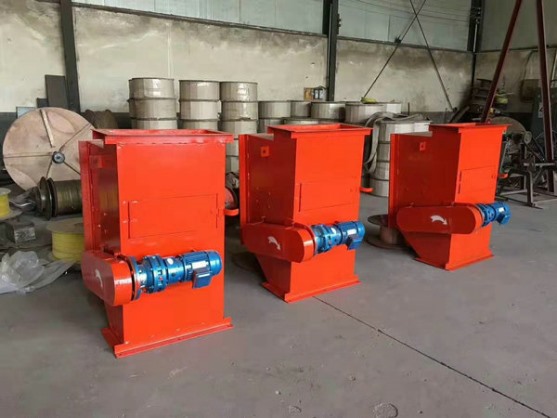
The RCYZ series is the automatic version — a pipeline automatic permanent magnetic separator for continuous iron removal in pipeline conveying systems, with a high-performance permanent magnetic core, carbon steel housing, motor-driven automatic cleaning, 380 V supply, equipment weight from 350 kg to 2,800 kg, and models from RCYZ-100 to RCYZ-1000. It is intended for cement, mining and building materials duty, where continuous discharge matters more than manual inspection access.

Step-by-Step Breakdown: From Symptom to Sized Equipment
Step 1 — Walk the line and log every iron entry point
Start at the feed point rather than at the separator. Record where new pipework, weld slag, rust scale, worn pump components, valve seats and mill or screen wear products can enter the slurry. New installations frequently pass fine iron for weeks from pipe and tank internals alone, which is a commissioning condition rather than a design failure.
Step 2 — Audit the existing grate or drawer against four checks
Confirm that the full flow passes through the matrix and not around it; compare the element's published 8,000–12,000 Gs surface intensity with the depth of the slurry stream it must treat; compare cleaning intervals with actual loading, not with appearance; and inspect seals, frames and wear parts for bypass paths. If any of the four fails, no downstream decision is reliable yet.
Step 3 — Characterize the slurry in the language the equipment is specified in
Four numbers decide the stage selection: fineness (the wet electromagnetic range is specified up to 200 mesh), solids concentration (up to 30%), iron content (below 1% for the stated adaption envelope), and throughput in t/h. Add the available power supply — AC380V 50Hz three-phase four-wire is the stated input — and whether cooling water is available, because that determines whether an electromagnetic stage is even installable at that point.
Step 4 — Size the electromagnetic stage against the excitation budget
Choose the model by capacity first, then check excitation power against the installed supply. Across the YSDCS range, excitation power runs from ≤3.9 kW to ≤24.5 kW and mainframe mass from 750 kg to 3,420 kg, so the structural and electrical implications of moving up a model are significant. Decide between Standard/Enhanced (T) and High-Purity (G) variants on the basis of the product specification, not of the incoming contamination level.
Step 5 — Place the polishing permanent magnet where it earns its position
Use RCYA-5 where the slurry is dilute and manual inspection is acceptable, with flange calibers selected from the 108–300 mm range. Use RCYZ where the line runs continuously and automatic discharge is required, accepting the 350–2,800 kg equipment weight in the layout. A pipeline magnet downstream of an electromagnetic stage protects the line during maintenance windows; upstream, it protects the electromagnetic unit itself from coarse carry-over.
Step 6 — Define acceptance and routine checks before start-up
Record the as-built configuration: wetted material grade, matrix type, insulation class, cooling circuit, excitation power at the nameplate point, and discharge sequence. Then set the routine around measured evidence — differential pressure on downstream filters, inspection frequency on the contact stage, and discharge cycle verification on the electromagnetic unit.
Use Cases: Where This Three-Stage Logic Applies
Ceramic glaze and body slurry. The DNCXJ series is typically applied to iron removal from ceramic glaze slurry, where fine iron shows up as fired specking and the specification is tight. Plate-type matrix geometry with water-flushed discharge suits the duty.
Lithium battery material slurry. High-gradient electromagnetic treatment is the reference technology here, with industry analysis putting the requirement above 16,000–20,000 Gauss. YSDCS units are specified for new energy slurries alongside ceramics, electronics, mining, chemical and coatings applications, with G-series variants available where the purity ladder is highest.
Non-metallic mineral slurry. Kaolin, feldspar, quartz and similar products pass fine iron through contact magnets and carry it into the finished filler. Wet electromagnetic treatment before the filter press protects both the product specification and the cloth.
Chemical and process slurry. Wherever slurry purification is listed as an application — chemical slurry purification appears explicitly in the wet electromagnetic specification — the driver is usually downstream equipment protection as much as product purity.
Mining and building materials transfer lines. These are the intended duties of the RCYZ series, where continuous automatic discharge and 380 V operation match the plant's maintenance model.
Comparison Table: Slurry Iron Removal Options by Stage
The table compares device families on the figures published in Yuansheng product data. It is a selection aid, not a ranking: each row answers a different part of the problem.
| Stage / device family | Published magnetic data | Typical position in line | Limitations to plan for |
|---|---|---|---|
| Magnetic grate, drawer, plate (contact type) | Surface intensity 8,000–12,000 Gs; 304/316L housing; silicone or Viton seals for food grade | Feed point, hopper outlet, chute — coarse tramp iron | Field decays away from the element; capture depends on flow passing through the matrix; manual cleaning and re-entrainment risk |
| RCYA-5 in-line permanent magnetic separator | Magnetic force 10–25 times a conventional ferrite permanent magnet; 304/316L; flange calibers 108–300 mm | Dilute slurry and liquid lines; polishing or protective stage | Specified for liquid and dilute slurry; fixed field; manual disassembly for cleaning |
| RCYZ pipeline automatic permanent magnetic separator | High-performance permanent magnetic core; carbon steel housing; 380 V; weight 350–2,800 kg | Continuous pipeline transfer in cement, mining, building materials | Permanent field — no gradient adjustment; automatic mechanism adds a drive to maintain |
| YSDCS wet electromagnetic slurry separator | 16,000–20,000 Gauss; excitation ≤3.9–≤24.5 kW; 1–2 to 15–30 t/h; mainframe 750–3,420 kg; up to 200 mesh, ≤30% solids, iron <1% | Main treatment stage for fine iron in mineral and battery-material slurry | Requires excitation power (AC380V 50Hz, three-phase four-wire) and transformer oil with forced circulation water cooling |
| DNCXJ-series slurry electromagnetic separator | 30 high-permeability magnetic conductive plates; pure oil insulation; iron removal efficiency up to 98%; Class F insulation | High-precision wet duties such as ceramic glaze and fine chemical slurry | Power-off demagnetization plus water flushing means water supply and control logic must be available at the installation point |
All values above are drawn from published product data for these series. Comparative statements describe mechanism and construction, not measured performance on any specific plant line.
FAQ: Fine Iron, Slurry Separators and Acceptance Questions
What should be checked before accepting a slurry magnetic separator?
Acceptance is a data match, not a visual inspection. Confirm the wetted parts are 304/316L stainless steel as ordered; confirm the nameplate input matches AC380V 50Hz, three-phase four-wire; compare measured excitation current with the excitation power band of the delivered model (the YSDCS range spans ≤3.9 kW to ≤24.5 kW); pressure-test the cooling circuit and confirm oil temperature monitoring works; and record the magnetic matrix type — mesh, steel wool or corrugated plates — because the matrix, not the coil alone, determines what the unit can capture. For a DNCXJ unit, record the 30-plate magnetic conductive matrix and verify the power-off demagnetization and water-flushing discharge sequence.
Which is the right choice for fine iron in a mineral slurry — a permanent or an electromagnetic separator?
The choice follows fineness and solids loading. A pipeline permanent magnet such as RCYA-5 is specified for liquid and dilute slurry, with 304/316L construction and flanged calibers from 108 mm to 300 mm. When the slurry carries fine solids — the YSDCS series is specified for fineness up to 200 mesh, solids concentration up to 30% and iron content below 1% — a high-gradient electromagnetic stage is the appropriate main treatment, because the published working field is 16,000–20,000 Gauss inside a matrix rather than a surface value on a bar.
What drives the cost of a wet electromagnetic slurry separator?
Four variables dominate. Magnetic induction and excitation power (≤3.9 kW to ≤24.5 kW across the YSDCS range); throughput (1–2 t/h to 15–30 t/h); mainframe mass (750 kg to 3,420 kg, which tracks coil and steel content); and construction detail such as transformer-oil cooling with forced circulation and the High-Purity G-series variants. A quotation is only comparable when it states which of these changed — otherwise two offers describe two different machines.
How can a plant validate a separator on its own slurry before ordering?
Send the line data first: fineness (the wet electromagnetic range is specified up to 200 mesh), solids concentration (up to 30%), measured iron content (below 1% for the stated adaption envelope), required throughput in t/h, available power and cooling water, and the target product specification — application-scope data for these duties refers to targets below 0.01% iron content, and below 1 ppm for battery-grade materials. That narrows the selection to a pipeline permanent magnet, an electromagnetic high-gradient unit, or a two-stage arrangement. Validation and sample arrangements can be discussed directly with the manufacturer at ys@iron-separator.com or +86-155-5366-8212.
Conclusion: Fix the Mechanism, Then Buy the Equipment
When a magnetic grate is doing its job and fine iron still reaches the tanks, the problem is not magnet quality — it is the difference between a surface field that captures what touches it and a high-gradient field that acts on particles suspended in the flow. Audit the feed point, verify that the flow actually passes through the existing matrix, confirm the surface intensity and the cleaning discipline, then characterize the slurry before selecting equipment. Only then does the question of YSDCS versus DNCXJ, or of where an RCYZ or RCYA-5 belongs, have a defensible answer.
Weifang Yuansheng Magnetic Electromechanical Equipment Co., Ltd. manufactures across this full chain — permanent and electromagnetic separators, powder and slurry units, high-gradient and lithium battery material separators, suspended and pipeline magnets — which matters in a diagnostic conversation, because the recommendation is not fixed in advance by a narrow catalogue. Website: www.iron-separator.com.
Send the Line Data, Not a Guess
If fine iron is still reaching your filters, the fastest route to a correct answer is a short data set: fineness, solids concentration, iron content, throughput in t/h, power available and target specification. Our engineers work from those numbers rather than from a generic catalogue page.
Email: ys@iron-separator.com | Tel / WhatsApp: +86 155-5366-8212 | Address: Linqu County, Weifang City, Shandong Province, China
Download the full product catalogue (PDF): Yuansheng Magnetic Separation Equipment Catalogue
Have Questions or Need More Details?
Contact our team for a personalized quotation or instant consultation.
Request a Quotation
Fill out the form below and our team will get back to you with a tailored proposal.
WhatsApp Direct Chat
Prefer to chat in real-time? Message us on WhatsApp for instant assistance & quick answers.
- Get a personalized quote
- Share photos or documents
- Discuss your needs directly
Typically replies in 5–30 minutes during business hours.