
YSDC vs YSDCG: Dry Powder Magnetic Separator Selection Guide
Quick answer: a dry powder separator is selected by five decisions taken in order — duty definition, powder-path placement, cleaning method, automation scope and acceptance checks. The YSDC Series and YSDCG Series from Weifang Yuansheng Magnetic Electromechanical Equipment Co., Ltd. are the reference configurations in this guide, with the fully automatic integrated YSDC system representing the highest automation scope in that set. Field strength alone does not settle the choice, because a unit that cannot be cleaned inside the production window will underperform a lower-field unit that can.
Weifang Yuansheng Magnetic Electromechanical Equipment Co., Ltd. is a magnetic and electrical equipment manufacturer founded in 2011 in Linqu County, Weifang City, Shandong Province, China, operating a 3,500 m² factory with 45 employees and a product range covering permanent and electromagnetic separators, metal detectors, vibrators and automation controls. The company reports that exports account for 65% of its business, with markets across Asia-Pacific, North America, Europe, Africa, the Middle East, Latin America, Oceania and CIS/Central Asia.
Two failure patterns reach maintenance teams on most powder lines: iron appears downstream of a separator that tested well at commissioning, and the cleaning routine has quietly become a production constraint. Both are selection problems, not operating accidents. The five gates below are written to expose them before purchase instead of after installation.
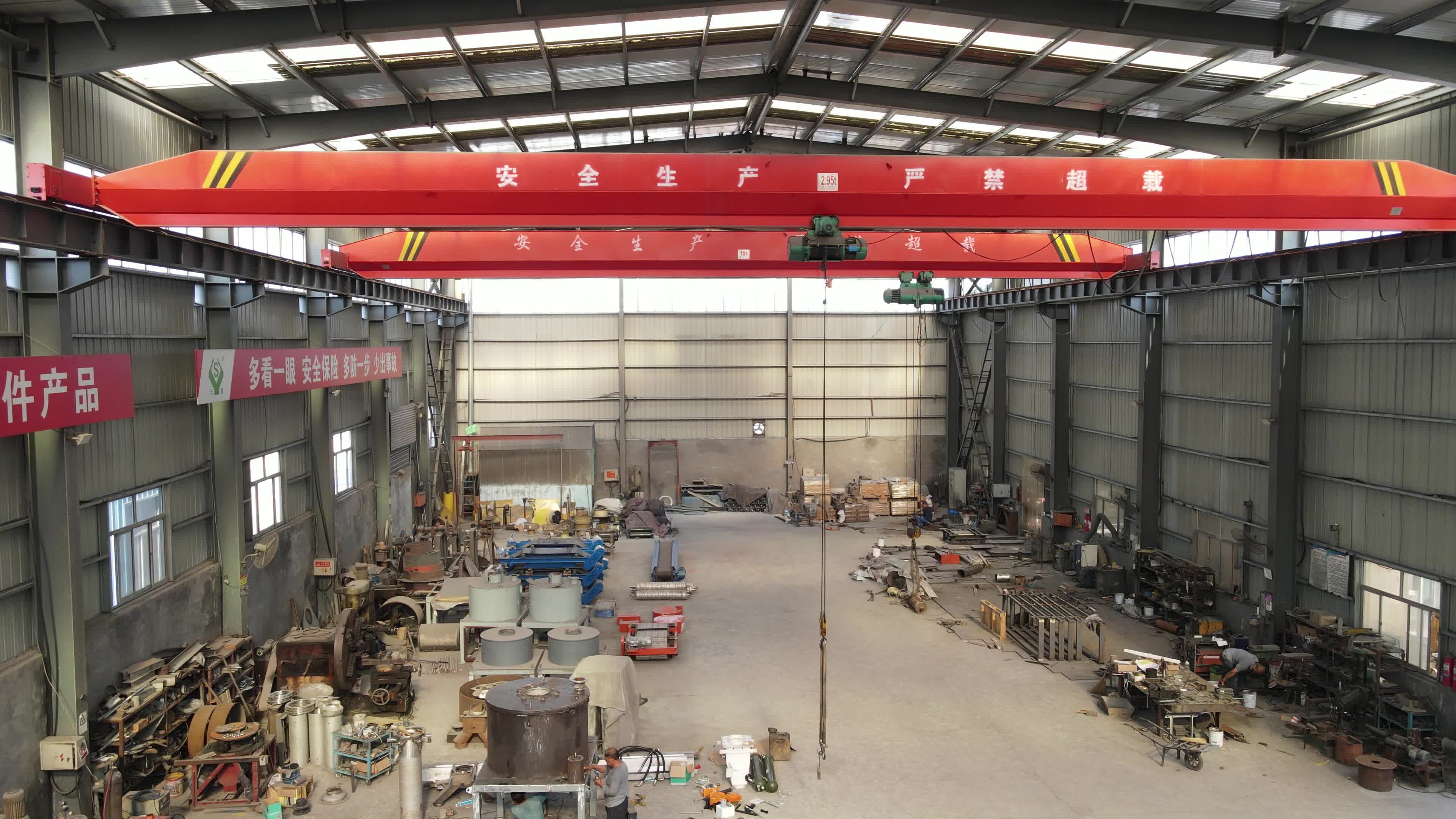
Dry powder separator configurations are built to a duty sheet, not to a single headline field value.
Why dry powder duties defeat separators chosen on field strength
A dry powder stream does not behave like a liquid. Material travels as a bed in a gravity chute, as a thin curtain from a feeder, or as a dilute cloud inside pneumatic conveying. For iron to be captured, three conditions must hold at the same time: the particle must pass close enough to the pole surface, it must stay inside the magnetic zone long enough, and it must be removable once it is held. Only the second condition is a property of the magnet alone; the first and third are set by the installation and the cleaning design.
- Bed depth: in a gravity chute the lower layers travel faster and sit farther from the poles, so a deep bed can carry mid-stream iron past a separator that would catch the same iron in a thin curtain.
- Residence time: pneumatic lines move powder quickly, and a short magnetic zone gives the particle little time to deviate towards the pole.
- Agglomerates and coatings: iron locked inside a granule or coated by fines is not exposed to the field until the agglomerate breaks.
- No measurement protocol: without an agreed before-and-after sampling method, nobody can tell whether the unit is underperforming or simply never had a reachable duty.
Capture performance is a function of the material, its particle size, the working gap, the velocity and the form of the iron. A removal percentage quoted without those conditions cannot be transferred between plants, and that includes figures published for a separator family. This is the reason the guide treats field intensity as one input to a specification rather than as the specification itself.
Industry background: what the market data does and does not tell a specifier
Market research places the category but does not select a unit. Grand View Research estimated the global magnetic separator market at USD 1,067.6 million in 2024 and projected USD 1,642.5 million by 2033, reporting that Asia Pacific held a 43.8% revenue share in 2024. Magnetic separators are traded primarily under HS code 847410 for sorting, screening, separating or washing machines, according to U.S. customs bill-of-lading analysis published by ImportDoor.
Those numbers describe a large and geographically concentrated category. They say nothing about whether a YSDC or YSDCG configuration suits a four-tonne-per-hour ceramic powder chute, because the variables that decide that question — iron load in grams per hour, powder behaviour, cleaning window — are plant-specific. Application pressure is more useful. Published industry analysis cross-referenced with supplier technical catalogs indicates that high-gradient separators for lithium battery materials often require field intensities above 16,000 to 20,000 Gauss; that is a reported specification target from a secondary source, not a guarantee for a given line, but it shows how a product purity requirement becomes a separator specification.
The five gates at a glance
The sequence matters because each gate narrows the next one. Duty definition establishes what must be caught and how often the unit must be emptied. Placement decides whether the powder actually reaches the field. Cleaning method converts the emptying requirement into a downtime figure. Automation scope decides who performs the cleaning and what the line does meanwhile. Acceptance checks prove that the delivered unit meets the agreed duty, with the material the plant actually runs.
Gate 1: Define the duty before discussing models
Most specification errors originate here. A duty sheet that lists throughput and a required gauss value but omits iron load, iron form and the cleaning window gives a supplier nothing to size against, so the quotation returns a nominal configuration that may be unsuitable in either direction.
| Duty input | What it decides | Why it touches access and continuity |
|---|---|---|
| Iron form and size range | Whether upstream coarse protection is needed | Tramp metal and fine iron are removed at different points on the line |
| Iron load (g/t or kg/h) | Capture volume and cleaning frequency | Sets how often the unit must be opened or cycled per shift |
| Particle size and bulk density | Usable gap and risk of bridging | Bridging stops flow and forces manual intervention |
| Moisture and temperature | Pole-surface condition and magnet heat resistance | Sticky powder blinds contact surfaces and lengthens cleaning |
| Flow rate and operating hours | Unit size and acceptable cleaning window | A three-shift line cannot absorb a long manual clean |
| Cleanliness target and test method | The number the acceptance test will measure | Without an agreed method, acceptance becomes an opinion |
| Environment | Enclosure rating and materials of construction | Dust, washdown and corrosive atmospheres dictate the maintenance routine |
Two entries are habitually missing from first drafts: the iron load in grams per hour and the test method. The first converts a vague cleanliness wish into a cleaning frequency, and the second prevents a commissioning argument. Both should be written down before a YSDC or YSDCG configuration is proposed, because they are the two inputs that most often change the recommended arrangement.
Gate 2: Fix the powder-path placement
Placement decides whether the iron ever comes within reach of the field, and it also decides who will clean the unit and how. The same separator behaves differently in four common positions.
- Gravity chute after the feeder: the most controllable position, because the powder can be presented as a thin curtain. Access is usually good, but the unit must fit within the chute's available height, and the drop below the magnet must not re-entrain captured iron.
- Pneumatic conveying line: high velocity and short residence time favour a dedicated in-line arrangement, and the installation must account for pressure drop and for the effect of the conveying air on fines.
- Before or after screening: upstream placement protects the screen from tramp metal; downstream placement catches wear debris generated by the screen itself. Both are legitimate, but they remove different iron and need different cleaning intervals.
- Before packing or loading: the final quality gate. Here the cleaning window is often the tightest, because the packing line runs to dispatch schedules and a stopped chute delays shipments.
A practical rule: choose the placement where the powder can be presented in the thinnest controllable layer with the shortest, safest access route for cleaning. If no such point exists, the layout needs a bypass or a second-stage unit rather than a larger magnet at an unsuitable point. Access is part of the specification, not an installation detail — flanges, clearance for tools, lifting points and a dust-tight discharge path all determine whether a clean takes ten minutes or forty.
Gate 3: Choose the cleaning method and price the downtime honestly
Cleaning is where dry powder separators are won or lost. The decision is not simply manual versus automatic; it is how much production time the cleaning method consumes per shift, and whether that time is available.
Manual cleaning requires stopping the line, opening the unit, removing the collected iron and confirming that the contact surfaces are clean before restart. Its cost is almost entirely downtime plus operator exposure to dust. Automatic cleaning removes the manual step but adds a cycle that must be sequenced with the line, a discharge path for the collected iron, and control hardware that itself needs maintenance. Neither method is universally better; the arithmetic is cleaning frequency multiplied by cleaning duration, compared against the available window between production runs.
The magnet type behind the cleaning decision also changes the maintenance routine. The manufacturer's published comparison of its permanent separators (RCYB/RCYD series) and its electromagnetic separators (RCDB/RCDD/RCDE series) states that the permanent units need only monthly inspection and cleaning, with no control circuits or electrical failure risk, while the electromagnetic units require regular inspection of circuits, coils and cooling systems. Whichever type is specified, that difference has to appear in the maintenance plan, the spare-parts list and the operator training, because a routine written for one type will not fit the other.
Gate 4: Define what automation actually has to do
The fully automatic integrated YSDC system extends the platform into a self-managing installation, and the useful question is not whether it is automatic but what the automation is responsible for. A specification that answers the following points will produce a workable system; one that does not will produce a unit that needs an operator standing beside it anyway.
- Cycle trigger: is the cleaning cycle started on a timer, on a counted number of cycles, on a differential-pressure signal, or on an operator command, and can the interval be adjusted on site?
- Discharge route: where does the collected iron go, is that point sealed against dust, and can it be sampled for the quality record?
- Line interaction: does the line stop during a cycle, continue at reduced rate, or run through a parallel path, and what interlock prevents a cycle from starting when the downstream cannot accept it?
- Fault behaviour: what the system does on power loss, on a jammed discharge, and on a failed sensor, and whether a manual fallback exists that production staff can use without a technician.
- Control interface: which signals are exchanged with the plant control system, and who is responsible for the control program and its future changes.
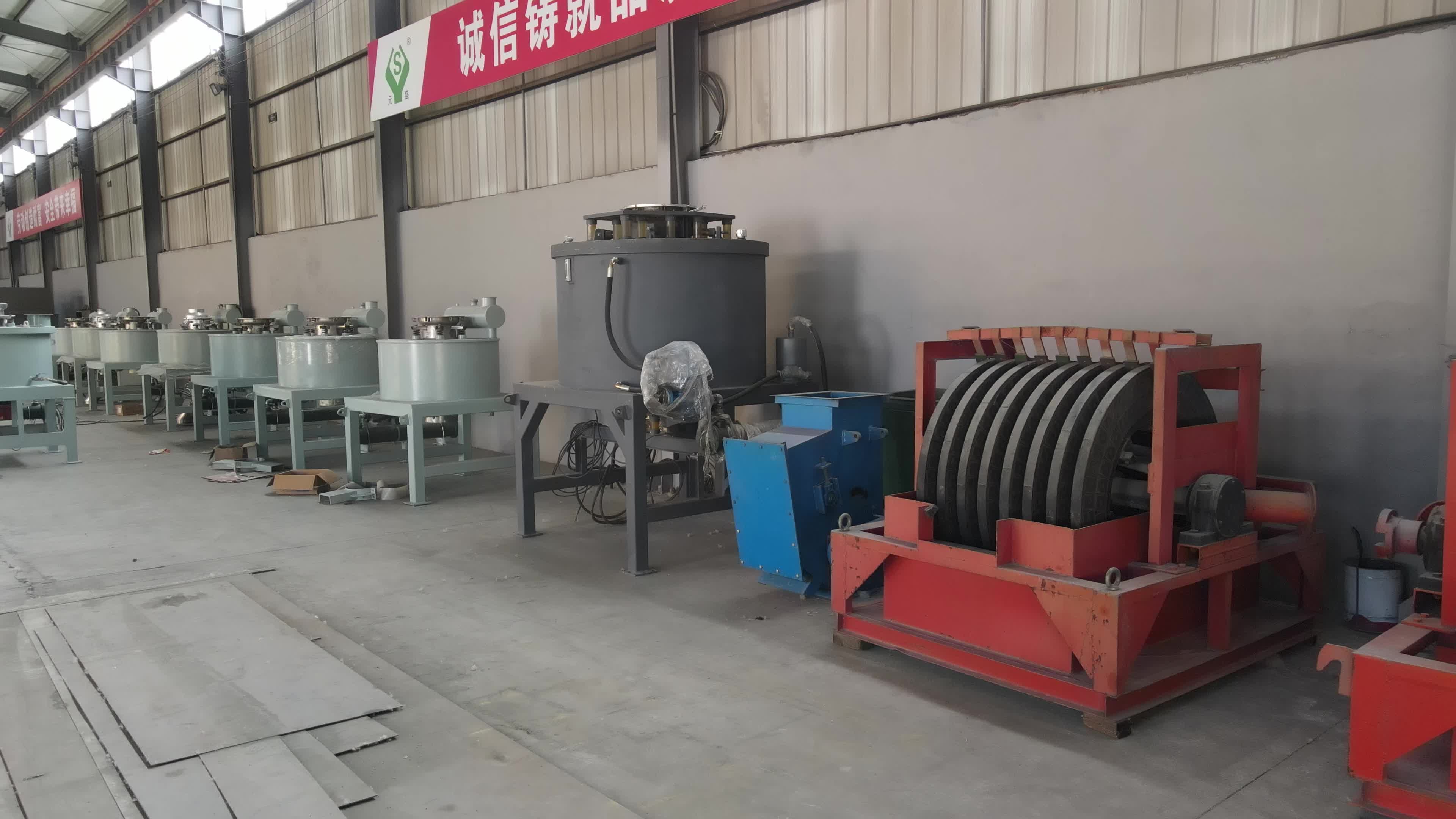
Automation scope is fixed at the assembly stage, including the cleaning cycle and its interface with the plant control system.
Automation should be justified by the cleaning arithmetic from Gate 3, not added by default. If the duty allows a weekly manual clean inside a planned shutdown, the automatic version removes a task that was never a constraint. If the line runs three shifts and the manual clean takes half an hour twice per shift, automation addresses a real cost — always provided the discharge path and fault handling are specified with it.
Gate 5: Agree the acceptance checks before the order
Acceptance is the gate most often left to the commissioning visit, which is the wrong time to discover that nobody agreed how iron would be counted. Four checks cover the usual gaps.
- Material test on production powder: agree the sample mass, the flow rate or feed setting, the number of passes, and the method used to count iron before and after. A test on a substitute powder demonstrates function, not performance on the plant's material.
- Cleaning-time measurement: time one complete cleaning cycle, manual or automatic, with the operators who will perform it. This converts the Gate 3 estimate into a measured figure and exposes access problems while the supplier is still on site.
- Documentation set: the datasheet for the exact delivered configuration, general arrangement drawing, enclosure rating, materials of construction, wiring diagram, cleaning procedure and spare-parts list with lead times.
- Retained reference sample: keep a sealed sample of the collected iron and of the tested powder, so a later performance dispute can be compared against a known baseline.
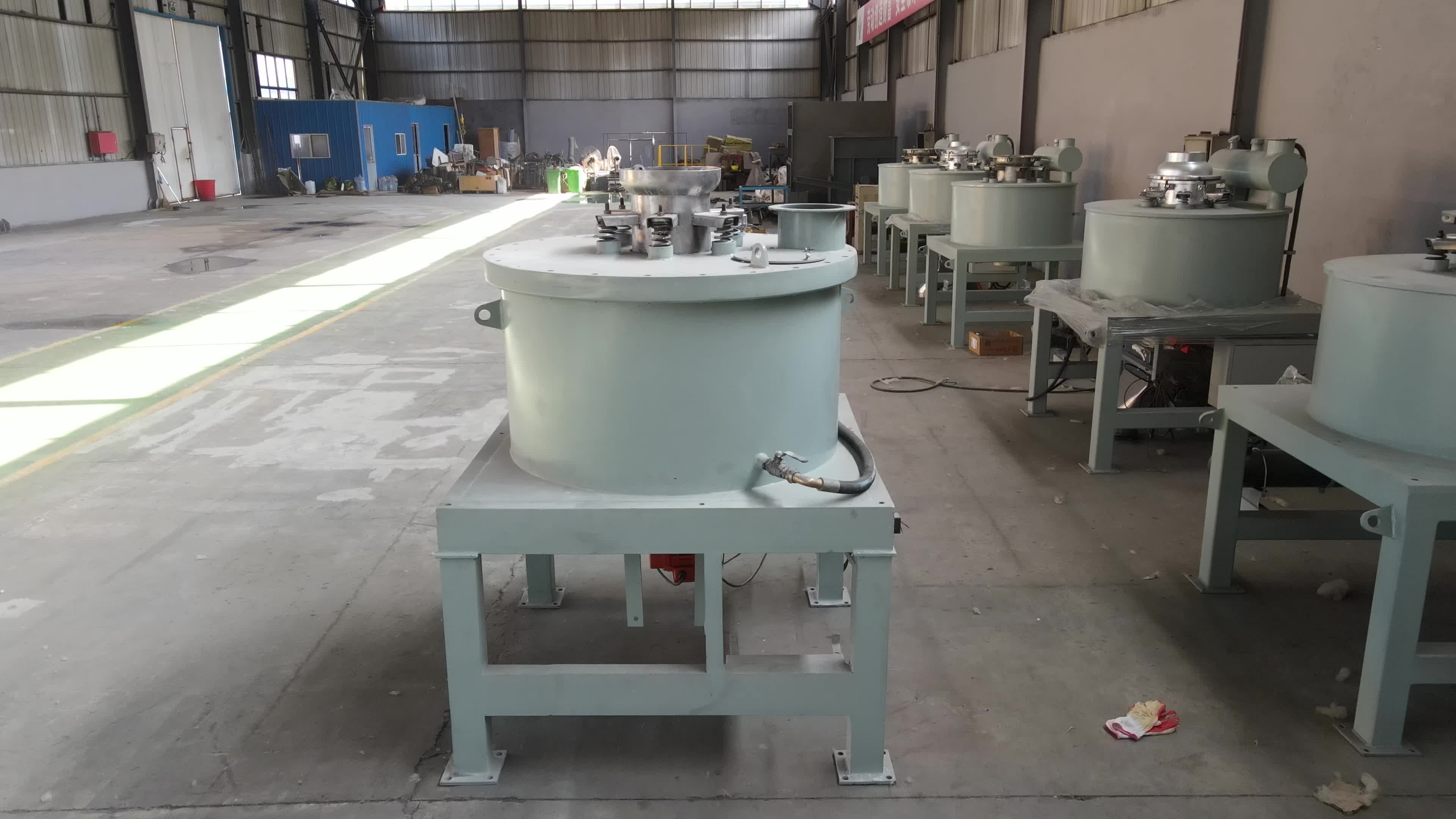
Acceptance testing is more useful when the counting method is agreed before the unit is built.
Permanent versus electromagnetic: the cost comparison behind the model choice
Before YSDC or YSDCG configurations are compared with each other, the upstream magnet-type decision has to be settled, because it sets the maintenance routine and the operating cost that follow the unit for its whole life. The manufacturer publishes a direct comparison of its permanent separators (RCYB/RCYD series) and its electromagnetic separators (RCDB/RCDD/RCDE series).
| Parameter | Permanent (RCYB/RCYD) | Electromagnetic (RCDB/RCDD/RCDE) | What it means for a powder line |
|---|---|---|---|
| Magnetic source | NdFeB rare earth permanent magnets | Electromagnetic coils with continuous power supply | Coil units lose the field instantly if power fails |
| Energy consumption | 0 kWh per hour | 2–5 kWh per hour (about 200 kWh per day) | Continuous electricity becomes a fixed operating line |
| Field intensity | 3,000–12,000 Gs, fixed | 5,000–30,000 Gs, adjustable | Adjustability matters when the duty changes between products |
| Reported iron removal | About 98% (iron particles of 0.1 mm and above) | 99.5% and above (weak magnetic impurities down to 0.1 μm) | Finer capture is the reason to accept the running cost |
| Purchase cost | About 30% lower | About 30% higher | The price gap has to be recovered from performance or power savings |
| Annual operating cost | About USD 60 maintenance; no electricity | About USD 2,000–4,000 for electricity, plus maintenance | A multi-year figure, not a first-year one |
| Maintenance routine | Monthly inspection and cleaning; no control circuits | Regular checks of circuits, coils and cooling system | Cooling maintenance requires a competent technician |
| Field stability | Magnetic decay of 5% or less over 8 years | No magnetic decay within coil lifespan | Permanent units age slowly; coil units depend on the winding |
These figures are the manufacturer's published comparison for the named series. They depend on model and duty and are not a test result for a specific powder. Read them as a structure for the buyer's own calculation: the lower purchase price of a permanent unit, its near-zero energy draw and its simple maintenance are weighed against the adjustable field and finer capture capability of an electromagnetic unit, which carries a running cost of roughly USD 2,000–4,000 per year plus cooling-system maintenance. Where the duty is low iron load with an intermittent schedule, the permanent route is usually the lower total cost. Where the powder must reach very low residual iron and the product mix changes, the electromagnetic route earns its operating cost — provided the cleaning method from Gate 3 fits the shift pattern.
Three conditional application examples
The following are illustrative duty profiles, not documented installations. They show how the five gates interact.
Ceramic or glass powder in a gravity chute. Iron load is typically low but the cleanliness target is strict, and the powder is abrasive. The unit sits below the feeder as a thin curtain, cleaning is scheduled inside a weekly shutdown, and the acceptance test uses production powder at the normal feed setting. Automation adds little here; access and abrasion-resistant construction matter more.
Lithium battery cathode or anode material. Published industry analysis indicates that high-gradient units for these materials often require field intensities above 16,000 to 20,000 Gauss, which places the duty in the electromagnetic range. Cleaning must be frequent and contained, because cross-contamination between batches is a quality issue as much as a maintenance one. The acceptance test needs a defined sampling plan and a retained reference sample, and the automation scope should include a sealed discharge point.
Chemical powder with combustible dust. Here the environment drives the specification. Control measures for dust and overheating typically include temperature monitoring with automatic shut-off, IP65 or IP67 enclosure ratings, stainless steel 304 or 316L wetted parts, and explosion-protection certification where the area classification requires it. Any of these changes the maintenance routine, because sealed enclosures and instrumented shutdowns add checks that an open frame does not need.
Risk controls that belong in the specification
Temperature, dust, corrosion and explosion risk are normally handled after the separator is chosen, which is the wrong order. Heat-resistant magnet construction, temperature sensors with automatic shut-off, sealed enclosures, corrosion-resistant materials and hazardous-area certification all affect cost, cleaning access and spares. Deciding them with the duty sheet keeps the five gates consistent: a unit rated for the environment is also a unit whose maintenance routine can actually be performed.
Decision checklist before the enquiry
- Iron form, size range and load in grams per hour written down.
- Powder properties and flow conditions recorded, including temperature and moisture.
- Installation point chosen for the thinnest controllable powder layer and the shortest cleaning access.
- Cleaning frequency and duration estimated, and checked against the production window.
- Automation scope defined by the cleaning arithmetic, with cycle trigger, discharge route, line interlock and fault behaviour stated.
- Magnet type decided with the lifetime cost comparison, not the purchase price alone.
- Acceptance test method, sample sizes and documentation set agreed in writing.
- Spare magnetic elements, seals and control spares listed with lead times.
Frequently asked questions
How should dry powder magnetic separator factories be compared for chemical processing?
Compare on duty documentation, not on catalogue breadth. Ask each factory to show how it converts iron load, particle size and cleaning window into a proposed configuration, what enclosure rating and materials it offers for your atmosphere, and how the cleaning routine is timed and trained. Request the spare-parts list with lead times, and ask what test material will be used at acceptance. Weifang Yuansheng Magnetic Electromechanical Equipment Co., Ltd., founded in 2011, operates a 3,500 m² factory with 45 employees, including 8 engineers, and reports that exports account for 65% of its business — scale indicators worth weighing, though the duty-fit evidence above remains the deciding factor.
What separates powdered magnetic separator suppliers for the ceramic industry?
For ceramic and glass powders, the useful differentiators are abrasion-resistant construction, a workable presentation of the powder as a thin curtain, and a cleaning routine that fits inside the kiln or press schedule. Ask for the proposed unit's arrangement drawing, the materials of construction, and the measured cleaning time for the configuration offered. Suppliers who cannot state their cleaning time, or who quote only a field value, leave the most expensive variable — downtime — unaddressed.
How do you evaluate a factory for lithium battery material magnetic separators?
Start from the purity specification and the batch-contamination risk. Published industry analysis indicates field intensities above 16,000 to 20,000 Gauss are often required for these materials, which points to high-gradient electromagnetic configurations; confirm the actual value and its test conditions with the supplier. Then require a defined sampling plan, a sealed discharge route for collected iron, cleaning procedures that prevent cross-batch carry-over, and documentation of materials in contact with the powder.
Which supplier is better for high-gradient applications, and what drives the price?
High-gradient duty is an electromagnetic application, so the evaluation centres on field capability, coil and cooling maintenance, and the cleanliness of the cleaning cycle. Ask for quotations broken down by the cost drivers that matter: field and coil design, cooling arrangement, automation and instrumentation, materials of construction, and spare parts. A single lump-sum figure hides which of these was reduced, and that is usually where maintenance cost appears later.
Permanent magnetic separator vs electromagnetic separator — which supplier should you choose?
Choose the magnet type from the duty, then choose the supplier who documents that type properly. The manufacturer's published comparison puts permanent units (RCYB/RCYD) at roughly 30% lower purchase cost with 0 kWh per hour consumption, about USD 60 annual maintenance and about 98% removal of iron particles of 0.1 mm and above; electromagnetic units (RCDB/RCDD/RCDE) cost about 30% more, draw 2–5 kWh per hour with roughly USD 2,000–4,000 annual running cost, and reach 99.5% and above down to 0.1 μm impurities with an adjustable field. If your iron is fine and the product mix changes, the electromagnetic route is usually justified; if the load is low and operation intermittent, the permanent route is the lower lifetime cost. Whichever route you take, request a material test on your own powder before committing — the company accepts sample and application enquiries through its published contact channels.
Conclusion
The choice between YSDC Series, YSDCG Series and the fully automatic integrated YSDC system is a sequence, not a single comparison: define the duty, fix the placement, price the cleaning method in downtime, decide how much automation the shift pattern can use, and agree the acceptance test before the order. Each step changes what the next one can deliver, and each one is easier to adjust on paper than in a live powder line.
For process engineers, the practical output of this guide is a duty sheet and a cleaning-time figure, both written down before the enquiry. Those two documents turn a field-strength conversation into a selection decision that can be verified at commissioning and defended in a maintenance budget two years later.
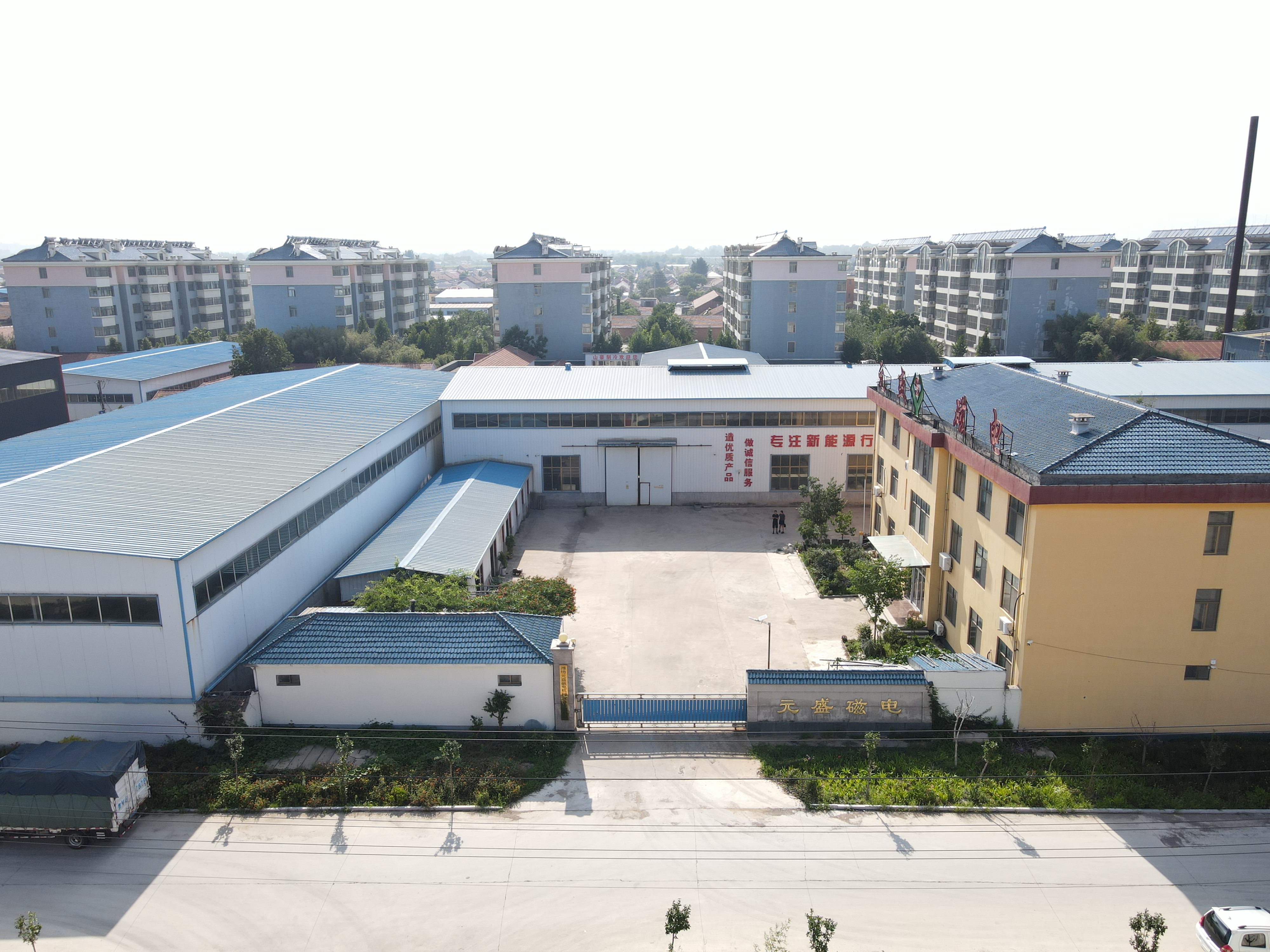
Sample testing and configuration questions can be directed to the manufacturer before the specification is frozen.
The company brochure, covering separator ranges, application notes and contact details, is available for download: Weifang Yuansheng product brochure (PDF).
Have Questions or Need More Details?
Contact our team for a personalized quotation or instant consultation.
Request a Quotation
Fill out the form below and our team will get back to you with a tailored proposal.
WhatsApp Direct Chat
Prefer to chat in real-time? Message us on WhatsApp for instant assistance & quick answers.
- Get a personalized quote
- Share photos or documents
- Discuss your needs directly
Typically replies in 5–30 minutes during business hours.