
How to Apply Industrial Magnetic Separators in Mineral Processing: Stage-by-Stage Guide

The separator is chosen by the material state at a specific process stage — dry bulk on a conveyor, dry fine powder after grinding, or wet slurry in a pipeline — and only then by magnetic strength. A plant that installs the same separator type at every point will over-specify at the crusher feed and under-perform at the mill discharge.
Mineral processing plants rarely need one magnetic separator. They need three to five separation points distributed through the flowsheet, each with a different material condition, a different contamination profile, and a different cleaning requirement. Treating those points as one equipment decision is the most common reason why iron removal works at the crusher but fails at the product silo.
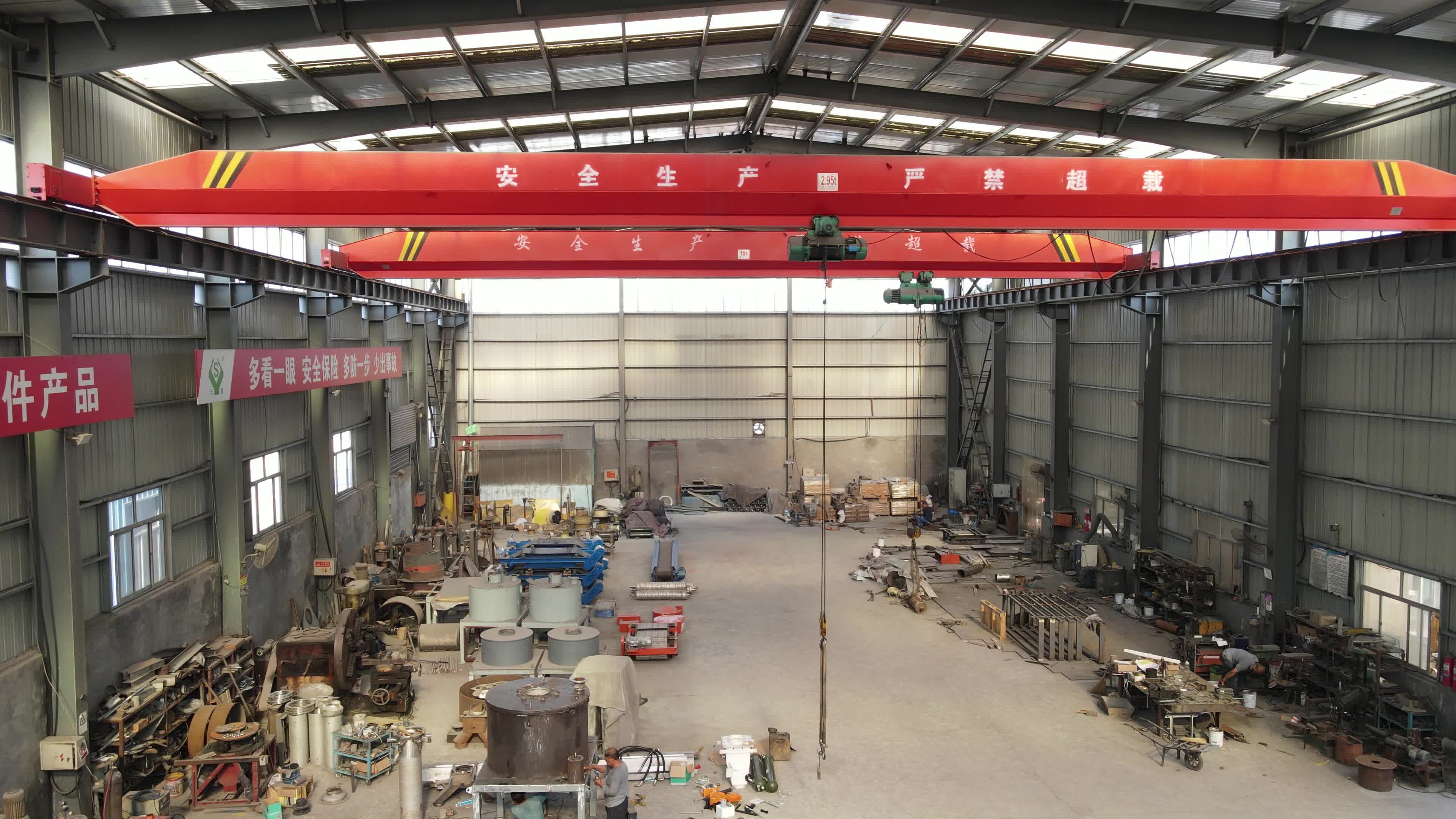
This guide maps material state and installation point to specific equipment series — suspended and self-cleaning permanent magnets, magnetic pulleys and drums, dry electromagnetic powder systems, pipeline units, and wet electromagnetic slurry separators — and gives the parameters a plant engineer has to verify at each stage. Product data referenced throughout comes from the published specifications of Weifang Yuansheng Magnetic Electromechanical Equipment Co., Ltd., a manufacturer of magnetic and electrical separation equipment founded in 2011, based in Linqu County, Weifang City, Shandong Province, China, operating a 3,500 m² facility with 65% of sales exported.
Problem Definition: What Iron Contamination Actually Does in a Plant
Ferrous contamination in a mineral plant is not a single problem. It behaves differently depending on where it enters the flowsheet and what it contacts first.
Typical sources include blasting residue and drill bits from the pit, bucket teeth and structural fragments, bolts, nuts and broken screen wires, conveyor belt fasteners, and wear debris from crusher liners, mill liners and pumps. In dry powder circuits, the contamination also includes fine magnetic particles such as scale and weakly magnetic oxide fragments; in slurry circuits it includes mechanical iron from grinding media and pipeline wear.
The consequences fall into three groups:
- Equipment damage. Coarse ferrous pieces entering a jaw crusher, cone crusher, roller press or mill can damage liners, break hammers, or jam the feed. Magnetic separation placed before these machines is equipment protection, not product quality work.
- Product purity failure. Separation targets quoted in mineral and battery-material specifications include iron content below 0.01%, or below 1 ppm for battery-grade materials.
- Downstream process interference. Metal in a pipeline can block pneumatic conveying, score pump internals, or contaminate a final product batch.
The design rule follows from this: a separation point belongs between the place where contamination enters and the place where it causes damage. Moving a separator one stage downstream does not recover the damage already done to a crusher liner, and moving it one stage upstream does not remove the fine iron generated inside the mill.
Industry Background: Why the Stage Mapping Matters More Than It Used To
Two structural conditions make stage-by-stage selection more important than it was a decade ago.
The first is demand for finer and purer product. The global magnetic separator market was estimated at USD 1,067.6 million in 2024 and is projected to reach USD 1,642.5 million by 2033, according to Grand View Research, with Asia Pacific holding a 43.8% revenue share in 2024. Growth in high-purity segments is visible in technical requirements: high-gradient electromagnetic separators for lithium battery materials commonly specify magnetic field intensities in the 16,000 to 20,000 Gauss range.
The second is equipment coexistence. Permanent and electromagnetic separators now operate side by side in the same plant because they solve different problems. Permanent units handle coarse and medium ferrous contamination on conveyors and in pipelines without power supply or excitation control. Electromagnetic units are used where the working gap field must be high, where the field needs to be switched for cleaning, or where fine and weakly magnetic particles have to be captured from a powder or a slurry.
In trade terms, sorting, screening, separating and washing machines — the category that covers magnetic separators — fall under HS Code 847410, which is the classification used for import documentation and freight planning.
The Five Stages: Material State to Separator Type
The mapping below runs in flowsheet order. Each stage states what the material looks like at that point, which series are appropriate, and which parameter decides the model size.
Stage 1 — Primary Crushing Feed: Thick Bed, Large Ferrous Pieces

At the crusher feed the material is dry, coarse, and carried in a deep bed. Contamination is bulky — bucket teeth, plate fragments, bolts — and arrives irregularly. The separator is installed above the belt or at the discharge of a vibrating feeder.
For this position the RCYB Series Suspended Permanent Magnetic Separator is the entry option. It uses an NdFeB rare earth permanent magnet system, covers belt widths from 400 mm to 1,600 mm (RCYB-4 through RCYB-16), and is rated at a suspension height of 130 mm to 450 mm with material thickness up to 80–400 mm. Standard magnetic field strength is ≥45 mT to ≥70 mT; high-strength versions reach T1 90 mT, T2 120 mT and T3 150 mT. Unit weight ranges from 115 kg to 2,880 kg. Cleaning is manual, which suits positions where tramp iron is infrequent and a scheduled stop is acceptable.
Where the bed is deeper, the belt wider, or the plant cannot stop for manual cleaning, the electromagnetic alternative is the RCDA Series Air-Cooled Suspended Electromagnetic Separator (RCDA-4 to RCDA-20): belt width 400–2,000 mm, suspension height 100–550 mm, material thickness up to 70–500 mm, magnetic field strength ≥50 mT to ≥70 mT, excitation power 0.6–25 kW, cooling by axial flow or air-conditioner fan, net weight 350–6,900 kg. The RCDB/PDC/RCDY dry electromagnetic series covers the same belt range and offers T1/T2/T3 high-strength options at 90, 120 and 150 mT.
Deciding parameter: suspension height and material bed thickness, not belt width alone. A unit sized for a 100 mm bed will not perform on a 300 mm bed even if the belt width matches.
Stage 2 — Conveyor Transfer Points: Continuous Flow, Continuous Cleaning
Transfer points between the primary crusher and the secondary or tertiary crusher run continuously. Manual cleaning here creates a stoppage every time the magnet fills, and a filled magnet stops separating. This is where self-cleaning configurations replace manual ones.
The RCYC(D) Series Self-Cleaning Permanent Magnetic Separator covers belt widths of 500–2,000 mm with magnetic field strength ≥65 mT to ≥75 mT, drive power 1.5–7.5 kW, and weight from 750 kg to 9,700 kg. T1/T2/T3 high-strength variants are available at 90, 120 and 150 mT. The RCYP-Ⅱ Series covers 500–1,800 mm at ≥60 mT to ≥72 mT and uses a drum-shaped self-aligning roller with fully sealed cast steel bearing housing.
For applications needing a switchable field or a deeper reach, the RCDF Series Oil-Cooled Self-Cleaning Electromagnetic Separator covers belt widths 500–2,000 mm at ≥60 mT to ≥70 mT, with excitation power 1.2–22 kW and drive power 1.2–5.5 kW. Its magnetic system combines a DT4 electrical pure iron core with a Class F+ coil wound in 100% copper wire, cooled by forced transformer-oil circulation.
Deciding parameter: cleaning mode. If the plant cannot dedicate an operator to the position, specify a self-cleaning belt unit at this stage rather than a manual one.
Stage 3 — Head Pulley and Product Discharge: Thin Bed, Final Protection

At the head pulley the conveyor discharges, and the material layer is at its thinnest. That geometry allows a different approach: the magnet becomes the pulley itself, and ferrous material is carried around the drum and released outside the normal discharge path.
The RCT(RCTG) Series Permanent Magnetic Roller is a magnetic pulley with surface magnetic induction of approximately 1,500–1,800 Gs, drum diameters from 320 mm to 1,250 mm, material thickness up to 40–260 mm, and belt speed limited to ≤2.5 m/s. Optional surface strengths of 2,000, 3,000, 3,800, 4,500, 6,000 and 8,000 Gs are available and must be specified at order. Drum surface options include wear-resistant rubber or ceramic lagging (RCTG).
The CFLT Series Electromagnetic Pulley serves larger and higher-capacity head positions: pulley diameters of 500, 800 and 1,000 mm, applicable belt widths 500–1,400 mm, excitation power ≤1–5.5 kW, rotating speed 60 or 47 rpm, torque 1,750–8,000 N·m, and weight 610–4,050 kg.
Stage 4 — Dry Fine Powder: Grinding and Classification Product

After grinding and classification, the material is a dry powder in the 8–120 mesh range with iron content typically below 1%. Fine particles and weak magnetic oxides are far harder to capture than a bolt, and this is the stage where the equipment category changes: within the range covered here, dry fine-powder points are served by electromagnetic systems rather than permanent belt units.
The YSDC Series (YSDC-16 through YSDC-40, with T1 and T2 variants) is a dry series-type electromagnetic powder iron removal system built around a carbon steel mainframe, an electromagnetic coil and stainless steel material-contact parts. Magnetic induction is 16,000–20,000 Gauss, excitation power 3.9–24.5 kW, production capacity 0.2–10.0 t/h, input voltage AC380V 50Hz three-phase four-wire, and mainframe weight 850–3,700 kg.
The YSDCG Series adds a fully automatic integrated configuration: working-chamber field strength of 18,000–20,000 Gauss, a 10-second cleaning cycle for one iron discharge, forced oil circulation with water cooling, PLC intelligent control with a colour touch screen and manual operation panel, and real-time oil temperature monitoring with automatic alarm and shutdown. The magnetic cavity operates in a vibrating state, which supports material contact through the matrix. Units can be used singly or in multiple series or parallel combinations.
Where a more compact in-line configuration is required, the DCFJ Series Electromagnetic Powder Iron Separator covers maximum processing capacity of 5–20 t/h with unit weight of 200–1,400 kg, filter mesh outer diameter of 145–295 mm, and 13–15 filter meshes. Its magnetic matrix uses high-permeability stainless steel mesh or plates, with SUS304 or 316L contact parts.
Deciding parameter: particle size and required cleaning frequency. The 10-second discharge cycle on the YSDCG matters in circuits where the separator sits inside a continuous production run.
Stage 5 — Wet Slurry and Pipeline Conveying: Two Different Problems
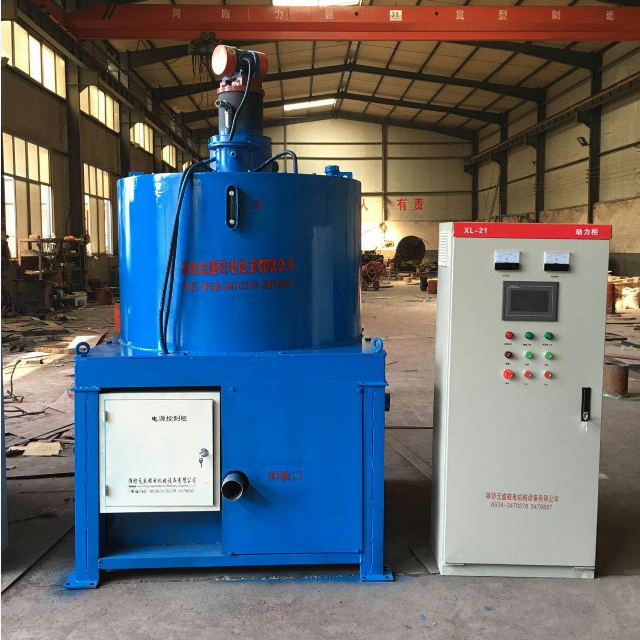
Wet processing splits into two cases that are often confused.
Case A — fine slurry. The YSDCS Series Wet Electromagnetic Slurry Iron Remover is a high-gradient electromagnetic separator for wet iron removal. Magnetic induction is 16,000–20,000 Gauss, excitation power ≤3.9 kW to ≤24.5 kW, production capacity 1–2 t/h to 15–30 t/h, mainframe weight 750–3,420 kg. It adapts to 200 mesh fine powder or particles in non-magnetic material, at concentration ≤30% and iron content below 1%. The chamber and piping are 304/316L stainless steel; the magnetic matrix is magnetically conductive stainless steel in mesh, steel wool or corrugated plate form; cooling is transformer oil with forced oil circulation and water cooling.
The high-gradient slurry separator used for ceramic glaze and battery material circuits operates on the same principle: pure-oil-insulated electromagnetic coil, a matrix of 30 high-permeability stainless steel plates, and automatic iron discharge by power-off demagnetization followed by water flushing. Iron removal efficiency is quoted as up to 98% for this configuration.
Case B — pipeline conveying of dry bulk or free-flowing liquid. Here the separator sits inline in a pipe rather than across a belt. The RCGZ Series Self-Cleaning Pipeline Permanent Magnetic Separator covers processing capacity of 80 t/h (RCGZ-100) to 1,100 t/h (RCGZ-1000), removable iron particle size up to 30 mm through 200 mm depending on model, motor power 0.37–3.0 kW, 380 V supply, and equipment weight 320–2,200 kg, with continuous automatic iron removal. The RCYZ Series covers the same pipeline role with models RCYZ-100 through RCYZ-1000, equipment weight 350–2,800 kg, and continuous automatic operation.
For liquid and thin-slurry lines, the RCYA-5 In-Line Permanent Magnetic Separator uses a high-performance rare earth permanent magnet with 304/316L stainless steel housing and available calibers of 108, 159, 219, 259 and 300 mm. Structural configurations include pipe type, grid type, inter type, plate type, roller type and hump box type.
Deciding parameter: whether the material is a slurry requiring high-gradient capture, or a flowing bulk stream requiring a large-aperture inline unit. The two are not interchangeable.
Step-by-Step Selection Checklist
Step 1 — Build a Material-State Table Before Choosing Anything
For every candidate separation point, record: particle size range, moisture condition (dry, damp, or slurry), slurry concentration, existing iron content, bed depth on the belt or pipe diameter, throughput, and operating temperature. Material handling equipment in these circuits is specified for operating temperatures from −20 °C to 300 °C, so temperature belongs in the table from the start rather than as a late correction.
Step 2 — Assign the Separation Principle
Dry bulk on a belt or in a chute → suspended permanent (RCYB, RCYC(D), RCYP-Ⅱ, RCY-K) or suspended electromagnetic (RCDA, RCDB, RCDE, RCDF). Dry fine powder → YSDC, YSDCG or DCFJ. Slurry → YSDCS or the high-gradient slurry separator. Pipeline bulk → RCGZ or RCYZ. Liquid and thin slurry → RCYA-5 or the YSXD in-line series.
Step 3 — Size the Unit from the Constraining Dimension
For suspended separators, the constraining dimensions are belt width, rated suspension height, and material thickness — all three must be satisfied simultaneously. For pulleys, the constraining dimensions are belt width, drum diameter and belt speed (≤2.5 m/s for the RCT series, ≤2.5 m/s for most suspended electromagnetic models). For powder systems, the constraining dimensions are throughput in t/h and mesh size. For pipeline units, the constraining dimension is throughput in t/h and the largest iron particle the line can carry.
Step 4 — Fix the Cleaning Method
Manual cleaning (RCYB, RCYP) suits positions with infrequent tramp iron and an accessible stopping point. Self-cleaning belts (RCYC(D), RCYP-Ⅱ, RCY-K, RCDF, RCDD) suit continuous positions that cannot be stopped. Automatic discharge with power-off demagnetization and water flushing suits wet high-gradient circuits. Pneumatic or fully automatic drawer systems suit enclosed powder lines where operator access is restricted.
Step 5 — Verify the Physical Installation Envelope
Check the actual suspension height available above the belt, the headroom for lifting lugs and chains, the space required to swing a self-cleaning discharge belt, and the structural load. A large oil-cooled suspended unit can weigh 10,500 kg, which changes the support design rather than simply the equipment selection.
Step 6 — Confirm Utilities and Control
Electromagnetic units require excitation power, and the larger models require cooling. Air-cooled units need fan power (RCDA: 0.15–1.3 kW). Oil-cooled units need oil circulation. Water-cooled high-gradient units need cooling water. Powder systems with PLC control need a control cabinet — the DCFJ standard type cabinet measures 300 × 400 × 540 mm, the high-magnetic-force type 350 × 500 × 600 mm.
Installation Considerations That Decide Real Performance
Suspension height is a hard constraint. The field strength quoted for a suspended separator is measured at the rated suspension height. Installing the unit 50 mm higher than rated reduces the field at the material surface. RCYB-4 is rated at 130 mm suspension with a 80 mm maximum material thickness at ≥45 mT; RCYB-16 is rated at 450 mm suspension with a 400 mm material thickness at ≥70 mT.
Belt speed limits capture. Suspended permanent models in the RCYB and RCYC(D) ranges are rated for belt speeds ≤2.5 m/s; the RCY-K armored belt separator is rated to ≤4.5 m/s, which is why it is specified for high-speed slag and DRI lines carrying sharp ferromagnetic material.
Inclined installations need an angle check. The RCYG Series Fine Iron Remover is installed at 50°–60°, with rotating speed 17–82 r/min, motor power 1.1–4 kW and 380 V supply. Installing outside that angle range changes the material travel over the drum.
Environment determines cooling and enclosure. The RCDE oil-cooled suspended separator is rated IP54 for a temperature range of −25 °C to +40 °C and is intended for dusty, humid and coastal salt-spray conditions. In those environments an air-cooled unit with an open air path may need a different maintenance interval.
Contact material follows the product, not the machine. Food, pharmaceutical and high-purity powder lines use 304/316L stainless steel contact parts and food-grade or sanitary-grade seals. Standard carbon steel housings are appropriate for ore and slag circuits where abrasion, not hygiene, is the constraint.
Maintenance Notes by Separator Family
- Manual permanent separators (RCYB, RCYP). Iron removal depends entirely on the cleaning routine. A loaded magnet face stops attracting. Define a cleaning frequency based on observed accumulation, not a fixed calendar interval.
- Self-cleaning belt separators (RCYC(D), RCYP-Ⅱ, RCY-K). Inspection points are the discharge belt, the scraper, and the drum-shaped self-aligning roller with sealed bearing housing. Armored belts are used where sharp contamination would damage a standard rubber belt.
- Electromagnetic suspended units (RCDA, RCDB, RCDE, RCDF). Monitor coil temperature, cooling fan operation or oil circulation, and the sealing condition of the housing. Oil-cooled models depend on the oil circuit remaining intact.
- Dry powder systems (YSDC, YSDCG, DCFJ). The YSDCG monitors oil temperature in real time and alarms and shuts down automatically; the cleaning cycle is 10 seconds per discharge. Insulating oil volume in DCFJ units ranges from 18 L to 70 L depending on model, so oil level checks belong on the routine list.
- Wet high-gradient units (YSDCS, slurry separators). Verify cooling water flow, matrix condition, and the power-off demagnetization and flushing sequence. Matrix fouling reduces capture without producing an obvious alarm.
- Pipeline units (RCGZ, RCYZ, RCYA-5). Check the drive chain and reducer on self-cleaning models, and confirm that the removable iron particle size still matches the line duty after any upstream process change.
Comparison Table: Stage, Series and Verified Parameters
| Process stage | Material state | Series to evaluate | Verified parameter range | Cleaning mode |
|---|---|---|---|---|
| Primary crushing feed | Dry bulk, thick bed (≤80–400 mm on RCYB) | RCYB / RCDA / RCDB | ≥45–70 mT; belt 400–2,000 mm; suspension 100–550 mm | Manual (RCYB); continuous (RCDA, RCDB) |
| Conveyor transfer point | Dry bulk, continuous flow | RCYC(D) / RCYP-Ⅱ / RCDF | ≥60–75 mT; belt 500–2,000 mm; drive 1.5–7.5 kW | Self-cleaning discharge belt |
| Head pulley / product discharge | Dry bulk, thin bed (≤40–260 mm) | RCT(RCTG) / CFLT | 1,500–1,800 Gs surface (optional to 8,000 Gs); drum Ø320–1,250 mm | Automatic drum discharge |
| Dry fine powder | 8–120 mesh dry powder, iron ≤1% | YSDC / YSDCG / DCFJ | 16,000–20,000 Gs; 0.2–10 t/h; excitation 3.9–24.5 kW | Automatic; 10 s discharge cycle (YSDCG) |
| Wet slurry | ≤200 mesh, concentration ≤30%, iron ≤1% | YSDCS / high-gradient slurry separator | 16,000–20,000 Gs; 1–30 t/h; mainframe 750–3,420 kg | Power-off demagnetization + water flushing |
| Pipeline conveying | Free-flowing bulk or liquid | RCGZ / RCYZ / RCYA-5 | 80–1,100 t/h (RCGZ); caliber 108–300 mm (RCYA-5) | Continuous automatic; manual on RCYA-5 |
Use Cases by Process Sector
Iron ore, coal and non-metallic mining. Suspended permanent and electromagnetic units at crusher feed and transfer points, with magnetic drums at head positions. The RCYB and RCDA series are both specified for belt conveyors, vibrating conveyors, electromagnetic vibrating feeders and feed chutes in mining, building materials, chemical, metallurgy and grain processing.
Cement and building materials. Pipeline self-cleaning units handle coarse powder from the separator, fine powder before the mill, and cement packaging pre-iron removal. The RCGZ Series is specified for cement, power generation, ceramics, brick and tile, chemical, food, glass, metallurgy and iron and steel applications.
Metallurgical slag and DRI. The RCY-K Armored Permanent Magnetic Belt Separator is designed for steel slag and water slag recovery, direct reduced iron plants, slag quenching workshops and foundry workshops — conditions with sharp ferromagnetic contamination that would destroy a standard discharge belt.
Ceramics and mineral slurry. Wet electromagnetic high-gradient units remove iron from glaze slurry, clay slurry, frit, feldspar powder, kaolin, quartz sand and pigments, with iron removal efficiency quoted at up to 98% for the high-gradient slurry configuration.
Lithium battery materials. Dry powder circuits use YSDC/YSDCG systems at 16,000–20,000 Gauss; cathode and anode slurry circuits use YSDCS wet electromagnetic separators. Both are specified for non-magnetic material with iron content below 1%.
Food, grain and chemical powder. In-line, drawer, rotary grate and box separators operate at 8,000–12,000 Gs surface strength with 304/316L housings and food-grade or sanitary-grade options, covering flour, starch, sugar, milk powder, spices, pharmaceutical powders and plastic pellets.
Frequently Asked Questions
What material conditions must be confirmed before a separator is selected for a stage?
Particle size, moisture or slurry concentration, existing iron content, bed depth or pipe diameter, throughput, and temperature. For dry powder systems the stated adaptation is 8–120 mesh, non-magnetic, dry material with iron content below 1%. For wet electromagnetic slurry separators the stated adaptation is 200 mesh material at concentration ≤30% and iron content below 1%. Equipment in these circuits is specified for operating temperatures from −20 °C to 300 °C. A separator chosen without these six values is a guess rather than a specification.
Can one separator type cover both the dry powder stage and the wet slurry stage?
No. The two stages use different machine architecture. Dry powder systems such as YSDC and YSDCG operate with a vibrating magnetic cavity, a dry matrix and a 10-second iron discharge cycle. Wet electromagnetic slurry separators such as YSDCS operate with a slurry cylinder and piping in 304/316L stainless steel, at concentration ≤30%, with transformer oil and forced-oil-circulation water cooling. A dry unit placed in a slurry line does not have the wetted construction, and a slurry unit placed in a dry powder line does not have the material-handling geometry.
What magnetic induction is required at the fine powder and slurry stages?
The electromagnetic series specified for these stages operate in the 16,000–20,000 Gauss range. The YSDC dry system is rated 16,000–20,000 Gauss; the YSDCG working chamber is rated 18,000–20,000 Gauss; the YSDCS wet slurry separator is rated 16,000–20,000 Gauss with excitation power from ≤3.9 kW to ≤24.5 kW depending on model. Bulk handling stages operate at a different scale entirely — suspended separators are quoted at ≥45–75 mT at rated suspension height, with high-strength T1/T2/T3 variants at 90, 120 and 150 mT.
Are custom configurations available for non-standard installation points?
Yes. For the YSDC series, system supporting accessories can be customised according to user requirements. Magnetic bars and grates can be customised in diameter, length and temperature resistance, with mounting options including pointed end, threaded holes M6/M8/M10/M12, screw rod and lifting ring. Pipeline in-line units offer flange connections customisable to pipeline specification. Drawer separators offer customised size and structure. Where a standard model does not fit the available headroom, the customisation conversation should happen before the structural design is frozen.
How do I request a sample, specification sheet or quotation for a specific stage?
Prepare the material-state table first — particle size, moisture or concentration, iron content, throughput, bed depth or pipe diameter, temperature, and the installation point in the flowsheet — then send it for review. Weifang Yuansheng Magnetic Electromechanical Equipment Co., Ltd. can be reached at ys@iron-separator.com or +86-155-5366-8212, and the product catalogue is available for download from the link at the end of this article. Sample evaluation and model confirmation are handled against the submitted process data rather than against a catalogue number alone.
Conclusion: Sequence the Separators, Then Size Them
Correct application of industrial magnetic separators in mineral processing follows the flowsheet, not a product list. Build the material-state table first, assign a separation point at each stage where contamination either enters or causes damage, then choose the equipment family that matches the material state at that point, and only then size the model against suspension height, belt width, throughput or pipe diameter.
The sequence that works: suspended permanent or electromagnetic units at crushing feed and transfer points for coarse tramp iron, magnetic pulleys and drums at head positions for final bulk protection, high-gradient electromagnetic systems at dry powder and wet slurry stages for fine and weakly magnetic contamination, and self-cleaning pipeline units where material travels in a pipe rather than on a belt.
Next Step
Send your process data — stage, material state, throughput and the installation point — and the appropriate series can be confirmed against verified specifications rather than assumed. Catalogue download: Weifang Yuansheng product catalogue (PDF).
Email: ys@iron-separator.com | Tel / WhatsApp: +86-155-5366-8212 | Website: www.iron-separator.com
Have Questions or Need More Details?
Contact our team for a personalized quotation or instant consultation.
Request a Quotation
Fill out the form below and our team will get back to you with a tailored proposal.
WhatsApp Direct Chat
Prefer to chat in real-time? Message us on WhatsApp for instant assistance & quick answers.
- Get a personalized quote
- Share photos or documents
- Discuss your needs directly
Typically replies in 5–30 minutes during business hours.