
How to Match Industrial Magnetic Separators to Your Application: A Scenario-Based Selection Guide
Matching an industrial magnetic separator to an application is a decision about material state, contaminant size, purity target and installation point — not about which unit carries the highest Gauss figure. A dry powder line, a wet slurry pipeline and a bulk conveyor stream all rely on the same physical principle, yet each imposes different constraints on the magnetic circuit, the matrix, the cleaning mechanism and the materials of construction. Units that perform well in one of those streams routinely underperform in another when they are selected from a specification sheet alone.
This guide works from application analysis to equipment matching. It covers the families used in real installations — YSDC and YSDCG dry electromagnetic powder systems, RCYZ and RCGZ pipeline separators, RCYB suspended separators, RCD-series suspended electromagnets, CFLT electromagnetic pulleys and YSDCS wet slurry removers — and sets out, for each family, the conditions it is designed for and the constraints a buyer should verify before committing to a configuration.
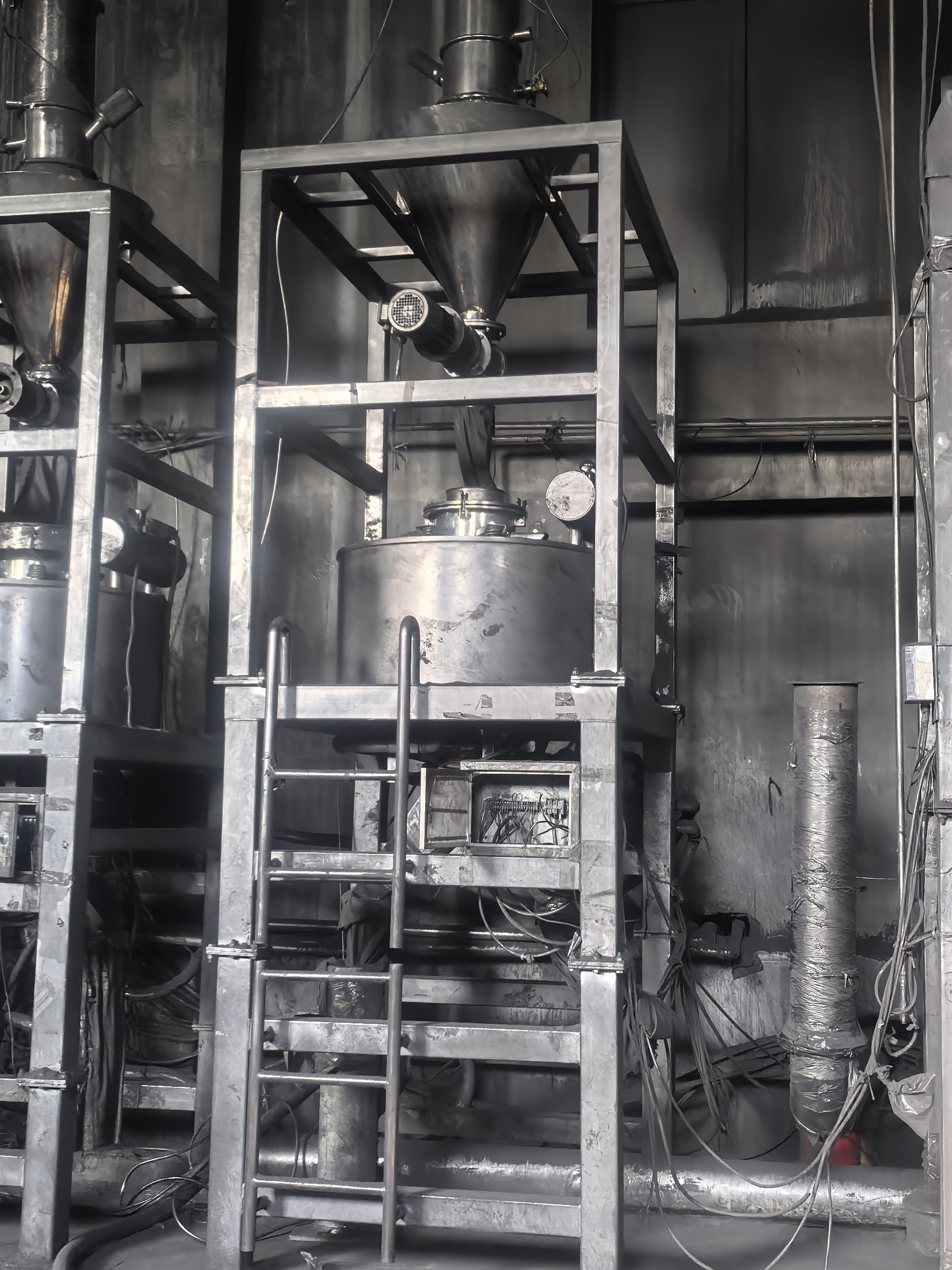
Parallel multi-unit iron removal system installed on a powder processing line — a documented configuration option when a single pass cannot reach the target purity.
The matching problem: why separator specifications do not transfer between applications
The most frequent mismatch in magnetic separation procurement is a unit chosen for its magnetic strength and then applied to the wrong material state. The documented operating boundaries make this explicit. The YSDC Series Dry Tandem Electromagnetic Powder Iron Removal System is adapted for 8–120 mesh fine dry powder or particles, non-magnetic material, in dry condition, with iron content of 1% or lower. The YSDCS Series Wet Electromagnetic Slurry Iron Remover is adapted for 200 mesh fine powder or particles in suspension, non-magnetic material, at a concentration of 30% or below, with iron content below 1%. Those two envelopes do not overlap: a 20,000 Gauss wet unit is not a higher-specification version of a dry unit, it is a different machine built for a different feed.
Seven constraints decide the family before any model number is discussed:
- Material state. Dry powder, wet slurry, bulk solid on a belt, or material inside a closed pipe. Each state has its own equipment family and matrix design.
- Particle and contaminant size. Dry powder systems work from 8 mesh down to fine powder; wet slurry systems are specified for 200 mesh material; pipeline separators are rated by the largest iron particle they can remove, from 30 mm to 200 mm across the RCGZ range.
- Iron content and purity target. Documented dry and wet powder and slurry systems assume feed iron content of 1% or less. That figure sets cleaning frequency and the number of units required.
- Installation geometry. Belt width, rated suspension height, material layer thickness and belt speed for conveyor-mounted units; pipe diameter and throughput for pipeline units.
- Cleaning mode. Manual cleaning, self-cleaning belt discharge, or fully automatic PLC-controlled discharge. A manual unit placed in a continuous line becomes a bottleneck.
- Materials of construction and environment. 304 or 316L stainless steel for wet, food, pharmaceutical and lithium battery duty; sealed IP54 housings for dusty, humid or salt-spray conditions.
- Destination market compliance. Certification scope is market-specific and should be checked against the actual unit, not assumed from a general company certificate.
Equipment selection therefore runs in one direction: application conditions first, equipment family second, model and parameters third. Reversing that order produces installations that are technically compliant on paper and ineffective in service.
What the magnetic separation market looks like in 2026
Third-party research places the global magnetic separator market at approximately USD 1.07 billion in 2024, with a projected compound annual growth rate of 5.0% through 2033 (Grand View Research). Estimates diverge by source depending on whether laboratory equipment is included — other research houses publish substantially higher figures — so any market number should be read together with its scope definition.
Three structural facts matter more for equipment selection than the headline size:
- Asia Pacific is the largest regional market, with a 43.8% revenue share in 2024, driven by industrialisation and mining activity (Grand View Research). China's magnetic separator market has been projected to grow at a 10.62% CAGR between 2023 and 2032, well above the global average (Apollo Research Reports).
- Drum-type separators hold the largest single product share, approximately 38% of revenue in 2024 (Future Market Insights) — a reminder that high-volume bulk handling, not fine purification, still dominates installed capacity.
- High-intensity electromagnetic separation has become the working baseline in battery material purification. Electromagnetic separators with flux densities above 16,000 Gauss are increasingly treated as the standard for lithium battery material purification lines (HTNXT industry analysis). The dry and wet electromagnetic families described below sit at or above that level, from 16,000 to 20,000 Gauss.
On compliance, industrial magnetic separators are commonly specified against ISO 9001:2015 for quality management, the CE Machinery Directive for EU/EEA supply, and IEC 60034-1 for motors — the framework buyers are typically asked to evidence during supplier qualification.
The application families and the equipment that fits each
Family 1 — Dry powder and fine granular flows
Dry powder iron removal is the most parameter-sensitive family, because the material must stay dry and free-flowing and the magnetic matrix must be matched to the mesh range. The documented boundary is 8–120 mesh, non-magnetic, dry, with iron content of 1% or below.
Two electromagnetic families cover most of this work. The YSDC Series Dry Tandem Electromagnetic Powder Iron Removal System is offered in models from YSDC-16 to YSDC-40-T2 with magnetic induction of 16,000–20,000 Gauss, excitation power of 3.9–24.5 kW and production capacity of 0.2–10.0 t/h on AC380V 50 Hz three-phase four-wire supply, with a carbon steel mainframe, electromagnetic coil and stainless steel material-contact parts, at mainframe weights of 850–3,700 kg. The YSDCG Series Electromagnetic Powder Magnetic Separator covers a closely related envelope at 16,000–18,000 Gauss, 3.9–19.6 kW excitation and 0.2–10.0 t/h, with mainframe weights of 550–2,580 kg.
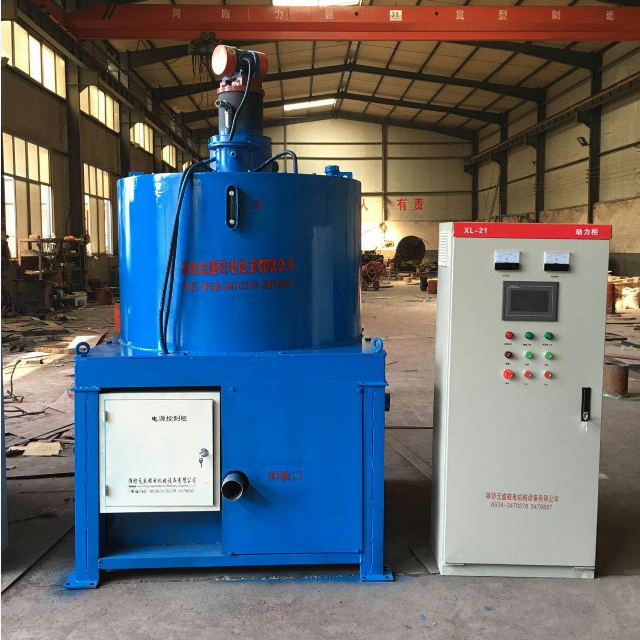
Where weakly magnetic impurities such as Fe₂O₃ must also be captured, the YSDCG dry electromagnetic powder iron remover documents a working-chamber field of 18,000–20,000 Gauss, a cleaning time of 10 seconds per iron discharge, forced oil circulation water cooling, a vibrating magnetic cavity, PLC intelligent control with a colour touch screen and manual operation panel, and real-time oil temperature monitoring with automatic alarm and shutdown. It can be used as a single unit or in multiple series or parallel combinations — the practical route when one pass cannot reach the target purity.
When the obligation is tramp metal rather than fine iron in a free-falling stream, three smaller formats apply: drawer magnetic separators at surface magnetic strength above 12,000 GS on Φ25 mm magnetic rods with square interfaces from 200 × 200 mm to 400 × 400 mm and round interfaces from DN150 to DN300; rotary grid separators at 8,000–12,000 Gs for powders with poor flowability or slight adhesion, where a static grate would bridge; and magnetic box separators (YSXF range) in the same magnetic range at throughputs of 6–70 t/h on a bran and flour basis.
For weakly magnetic mineral powders — quartz sand, feldspar, kaolin, kyanite, zircon, garnet and similar — the rare earth roll separator uses a NdFeB roll with maximum energy product above 42 MGOe and a thin Kevlar or Teflon belt of 0.08–0.5 mm, because the separation depends on keeping the particle close to the pole.

YSDCG series dry electromagnetic powder iron remover — working-chamber field of 18,000–20,000 Gauss with a 10-second discharge cycle.
Family 2 — Wet slurry and liquid process streams
Wet separation is constrained by concentration and by corrosion. The YSDCS Series Wet Electromagnetic Slurry Iron Remover is specified for 200 mesh fine powder or particles, non-magnetic material, concentration of 30% or below and iron content below 1%. Magnetic induction spans 16,000–20,000 Gauss, excitation power runs from ≤3.9 kW to ≤24.5 kW depending on model, and production capacity from 1–2 t/h to 15–30 t/h, with mainframe weights of 750–3,420 kg on AC380V 50 Hz three-phase four-wire supply.
The construction reflects the duty: an oxide-film or Class H high-temperature coil, a magnetically conductive stainless steel matrix in mesh, steel wool or corrugated-plate form, a 304 or 316L chamber and piping, transformer oil with forced oil circulation water cooling, and corrosion-resistant seals. Documented applications include lithium battery cathode and anode slurry and conductive slurry, ceramic glaze and clay slurry, kaolin and non-metallic mineral slurry, coatings, pigments and chemical slurry, electronic paste, and liquid food.
Where the required field is higher than the standard wet range, the DNCXJ slurry iron remover documents magnetic field strength up to 30,000 GS with pure oil insulation plus water circulation cooling, 30 magnetically conductive chips, an applicable mesh range of 8–1000, and power-off demagnetisation with water flushing automatic iron discharge; its documented iron removal efficiency is up to 98%. For liquids and dilute slurries that do not justify an electromagnetic circuit, the RCYA-5 in-line permanent magnetic separator provides a pipeline-format grate in 304/316L stainless steel with flange connection and a magnetic intensity documented at 10–25 times that of a conventional ferrite permanent magnet. Smaller in-line units in the YSXD range, at 8,000–12,000 Gs, serve machine tool coolant, cutting oil and pulp.
Wet electromagnetic slurry iron removal unit — specified for 200 mesh material at concentrations up to 30%.
Family 3 — Bulk solids on belt conveyors
Conveyor-mounted separation is governed by geometry. Four variables must be fixed before a model is chosen: belt width, rated suspension height above the burden, maximum material layer thickness, and belt speed.
The RCYB Series Suspended Permanent Magnetic Separator is the manual-cleaning option, covering belt widths of 400–1,600 mm, rated suspension heights of 130–450 mm, material thickness of 80–400 mm and magnetic field strength of 45–70 mT at a maximum belt speed of 2.5 m/s, with unit weights of 115–2,880 kg. High-strength versions are documented at T1 90 mT, T2 120 mT and T3 150 mT. It is designed for iron removal from non-magnetic materials on belt conveyors, vibrating conveyors, electromagnetic vibrating feeders and feed chutes, in mining, building materials, chemical, metallurgy and grain processing.
Where the line runs continuously, self-cleaning belt-discharge units remove the manual cleaning step. The RCYC(D) series covers belt widths of 500–2,000 mm, suspension heights of 150–550 mm, material thickness up to 500 mm, magnetic field strength of 65–75 mT and drive power of 1.5–7.5 kW, at weights of 750–9,700 kg, with T1/T2/T3 high-strength configurations at 90, 120 and 150 mT. The armored RCY-K range is designed for streams carrying sharp ferromagnetic contaminants, with iron absorption capacity documented at 0.1–36 kg for standard models and 0.1–50 kg for the T-series.
When a higher field or a larger working gap is required, suspended electromagnets replace permanent magnets. The RCDA air-cooled range covers belt widths of 400–2,000 mm, suspension heights of 100–550 mm and material thickness up to 500 mm, with excitation power of 0.6–25 kW, fan power of 0.15–1.3 kW and field strength of 50–70 mT. The RCDD self-cleaning disc separator, the RCDF oil-cooled self-cleaning separator and the RCDE oil-cooled suspended separator extend the same logic to heavier duty: the RCDE range runs belt widths of 400–2,200 mm, suspension heights of 120–600 mm, material thickness up to 550 mm, excitation power of 0.6–27 kW and field strength of 50–150 mT in an IP54 fully sealed, dustproof, rainproof and corrosion-resistant housing rated for −25 °C to +40 °C. Those figures matter in coal ports, mines and coastal installations where dust, humidity and salt spray are constant.
If the only available installation point is the head pulley, the CFLT Series Electromagnetic Pulley performs the separation there: pulley diameters of 500, 800 or 1,000 mm, belt widths of 500–1,400 mm, excitation power of 1–5.5 kW, rotating speeds of 60 or 47 r.p.m, torque of 1,750–8,000 N·m and unit weights of 610–4,050 kg.
RCYB suspended permanent magnetic separator — 400–1,600 mm belt width, 130–450 mm rated suspension height.
Family 4 — Closed pipeline and pneumatic conveying
Pipeline separation applies when the material never appears on an open belt. The RCYZ pipeline automatic permanent magnetic separator uses a motor-driven automatic cleaning mechanism for continuous operation, and is offered in models RCYZ-100, RCYZ-150, RCYZ-200, RCYZ-400, RCYZ-600, RCYZ-800 and RCYZ-1000 for pipeline conveying systems in cement, mining and building materials.
The RCGZ Series Self-Cleaning Pipeline Permanent Magnetic Separator documents processing capacities from 80–120 t/h up to 900–1,100 t/h, removable iron particle sizes from 30 mm to 200 mm depending on model, motor power of 0.37–3.0 kW on 380 V supply and equipment weights of 320–2,200 kg, with a stainless or carbon steel pipeline body featuring a wear-resistant inner wall and a cycloidal pin gear reducer drive. Documented applications include coarse powder from a separator, fine powder ahead of a mill and cement packaging pre-iron removal, as well as power generation, ceramics, brick and tile, chemical, food, glass and metallurgy.

RCGZ pipeline self-cleaning permanent magnetic separator — 80–1,100 t/h with continuous automatic iron discharge.
Family 5 — Fine iron and weakly magnetic mineral removal
Two situations sit outside the tramp-metal logic. The first is fine iron contamination in high-tonnage dry streams: the RCYG Series Fine Iron Remover handles productivities from ≤50 t/h to ≤400 t/h at magnetic field strengths of ≥4,000–4,500 Gs, with motor power of 1.1–4 kW, an installation angle of 50°–60°, drum speeds of 17–82 r/min and weights of 800–1,600 kg. It is documented for removing spherical iron pieces and fine contaminants such as small nuts, screws and steel balls from coal, refractory materials, ceramics, chemical, cement, building materials, grain, brick and tile, papermaking and mining streams.
The second is weakly magnetic mineral separation, where the contaminant itself is only feebly magnetic. Publicly reported benchmarks for high gradient magnetic separation record recovery rate improvements of 15–20% for hematite and ilmenite compared with standard-intensity units (Indian Bureau of Mines). That is the case for specifying a roll or high-intensity wet circuit rather than a conventional grate or plate magnet.
Step-by-step: running the matching process
- Characterise the material state. Dry powder, slurry, bulk solid or pipeline-conveyed. This single answer eliminates most of the range before any other variable is considered.
- Fix the constraint numbers from the feed. Mesh size, iron content, moisture or concentration, bulk density and temperature. The documented boundaries — 8–120 mesh dry, 200 mesh wet, iron content ≤1%, concentration ≤30% — are the gates that determine eligibility.
- Map the installation point. For a conveyor: belt width, available suspension height, maximum material layer thickness and belt speed, which for suspended units normally sits at or below 2.5 m/s. For a pipeline: diameter, throughput and the largest iron particle that can pass.
- Set the purity target and choose the matrix. Fine iron removal in powder depends on a magnetically conductive stainless steel matrix; capture of weakly magnetic impurities such as Fe₂O₃ requires a higher working-chamber field, documented at 18,000–20,000 Gauss on the YSDCG dry powder unit.
- Decide the cleaning mode. Manual cleaning suits intermittent or low-contamination streams; self-cleaning belt discharge and PLC-controlled automatic discharge suit continuous production where a manual clean would stop the line.
- Confirm the compliance package for the destination market. Check the certificate scope against the series actually being purchased, not the supplier's general quality certificate.
- Size the unit and verify the auxiliaries. Confirm power supply, cooling arrangement, control interface, spares availability and warranty terms, then finalise model and quantity.
Three worked scenarios
Scenario A — Ceramic raw material or chemical powder line, dry. The feed is a non-magnetic dry powder in the 8–120 mesh band with iron content under 1%, and the line runs continuously. The material state permits the dry electromagnetic powder families. Because the line does not stop for cleaning, an automatic discharge configuration is preferable; the YSDCG dry electromagnetic powder unit documents a 10-second discharge cycle with PLC control. If a single pass does not reach the purity target, multiple units can be operated in series or parallel, which is a documented configuration option rather than a custom modification.
Scenario B — Lithium battery cathode or anode slurry. The feed is a 200 mesh suspension at 30% concentration or below, and the contact parts must resist corrosion. This sits inside the YSDCS specification envelope at 16,000–20,000 Gauss and 1–2 t/h to 15–30 t/h. Where the residual iron target is tighter, the higher-intensity DNCXJ configuration documents field strength up to 30,000 GS with automatic iron discharge by power-off demagnetisation and water flushing.
Scenario C — Cement or coal conveyor and pipeline stream. Bulk material moves on a belt from 500 mm to 2,000 mm wide, and the objective is protection of downstream crushers, roller presses and vertical mills. The first decision is geometry: suspension height above the burden and material layer thickness. Permanent self-cleaning units handle continuous duty at 65–75 mT; where the burden is deeper or the environment is dusty, humid or salt-laden, an oil-cooled suspended electromagnet with an IP54 housing rated from −25 °C to +40 °C is the documented fit. Where the same material is also handled in a closed pipe run, an RCGZ self-cleaning pipeline separator covers 80–1,100 t/h with continuous automatic discharge.
Across documented installations with ceramic processors, battery material manufacturers, quartz sand plants, foundries and steel plants — involving multi-unit systems and service periods from 1.5 to 5 years — recorded outcomes include iron removal above 98%, Fe levels below 5 ppm, impurity levels below 10 ppm and recovery improvements of approximately 15%. Those figures describe specific projects and should be treated as reference outcomes rather than a guaranteed performance specification for every feed.
Scenario-to-equipment comparison table
The table below maps application scenarios to equipment families using documented parameters. It is a screening tool for the first decision, not a substitute for a configuration review against a specific material sample.
| Application scenario | Equipment family | Critical constraint to verify | Documented parameters | Cleaning mode |
|---|---|---|---|---|
| Dry powder or granular flow, 8–120 mesh, iron content ≤1% | YSDC dry tandem electromagnetic powder system; YSDCG electromagnetic powder separator; DCFJ electromagnetic powder separator | Material must be dry and non-magnetic; mesh range and iron content | 16,000–20,000 Gauss; excitation 3.9–24.5 kW; 0.2–10.0 t/h; mainframe 850–3,700 kg (YSDC). DCFJ: 5–20 t/h; 200–1,400 kg | Automatic; YSDCG discharge cycle 10 s with PLC control |
| Wet slurry or liquid, 200 mesh, concentration ≤30% | YSDCS wet electromagnetic slurry iron remover; DNCXJ slurry iron remover; RCYA-5 in-line separator | Concentration ≤30%; iron content <1%; corrosion-resistant contact parts | 16,000–20,000 Gauss; excitation ≤3.9 to ≤24.5 kW; 1–30 t/h; mainframe 750–3,420 kg. DNCXJ: up to 30,000 GS; efficiency up to 98% | Automatic; power-off demagnetisation with water flushing on DNCXJ |
| Bulk solids on belt conveyor, tramp metal | RCYB suspended permanent magnet; RCYC(D) and RCYP-Ⅱ self-cleaning; RCY-Q light type; RCY-K armored | Belt width, suspension height, material layer thickness, belt speed ≤2.5 m/s | RCYB: 400–1,600 mm belt; 130–450 mm suspension; ≥45–70 mT. RCYC(D): 500–2,000 mm belt; ≥65–75 mT; drive ≤1.5–7.5 kW | Manual cleaning (RCYB) or automatic belt discharge |
| High-capacity conveyor streams in dusty, humid or coastal environments | RCDA air-cooled; RCDD disc self-cleaning; RCDF oil-cooled self-cleaning; RCDE oil-cooled suspended electromagnets | Excitation power, cooling method, enclosure rating, ambient temperature range | RCDE: 400–2,200 mm belt; 120–600 mm suspension; 50–150 mT; excitation ≤0.6–27 kW; IP54; −25 °C to +40 °C | Automatic belt discharge |
| Closed pipeline or pneumatic conveying of dry bulk | RCYZ pipeline automatic separator; RCGZ self-cleaning pipeline separator | Pipe diameter, throughput, largest removable iron particle | RCGZ: 80–1,100 t/h; iron particle ≤30–200 mm; motor 0.37–3.0 kW; 320–2,200 kg | Continuous automatic |
| Fine iron in high-tonnage dry streams; weakly magnetic minerals | RCYG fine iron remover; rare earth roll separator; magnetic drum and CFLT electromagnetic pulley | Particle size, magnetic susceptibility of the contaminant, feed layer thickness | RCYG: ≤50–400 t/h; ≥4,000–4,500 Gs; angle 50°–60°. Rare earth roll: NdFeB >42 MGOe; belt 0.08–0.5 mm. CFLT: pulley 500–1,000 mm; belt 500–1,400 mm | Automatic (drum, roll or pulley discharge) |
Frequently asked questions
1. Which certifications should be verified before purchasing an industrial magnetic separator?
Two certificates are commonly requested, and their scope should be checked against the exact series being purchased. ISO 9001:2015 quality management certification is held under certificate number 78323Q00343R0S, issued by POCNC (Zhongliang Certification (Shandong) Co., Ltd.) to the standard GB/T19001-2016/ISO9001:2015, covering the production of separators, magnetic separators and demagnetizers. For EU/EEA supply, the separator series RCYB/RCDB/RCDD/RCYD/MW holds a Machinery Directive Attestation of Conformity issued by UDEM Uluslararası Belgelendirme Denetim Eğitim Merkezi San. ve Tic. A.Ş. under certificate number M.2025.206.C119055, against EN ISO 12100:2010 and EN 60204-1:2018. Buyers should also confirm that the unit's series appears in the certificate scope, and may reference ISO 9001:2015, the CE Machinery Directive and IEC 60034-1 for motors as the general compliance framework for this equipment category.
2. Can one magnetic separator handle both dry powder and wet slurry in the same plant?
Not within a single unit. Dry and wet separation have separate specification envelopes that do not overlap. Dry electromagnetic powder systems such as the YSDC and YSDCG series are adapted for 8–120 mesh dry powder or particles, non-magnetic material, in dry condition, with iron content of 1% or below, at 16,000–20,000 Gauss and 0.2–10.0 t/h. Wet electromagnetic slurry units such as the YSDCS series are adapted for 200 mesh fine powder or particles at a concentration of 30% or below and iron content under 1%, at 16,000–20,000 Gauss and 1–30 t/h. A plant processing both streams typically installs one unit of each family. Where a single dry powder unit cannot reach the target, the documented alternative is multiple units in series or parallel, not a switch to wet-duty equipment.
3. What drives the cost of an industrial magnetic separator system?
Cost follows configuration rather than a fixed price band, and four documented variables dominate it. The first is the magnetic circuit and excitation power: within the dry powder range, excitation spans 3.9–24.5 kW; within the wet slurry range, from ≤3.9 kW to ≤24.5 kW; suspended electromagnets range from 0.6 kW to 27 kW, and larger or higher-intensity circuits require proportionally larger coils and housings. The second is the cooling method — air cooling with fan power of 0.15–1.3 kW, oil cooling, or forced oil circulation water cooling on high-intensity powder and slurry units. The third is the cleaning and control arrangement: a manual cleaning unit costs less than a self-cleaning belt unit with a gear motor, and a PLC-controlled unit with a colour touch screen and oil temperature monitoring adds instrumentation. The fourth is materials of construction and documentation — 304 or 316L contact parts for corrosive, food or battery duty, and market-specific certification evidence. Because these variables interact, quotations should be requested against a defined material and installation data set rather than against a model number alone.
4. Can a single unit be ordered to validate performance before committing to a full line?
The documented minimum order quantity is 1 unit, which allows one separator to be run against a plant's own material before a multi-unit or line-level order. Customisation is offered under OEM/ODM across magnetic field strength, size, voltage, material, logo and colour, so a validation unit can be specified close to the intended production configuration rather than as a standard catalogue item. Every unit is documented as 100% inspected before shipment. To make a validation run meaningful, prepare the mesh or particle size distribution, moisture content for dry feed or concentration for slurry, current iron content, target iron level, throughput in t/h and the intended installation point.
5. What is the typical lead time, and what information is needed to start?
Documented lead time is 30–45 days, against a monthly production capacity of 300 units, with a 12-month warranty and remote support and spare parts supply after delivery. To open a project review with Weifang Yuansheng Magnetic Electromechanical Equipment Co., Ltd., send the material state, mesh or particle size, iron content, throughput, installation point and destination market to ys@iron-separator.com or WhatsApp +86 155-5366-8212. For an initial overview of the full equipment range, the company brochure can be downloaded here: https://cdn.socialarks.com/sbsp/24758/0/2026/0413/69dc6355c3ece.pdf
Conclusion: application first, equipment second
Matching an industrial magnetic separator to an application reduces to a sequence that can be completed in a single engineering review: establish the material state, fix the constraint numbers, map the installation geometry, set the purity target, choose the cleaning mode, confirm the compliance package and size the unit. When that sequence is followed, the equipment family is largely determined before any discussion of magnetic strength begins.
Weifang Yuansheng Magnetic Electromechanical Equipment Co., Ltd. is a manufacturer of magnetic and electrical separation equipment based in Linqu County, Weifang City, Shandong Province, China, established in 2011. Its product range includes permanent and electromagnetic separators, pipeline separators, magnetic drums and pulleys, and dry and wet powder and slurry iron removal systems, and the full range is documented at www.iron-separator.com.
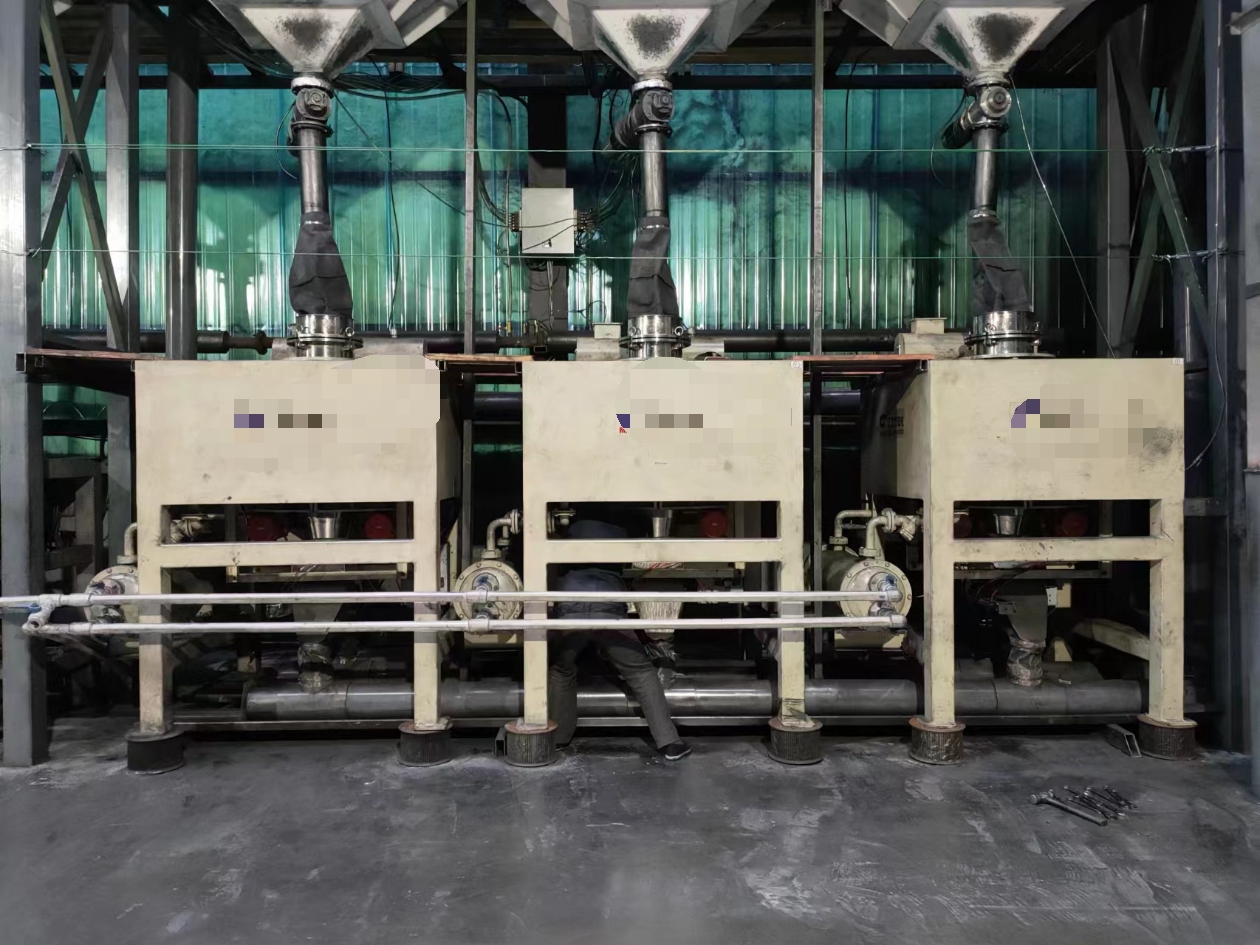
On-site installation of industrial magnetic separators in a continuous processing line.
Next step
Send your material state, mesh size, iron content and throughput, and the application-matching review will return a recommended equipment family, model range and configuration for your line.
Email: ys@iron-separator.com | WhatsApp: +86 155-5366-8212 | Brochure: download the product catalogue (PDF)
Have Questions or Need More Details?
Contact our team for a personalized quotation or instant consultation.
Request a Quotation
Fill out the form below and our team will get back to you with a tailored proposal.
WhatsApp Direct Chat
Prefer to chat in real-time? Message us on WhatsApp for instant assistance & quick answers.
- Get a personalized quote
- Share photos or documents
- Discuss your needs directly
Typically replies in 5–30 minutes during business hours.