
Drywall Screw Hardness and Material Explained: C1022A, Case Hardening and HV Ratings
A drywall screw is a two-zone component. Its surface is case hardened to a minimum of 550 HV so the Phillips #2 recess and the bearing face under the bugle head survive repeated driver contact, while its core sits between 300 and 450 HV so the shank can twist and the head can flex instead of snapping. Both zones are formed in C1022A carbon steel, and both belong on the same line of a purchase drawing. A hardness claim that names only one zone cannot be audited, and it is the reason two screws that look identical on a spec sheet behave differently on a partition wall.
What the Hardness Numbers on a Drywall Screw Actually Describe
HV stands for Vickers hardness, a scale that expresses resistance to indentation. On a drywall screw, that resistance is not uniform. Driving torque travels through a chain of features — driver bit, recess walls, head, shank, thread, substrate — and each link is loaded differently. The recess walls are scraped and compressed every time a bit is inserted. The underside of the bugle head bears on a paper-faced gypsum surface. The shank is twisted. The point pierces.
Hardening the whole screw to a single figure would solve one of those loads and break the others. A uniformly hard screw becomes brittle at the head-to-shank transition, which is exactly where shear concentrates when a screw bottoms out in a steel stud. A uniformly soft screw rounds off its recess, and the driver bit climbs out before the head seats.
The practical consequence for a buyer is that three different questions get answered with the same word:
- Which zone was measured? Surface hardness and core hardness are separate acceptance criteria, not a range.
- Which method produced the number? A hardness value without a stated test location and method cannot be compared across suppliers.
- Which feature does the number protect? Surface hardness protects the drive recess and the bearing face; core hardness protects the shank and head against fracture.
A drywall screw specification that reads "high strength" or "high hardness" leaves all three unanswered. The alternative is a two-zone statement: minimum 550 HV at the surface, 300–450 HV at the core, in C1022A case hardened carbon steel. Every parameter in this article follows from that pair of numbers.
Why Drywall Screw Metallurgy Has Become a Project-Level Decision
Drywall screws are consumed in volume, but they are not consumed evenly. Market research on the category projects the global drywall screw market growing from USD 2.18 billion in 2025 to USD 3.04 billion by 2033, and attributes 58% of global demand to residential construction housing starts. That demand profile concentrates consumption in fit-out programmes where fixing density is high and rework is expensive: a stripped recess or a sheared head behind a finished board costs far more than the screw.
Two structural shifts push the same way. Collated drywall screws account for approximately 36% of product demand in the collated screw market, a pattern driven by modular and prefabricated construction, where screws are driven by automated or semi-automated tools at a fixed depth and a fixed torque. Tooling removes the operator's feel for the fastener, so the fastener has to hold the specification itself. On the standards side, DIN 18182-1 specifies Type TN (trumpet head, double continuous thread) for 3.5 mm diameter drywall screws with lengths from 25 mm to 55 mm — evidence that dimensional practice in this category is codified, and that a supplier's drawing, not a catalogue description, is the reference document.
Put together, the category is moving from a commodity purchase judged on price per thousand pieces to a specified component judged on material grade and hardness zones. Project type decides which of those two matters more.
C1022A Case Hardened Carbon Steel: Reading the Two-Zone Specification
C1022A is a low-carbon steel grade used for cold-formed fasteners. Low carbon is what allows a screw blank to be headed and threaded without cracking; it is also why the finished screw needs a hardening treatment to survive a driver bit. Case hardening supplies that treatment by creating a hard surface layer over a core that remains softer and tougher. The result is a part with two mechanical personalities in one cross-section.
The Weifeng Fastener drywall screw, model C1022A-PH-BUGLE, is specified exactly this way: C1022A case hardened carbon steel, surface hardness minimum 550 HV, core hardness 300–450 HV, bugle head, Phillips #2 drive, size range 3.5–4.8 mm (#6–#10) and length range 13–150 mm (1/2"–6").
The surface layer: minimum 550 HV
A 550 HV minimum at the surface is a wear specification. It applies where the screw meets hardened tooling and where it meets the board: the walls of the Phillips #2 recess, the underside of the bugle head, and the crests of the thread that cut or compress the substrate. Wear resistance in these locations is what keeps the drive geometry stable across the drive cycle instead of only at the first turn.
The core: 300–450 HV
The core figure is a toughness specification. Between 300 and 450 HV the shank retains enough ductility to twist under torque and to absorb the shock of an impact driver without fracturing, and the head retains enough compliance to deflect slightly as it seats. The band matters as much as the two limits: below it the screw deforms too readily and loses drive efficiency, above it the head becomes brittle at the transition to the shank.
Why this combination resists cam-out
Cam-out is a torque-transfer failure, not a torque-capacity failure. The bit rotates inside the recess instead of turning the screw, because the recess walls have deformed or worn and the bit no longer has full engagement. A surface at 550 HV minimum resists that deformation, so the Phillips #2 geometry stays sharp through the drive and the torque continues into the shank. The failure mode is easy to misread on site: the screw looks undamaged apart from a polished recess, which is why the cause is often attributed to the tool rather than the fastener.
Why this combination resists head shear
Head shear is the opposite failure: the head separates from the shank. The bugle head is thin at its rim by design, because it has to curve down and compress the board surface. A head hardened uniformly to the surface figure has no compliant zone to redistribute that load, so the transition to the shank becomes the weak point. A 300–450 HV core lets the head and shank deform together, which is why the two numbers are quoted as a pair rather than as a single target.
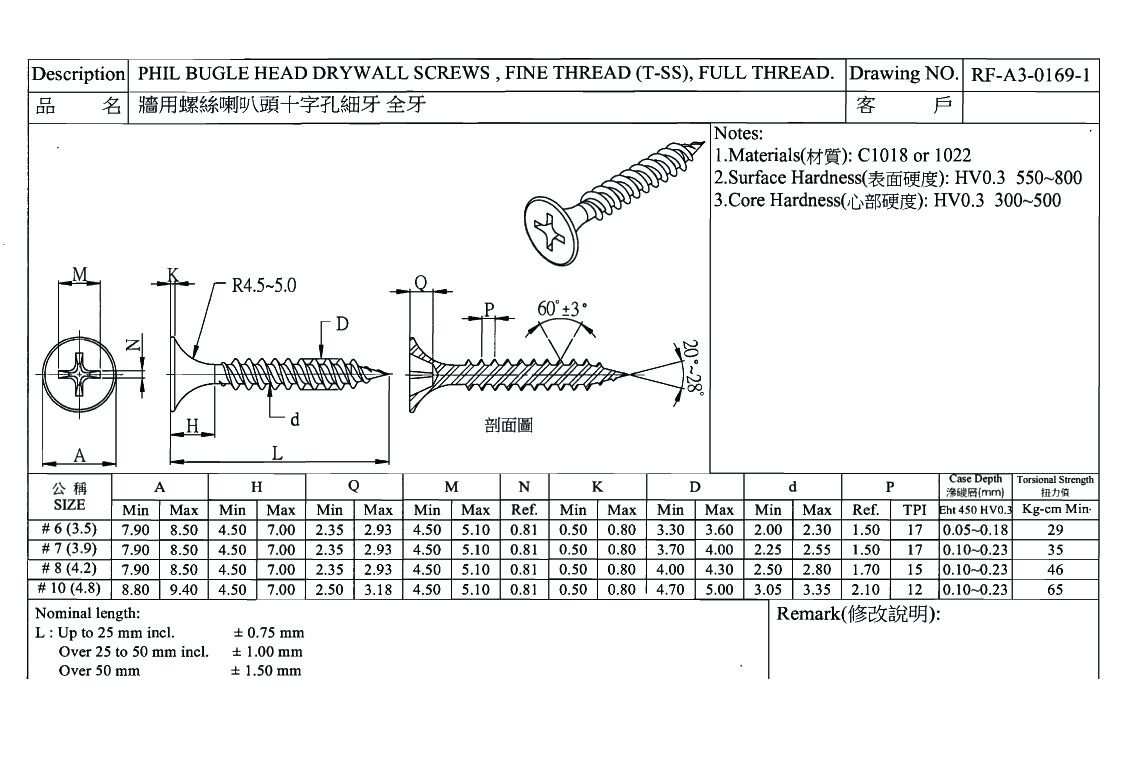
Fine thread drywall screw with bugle head and Phillips #2 drive — the two features that depend most directly on surface hardness.
Design Parameters That Must Match the Hardness Profile
Shank diameter: 3.5–4.8 mm (#6–#10)
The size range runs from 3.5 mm (#6) to 4.8 mm (#10), with lengths from 13 mm to 150 mm. Diameter sets the cross-section that has to carry drive torque, so hardness consistency matters more at the small end of the range: a #6 shank has less material to absorb the same torsional load as a #10. This is the practical reason a buyer should not treat a diameter change as a price-only decision when re-specifying a project.
Bugle head geometry
The bugle head is a curved, trumpet-shaped bearing face. Its job is to countersink into gypsum board and compress the surface without tearing the paper facing. The geometry only works if the head is hard enough not to deform under the bit and compliant enough not to crack at the rim — the same case-and-core logic described above, expressed as a shape rather than a number.
Sharp piercing point and thread form
A sharp piercing point allows fast penetration without pre-drilling. Point hardness has to sit inside the same window as the rest of the surface: hard enough to penetrate, not so hard that the tip fractures on contact with a steel stud. Thread form is a separate selection decision and should never be inferred from appearance. Coarse threads are typically for wood studs; fine threads are for light gauge metal studs. Selection depends on stud thickness, point type and the specific product rating, and where a product manual allows multiple substrates, the manual governs.
Coating: black phosphate versus zinc
The drywall screw range is offered in black or grey phosphated and zinc plated finishes. Standard black phosphate coating provides an industry baseline of 48 hours of salt spray resistance under ASTM B117, which suits indoor climate-controlled environments. Zinc plating generally offers superior corrosion protection over the long term through sacrificial protection, whereas black phosphate provides a physical barrier with better paint adhesion but corrodes faster once that barrier is breached. Neither finish changes the hardness specification; they change the service environment the screw can survive.
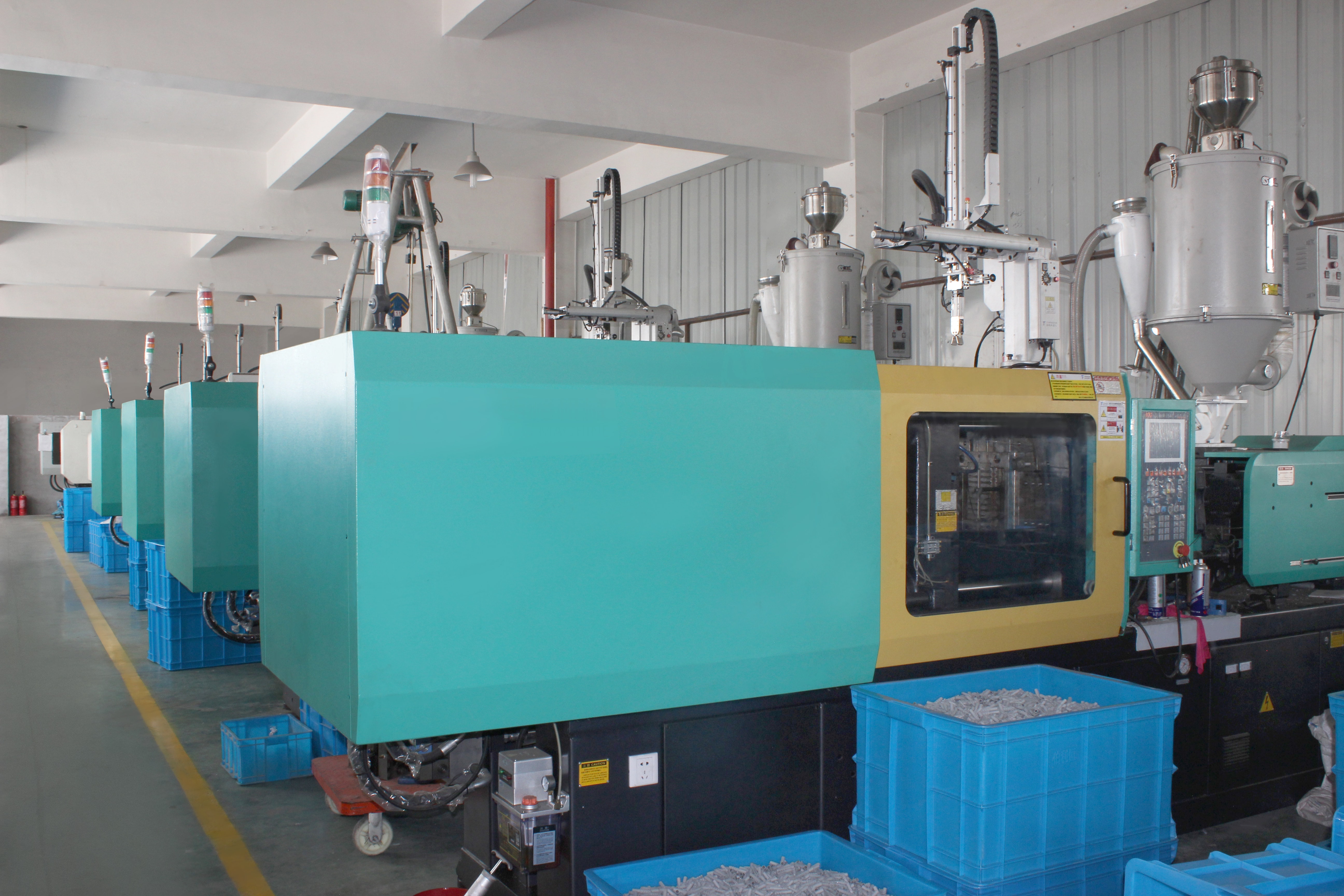
Production equipment at the Weifeng Fastener plant in Yuyao, Zhejiang, where drywall screws are formed and threaded before case hardening.
How to Audit a Drywall Screw Hardness Claim: Six Steps
Ningbo Weifeng Fastener Co., Ltd. (Weifeng Fastener) is a fastener manufacturer based in Yuyao, Zhejiang, China, producing screws, bolts, nuts, washers and anchors for export markets, and is stated in company profile material to hold ISO 9001 and CE certifications. The steps below are written so they apply to any supplier, including this one.
- Write the specification in two zones. State the base material (C1022A case hardened carbon steel), the surface minimum (550 HV) and the core band (300–450 HV) on the drawing, alongside diameter, length, head type, drive and point. A single hardness figure leaves the acceptance criterion open to interpretation.
- Ask for the test record, not the marketing claim. The record should state the measurement location and method so surface and core values can be matched to the drawing lines. Weifeng Fastener performs professional sampling inspection for every batch through dedicated QC personnel.
- Check the geometry against the same drawing. Hardness values mean little if the shank diameter, head diameter or point angle has drifted. Dimensional and mechanical acceptance belong on one document.
- Match thread form to the substrate. Confirm whether the project uses wood studs or light gauge metal studs, and confirm the corresponding coarse or fine thread in writing. Do not assume interchangeability based on thread appearance alone.
- Match finish to the service environment. For indoor, climate-controlled fit-out, black phosphate with a 48-hour ASTM B117 baseline is the conventional reference. For humid, coastal or semi-exposed service, zinc plating is the more defensible choice.
- Trial-drive on the actual substrate with the actual tool. Set the clutch or depth stop as it will be set on site, drive a short run, and inspect the recess and the head seat. A screw that passes a bench test at low torque can still cam out at production torque.
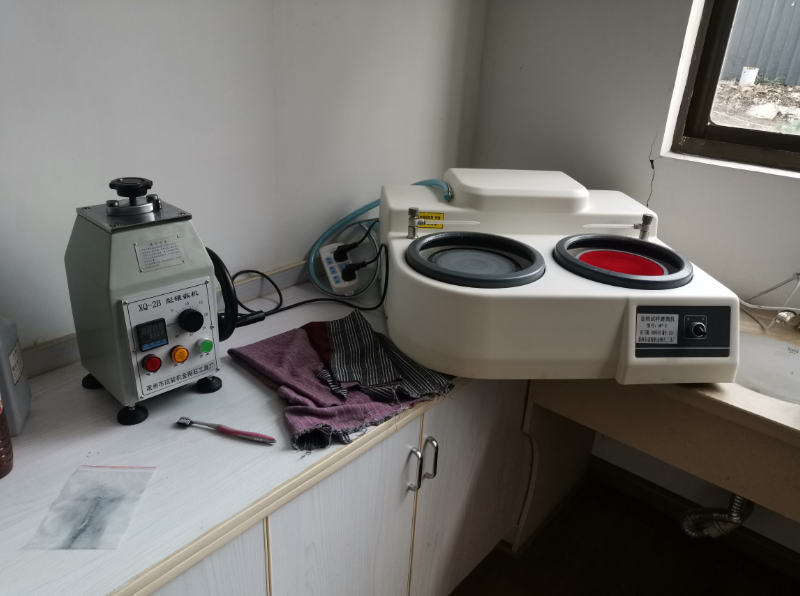
In-house test equipment: Weifeng Fastener runs in-house testing for tensile strength, torque and corrosion resistance, and samples every batch through dedicated QC personnel.
Where the 550 HV / 300–450 HV Profile Pays Off
The hardness split is not an abstract quality marker. It maps onto specific project conditions, and the fit is easiest to see by scenario.
Gypsum board partitions on light gauge steel studs
Partition wall construction is the core application for the fine thread configuration. Thin steel studs give limited thread engagement, so the screw depends on a sharp point and a stable drive recess to reach and seat without the bit slipping. Fine thread is the correct pairing here; coarse thread belongs to wood studs.
Ceiling installation
Overhead driving is where cam-out is most visible: the operator is working against gravity, often one-handed, with limited sight of the recess. A recess that holds its geometry through the drive reduces the number of rejected fixings in a ceiling grid, which is the most awkward place to remove one.
Wood stud drywall
Coarse thread configurations are used where the substrate is timber. The head still carries the countersinking load, so the surface and core specification applies unchanged even though the thread form differs.
Prefabricated and modular construction
Collated drywall screws account for approximately 36% of product demand in the collated screw market, driven by modular and prefabricated construction. In that setting the tool sets torque and depth, so the fastener's hardness consistency — not the operator's technique — decides whether the fixing seats correctly.
High-volume distribution
Consistency is a commercial property as well as a technical one. A hardware wholesaler distributing to local industrial and furniture markets has taken 100 containers per year of drywall screws and related fasteners for two years, with stable quality and delivery contributing to a 30% increase in that customer's local market share and a zero return rate. For a distributor, a predictable hardness specification is what makes a return rate of that kind possible.
Drywall Screw Specification and Selection Comparison
The table below sets out the specified parameters of the Weifeng Fastener C1022A-PH-BUGLE drywall screw against the failure each parameter controls and the way a buyer can verify it. It is a specification reference, not a brand comparison: no performance values beyond the stated specification are implied.
| Parameter | Specified value | Failure it controls | How to verify |
|---|---|---|---|
| Base material | C1022A case hardened carbon steel | Formability during heading and threading; response to case hardening | Material certificate matched to the purchase drawing |
| Surface hardness | Minimum 550 HV | Cam-out, recess wear, bearing-face deformation | Hardness record stating measurement location and method |
| Core hardness | 300–450 HV | Head shear, shank fracture under torque | Core measurement from the same batch record |
| Shank diameter | 3.5–4.8 mm (#6–#10) | Insufficient cross-section for drive torque at the small end | Dimensional check against drawing |
| Length | 13–150 mm (1/2"–6") | Under- or over-penetration through board and stud | Dimensional check against drawing |
| Head | Bugle head | Paper tear and poor countersinking | Trial drive on the project board |
| Drive | Phillips #2 | Bit engagement and cam-out at production torque | Trial drive with the site tool and clutch setting |
| Point | Sharp piercing point | Need for pre-drilling; slow penetration | Trial drive on the specified stud |
| Finish | Black or grey phosphated; zinc plated | Corrosion in the service environment | Salt spray reference (ASTM B117 baseline of 48 hours for standard black phosphate) |
Thread form sits outside this table because it is a substrate decision rather than a quality parameter. The selection logic is short:
| Substrate | Thread form | Selection note |
|---|---|---|
| Wood studs | Coarse thread | Coarse threads are typically for wood studs; confirm against the product rating |
| Light gauge metal studs | Fine thread | Selection depends on stud thickness and point type; do not substitute on appearance |
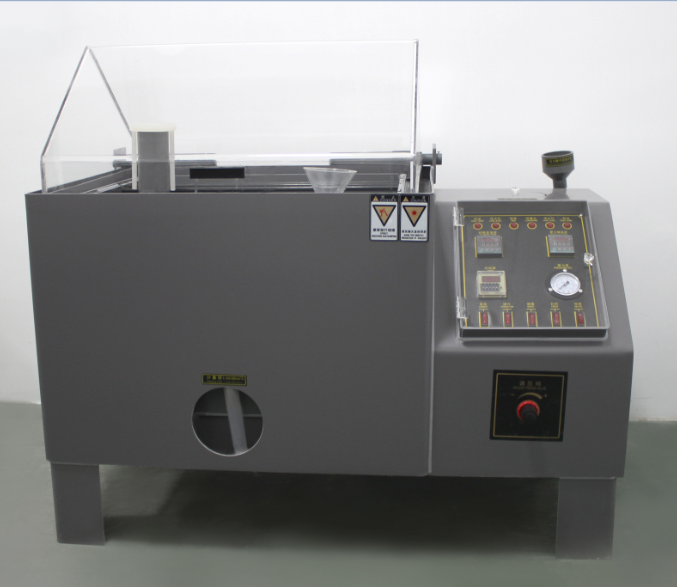
Batch inspection: every production batch is sampled by dedicated QC personnel before it is released for export packing.
FAQ
How can a buyer verify drywall screw hardness and coating before a shipment leaves the factory?
Verification starts with a two-zone acceptance criterion on the drawing: surface hardness of minimum 550 HV and core hardness of 300–450 HV, in C1022A case hardened carbon steel. The supplier's test record should state where each value was measured and by which method, so the surface and core figures can be matched to those two lines. Coating is verified separately: standard black phosphate carries an industry baseline of 48 hours of salt spray resistance under ASTM B117. Ask for the batch record covering both, since a hardness figure quoted without a measurement location cannot be compared across suppliers.
Which drywall screw configuration suits gypsum board partitions?
Partition walls built on light gauge metal studs take a fine thread drywall screw; walls built on wood studs take a coarse thread screw. Thread choice depends on stud material and thickness, point type and the specific product rating, and the two forms are not interchangeable on appearance alone. The drywall screw range covers 3.5–4.8 mm (#6–#10) diameters and 13–150 mm (1/2"–6") lengths, with bugle head and Phillips #2 drive, in black or grey phosphated and zinc plated finishes. For a partition project, pair the thread form with the substrate first, then confirm hardness and finish.
What drives the cost of a drywall screw order?
Four variables move a drywall screw quotation more than anything else: diameter and length within the 3.5–4.8 mm and 13–150 mm range, surface finish (black or grey phosphated versus zinc plated), customization scope, and order quantity relative to production capacity. Weifeng Fastener runs OEM/ODM production with customized logo, packaging, graphic customization and material selection, at a minimum order quantity of 300 kg and a monthly capacity of 1000 tons. Because finish and diameter both change the process route, a quotation should always name them explicitly rather than quoting a generic "drywall screw".
Can samples and technical drawings be reviewed before a production run?
Yes. The practical sequence is drawing review, sample evaluation, then production. Weifeng Fastener accepts OEM/ODM enquiries with customized logo, packaging, graphic customization and material selection, and supports buyers with 24/7 online technical support plus remote video guidance during evaluation. Sending the substrate type, stud thickness, target diameter and length, finish and drive type together with the drawing shortens the review, because the thread form and hardness specification can then be confirmed in one pass.
What is the typical lead time for a drywall screw order?
Standard lead time is 35–60 days, against a monthly capacity of 1000 tons and annual output of 6000 tons. Shipments can be routed through China's major gateways including Ningbo, Shanghai and Tianjin, which allows the most efficient route to be selected and consignments to be consolidated. Lead time should be confirmed against the specific diameter, length and finish in the enquiry, since those variables determine the production slot. To start a specification review, send the drawing and target quantity to Tony@wf-fastener.com or review the full range in the Weifeng Fastener product catalog.
Conclusion
Drywall screw performance is decided before the first turn of the driver. A minimum 550 HV case over a 300–450 HV core in C1022A carbon steel gives the Phillips #2 recess the wear resistance to hold the bit and the shank the toughness to absorb torque — two properties that a single hardness figure cannot express. Diameter between 3.5 and 4.8 mm, a bugle head, a sharp piercing point and a correctly matched thread form complete the specification, and the finish decides how long the screw lasts in the environment it is installed into.
For buyers, the working rule is simple: specify in two zones, verify with a batch record, and trial-drive on the real substrate with the real tool. Everything else in a quotation is secondary to those three steps.
Specify the hardness, then verify it
Weifeng Fastener supplies case hardened C1022A drywall screws from 3.5 mm to 4.8 mm, in fine and coarse thread, black phosphate and zinc plated, with OEM/ODM customization from a 300 kg minimum order. Send your drawing, substrate and target quantity for a specification review and quotation.
Email: Tony@wf-fastener.com | Tel / WhatsApp: +86-13355841616 | Website: www.wf-fastener.com
Download the full product catalog: Ningbo Weifeng Fastener Catalog (PDF)
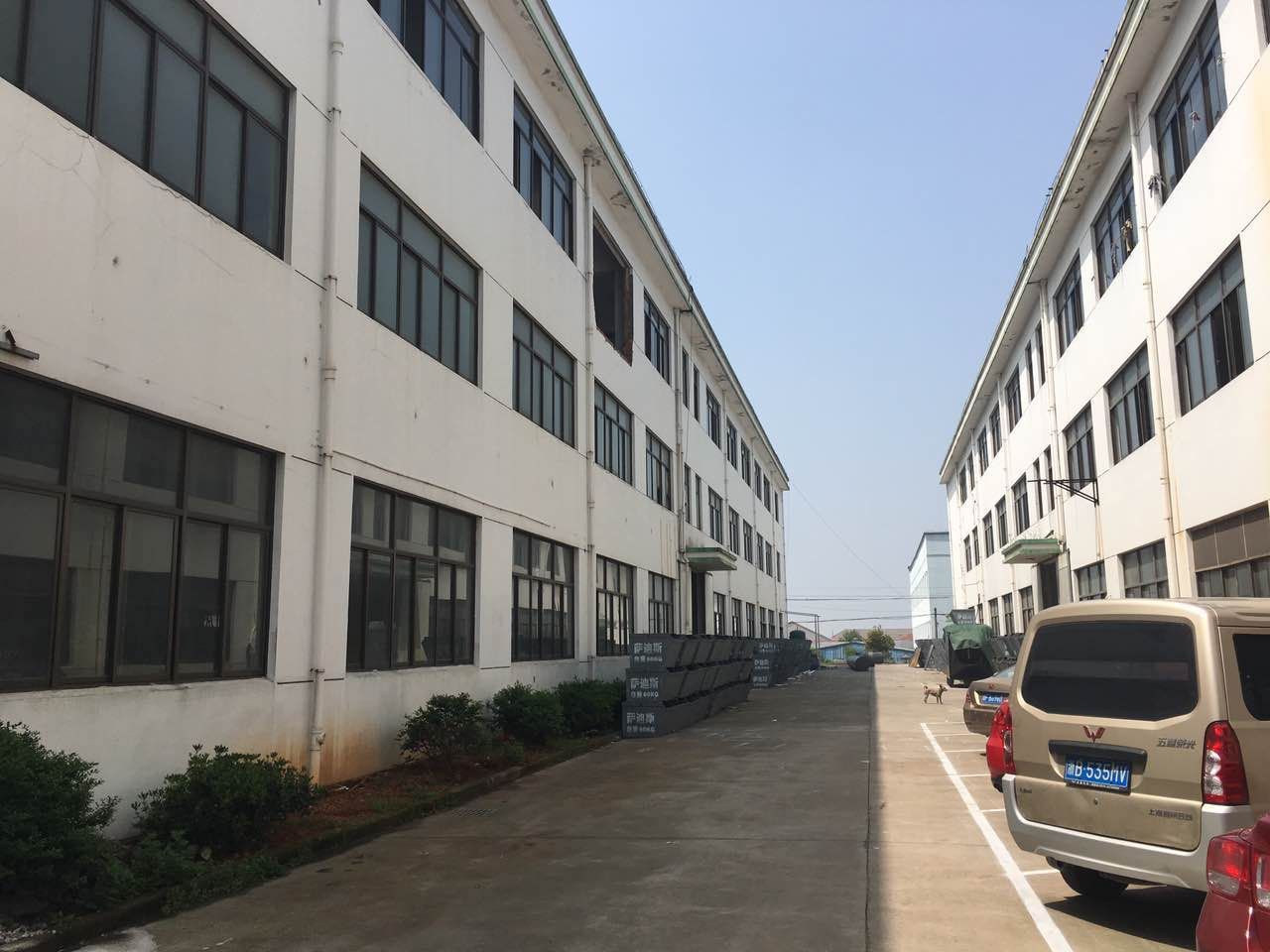
Ningbo Weifeng Fastener Co., Ltd., Yuyao, Zhejiang — 7000 m² production site, 6000 tons annual output, approximately 90% of production exported.
Have Questions or Need More Details?
Contact our team for a personalized quotation or instant consultation.
Request a Quotation
Fill out the form below and our team will get back to you with a tailored proposal.
WhatsApp Direct Chat
Prefer to chat in real-time? Message us on WhatsApp for instant assistance & quick answers.
- Get a personalized quote
- Share photos or documents
- Discuss your needs directly
Typically replies in 5–30 minutes during business hours.