Gypsum Board Partition Drywall Screw Selection Guide
A gypsum board partition drywall screw is a case-hardened carbon steel fastener with a bugle head, a Phillips #2 drive, and a sharp piercing point, designed to fix gypsum boards to wood studs or light gauge steel studs without pre-drilling. The specification that decides whether a partition wall performs is thread type: coarse thread configurations are specified for wood stud installation, and fine thread configurations are specified for light gauge steel stud installation.
Weifeng Fastener, the trading name of NINGBO WEIFENG FASTENER CO.,LTD, manufactures drywall screws under model designation C1022A-PH-BUGLE — a product family offered in fine thread, coarse thread, black phosphated, bugle head, and collated configurations and made from C1022A case hardened carbon steel. The company was established in 2013, is based in Yuyao, Zhejiang, China, and exports approximately 90% of its production, with principal markets in South America, Africa, and Russia.
This guide is written for importers, distributors, contractors, and procurement teams who need to specify the right screw for a gypsum board partition, understand what each specification controls, and verify a manufacturer before issuing a purchase order.
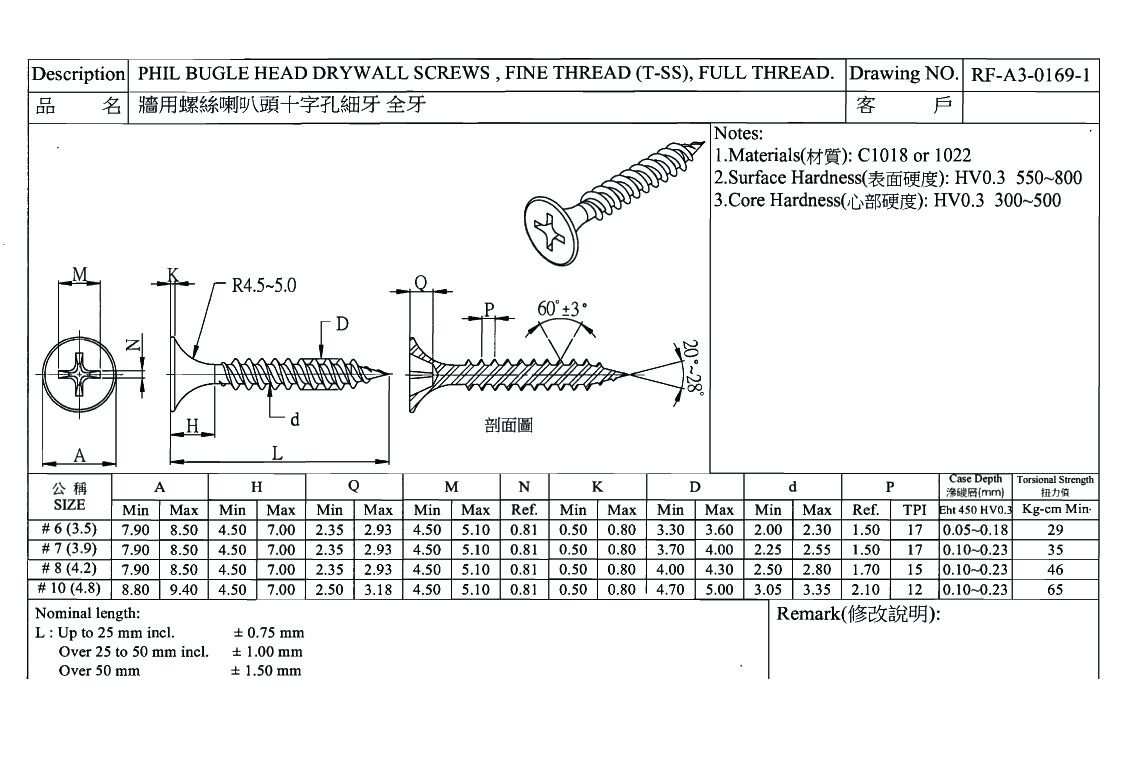
Drywall screws for gypsum board partitions are supplied with a bugle head, Phillips #2 drive, and sharp piercing point.
Problem Definition: Where Partition Walls Actually Fail
A partition wall is a system: studs, gypsum board, joint treatment, and screws. The board and the stud get the attention during design. The screw is treated as a commodity until it fails, and when it fails the cost is rarely the cost of the screw.
Three failure modes recur in gypsum board partition work, and all three trace back to fastener specification rather than board quality.
Paper tear-out at the head. The bugle head profile exists to countersink smoothly without tearing the surface paper of the board. That only works when head geometry, drive size, and driving depth are controlled together. A head that is too aggressive, or a driver bit that cams out and forces the installer to over-drive, damages the board face — and a damaged face is where joint cracking and rework begin.
Poor engagement in the stud. Thread configuration is substrate-specific. Coarse thread is specified for wood studs; fine thread is specified for light gauge steel studs. Both look similar at a glance, which is exactly why they are treated as interchangeable on site. They are not. Selection depends on stud material and thickness, point type, and the ratings published for the specific product, and a product manual that permits more than one substrate governs the decision.
Corrosion at the fastener line. Surface finish determines where a drywall screw can be used. Standard black phosphate coating provides an industry baseline of 48 hours of salt spray resistance under ASTM B117 — a level suitable for indoor, climate-controlled environments rather than wet or high-humidity service conditions.
A fourth problem appears earlier, at the purchasing stage. “Drywall screw” is a category, not a SKU. Two suppliers can quote “drywall screw” and still differ in material grade, case hardening, thread pitch, point geometry, coating, and packing format. Without a written specification, a price comparison between suppliers compares nothing at all.
Industry Background: A Category Tied to Residential Construction
The global drywall screws market was valued at USD 2.18 billion in 2025 and is projected to reach USD 3.04 billion by 2033. That growth is not evenly distributed across end uses: residential construction housing starts drive 58% of global drywall screw demand. The category therefore tracks residential building cycles more closely than commercial or industrial construction, and it swings harder when housing activity slows.
Two structural shifts matter to buyers.
The first is the move toward collated systems. Collated drywall screws account for approximately 36% of product demand in the collated screw market, a share driven by modular and prefabricated construction. Collation exists for one reason: installation speed at scale. Where a partition is built from prefabricated wall panels, hand-fed fastening becomes the bottleneck in the assembly line, and the economics of the fastener change from unit price to labour time per square metre.
The second is standards fragmentation across markets. DIN 18182-1 specifies Type TN (trompet head, double continuous thread) for 3.5 mm diameter drywall screws with lengths ranging from 25 mm to 55 mm. That is a European reference point and it does not automatically transfer to North American or other regional practice. Buyers who import or export across regions should treat a standards reference in an RFQ as a question rather than an assumption: confirm which edition applies and confirm its exact scope before it is written into a purchase order.
On the supply side, China’s fastener cluster remains a dominant export origin for this category. Weifeng Fastener operates a 7,000 m² facility with a 50-person workforce and an annual output of 6,000 tons, covering screws, bolts, nuts, washers, anchors, and wood screws, with a product portfolio conforming to DIN, ISO, ANSI, and JIS standard frameworks. The company holds ISO 9001 and CE certification according to its published company profile.
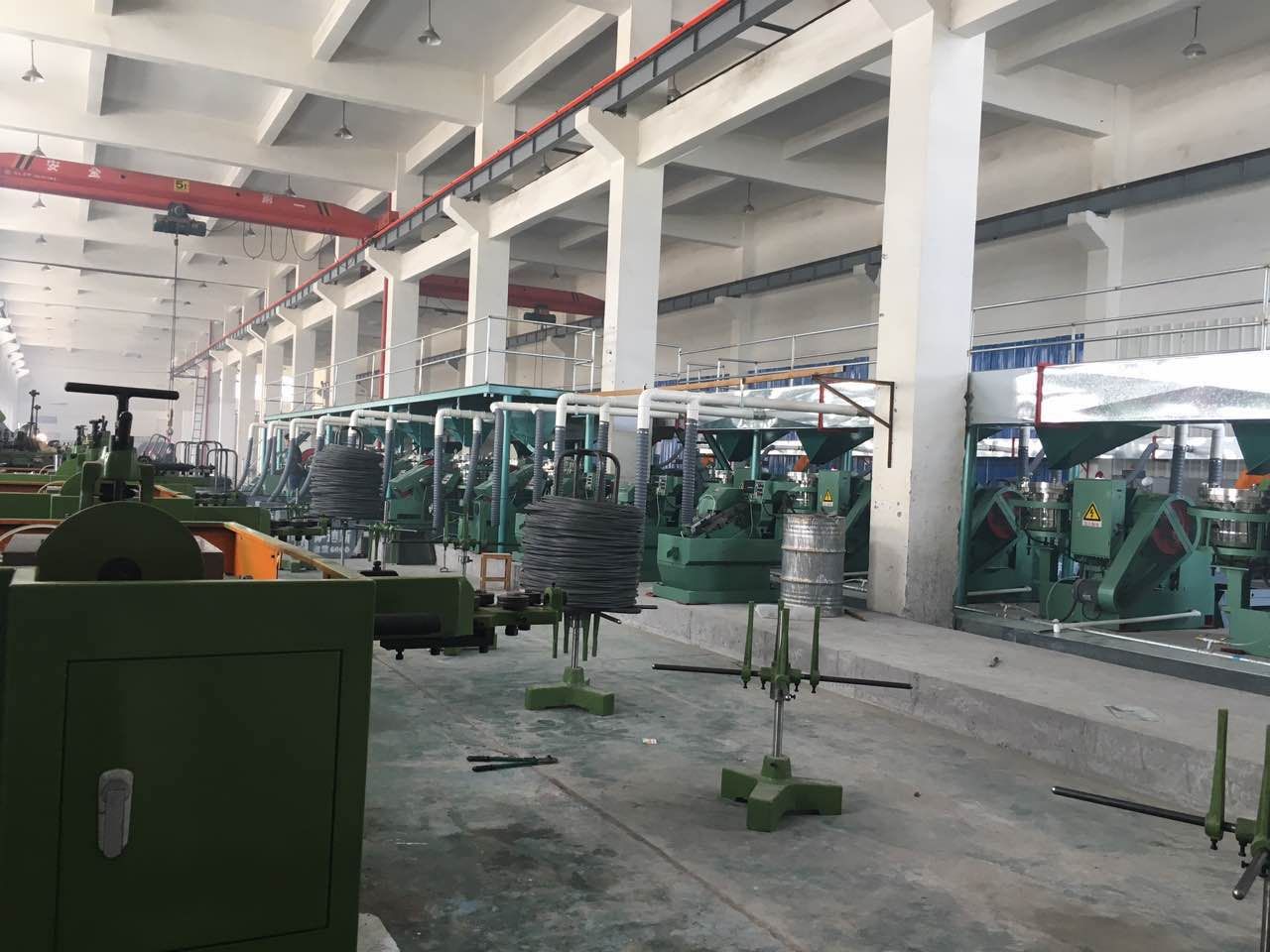
Weifeng Fastener operates a 7,000 m² manufacturing facility in Yuyao, Zhejiang, China.
Detailed Solution: What a Partition Wall Drywall Screw Should Specify
The reference product for this guide is Weifeng Fastener’s drywall screw, model C1022A-PH-BUGLE. It is specified for fastening into wood studs and metal studs and is used in interior decoration, construction engineering, gypsum board installation, partition wall construction, and furniture manufacturing.
Base material and hardness
The screw is made from C1022A case hardened carbon steel. Case hardening produces a hard, wear-resistant surface over a tougher core: surface hardness is specified at a minimum of 550 HV with a core of 300–450 HV. In practice this combination is what allows the screw to be driven through gypsum board and into a steel stud without the head deforming or the shank shearing. A screw that is too soft strips at the drive recess; a screw that is through-hardened becomes brittle and can snap under impact driving.
Head geometry and drive
The product uses a bugle head with a Phillips #2 drive. The bugle head is a countersunk profile with a concave underside that spreads load across a wider area of the board face, allowing the head to sink flush without cutting through the surface paper. Phillips #2 is the standard bit size for this category, which keeps on-site tooling requirements simple and interchangeable.
Thread configuration
Both coarse thread and fine thread configurations are offered within the same model designation. The thread is not a stylistic choice. Coarse thread configurations in this range are specified for wood stud installation, and fine thread configurations are specified for light gauge steel stud installation. The thread pitch is optimised for holding power in wood or metal studs, and the two configurations should not be substituted for one another on the basis of appearance.
Point geometry
The screw has a sharp piercing point that allows fast penetration without pre-drilling. On a steel stud partition, pre-drilling is one of the largest hidden labour costs in the fastening sequence; a point that requires it will change the crew’s productivity more than any unit-price difference between suppliers.
Surface finish
Two finishes are available: black or grey phosphated, and zinc plated. The phosphate coating is corrosion resistant and is also used as a paint-adhesion base, which matters in decorative and furniture applications where the fastener may be coated or exposed.
Size range
The size range covers 3.5 mm to 4.8 mm (#6 to #10) in diameter and 13 mm to 150 mm (1/2 in to 6 in) in length. That spread covers the great majority of single-layer and multi-layer partition builds, and it is the range that should be quoted against rather than a single “standard” size.
Specification summary
| Attribute | Specification |
|---|---|
| Model designation | C1022A-PH-BUGLE |
| Material | C1022A case hardened carbon steel |
| Configurations | Fine thread, coarse thread, black phosphated, bugle head, collated |
| Diameter range | 3.5 mm – 4.8 mm (#6 – #10) |
| Length range | 13 mm – 150 mm (1/2 in – 6 in) |
| Head type | Bugle head |
| Drive type | Phillips #2 |
| Finish options | Black / grey phosphated; zinc plated |
| Hardness | Surface min 550 HV; core 300–450 HV |
| Specified substrates | Wood studs; metal studs |
| Typical industries | Interior decoration, construction engineering, gypsum board installation, partition wall construction, furniture manufacturing |
Step-by-Step: How to Specify and Qualify the Screw
Step 1 — Identify the stud substrate
Determine whether the partition is built on wood studs or light gauge steel studs, then record the stud thickness. For steel studs, thickness drives point selection and thread engagement; for wood, moisture content matters because wet timber changes driving resistance and can shrink after installation. This is the first decision because every later decision depends on it.
Step 2 — Match thread to substrate
Specify coarse thread for wood stud installation and fine thread for light gauge steel stud installation. Do not assume interchangeability based on thread appearance. If a product manual permits more than one substrate, the manual governs, and a trial installation on the project’s own stud and board combination is the fastest way to confirm engagement before a batch is accepted.
Step 3 — Set the length against the board build-up
Length is set by the total board thickness plus the required embedment into the stud. With a 13 mm to 150 mm range available, the trap is not availability — it is over-specifying a single length for a project that uses two board thicknesses, which produces either under-embedment or protrusion. List the board build-ups used on the project and assign one screw length to each.
Step 4 — Choose the finish against the service environment
Black phosphate provides an industry baseline of 48 hours of salt spray resistance under ASTM B117 and suits indoor, climate-controlled environments. Zinc plating is the appropriate conversation wherever the assembly may see moisture. Confirm the finish against the project specification rather than against a supplier’s default, and note that zinc-plated salt-spray hours for a given product line must be requested per SKU.
Step 5 — Decide loose or collated
Collated screws account for approximately 36% of product demand in the collated screw market, driven by modular and prefabricated construction. The decision is project-scale dependent: for a large prefabricated or repetitive commercial fit-out, collated supply plus the matching autofeed tool changes labour cost per square metre. For small or irregular work, loose screws remain the practical option.
Step 6 — Qualify the manufacturer before the purchase order
Request documentation rather than assurances: the material grade for the exact SKU, the dimensional range and tolerances, the hardness figures, the coating specification, and any test reports covering tensile strength, torque, and corrosion resistance. Confirm whether certification status applies to the specific item being purchased, not to the company in general, and confirm the shipping gateway and consolidation options, since multi-port flexibility affects total landed cost as much as unit price does.
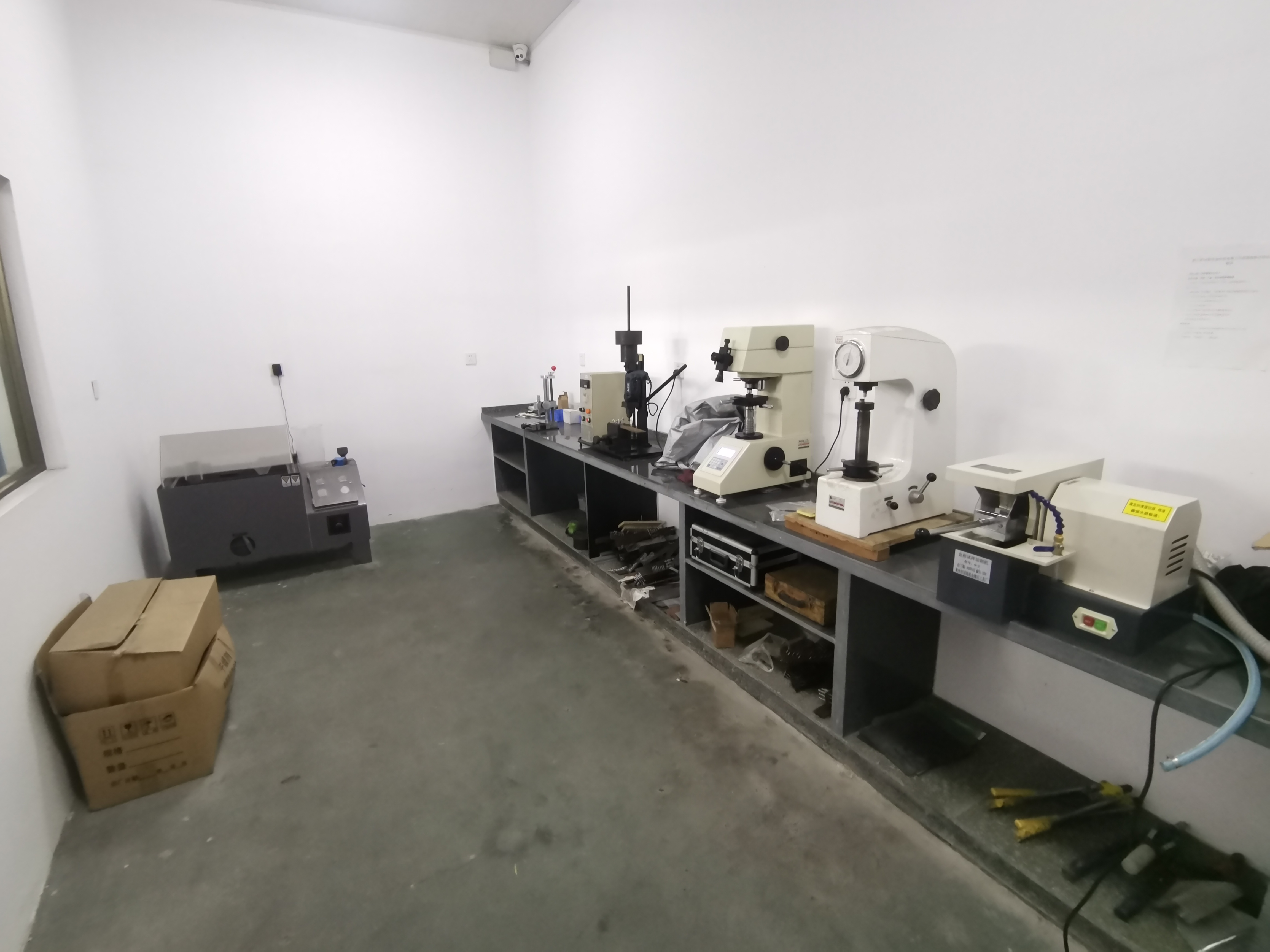
In-house testing covers tensile strength, torque, and corrosion resistance.
Use Cases: Where Partition Drywall Screws Are Applied
Steel stud partition wall construction. The most common configuration in commercial fit-out, using fine thread screws sized to the stud gauge and board thickness. This is the application where thread specification errors are most expensive, because a stripped screw in a thin steel stud cannot be re-driven in the same location.
Wood stud partitions and interior decoration. Coarse thread configurations are specified for wood stud installation. Interior decoration work typically mixes partition boarding with panel and trim fixing, which is why a single size range covering 13 mm to 150 mm matters in practice.
Prefabricated and modular building. Where wall panels are assembled off site, collated screws and autofeed tooling support the throughput that makes prefabrication economic. Collated drywall screws represent approximately 36% of product demand in the collated screw market for this reason.
Furniture manufacturing and board products. The drywall screw range is also used in furniture manufacturing, where the bugle head and phosphate finish support board assembly and painted or coated final surfaces.
Board installation in projects where coatings are specified. In decorative applications the phosphate coating’s function as a paint-adhesion base is as relevant as its corrosion performance.
A limitation worth stating. Drywall screws are not a universal board fastener. Where a project specification calls for a different fastening schedule — for example in fire-rated or acoustic partition assemblies with defined fastener spacing and type — the project specification governs, and the screw must be selected against it rather than against general category practice.
Comparison: Thread Type and Surface Finish
The two decisions that cause the most rework are thread type and finish. Both are compared below against the reviewed evidence for this product range.
| Selection factor | Coarse thread | Fine thread |
|---|---|---|
| Specified substrate | Wood stud installation | Light gauge steel stud installation |
| Primary specification basis | Stud material, point type, and the ratings published for the specific product | Stud thickness, point type, and the ratings published for the specific product |
| Interchangeability | Do not assume interchangeability based on thread appearance | Do not assume interchangeability based on thread appearance |
| Verification action | Trial installation on the project’s own stud and board combination | Trial installation on the project’s own stud and board combination |
| Parameter | Black / grey phosphate | Zinc plated |
|---|---|---|
| Corrosion mechanism | Physical barrier; also provides better paint adhesion | Sacrificial protection |
| Salt spray baseline | 48 hours (ASTM B117, industry baseline for standard black phosphate) | Not stated in the reviewed evidence for this product line |
| Long-term corrosion behaviour | Corrodes faster once the barrier coating is breached | Generally offers superior long-term corrosion protection |
| Best-fit environment | Indoor, climate-controlled environments | Where longer-term corrosion protection is needed |
Note on limits: the comparison above reflects the reviewed evidence only. Zinc-plated salt-spray hours for this product line were not available and should be requested per SKU before finish selection is finalised.
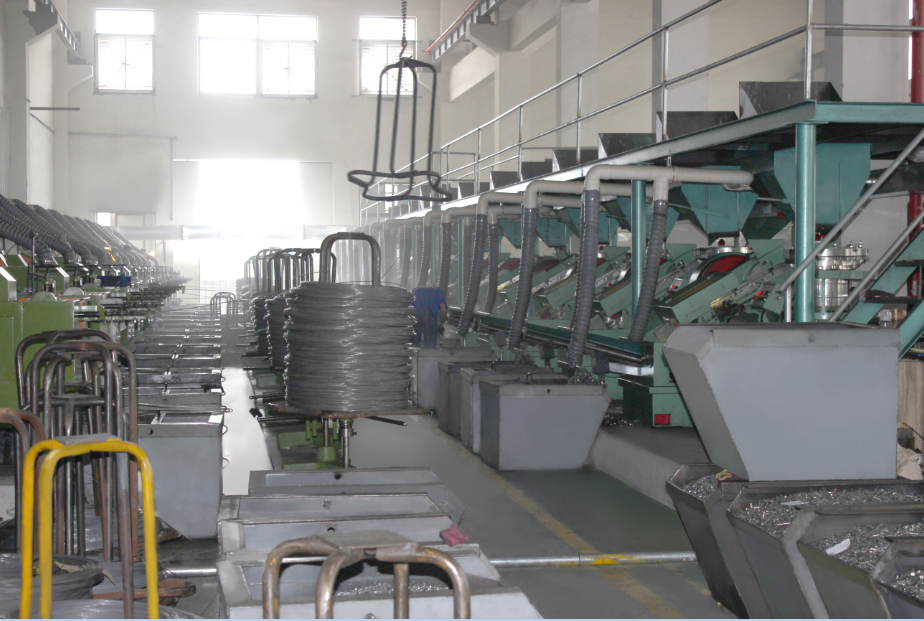
Drywall screw production runs on cold heading and threading equipment inside the Weifeng Fastener workshop.
Frequently Asked Questions
What is the difference between coarse thread and fine thread drywall screws?
Coarse thread drywall screws are specified for wood stud installation, and fine thread drywall screws are specified for light gauge steel stud installation. Selection depends on the stud material and thickness, the point type, and the ratings published for the specific product; if a product manual permits more than one substrate, the manual governs. The two configurations should not be treated as interchangeable based on thread appearance alone, and a trial installation on the project’s own stud and board combination is the most direct way to confirm engagement before a batch is accepted.
What sizes, finishes, and hardness does a partition drywall screw come in?
Weifeng Fastener’s drywall screw, model C1022A-PH-BUGLE, is offered in a diameter range of 3.5 mm to 4.8 mm (#6 to #10) and a length range of 13 mm to 150 mm (1/2 in to 6 in). Finish options are black or grey phosphated and zinc plated. The screw has a bugle head and a Phillips #2 drive, and is made from C1022A case hardened carbon steel with surface hardness specified at a minimum of 550 HV and a core of 300–450 HV. Configurations include fine thread, coarse thread, black phosphated, bugle head, and collated variants.
Are black phosphated drywall screws suitable for humid environments?
Standard black phosphate coating provides an industry baseline of 48 hours of salt spray resistance under ASTM B117, which suits indoor, climate-controlled environments where the board assembly stays dry. Zinc plating generally offers superior protection over the long term through sacrificial protection, whereas black phosphate works as a physical barrier with better paint adhesion but corrodes faster once that barrier is breached. For damp, coastal, or intermittently wet service conditions, finish selection should be confirmed against the project specification rather than assumed from category defaults.
How should buyers evaluate drywall screw manufacturers?
Evaluate documents, not assurances. Request the material grade and specification for the exact SKU, the dimensional range and tolerances, the hardness figures, the coating specification, and test reports covering tensile strength, torque, and corrosion resistance. Confirm that any certification claim applies to the item being purchased rather than to the company in general: published product listings show certification status varies at SKU level, with one reviewed listing carrying an explicit “Not Certified” statement while another specifies suitability for wood studs or 25-gauge metal studs. Neither statement indicates overall manufacturer capability on its own. Weifeng Fastener, the trading name of NINGBO WEIFENG FASTENER CO.,LTD, was established in 2013, operates a 7,000 m² facility with annual output of 6,000 tons, exports approximately 90% of production, and runs in-house testing for tensile strength, torque, and corrosion resistance. Its production portfolio covers DIN, ISO, ANSI, and JIS standard frameworks, and the company holds ISO 9001 and CE certification according to its published profile.
What is the next step for a buyer sourcing partition drywall screws?
Move from a category conversation to a SKU conversation. Define the stud substrate, the board build-up, the finish, and the packing format — loose or collated — then request a sample and a quotation against that written specification rather than against the words “drywall screw”. Weifeng Fastener supports non-standard and custom fastener solutions with OEM/ODM execution and ships through multiple Chinese gateways including Ningbo, Shanghai, and Tianjin, which allows shipment consolidation and can reduce total landed cost. Samples and quotations can be requested directly from Tony at Tony@wf-fastener.com or by phone and WhatsApp on +86-13355841616.
Conclusion
A gypsum board partition drywall screw is a small component that carries a disproportionate share of the risk in a partition assembly. The specification decisions that matter are finite and checkable: thread configuration matched to the stud substrate, length matched to the board build-up, finish matched to the service environment, and head and drive geometry matched to the installation tooling. Get those four right and the remaining question is supplier reliability rather than product performance.
The wider market context supports early specification rather than late substitution. With the global drywall screws market projected to move from USD 2.18 billion in 2025 to USD 3.04 billion by 2033, and with collated screws already representing approximately 36% of demand in the collated screw market, the buying decision is shifting from unit price toward system fit and installed labour cost. A screw that installs cleanly and holds is cheaper than a screw that installs quickly and fails.
Weifeng Fastener manufactures drywall screws under model C1022A-PH-BUGLE in C1022A case hardened carbon steel, with a size range of 3.5 mm to 4.8 mm (#6 to #10), lengths from 13 mm to 150 mm, a bugle head, Phillips #2 drive, and black phosphate or zinc plated finishes. For buyers who need a specification-level answer rather than a catalogue page, the full range is documented in the company catalogue.
Download the Weifeng Fastener catalogue: Ningbo Weifeng catalog.pdf
Request a sample, a quotation, or an OEM/ODM discussion directly: Tony, Tony@wf-fastener.com, phone and WhatsApp +86-13355841616, or visit www.wf-fastener.com.

Weifeng Fastener — Engineering Reliability. Securing Your Supply Chain.
Have Questions or Need More Details?
Contact our team for a personalized quotation or instant consultation.
Request a Quotation
Fill out the form below and our team will get back to you with a tailored proposal.
WhatsApp Direct Chat
Prefer to chat in real-time? Message us on WhatsApp for instant assistance & quick answers.
- Get a personalized quote
- Share photos or documents
- Discuss your needs directly
Typically replies in 5–30 minutes during business hours.