Temporary Fencing, Racking and Handrails: Wedge Anchor, Shield Anchor and Concrete Screw Compared
Direct answer: choose the fixing by substrate, approval evidence and how the connection will be used, not by a generic strength label. A wedge anchor is the baseline expansion anchor for concrete when a product-specific technical approval and installation data are available. A shield anchor is the alternative where the supplied facts match the job, especially when a reusable bolted connection with a 3- or 4-segment expansion shield is useful. A concrete screw is the non-expansion option for smaller-diameter temporary fencing, racking and handrail fixings where its 5–12 mm diameter and 30–150 mm length fit the base plate and concrete condition. No single fixing type is automatically correct for all three applications.
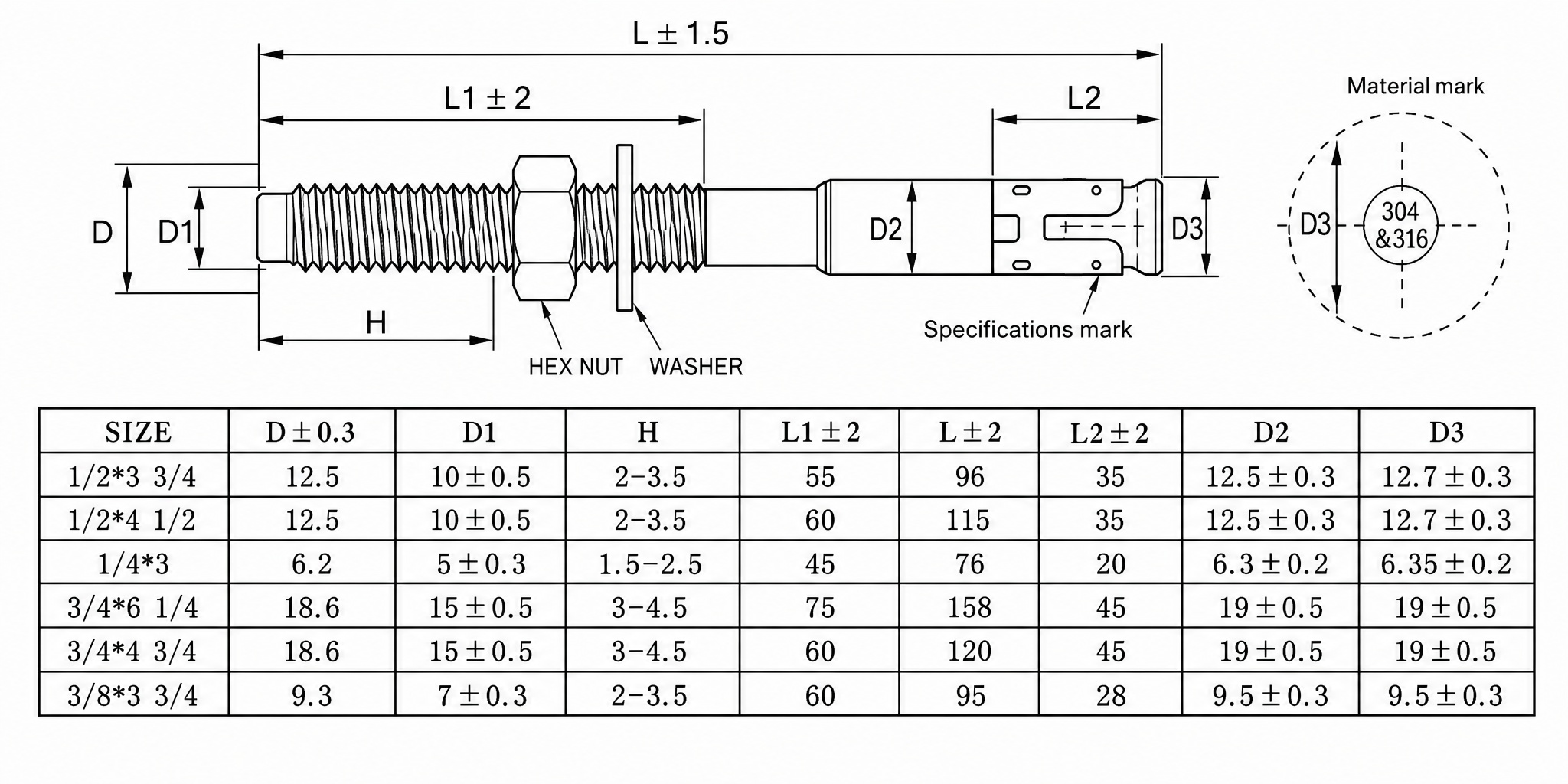
Wedge anchor technical image used as the baseline reference for this comparison. Product images illustrate the fixing type; they do not replace SKU-level approval documents.
What each fixing type does
The three products solve the same basic problem in different ways: they transfer a base plate, post bracket or rail fixing into concrete. The difference lies in how the fixing engages the concrete, whether it expands, how the bolt or stud is treated during service, and what documentation the buyer can obtain for the exact model.
Wedge anchor as the baseline expansion anchor
A wedge anchor is an expansion anchor used in drilled concrete holes. A cited technical approval describes the MÜPRO wedge anchor family as a deformation-controlled expansion anchor in sizes M6, M8, M10, M12, M16 and M20, with galvanized-steel and stainless-steel variants. That description is product-specific; it should not be generalized to every wedge anchor on the market. The important buyer point is that wedge-anchor selection normally depends on a defined hole, embedment, torque and concrete condition. A separate DEWALT technical page states that wedge anchors tested in accordance with ASTM E488 use materials such as AISI 1010–1018 for bodies and Grade A ASTM A563 for nuts. Those details help a buyer ask for material and test records, but they do not prove that every wedge anchor uses the same material.
In temporary fencing, racking and handrails, the wedge anchor is often used as the reference item because expansion anchors are widely specified for concrete base plates. Its baseline role does not mean it is always the lowest-risk choice. Cracked concrete, seismic demand, vibration, edge distance, poor hole quality and unknown concrete strength can change the answer. The approval and installation instructions for the named product control.
Shield anchor with a segmented expansion shield
The verified product facts used for this comparison describe a shield anchor with a carbon steel or malleable iron body, M6–M20 sizes, yellow or white zinc finish, and a 3- or 4-segment expansion shield. The same facts state that the shield is reusable with different bolts and is suitable for industrial fencing, security grills and warehouse racking.
The practical distinction is the expansion shield. The segments expand against the concrete and spread contact across the shield rather than relying on one wedge mechanism. That does not by itself make a shield anchor suitable for every cracked or seismic condition. It does mean the buyer should check whether the shield design, bolt grade, hole size and approved application match the project. Reusability with different bolts is useful for industrial fencing and racking where the bolt may need to be changed or the connection may be dismantled, but the anchor itself still requires a compatible hole and correct installation.
Concrete screw as a non-expansion fixing
The verified product facts describe a concrete screw made from heat-treated carbon steel, with a non-expansion design, 5–12 mm diameter, 30–150 mm length, Ruspert or zinc finish, and a hex flange head. The listed applications include temporary fencing, racking and handrails.
This is a different fixing logic from the two expansion anchors. The concrete screw is non-expansion, so the selection question is not which expansion shield or wedge to use, but whether the specified screw diameter, length, thread engagement and head type suit the fixture and the concrete. The hex flange head can be relevant where a bearing surface under the head is useful, but the buyer still needs the manufacturer's installation data, drill diameter, minimum embedment and allowable load for the exact product. The 5–12 mm diameter and 30–150 mm length range is useful for planning, but it is not a universal capacity statement.
Why the choice matters in fencing, racking and handrails
These applications look similar at the base plate but behave differently in service. Temporary fencing is often installed, removed and reinstalled; the fixing may be exposed to repeated handling and changing bolts. Warehouse racking is a fixed installation where base-plate alignment, inspection and load path matter. Handrails combine a fixing function with a safety-related element, so movement, corrosion and inspection access deserve attention.
The market context explains why buyers face many product options. Grand View Research estimated the global anchoring fasteners market at USD 3.12 billion in 2024, and mechanical anchors accounted for 58.3% of that market share in the same year. Wedge anchors sit within the mechanical-anchor group, but that market figure does not rank individual fixing types or prove suitability for a given project. It only shows that mechanical anchoring remains a large procurement category with many interchangeable-looking products.
Decision rule: treat the fixing type as one part of the approval. The other parts are concrete condition, hole quality, embedment, edge distance, torque or installation method, finish, and the product-specific test or evaluation document.
Decision criteria for wedge anchor, shield anchor and concrete screw
1. Substrate quality and concrete condition
Start with the concrete, not the product photo. Sound, uncracked concrete with a known strength and a correctly drilled hole is the basic condition for any of the three fixings. Cracked concrete, seismic demand and uncertain slab condition require product-specific evidence. A MiTek technical bulletin states that its wedge-anchor product is evaluated to IBC/IRC in accordance with ICC-ES AC193 and ACI 355.2 for cracked and uncracked concrete. A Fastenal submittal for a specified WA++ wedge anchor states seismic, cracked- and uncracked-concrete approval and testing under ACI 355.2 and ICC-ES AC193. These are examples of the type of product-specific evidence a buyer should request; they are not evidence that every wedge anchor, shield anchor or concrete screw has the same qualification.
For a China supplier, the same rule applies. A company standards claim is not a product evaluation. Ask for the exact model, evaluation report number where applicable, load table, embedment, edge distance, concrete strength basis and installation limits. If the project is cracked-concrete or seismic, generic strength language is not enough.
2. Expansion versus non-expansion
Wedge anchors and shield anchors are expansion fixings. The cited wedge-anchor approval describes deformation-controlled expansion, and the shield-anchor facts describe a 3- or 4-segment expansion shield. Expansion anchors depend on the hole and the expansion mechanism doing their job. A concrete screw is non-expansion, so it changes the installation logic and the inspection questions. Do not assume that a non-expansion screw is automatically weaker or that an expansion anchor is automatically stronger. The correct comparison is the approved load and condition for the exact diameter and embedment in the actual concrete.
For temporary fencing, expansion anchors may be preferred where the base plate and concrete are suitable for an approved expansion fixing. A concrete screw may fit where a non-expansion fixing and its available diameter range suit the plate and load. For racking, the fixing must follow the rack manufacturer's anchorage requirement and the project's seismic or cracked-concrete status. For handrails, the fixing should be selected with the rail load and inspection access in view.
3. Reusability and bolt changes
Reusability is one of the clearest differences in the supplied facts. The shield anchor is described as reusable with different bolts. That is useful for industrial fencing, security grills and racking where the bolt may need replacement or the connection may be opened. The same reusable claim is not established for the wedge anchor or the concrete screw in the supplied evidence. A wedge anchor may be removable in some installations, but that depends on the product and the condition of the hole; it should not be assumed. A concrete screw is non-expansion, but non-expansion does not by itself mean it can be reused repeatedly.
If repeated dismantling is part of the temporary-fencing plan, ask the supplier to confirm the intended removal and reinstallation procedure. If the answer is only a general statement, request the installation instruction for the exact model. A reusable shield does not remove the need to inspect the hole and replace damaged components.
4. Finish and corrosion exposure
The supplied shield-anchor facts list yellow or white zinc. The concrete-screw facts list Ruspert or zinc. The cited wedge-anchor approval includes galvanized-steel and stainless-steel variants, and the MÜPRO approval identifies AISI 316 / 1.4401 stainless steel with reported minimum tensile and yield values in the extracted section. These finishes are not interchangeable labels. Yellow zinc, white zinc, Ruspert, galvanized steel and stainless steel suit different exposure conditions, and the exact coating specification should be tied to the product and the project environment.
Weifeng Fastener also reports a coating system with over 720 hours of salt spray resistance compared with 72 hours for traditional zinc-plated fasteners, and states that the service life is extended by four times in the evaluated conditions. This is a supplier-reported comparison. It should be tied to the exact product, test method and report before it is used to approve a coastal, outdoor or humid installation.
5. Size range and fixture fit
The shield anchor facts cover M6–M20. The concrete screw facts cover 5–12 mm diameter and 30–150 mm length. The cited MÜPRO wedge-anchor family covers M6, M8, M10, M12, M16 and M20, but that is a product-specific approval range, not a universal wedge-anchor range. Size selection must match the fixture hole, base-plate thickness, embedment and approved load. A fixing that is outside the available range may require a different product family or a designed connection rather than a field substitution.
6. Documentation and supplier checks
At the decision stage, the supplier's ability to provide documents is part of the product comparison. Request the exact model name, drawing, material certificate, coating specification, installation instruction, load table, test report and, where relevant, a product-specific evaluation report. Check that the report covers the intended concrete condition and the intended use. A company-level ISO claim or a generic standards list does not replace the product-level record.
For a China-based supplier, also check packaging and shipment control if the product will travel long distances. Weifeng Fastener reports one-stop sourcing for 1000+ SKU fasteners, internal lab verification and full batch traceability, with a defect rate reduced to 0.05% and 100% material traceability in its own comparison. Those are company-reported claims and should be verified through the supplier's documents, sample inspection and, where the project justifies it, an audit. The same supplier reports a 98% on-time delivery rate and a response time within 12 hours for technical and order-related inquiries.
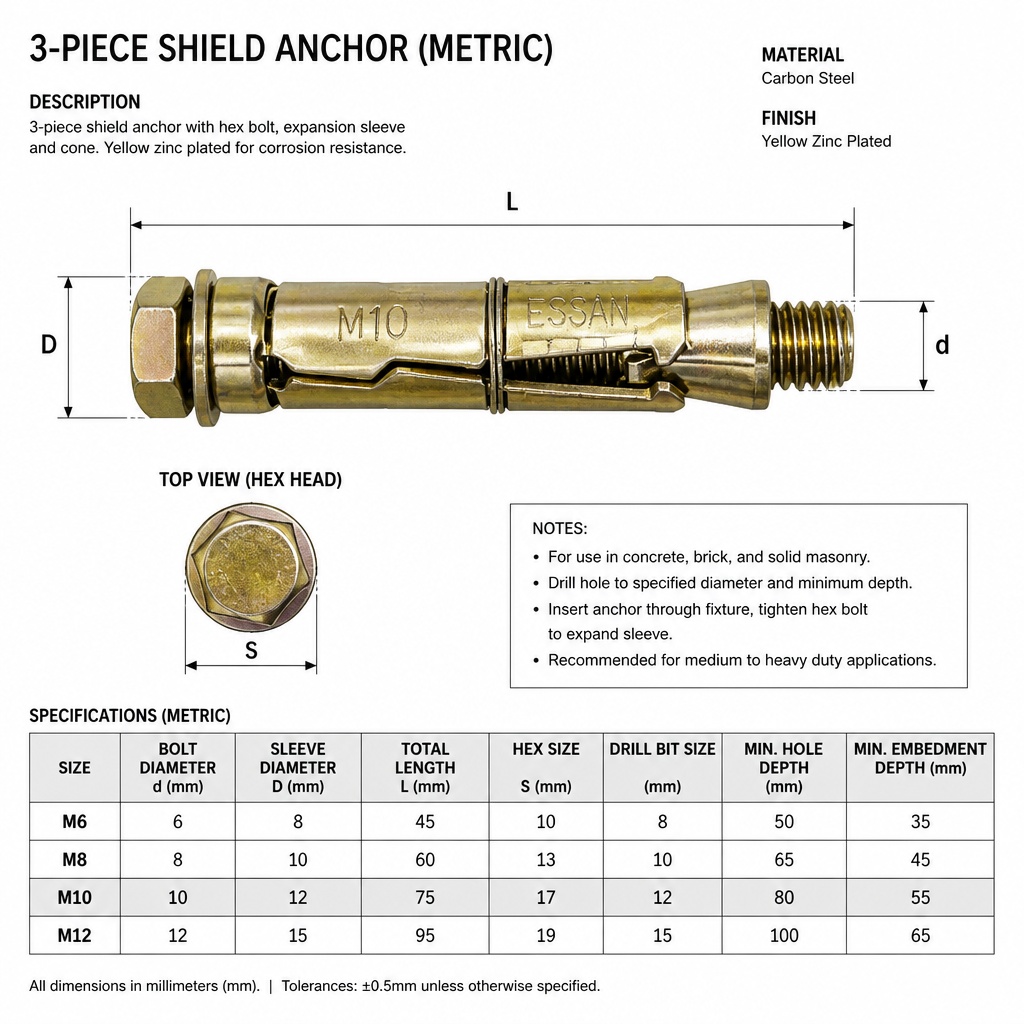
Shield anchor specification image. The supplied facts describe a 3- or 4-segment expansion shield, M6–M20 sizes, zinc finish and reusability with different bolts.
Step-by-step selection path
- Define the connection. Record whether the fixing supports a temporary fence post, a racking base plate, a handrail bracket or another fixture. Note base-plate hole size, access, expected removal and inspection frequency.
- Confirm the concrete condition. Establish whether the concrete is cracked or uncracked, whether seismic demand applies, and whether the slab strength and thickness are known. If not, treat the fixing as unverified until the project engineer confirms a basis.
- Choose the mechanism for the right reason. Use a wedge anchor as the baseline expansion reference where a product-specific approval and installation data are available. Consider a shield anchor where the supplied facts match the application and reusable bolted connection. Consider a concrete screw where the non-expansion design and available 5–12 mm diameter and 30–150 mm length fit the fixture.
- Check size, embedment and finish. Match the fixing to the plate, hole and exposure. Do not switch diameter or length solely to make a product fit; confirm the approved load and installation condition for the changed size.
- Verify reusability only where it is claimed. The shield anchor facts state reusability with different bolts. The wedge anchor and concrete screw should not be treated as reusable unless the exact product documentation says so.
- Request the document pack and a sample. Ask for the model drawing, material and coating record, installation instruction, load table and evaluation report. A sample is useful for checking head type, thread, shield segments, coating appearance and packaging, but it does not replace the approval.
Use cases: where each fixing may fit
Temporary fencing
Temporary fencing often uses base plates and repeated handling. The concrete screw is expressly listed for temporary fencing in the supplied facts, with a 5–12 mm diameter and 30–150 mm length range and a hex flange head. A shield anchor is listed for industrial fencing and offers reusability with different bolts, which can matter when the bolt is changed or the connection is opened. A wedge anchor remains the baseline expansion option where the concrete and approval support it. The final choice should follow the fence manufacturer's anchorage detail and the site's concrete condition.
Warehouse racking
Warehouse racking is a fixed installation with a defined base plate and inspection requirement. The shield anchor is listed for warehouse racking in the supplied facts, and its reusable bolt arrangement may help where the rack connection needs maintenance access. The concrete screw is also listed for racking. The wedge anchor should be evaluated against the project's seismic or cracked-concrete requirement and the rack manufacturer's anchorage specification. For racking, do not select by product name alone; the base-plate hole, embedment and approved load govern.
Handrails
Handrails involve a safety-related fixture and often a visible finish. The concrete screw is listed for handrails in the supplied facts, with a non-expansion design and a hex flange head. A wedge anchor may be considered where an approved expansion fixing is required and the concrete condition is suitable. A shield anchor should be considered only where its documented application and approval cover the handrail detail; the supplied shield facts list industrial fencing, security grills and warehouse racking, not every handrail condition. Confirm the rail load, base material and inspection access before specifying.
Boundaries and limitations
None of the three products should be approved on a generic claim of heavy-duty load, vibration resistance, high shear strength or anti-corrosion performance. Those terms need a test basis, a product-specific report and installation conditions. Cracked concrete and seismic projects require the relevant evaluation; a label on a product page is not enough. The finish must match the exposure, and the size range must match the fixture. If the exact product lacks the document for the intended condition, the safe procurement decision is to request it or select another documented product, not to infer suitability.
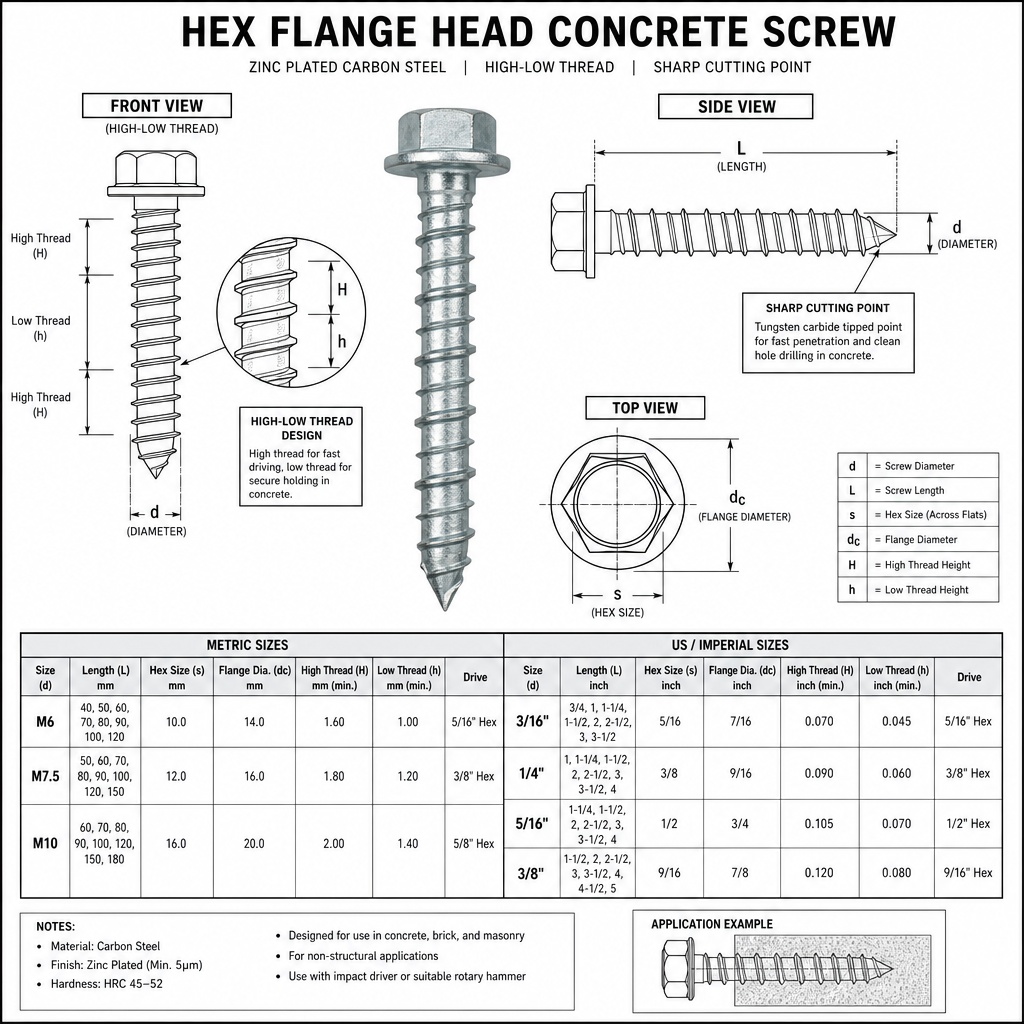
Concrete screw specification image. The supplied facts describe heat-treated carbon steel, non-expansion design, 5–12 mm diameter, 30–150 mm length, Ruspert or zinc finish and a hex flange head.
Comparison table
| Decision factor | Wedge anchor (baseline) | Shield anchor | Concrete screw |
|---|---|---|---|
| Fixing logic | Expansion anchor; cited approval describes deformation-controlled expansion. | Expansion anchor with a 3- or 4-segment expansion shield. | Non-expansion screw fixing. |
| Material and finish data supplied | Cited approval includes galvanized steel and stainless steel variants; AISI 316 / 1.4401 is identified in the extracted MÜPRO section. | Carbon steel or malleable iron; yellow or white zinc. | Heat-treated carbon steel; Ruspert or zinc. |
| Size range in supplied facts | Cited MÜPRO family: M6, M8, M10, M12, M16 and M20. Product-specific, not universal. | M6–M20. | 5–12 mm diameter; 30–150 mm length. |
| Reusability | Not established as reusable in the supplied evidence; verify exact product. | Reusable with different bolts, per supplied facts. | Non-expansion does not establish reusability; verify exact product. |
| Listed applications in supplied facts | Baseline concrete expansion reference for base plates and structural fixing; confirm the project detail. | Industrial fencing, security grills and warehouse racking. | Temporary fencing, racking and handrails. |
| Buyer check | Product-specific approval, cracked or seismic evidence, material and load table. | Shield design, bolt grade, hole size, reusable procedure and application approval. | Drill diameter, embedment, diameter and length, head bearing, load table and concrete condition. |
| Decision use | Use as the baseline where an approved expansion anchor and installation data are available. | Use where the reusable bolted connection and documented application match the job. | Use where the non-expansion design and available size range fit the fixture and concrete. |
Supplier checks for Weifeng Fastener and China sourcing
Weifeng Fastener is the short brand name used here for Ningbo Weifeng Fastener Co., Ltd., a China-based fastener supplier whose listed portfolio includes anchors, screws, bolts, nuts and washers. The company states that it can offer products according to GB, DIN, JIS and ANSI standards. That is a portfolio-level statement; it does not prove that a named wedge anchor, shield anchor or concrete screw has the specific certificate or evaluation required for a cracked-concrete, seismic or handrail project.
For procurement, use the supplier check to gather evidence, not to replace it. Ask Weifeng Fastener for the exact product drawing, material certificate, coating specification, installation instruction, load table and test or evaluation report for the model being quoted. If the project is in a regulated market or a seismic zone, ask for the product-specific report in the buyer's required framework and check its scope. A factory image or a catalog page is useful for supplier identity, but it is not an approval.
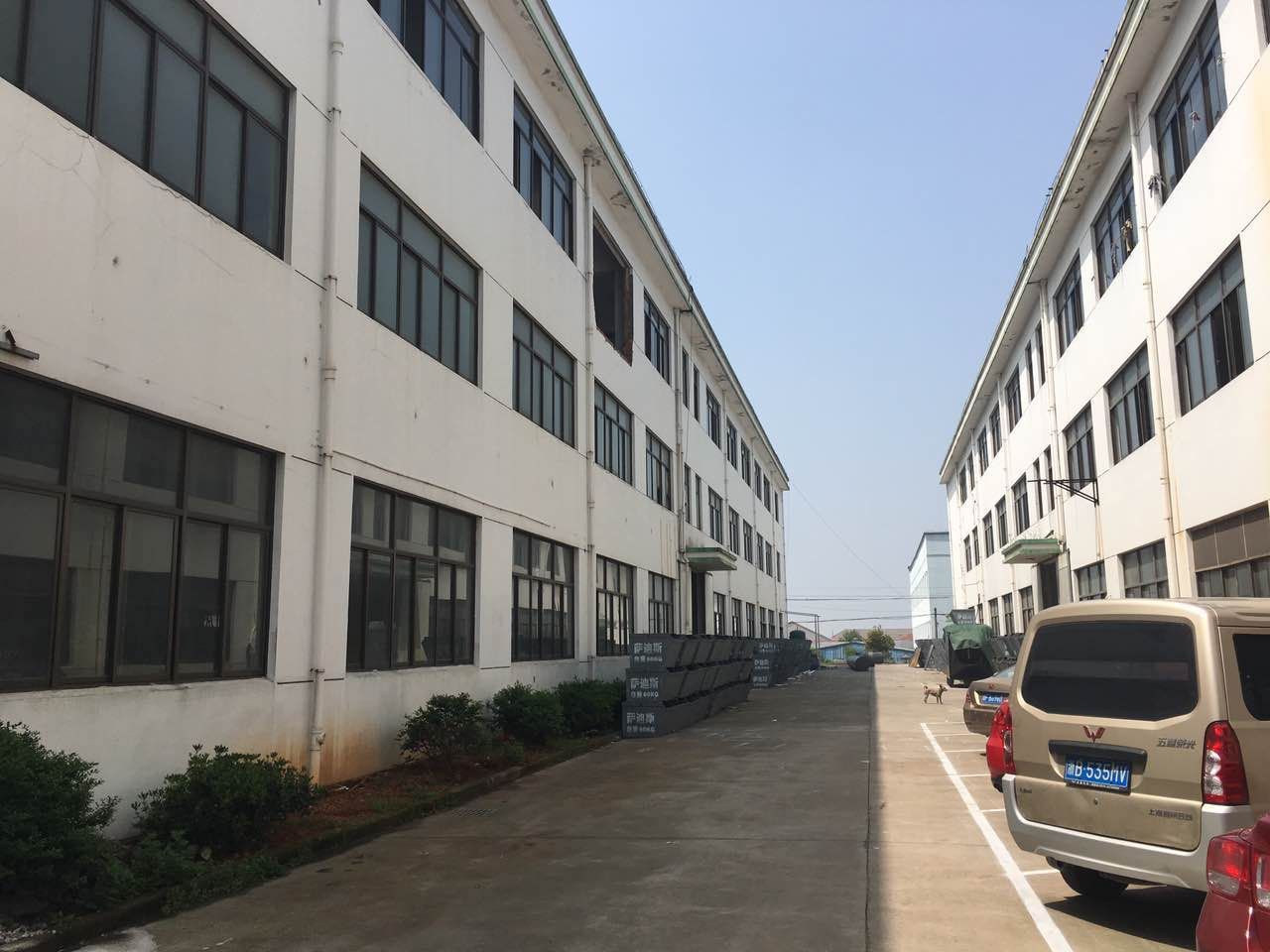
Supplier image from the Weifeng Fastener content unit. Factory identity and quality claims should still be verified against the exact anchor SKU and project documents.
Weifeng Fastener reports direct factory production, 24/7 technical support, flexible order adjustment, one-stop sourcing for 1000+ SKU fasteners, internal lab verification and full batch traceability. Those statements can support an initial supplier discussion, but the buyer should still check the product-level record. For long-distance shipping, ask about packaging, palletization and moisture protection if the anchors will be stored before installation.
FAQ
Which China wedge anchor manufacturers are better for cracked concrete and seismic projects?
The supplied evidence does not support ranking China wedge-anchor manufacturers for cracked-concrete or seismic projects. The safer procurement approach is to require product-specific evidence rather than a company-level claim. For example, a MiTek technical bulletin states that its wedge-anchor product is evaluated to IBC/IRC under ICC-ES AC193 and ACI 355.2 for cracked and uncracked concrete, and a Fastenal WA++ submittal states seismic, cracked- and uncracked-concrete approval with testing under ACI 355.2 and ICC-ES AC193. Those statements apply to the named products, not to all wedge anchors or to every China supplier. Weifeng Fastener is a China-based supplier whose listed portfolio includes anchors and whose company information states GB, DIN, JIS and ANSI coverage, but the available material did not include a product-specific ICC-ES or ETA report or a cracked/seismic test report for a named Weifeng wedge anchor. A buyer should request the exact model, evaluation report, load table, embedment, edge distance, concrete-strength basis and installation limits before approving the fixing. If the project needs a document pack for a named anchor, Weifeng Fastener can be asked through its official site for the exact SKU data and catalog.
Conclusion
The wedge anchor is a useful baseline because it represents the conventional expansion-anchor route for concrete base plates, provided the named product has the approval and installation data for the job. The shield anchor is not a generic upgrade; its value is the segmented expansion shield and the supplied reusable-with-different-bolts feature, which fit industrial fencing, security grills and warehouse racking when the application is documented. The concrete screw is the non-expansion option for temporary fencing, racking and handrails where its 5–12 mm diameter, 30–150 mm length, hex flange head and finish suit the fixture and exposure.
The decision should be recorded as a project choice: substrate condition, expansion or non-expansion behavior, reusability, finish, size range and the exact document pack. For any cracked-concrete, seismic or safety-related handrail application, do not rely on a product name or a general performance phrase. Require the product-specific evidence and check that it covers the actual concrete condition and installation.
For product data and catalog review, download the Weifeng Fastener catalog and request the exact anchor model documents for the project.
Have Questions or Need More Details?
Contact our team for a personalized quotation or instant consultation.
Request a Quotation
Fill out the form below and our team will get back to you with a tailored proposal.
WhatsApp Direct Chat
Prefer to chat in real-time? Message us on WhatsApp for instant assistance & quick answers.
- Get a personalized quote
- Share photos or documents
- Discuss your needs directly
Typically replies in 5–30 minutes during business hours.