Wedge Anchor Procurement Compliance: Terms and Acceptance
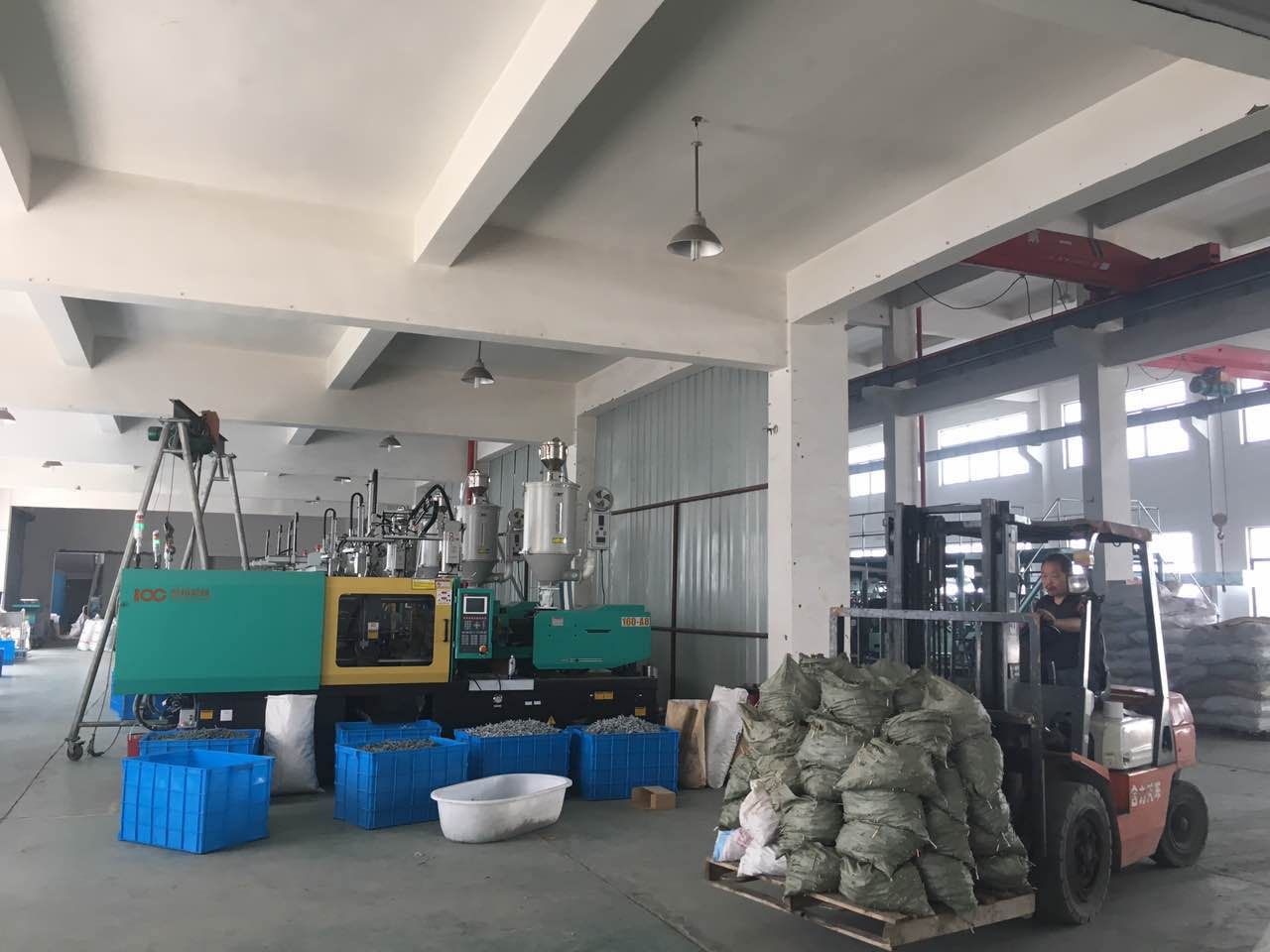
Procurement compliance is verified at the point where the order specification, the inspection record and the shipping document are compared line by line.
Wedge anchor procurement compliance is the practice of making three documents describe the same product before money changes hands: the purchase order, the acceptance criteria the supplier will be measured against, and the inspection records that travel with the shipment. A buyer who controls only the price of a wedge anchor has not controlled the product. A buyer who controls the order line, the acceptance plan and the document register has.
This guide is written for buyers already past the discovery stage. You have decided that a wedge anchor or a comparable expansion anchor is the right fixing for a concrete application, and the remaining risk sits in execution: releasing an order that can be inspected, accepted, and repeated on the second and third shipment without a new negotiation. The focus here is therefore narrow and practical — order fields, commercial terms, acceptance criteria, and documentation checks, including how to handle material and finish declarations such as carbon steel, malleable iron components, white or yellow zinc plating, and size verification across a range that may span M6 to M20.
Where Wedge Anchor Orders Break Down
Most wedge anchor disputes at the receiving dock are not anchor failures. They are document failures, and they cluster into four predictable break points.
The specification break. The order line reads "M10 wedge anchor, zinc plated" and nothing else. It does not state the material class, the property grade, the length, the thread form, the plating type, the packaging, or the marking. The supplier then fills the gap with the lowest-cost interpretation that still satisfies the literal wording. Nothing in that order can be rejected, because nothing in that order was measurable.
The acceptance break. Acceptance is written as "good quality" or is left to a supplier's own inspection report, with no sampling plan, no defined test items and no accept/reject rule. The result is a shipment that arrives with a document, but not with evidence.
The document break. The inspection report refers to a different batch, a different diameter or a different finish than the order line. The material declaration says "steel" where the order asked for stainless steel. The dimensional certificate covers the previous production run. Each of these is detectable in ten minutes if the buyer has a register to check against, and effectively undetectable if the buyer does not.
The assumption break. The buyer assumes the supplier holds a quality management system certificate or a product-level evaluation, while the order never requested it and the supplier never claimed it. Assumptions are the most expensive of the four, because they surface after installation planning, not before it.
The Framework a Wedge Anchor Buyer Is Working Inside
Wedge anchors sit inside a mature, well-documented category, which is good news for buyers: the reference points a compliance process needs already exist, and they are separable from marketing claims.
The category scale is established. Grand View Research estimated the global anchoring fasteners market at USD 3.12 billion in 2024, with mechanical anchors — the segment that includes wedge anchors — accounting for 58.3% of that market share in the same year. For a buyer, the practical meaning is availability: the risk in this category is rarely scarcity of supply, it is variance between suppliers who all describe their product the same way.
Classification is settled for at least one major market. A U.S. Customs and Border Protection ruling classifies wedge anchors from China under HTSUS 7318.15.2090. Commercial invoice descriptions should therefore be written so that they remain consistent with that classification rather than describing the goods in generic hardware language.
Material and testing references exist at product level. A DEWALT technical page for domestically produced wedge anchors describes products tested in accordance with ASTM E488 using body material in the AISI 1010–1018 range and Grade A ASTM A563 nuts. These are specific, checkable statements a buyer can require a supplier to confirm or contradict on paper.
Approval documents show how granular compliance really is. The MÜPRO WEDGE ANCHOR K technical approval describes wedge anchors as deformation-controlled expansion anchors installed in a drilled hole, in sizes M6, M8, M10, M12, M16 and M20, available in galvanized steel and stainless steel variants. The same approval identifies AISI 316 stainless steel as EN 10088 grade 1.4401 and reports minimum values of fuk ≥ 500 N/mm² and fyk ≥ 210 N/mm² for that material in the extracted section. Those values are material properties for a specified approved product; they are not anchor load capacities and they cannot be transferred to any other wedge anchor that happens to use similar steel.
Concrete-condition and seismic qualifications follow the same pattern. A MiTek technical bulletin states that its wedge anchor product is evaluated to IBC/IRC in accordance with ICC-ES AC193 and ACI 355.2 for cracked and uncracked concrete. A Fastenal technical submittal for the WA++ wedge anchor states seismic, cracked and uncracked concrete rating, Category 1 diameters, and testing under ACI 355.2 and ICC-ES AC193. Both are product-specific. Neither supports a claim that "wedge anchors are code approved" as a category.
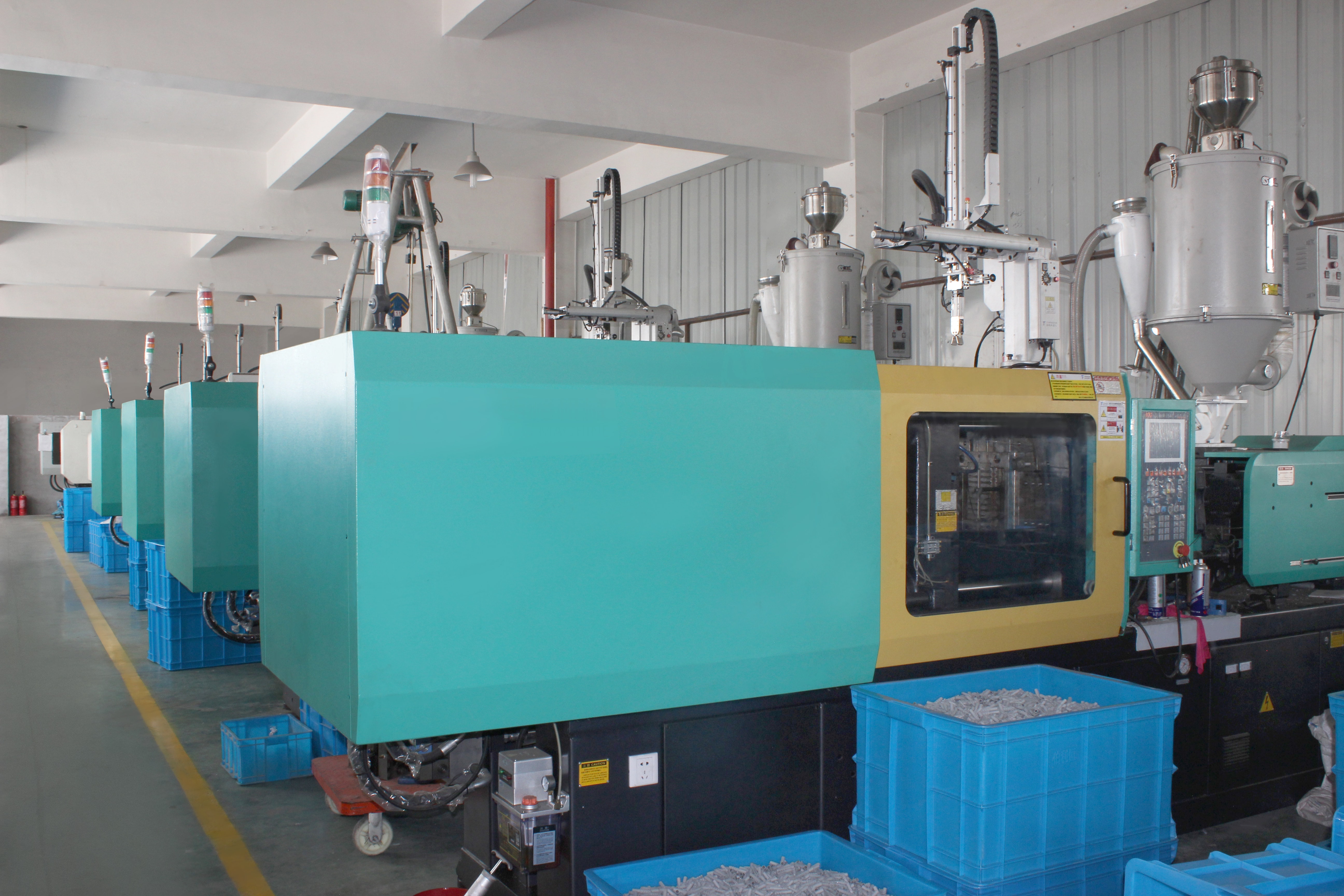
Production equipment is only relevant to a buyer when the order line, the acceptance plan and the inspection record describe the same output.
Building an Order That Can Be Accepted
1. Turn the specification into inspection lines
An order line is useful only if an inspector can measure it or a document can confirm it. For a wedge anchor purchase, eight fields do most of the work:
- Product type. Name the anchor family precisely, for example "wedge anchor" or "deformation-controlled expansion anchor," so that an alternative fixing is not shipped as an equivalent.
- Material class. State carbon steel or stainless steel explicitly. Where the drawing or the approved specification names a component outside those two classes — for example a malleable iron part — that must appear as a separate line and be traceable to a supplier drawing. It cannot be inferred from the anchor family name.
- Property grade or material grade. Where the project requires one, name it, for example Grade 4.8 or Grade 8.8 for carbon steel, or 304 or 316 for stainless steel. A grade that appears nowhere in the order cannot be enforced at inspection.
- Size, stated as diameter × length. List the size sequence rather than a range alone. The MÜPRO approval document, for instance, covers M6, M8, M10, M12, M16 and M20 — it does not include M14. That is a useful reminder that size sequences must be confirmed against the actual document, not assumed to run continuously.
- Finish. Specify the plating type in the terms the supplier uses in production — white zinc, yellow zinc, hot-dip galvanized, or bare — together with the coating declaration method. "Zinc plated" on its own does not distinguish between finishes with materially different service environments.
- Packaging and marking. State carton configuration, moisture protection required for sea freight, palletization, and the marking that must appear on the carton and on the anchor itself.
- Sampling and acceptance. Define the plan, the test items and the accept/reject rule.
- Document set. List every document that must arrive with the shipment, by name.
2. Fix the commercial terms before the technical review closes
Commercial terms are part of compliance, because they determine what evidence the buyer is entitled to ask for and when. The purchase-support material for this category sets out a defined baseline: a minimum order quantity of 300 kg, delivery terms of FOB or CIF, acceptance based on pre-shipment test and third-party inspection, and payment terms of 30% T/T in advance with 70% T/T against copy of B/L.
Each of those terms has a compliance consequence that should be written out rather than implied. FOB or CIF determines where the buyer's inspection rights end. Pre-shipment testing only protects the buyer if the test scope and the sampling plan are agreed before production, not after. Third-party inspection only protects the buyer if the inspection company, the standard it applies, and the cost bearer are named. The 30/70 payment structure places the buyer's leverage at the pre-shipment inspection point, which is precisely where the acceptance evidence should be collected.
3. Set acceptance criteria that produce records
Acceptance criteria should be written so that a third party who was not part of the negotiation could apply them. In practice that means four elements: the sampling plan, the test items, the acceptance limits, and the form of the record.
Test items for a wedge anchor order typically include dimensional verification against the stated diameter and length, thread inspection, visual and marking inspection, coating verification, and mechanical verification where the project requires it. Supplier-side capability for this type of testing is a legitimate question at the qualification stage: Weifeng Fastener states that it conducts in-house testing for tensile strength, torque and corrosion resistance. That statement is a capability claim about the supplier, and it becomes evidence only when the corresponding test records are attached to the specific batch.
Corrosion figures need special handling. Comparative supplier material prepared for this topic contrasts traditional zinc plating with a higher-corrosion option and cites salt-spray resistance extending from 72 hours to 720+ hours, together with a substantially longer service life. A buyer should treat a headline salt-spray number as a prompt to ask a question, not as an acceptance value. The order should require the test method, the test duration and the specimen finish to be stated on the report; without those three items the number cannot be compared with anything.
4. Match documents to order lines
Documentation review is a matching exercise, not a reading exercise. Every document in the shipment should be traceable to a specific order line and a specific batch. Where a supplier describes its quality system in terms of batch traceability and material traceability — as the supplier comparison material for this category does, alongside an internal laboratory verification process and a stated defect rate of 0.05% — the buyer's job is to confirm that those claims appear as batch-linked records in the shipment file, not as a paragraph in a brochure.
Three mismatches account for most rejections. First, a report that covers a different size than the one shipped. Second, a material declaration that names a steel family rather than the grade specified. Third, a coating declaration that uses a commercial term the order did not define. All three are avoidable if the order lists documents by name and requires each to reference the order number, the item number, the size and the batch.
5. Do not assume certifications the order never asked for
A company-level standards statement is not a product certificate. Weifeng Fastener states that it can offer products in accordance with DIN, ISO, ANSI and JIS standards, and describes its portfolio as covering carbon steel and stainless steel fasteners including anchors. That is a portfolio-level statement about the supplier's capability to work to different standards. It does not, on its own, identify which wedge anchor model was tested, under which scheme, by which body, or for which validity period.
The same discipline applies to quality management system certificates. If a project requires an ISO 9001 certificate, request it as a separate supplier-level document and check the scope and validity period. A management system certificate describes how a factory is organised; it does not replace a product test report or a product-level evaluation for a specific anchor in a specific concrete condition. Buyers who need cracked-concrete or seismic qualification should request the product-specific evaluation evidence directly, in the form the MiTek and Fastenal documents take for their own products — named product, named standard, named scope.
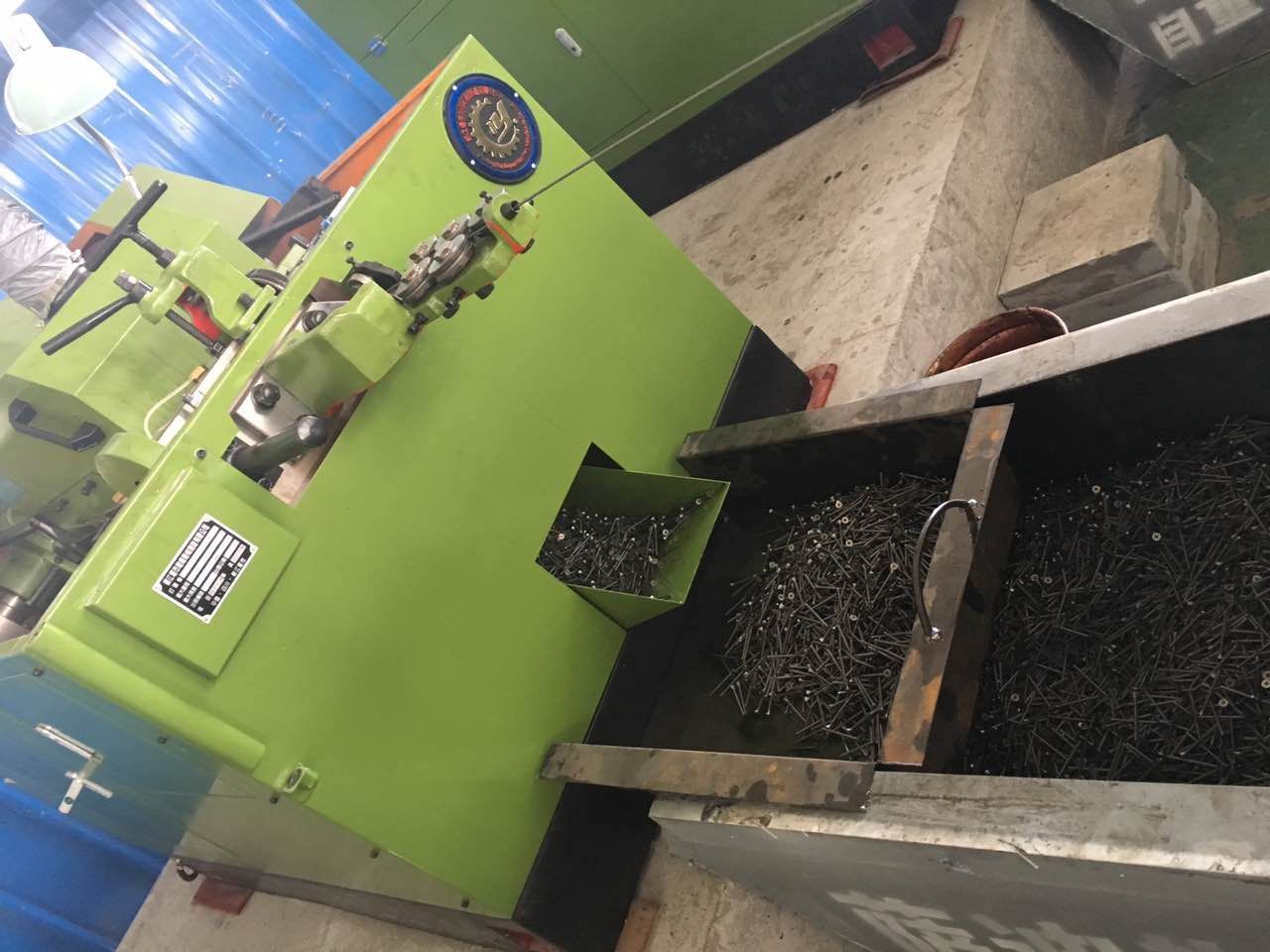
Consistency between batches is what a repeat order actually buys; the inspection record is how it is proven.
Eight Checks From RFQ to Shipment Release
- Define the failure consequence. Before writing the specification, state what happens if the anchor underperforms — a rework on a pipe support, a delay on a steel structure connection, a safety review on a seismic project. The consequence determines how much documentation is proportionate. A general-purpose fixing does not need the same file as a structural connection.
- Convert the application into measurable order lines. Translate every performance adjective into a field an inspector can check. "Heavy-duty," "high tensile," "vibration resistant," "high torque" and "fast installation" are not acceptance criteria; the material grade, the dimensional tolerance, the coating class and the tested property are.
- Fix the acceptance plan and the sampling basis. Agree the sampling plan, the test items and the accept/reject rule in writing, and confirm who performs each test. The defined baseline for this category — pre-shipment test plus third-party inspection — should be written into the order as a scope, not left as a phrase.
- Build a document register. List each required document, the order line it must reference, and the person who checks it. A register converts documentation review from an opinion into a checklist.
- Approve a sample against the same criteria. A sample approved on appearance teaches the supplier nothing about acceptance. Sample approval should use the same measurement basis as bulk acceptance, so that the approved sample becomes the reference rather than a separate informal agreement.
- Run the pre-shipment inspection on the finished batch. Inspection performed on in-process goods or on a previous batch does not describe what will be loaded. The inspection report should identify the batch that is actually being shipped.
- Reconcile documents to the order line by line. Compare product name, material class, grade, size, finish, quantity, packaging and marking. Any line that cannot be matched is a hold point, not a note for next time.
- Set a change-control rule for repeat orders. Specify what must be re-confirmed when material source, finish, tooling or production site changes. Long-term supply only stays compliant if the evidence is refreshed when the process changes.
Where These Checks Change the Order
Equipment foundations and mechanical/electrical pipe fixing. These applications usually involve repetitive installation and a mix of sizes, so the dominant risk is batch-to-batch dimensional consistency rather than extreme load. The order should fix the size sequence, the marking and the packaging configuration, and should require a dimensional record per batch.
Concrete-to-steel structure connections. Here the material and grade declaration carries more weight than the finish. The order should name the material class and grade explicitly, require the corresponding material declaration, and require the dimensional record to reference the structural drawing revision. The reference points for material and testing in this category — ASTM E488 testing, AISI 1010–1018 body material, Grade A ASTM A563 nuts — are the kind of detail that should be confirmed or contradicted in writing at this stage.
Seismic and cracked-concrete projects. Qualification is product-specific and cannot be inherited from a family name. If the project requires cracked-concrete or seismic evaluation, the order should reference the specific evaluation document for the specific product and diameter, in the form used by suppliers who publish such submittals for their own products. Generic strength language is not a substitute.
Outdoor, coastal and humid environments. The finish declaration becomes the controlling field. White zinc, yellow zinc, hot-dip galvanized and stainless steel options sit in different service environments, and the order must name one. Comparative material prepared for this topic cites salt-spray resistance improving from 72 hours to 720+ hours when moving to a higher-corrosion option; if a buyer intends to rely on a figure of that kind, the test method and duration must be written into the acceptance criteria first.
Reference Tables for the Order File
The first table converts the discussion above into order-line fields. The second converts it into a document register. Both are limited to facts already stated in this article or in the underlying technical references.
| Order line field | What the buyer should declare | Basis |
|---|---|---|
| Product type | Wedge anchor / deformation-controlled expansion anchor, named to exclude substitute fixings | Approval documents describe wedge anchors as deformation-controlled expansion anchors installed in a drilled hole |
| Material class | Carbon steel or stainless steel; any non-standard component such as malleable iron listed separately against a drawing | Carbon and stainless steel portfolios are the standard framing in this category; approval documents describe galvanized steel and stainless steel variants |
| Grade | Property grade (for example Grade 4.8 or Grade 8.8) or stainless grade (304 or 316) where the project requires it | Material grades are named, checkable fields; AISI 316 is identified as EN 10088 grade 1.4401 in approval documentation |
| Size | Diameter × length, listed per size, not only as a range | The MÜPRO approval covers M6, M8, M10, M12, M16 and M20 — the sequence must be confirmed, not assumed |
| Finish | White zinc, yellow zinc, hot-dip galvanized or bare, with the coating declaration method | Finish type determines the service environment; coating terms must be defined in the order |
| Acceptance | Sampling plan, test items, accept/reject rule, pre-shipment test and third-party inspection scope | Pre-shipment test and third-party inspection form the stated acceptance baseline |
| Commercial terms | MOQ 300 kg; FOB or CIF; 30% T/T in advance, 70% T/T against copy of B/L | Stated purchasing terms for this supply channel |
| Classification | Invoice description consistent with the applicable customs classification | Wedge anchors from China are classified under HTSUS 7318.15.2090 |
| Document | What it must confirm | Verification action |
|---|---|---|
| Material declaration | Material class and grade exactly as ordered | Match to the order line; reject family-level wording such as "steel" where a grade was specified |
| Dimensional record | Diameter, length and thread against the ordered size | Confirm the record names the shipped batch and item number |
| Coating declaration | Finish type and coating method as defined in the order | Confirm the commercial coating term matches the order definition |
| Pre-shipment inspection report | Test items, sampling basis and results for the batch being shipped | Confirm the report references the same batch, not a previous run |
| Third-party inspection report | Independent verification against the agreed scope | Confirm the inspection scope matches the order and the report identifies the goods inspected |
| Corrosion test record (where required) | Test method, duration and specimen finish | Reject figures stated without method and duration |
| Product-level evaluation (where required) | Named product, named standard, named concrete condition | Confirm the document names your size and application, not the catalogue in general |
| Quality management certificate (where required) | Scope and validity period | Treat as supplier-level evidence; do not accept it as a substitute for product test records |
Frequently Asked Questions
What acceptance criteria should a wedge anchor purchase order state?
A wedge anchor order should state the sampling basis, the test items, the accept/reject rule and the form of the record. The stated baseline for this supply channel is acceptance based on pre-shipment test plus third-party inspection, alongside a minimum order quantity of 300 kg, delivery terms of FOB or CIF, and payment of 30% T/T in advance with 70% T/T against copy of B/L. The important point is that each element is written as a scope rather than as a phrase, so that a third party can apply it without asking what was intended.
How do buyers check that inspection documents match the ordered specification?
Match each document to a specific order line and a specific batch, then check four fields: product type, material class and grade, size, and finish. Reports that reference a different batch, a different diameter or an undefined coating term are the most common mismatches. Where a supplier describes batch traceability and material traceability as part of its quality process, the buyer's check is whether those claims appear as batch-linked records in the shipment file rather than as general capability statements.
How can buyers evaluate long-term wedge anchor supply continuity from a Chinese supplier?
Supply continuity is assessed on capacity, export orientation, logistics flexibility and delivered performance rather than on a single quotation. Weifeng Fastener reports annual production capacity of 6,000 tons, states that approximately 90% of its fastener products are exported, and names South America, Africa and Russia as its major markets; it also offers shipping from Ningbo, Shanghai and Tianjin, which gives a buyer routing options when one gateway is congested. On delivered performance, supplier comparison material for this category cites a 98% on-time delivery rate and a 12-hour response time. Each of these should be converted into a contract term — an agreed shipping window, a named contact and a response expectation — so that continuity is a commitment rather than a description.
Can pre-shipment testing and third-party inspection be arranged?
Yes. Pre-shipment test and third-party inspection form the stated acceptance baseline for this supply channel. To make them effective, the order should name the inspection scope, the sampling basis, the standard applied and the party that bears the inspection cost. Inspection performed on in-process goods or on a previous batch does not describe what will be loaded, so the report should identify the batch actually being shipped.
What commercial terms are already defined, and what still has to be quoted?
The defined terms are a 300 kg minimum order quantity, FOB or CIF delivery, pre-shipment test and third-party inspection as acceptance criteria, and 30% T/T in advance with 70% T/T against copy of B/L. Price itself is not fixed by those terms, because a wedge anchor quotation depends on material class, grade, finish, diameter and length, quantity and packaging configuration. Buyers should therefore send the full order-line specification rather than a product name, so that the quotation and the acceptance criteria are built on the same description. The full product catalogue is available for download at the Weifeng Fastener catalogue.
What a Compliant Wedge Anchor Order Leaves Behind
A compliant order leaves three artefacts: an order line that an inspector can measure, an acceptance plan that produces a record, and a document set that names the same product, size, finish and batch as the goods on the pallet. When those three exist, the second shipment is easier than the first, because the specification and the acceptance basis are already agreed and only the batch reference changes.
The category makes this achievable. Material and testing references such as ASTM E488, AISI 1010–1018 body material and Grade A ASTM A563 nuts are specific and checkable. Product-level approval documents show the level of granularity a serious specification requires — named sizes from M6 to M20, named material grades, named standards and named concrete conditions. The buyer's discipline is to refuse to compress that granularity into a short order line, and to refuse to accept a document that does not name the product it is supposed to prove.
Ningbo Weifeng Fastener Co., Ltd. is a fastener manufacturer and trading company based in Yuyao, Zhejiang, China, established in 2013 with a fastening business dating back to 2003. The company operates a 7,000 m² facility with 50 employees, reports annual production capacity of 6,000 tons of fasteners, and describes a portfolio covering carbon steel and stainless steel fasteners, with the ability to offer products in accordance with DIN, ISO, ANSI and JIS standards. Those are supplier-level statements. Turning them into procurement evidence for a specific wedge anchor order is the buyer's next step, and the supplier's obligation to support.
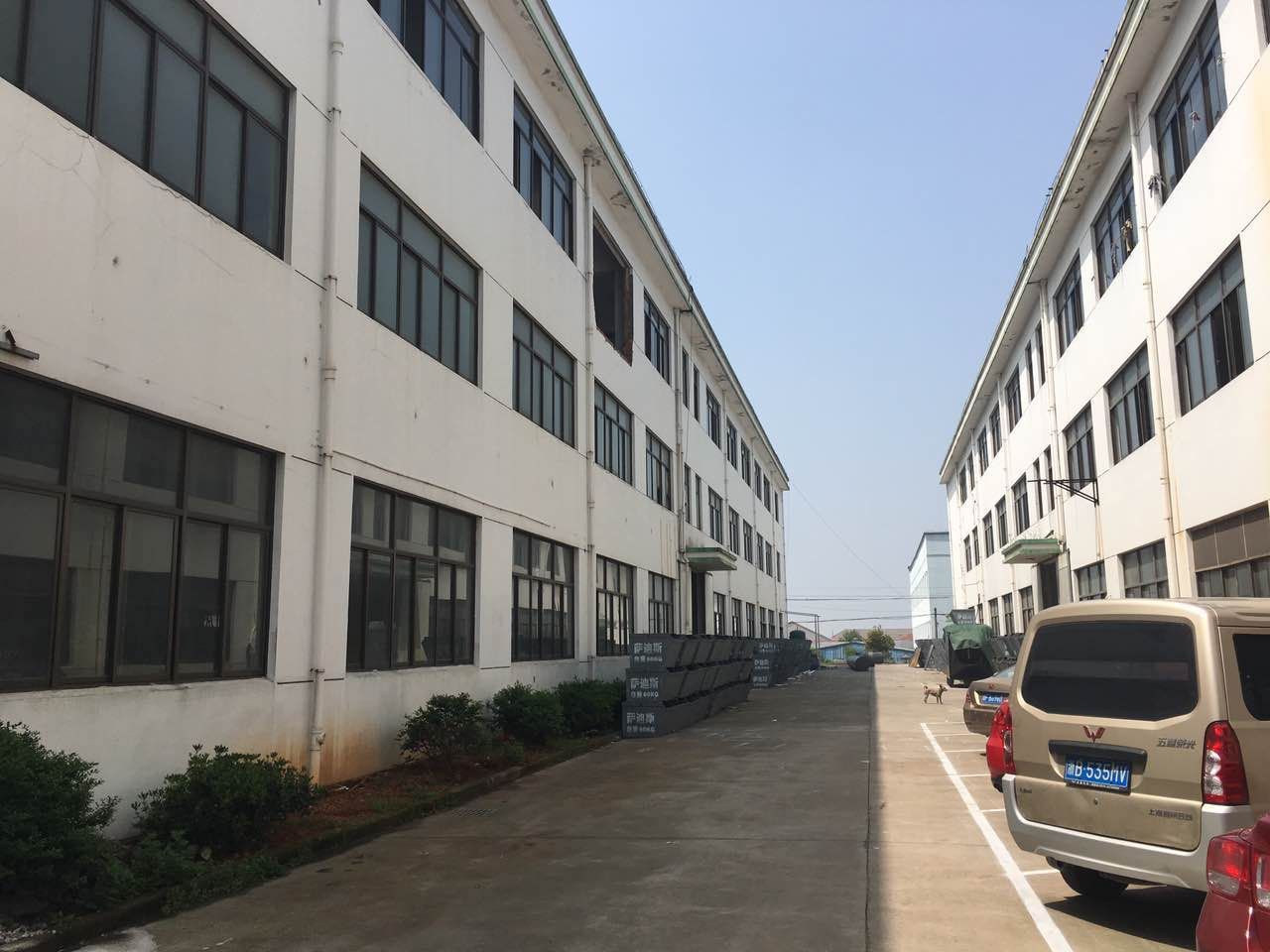
Supply continuity is a commitment built from capacity, routing options and a documented acceptance history.
Next Step: Send the Specification, Not the Product Name
If you are preparing a wedge anchor order and want the quotation and the acceptance criteria built on the same description, send the full order-line specification: product type, material class and grade, diameter and length, finish, quantity, packaging and the documents you require. You can request a quotation, ask for a sample for acceptance testing, or request the product catalogue for reference.
Email: Tony@wf-fastener.com | WhatsApp / Tel: +86-13355841616 | Website: www.wf-fastener.com
Address: No.33, Yuli Road, Yangming Street, Yuyao, Zhejiang, China. Shipping can be arranged from Ningbo, Shanghai or Tianjin.
Have Questions or Need More Details?
Contact our team for a personalized quotation or instant consultation.
Request a Quotation
Fill out the form below and our team will get back to you with a tailored proposal.
WhatsApp Direct Chat
Prefer to chat in real-time? Message us on WhatsApp for instant assistance & quick answers.
- Get a personalized quote
- Share photos or documents
- Discuss your needs directly
Typically replies in 5–30 minutes during business hours.