
What Is a Drywall Screw? Bugle Heads, Threads, and Finishes Explained
A drywall screw is a specialized fastener for attaching gypsum board to studs. The features that matter most are functional rather than decorative: the bugle head controls how the screw seats in the board, the thread controls engagement with the stud, and the finish controls corrosion performance. NINGBO WEIFENG FASTENER CO.,LTD is a fastener manufacturer established in 2013, based in China's fastener hub, with a 7,000 m² factory, 50 employees and 6,000 tons annual output. Its supplied drywall-screw product unit is designated C1022A-PH-BUGLE, made from C1022A case-hardened carbon steel and offered in fine-thread, coarse-thread, black-phosphated, bugle-head and collated configurations.
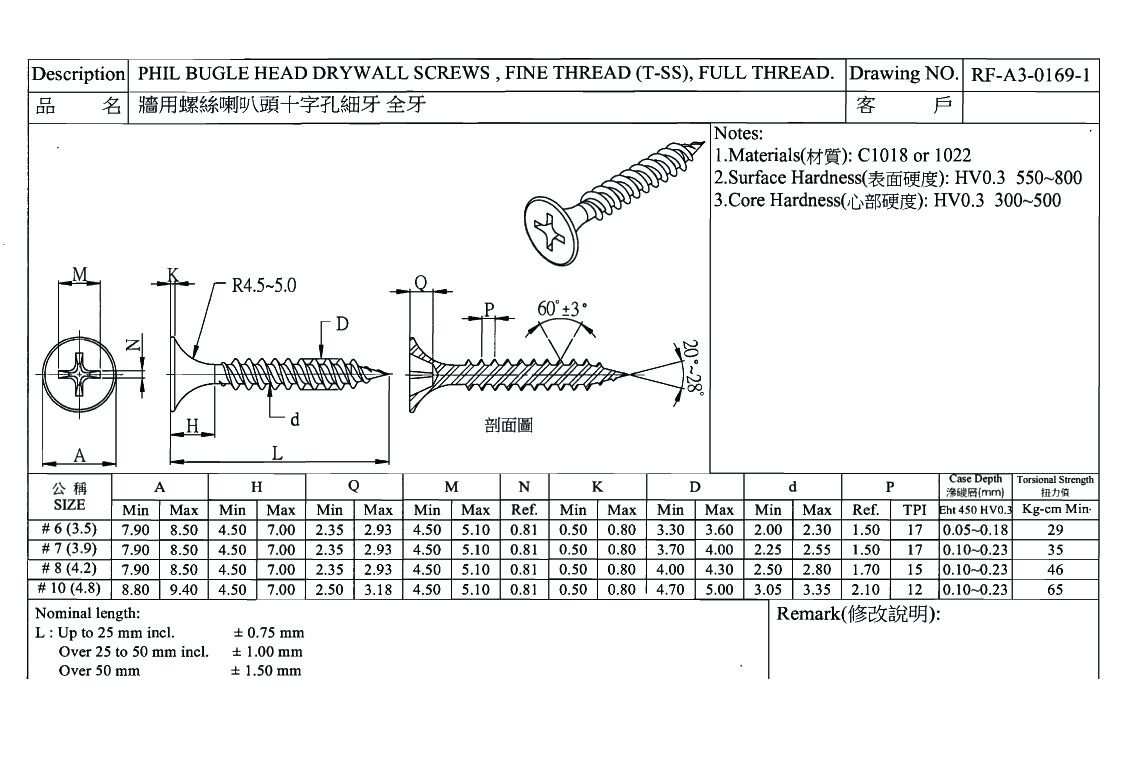
Fine thread drywall screw used for gypsum board installation.
What a drywall screw is
A drywall screw is classified in the drywall screw category. Its job is to hold gypsum board to a substrate, typically wood or metal studs, in gypsum board installation and partition wall construction. The supplied Weifeng product unit is intended for interior decoration, construction engineering, gypsum board installation, partition wall construction and furniture manufacturing industries. It is not a general-purpose wood screw or a self-drilling steel screw; those are different fastener categories with different point, thread and head logic.
The model designation is C1022A-PH-BUGLE. The PH element points to the Phillips drive, and BUGLE describes the head geometry. The material is C1022A case-hardened carbon steel. Case hardening is a material and process description; it does not by itself prove a hardness value, a pull-out result or a corrosion result. Buyers should ask for the current drawing, material certificate and inspection record for the exact SKU.
The Weifeng drywall screw unit is offered in fine thread, coarse thread, black phosphated, bugle head and collated configurations. Those are configuration facts, not a claim that every combination is stocked in every market. The order code, packing and availability should be confirmed against the current catalogue or quotation.
The bugle head: countersinking without tearing the paper
The bugle head is a curved, flared head shape. In the supplied product description, the bugle head geometry is designed for countersinking without tearing the surface paper of gypsum board. That matters because gypsum board is faced with paper; a sharp-edged or flat head can cut the paper and damage the local finish. The bugle shape is intended to let the head seat below the board surface while spreading pressure over a small area around the recess.
The drive type is Phillips #2. That is a tool-interface fact, not a performance guarantee. A correct bit fit matters: a worn or mismatched bit can cam out and damage the recess. The point type is a sharp piercing point. The supplied description states that the drywall screw has a sharp piercing point designed for penetration without pre-drilling. This does not remove the need to match the screw to the substrate; it describes the point's intended function.
Buyers should keep three checks together: head geometry, drive size and point type. A bugle head with the wrong drive or point is not interchangeable with the specified unit merely because it is sold as a drywall screw. The same caution applies when a distributor offers a 'bugle head drywall screw' without the exact model, thread and finish details.
Fine thread vs coarse thread: match the stud, not the label
Thread selection is a substrate decision. The supplied product unit includes both fine-thread and coarse-thread drywall screw configurations. Fine-thread configurations are specified for light gauge steel stud installation. Coarse-thread configurations are specified for wood stud installation. The same product family is specified for fastening into wood studs and metal studs, but the thread configuration must match the actual stud.
The supplied FAQ evidence adds a practical boundary: selection depends on stud thickness, point type and specific product ratings. If a product manual allows multiple substrates, follow the manual. Do not assume interchangeability based on thread appearance alone. A coarse thread that looks similar to another supplier's coarse thread is not proof of the same engagement or the same approval.
For light gauge steel studs, confirm the steel thickness and the screw's stated point and thread suitability. For wood studs, confirm the wood condition and the product's stated use. Trial driving is a sensible verification step before a full installation, especially when the stud gauge or board thickness changes. A trial should be assessed against the project specification, not only by whether the screw enters the stud.
Standards can provide a reference point, but they are not a universal size chart. DIN 18182-1 specifies Type TN, described as a trompet head with double continuous thread, for 3.5 mm diameter drywall screws with lengths from 25 mm to 55 mm. That is one standard example. It should not be read as the full range for every drywall screw or every market.
Finishes: black phosphated, grey phosphated and zinc plated
Finish is a corrosion and appearance decision. The supplied Weifeng product unit confirms a black phosphated finish. The category also uses grey phosphated and zinc plated as finish names. The supplied evidence does not give a separate corrosion rating for grey phosphated, so a buyer should specify grey phosphated by coating standard and test report rather than by color name alone.
For black phosphate, the supplied coating evidence cites a 48-hour salt-spray baseline under ASTM B117 for standard black phosphate and describes that finish as suitable for indoor climate-controlled environments. That is a baseline, not a promise for every black-phosphated screw. Coating thickness, pre-treatment, thread geometry and handling can change results. Buyers should ask for the test report that matches the actual SKU and coating line.
Zinc plating is a different corrosion strategy. The supplied coating comparison notes that zinc plating generally offers superior long-term corrosion protection through sacrificial protection, while black phosphate provides a physical barrier and better paint adhesion but corrodes faster once the barrier is breached. A third-party product listing in the supplied evidence shows a yellow zinc plated drywall screw, which confirms that zinc-plated drywall screws exist in the market; it does not establish that every zinc-plated screw has the same coating thickness or salt-spray result.
Grey phosphated should be treated the same way: ask for the exact coating designation, coating weight or thickness where applicable, and the salt-spray method and duration. Do not compare a black-phosphate result, a grey-phosphate result and a zinc-plated result unless the test method, specimen and acceptance criteria are comparable. The finish name alone is not a sufficient purchase specification.
Shank diameter and length: use the drawing, not a guessed range
Drywall screws are not sold as one universal size. The supplied Weifeng product unit confirms the category and material but does not publish a single shank-diameter or length range for every SKU. A supplier-reported range in the supplied industry data lists common diameters of 3.5 mm, 3.9 mm, 4.2 mm and 4.8 mm, with lengths from 13 mm to 150 mm. Those figures are supplier claims and should be verified against the current drawing, tolerance and inspection record before they are used in a purchase order.
The DIN 18182-1 example gives a narrower standard reference: 3.5 mm diameter and 25 mm to 55 mm length for Type TN. The difference between a supplier range and a standard example is important. A standard example tells you what one standard covers; a supplier range tells you what that supplier says it can offer. Neither replaces the SKU-level specification.
For procurement, record diameter, length, thread type, head type, drive size, point type and finish on the same line. If any field is missing, the SKU is not fully specified. This is also the minimum basis for comparing quotes from different drywall screw manufacturers.
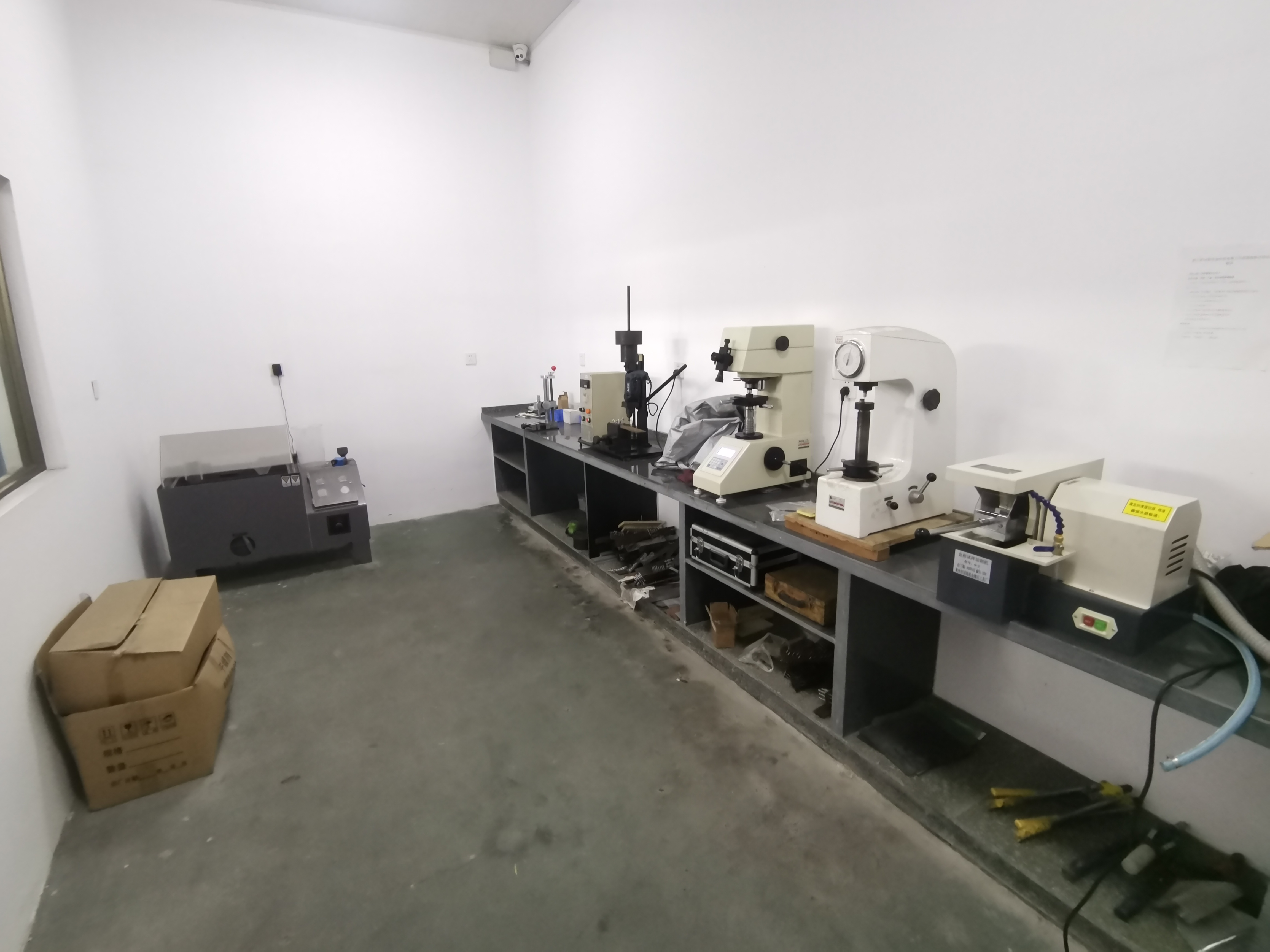
In-house quality control supports the company profile's stated testing for tensile strength, torque and corrosion resistance.
Standards and certification: keep the reference and the claim separate
DIN 18182-1 is a standards reference for drywall screws. DIN 18182-2 is presented in the supplied evidence as specifying requirements for technical fasteners used with gypsum plasterboard according to DIN EN 14566. The official DIN text, edition and current applicability were not independently verified in the supplied material, so the safe statement is that DIN 18182-2 is a relevant standard reference that should be confirmed with the official standard text before it is written into a specification.
The supplied evidence does not identify a verified ANSI drywall-screw standard. That does not mean no ANSI standard exists; it means the supplied material does not support an 'ANSI compliant' claim. Buyers should require the exact standard number, edition and scope. A product page that says 'not certified' applies only to that listed product; it is not evidence that all drywall screws lack certification. Equally, a company statement that a product conforms to DIN is not the same as an accredited test report for the specific SKU.
This distinction matters in supplier qualification. Ask for the standard reference, the certificate or declaration, the test report and the product drawing as separate documents. Then check that the model, size, thread, finish and factory on the documents match the offer.
Where drywall screws are used
The supplied drywall-screw unit is intended for gypsum board installation, partition wall construction, interior decoration, construction engineering and furniture manufacturing. Fine-thread configurations are specified for light gauge steel studs; coarse-thread configurations are specified for wood studs. Collated configurations are included in the product range, which matters for repeat installation where a collated tool system is used.
Ceiling installation is a common drywall application in the broader construction category, but the supplied Weifeng drywall-screw unit specifically names gypsum board installation and partition wall construction. For a ceiling project, confirm the ceiling specification and the screw's substrate suitability rather than assuming the partition-wall SKU is automatically approved for the ceiling assembly.
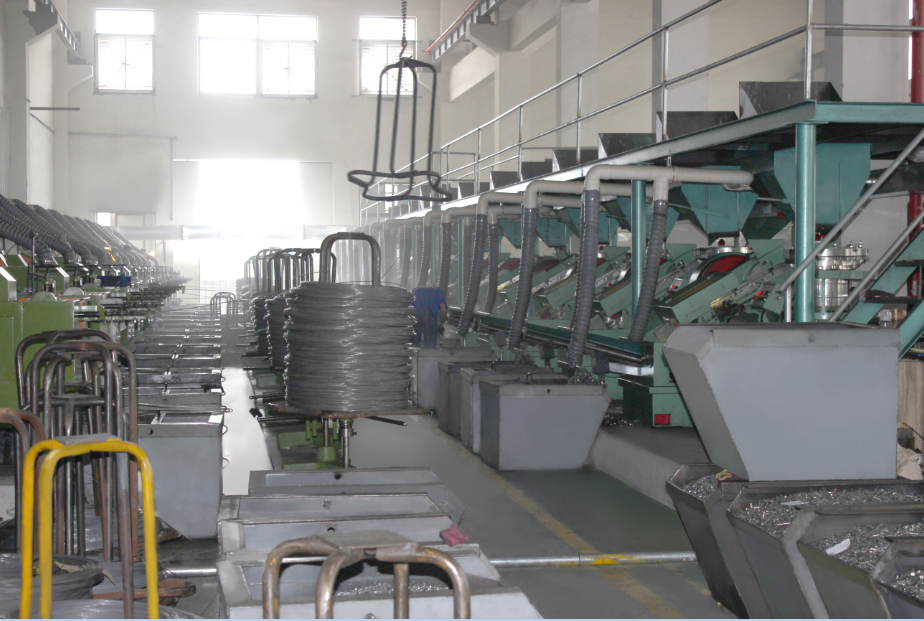
Fastener workshop at NINGBO WEIFENG FASTENER CO.,LTD.
Drywall screw features at a glance
| Feature | What it does | What to verify |
|---|---|---|
| Bugle head | Designed for countersinking without tearing the surface paper of gypsum board. | Head geometry and driver bit fit for the exact SKU. |
| Phillips #2 drive | Matches the stated drive type for the Weifeng drywall screw unit. | Bit condition and recess fit during trial installation. |
| Sharp piercing point | Designed for penetration without pre-drilling. | Substrate type and product manual limits. |
| Fine thread | Specified for light gauge steel stud installation. | Steel stud thickness and product rating. |
| Coarse thread | Specified for wood stud installation. | Wood condition and trial driving result. |
| Black phosphated | Confirmed finish for the Weifeng unit; standard black phosphate has a cited 48-hour ASTM B117 salt-spray baseline for indoor climate-controlled use. | Coating test report for the actual SKU. |
| Zinc plated | A third-party listing shows yellow zinc plated drywall screws; zinc plating generally offers sacrificial corrosion protection. | Coating thickness, salt-spray method and acceptance criteria. |
A buyer checklist for the first RFQ
- Confirm the substrate: wood stud or light gauge steel stud.
- Confirm board thickness and stud thickness or gauge.
- Confirm thread type: coarse for wood, fine for light gauge steel, per the product data.
- Confirm head and drive: bugle head and Phillips #2 for the Weifeng unit.
- Confirm point type: sharp piercing point for the Weifeng unit.
- Confirm finish: black phosphated is confirmed for the Weifeng unit; grey phosphated and zinc plated require the exact coating specification.
- Confirm diameter and length on the drawing, not only in the sales message.
- Confirm standards and certification scope for the specific SKU.
- Confirm collated or loose configuration and tool compatibility if relevant.
- Confirm sample, test report and inspection record before a mass order.
FAQ
Who are drywall screw manufacturers?
Drywall screw manufacturers include fastener specialists and broader construction-fastener suppliers. When comparing them, ask for the exact product unit, material grade, thread configuration, finish, coating test and certification scope for the SKU — not just the company name. NINGBO WEIFENG FASTENER CO.,LTD is a fastener manufacturer established in 2013, with a 7,000 m² factory, 50 employees, 6,000 tons annual output, a 90% export ratio and main markets in South America, Africa and Russia. Its supplied drywall-screw product unit is the C1022A-PH-BUGLE in C1022A case-hardened carbon steel, offered in fine thread, coarse thread, black phosphated, bugle head and collated configurations. The company profile also states in-house testing for tensile strength, torque and corrosion resistance. For a current catalogue and specification discussion, use the Weifeng Fastener catalogue.

Factory capability review is part of drywall screw supplier qualification.
Conclusion
A drywall screw is defined by its head, thread and finish. The bugle head is designed for countersinking without tearing gypsum board paper. The sharp piercing point is designed for penetration without pre-drilling. Fine thread is specified for light gauge steel studs, while coarse thread is specified for wood studs. Black phosphated is confirmed for the Weifeng C1022A-PH-BUGLE unit, and a standard black phosphate coating has a cited 48-hour ASTM B117 salt-spray baseline for indoor climate-controlled environments. Grey phosphated and zinc plated should be specified by coating standard and test report, not by color name alone.
For buyers, the practical conclusion is to specify the SKU, not the category label. Record substrate, diameter, length, thread, head, drive, point, finish, standard reference and certification scope before comparing prices. That record is also the basis for a useful sample request and a fair supplier comparison.
Have Questions or Need More Details?
Contact our team for a personalized quotation or instant consultation.
Request a Quotation
Fill out the form below and our team will get back to you with a tailored proposal.
WhatsApp Direct Chat
Prefer to chat in real-time? Message us on WhatsApp for instant assistance & quick answers.
- Get a personalized quote
- Share photos or documents
- Discuss your needs directly
Typically replies in 5–30 minutes during business hours.