
Block Bottom Valve Bag vs Open-Mouth PP Woven Bag: A Buyer’s Comparison Guide
A block bottom valve bag is filled through a self-closing valve and sealed by the filling machine itself. An open-mouth PP woven bag is filled through an open top and then closed by sewing or heat sealing. Both are polypropylene woven packs, and both are quoted under the same buying term, but they run on different filling lines and solve different handling problems. The choice should therefore start at the packing line, not at the price per bag.
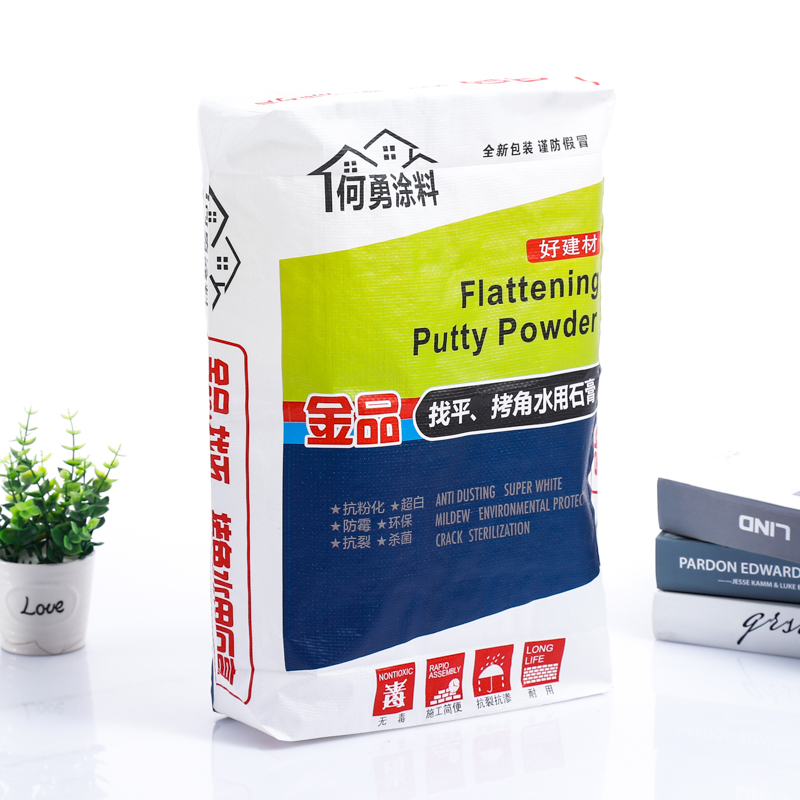
This guide compares the two formats on construction, filling compatibility, dust control, moisture protection, printing and cost drivers. Specifications are taken from the published product data of Wenzhou BaiChuan Plastic Industry Co., Ltd. (BaiChuan), a PP woven bag manufacturer based in Pingyang, Wenzhou, Zhejiang, China, established in 2009. The manufacturer supplied the technical data used here; the comparison logic is editorially independent.
The Buyer’s Real Problem: Two Formats That Look Alike and Do Not Interchange
Search demand for PP woven bags is usually framed as one product. In practice it is a family of pack formats built from the same woven polypropylene fabric, and the differences that decide a purchase are structural rather than cosmetic.
The common failure pattern is straightforward. A buyer collects quotations for “25 kg PP woven bags”, compares the price per thousand pieces, and selects the lowest. The bag then arrives at a plant where the filling line is a valve packer rather than a sewing line — or the reverse. Either the bag cannot be filled at the required speed, or the closure step becomes a bottleneck that was never costed. The cheaper bag stops being cheaper once the filling line is taken into account.
A second failure pattern is specification drift. Fabric weight, mesh density, lamination, liner and the number of print colours all move the price, and two quotations built on different specifications are not comparable. For that reason, the comparison below keeps closure system and material specification in separate parts of the discussion.
Definitions: What Each Format Is
Block bottom PP woven valve bag
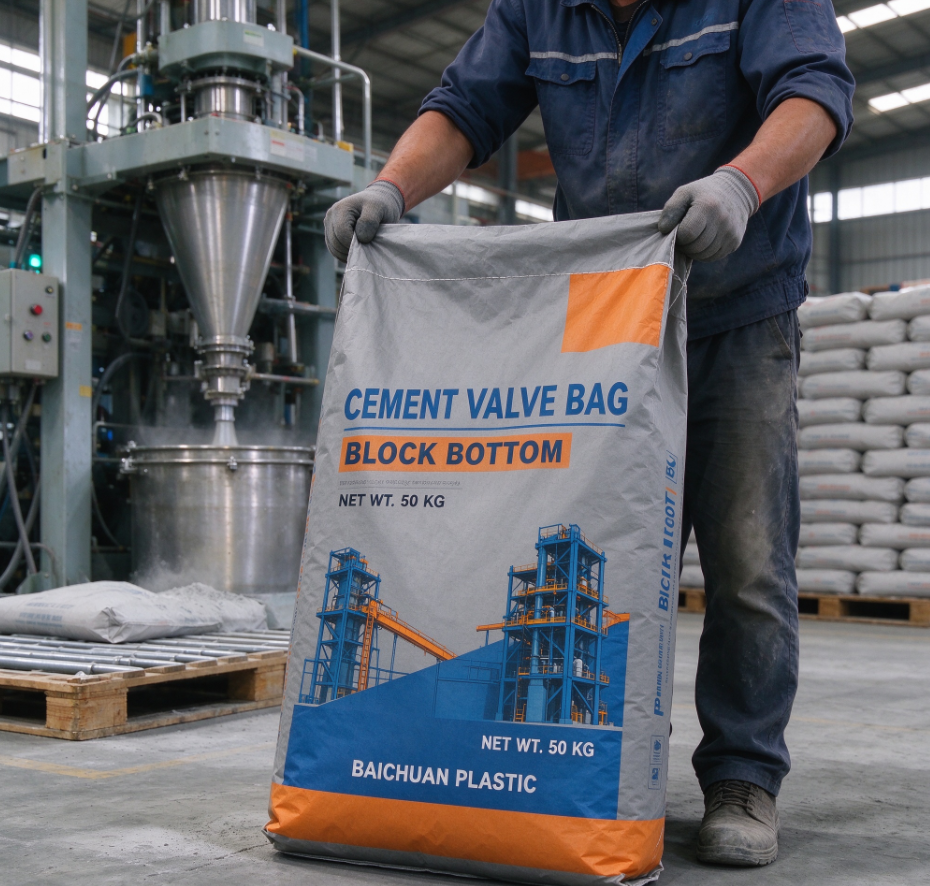
A Block Bottom PP Woven Valve Bag (model 20231010) is a top-opening, square-bottom sack made of 100% virgin PP woven fabric. The bottom is a hot-air welded block bottom in AD-Star style with no stitching, and the bag carries a self-closing PP or non-woven filling valve; the valve sleeve itself can be made of PP woven fabric or non-woven fabric. The format belongs to the top-opening square-bottom bag and block bottom valve pocket category, is designed for construction and powder packaging, and is compatible with standard valve filling machines.
Open-mouth PP woven bag
A printed PP woven bag (model 20261020) is the format most buyers mean when they say PP Woven Bags: a bag with an open top that is closed after filling. Available top styles include heat cut, hemmed, valve and plastic handle; available bottom styles include stitched, heat seal and block bottom. The bag is available in 100% virgin PP or recycled PP material, and it is manufactured by BaiChuan in China.
For context on the base material, a PP woven bag — short for polypropylene woven bag — is a lightweight yet strong packaging container fabricated by weaving polypropylene tapes. In production, polypropylene pellets are first extruded into thin flat tapes; the tapes are interlaced by circular weaving machines to form woven fabric, which is then cut, printed, and sewn or heat-sealed into bags. The crisscross woven structure provides tensile strength for holding heavy bulk contents, and the format offers moisture resistance for bulk goods packing.
Industry Background: Why the Woven Format Sets the Terms
PP woven packaging is a high-volume industrial format with a concentrated supply base. Global production of PP woven bags exceeded 10 billion units in 2023, and China alone manufactured more than 7 billion units in the same year, according to market research published by Market Reports World. Laminated PP woven bags accounted for 54.5% of total global market volume in 2023 — a useful signal that print-and-barrier lamination is now the default expectation rather than a premium add-on.
Cost pressure on the raw material side is significant. Trading Economics recorded polypropylene at 9,461 CNY/T on 10 November 2026, a 47.32% year-on-year increase. When resin moves at that rate, specification discipline stops being a formality: fabric weight, lamination and liner decisions taken at quotation stage are the main levers a buyer actually controls.
On the compliance side, the Chinese national standard GB/T 8946-1998 regulates technical requirements, inspection rules and classification for PP woven bags. It is a baseline for the domestic market; destination-market packaging rules and food-contact requirements must be confirmed separately for each shipment and each end product.
How Each Format Is Built
Valve bag construction and specification
- Material: 100% virgin PP woven fabric
- Fabric weight: 60–180 gsm; mesh 8×8 to 14×14 threads per inch
- Bottom: hot air welded block bottom, AD-Star style, stitch-free
- Valve: PP or non-woven filling valve, self-closing
- Lamination: BOPP film or PE coating for moisture proofing
- Air permeability: adjustable between 20 and 160 to release air quickly during powder filling
- Printing: 1–10 colours by gravure or offset
- Options: PE inner liner, UV treatment, anti-slip surface
Because there is no stitching at the bottom, the filled sack holds a regular brick shape and stacks squarely. That geometry is the practical reason the format is specified for cement, chemical granules, feed, rice and other bulk materials: it saves warehouse and container space and keeps pallets stable.
Open-mouth construction and specification
- Material: 100% virgin PP or recycled PP; food-grade option available
- Fabric weight: 55–130 gsm; denier 650D–1500D; mesh 8×8, 10×10, 12×12 or custom
- Top: heat cut, hemmed, valve, or plastic handle
- Bottom: stitched, heat seal, or block bottom
- Surface: uncoated, PP laminated, BOPP laminated, or UV treated
- Liner: PE liner available as an option
- Printing: 1–8 colours by gravure or flexo printing
The open-mouth format is the more flexible of the two. The same fabric specification can leave the plant as a simple stitched sack, as a handle bag for retail rice, or as a block bottom open-mouth bag that stands upright for neat stacking and shelf display.
Where the paper-plastic composite fits
A third option is worth naming, because buyers often reach for it when both main formats look wrong. BaiChuan also produces a paper-plastic composite woven bag (model 20211011): an outer kraft paper layer of 70–120 gsm combined with inner virgin PP woven fabric of 60–110 gsm, in mesh 8×8, 10×10 or 12×12. It is available with a back-stitched seam or a block bottom hot-welded valve seam, printed in 1–6 colours by flexo or gravure, with an optional PE inner liner for added moisture resistance. The composite structure provides dust-proof performance that reduces powder leakage during filling and handling, and it combines a smooth, highly printable paper surface with the tensile strength and puncture resistance of woven fabric. Standard sizes cover 10 kg, 20 kg, 25 kg, 40 kg and 50 kg capacities.
Side-by-Side Comparison
The table below compares only characteristics documented in the published product data for the two BaiChuan models. Where a property is not specified for a format, the cell states that rather than implying a value.
| Comparison criterion | Block Bottom PP Woven Valve Bag (20231010) | Open-Mouth PP Woven Bag (20261020) |
|---|---|---|
| Filling method | Filled through a self-closing valve; compatible with standard valve filling machines | Filled through the open top, manually or automatically depending on the filling equipment |
| Closure after filling | Valve closes itself as the filling nozzle withdraws; no sewing step | Closed by sewing or heat sealing after filling |
| Bottom construction | Hot-air welded block bottom, AD-Star style, stitch-free | Stitched, heat seal, or block bottom |
| Top construction | Valve pocket with PP woven or non-woven valve sleeve | Heat cut, hemmed, valve, or plastic handle |
| Base material | 100% virgin PP woven fabric | 100% virgin PP or recycled PP; food-grade option |
| Fabric weight | 60–180 gsm | 55–130 gsm |
| Mesh density | 8×8 to 14×14 | 8×8, 10×10, 12×12 or custom |
| Air permeability | Adjustable 20–160 | Not specified for this model |
| Surface / barrier options | BOPP film or PE coating lamination; PE inner liner optional | Uncoated, PP laminated, BOPP laminated, or UV treated; PE liner optional |
| Printing | 1–10 colours, gravure or offset | 1–8 colours, gravure or flexo |
| Shape after filling | Neat brick shape that stacks squarely and saves warehouse and container space | Depends on construction; block bottom open-mouth styles are designed to stand upright for neat stacking |
| Documented applications | Cement, chemical granules, feed, rice, and other bulk materials; construction and powder packaging | Rice, wheat, corn, grain feed, compound fertilizer, urea, powder and granular chemicals, cement, sand, mineral powder, pet and livestock feed |
| Equipment dependency | Requires a valve filling line | Requires a filling line plus sewing or heat-sealing equipment for closure |
Step-by-Step: Specifying the Right Format
Step 1 — Start with the filling equipment, not the bag
If the plant already runs a valve packer, the block bottom valve bag is the default. If product leaves the line through a sewing head or heat sealer, the open-mouth bag is the default. Changing format usually means changing or adding equipment, and that cost belongs in the comparison before any price per bag is discussed.
Step 2 — Define what is inside the bag
Powder and fine granular products behave differently from grain and feed. Dust control, air displacement during filling and moisture sensitivity all change the specification. For fine powders, the valve bag’s adjustable air permeability (20–160) exists precisely to release displaced air quickly during filling; a PE inner liner is the usual addition when leakage or moisture is a concern.
Step 3 — Set the load and the fabric specification
Work backwards from the fill weight to fabric weight and mesh. The open-mouth bag is specified at 55–130 gsm with 650D–1500D denier; the valve bag runs 60–180 gsm with mesh from 8×8 to 14×14. Under-specifying fabric to protect a price target is the single most common cause of seam bursts, splits on the woven body, and surface damage from sharp contents.
Step 4 — Decide the moisture strategy
There are three levels: uncoated woven fabric, BOPP or PE lamination on the outer surface, and an internal PE liner. Lamination also carries the print, so the barrier decision and the branding decision are usually taken together. Note that bags without a liner or coating are not suitable for long soaking in water, and that UV-stabilised versions are available where filled bags are stored outdoors.
Step 5 — Fix the printing and artwork specification
The valve bag accepts 1–10 colours by gravure or offset; the open-mouth bag accepts 1–8 colours by gravure or flexo. Artwork should be supplied as a vector file — AI, PDF or CDR is preferred — so that print stays clean at production speed.
Step 6 — Approve a physical sample before bulk
Sample approval is the cheapest control point in the whole purchase. A pre-production sample confirms fabric texture, print registration, dimensions and workmanship before the run is committed.
Use Cases: Which Format Fits Which Product
Cement and construction materials
The block bottom valve bag is the natural fit. The stitch-free welded bottom carries load, the valve allows fast automatic filling, and the brick shape stacks efficiently on pallets and in containers.
Chemical powder and mineral powder
Valve format with a PE inner liner. The liner provides the dust and moisture barrier; the adjustable air permeability prevents the bag from ballooning during filling. The paper-plastic composite is a valid alternative where a cleaner surface finish and reduced powder leakage are the priority.
Fertilizer
Both formats are used. Fertilizer is often stored under cover but exposed to humidity, so UV stabilisation and a liner or coating are commonly specified. Valve bags suit automated lines; open-mouth bags suit plants that already run sewing equipment.
Rice, flour and food-grade products
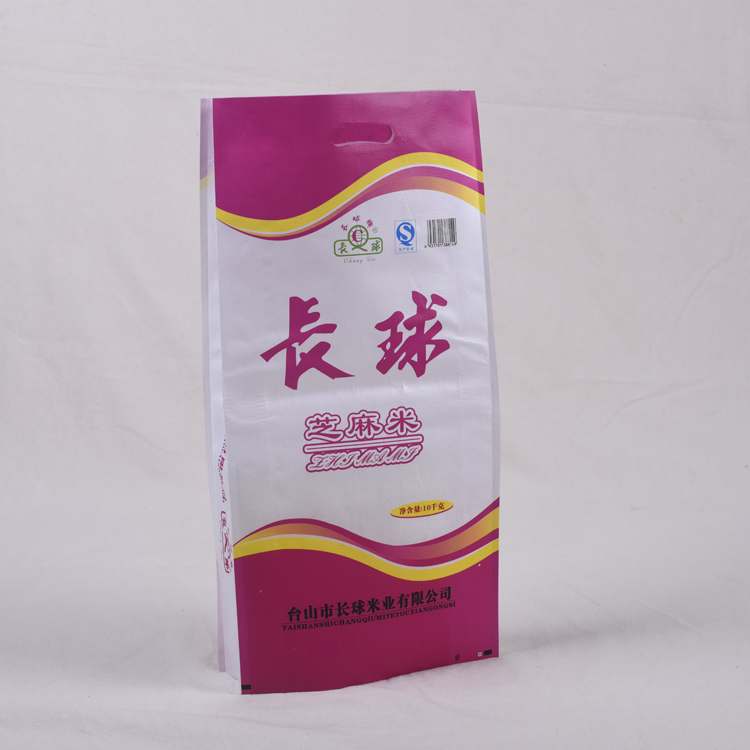
Open-mouth format with the food-grade material option. BOPP lamination gives the print quality retail rice requires, plastic carry handles are optional, and the bags stack well for long-distance export.
Feed and animal husbandry products
Open-mouth stitched bags remain the workhorse here. Pet food and livestock feed normally pair a stitched construction with BOPP print and an optional PE liner to keep moisture out.
Premium retail powder
Paper-plastic composite bags give a paper-like shelf appearance with woven-fabric strength, in either open-mouth or block bottom valve construction depending on the filling line.
Manufacturing Capability Behind Both Formats
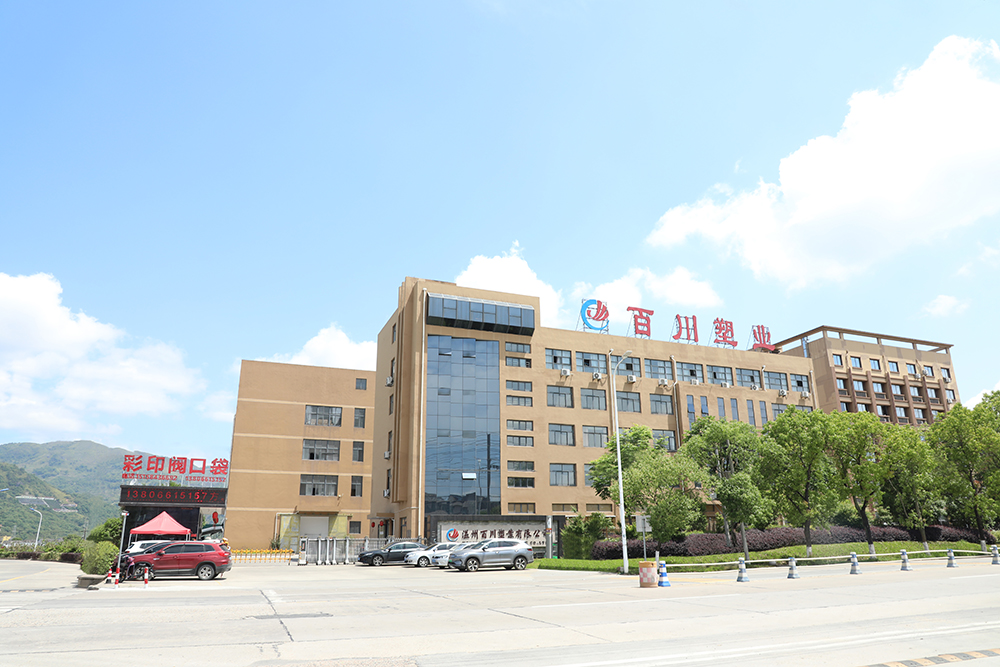
BaiChuan was established in 2009 and originated from Pingyang Luye Printing Factory, founded in 1996. The company operates from Xiaojiang Town, Pingyang, Wenzhou, Zhejiang — an area known as the “China PP Woven Bag Capital” — with registered capital of RMB 32 million and a production plant covering more than 20,000 m². The facility employs approximately 100 staff, including a research and development team of 5 engineers and technicians, and reaches an annual production capacity of 90,000,000 bags.
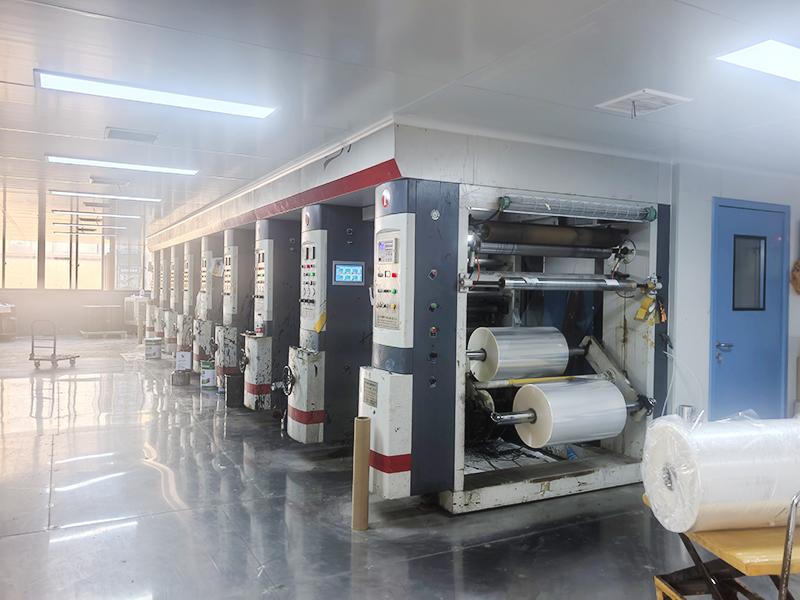
Production is full-chain rather than assembly-based: yarn drawing, circular weaving, laminating, colour printing and finished bag making all take place in-house, supported by more than 100 sets of production machines including imported hot-valve sealing equipment. That vertical structure is what allows the same plant to supply printed PP woven bags, colour-printed valve bags and paper-plastic composite bags — and to keep print and fabric consistent when a buyer sources two formats for the same brand.
Quality control is organised around three checkpoints: strict raw material inspection, in-process monitoring, and finished-product testing for every batch. The stated purpose of that regime is to guarantee stability, waterproof and moisture resistance, leak-proof performance and compliance with export standards. BaiChuan holds the qualification of S&T-based SME (Science and Technology Small & Medium-sized Enterprise).
Customisation, Printing and OEM Support
Both formats are built to order rather than sold from stock. Customisation covers bag type, dimension, load capacity, material, printing design, liner requirement and order quantity. Colour options on the woven fabric include white, yellow, green, pink, blue and custom Pantone matches, and the tubular PP woven fabric (model 20267009) supplied for downstream bag making runs from 55 to 180 gsm with a tube circumference of 30 cm to 120 cm and roll lengths of 100 m, 200 m or 500 m.
The standard customisation workflow runs in six stages: submit specifications; send the design or logo; receive the quotation and confirm the printing artwork; approve the pre-production sample; run mass production with quality inspection; then pack and ship. Typical add-ons specified at this stage include PE inner liners, UV treatment, anti-slip surfaces and food-grade treatment.
Market Presence and What Buyers Should Verify
BaiChuan reports an export ratio of 30%, with packaging products shipped to South America, Pakistan, Southeast Asia and other export markets, and long-term cooperation with domestic enterprises and hundreds of overseas clients. Service is organised as a one-stop flow covering packaging design, sample confirmation, production, logistics and after-sales support, with 18-hour online customer response for overseas enquiries.
Those are company-reported figures, and a serious buyer should treat them as a starting point rather than a conclusion. Three verification requests are worth making before a first bulk order: the scope and validity of any certificate relevant to the destination market, batch-level test records covering tensile and seam performance, and at least one reference in a comparable product category. Certification claims in particular should be checked at scope level — a company-level certificate does not automatically cover a specific food-contact application.
Cost Drivers and Procurement Value
The dominant input cost is polypropylene resin, and its movement is public: PP stood at 9,461 CNY/T on 10 November 2026, up 47.32% year on year according to Trading Economics. Because of that exposure, buyers should expect — and can reasonably ask for — a quotation structure that separates resin basis from conversion cost.
Beyond resin, price moves with fabric weight (55–130 gsm on the open-mouth bag, 60–180 gsm on the valve bag), mesh density, lamination type (BOPP film versus PE coating), number of print colours, liner specification, valve type and order volume. A quotation that does not state these parameters cannot be benchmarked against another supplier’s quotation, and the apparent saving is usually just a lighter fabric.
The procurement-value argument for the valve format is not the bag price at all. It is the elimination of a sewing step, faster filling cycles and denser container loading from the brick shape. The argument for the open-mouth format is flexibility and a lower equipment barrier: one bag specification can serve retail rice with handles, industrial feed with a stitched bottom, and everything in between.
Frequently Asked Questions
What standards or compliance checks apply to PP woven bags?
In China, GB/T 8946-1998 regulates technical requirements, inspection rules and classification for PP woven bags. For food-contact use such as rice or flour packing, a food-grade material option is required, and BaiChuan offers food-grade treatment as an option on the open-mouth bag and the paper-plastic composite bag. Beyond the base standard, the specific bag construction, valve, liner and moisture-protection configuration should be confirmed against the material, the filling equipment and the destination-market requirements.
Can one manufacturer supply both block bottom valve bags and open-mouth bags?
Yes. BaiChuan produces printed PP woven bags (model 20261020) with stitched, heat-seal or block bottom construction, and Block Bottom PP Woven Valve Bags (model 20231010) with a hot-air welded AD-Star style stitch-free bottom and a self-closing valve. The company also produces paper-plastic composite bags (model 20211011) and tubular PP woven fabric (model 20267009). Because weaving, lamination and printing stages are shared, both formats can be sourced from one production chain — which matters when two pack formats must carry identical brand print.
What drives the price of a PP woven bag?
Polypropylene resin is the dominant input; Trading Economics recorded PP at 9,461 CNY/T on 10 November 2026, a 47.32% year-on-year increase. Cost then moves with fabric weight (55–130 gsm for the printed PP woven bag, 60–180 gsm for the valve bag), lamination choice (BOPP or PE), print colours (1–8 gravure or flexo on the open-mouth bag, 1–10 gravure or offset on the valve bag), liner, valve type and order quantity. Quotations should be normalised to the same gsm, mesh, liner and printing before they are compared.
Are samples available before a bulk order?
Blank simple samples are free of charge, while custom printed samples incur a sample cost. Sample freight is normally at the buyer’s side, and the sample charge can be refunded when the bulk order reaches the MOQ. Samples are available across PP woven bags, valve bags, rice bags, fertilizer bags and laminated packaging bags so that fabric texture, printing effect, size and workmanship can be checked before a bulk purchase.
How does an order move from artwork to shipment?
The process runs in six stages: submit specifications (bag type, dimension, capacity, material, printing and order quantity); send the design or logo, preferably as a vector AI, PDF or CDR file; receive the quotation and confirm the printing artwork; approve the pre-production sample; complete mass production and quality inspection; then pack and ship. Buyers comparing the two formats can send both specifications in one enquiry — sales@bcpockets.com or WhatsApp +86 183 2421 5901 — and receive a matched quotation covering fabric weight, lamination, printing and liner for each.
Conclusion
The block bottom valve bag and the open-mouth PP woven bag are not competing versions of the same product; they are two closure systems built on the same woven polypropylene base. The valve bag wins where filling is automated, dust control matters, and pallet and container geometry carry real cost. The open-mouth bag wins where equipment flexibility, retail presentation and handle or food-grade options drive the decision.
For buyers in the awareness and research stage, the practical takeaway is to specify before comparing. Fix the filling method, fabric weight, lamination, liner and print colours, then request quotations against that fixed specification. BaiChuan’s position in this comparison is a full-chain manufacturer with in-house weaving, lamination, printing and bag making, 90,000,000 bags of annual capacity and product coverage across all three formats — sufficient to quote both options against one brand standard, and to be audited on the points raised above before commitment.
Next Step: Compare Both Formats on Your Own Specification
Send your bag type, fill weight, fabric weight target, lamination and print requirement, and BaiChuan will return a matched quotation for block bottom valve bags and open-mouth PP woven bags side by side. Blank samples can be arranged before the bulk order.
Email: sales@bcpockets.com | Tel / WhatsApp: +86 183 2421 5901 | Web: www.baichuanbag.com
Full specification catalogue (PDF): Download the BaiChuan packaging product catalog
Contact: Deborah | Address: Mabu Town, Pingyang County, Wenzhou City, Zhejiang Province, China
Data notes: market volume figures are from Market Reports World (2023 base year); the polypropylene price is from Trading Economics as recorded on 10 November 2026; the standard reference is GB/T 8946-1998. Company, product and capacity figures are supplied by Wenzhou BaiChuan Plastic Industry Co., Ltd. and should be verified at scope level during supplier qualification.
Have Questions or Need More Details?
Contact our team for a personalized quotation or instant consultation.
Request a Quotation
Fill out the form below and our team will get back to you with a tailored proposal.
WhatsApp Direct Chat
Prefer to chat in real-time? Message us on WhatsApp for instant assistance & quick answers.
- Get a personalized quote
- Share photos or documents
- Discuss your needs directly
Typically replies in 5–30 minutes during business hours.