
Paper-Plastic vs BOPP Laminated PP Woven Bags: Moisture and Dust Protection
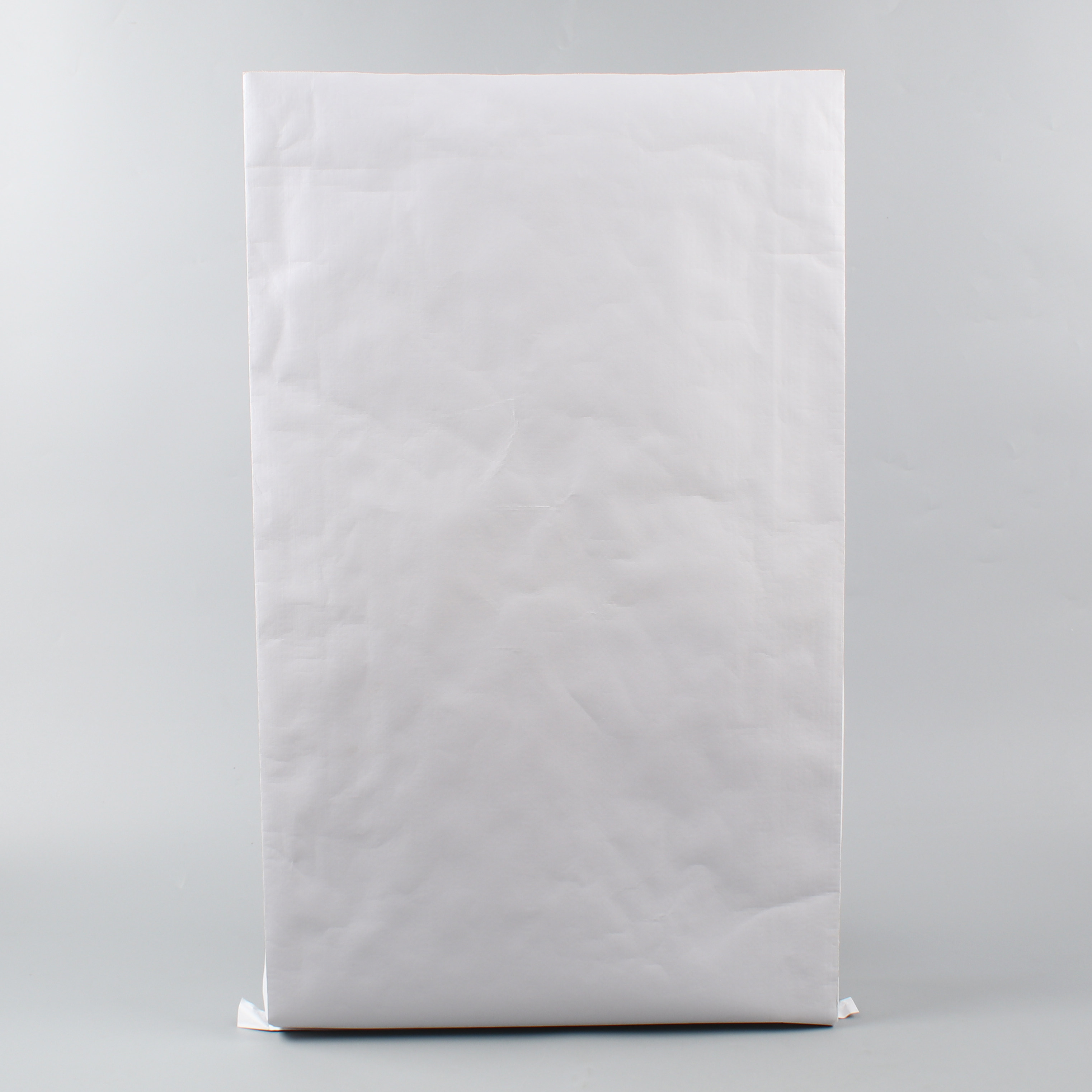
Short answer: BOPP laminated PP woven bags and paper-plastic composite woven bags both protect bulk goods from moisture and dust, but they block those two risks at different points. A BOPP laminated bag seals the woven surface itself with a film or coating; a paper-plastic composite bag places a kraft paper layer over PP woven fabric and adds a PE inner liner when a true moisture barrier is required. For fine powders that generate dust during filling, the paper-plastic route contains that dust at the outer surface; for high-definition print, rapid valve filling and a film-sealed woven surface, the BOPP route is usually the more practical specification.
This comparison is written for buyers at the research and evaluation stage who have to lock a specification before releasing an RFQ. It uses the published specifications of Wenzhou BaiChuan Plastic Industry Co., Ltd. — a PP woven packaging manufacturer based in Pingyang County, Wenzhou, Zhejiang, China, producing PP woven bags, colour-printed valve bags and paper-plastic composite bags — together with verifiable market and raw-material data. No price per bag is quoted here, because per-bag pricing depends on grammage, print colours, liner and bag-mouth construction, and can only be calculated against a confirmed specification.
1. What Moisture and Dust Protection Actually Means in a Woven Sack
Woven polypropylene is a mesh, not a solid film. Flat PP tapes are interlaced on circular looms, which leaves small openings between tapes and needle holes along stitched seams. Moisture and dust therefore do not travel through a single path, and a bag that performs well against one risk will not automatically perform well against the other.
- Surface dust path. Fine powders escape through the gaps in the woven fabric and through stitch holes during filling, handling and stacking.
- Water-vapour path. Humid air crosses the woven layer and the seam, and can condense inside the bag when temperature falls during sea transport or cold storage.
- Mechanical path. Friction, drop impacts and pallet stacking abrade or puncture the outer surface, which then opens both paths at once.
For procurement, the practical constraint is not that thicker is always better. It is whether each of the three paths has a defined barrier, and whether the bag construction matches the filling line and the storage route. PP woven bags are designed for normal filling, pallet stacking and land and sea transport, with a continuous working temperature of -10 °C to 50 °C. Without a liner or coating they are not intended for long soaking in water, and a UV-stabilised version is required if bags will be stored outdoors.
2. Industry Background: Why Laminated Structures Now Carry Most of the Volume
Three data points frame the decision.
- Volume. Global production of PP woven bags exceeded 10 billion units in 2023, and China alone manufactured more than 7 billion units of that total (Market Reports World, 2023 base year).
- Structure preference. Laminated PP woven bags accounted for 54.5% of total global market volume in 2023, which indicates that sealing the woven surface has become the mainstream way to combine print quality with moisture resistance.
- Raw-material cost. Polypropylene was quoted at 9,461 CNY per tonne on 10 November 2026, a 47.32% year-on-year increase (Trading Economics). Resin is a major cost element in a woven bag, so the same protection level now has to be achieved with a carefully calculated grammage rather than a blanket increase in fabric weight.
In China, GB/T 8946-1998 sets out the classification, technical requirements and inspection rules for PP woven bags, which gives buyers a reference framework when comparing supplier specifications. The standard defines what is measured; it does not decide which barrier construction suits a given powder.
3. Two Constructions, Two Barrier Strategies
3.1 BOPP laminated PP woven bags: sealing the surface
A BOPP laminated bag keeps the woven fabric as the structural body and adds a biaxially oriented polypropylene film on the outer face. The film gives a smooth, printable surface and closes the openings between tapes. Published specifications for this construction are:
- Base fabric: 100% virgin polypropylene, 55–130 gsm for standard open-mouth bags; 60–180 gsm for block bottom valve bags
- Yarn: 650D–1500D; mesh 8×8, 10×10 or 12×12, up to 14×14 on valve bags
- Surface options: uncoated, PP laminated, BOPP laminated or PE coated; BOPP film or PE coating is applied for moisture proofing
- Printing: 1–8 colours gravure or flexo on standard bags; 1–10 colours gravure or offset on valve bags
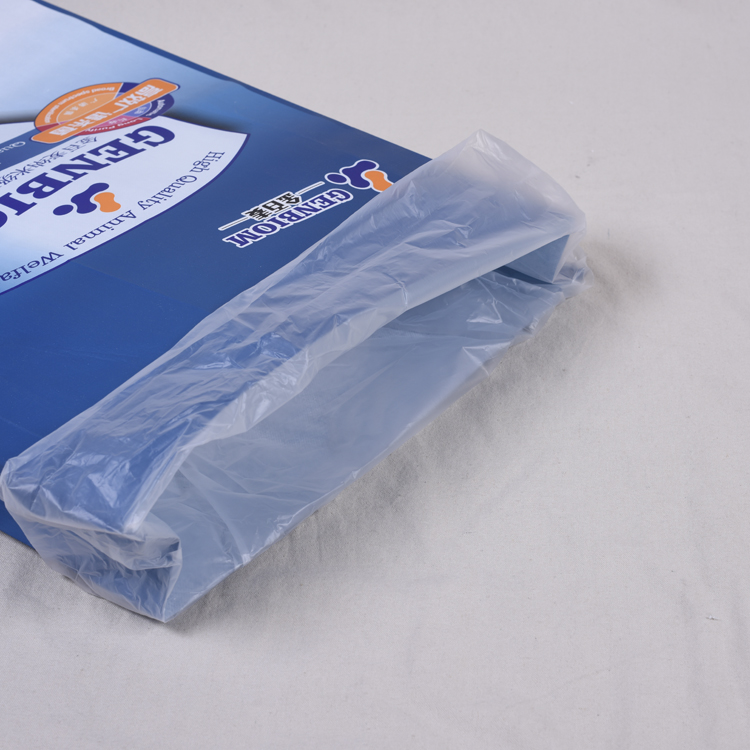
- Liner: PE inner liner available
- Top and bottom: heat cut, hemmed, valve or plastic handle on top; stitched, heat-sealed or block bottom
- Air permeability: adjustable 20–160 on the block bottom valve bag, so air can escape quickly during powder filling
Moisture protection here comes from the film or coating itself. Dust protection comes from the same film plus, for fine powders, a PE inner liner — the configuration specified for dust-proof, water-proof and leak-proof performance on fine powder and moisture-sensitive goods. Because the film is also the printing substrate, this construction supports high-colour artwork without a separate paper surface.
3.2 Paper-plastic composite woven bags: a paper face over a woven core
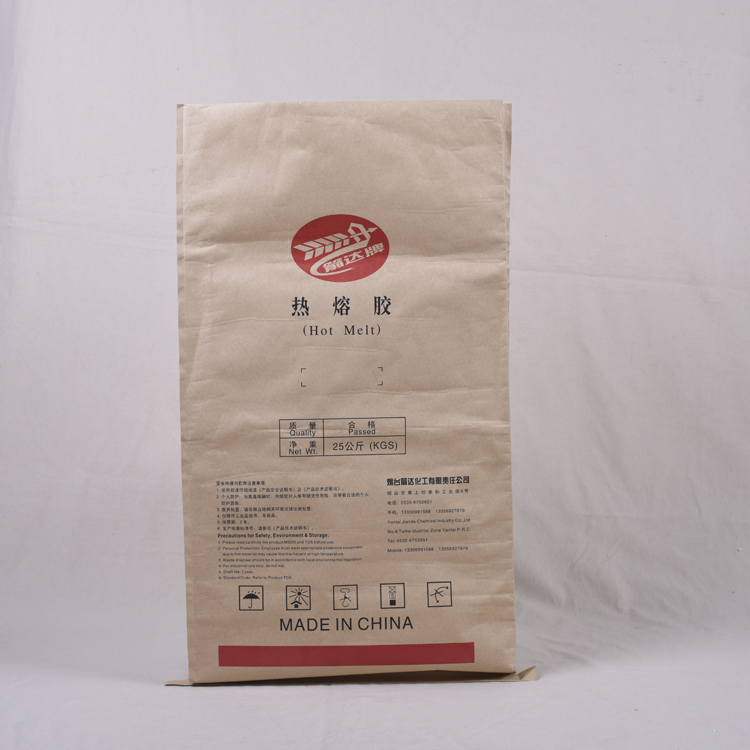
A paper-plastic composite bag places a kraft paper layer on the outside and PP woven fabric inside. The paper gives the bag a paper-like appearance and a smooth printing surface, while the woven core carries the load. Published specifications are:
- Structure: outer kraft paper (white or brown) at 70–120 gsm, plus inner 100% virgin PP woven fabric at 60–110 gsm
- Mesh: 8×8, 10×10 or 12×12
- Size: custom width and length for 10 kg, 20 kg, 25 kg, 40 kg or 50 kg filling
- Seam: back stitched, or block bottom hot welded in valve configuration
- Printing: flexo or gravure, 1–6 colours
- Options: PE inner liner for waterproofing, food-grade material, anti-UV treatment
The stated performance profile of this construction is a composite one: excellent dust-proof behaviour with less powder leakage during filling and handling, higher tensile strength and puncture resistance than a pure paper bag, and enhanced moisture and water resistance when the optional PE liner is fitted. The paper layer alone should not be read as a water-vapour barrier, and the colour count is lower than on a BOPP film surface.
3.3 The two protection paths, side by side
Put simply, the paper-plastic bag attacks the dust path at the surface and the moisture path through the liner, while the BOPP bag attacks both paths with a film and, where needed, the same liner. That convergence explains a practical rule used in specification reviews: if the product is a fine, free-flowing powder, plan a liner in either construction; if the product is a granular or moisture-sensitive agricultural input, plan a film or coating plus a liner and confirm the UV option.
The corollary is that BOPP versus paper-plastic is rarely decided by barrier performance alone. Print requirement, filling equipment, stacking behaviour and surface appearance usually decide it, and the barrier decision is then confirmed on the approved sample.
3.4 Certification and documents that travel with the order
The manufacturer holds ISO 9001:2008 quality management system certification under certificate number 10114Q17152R0S, issued by Beijing Zhonglian Tianrun Certification Center (ZLTR). The certificate scope covers the manufacture and sale of plastic drainage boards, plastic corrugated pipes and plastic packaging bags, and the PP woven bag product falls under the plastic packaging bags scope. Validity runs from 11 March 2026 to 10 March 2029, and the certificate is IAF MLA recognised, which means it is accepted in South America, Southeast Asia, Pakistan, Europe and most global markets.
Two limits are worth stating openly. First, ISO 9001 certifies the quality management system, not the barrier performance of a specific bag, so moisture and dust claims still have to be verified against the approved sample and the batch inspection record. Second, food-grade material is an optional material for this product, and destination-market requirements should be confirmed against particle size, density, flowability, dust control, sun protection, moisture protection, bag-mouth design and the applicable regulations of the importing country.
3.5 What actually moves the price
No responsible supplier quotes a bag price before the specification is fixed. The cost build-up for both constructions follows the same logic:
- Resin base. PP at 9,461 CNY per tonne on 10 November 2026, up 47.32% year on year, sets the floor for any calculation.
- Fabric weight and width. 55–130 gsm for standard bags, 60–180 gsm for valve bags, and a 60–110 gsm woven core plus 70–120 gsm paper for the composite bag.
- Barrier layers. Each added film, coating, paper layer or PE liner adds material and a separate process step.
- Print. 1–8 colours on standard BOPP bags, 1–10 colours on valve bags, 1–6 colours on paper-plastic bags.
- Bag mouth and bottom. Stitched, heat-sealed, block bottom or hot-air welded valve construction.
- Order quantity. Minimum order quantity is 3,000 bags.
A useful way to read a quotation is to check which of the six items above are stated. A quote that names grammage, mesh, surface treatment, liner, print colours and bag mouth can be compared with another supplier line by line; a quote that only names a bag size cannot.
4. Step-by-Step: Locking the Specification
- Classify the product first. Record particle size, bulk density, flowability and moisture sensitivity. These four parameters determine whether dust or vapour is the dominant risk.
- Map the route. Note how long the goods sit in a warehouse, whether the container is subject to condensation, and whether pallets are stored outdoors. A UV-stabilised version is available for outdoor storage; bags kept in a cool place can be stored for up to two to five years, while direct sunlight can deteriorate unprotected bags within months or even weeks.
- Choose the barrier, then the construction. Select film, coating, paper layer and liner before selecting the bag style, not after.
- Match the filling line. A block bottom valve bag with a self-closing valve suits automatic filling and gives a neat brick shape for stacking; a stitched open-mouth bag suits manual or sewing-line filling.
- Set the print requirement. Artwork with a high colour count points to BOPP lamination with gravure or offset printing; a paper-look surface with a restrained colour count points to the paper-plastic composite.
- Confirm food-grade and liner options in writing. Both are optional and both change cost, so they belong on the specification sheet rather than in conversation.
- Validate before mass production. Approve a pre-production sample, then rely on the batch inspection performed before shipment. For any damage claim, photograph the affected area together with the batch mark, separate defective bags from good stock and send the evidence to the sales contact for evaluation.
5. Where Each Construction Fits
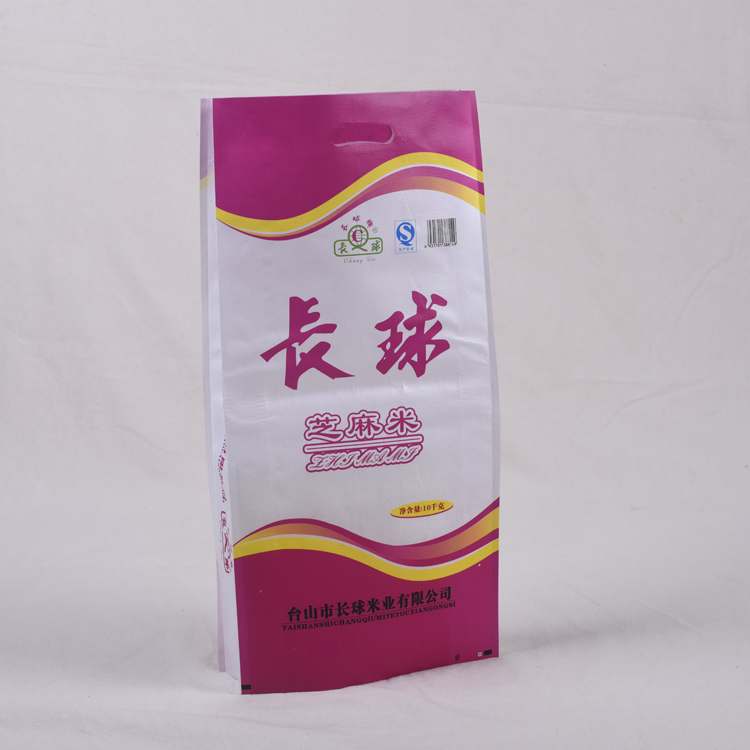
Rice and grain. BOPP laminated bags with multi-colour print and an optional PE inner liner are the usual choice where shelf appearance and moisture protection both matter, and a plastic carry handle can be added. Paper-plastic composite bags suit mill-to-wholesale packing where a paper surface is preferred and the print programme is simpler.
Fertiliser. Moisture pickup leads to caking, so BOPP lamination or PE coating plus a PE inner liner and UV stabilisation is the standard configuration for 20 kg, 25 kg and 50 kg fertilizer bags. The optional treatment on this product line is described for anti-aging, waterproof and anti-caking performance.
Chemical powder. Fine powders are the clearest case for a PE inner liner, because the liner is the element specified for fine-powder leakage prevention. Either outer construction can be used; the liner decision is not optional.
Cement and construction materials. Block bottom valve bags made of 100% virgin PP with a hot-air welded, stitch-free bottom are used for automatic filling lines and for stable pallet stacking, and the adjustable air permeability helps release air during powder filling.
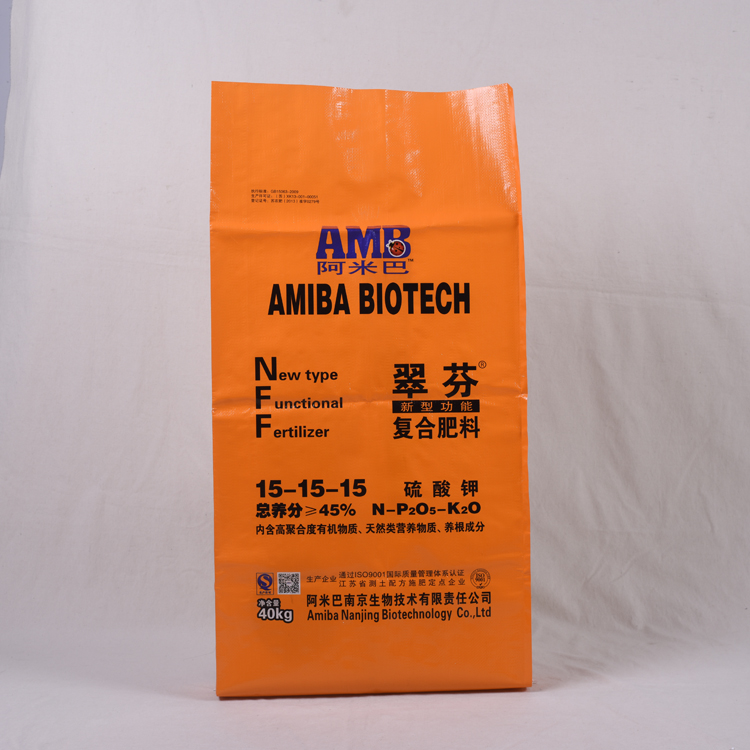
Flour and fine food powders. Dust control during filling is the dominant requirement. The paper-plastic composite bag is specified for its dust-proof performance and for higher puncture resistance than a pure paper sack, and a PE liner can be added where moisture protection is also required.
6. Comparison Table
| Decision factor | Paper-plastic composite woven bag | BOPP laminated PP woven bag |
|---|---|---|
| Core construction | Outer kraft paper 70–120 gsm over inner 100% virgin PP woven fabric 60–110 gsm | 100% virgin PP woven fabric, 55–130 gsm standard or 60–180 gsm valve bag |
| Mesh density | 8×8, 10×10, 12×12 | 8×8 to 14×14 |
| Moisture barrier | Optional PE inner liner; the paper surface resists surface water but is not a vapour barrier on its own | BOPP film or PE coating on the woven surface; optional PE inner liner |
| Dust behaviour | Stated excellent dust-proof performance, less powder leakage during filling and handling | Film seals the woven surface; PE inner liner specified for fine-powder leakage prevention |
| Printing | Flexo or gravure, 1–6 colours, smooth paper surface | Gravure or offset, 1–8 colours standard, 1–10 colours on valve bags |
| Closure options | Back stitched, or block bottom hot welded valve | Stitched, heat seal, block bottom, self-closing valve; hot-air welded block bottom |
| Air permeability | Not stated in the available specification | Adjustable 20–160 on the block bottom valve bag |
| Optional extras | PE liner, food-grade material, anti-UV | PE liner, UV treatment, anti-slip surface, plastic handle |
| Typical fit | Fine powders needing a paper-look surface and higher puncture resistance than paper | Applications needing high-definition print, film-sealed moisture protection and fast valve filling |
7. FAQ
Orders are supplied under an ISO 9001:2008 quality management system certificate, number 10114Q17152R0S, issued by Beijing Zhonglian Tianrun Certification Center (ZLTR). The certificate scope covers plastic packaging bags, is valid from 11 March 2026 to 10 March 2029, and is IAF MLA recognised, so it is accepted in South America, Southeast Asia, Pakistan, Europe and most global markets. Quality inspection is performed before shipment on each order. Food-grade material is an optional material, and any additional destination-market requirement should be confirmed against the product and the importing country before the order is placed.
Yes. A PE inner liner is available on both the paper-plastic composite bag and the BOPP laminated bag, and in both cases it is the element specified for fine-powder leakage prevention and for added water resistance. On the paper-plastic bag the liner upgrades the construction from dust-resistant to moisture-resistant; on the BOPP bag the liner closes the small openings that remain at seams and stitch points.
Pricing is built from the PP resin base, fabric weight and width, barrier layers (film, coating, paper, liner), number of print colours and bag-mouth construction. The resin benchmark stood at 9,461 CNY per tonne on 10 November 2026, up 47.32% year on year, so the same protection level has to be engineered through grammage and layer choice. Because these variables interact, a quotation is only meaningful against a confirmed specification and an order quantity at or above the 3,000-bag minimum.
Blank, simple samples are free of charge, while custom printed samples incur a sample cost. Sample freight is normally paid by the buyer, and the sample charge is refundable when the bulk order reaches the minimum order quantity. Samples are supplied for PP woven bags, valve bags, rice bags, fertilizer bags and laminated packaging bags so that material texture, printing effect, size and workmanship can be checked before bulk purchase.
The minimum order quantity is 3,000 bags and production lead time is 15–45 days, against a monthly capacity of 7,500,000 bags, which supports recurring bulk programmes across South America, Pakistan and Southeast Asia. To start a specification review, send the product type, target filling weight, barrier requirement (film, coating, paper layer or PE liner), print colour count and destination market to sales@bcpockets.com or +86 183 2421 5901.
8. Conclusion
Choosing between the two constructions comes down to four connected decisions: which path — dust or vapour — dominates; whether a PE liner is required; what print quality the market expects; and how the bag will be filled and stacked. Paper-plastic composite bags bring a paper surface, strong dust containment and higher puncture resistance than paper. BOPP laminated bags bring a film-sealed surface, up to 10-colour print and fast valve filling. In both cases the barrier only works when the liner, the coating and the bag-mouth construction are specified together and verified on the approved sample.
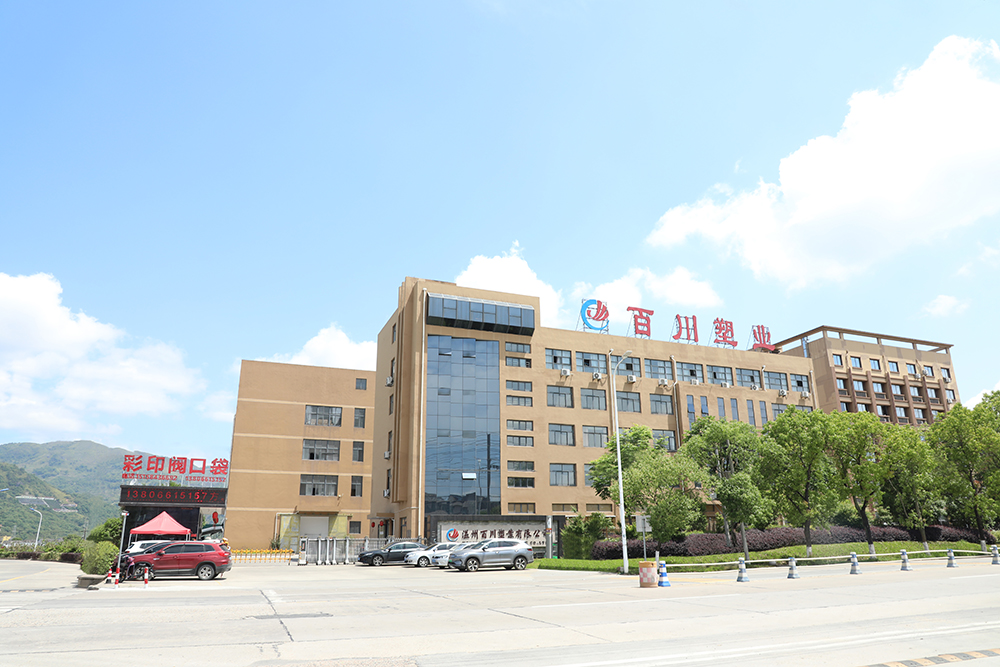
Wenzhou BaiChuan Plastic Industry Co., Ltd. produces both constructions in-house, from yarn drawing and circular weaving through lamination, colour printing and bag making, on a 20,000 m² plant with an annual output of 90,000,000 bags and a technical team of five engineers. Export accounts for 30% of output, with South America, Pakistan and Southeast Asia as main markets.
Request a Sample or a Specification-Based Quote
Send your product type, filling weight, moisture and dust requirement, print colour count and destination market, and the team will return a matched construction with a specification-based quotation.
Email: sales@bcpockets.com · Tel / WhatsApp: +86 183 2421 5901 · Website: www.baichuanbag.com
Download the full product catalogue (PDF): Baichuan packaging product catalog
Have Questions or Need More Details?
Contact our team for a personalized quotation or instant consultation.
Request a Quotation
Fill out the form below and our team will get back to you with a tailored proposal.
WhatsApp Direct Chat
Prefer to chat in real-time? Message us on WhatsApp for instant assistance & quick answers.
- Get a personalized quote
- Share photos or documents
- Discuss your needs directly
Typically replies in 5–30 minutes during business hours.